AR/VR in Quality Training
Augmented Reality (AR) and Virtual Reality (VR) technologies are transforming quality training across industries by providing immersive, interactive, and highly effective learning experiences. Traditional quality training methods—such as classroom lectures, printed manuals, or on-the-job shadowing—often face limitations in engagement, retention, and scalability. AR/VR in Quality Training overcomes these by simulating real-world processes, equipment, and scenarios in controlled virtual or augmented environments.
1. Enhanced Skill Acquisition
VR allows trainees to practice quality inspection, assembly, and process evaluation in a safe, simulated environment before interacting with real products. This approach reduces the risk of errors in high-stakes environments such as pharmaceuticals, aerospace, or automotive manufacturing. AR overlays digital instructions, metrics, or error alerts directly onto physical equipment, enabling real-time guidance during tasks. Studies have shown that hands-on, immersive learning significantly increases retention rates compared to traditional methods (Source: Journal of Manufacturing Systems).
2. Standardization and Compliance
Maintaining consistent quality standards across multiple locations is a challenge for global enterprises. AR/VR in Quality Training solutions standardize training by ensuring all employees receive the same high-fidelity experience. VR simulations can replicate audit procedures, testing protocols, or troubleshooting steps exactly as required by regulatory bodies. For industries governed by strict standards like ISO 9001 or FDA regulations, AR/VR in Quality Training training ensures compliance without the variability introduced by human trainers.
3. Error Reduction and Process Optimization
Immersive simulations allow employees to identify defects or process inefficiencies in a virtual environment, helping them internalize best practices before encountering real-world consequences. For example, in the electronics industry, VR-based assembly line simulations can teach workers to detect soldering defects or calibration errors without wasting materials or slowing production. Similarly, AR can highlight deviations during live inspections, guiding employees toward immediate corrective action.
4. Remote Training and Scalability
AR/VR in Quality Training enables remote quality training, which is increasingly valuable for distributed teams. VR platforms allow multiple users to interact within the same simulated environment regardless of location, facilitating collaborative problem-solving and real-time assessment. AR can provide remote expert guidance through live video overlays, where an expert annotates the trainee’s physical workspace. This reduces travel costs and allows rapid onboarding of new personnel in different geographies (Source: PwC AR/VR Report).
5. Data-Driven Performance Tracking
AR/VR in Quality Training systems often include integrated analytics that track trainee actions, response times, and accuracy. This data provides actionable insights for trainers and quality managers, identifying areas for improvement and tailoring future training sessions. Over time, organizations can use these metrics to refine SOPs, reduce defects, and optimize workflow efficiency.
6. Challenges and Considerations
While AR/VR offers significant benefits, adoption comes with challenges:
- Cost and Infrastructure: High-quality VR headsets, AR glasses, and simulation software require significant investment.
- Content Development: Creating realistic, scenario-specific training modules can be time-intensive.
- User Acceptance: Employees may resist new technologies if they are uncomfortable with AR/VR in Quality Training hardware or if training is not seamlessly integrated into daily workflows.
7. Future Trends
The future of AR/VR in Quality Training in quality training includes AI-driven adaptive simulations, where the training environment responds dynamically to trainee decisions, and mixed-reality platforms that seamlessly blend physical and virtual elements. Integration with digital twins of manufacturing plants will allow employees to simulate quality scenarios in real-time alongside live production data, further enhancing predictive quality management.
References & Further Reading:
- Journal of Manufacturing Systems – AR/VR in Industry 4.0
- PwC – Seeing is Believing: How VR and AR will transform business
- McKinsey – The future of work in manufacturing: AR/VR applications
#AR/VR in Quality Training in Maharashtra
What is AR/VR in Quality Training?
Augmented Reality (AR) and Virtual Reality (VR) are advanced technologies that are increasingly being used in quality training to improve skills, efficiency, and compliance in industrial and service environments. They provide immersive, interactive learning experiences that go beyond traditional classroom methods or on-the-job instruction.
1. Definition and Scope
- Virtual Reality (VR): VR creates a fully immersive digital environment where trainees can practice quality procedures, inspections, and process operations in a simulated, risk-free setting. Trainees wear VR headsets to interact with realistic simulations of equipment, products, or manufacturing lines.
- Augmented Reality (AR): AR overlays digital information—such as instructions, metrics, or visual cues—onto the real-world environment. Trainees can follow step-by-step guidance while performing real tasks, reducing errors and reinforcing correct practices.
In quality training, AR/VR in Quality Training focuses on areas such as defect detection, process verification, standard operating procedures (SOPs), and compliance with regulatory standards.
2. Key Benefits
- Enhanced Learning and Retention: Immersive simulations engage employees more effectively, improving skill retention and confidence in performing quality tasks.
- Error Reduction: Employees can practice inspections and troubleshooting in virtual environments before handling actual products, minimizing mistakes and waste.
- Standardization: AR/VR in Quality Training ensures consistent training across multiple locations, critical for industries adhering to ISO 9001, FDA, or other quality standards.
- Remote Training: Trainees in different locations can access the same VR simulations or AR-guided workflows, enabling scalable and cost-effective learning.
- Data-Driven Feedback: AR/VR in Quality Training systems capture detailed performance metrics, allowing managers to analyze training effectiveness and identify areas for improvement.
3. Applications in Industries
- Manufacturing: VR simulations for assembly line training, defect identification, and process optimization. AR overlays to guide workers through inspections and quality checks.
- Healthcare and Pharmaceuticals: VR-based simulations for laboratory procedures and AR guidance for compliance checks or equipment calibration.
- Automotive and Aerospace: AR-assisted inspections and VR-based assembly training to reduce errors in complex workflows.
4. Challenges
- High initial investment in hardware, software, and content development.
- Learning curve for employees to adopt new technologies.
- Need for regular updates to reflect process changes or product modifications.
5. Conclusion
AR/VR in Quality Training in quality training provides an innovative and efficient way to enhance workforce capabilities, improve compliance, and reduce errors. By simulating real-world scenarios and providing interactive guidance, it allows organizations to train employees faster, safer, and more consistently.
References for Further Reading:
- PwC – Seeing is Believing: How VR and AR will transform business
- Journal of Manufacturing Systems – AR/VR in Industry 4.0
- McKinsey – AR in Manufacturing and Quality Control
#AR/VR in Quality Training in Singapore
When is AR/VR in Quality Training required?
AR (Augmented Reality) and VR (Virtual Reality) are not necessary for every training scenario, but they become highly valuable in specific situations where traditional training methods are insufficient. Their adoption is generally driven by the complexity, risk, or scale of quality-related tasks. Here are the main scenarios where AR/VR in Quality Training in quality training is required:
1. High-Risk Environments
AR/VR in Quality Training is critical when mistakes can result in safety hazards, costly errors, or regulatory non-compliance. Examples include:
- Aerospace: VR simulations for assembly, inspection, or defect detection in aircraft parts to avoid costly recalls or accidents.
- Pharmaceuticals and Healthcare: AR-guided procedures in laboratories or VR-based training for sterile manufacturing to minimize contamination risks.
- Chemical or Energy Industries: VR-based hazard simulations allow employees to practice emergency protocols or equipment inspections safely.
In these cases, training directly on real equipment is either dangerous, expensive, or logistically difficult.
2. Complex or Technical Processes
When quality processes involve intricate procedures, multiple steps, or specialized tools, AR/VR in Quality Training helps employees learn faster and retain knowledge more effectively:
- Precision Manufacturing: Training workers to identify micro-defects in electronics or automotive components using VR simulations.
- Calibration and Testing: AR overlays can guide technicians step-by-step to perform complex calibration procedures correctly.
3. Standardization Across Multiple Locations
Organizations with distributed operations often require consistent quality training:
- Global Manufacturing: Ensures all employees follow the same SOPs regardless of location.
- Franchise or Service Networks: AR/VR in Quality Training provides identical, standardized training experiences for quality audits, inspections, or maintenance tasks.
4. High Turnover or Rapid Onboarding
Industries with frequent workforce changes or temporary staff benefit from AR/VR in Quality Training training:
- New employees can quickly achieve competency without relying solely on human trainers.
- VR simulations and AR instructions allow learners to practice tasks repeatedly until they reach proficiency, reducing errors on the job.
5. When Error Reduction is Critical
Quality training is required via AR/VR in Quality Training when small mistakes can lead to significant losses:
- Automotive Assembly: VR training helps workers detect misalignments or defects before production begins.
- Food or Pharmaceutical Manufacturing: AR systems highlight deviations from quality standards during live inspections.
6. Remote or Scalable Training Needs
AR/VR in Quality Training is essential when training must reach multiple sites or remote employees efficiently:
- Employees can access VR simulations or AR-guided processes from different locations, reducing travel costs and downtime.
- Useful for multinational organizations, distributed factories, or offshore operations.
Summary
AR/VR in Quality Training training is most required when:
- Safety or compliance risks are high.
- Tasks are technically complex or highly detailed.
- Standardized training is necessary across multiple sites.
- Rapid onboarding or frequent workforce changes occur.
- Errors are costly or affect product quality.
- Training must be delivered remotely or at scale.
By leveraging AR/VR in Quality Training in these scenarios, organizations can improve learning outcomes, minimize errors, and maintain consistent quality standards globally.
References:
- PwC – Seeing is Believing: How AR and VR will transform business
- Journal of Manufacturing Systems – AR/VR in Industry 4.0
- McKinsey – Augmented Reality in Manufacturing
#AR/VR in Quality Training in Banglore
Where is AR/VR in Quality Training required?
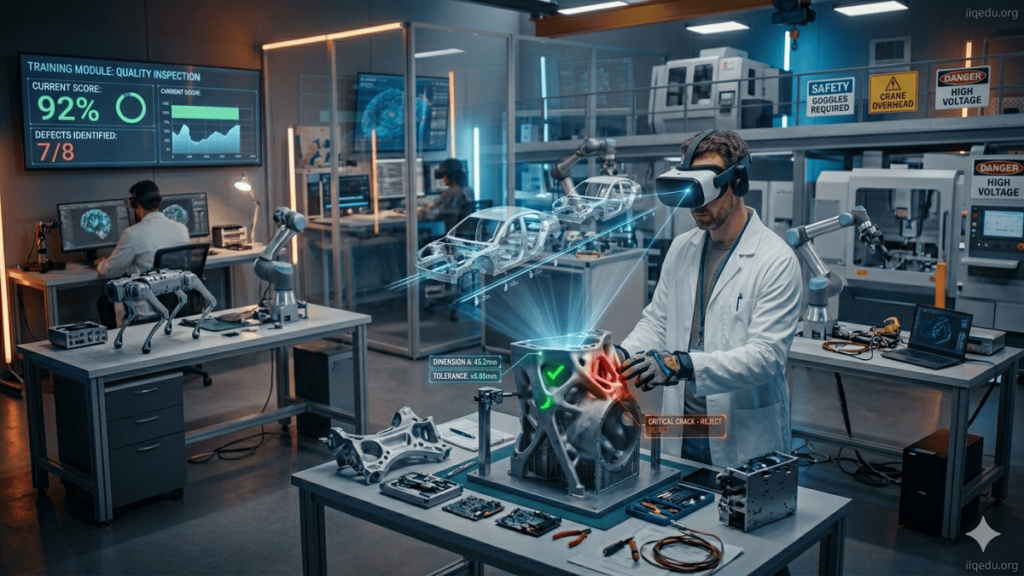
AR (Augmented Reality) and VR (Virtual Reality) in quality training are particularly required in environments, locations, or operational contexts where traditional training methods are insufficient to ensure safety, consistency, and efficiency. Their use is driven by the complexity of processes, risk factors, and the need for real-time guidance or immersive simulation.
1. Manufacturing Plants and Production Lines
- Automotive, Aerospace, Electronics: VR is used to simulate assembly lines, inspect components, and detect defects without disrupting production. AR can overlay instructions on machinery to guide workers in real-time.
- High-Precision Manufacturing: Where micro-defects or calibration errors can compromise product quality, AR/VR in Quality Training allows employees to practice and perfect processes before interacting with real products.
- Lean and Six Sigma Implementation: AR/VR in Quality Training can visualize process flows, highlight bottlenecks, and train employees in continuous improvement methods.
2. Pharmaceutical and Healthcare Facilities
- Laboratories: VR enables trainees to perform experiments or testing procedures in a virtual environment, reducing the risk of contamination.
- Medical Device Manufacturing: AR can guide workers in assembly and quality inspections of sensitive equipment.
- Training in Sterile Environments: VR simulations reduce the need for physical access, preserving the integrity of cleanrooms while teaching critical procedures.
3. Energy, Chemical, and Heavy Industries
- Hazardous Environments: VR simulations allow safe training in chemical plants, oil rigs, or nuclear facilities where mistakes could have catastrophic consequences.
- Inspection and Maintenance: AR can guide technicians during complex inspections of pipelines, reactors, or heavy machinery, highlighting quality metrics and potential errors.
4. Remote or Distributed Operations
- Multinational Corporations: AR/VR in Quality Training ensures consistent training across global facilities, regardless of geographical distance.
- Offshore Operations or Construction Sites: Remote teams can receive immersive VR training or AR-guided instructions for quality-critical tasks without travel.
5. Training Centers and Simulation Labs
- Organizations can establish dedicated VR/AR labs to simulate quality inspection, testing, or process operations.
- These labs allow repetitive practice, error correction, and mastery of standard operating procedures (SOPs) without impacting live production.
6. Quality Audit and Compliance Contexts
- Regulatory Compliance: AR/VR in Quality Training is used in facilities where strict adherence to ISO, FDA, or GMP standards is required. Trainees can practice audits, inspections, and reporting without interrupting real processes.
- Remote Audits: AR-enabled devices allow auditors to virtually guide employees or review compliance procedures in real-time from different locations.
Summary
AR/VR in Quality Training is required wherever:
- Processes are complex, technical, or require precision.
- The environment is hazardous or sensitive.
- Standardization across multiple locations is essential.
- Remote training or scalable learning solutions are needed.
- High-quality compliance, inspections, and audits are critical.
By implementing AR/VR in Quality Training in these environments, organizations reduce errors, accelerate skill acquisition, and maintain consistent quality across operations.
References:
- PwC – Seeing is Believing: How VR and AR will transform business
- Journal of Manufacturing Systems – AR/VR in Industry 4.0
- McKinsey – Augmented Reality in Manufacturing
#AR/VR in Quality Training in Patna
How is AR/VR in Quality Training required?
AR (Augmented Reality) and VR (Virtual Reality) are not just optional tools; they are increasingly required in quality training when organizations aim to improve accuracy, reduce risk, and standardize processes. The “how” of their requirement refers to the methods, contexts, and rationale for integrating these technologies into quality programs.
1. By Replacing or Enhancing Traditional Training Methods
Traditional quality training often relies on manuals, lectures, or on-the-job shadowing. AR/VR in Quality Training enhances these by:
- VR Simulations: Trainees can practice complex processes, inspections, or assembly tasks in a fully immersive virtual environment without risk to products or personnel.
- AR Guidance: Real-time overlays on equipment or products guide employees through inspections, SOPs, and corrective actions, reducing errors that occur due to misunderstanding or memory lapses.
Example: A manufacturing worker can use AR glasses to see step-by-step instructions for defect detection, while VR allows them to practice the full assembly line virtually before working on the actual line.
2. By Supporting Skill Development in High-Risk or Technical Environments
AR/VR in Quality Training is required in environments where mistakes are costly, hazardous, or technically complex:
- VR Hazard Simulations: Employees practice emergency protocols, process failures, or equipment handling in a virtual setting, avoiding safety risks.
- AR Real-Time Feedback: During live tasks, AR can highlight deviations or provide immediate corrective suggestions.
Example: Pharmaceutical labs use VR for sterile procedure training to avoid contamination, while AR guides technicians during live equipment calibration.
3. By Enabling Standardized and Remote Training
AR/VR in Quality Training is required when consistent quality standards must be maintained across multiple sites:
- VR simulations provide identical training experiences across locations, ensuring every employee is taught the same quality processes.
- AR can facilitate remote expert guidance, where an offsite specialist can annotate or instruct an onsite trainee in real-time.
Example: An automotive company can train assembly line workers in Germany and India using the same VR scenario, ensuring uniform quality knowledge.
4. By Allowing Repetition and Performance Tracking
Repetition and feedback are key for mastering quality processes:
- VR enables repeated practice of inspection, assembly, or auditing procedures until proficiency is achieved.
- Integrated analytics track trainee performance, error rates, and response times, which can guide further training or process improvements.
Example: VR-based quality inspection modules can record how quickly a trainee identifies defects and provide targeted feedback to improve accuracy.
5. By Reducing Cost and Material Waste
- Training in a virtual environment reduces the need to use real materials, which can be expensive, sensitive, or limited.
- Mistakes made in VR or AR-guided exercises do not result in production defects, scrap, or safety incidents.
Example: Electronics manufacturing can use VR for soldering defect detection practice rather than wasting real components.
6. By Supporting Compliance and Audit Preparedness
AR/VR is required when organizations must comply with regulatory standards:
- VR can simulate audit procedures for employees, preparing them for inspections without disrupting live operations.
- AR can guide employees to follow ISO, FDA, or GMP procedures correctly during live operations.
Example: In food processing, AR overlays ensure hygiene and quality checks are performed in accordance with regulatory standards.
Summary
AR/VR becomes required in quality training when organizations need:
- Immersive, risk-free practice for complex or high-stakes processes.
- Real-time guidance and error reduction during live operations.
- Standardized, scalable training across multiple locations.
- Performance tracking and data-driven learning improvements.
- Cost-effective training that minimizes material waste.
- Compliance with strict quality and regulatory standards.
By integrating AR/VR, organizations train employees faster, safer, and more consistently, which directly improves product quality, reduces defects, and ensures compliance.
References:
- PwC – Seeing is Believing: How VR and AR will transform business
- Journal of Manufacturing Systems – AR/VR in Industry 4.0
- McKinsey – Augmented Reality in Manufacturing
#AR/VR in Quality Training in Ahemadabad
Case Study of AR/VR in Quality Training
Below is a detailed, professional case study illustrating how Augmented Reality (AR) and Virtual Reality (VR) technologies have been successfully used to enhance quality training in industrial environments. These real‑world applications demonstrate measurable improvements in training effectiveness, error reduction, and operational consistency.
1. AR‑Guided Assembly and Error Reduction in Industrial Manufacturing
A significant example of AR improving training and quality outcomes comes from industrial sectors such as automotive and rail vehicle manufacturing where AR systems have been deployed to assist workers during assembly and quality inspection processes. Using head‑mounted AR devices such as Microsoft HoloLens 2, technicians receive visual overlays and step‑by‑step digital instructions directly in their field of vision while working on complex components. This approach not only enhances spatial understanding of parts and procedures but also significantly reduces dependence on prior expertise, enabling new or less experienced workers to perform tasks with higher accuracy.
This case underscores how AR can transform quality training by embedding instructions into the workflow itself, reducing cognitive load and minimizing mistakes that typically arise when trainees must recall extensive procedural knowledge from manuals or classroom sessions.
2. Immersive VR Training for Precision Manufacturing
In precision manufacturing environments—particularly where handling specialized tools and equipment carries risk or cost—companies have turned to VR simulations to deliver quality training without exposing workers to actual hazards or disrupting production lines. One documented implementation involved the development of an immersive VR training program for operators working on machinery used to produce medical components such as precision pliers and stoppers.
The VR environment replicated the actual equipment and production scenarios, enabling trainees to:
- Practice repeated operations in a risk‑free simulation environment;
- Experience realistic machine behavior and responses to operator actions;
- Receive instant performance feedback and corrective guidance;
- Standardize training modules across distributed facilities.
Beyond improving initial skill acquisition, this VR deployment enhanced consistency in operational execution and contributed to higher levels of quality assurance on the shop floor by ensuring that all operators reached a minimum competency standard before working with real machines.
3. Industry‑Level Quality Performance Improvements with AR Tools
Beyond individual company implementations, broader industry research and pilot studies provide evidence for AR’s impact on both training and process quality. For example, industrial research assessing AR‑assisted assembly tasks has shown that AR guidance dramatically decreases the number of assembly mistakes and supports improved learning transfer, which can translate directly into fewer quality defects in the production line. AR was found in certain settings to reduce the number of errors compared to traditional instruction, even after the AR support was removed, indicating that workers internalized correct procedures more robustly.
Major corporations across high‑precision manufacturing sectors—including aerospace, automotive, and heavy equipment—have also adopted AR for quality workflow guidance, often reporting performance improvements such as reduced cycle times, accelerated onboarding, and higher quality outcomes through consistent procedural adherence.
4. Organizational and Training Outcomes
Across these diverse case examples, several common high‑level outcomes emerge:
Reduced Error Rates and Rework
AR and VR training systems provide real‑time guidance and simulation practice, which helps workers avoid mistakes that typically lead to product defects, rework, and quality non‑conformances.
Improved Training Retention and Performance
Immersive experiences help trainees internalize procedures and sequences more effectively than classroom or manual‑based instruction alone, leading to higher knowledge retention and transfer to on‑the‑job performance.
Standardization Across Sites and Teams
VR modules can be deployed remotely, ensuring workers at different facilities receive identical training. AR supports real‑time, context‑aware guidance that enforces standardized best practices on the production floor.
Cost and Safety Benefits
Training in a virtual or augmented context minimizes production disruption, reduces safety risks, and conserves material that would otherwise be used for training on actual equipment.
References & Further Reading
- Detailed research on AR‑assisted quality training and performance improvements in assembly and industrial tasks.
- Technical case examples of AR systems reducing assembly errors and enhancing training effectiveness using mixed reality devices.
- Real‑world implementation of immersive VR training in precision manufacturing environments.
#AR/VR in Quality Training in Hyderabad
White Paper of AR/VR in Quality Training
Executive Summary
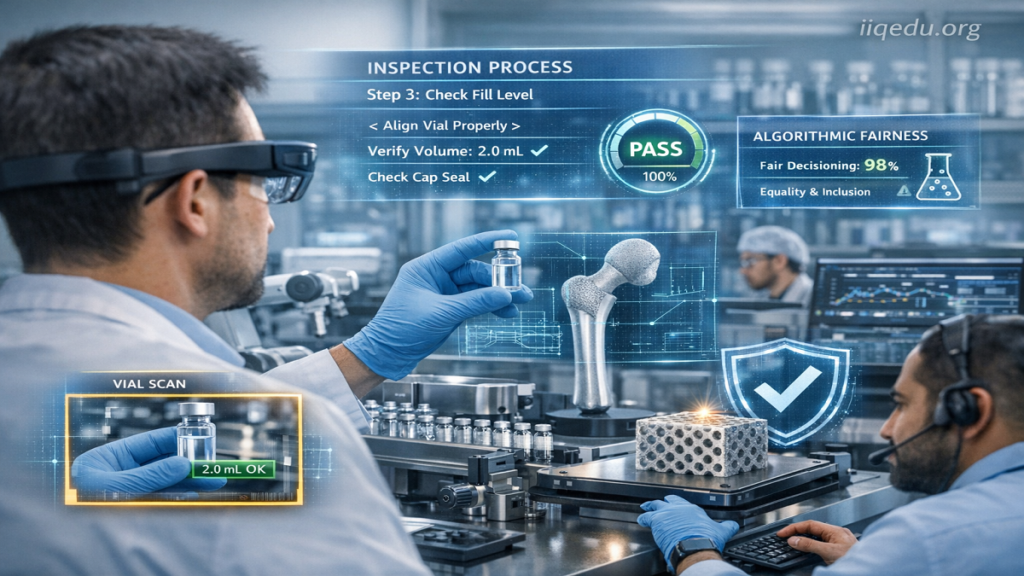
Quality training is a foundational component of operational excellence in modern enterprises. Industries with complex workflows, stringent compliance requirements, or safety‑critical environments increasingly seek innovative solutions to enhance training effectiveness, consistency, and measurable outcomes. Augmented Reality (AR) and Virtual Reality (VR) represent transformative technologies that improve knowledge retention, reduce error rates, and align workforce capability with organizational quality standards.
This white paper explores the justification, implementation models, benefits, challenges, and future outlook for AR/VR applications in quality training across diverse industry settings.
1. Introduction
Quality training is the systematic process of equipping personnel with the skills and knowledge required to perform tasks accurately, safely, and consistently. Traditional methods—such as classroom instruction, printed procedures, and mentoring—remain relevant but face limitations in scalability, engagement, and retention when applied to complex or hazardous tasks.
AR and VR extend conventional training by enabling immersive, interactive learning experiences that integrate digital content with real or simulated physical environments. These technologies allow trainees to rehearse realistic scenarios, visualize procedural dependencies, and receive real‑time operational feedback.
2. Technology Overview
2.1 Augmented Reality (AR)
AR overlays digital information on the real world. In quality training, AR can provide:
- Step‑by‑step instructions during live tasks
- Contextual alerts for deviations or non‑compliance
- Data overlays showing measurements, metrics, and checkpoints
AR delivery platforms include mobile devices, tablets, and wearable head‑mounted displays (HMDs) such as Microsoft HoloLens, Vuzix, and RealWear. AR supports hands‑free guidance and live expert collaboration.
2.2 Virtual Reality (VR)
VR transports users to fully synthetic environments that replicate physical processes, equipment, and workflows. Key attributes include:
- Risk‑free simulations of hazardous or complex tasks
- Repetition and mastery practice
- Scenario variation for decision making and problem solving
VR headsets such as Oculus (Meta Quest), HTC Vive, and Varjo are commonly used for immersive training modules.
3. Rationale for AR/VR in Quality Training
AR/VR is required in quality training when:
- Processes are technically complex or multi‑step
- Errors carry high cost, safety, or compliance risk
- Training requires standardization across distributed sites
- Real‑time feedback improves adherence to SOPs
- On‑the‑job training cannot safely replicate real scenarios
These technologies transform training from passive knowledge transfer into active learning experiences that mimic real operational conditions while maintaining safety and repeatability.
4. Business Case and Key Value Drivers
4.1 Enhanced Learning Outcomes
Immersive environments significantly increase engagement and retention rates compared to traditional instruction. Studies of immersive learning show higher knowledge transfer efficiency and application in real tasks. See research on AR/VR in industrial training.
Source: Journal of Manufacturing Systems (ScienceDirect) — https://www.sciencedirect.com/science/article/pii/S0278612521001181
4.2 Quality and Error Reduction
AR guidance reduces assembly and inspection errors by providing contextual task cues and validation checkpoints. VR practice allows trainees to internalize quality protocols before working on live production.
4.3 Operational Standardization
AR/VR modules enforce consistent, repeatable processes across locations. This improves quality conformity in globally distributed workforces and aligns performance with regulatory standards such as ISO 9001.
4.4 Safety and Risk Mitigation
VR training replicates hazardous environments without exposing personnel to danger. AR assists in high‑risk settings by guiding live tasks with real‑time annotations.
4.5 Cost Reduction and ROI
While initial technology investment exists, long‑term savings accrue through reduced rework, lower scrap rates, fewer quality incidents, and decreased instructor travel. Additionally, virtual training reduces downtime of production resources normally required for training.
5. Implementation Framework
A phased approach ensures successful integration of AR/VR into quality training programs.
5.1 Strategy and Assessment
- Define training objectives and quality KPIs
- Prioritize processes with high error rates or risk profiles
- Assess current training effectiveness
5.2 Content Development and Design
- Identify process tasks for digitization
- Develop 3D models, simulations, and instructional flows
- Collaborate with subject matter experts (SMEs)
5.3 Technology Selection
- Choose AR/VR hardware based on task requirements (e.g., mobile AR for inspections; immersive VR for full simulations)
- Evaluate software platforms for authoring and analytics
5.4 Pilot and Validation
- Implement pilots in controlled environments
- Gather performance data and trainee feedback
- Refine content and deployment models
5.5 Rollout and Scaling
- Deploy across operational sites
- Integrate with learning management systems (LMS)
- Monitor training effectiveness and quality performance
5.6 Analytics and Continuous Improvement
- Use data generated by AR/VR systems to assess competency, speed, and accuracy
- Iterate on training content to address persistent gaps
6. Case Highlights
Multiple industries demonstrate tangible outcomes through AR/VR adoption:
- Industrial assembly lines using AR reduced error rates significantly by overlaying step sequences and quality checks.
- Precision manufacturing firms implemented VR simulations to train operators on complex machine operations without material waste.
- Quality inspection processes augmented with AR decreased cycle times and improved first‑pass yield.
Detailed case references:
Springer article on AR reducing industrial assembly errors — https://link.springer.com/article/10.1007/s40436-023-00479-5
Research on AR/VR in industrial workflows — https://www.sciencedirect.com/science/article/abs/pii/S1474034621001622
7. Challenges and Risk Mitigation
7.1 Content Development Costs
Producing high‑quality AR/VR content requires specialized skills. Mitigation approaches include modular design, reuse of 3D assets, and partnerships with AR/VR content developers.
7.2 User Adoption
Resistance may occur due to unfamiliarity. Structured change management, early stakeholder engagement, and UX‑focused design improve acceptance.
7.3 Hardware Limitations
Heavy or uncomfortable devices can impede adoption. Selection based on ergonomic criteria and task fit minimizes this risk.
7.4 Integration with Existing Systems
Ensuring AR/VR platforms integrate with LMS, compliance systems, and quality dashboards is essential. APIs and data standardization practices support interoperability.
8. Future Trends
Emerging developments will further enhance quality training:
- AI‑Driven Adaptive Simulations that respond to trainee performance
- Digital Twins coupled with AR/VR to simulate real‑time quality scenarios
- Haptic Feedback for tactile skill acquisition
- 5G Connectivity enabling high‑fidelity remote collaboration
These advancements will deepen the impact of immersive training and accelerate digital transformation in quality operations.
9. Conclusions
AR and VR offer actionable, measurable benefits for organizations seeking to elevate quality training beyond conventional approaches. By enabling immersive learning, real‑time guidance, and data‑driven performance evaluation, these technologies address core challenges related to complexity, safety, standardization, and operational excellence. Implemented thoughtfully and strategically, AR/VR can produce substantial gains in quality consistency, workforce capability, and organizational performance.
10. References
Research & Industry Reports
- “AR/VR in Industry 4.0.” Journal of Manufacturing Systems, ScienceDirect.
https://www.sciencedirect.com/science/article/pii/S0278612521001181 - “Seeing is Believing: How AR/VR will transform business.” PwC.
https://www.pwc.com/gx/en/services/consulting/technology/virtual-reality.html - Research on AR/VR applications in industrial quality tasks. ScienceDirect.
https://www.sciencedirect.com/science/article/abs/pii/S1474034621001622 - Springer case study on AR‑enabled training for assembly error reduction.
https://link.springer.com/article/10.1007/s40436-023-00479-5 - Case examples of immersive VR training for manufacturing.
https://www.simelabs.com/immersive-vr-training-precision-manufacturing/
#AR/VR in Quality Training in Pune
Industry Application of AR/VR in Quality Training
AR (Augmented Reality) and VR (Virtual Reality) technologies are increasingly integrated across multiple industries to improve quality training, standardize processes, and enhance workforce performance. Each industry leverages these immersive technologies to address specific operational challenges, reduce errors, and ensure compliance with rigorous standards.
1. Automotive Industry
Application: Assembly, inspection, and maintenance training.
- VR: Immersive simulations for assembling complex components, practicing welding, or identifying defects without disrupting production.
- AR: Head-mounted displays overlay assembly instructions or highlight errors in real-time, helping workers maintain accuracy on production lines.
Impact: Studies report reductions in assembly errors, faster onboarding of new employees, and improved first-pass yield rates.
Reference: McKinsey – AR in Manufacturing
2. Aerospace Industry
Application: Aircraft assembly, maintenance, and quality inspections.
- VR: Simulates complex assembly tasks and maintenance scenarios, enabling technicians to practice without grounding aircraft or risking safety.
- AR: Real-time guidance for inspection protocols, torque specifications, and compliance checks during maintenance operations.
Impact: Increases accuracy in inspections, reduces rework, and ensures compliance with aviation safety standards.
Reference: ScienceDirect – AR/VR in Industry 4.0
3. Pharmaceutical and Healthcare
Application: Laboratory procedures, sterile operations, and equipment calibration.
- VR: Simulates cleanroom environments and procedural tasks, minimizing contamination risk during training.
- AR: Guides lab technicians and operators with overlay instructions for quality checks and standard operating procedures (SOPs).
Impact: Reduces errors, improves adherence to Good Manufacturing Practices (GMP), and enhances compliance with FDA regulations.
Reference: Simelabs – Immersive VR in Manufacturing
4. Electronics and High-Tech Manufacturing
Application: Precision assembly, quality inspection, and defect detection.
- VR: Operators can practice handling delicate components in virtual environments, reducing the risk of damage.
- AR: Provides real-time metrics, assembly checklists, and defect visualization during live production.
Impact: Improves product quality, reduces defective rates, and enhances operator confidence in complex procedures.
Reference: Springer – AR in Industrial Assembly
5. Energy and Heavy Industries
Application: Maintenance, safety, and quality assurance in hazardous environments.
- VR: Simulates chemical plant or energy facility operations for safe training in emergency procedures or high-risk tasks.
- AR: Provides on-site guidance for inspections, quality measurements, and compliance verification without exposing workers to danger.
Impact: Enhances workforce safety, reduces training risk, and ensures consistent quality standards in complex industrial processes.
Reference: ScienceDirect – AR/VR in Industry
6. Food and Beverage Manufacturing
Application: Hygiene compliance, packaging, and quality control.
- VR: Simulates processing lines and cleaning procedures for training without interrupting production.
- AR: Guides employees through critical inspection points, ensuring adherence to safety and quality standards.
Impact: Reduces contamination risks, ensures regulatory compliance, and standardizes quality practices across production facilities.
Summary of Industry Benefits
| Industry | Key AR/VR Application | Outcome |
|---|---|---|
| Automotive | Assembly & inspection guidance | Reduced errors, faster onboarding |
| Aerospace | Maintenance & inspection | Compliance, reduced rework |
| Pharmaceuticals | Lab procedures & SOP training | Contamination reduction, GMP adherence |
| Electronics | Precision assembly & defect detection | Higher product quality |
| Energy & Heavy Industries | Safety & maintenance training | Reduced risk, standardized procedures |
| Food & Beverage | Hygiene & quality control | Regulatory compliance, contamination control |
AR/VR provides industries with scalable, immersive, and safe training solutions that improve quality outcomes, reduce operational errors, and ensure workforce competency.
References:
- PwC – Seeing is Believing: AR/VR in Business
- ScienceDirect – AR/VR in Industry 4.0
- Springer – AR in Industrial Assembly
- Simelabs – Immersive VR Training
#AR/VR in Quality Training in Mumbai
Ask FAQs
What is AR/VR in quality training?
AR (Augmented Reality) and VR (Virtual Reality) are technologies used to deliver immersive, interactive training for quality processes. VR creates fully simulated environments where trainees can practice inspections, assembly, or maintenance without affecting real products. AR overlays digital instructions, metrics, or alerts onto physical equipment to guide employees in real time. Together, they improve skill acquisition, reduce errors, and standardize training across locations.
Why is AR/VR necessary for quality training?
AR/VR is necessary when traditional training cannot fully replicate complex, high-risk, or precision-driven tasks. They allow trainees to safely practice scenarios that would otherwise involve safety hazards, costly materials, or regulatory constraints. Additionally, AR/VR enables standardized, repeatable training for distributed teams, reduces error rates, and enhances retention by providing hands-on, immersive learning experiences.
Which industries benefit most from AR/VR quality training?
Industries that benefit include:
Automotive and Aerospace: Assembly, maintenance, and inspections.
Pharmaceuticals and Healthcare: Lab procedures, sterile operations, and equipment calibration.
Electronics and High-Tech Manufacturing: Precision assembly and defect detection.
Energy and Heavy Industry: Hazardous maintenance and safety training.
Food and Beverage: Hygiene, packaging, and quality compliance.
These industries have complex processes, high compliance standards, or safety-critical operations, making AR/VR highly effective.
How does AR/VR improve quality training outcomes?
AR/VR improves outcomes by:
Allowing risk-free practice of complex or hazardous tasks.
Providing real-time guidance to reduce errors.
Standardizing training across multiple locations.
Tracking performance metrics for continuous improvement.
Enhancing retention and learning through immersive, interactive experiences.
This leads to fewer defects, higher compliance, faster onboarding, and more consistent quality performance.
What are the challenges in implementing AR/VR for quality training?
Common challenges include:
High upfront costs for hardware, software, and content creation.
Content development complexity to accurately simulate real-world tasks.
User adoption resistance, especially if employees are unfamiliar with immersive technologies.
Integration with existing training systems and workflows.
These can be mitigated by phased implementation, pilot programs, ergonomic hardware selection, and ongoing support for trainees.
Source: The Brain Engineer
Table of Contents
Disclaimer:
The information provided in this document is for educational and informational purposes only. While every effort has been made to ensure accuracy, the content may not reflect the most current industry standards or regulations. Organizations should independently verify applicability and consult relevant experts before implementing AR/VR training programs.