Blockchain for Quality Traceability
Introduction
Blockchain technology is transforming how organizations ensure product quality, authenticity, and supply chain transparency. Quality traceability refers to the ability to track and verify the entire lifecycle of a product—from raw materials to the end consumer—ensuring that each step meets regulatory, safety, and quality standards. By leveraging blockchain’s decentralized, immutable ledger, companies can create tamper-proof records of every transaction and process, enhancing trust, accountability, and compliance.
How Blockchain Enhances Quality Traceability
- Immutable Record-Keeping
Blockchain ensures that all product-related data, including manufacturing details, inspections, and certifications, are securely stored in a distributed ledger. Once recorded, the data cannot be altered, preventing fraud or falsification. - End-to-End Supply Chain Visibility
Every step of the supply chain—from suppliers to distributors to retailers—can be tracked on the blockchain. This transparency allows stakeholders to verify product quality and compliance in real time. - Enhanced Accountability and Auditing
Auditors and regulators can access blockchain records to validate compliance with standards such as ISO 9001, HACCP, or GMP without relying on paper trails. This reduces manual verification time and the risk of human error. - Smart Contracts for Automated Quality Checks
Smart contracts can automatically trigger quality inspections, flag deviations, or enforce contractual obligations based on predefined quality parameters, ensuring consistency and reducing delays. - Consumer Trust and Brand Integrity
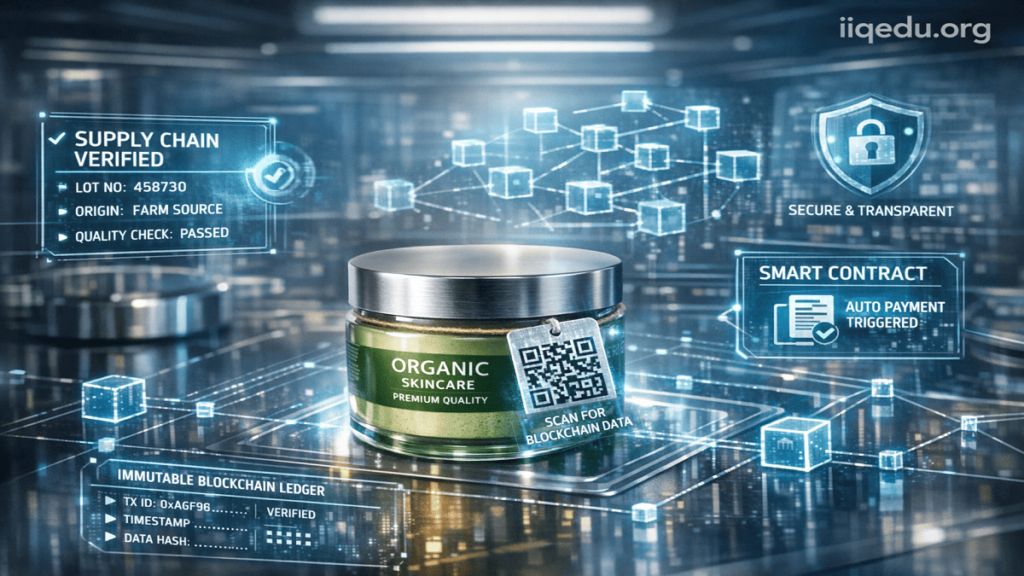
End consumers can scan QR codes or digital tags linked to the blockchain to verify the authenticity, quality, and origin of products, which is particularly valuable in industries like food, pharmaceuticals, and luxury goods.
Industry Applications
- Food & Agriculture: Track produce from farm to table, ensuring freshness, compliance with safety standards, and preventing contamination.
- Pharmaceuticals: Verify drug authenticity, monitor temperature-sensitive shipments, and prevent counterfeit medications.
- Automotive & Aerospace: Trace components for safety, warranty, and regulatory compliance.
- Luxury Goods: Ensure authenticity and provenance to prevent counterfeiting of jewelry, fashion, and electronics.
Benefits of Blockchain-Based Quality Traceability
| Benefit | Impact |
|---|---|
| Transparency | Full visibility across supply chains, reducing disputes and recalls |
| Security | Tamper-proof records reduce fraud and errors |
| Compliance | Easier verification of quality standards and regulatory requirements |
| Efficiency | Automates auditing, reduces paperwork, and accelerates decision-making |
| Customer Trust | Provides verifiable proof of authenticity and quality to consumers |
Challenges
- Integration Complexity: Implementing blockchain across multiple suppliers and systems can be complex.
- Data Input Integrity: Blockchain ensures immutability, but inaccurate data entry can still affect traceability.
- Scalability and Cost: High transaction volumes and public blockchain fees may impact feasibility for some applications.
- Regulatory Acceptance: Legal frameworks for blockchain in quality certification are still evolving globally.
Conclusion
Blockchain for quality traceability provides a secure, transparent, and efficient solution for modern supply chains. By enabling end-to-end visibility, automated quality verification, and immutable records, organizations can strengthen compliance, reduce risk, and enhance consumer trust. As adoption grows, blockchain is expected to become a standard for industries where quality, authenticity, and safety are critical.
References for Further Reading:
- IBM Blockchain – Traceability in Supply Chains: https://www.ibm.com/blockchain/solutions/supply-chain
- Deloitte – Blockchain for Supply Chain Transparency: https://www2.deloitte.com/global/en/pages/operations/articles/blockchain-in-supply-chain.html
- World Economic Forum – Blockchain and Product Traceability: https://www.weforum.org/reports/blockchain-in-supply-chains
- Harvard Business Review – How Blockchain Will Transform Supply Chain Traceability: https://hbr.org/2020/05/how-blockchain-will-transform-supply-chain-traceability
#Blockchain for Quality Traceability in Goa
What is Blockchain for Quality Traceability?
Blockchain for Quality Traceability refers to the use of blockchain technology to track, verify, and record every stage of a product’s lifecycle in a secure and transparent way. It ensures that each step—starting from raw material sourcing, production, distribution, and finally delivery to the end customer—meets defined quality standards and regulatory requirements.
Unlike traditional traceability systems that rely on centralized databases or paper-based records, blockchain provides a decentralized, immutable ledger where every transaction or process entry is recorded permanently and cannot be altered. This ensures data integrity, accountability, and transparency across the entire supply chain.
Key Characteristics Include:
- Immutable Records: Each quality check, certification, and transaction is stored permanently.
- Transparency: All stakeholders, including manufacturers, auditors, and customers, can access verifiable product history.
- Automation via Smart Contracts: Predefined rules can trigger automatic quality inspections, approvals, or alerts.
- Enhanced Consumer Trust: Customers can verify product authenticity and quality using QR codes or digital tags linked to the blockchain.
In essence, blockchain for quality traceability is a technology-driven solution that ensures products are authentic, safe, and compliant at every step of the supply chain.
References:
- IBM Blockchain – Supply Chain Traceability
- Deloitte – Blockchain for Supply Chain Transparency
- World Economic Forum – Blockchain and Product Traceability
#Blockchain for Quality Traceability in Patna
Who is Blockchain for Quality Traceability required?
Blockchain for quality traceability is primarily required by organizations that need to ensure the integrity, safety, and compliance of their products across the supply chain. This typically includes industries where product quality, authenticity, and regulatory adherence are critical.
Key Stakeholders and Users Include:
- Manufacturers:
- Ensure that raw materials and components meet quality standards.
- Maintain accurate, tamper-proof records of production processes.
- Supply Chain and Logistics Providers:
- Track shipments in real time and ensure proper handling of goods.
- Provide transparency and accountability across multiple vendors and carriers.
- Auditors and Regulatory Authorities:
- Verify compliance with standards such as ISO 9001, GMP, HACCP, or FDA regulations.
- Access immutable records for audits without relying on paper-based documentation.
- Retailers and Distributors:
- Confirm product authenticity before reaching consumers.
- Detect counterfeit or substandard goods quickly.
- End Consumers:
- Verify product origin, authenticity, and quality through QR codes or digital tags linked to the blockchain.
- Build trust in brands by ensuring transparency of the product lifecycle.
In short, any organization or stakeholder involved in industries with complex supply chains, regulatory requirements, or high-quality standards—such as food and beverages, pharmaceuticals, automotive, aerospace, and luxury goods—can benefit from blockchain-based quality traceability.
References:
- IBM Blockchain – Supply Chain Traceability
- Deloitte – Blockchain in Supply Chains
- World Economic Forum – Blockchain and Product Traceability
#Blockchain for Quality Traceability in Jaipur
When is Blockchain for Quality Traceability required?
Blockchain for quality traceability becomes necessary whenever organizations need to ensure transparency, authenticity, and compliance throughout a product’s lifecycle. Its adoption is particularly critical under the following scenarios:
- Regulatory Compliance Requirements:
- When industries are subject to strict regulations (e.g., ISO 9001, GMP, HACCP, FDA, or EU food safety standards), blockchain helps maintain immutable records that simplify audits and regulatory reporting.
- Complex and Multi-Tier Supply Chains:
- When products pass through multiple suppliers, distributors, or logistics partners, blockchain ensures every step is tracked and verifiable, reducing errors, delays, and disputes.
- Risk of Counterfeiting or Fraud:
- In sectors like pharmaceuticals, luxury goods, or electronics, blockchain ensures product authenticity and prevents counterfeit items from entering the supply chain.
- Quality Assurance in Critical Products:
- For items where safety and quality directly affect consumers—such as medicines, food, aerospace components, or medical devices—blockchain ensures consistent verification at each stage.
- Consumer Transparency and Trust:
- When businesses want to provide end consumers with verifiable proof of product origin, ethical sourcing, or sustainability practices, blockchain enables traceable, trustworthy data.
In essence, blockchain for quality traceability is required whenever there is a need for: reliable data integrity, end-to-end supply chain visibility, automated compliance, and enhanced consumer trust.
References:
- IBM Blockchain – Supply Chain Traceability
- Deloitte – Blockchain for Supply Chain Transparency
- World Economic Forum – Blockchain and Product Traceability
#Blockchain for Quality Traceability in Hyderabad
Where is Blockchain for Quality Traceability required?
Blockchain for quality traceability is required across the entire supply chain, from the origin of raw materials to the end consumer. Its application spans multiple locations, partners, and processes where verification, accountability, and transparency are critical.
Key Areas of Application Include:
- Raw Material Sourcing:
- At farms, mines, or suppliers where raw materials are produced, blockchain ensures provenance and adherence to quality or ethical standards.
- Manufacturing and Production Facilities:
- In factories or processing plants, blockchain records production steps, inspections, and quality control checks, ensuring that every batch meets defined standards.
- Distribution and Logistics Hubs:
- Warehouses, shipping centers, and transport networks use blockchain to monitor handling, storage conditions (e.g., temperature-sensitive goods), and movement of products.
- Retail and Point of Sale:
- Retail stores, e-commerce platforms, and other customer-facing points can provide verified product history to consumers, building trust in quality and authenticity.
- Auditing and Regulatory Review Centers:
- Audit firms, certification bodies, and regulatory agencies can access blockchain records to verify compliance without relying on paper-based documentation.
Industries that commonly implement blockchain traceability include:
- Food & Agriculture – tracking farm-to-table quality and safety.
- Pharmaceuticals – ensuring drug authenticity and safe transport.
- Automotive & Aerospace – monitoring component quality and safety compliance.
- Luxury Goods & Electronics – preventing counterfeiting and verifying provenance.
**In short, blockchain is required wherever products, components, or processes demand secure, verifiable, and transparent tracking to maintain quality and regulatory compliance.
References:
- IBM Blockchain – Supply Chain Traceability
- Deloitte – Blockchain in Supply Chains
- World Economic Forum – Blockchain and Product Traceability
#Blockchain for Quality Traceability in Ahemdabad
How is Where is Blockchain for Quality Traceability required?
Blockchain for quality traceability is implemented by integrating decentralized ledger technology into supply chain and quality management processes to ensure transparency, authenticity, and compliance. The process involves multiple steps and stakeholders across the product lifecycle.
Key Implementation Steps:
- Data Capture at Every Stage:
- Record all relevant product information, including raw materials, production processes, inspection results, and shipment details.
- Use IoT sensors, RFID tags, QR codes, or digital certificates to automatically capture accurate data.
- Blockchain Ledger Recording:
- Each transaction or quality checkpoint is added to an immutable blockchain ledger.
- This ensures that records cannot be tampered with or deleted, providing a permanent history of the product lifecycle.
- Smart Contracts for Automated Quality Control:
- Define rules that trigger automatic actions such as inspections, alerts, or approvals when quality thresholds are met or breached.
- This reduces manual intervention and ensures consistent enforcement of quality standards.
- End-to-End Supply Chain Integration:
- Connect suppliers, manufacturers, logistics providers, distributors, and retailers to the blockchain network.
- Share verifiable product information securely across all stakeholders to ensure traceability from origin to consumer.
- Verification and Consumer Access:
- Auditors and regulators can access blockchain records for compliance checks.
- Consumers can scan QR codes or digital tags to verify product origin, authenticity, and quality, building trust in the brand.
- Analytics and Continuous Improvement:
- Analyze blockchain data to identify quality issues, process inefficiencies, or supplier performance gaps.
- Use insights to enhance production standards, reduce defects, and improve overall supply chain transparency.
Summary:
Blockchain for quality traceability is required by embedding secure, tamper-proof, and transparent record-keeping throughout the supply chain, enabling automated quality enforcement, regulatory compliance, and consumer trust. It is applied wherever reliable verification of product quality, authenticity, or provenance is critical.
References:
- IBM Blockchain – Supply Chain Traceability
- Deloitte – Blockchain for Supply Chain Transparency
- World Economic Forum – Blockchain and Product Traceability
#Blockchain for Quality Traceability in Delhi
Case Study of Blockchain for Quality Traceability
Background
In complex multi‑tier industries such as textiles and apparel, ensuring product quality, ethical sourcing, and transparency is a major operational challenge. Traditional traceability systems often rely on siloed databases or paper documentation, leading to limited visibility, data manipulation risks, and information asymmetry between supply chain partners and customers.
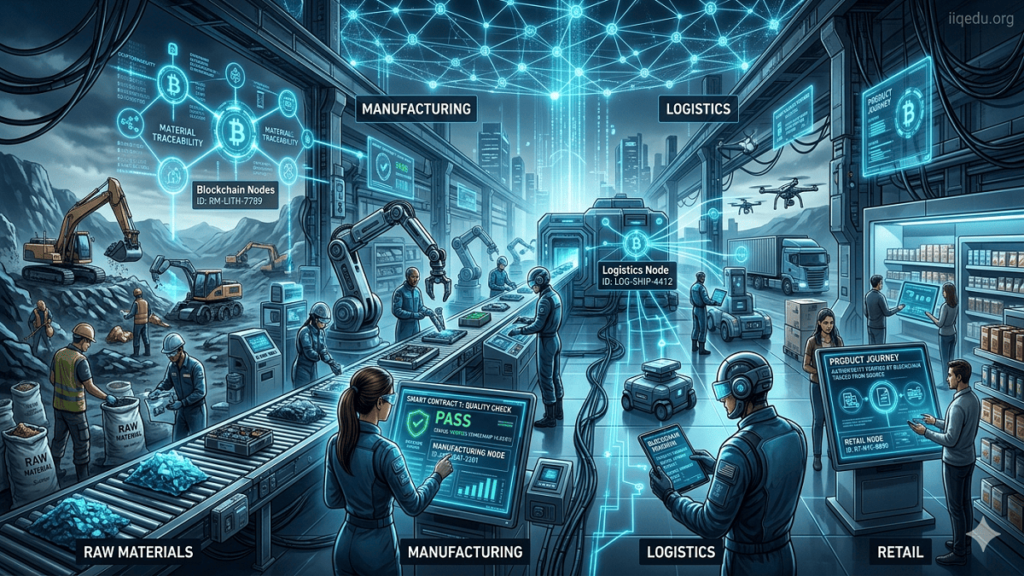
To address these issues, a blockchain‑based traceability framework was designed and implemented to improve the tracking of product quality and provenance throughout the textile supply chain. This real example draws from a conceptual and applied case in the textile industry involving organic cotton supply tracking.
Objectives
- Enhance Transparency: Provide all stakeholders with a transparent, tamper‑proof record of product data.
- Improve Traceability: Enable backward and forward traceability from raw cotton to finished garments.
- Build Trust: Allow consumers and partners to independently verify product quality and ethical sourcing.
- Support Sustainability: Track compliance with sustainability and ethical sourcing standards.
Implementation Approach
- Blockchain Framework Design
- A permissioned blockchain network was established to support multiple stakeholders—farmers, processors, manufacturers, and retailers.
- Smart contracts were developed to govern the validation and recording of transactions on the blockchain.
- Each supply chain event (e.g., harvesting, processing, shipment, inspection) was recorded as a transaction block, ensuring immutability.
- IoT and Digital Tag Integration
- IoT sensors and QR codes were used to capture product data at each stage (e.g., location, temperature control, batch details).
- Digital tags linked to blockchain records provided accessible product history for auditors and end consumers.
- Stakeholder Data Sharing
- All participating entities could write to and read from the blockchain ledger using secure identities and cryptographic verification.
- Smart contracts automatically executed quality verification rules—triggering alerts if a transaction did not meet predefined criteria.
Results and Benefits
- Improved Quality Assurance:
Production steps and inspection outcomes became verifiable and tamper‑proof, greatly reducing disputes over product quality data. - Higher Supply Chain Visibility:
Stakeholders accessed real‑time traceability data, significantly improving coordination between suppliers and manufacturers. - Consumer Trust and Brand Value:
End consumers could scan product tags to verify origin, sustainability certifications, and quality proof—strengthening brand credibility. - Sustainability Insights:
Transparent provenance data supported claims about ethical sourcing and compliance with environmental standards.
Key Takeaways
- Blockchain acts as a trust layer that secures data across decentralized participants, ensuring that quality and provenance information remains consistent and auditable.
- Smart contracts automate enforcement of quality rules, reducing reliance on manual audits and minimizing human error.
- Transparency increases consumer confidence, particularly in industries where ethical sourcing and product authenticity are critical.
Conclusion
This case study demonstrates that blockchain technology can serve as a robust foundation for quality traceability in complex supply chains. By enhancing transparency, automating verification, and enabling immutable record‑keeping, blockchain solutions help organizations ensure product quality, meet regulatory requirements, and build stronger trust with consumers and partners.
External Resources for Further Reading:
- Blockchain‑based Framework for Supply Chain Traceability — Textile Case: DOI link (Elsevier).
- Supply Chain Traceability Using Blockchain Technology: Springer Nature Open Access.
#Blockchain for Quality Traceability in Kolkata
White Paper of Blockchain for Quality Traceability
Executive Summary
Quality traceability is critical for industries that require transparency, safety, and compliance in their supply chains. Traditional tracking systems often fail to provide real-time, verifiable, and tamper-proof records. Blockchain technology offers a transformative solution by enabling immutable, decentralized, and auditable records throughout the product lifecycle. This white paper explores how blockchain can enhance quality traceability, the benefits, implementation strategies, industry applications, and challenges.
1. Introduction
- Definition of Quality Traceability: The ability to track and verify every step of a product’s lifecycle, from raw materials to end consumers.
- Limitations of traditional traceability methods: paper-based documentation, centralized databases, human error, and susceptibility to fraud.
- Blockchain as a solution: Decentralized, immutable, and transparent ledger ensuring data integrity and accountability.
2. Technology Overview
- Blockchain Fundamentals: Distributed ledger, immutability, cryptographic security, and consensus mechanisms.
- Smart Contracts: Automated execution of predefined rules for quality checks, compliance enforcement, and alerts.
- Integration with IoT: Real-time data capture using sensors, RFID, QR codes, and other digital tags.
- Data Accessibility: Role-based access to ensure authorized visibility for suppliers, auditors, regulators, and consumers.
3. How Blockchain Enables Quality Traceability
- End-to-End Supply Chain Visibility: Track every product stage from raw material to delivery.
- Immutable Audit Trails: Records cannot be altered, enabling trustworthy audits.
- Automated Compliance: Smart contracts enforce regulatory or contractual quality standards.
- Consumer Verification: QR codes or digital tags provide proof of origin, authenticity, and sustainability.
4. Industry Applications
- Food & Agriculture: Farm-to-table traceability, freshness monitoring, and contamination prevention.
- Pharmaceuticals: Verification of drug authenticity, temperature-sensitive shipment tracking, and anti-counterfeiting measures.
- Automotive & Aerospace: Component lifecycle tracking, warranty validation, and safety compliance.
- Luxury Goods & Electronics: Provenance verification to prevent counterfeiting and ensure authenticity.
- Textiles & Apparel: Tracking sustainable sourcing, organic certifications, and ethical production compliance.
5. Benefits
| Benefit | Impact |
|---|---|
| Transparency | End-to-end visibility across multi-tier supply chains |
| Security | Tamper-proof records reduce fraud and errors |
| Compliance | Simplified audits and regulatory verification |
| Efficiency | Automation reduces paperwork, delays, and manual intervention |
| Consumer Trust | Verifiable authenticity and quality information for end-users |
6. Implementation Strategy
- Step 1: Identify Stakeholders – Suppliers, manufacturers, distributors, auditors, and consumers.
- Step 2: Data Capture Infrastructure – IoT sensors, QR codes, RFID tags, and digital certifications.
- Step 3: Blockchain Network Design – Public vs. permissioned blockchain depending on scalability and security needs.
- Step 4: Smart Contract Deployment – Automate quality checks, alerts, and approvals.
- Step 5: Integration & Training – Ensure supply chain participants are trained and systems are interoperable.
- Step 6: Continuous Monitoring & Analytics – Track trends, identify gaps, and improve quality continuously.
7. Challenges
- Data integrity at the point of entry – blockchain secures records but cannot verify false inputs.
- Scalability and network performance for high-volume supply chains.
- Integration with legacy IT systems.
- Regulatory uncertainty regarding blockchain-based compliance reporting.
- Cost of implementation, especially for smaller suppliers.
8. Case Studies
- Textile Supply Chain Traceability: Blockchain tracks organic cotton from farm to finished garments, ensuring ethical sourcing and consumer verification.
- Pharmaceutical Anti-Counterfeiting: Blockchain provides immutable proof of authenticity and temperature-controlled logistics.
9. Future Outlook
- Widespread adoption in food, pharma, automotive, and luxury industries.
- Integration with AI and machine learning for predictive quality analytics.
- Standardization of blockchain protocols for supply chain interoperability.
- Increasing consumer demand for transparency and verifiable sustainability claims.
10. Conclusion
Blockchain technology provides a robust, secure, and transparent platform for quality traceability, addressing the limitations of traditional systems. By implementing blockchain, organizations can:
- Ensure end-to-end product visibility.
- Reduce fraud and counterfeiting.
- Automate compliance and auditing processes.
- Build stronger trust with consumers and partners.
The adoption of blockchain in quality traceability represents a strategic investment in efficiency, compliance, and brand reputation.
#Blockchain for Quality Traceability in Banglore
Idustry Application of Blockchain for Quality Traceability
Blockchain for quality traceability is increasingly being adopted across industries where product authenticity, safety, and compliance are critical. By leveraging the immutable and transparent nature of blockchain, organizations can track products from origin to consumer, ensure regulatory compliance, and enhance trust.
1. Food & Agriculture
- Use Case: Track produce from farm to table, monitor storage conditions, and verify organic or fair-trade certifications.
- Benefits: Prevents contamination, enables rapid recalls, and ensures food safety standards are met.
- Example: Walmart has implemented blockchain to trace leafy greens and other perishables, significantly reducing the time needed to identify the source of contamination.
2. Pharmaceuticals
- Use Case: Verify drug authenticity, monitor temperature-sensitive shipments, and prevent counterfeit medications.
- Benefits: Ensures compliance with FDA regulations, reduces counterfeit risk, and improves patient safety.
- Example: MediLedger and other blockchain networks track prescription drugs across the supply chain.
3. Automotive & Aerospace
- Use Case: Track components, parts, and maintenance records throughout the supply chain.
- Benefits: Enhances safety, ensures warranty compliance, and reduces counterfeit or substandard components.
- Example: BMW and Airbus have explored blockchain for tracing automotive and aircraft components to improve safety and regulatory compliance.
4. Luxury Goods & Electronics
- Use Case: Provide provenance verification for luxury products, high-end electronics, and designer items.
- Benefits: Reduces counterfeiting, protects brand reputation, and allows consumers to verify authenticity.
- Example: LVMH’s Aura Blockchain initiative enables consumers to verify the authenticity and origin of luxury goods.
5. Textiles & Apparel
- Use Case: Track organic or sustainably sourced materials from farms to finished garments.
- Benefits: Enhances supply chain transparency, ensures ethical sourcing, and validates sustainability claims.
- Example: Brands like Provenance and TextileGenesis use blockchain to trace textiles for ethical production and sustainability certifications.
6. Food Supplements & Nutraceuticals
- Use Case: Trace ingredients, verify quality testing, and monitor storage conditions.
- Benefits: Ensures product safety, compliance with labeling regulations, and prevents adulteration.
Key Takeaways
- Blockchain is applicable in any industry with complex supply chains, high regulatory compliance, or risk of counterfeiting.
- Common benefits across industries include:
- Immutable, tamper-proof records
- End-to-end supply chain visibility
- Automated compliance and auditing
- Increased consumer trust through verifiable product data
References:
- IBM Blockchain – Supply Chain Traceability
- Deloitte – Blockchain for Supply Chain Transparency
- World Economic Forum – Blockchain and Product Traceability
- ScienceDirect – Blockchain-Based Framework for Textile Supply Chain Traceability (Link)
#Blockchain for Quality Traceability in Mumbai
Ask FAQs
What is Blockchain for Quality Traceability?
Blockchain for quality traceability is a technology solution that records and tracks every stage of a product’s lifecycle—from raw materials to end consumers—on an immutable, decentralized ledger. It ensures product authenticity, regulatory compliance, and transparency throughout the supply chain.
Who needs Blockchain for Quality Traceability?
Organizations in industries with complex supply chains, regulatory requirements, or high risk of counterfeit products—such as food & beverages, pharmaceuticals, automotive, aerospace, textiles, and luxury goods—benefit most. It is required by manufacturers, distributors, auditors, regulators, and even consumers seeking verified product quality.
How does Blockchain improve product quality and compliance?
By recording every transaction and quality checkpoint on an immutable ledger, blockchain prevents data tampering, enables automated verification through smart contracts, and provides a transparent, auditable history. This improves regulatory compliance, reduces errors, and ensures consistent product quality.
Can consumers verify products using blockchain?
Yes. Products linked to blockchain records often include QR codes or digital tags that allow consumers to access verifiable information about the product’s origin, production process, quality certifications, and sustainability credentials. This builds trust and brand loyalty.
What are the challenges of implementing Blockchain for Quality Traceability?
Key challenges include:
Ensuring accurate data entry at all stages (garbage in, garbage out).
Integrating blockchain with existing IT systems and supply chain partners.
Costs associated with network setup and IoT devices.
Scalability and performance considerations for high-volume supply chains.
Regulatory recognition and standardization of blockchain-based traceability.
Source: HashCash Consultants- Official Channel
Table of Contents
Disclaimer:
The information provided is for educational and informational purposes only. It does not constitute legal, financial, or professional advice. Organizations should consult qualified experts before implementing blockchain solutions for quality traceability. Results may vary depending on technology, supply chain complexity, and regulatory requirements.