Blockchain in QA Traceability
1. What is Blockchain in QA Traceability?
Blockchain in Quality Assurance (QA) Traceability uses a decentralized, immutable ledger to record every step of a product’s lifecycle, from raw materials to final delivery. It ensures transparent, tamper-proof, and verifiable data for quality control, compliance, and supply chain traceability.
2. Benefits of Blockchain in QA Traceability
- Enhanced Transparency: All stakeholders can view verified records of product quality.
- Immutable Records: Prevents tampering and ensures accurate traceability.
- Regulatory Compliance: Simplifies audits and certifications with verifiable data.
- Faster Recall Management: Quickly identify affected batches in case of defects.
- Improved Supplier Accountability: Track raw material and component quality across the supply chain.
3. How Blockchain is Used in QA Traceability
- Recording quality checks, inspections, and approvals at each stage of production.
- Tracking raw materials and component sourcing from suppliers.
- Storing test results, certifications, and audit reports on a secure, immutable ledger.
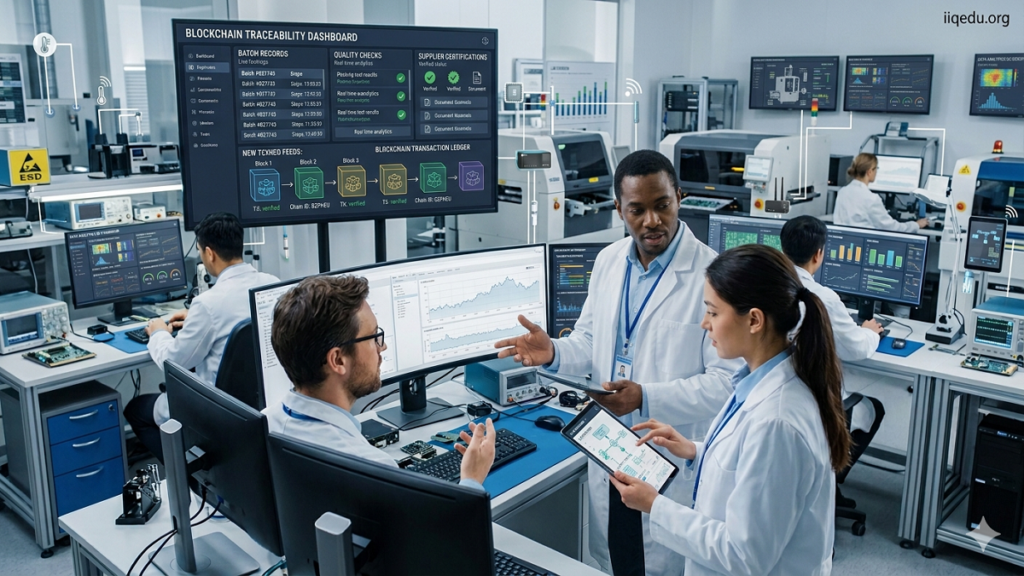
- Integrating with IoT sensors and ERP systems for automated, real-time updates.
4. Industry Applications
- Pharmaceuticals: Track batch quality, regulatory compliance, and recalls.
- Food & Beverage: Monitor production, safety, and ingredient traceability.
- Automotive: Verify component authenticity and assembly quality.
- Electronics: Ensure traceable inspections and component testing.
- Luxury Goods: Prevent counterfeit products and maintain product authenticity.
5. Key Takeaways
Blockchain in QA Traceability ensures end-to-end transparency, accountability, and compliance. It reduces errors, strengthens supply chain trust, and enables faster response to quality issues.
Who is Blockchain in QA Traceability required?
Blockchain in QA Traceability is required by organizations and stakeholders responsible for ensuring product quality, supply chain transparency, and regulatory compliance. Specifically:
1. Quality Assurance (QA) Teams
- QA managers and inspectors use blockchain to record and verify quality checks, approvals, and certifications at every production stage.
2. Production & Operations Teams
- Operations staff leverage blockchain to track batch production, monitor process compliance, and ensure accurate record-keeping.
3. Supply Chain & Procurement Managers
- Track raw materials, components, and supplier performance to ensure upstream quality and accountability.
4. Regulatory & Compliance Officers
- Use blockchain to maintain tamper-proof records for audits, certifications, and adherence to industry standards.
5. Senior Management & Executives
- Leverage traceable blockchain data for strategic decision-making, risk management, and process optimization.
6. Customers & End-Users
- In industries like pharmaceuticals, food, and luxury goods, blockchain allows verification of product authenticity and quality history, enhancing trust.
In short:
Blockchain in QA Traceability is required by QA teams, production and supply chain managers, compliance officers, executives, and customers to ensure transparent, tamper-proof records, maintain high-quality standards, and achieve regulatory compliance.
When is Blockchain in QA Traceability required?
Blockchain in QA Traceability is required whenever organizations need secure, transparent, and verifiable records of product quality and supply chain activities. Key situations include:
1. During Production and Quality Checks
- To record inspections, approvals, and test results at every stage of manufacturing, ensuring tamper-proof traceability.
2. When Sourcing Materials or Components
- To verify supplier quality, authenticity, and compliance for raw materials and parts before production.
3. During Regulatory Compliance and Audits
- To maintain immutable records required for audits, certifications, and adherence to industry standards.
4. For Product Recalls or Quality Issues
- Enables quick identification of affected batches and traceability back to the source, reducing risk and response time.
5. When Ensuring Customer Trust and Authenticity
- In industries like pharmaceuticals, food, or luxury goods, blockchain ensures end-to-end product traceability, allowing customers to verify quality and authenticity.
In short:
Blockchain in QA Traceability is required during production, supplier verification, regulatory audits, recall management, and customer assurance processes, providing secure, transparent, and tamper-proof quality records across the entire supply chain.
Where is Blockchain in QA Traceability required?
Blockchain in QA Traceability is required wherever product quality, supply chain transparency, and regulatory compliance are critical. Specifically:
1. Manufacturing & Production Facilities
- To track product quality, inspections, and approvals throughout assembly lines and production stages.
2. Supply Chain & Procurement Networks
- In warehouses, supplier sites, and logistics centers to verify raw materials, component sourcing, and supplier performance.
3. Pharmaceuticals & Healthcare Production
- In labs, packaging, and distribution to ensure batch quality, regulatory compliance, and patient safety.
4. Food & Beverage Industry
- Across processing, packaging, and distribution to monitor safety, ingredient traceability, and compliance.
5. Automotive & Electronics Facilities
- In assembly, testing, and quality inspection areas to track components, maintain audit trails, and ensure product authenticity.
6. Luxury Goods & High-Value Products
- To prevent counterfeit products, verify authenticity, and maintain end-to-end traceability.
In short:
Blockchain in QA Traceability is required in manufacturing plants, supply chains, pharmaceuticals, food production, automotive and electronics facilities, and luxury goods sectors. It ensures transparent, tamper-proof, and verifiable quality records throughout the entire product lifecycle.
How is Blockchain in QA Traceability required?
Blockchain in QA Traceability is required by implementing a secure, transparent, and tamper-proof system to track and verify every step of the product lifecycle. Here’s how it is applied:
1. Recording QA and Inspection Data
- Each quality check, test result, and approval is logged on the blockchain.
- Ensures data is immutable, verifiable, and auditable at any stage.
2. Tracking Supply Chain and Supplier Information
- Blockchain captures raw material sources, component quality, and supplier certifications.
- Provides end-to-end traceability from supplier to final product delivery.
3. Integrating IoT and Production Systems
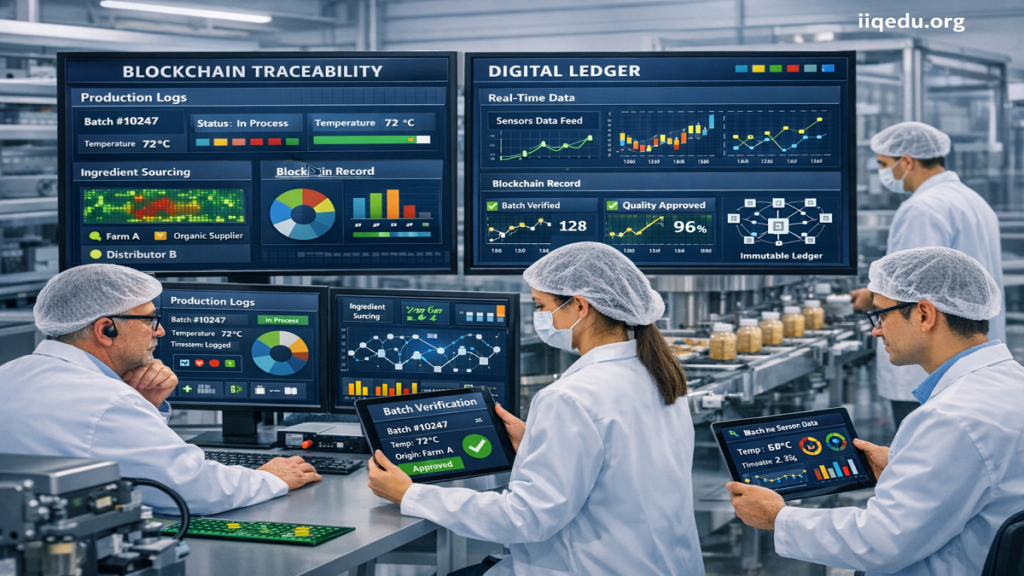
- Sensor data, production machine outputs, and automated QA results are recorded in real time.
- Enables instant visibility into production quality and reduces human errors.
4. Ensuring Compliance and Audit Readiness
- Immutable blockchain records simplify regulatory compliance, audits, and certification reporting.
- Reduces risks of falsified or missing quality data.
5. Enabling Faster Recalls and Quality Issue Resolution
- In case of defects, blockchain allows quick identification of affected batches.
- Streamlines recall processes and corrective actions.
6. Enhancing Transparency and Stakeholder Trust
- QA teams, managers, suppliers, and customers can access verified, transparent records.
- Builds trust across the supply chain and ensures accountability.
In short:
Blockchain in QA Traceability is required to record and secure QA data, track supply chain and production processes, ensure compliance, enable fast corrective actions, and provide transparent, tamper-proof information. It helps organizations maintain consistent quality, accountability, and trust throughout the product lifecycle.
Case Study of Blockchain in QA Traceability
Background
A global pharmaceutical company faced challenges with ensuring consistent product quality, maintaining regulatory compliance, and tracking raw materials across multiple suppliers. Traditional QA systems relied on manual documentation, spreadsheets, and siloed databases, which were prone to errors, delays, and data tampering. To address these challenges, the company implemented blockchain-based QA traceability.
Step 1: Blockchain Integration
- Deployed a permissioned blockchain network to log every QA activity across the production and supply chain.
- Integrated blockchain with IoT-enabled sensors, production machines, and ERP systems to automate data collection.
- Suppliers were onboarded to log raw material sourcing, certifications, and inspection reports directly on the blockchain.
Step 2: Real-Time Tracking and Quality Assurance
- QA teams could monitor batch quality in real time, with all inspection results and approvals securely recorded.
- Managers had access to immutable dashboards showing product history, supplier performance, and compliance metrics.
Step 3: Regulatory Compliance and Audit Readiness
- Blockchain ensured tamper-proof records for regulatory audits, simplifying documentation and verification processes.
- Reduced time and resources spent on manual reporting and data reconciliation.
Step 4: Rapid Issue Detection and Recall Management
- When a defective batch was detected, the blockchain system allowed instant identification of affected batches and suppliers.
- Enabled faster corrective actions and recalls, minimizing risk to patients and protecting brand reputation.
Results
- 100% traceability across the supply chain and production processes.
- Significant reduction in QA errors due to automated, immutable record-keeping.
- Faster compliance reporting, reducing audit preparation time by 40%.
- Improved trust with regulators, suppliers, and customers due to transparent data.
Key Takeaways
Enables rapid response to quality issues, protecting both customers and brand integrity.
Blockchain ensures end-to-end QA traceability.
Real-time data and immutable records enhance compliance and accountability.
White Paper of Blockchain in QA Traceability
1. Executive Summary
Blockchain technology is revolutionizing Quality Assurance (QA) traceability by providing a secure, transparent, and tamper-proof system for recording every step of the product lifecycle. By integrating blockchain with production systems, IoT devices, and supply chain data, organizations can ensure end-to-end traceability, regulatory compliance, and operational efficiency. This white paper explores the benefits, implementation strategies, industry applications, and best practices for blockchain in QA traceability.
2. Introduction
Traditional QA traceability relies on manual records, spreadsheets, and siloed databases, which are often error-prone and difficult to audit. Blockchain provides an immutable digital ledger, enabling companies to record quality checks, supplier data, batch information, and compliance documents securely and transparently. This ensures that all stakeholders—including QA teams, operations, suppliers, regulators, and customers—have access to verified, trustworthy information.
3. Key Benefits
- End-to-End Traceability: Every step of production and supply chain is recorded and verifiable.
- Immutable Records: Prevents tampering, ensuring data integrity.
- Regulatory Compliance: Simplifies audits and certifications.
- Faster Recall Management: Quickly identify affected batches in case of defects.
- Supplier Accountability: Track raw material and component quality across the supply chain.
- Enhanced Customer Trust: Transparent data enables verification of product authenticity.
4. Implementation Strategies
- Deploy a permissioned blockchain network for QA and supply chain data.
- Integrate with IoT devices, ERP, and production systems to automate data collection.
- Record QA checks, test results, approvals, and supplier certifications on the blockchain.
- Provide dashboards for real-time monitoring and reporting.
- Ensure compliance with industry regulations and standards.
5. Industry Applications
- Pharmaceuticals: Track batch quality, certifications, and recalls.
- Food & Beverage: Monitor production, ingredients, and safety compliance.
- Automotive & Electronics: Verify component authenticity and assembly quality.
- Luxury Goods: Prevent counterfeiting and maintain product traceability.
6. Best Practices
- Align blockchain initiatives with QA objectives and business goals.
- Onboard suppliers and partners to ensure consistent data entry.
- Use smart contracts for automated QA approvals and alerts.
- Continuously monitor and update blockchain protocols for evolving regulations.
7. Conclusion
Blockchain in QA Traceability ensures transparent, tamper-proof, and reliable quality records across the product lifecycle. By providing end-to-end traceability, improving regulatory compliance, and enabling rapid corrective actions, organizations gain trust, operational efficiency, and competitive advantage in quality management.
Industry Appliaction of Blockchain in QA Traceability
Blockchain in QA Traceability is being adopted across industries to ensure end-to-end transparency, tamper-proof records, and regulatory compliance. By providing an immutable ledger of quality checks, supplier data, and production steps, blockchain helps organizations maintain high-quality standards and trust across the supply chain.
1. Pharmaceuticals & Healthcare
- Application: Track batch quality, production processes, and regulatory certifications.
- Impact: Ensures compliance with FDA and EMA regulations, reduces counterfeit drugs, and enables faster recall management.
2. Food & Beverage Industry
- Application: Record ingredient sourcing, processing, packaging, and safety inspections on blockchain.
- Impact: Maintains food safety standards, improves traceability in case of contamination, and enhances consumer trust.
3. Automotive Industry
- Application: Track components, assembly processes, and supplier quality records.
- Impact: Ensures component authenticity, reduces defective parts, and provides audit-ready QA records.
4. Electronics & High-Value Manufacturing
- Application: Monitor component quality, testing results, and final product inspections.
- Impact: Improves reliability, reduces errors, and prevents counterfeit components.
5. Luxury Goods & Fashion
- Application: Authenticate raw materials and finished products, maintaining a blockchain record of origin and production.
- Impact: Prevents counterfeiting, enhances brand integrity, and builds customer confidence.
6. Supply Chain Management Across Industries
- Application: Integrate supplier data, shipment logs, and quality certifications on a shared blockchain ledger.
- Impact: Provides full supply chain visibility, ensures accountability, and enables proactive quality control.
In short:
Blockchain in QA Traceability is applied across pharmaceuticals, food & beverage, automotive, electronics, luxury goods, and supply chains. It enables organizations to ensure product quality, maintain compliance, prevent counterfeiting, and build trust through a secure, transparent, and immutable QA record system.
#bestinstituteintheworld #bestinstituteinmumbai #bestinstituteinchennai #bestinstituteinkarnataka #bestinstituteinjaipur #bestinstituteinraipur #bestinstituteinmaharashtra #bestinstituteinvasai #bestinstituteinkochi #bestinstituteinratnagiri #bestinstituteinkanpur #blockchaininqatracebilityinmumbai #blockchaininqatracebilityinrajstan #bestinstituteintheworld #bestinstituteinmumbai #bestinstituteinchennai #bestinstituteinkarnataka #bestinstituteinjaipur #bestinstituteinraipur #bestinstituteinmaharashtra #bestinstituteinvasai #bestinstituteinkochi #bestinstituteinratnagiri #bestinstituteinkanpur #blockchaininqatracebilityinmumbai #blockchaininqatracebilityinrajstan
Ask FAQs
What are the benefits of blockchain in QA Traceability?
Benefits include end-to-end traceability, immutable records, faster recall management, supplier accountability, enhanced regulatory compliance, and improved customer trust.
Can blockchain help with product recalls?
Yes. Blockchain allows quick identification of affected batches, tracing defects back to suppliers or production lines, reducing response time and mitigating risks.
How does blockchain improve supplier accountability?
Suppliers log raw material data, certifications, and inspections on the blockchain. Any discrepancies or quality issues are immediately traceable to the responsible party.
Which industries benefit most from blockchain in QA Traceability?
Which inIndustries such as pharmaceuticals, food & beverage, automotive, electronics, aerospace, and luxury goods benefit by ensuring quality, compliance, and trust across the supply chain.
How does blockchain enhance regulatory compliance?
Blockchain provides immutable, verifiable records of QA checks, batch data, and supplier certifications, simplifying audits and ensuring adherence to industry standards.
Source: HashCash Consultants
Table of Contents
Disclaimer:
The information provided on Blockchain in QA Traceability is for general informational purposes only. Results and benefits may vary by organization, industry, and implementation. This content does not constitute professional, legal, or regulatory advice.