Brexit & Quality Certification
What is Brexit & Quality Certification?
Brexit & Quality Certification refers to the impact of the United Kingdom’s exit from the European Union (Brexit) on product and service quality certifications, regulatory compliance, and standards recognition between the UK, EU, and international markets. It covers changes in certification processes, conformity assessments, and legal requirements for products exported or imported between the UK and EU post-Brexit.
This topic is critical for businesses, manufacturers, and service providers that trade across borders, as compliance with updated certification rules ensures continued market access, legal adherence, and consumer safety.
Detailed Explanation
The UK’s departure from the EU on January 31, 2020, brought significant changes to quality certification and regulatory frameworks. Companies that previously relied on EU-recognized certifications now face new requirements to demonstrate compliance with UK-specific standards. Key considerations include:
1. Regulatory Divergence
- UK and EU regulatory frameworks are no longer automatically aligned.
- Products may require separate UK Conformity Assessed (UKCA) marking in addition to EU CE marking for sale in both markets.
- Regulatory divergence impacts industries such as electronics, pharmaceuticals, medical devices, construction, and food.
2. Certification Bodies
- EU-recognized Notified Bodies no longer automatically validate UK market products.
- UK-based Approved Bodies issue certifications recognized in the UK but may not be accepted in the EU.
- Companies trading internationally must navigate both systems for compliance.
3. Supply Chain and Market Access
- Brexit requires businesses to review supply chains, import/export documentation, and product labeling.
- Ensures products meet quality standards in both the UK and EU markets.
- Non-compliance risks market delays, fines, or loss of trading privileges.
4. Documentation and Testing
- Product technical files, testing records, and certification documents may need updates or duplication to satisfy UK and EU regulators.
- Continuous monitoring of regulatory changes is necessary to maintain valid certifications.
5. Impact on Businesses
- Companies must implement dual compliance strategies for UK and EU markets.
- Increased administrative costs and operational complexity may occur.
- Proactive planning, risk assessment, and quality management integration are essential.
Importance of Brexit & Quality Certification
- Market Access: Ensures continued trade between the UK, EU, and global markets.
- Regulatory Compliance: Avoids fines, product recalls, or legal penalties.
- Consumer Safety: Maintains product reliability and safety standards.
- Operational Continuity: Prevents delays in supply chains and ensures uninterrupted business operations.
- Strategic Planning: Helps companies adapt to changing regulations and maintain competitiveness.
Industry Applications
- Pharmaceuticals & Healthcare: UKCA marking required for medical devices and pharmaceuticals; separate EU CE certifications for EU sales.
- Electronics & Machinery: Products require dual conformity marking for UK and EU markets.
- Construction & Building Materials: Regulatory approvals and quality assessments may differ between UK and EU regions.
- Food & Beverage: Certifications for safety, hygiene, and labeling need to comply with both UK and EU regulations.
- Automotive: Vehicle components and safety systems must meet separate UK and EU quality certifications post-Brexit.
Conclusion
Brexit & Quality Certification represents a significant shift in regulatory compliance and quality assurance for businesses operating between the UK and EU. Organizations must adapt to dual certification systems, updated regulatory frameworks, and separate conformity assessments to maintain market access, legal compliance, and consumer trust.
By integrating proactive quality management strategies, risk assessments, and documentation practices, businesses can navigate post-Brexit challenges efficiently while ensuring high standards and operational continuity.
#Brexit & Quality Certification in Jharkhand

Who is Brexit & Quality Certification required?
Brexit & Quality Certification is required by any organization that manufactures, imports, or exports products and services between the United Kingdom and the European Union, or operates in sectors subject to regulatory standards impacted by Brexit. This includes companies that need to demonstrate product conformity, safety, and compliance under both UKCA (UK Conformity Assessed) and EU CE marking frameworks.
1. Manufacturers and Producers
- Companies producing goods for both UK and EU markets require dual certification.
- Applies to industries such as electronics, machinery, pharmaceuticals, medical devices, automotive components, and building materials.
- Ensures products meet quality, safety, and regulatory standards in both regions.
2. Importers and Exporters
- Businesses importing products into the UK or EU must ensure that goods have the correct certifications.
- Requires proper documentation and labeling to comply with UKCA or CE marking requirements.
- Helps prevent customs delays, fines, or rejection of shipments at the border.
3. Distributors and Retailers
- Retailers selling products in either the UK or EU markets must verify that suppliers provide valid certifications.
- Ensures compliance with regulatory authorities and protects consumer safety.
4. Regulated Industry Sectors
- Pharmaceuticals & Healthcare: Medical devices and drugs require certifications for legal sale in both markets.
- Food & Beverage: Safety, hygiene, and labeling standards must comply with UK and EU regulations.
- Automotive & Engineering: Vehicles and machinery must meet dual conformity requirements.
- Electronics & Technology: Electrical and electronic products must carry the correct marks to ensure market access.
5. Certification and Testing Bodies
- Approved certification bodies in the UK issue UKCA marks, while EU Notified Bodies issue CE certifications.
- These organizations are required to verify compliance for products and provide documentation for market access.
Conclusion
Brexit & Quality Certification is required by any organization involved in production, distribution, import, export, or sale of regulated products between the UK and EU. Companies must ensure compliance with dual regulatory frameworks (UKCA and CE marking) to maintain market access, meet safety standards, and avoid legal or operational penalties.
#Brexit & Quality Certification in Vasai
When is Brexit & Quality Certification required?
Brexit & Quality Certification is required whenever a product or service crosses regulatory boundaries between the United Kingdom and the European Union, or when a company operates in sectors affected by post-Brexit compliance requirements. It ensures that products meet both UK-specific and EU standards, preventing legal issues, supply chain disruptions, and market access problems.
1. Before Market Entry in the UK
- Products imported into or sold in the UK after Brexit must carry the UKCA (UK Conformity Assessed) marking.
- Ensures compliance with UK safety, quality, and environmental regulations.
- Required for industries such as electronics, machinery, medical devices, construction materials, and chemicals.
2. Before Market Entry in the EU
- Products exported from the UK to EU countries must comply with CE marking requirements.
- Demonstrates conformity with EU regulatory standards and safety protocols.
- Necessary for pharmaceuticals, automotive parts, food products, electronics, and other regulated goods.
3. During Product Manufacturing and Design
- Companies must ensure dual compliance early in the product lifecycle to avoid redesigns or re-testing.
- Required when materials, components, or finished products are intended for both UK and EU markets.
4. When Updating or Modifying Products
- Any changes to a product’s design, composition, or manufacturing process may require re-certification under both UK and EU standards.
- Ensures ongoing compliance and prevents regulatory breaches.
5. During Import, Export, or Supply Chain Operations
- Brexit requires correct documentation, labeling, and certification for cross-border movement of goods.
- Required when shipping products internationally to ensure smooth customs clearance and regulatory adherence.
6. For Ongoing Regulatory Compliance
- Certifications must be maintained and renewed as regulations evolve in the UK and EU.
- Continuous monitoring of quality standards, technical documentation, and compliance records is essential.
Conclusion
Brexit & Quality Certification is required at every stage where products are manufactured, modified, imported, exported, or sold across the UK and EU markets. Businesses must proactively obtain and maintain UKCA and CE certifications to ensure regulatory compliance, safeguard consumer safety, and maintain uninterrupted market access.
#Brexit & Quality Certification in Maharashtra
Where is Brexit & Quality Certification required?
Brexit & Quality Certification is required in any location, facility, or point in the supply chain where products or services are manufactured, handled, or sold between the United Kingdom and the European Union, or where regulated goods must comply with post-Brexit standards. Ensuring compliance in these areas is critical for market access, legal adherence, and product safety.
1. Manufacturing Facilities
- Factories and production sites in the UK or EU producing goods for cross-border trade must comply with relevant certification standards.
- Includes electronics, machinery, automotive parts, pharmaceuticals, medical devices, and construction materials.
- Ensures that products are manufactured according to both UKCA and CE standards before market entry.
2. Research and Development (R&D) Centers
- Product design, prototyping, and testing locations require certifications to ensure that all future products meet UK and EU standards.
- Prevents costly redesigns or re-testing due to non-compliance.
3. Distribution Centers and Warehouses
- Storage and logistics hubs must verify that incoming and outgoing products have proper certifications and documentation.
- Required to maintain traceability and compliance in cross-border trade.
4. Retail and Service Locations
- Retailers selling products in the UK or EU markets must ensure suppliers provide valid UKCA or CE-certified products.
- Ensures consumer safety and regulatory adherence at the point of sale.
5. Import and Export Points
- Ports, customs checkpoints, and freight handling centers require certification verification for products moving between the UK and EU.
- Ensures that goods meet local and international regulatory standards, avoiding customs delays or legal penalties.
6. Certification and Testing Bodies
- Approved UK certification bodies issue UKCA marks, while EU Notified Bodies issue CE certifications.
- These organizations are essential locations for testing, auditing, and verifying compliance for both markets.
Conclusion
Brexit & Quality Certification is required across all points in the supply chain, from manufacturing and R&D to storage, distribution, retail, and import/export operations. Ensuring compliance in each of these locations allows businesses to maintain legal market access, prevent product recalls, and uphold consumer safety standards in both the UK and EU.
How is Brexit & Quality Certification required?
Brexit & Quality Certification is implemented through structured processes, regulatory compliance checks, and documentation to ensure that products meet both UKCA (UK Conformity Assessed) and CE marking requirements. Businesses must adopt proactive strategies to align their manufacturing, testing, labeling, and distribution processes with post-Brexit standards.
#Brexit & Quality Certification in Banglore
1. Understanding Regulatory Requirements
- Identify whether products require UKCA marking for the UK market, CE marking for the EU market, or both.
- Determine which regulations, standards, and conformity assessment procedures apply to the specific industry, such as electronics, medical devices, pharmaceuticals, automotive, or food.
- Continuously monitor updates in UK and EU regulations to maintain compliance.
2. Product Testing and Certification
- Conduct technical testing and evaluations to meet safety, quality, and environmental standards required by both UK and EU authorities.
- Obtain certifications from UK Approved Bodies for UKCA marking and EU Notified Bodies for CE marking.
- Maintain detailed technical documentation and compliance records for audits and inspections.
3. Dual Compliance Strategy
- Implement a dual certification approach for products intended for both markets.
- Align manufacturing processes, labeling, and documentation to satisfy both regulatory frameworks.
- Ensure that supply chains, including imported components, meet the standards of both the UK and EU.
4. Labeling and Documentation
- Update product labeling, manuals, and packaging to include UKCA and CE markings where required.
- Maintain compliance certificates, technical files, risk assessments, and testing reports.
- Ensure that all documentation is accurate, accessible, and up-to-date for inspection by regulatory authorities.
5. Employee Training and Internal Audits
- Train staff in quality assurance, regulatory compliance, and post-Brexit certification requirements.
- Conduct regular internal audits to verify ongoing compliance with UK and EU standards.
- Address any non-compliance promptly with corrective and preventive actions.
6. Supply Chain Compliance
- Verify that suppliers provide components and materials that meet both UK and EU standards.
- Conduct supplier audits, certifications, and quality checks to prevent non-compliant materials from entering production.
7. Continuous Monitoring and Updates
- Use compliance management software and digital dashboards to track certification status, regulatory changes, and audit results.
- Maintain a proactive approach to identify potential compliance risks before they affect market access.
Conclusion
Brexit & Quality Certification is implemented through a combination of regulatory assessment, product testing, dual compliance strategies, documentation, employee training, and supply chain verification. By embedding these practices into daily operations, businesses can ensure legal market access, maintain product safety, and uphold international standards in both the UK and EU post-Brexit.
#Brexit & Quality Certification in Delhi
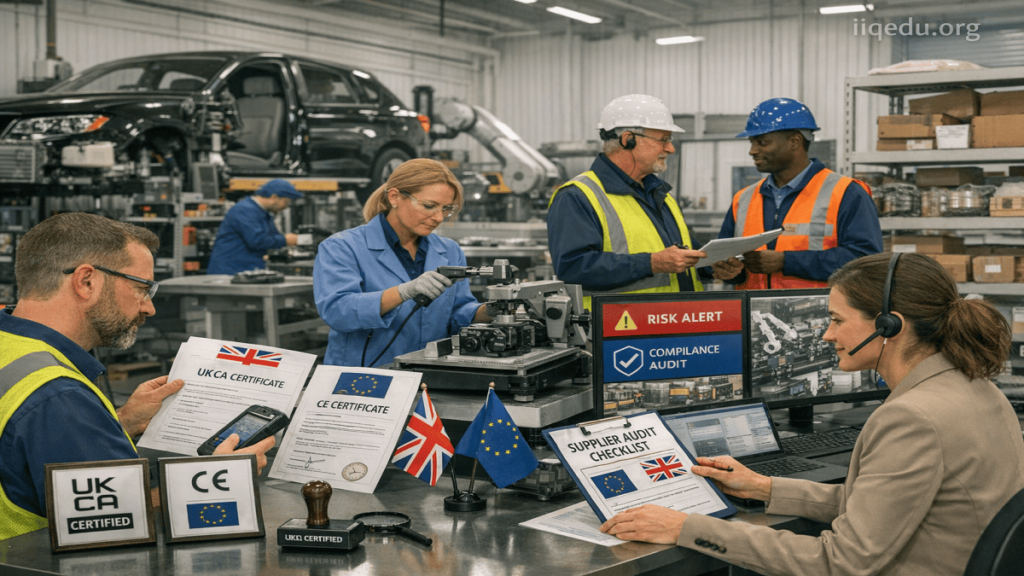
Case Study of Brexit & Quality Certification
1. Background
EuroAuto Ltd., a UK-based automotive component manufacturer, supplies critical parts to car manufacturers across both the United Kingdom and the European Union. Prior to Brexit, EuroAuto relied on EU CE certifications for all products, which were automatically recognized across EU markets, including Northern Ireland under the EU’s single market rules.
After Brexit, new regulations required the company to obtain UKCA marking for products sold in Great Britain while maintaining CE marking for EU exports. This dual compliance created operational, administrative, and logistical challenges.
2. Problem Statement
- EuroAuto’s products needed dual certifications to maintain access to UK and EU markets.
- Existing CE certifications were no longer valid for the UK post-Brexit.
- Supply chains and manufacturing processes were designed for a single certification workflow.
- Risk of delayed shipments, customs issues, and potential non-compliance fines.
The company needed a solution to ensure uninterrupted market access and maintain compliance with both UK and EU quality standards.
3. Objectives
- Achieve UKCA certification for products sold in Great Britain.
- Maintain CE certification for EU exports.
- Standardize manufacturing processes to meet dual regulatory requirements.
- Implement supply chain verification to ensure compliance of components.
- Minimize operational disruptions and administrative overhead.
4. Approach and Implementation
a. Regulatory Assessment
- Conducted a detailed review of UKCA requirements and differences from CE marking.
- Identified products and production lines that required dual certification.
b. Product Testing and Documentation
- Updated technical files and risk assessments to meet UKCA standards.
- Performed additional safety and quality testing as required by UK regulatory authorities.
- Maintained separate documentation for CE certification to satisfy EU regulators.
c. Process Standardization
- Aligned manufacturing and quality control processes to satisfy both UKCA and CE requirements.
- Implemented SOPs for labeling, packaging, and documentation.
d. Supply Chain Management
- Audited suppliers to ensure all components met UK and EU standards.
- Verified that incoming materials carried proper documentation for both certification schemes.
e. Training and Audits
- Trained staff in UKCA compliance processes, documentation standards, and dual certification procedures.
- Conducted internal audits to identify potential gaps and ensure ongoing compliance.
5. Challenges
- Increased administrative workload to manage dual certifications.
- Additional testing and documentation requirements for UKCA compliance.
- Supply chain adjustments to ensure all components met both UK and EU standards.
- Need for continuous monitoring of evolving post-Brexit regulations.
6. Outcomes
- Successfully obtained UKCA certification for all products sold in Great Britain.
- Maintained CE certification for exports to the EU, ensuring uninterrupted market access.
- Streamlined processes for dual compliance reduced delays and minimized risk.
- Improved supplier accountability and documentation transparency.
- Enhanced overall risk management and operational resilience in a post-Brexit regulatory environment.
7. Key Learnings
- Proactive planning is essential to manage regulatory divergence between the UK and EU.
- Dual certification strategies help businesses maintain uninterrupted market access.
- Supply chain verification and standardized internal processes are critical for compliance.
- Continuous monitoring and staff training mitigate the risk of non-compliance in dynamic regulatory environments.
8. Conclusion
The EuroAuto Ltd. case highlights the critical importance of Brexit & Quality Certification for organizations operating across UK and EU markets. By implementing dual certification, updating documentation, standardizing processes, and verifying suppliers, the company successfully navigated post-Brexit regulatory challenges.
This case demonstrates that businesses must adopt proactive compliance strategies, robust quality management, and dual certification workflows to ensure operational continuity, regulatory adherence, and market competitiveness in a post-Brexit environment.
#Brexit & Quality Certification in Patna
White Paper of Brexit & Quality Certification
1. Executive Summary
The United Kingdom’s departure from the European Union, known as Brexit, has fundamentally changed the landscape of quality certification and regulatory compliance for businesses operating between the UK and EU. Companies that previously relied on EU CE marking now face additional requirements to obtain UKCA (UK Conformity Assessed) marking for the UK market.
This white paper examines the impact of Brexit on quality certification, outlines best practices for compliance, explores industry implications, and provides guidance on implementing dual certification strategies to ensure market access, regulatory adherence, and operational continuity.
2. Introduction
Brexit has created a divergence in regulatory frameworks between the UK and EU. Businesses that manufacture, import, or export regulated products must now navigate two separate certification systems to continue trading without interruption.
Brexit & Quality Certification ensures that products meet:
- UKCA standards for the UK
- CE marking requirements for the EU
- Safety, quality, and environmental regulations applicable to specific industries
The white paper highlights the challenges, solutions, and strategic approaches businesses must adopt to comply with dual regulatory frameworks.
3. Objectives
The primary objectives of Brexit & Quality Certification are:
- Ensure Market Access: Maintain the ability to sell products legally in both UK and EU markets.
- Regulatory Compliance: Avoid fines, recalls, and legal issues by adhering to new certification requirements.
- Operational Continuity: Minimize disruptions in supply chains and production processes.
- Consumer Safety: Maintain product safety, quality, and reliability across borders.
- Strategic Adaptation: Develop proactive strategies to address regulatory divergence post-Brexit.
4. Key Components
4.1 Dual Certification
- Products intended for both UK and EU markets require UKCA and CE marking.
- Separate certification bodies may be involved: UK Approved Bodies for UKCA, EU Notified Bodies for CE.
4.2 Product Testing and Documentation
- Technical files, risk assessments, and safety evaluations must meet both UK and EU standards.
- Documentation must be updated, accurate, and accessible for regulatory audits.
4.3 Supply Chain Compliance
- Suppliers must provide components and materials that meet both regulatory standards.
- Supplier audits and verification processes are essential for maintaining compliance.
4.4 Labeling and Packaging
- Products must include correct markings, instructions, and safety information for the target market.
- Packaging may require dual compliance labeling if sold in both regions.
4.5 Staff Training and Awareness
- Employees must understand new UK and EU certification requirements.
- Training programs ensure proper implementation of dual compliance processes.
4.6 Audits and Continuous Monitoring
- Regular internal and external audits verify adherence to UKCA and CE standards.
- Continuous monitoring ensures compliance with evolving post-Brexit regulations.
5. Implementation Framework
- Regulatory Assessment: Identify products affected and determine applicable UKCA and CE requirements.
- Technical Evaluation: Conduct testing and risk assessments for dual compliance.
- Process Standardization: Update manufacturing, labeling, and documentation procedures.
- Supplier Verification: Ensure materials meet UK and EU standards.
- Certification & Auditing: Obtain UKCA and CE certifications and conduct ongoing audits.
- Continuous Improvement: Monitor regulatory updates and optimize processes to maintain compliance.
6. Challenges
- Increased administrative workload due to dual certification requirements
- Additional costs for testing, documentation, and supply chain verification
- Risk of non-compliance if regulations change or are misinterpreted
- Supply chain disruptions and delays in market access
- Need for ongoing employee training and process updates
7. Best Practices
- Implement a proactive dual certification strategy for all regulated products
- Maintain detailed technical files and documentation for audits
- Conduct supplier audits and verification to ensure materials meet both standards
- Train employees regularly on UKCA and CE requirements
- Use digital tools to monitor certification status, regulatory changes, and risk alerts
8. Industry Applications
- Automotive & Engineering: UKCA and CE marking required for vehicle components, machinery, and safety-critical parts.
- Pharmaceuticals & Medical Devices: Dual certification ensures legal market access and patient safety.
- Electronics & Technology: Compliance with electrical safety, performance, and environmental standards.
- Food & Beverage: Safety, hygiene, and labeling certifications for both markets.
- Construction & Building Materials: Products must meet both UK and EU structural, safety, and environmental standards.
9. Future Trends
- Regulatory Divergence Monitoring: Businesses will need tools to track changes in UK and EU standards.
- Digital Compliance Management: Software solutions for dual certification, audits, and documentation.
- Supply Chain Transparency: Increased focus on supplier compliance and traceability.
- Proactive Risk Management: Anticipating regulatory changes to prevent market disruptions.
- Global Adaptation: Lessons from Brexit compliance influencing strategies for other regional regulatory changes.
10. Conclusion
Brexit & Quality Certification represents a critical challenge and opportunity for businesses trading between the UK and EU. Organizations must adopt dual certification strategies, robust quality management, supply chain verification, and continuous monitoring to ensure regulatory compliance, product safety, and uninterrupted market access.
By proactively integrating these measures into operations, companies can turn compliance into a strategic advantage, enhancing operational efficiency, consumer trust, and long-term competitiveness in a post-Brexit environment.
#Brexit & Quality Certification in Mumbai
Industry Application of Brexit & Quality Certification
Brexit & Quality Certification affects multiple industries that trade between the United Kingdom and the European Union, requiring businesses to obtain the correct certifications (UKCA for the UK, CE marking for the EU) to maintain market access, ensure regulatory compliance, and guarantee product safety. The following industries illustrate key applications:
1. Automotive Industry
- Application: Vehicle parts, safety-critical components, and machinery must meet UKCA standards for Great Britain and CE marking for EU exports.
- Use Case: Automotive manufacturers must re-certify braking systems, airbags, and electronic components to comply with both UK and EU regulations.
- Impact: Prevents regulatory fines, recalls, and market disruptions, ensuring vehicles remain legally compliant in both markets.
2. Pharmaceuticals & Medical Devices
- Application: Medicines, medical equipment, and devices require dual certification to comply with UK and EU regulatory authorities.
- Use Case: Medical device manufacturers must obtain UKCA marking for devices sold in the UK and CE marking for EU markets, maintaining technical documentation and safety testing.
- Impact: Ensures patient safety, uninterrupted distribution, and legal market access post-Brexit.
3. Electronics & Technology
- Application: Electrical appliances, electronic components, and IT equipment require compliance with safety, environmental, and performance standards.
- Use Case: Electronics companies update labeling, technical documentation, and testing protocols to meet UKCA and CE standards.
- Impact: Protects consumers, maintains international competitiveness, and avoids customs delays.
4. Food & Beverage Industry
- Application: Safety, hygiene, and labeling certifications must comply with both UK and EU regulations.
- Use Case: Manufacturers exporting packaged foods must include UK-compliant labeling, nutritional information, and certifications while maintaining EU compliance for cross-border trade.
- Impact: Reduces risk of regulatory penalties and ensures consumer confidence in product safety.
5. Construction & Building Materials
- Application: Construction materials, machinery, and safety equipment require dual certification for legal sale in both the UK and EU.
- Use Case: Steel, cement, electrical wiring, and safety tools undergo separate testing and certification for UKCA and CE standards.
- Impact: Ensures compliance with structural, safety, and environmental regulations, reducing risk of legal disputes and market barriers.
6. Healthcare & Laboratory Equipment
- Application: Clinical equipment, laboratory instruments, and diagnostic tools must comply with UKCA and CE marking standards.
- Use Case: Hospitals and laboratories importing devices need certified products to ensure safety and functional reliability.
- Impact: Protects patients, ensures operational continuity, and aligns with post-Brexit regulatory requirements.
7. Supply Chain and Logistics
- Application: Certification verification for imported/exported goods and supplier compliance.
- Use Case: Businesses audit suppliers and verify technical files to ensure components meet UKCA and CE standards before entering production or shipping internationally.
- Impact: Minimizes risks of non-compliant materials entering the supply chain and prevents trade delays.
Conclusion
Brexit & Quality Certification is crucial across industries that trade between the UK and EU, including automotive, pharmaceuticals, electronics, food & beverage, construction, healthcare, and logistics. Dual certification (UKCA and CE marking) ensures legal market access, product safety, and regulatory compliance.
Organizations must implement robust compliance strategies, supplier verification, and continuous monitoring to maintain operational continuity, avoid legal risks, and preserve consumer trust in a post-Brexit business environment.
#Brexit & Quality Certification in India
Ask FAQs
What is Brexit & Quality Certification?
Brexit & Quality Certification refers to the changes in product and service certification requirements following the United Kingdom’s exit from the European Union. It ensures that goods comply with UKCA marking for the UK and CE marking for the EU, maintaining regulatory compliance, product safety, and market access.
Who requires Brexit & Quality Certification?
Businesses that manufacture, import, export, or sell products between the UK and EU require Brexit & Quality Certification. This includes industries such as automotive, pharmaceuticals, medical devices, electronics, food & beverage, and construction, as well as distributors and suppliers involved in cross-border trade.
When is Brexit & Quality Certification required?
Certification is required whenever products are manufactured, imported, exported, or modified for sale in the UK or EU. It is also necessary when regulatory updates occur, product designs change, or new materials are introduced that affect safety, performance, or compliance.
Where is Brexit & Quality Certification applied?
Certification is required at multiple points in the supply chain, including manufacturing facilities, R&D centers, distribution centers, retail locations, and import/export checkpoints. Certification bodies in the UK and EU also play a critical role in verifying compliance.
How is Brexit & Quality Certification implemented?
Implementation involves:
Conducting regulatory assessments for UKCA and CE marking requirements
Updating technical documentation and performing product testing
Aligning manufacturing, labeling, and packaging processes for dual compliance
Verifying supplier materials meet regulatory standards
Training employees and conducting audits for continuous monitoring and compliance
Source: explainitychannel
Table of Contents
Desclaimer:
This content is intended for informational and educational purposes only. It does not constitute legal, regulatory, or professional advice. Organizations should consult qualified experts and follow applicable UK and EU regulations before implementing Brexit & Quality Certification processes.