Circular Economy Standards
Circular economy standards are frameworks and guidelines designed to promote a sustainable economic system where resources are reused, recycled, and regenerated rather than discarded. They aim to minimize waste, extend product life cycles, and reduce environmental impact.
Key Concept
The Circular Economy focuses on creating a closed-loop system in which materials and products remain in use for as long as possible through reuse, repair, remanufacturing, and recycling.
Core Principles
- Reduce: Minimize resource use and waste generation
- Reuse: Extend product life through repeated use
- Recycle: Convert waste into new materials
- Recover: Extract energy or value from waste
Standards and Frameworks
Circular economy practices are guided by international standards and organizations such as:
- International Organization for Standardization (ISO standards on sustainability and waste management)
- Ellen MacArthur Foundation (global leadership and frameworks)
Applications
- Product design for durability and recyclability
- Waste management and recycling systems
- Sustainable supply chains
- Industrial symbiosis (sharing resources between industries)
Importance
Circular economy help reduce environmental pollution, conserve natural resources, and support sustainable economic growth by shifting from a “take-make-dispose” model to a regenerative system.
#Circular Economy Standards in Surat
What is Circular Economy Standards?
Circular economy are guidelines, frameworks, and best practices that help organizations design and operate systems where resources are reused, recycled, and regenerated instead of being wasted. They support a shift from the traditional “take–make–dispose” model to a more sustainable approach.
Key Concept
The Circular Economy focuses on keeping materials and products in use for as long as possible by promoting reuse, repair, remanufacturing, and recycling.
In Simple Terms
Circular economy provide rules and methods to:
- Reduce waste generation
- Use resources efficiently
- Extend product life cycles
- Promote sustainability in production and consumption
Conclusion
In essence, circular economy standards guide businesses and societies to minimize waste and maximize resource value, contributing to environmental protection and long-term economic sustainability.
#Circular Economy Standards in Maharashtra
Who is Circular Economy Standards required?
Circular economy standards are required by a wide range of stakeholders who are involved in the production, consumption, and management of resources.
1. Industries and Manufacturers
Companies that produce goods need circular economy standards to reduce waste, improve resource efficiency, and design products for reuse and recycling.
2. Governments and Policy Makers
Governments use these standards to create regulations and policies that promote sustainability and reduce environmental impact at national and regional levels.
3. Businesses and Corporations
Organizations across sectors adopt circular practices to improve sustainability performance, reduce costs, and meet environmental compliance requirements.
4. Waste Management and Recycling Sector
These standards guide how waste is collected, processed, and converted into reusable materials, supporting the principles of the Circular Economy.
5. Consumers and Society
Individuals also play a role by adopting responsible consumption habits such as reusing, recycling, and reducing waste.
6. Environmental Organizations
Institutions and advocacy groups promote circular economy standards to protect natural resources and encourage sustainable development.
Conclusion
Circular economy standards are required by all stakeholders involved in resource use—from producers to consumers—to ensure efficient use of materials and a sustainable future.
#Circular Economy Standards in Patna
When is Circular Economy Standards required?
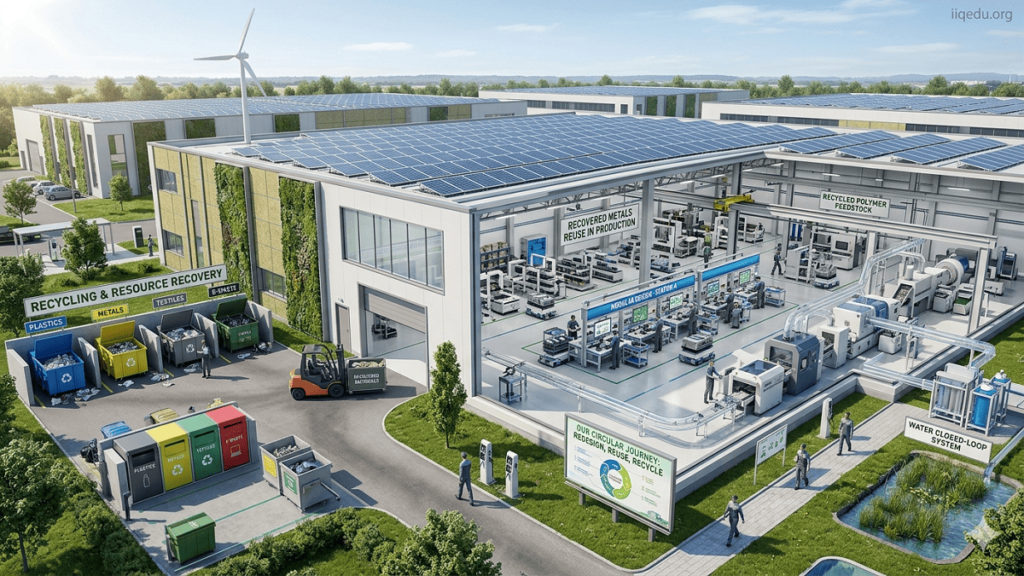
Circular economy standards are required whenever human activities involve the production, use, or disposal of materials and resources. They ensure sustainability and resource efficiency at all stages of a product’s lifecycle.
1. During Product Design
Standards are needed at the design stage to create products that are durable, repairable, and recyclable. This helps extend product life and reduce future waste.
2. During Manufacturing and Production
Applying standards in manufacturing ensures efficient use of raw materials, reduces energy consumption, and minimizes waste generation.
3. During Consumption and Use
Standards guide businesses and consumers to use products responsibly, promote reuse, and avoid unnecessary resource depletion.
4. During Waste Management and Recycling
Circular economy standards are essential for recycling, remanufacturing, and proper disposal to ensure materials are returned to the production cycle.
5. During Policy and Regulatory Implementation
Governments and regulatory bodies apply these standards when creating sustainability policies, environmental regulations, or incentives for green practices.
Conclusion
Circular economy standards are required at every stage of a product or resource lifecycle—from design to disposal—to create a sustainable, closed-loop system and reduce environmental impact.
#Circular Economy Standards in Himalaya
Where is Circular Economy Standards required?
Circular economy standards are needed wherever resources are produced, used, or managed to ensure sustainability and minimize environmental impact. Key areas include:
1. Manufacturing and Industry
- Product design, material selection, and production processes to reduce waste and improve recyclability.
- Industries such as electronics, textiles, automotive, and packaging.
2. Waste Management and Recycling
- Facilities handling collection, sorting, recycling, and remanufacturing of materials.
- Ensures proper material recovery and reduces landfill use.
3. Agriculture and Food Production
- Reducing food waste, optimizing resource use, and recycling organic waste as compost or energy.
4. Construction and Infrastructure
- Using sustainable building materials, recycling construction waste, and promoting modular or reusable structures.
5. Energy and Utilities
- Implementing renewable energy, energy recovery from waste, and sustainable resource management in utility systems.
6. Policy and Governance
- Government agencies and regulatory bodies use circular economy standards to enforce sustainability policies and environmental compliance.
#Circular Economy Standards in Uttar Pradesh
Conclusion
Circular economy standards are required across all sectors where resources are extracted, produced, consumed, or disposed of, ensuring a closed-loop system that reduces waste, conserves materials, and supports sustainable development.
Case Study of Circular Economy Standards
Background
The electronics industry is one of the largest consumers of raw materials and producers of waste globally. Rapid technological advancement and short product lifecycles result in high volumes of electronic waste (e-waste), which poses serious environmental and health risks. Implementing circular economy standards is essential to reduce waste, recover valuable materials, and promote sustainability.
Problem
- High generation of e-waste due to obsolete devices
- Low recycling and recovery rates of valuable materials like gold, copper, and rare earth metals
- Environmental pollution from improper disposal and landfill accumulation
Implementation of Circular Economy Standards
- Product Design for Circularity
- Electronics companies design products that are modular, repairable, and easier to disassemble for recycling.
- Example: Smartphones with replaceable batteries and modular components.
- Material Recovery and Recycling
- Implementation of certified recycling programs ensures that metals and plastics are recovered and reused in manufacturing new products.
- Partnerships with certified recyclers following International Organization for Standardization guidelines.
- Extended Producer Responsibility (EPR)
- Manufacturers are required to take responsibility for the end-of-life management of their products.
- Programs include take-back schemes and collection points for old electronics.
- Sustainable Supply Chains
- Companies adopt supply chain practices that minimize raw material extraction and favor recycled or refurbished components.
Outcomes
- Reduced volume of e-waste sent to landfills
- Increased reuse of materials, lowering demand for virgin resources
- Lower environmental pollution and reduced carbon footprint
- Enhanced corporate sustainability and compliance with international standards
Key Learnings
- Circular economy standards encourage innovation in product design and materials management.
- Collaboration across manufacturers, recyclers, and governments is critical for success.
- Monitoring, certification, and compliance are essential to ensure effective circular practices.
Conclusion
The electronics industry case demonstrates how circular economy standards can transform resource-intensive sectors into more sustainable systems. By integrating design, recycling, and responsibility measures, businesses can reduce environmental impact while maintaining economic viability.
#Circular Economy Standards in Vasai
White Paper of Circular Economy Standards
1. Executive Summary
Circular economy standards are critical for promoting sustainable economic systems that reduce waste, conserve resources, and minimize environmental impact. This white paper examines the principles of the circular economy, the need for standards, global frameworks, industry applications, and strategic recommendations to support sustainable development.
2. Introduction
The traditional linear economic model of “take–make–dispose” has led to resource depletion, environmental degradation, and increasing waste. A circular economy emphasizes the continuous use of resources through reuse, repair, remanufacturing, and recycling. Circular economy standards provide structured guidelines for businesses, governments, and communities to implement these principles effectively.
3. Objectives
- Define circular economy and its principles
- Explain the role of circular economy standards
- Explore global frameworks and industrial applications
- Provide recommendations for implementation and monitoring
4. Conceptual Framework
4.1 Circular Economy
Circular Economy is an economic system designed to maximize the value of materials and products while minimizing waste. Core strategies include:
- Reducing resource consumption
- Extending product lifecycles
- Recycling and reusing materials
- Recovering value from waste
4.2 Circular Economy Standards
These are formal guidelines and best practices that help organizations apply circular principles consistently. Standards focus on product design, sustainable supply chains, material recovery, and responsible disposal.
5. Global Frameworks and Organizations
- International Organization for Standardization: Provides ISO standards related to sustainability, waste management, and resource efficiency.
- Ellen MacArthur Foundation: Offers global guidance, research, and practical frameworks to implement circular economy strategies.
- Government and Regulatory Bodies: Enforce circular economy policies, extended producer responsibility (EPR), and eco-design regulations.
6. Industry Applications
- Electronics: Modular designs, take-back programs, and e-waste recycling.
- Textiles: Clothing recycling, fabric reuse, and sustainable manufacturing.
- Construction: Reuse of building materials, modular construction, and demolition waste management.
- Food & Agriculture: Food waste reduction, composting, and circular supply chains.
- Energy & Utilities: Renewable energy adoption, energy recovery from waste, and industrial symbiosis.
7. Challenges
- Lack of uniform standards across industries and regions
- High initial costs for implementing circular systems
- Insufficient awareness and training for stakeholders
- Technological limitations in recycling and material recovery
8. Strategic Recommendations
- Develop Harmonized Standards: Global alignment of circular economy standards to ensure consistency.
- Incentivize Sustainable Practices: Government policies and financial incentives for businesses adopting circular models.
- Integrate Technology: Use data analytics, tracking systems, and IoT for efficient resource management.
- Promote Industry Collaboration: Encourage partnerships between manufacturers, recyclers, and research institutions.
- Raise Public Awareness: Educate consumers and communities about circular economy principles and participation.
9. Conclusion
Circular economy standards are essential for creating sustainable and resource-efficient economic systems. They guide industries, governments, and societies in reducing waste, conserving materials, and achieving long-term environmental and economic sustainability. Effective implementation requires global cooperation, technological innovation, and active participation from all stakeholders.
10. References (Indicative)
- International Organization for Standardization standards on sustainability
- Ellen MacArthur Foundation research and guidelines
- Governmental circular economy policy reports
#Circular Economy Standards in India
Industry Application of Circular Economy Standards
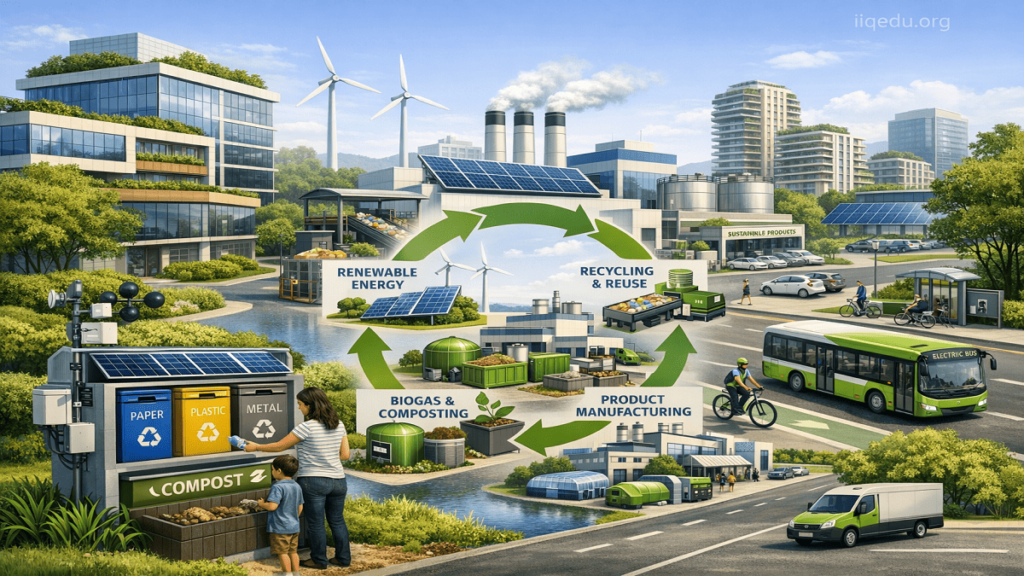
Circular economy standards guide industries in implementing sustainable practices that minimize waste, conserve resources, and create closed-loop systems. Applying these standards allows businesses to maintain profitability while reducing environmental impact.
1. Electronics Industry
- Application: Modular product design, repairable devices, take-back programs, and certified e-waste recycling.
- Benefit: Reduces electronic waste, recovers valuable materials like metals and rare earth elements, and supports regulatory compliance.
2. Textiles and Fashion
- Application: Use of recyclable fabrics, clothing reuse and resale programs, sustainable production techniques, and waste minimization in supply chains.
- Benefit: Decreases textile waste, lowers environmental footprint, and promotes sustainable fashion.
3. Construction and Infrastructure
- Application: Reuse of construction materials, modular building designs, demolition waste management, and eco-friendly construction practices.
- Benefit: Reduces landfill waste, conserves raw materials, and supports green building certifications.
4. Food and Agriculture
- Application: Food waste reduction, composting, sustainable packaging, and circular supply chain strategies.
- Benefit: Reduces organic waste, improves resource efficiency, and supports food security.
5. Energy and Utilities
- Application: Renewable energy adoption, energy recovery from waste, industrial symbiosis, and efficient resource management.
- Benefit: Lowers carbon emissions, reduces dependence on finite resources, and enhances operational sustainability.
6. Consumer Goods and Packaging
- Application: Eco-design of packaging, reusable containers, refill systems, and recycling initiatives.
- Benefit: Minimizes packaging waste, encourages responsible consumption, and improves brand sustainability credentials.
Conclusion
Industries across sectors can benefit from circular economy standards by integrating sustainable production, efficient resource management, and product lifecycle optimization. These standards help companies reduce costs, comply with regulations, and contribute to environmental protection while promoting economic resilience.
#Circular Economy Standards in Mumbai
Ask FAQs
What are circular economy standards?
Circular economy standards are guidelines and best practices that help organizations implement sustainable systems where resources are reused, recycled, and regenerated instead of being wasted. They ensure efficient use of materials across a product’s lifecycle.
Why are circular economy standards important?
They reduce waste, conserve natural resources, lower environmental impact, and promote sustainable economic growth. These standards also encourage innovation in product design and resource management.
Who needs to follow circular economy standards?
Industries and manufacturers
Waste management and recycling companies
Governments and regulatory agencies
Consumers and businesses aiming for sustainability
Essentially, any stakeholder involved in the production, use, or disposal of resources benefits from these standards.
When should circular economy standards be applied?
Standards should be applied at all stages of a product’s lifecycle:
Design: For durability, repairability, and recyclability
Production: Efficient use of materials and energy
Consumption: Responsible use and reuse
End-of-life: Recycling, recovery, or safe disposal
In which industries are circular economy standards applied?
Electronics (modular devices, e-waste recycling)
Textiles (recyclable fabrics, sustainable production)
Construction (reuse of materials, modular building)
Food and Agriculture (food waste reduction, composting)
Energy and Utilities (renewable energy, waste-to-energy systems)
Source: CNBC International
Table of Contents
Summary
Circular economy standards are structured guidelines that help organizations transition from the traditional linear “take-make-dispose” model to a sustainable, regenerative system. They focus on resource efficiency, waste reduction, and product life extension by promoting strategies like recycling, remanufacturing, reuse, and sustainable material selection. These standards provide measurable criteria for assessing circular practices across design, production, and end-of-life management. Implementing them helps businesses reduce environmental impact, improve economic resilience, and meet regulatory and consumer expectations. Key examples include ISO 59020, which outlines circular economy principles, and ISO 14001, supporting environmental management systems aligned with circular objectives.
Disclaimer:
This content is for informational purposes only and does not constitute professional, legal, or environmental advice. Readers should consult official sources or certified organizations such as the International Organization for Standardization or the Ellen MacArthur Foundation for authoritative guidance.