Disaster Management & ISO 22301
1. Introduction
Disaster management refers to the organized approach to preparing for, responding to, and recovering from emergencies that threaten human life, infrastructure, or business continuity. Disaster Management & ISO 22301 can be natural (floods, earthquakes, cyclones) or man-made (cyberattacks, industrial accidents, terrorism).
ISO 22301 is the international standard for Business Continuity Management Systems (BCMS). It provides a structured framework for organizations to ensure operations continue during and after disruptive incidents, mitigating the impact on people, assets, and reputation.
2. Objectives of Disaster Management
The core objectives of disaster management are:
- Risk Reduction – Identify potential hazards and minimize their likelihood and impact.
- Preparedness – Develop plans, protocols, and resources to respond effectively.
- Response – Execute emergency actions to save lives, protect assets, and stabilize operations.
- Recovery – Restore normal operations and ensure business continuity.
- Resilience Building – Improve infrastructure, training, and policies to withstand future Disaster Management & ISO 22301.
3. ISO 22301 Overview
ISO 22301 provides a systematic methodology to enhance organizational resilience:
- Scope: Applies to all industries and sectors globally.
- Focus: Ensures critical business functions continue during incidents.
- Framework: Based on Plan-Do-Check-Act (PDCA) cycle.
Key Benefits:
- Minimizes financial losses due to operational disruptions
- Enhances reputation and stakeholder confidence
- Strengthens risk management and Disaster Management & ISO 22301 response
- Aligns with legal and regulatory compliance requirements
4. ISO 22301 Structure
ISO 22301 adopts a process-oriented approach:
- Context of the Organization – Understanding internal/external factors affecting continuity.
- Leadership Commitment – Top management must support and allocate resources.
- Planning – Conduct risk assessments, business impact analyses, and set objectives.
- Support – Assign roles, communication plans, resources, and training.
- Operation – Implement continuity strategies, incident response, and recovery procedures.
- Performance Evaluation – Monitor, measure, and audit BCMS effectiveness.
- Improvement – Corrective actions and continual enhancement of systems.
5. Integration of Disaster Management and ISO 22301
ISO 22301 complements disaster management by:
- Providing structured planning and risk assessment tools
- Enabling organizations to prioritize critical processes during emergencies
- Establishing clear roles and responsibilities for Disaster Management & ISO 22301 response teams
- Ensuring communication plans for internal and external stakeholders
- Facilitating continuous improvement after each incident
6. Practical Industry Applications
- IT and Data Centers – Ensures systems remain operational during cyberattacks or power outages.
- Healthcare – Guarantees hospital operations, patient care, and critical services continue.
- Banking and Finance – Maintains transaction processing and data integrity in crises.
- Manufacturing – Minimizes production downtime and supply chain disruptions.
- Public Sector and Government – Supports emergency services, Disaster Management & ISO 22301 response coordination, and citizen services.
7. Benefits of Implementing ISO 22301
- Reduced downtime: Critical operations continue during incidents.
- Financial protection: Mitigates loss from disruption.
- Stakeholder confidence: Demonstrates organizational reliability and preparedness.
- Legal compliance: Aligns with regulatory requirements on continuity and safety.
- Improved decision-making: Clear procedures allow rapid, effective response.
8. Conclusion
Combining Disaster Management practices with ISO 22301 creates a resilient organizational framework that prepares businesses and institutions to face disruptions effectively. By implementing ISO 22301, organizations can anticipate risks, respond to emergencies efficiently, and recover quickly, ensuring continuity of operations and safeguarding human, financial, and reputational assets.
#Disaster Management & ISO 22301 in India
What is Disaster Management & ISO 22301?
1. During Business Operations
ISO 22301 is required to ensure business continuity during operational disruptions. Organizations must implement it to:
- Maintain critical services during unexpected incidents
- Protect revenue and financial stability
- Avoid long-term operational losses
For example, IT companies, banks, and manufacturing units use ISO 22301 to minimize downtime from cyberattacks, power failures, or supply chain interruptions.
2. When Managing Risk from Natural Disasters
Disaster Management and ISO 22301 are required in areas prone to:
- Earthquakes
- Floods or cyclones
- Fires or industrial accidents
Organizations and local governments adopt structured continuity and response plans to minimize human and material losses.
3. During Regulatory and Compliance Requirements
Many industries and government institutions require ISO 22301 to meet:
- Legal obligations
- Regulatory compliance for safety, data protection, and continuity
- Standards for certifications and audits
For instance, banks and healthcare providers are often mandated to implement business continuity plans aligned with ISO 22301.
4. When Protecting Critical Infrastructure
ISO 22301 is required for critical services such as:
- Hospitals and healthcare facilities
- Energy and utility companies
- Transportation and logistics networks
- Government emergency response centers
This ensures that these systems remain functional during crises and can resume normal operations quickly.
5. During Crisis and Emergency Planning
Disaster Management & ISO 22301 is needed whenever organizations must:
- Identify potential risks
- Prioritize essential processes
- Assign response teams
- Develop recovery procedures
ISO 22301 provides the structured framework to ensure these steps are effective and repeatable.
6. When Ensuring Stakeholder and Public Confidence
Organizations implement ISO 22301 and Disaster Management & ISO 22301 protocols to:
- Maintain customer trust and loyalty
- Demonstrate reliability to investors and partners
- Reduce reputational risk during disruptions
Conclusion
Disaster Management and ISO 22301 are required anytime there is potential for disruption to operations, human safety, data integrity, or service delivery. They are essential for businesses, governments, and critical infrastructure to prepare for, respond to, and recover from emergencies, ensuring continuity, resilience, and stakeholder confidence.
#Disaster Management & ISO 22301 in Delhi
When is Disaster Management & ISO 22301 required?
1. For Business Continuity
- ISO 22301 is required to maintain essential business operations during disruptions such as cyberattacks, power outages, IT failures, or supply chain interruptions.
- It ensures organizations resume critical processes quickly, minimizing downtime and financial losses.
2. For Natural and Man-Made Disasters
- Disaster Management and ISO 22301 are essential for areas prone to floods, earthquakes, cyclones, industrial accidents, or terrorism.
- They provide structured risk assessment, response, and recovery plans to safeguard people, infrastructure, and data.
3. For Regulatory Compliance
- Certain sectors (banking, healthcare, government, utilities) are legally required to implement business continuity measures aligned with ISO 22301.
- Compliance demonstrates preparedness, accountability, and risk mitigation.
4. For Critical Infrastructure Protection
- ISO 22301 is mandatory for systems critical to society, such as:
- Hospitals and healthcare networks
- Energy and water utilities
- Transportation and logistics systems
- Emergency and government services
- It ensures these services remain functional even during emergencies.
5. For Stakeholder Confidence and Reputation
- Organizations adopt ISO 22301 and Disaster Management & ISO 22301 protocols to maintain trust with customers, investors, and the public.
- It demonstrates resilience, reliability, and professionalism, even in crises.
Conclusion
Disaster Management and ISO 22301 are required whenever there is a risk of disruption that could affect people, operations, or critical services. They ensure organizations can prepare, respond, recover, and maintain continuity, reducing financial, operational, and reputational losses while protecting human life and infrastructure.
#Disaster Management & ISO 22301 in Singapore
Where is Disaster Management & ISO 22301 required?
1. Critical Infrastructure
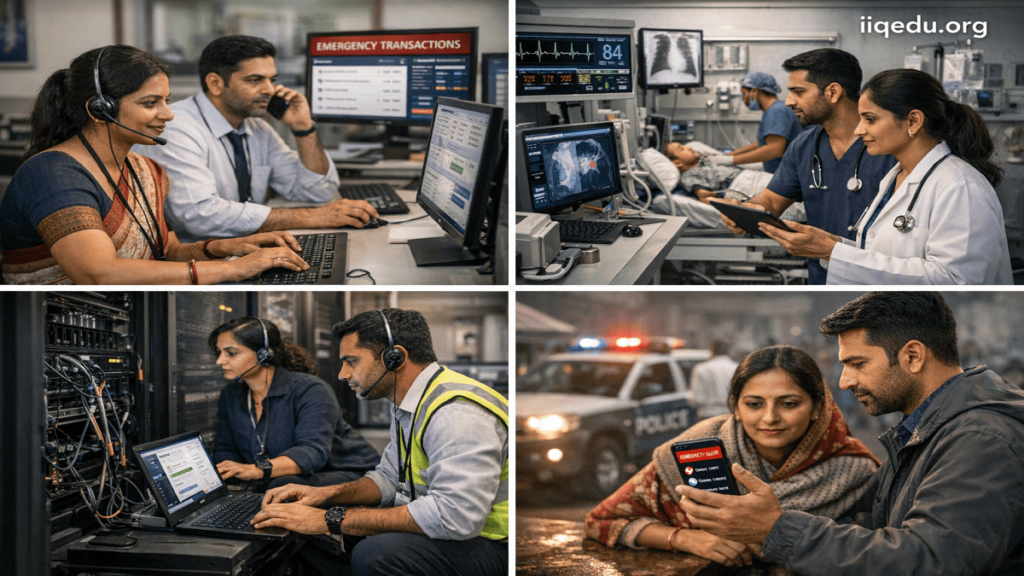
- Healthcare facilities: Hospitals, clinics, and telemedicine systems need ISO 22301 to ensure patient care continues during Disaster Management & ISO 22301.
- Energy and utilities: Power plants, water supply networks, and gas pipelines require structured Disaster Management & ISO 22301 to prevent service disruption.
- Transportation and logistics: Airports, railways, metro systems, and shipping operations must remain operational during emergencies.
2. Government and Public Services
- Government departments: Ministries, regulatory agencies, and e-governance portals need continuity to serve citizens during crises.
- Emergency services: Fire departments, police, and disaster response units must maintain operations during natural or man-made disasters.
- Municipal services: Water, sanitation, waste management, and city operations require continuity planning.
3. Banking and Financial Sector
- Banks, insurance companies, and digital payment platforms rely on ISO 22301 to maintain transaction integrity and customer services during outages, cyberattacks, or system failures.
4. IT and Telecommunication Industry
- Data centers, cloud providers, telecom networks, and software services need disaster management to ensure uptime, protect data, and prevent service interruptions.
5. Manufacturing and Industrial Operations
- Factories, production plants, and supply chain systems require ISO 22301 to minimize downtime, protect inventory, and maintain production schedules during disruptions.
6. Educational Institutions
- Schools, universities, and e-learning platforms use disaster management to ensure uninterrupted learning during natural disasters, IT failures, or pandemics.
7. Any Organization Handling Critical Data or Services
- Organizations of any size that store sensitive data (personal, financial, or health) or provide critical services require ISO 22301 to ensure continuity and compliance.
Conclusion
Disaster Management and ISO 22301 are required wherever operational disruptions can cause financial loss, risk to life, or interruption of essential services. This includes critical infrastructure, government services, financial institutions, IT systems, healthcare, manufacturing, and education sectors.
#Disaster Management & ISO 22301 in Kolkata
How is Disaster Management & ISO 22301 required?
Disaster Management and ISO 22301 are required through a structured, systematic approach that ensures organizations can continue critical operations during disruptions. They are not optional checklists—they must be integrated into organizational strategy, processes, and infrastructure. Here’s how they are required in practice:
1. Through Risk Assessment and Business Impact Analysis (BIA)
- Organizations must identify potential threats such as natural disasters, cyberattacks, power outages, or industrial accidents.
- ISO 22301 requires a Business Impact Analysis to determine which processes are critical and the potential consequences if they are disrupted.
- This forms the foundation for planning preventive and recovery measures.
2. Through Business Continuity Planning (BCP)
- ISO 22301 mandates that organizations develop and document business continuity plans covering:
- Emergency response procedures
- Backup operations
- Resource allocation and responsibilities
- Recovery timelines
- Disaster Management frameworks integrate these plans with real-world scenarios for fast, effective response.
3. Through Leadership and Governance
- Top management is required to lead, sponsor, and monitor continuity programs.
- ISO 22301 emphasizes accountability, defined roles, and authority, ensuring decisions during disasters are swift and coordinated.
4. Through Resource and Infrastructure Readiness
- Organizations must ensure backup systems, alternative sites, communication networks, and emergency supplies are in place.
- IT systems may require redundant servers, cloud failover, and secure data storage to maintain continuity during incidents.
5. Through Training and Awareness
- ISO 22301 requires staff and stakeholders to be trained in emergency response, continuity processes, and roles.
- Regular simulations, drills, and workshops ensure preparedness and minimal confusion during actual incidents.
6. Through Testing, Monitoring, and Improvement
- Continuity plans must be tested and evaluated periodically for effectiveness.
- ISO 22301 requires internal audits, performance monitoring, and corrective actions to continuously improve resilience.
- Disaster Management frameworks complement this with real-time monitoring and incident reporting.
7. Through Integration with Organizational Policies
- Disaster Management and ISO 22301 must be embedded in corporate policies, operational manuals, and IT governance frameworks.
- They are required not just during emergencies but as part of day-to-day operational risk management.
Conclusion
Disaster Management and ISO 22301 are required by organizations through formalized processes, planning, resource allocation, training, testing, and continuous improvement. Their implementation ensures that critical operations continue uninterrupted, risks are mitigated, and organizations can recover quickly from disruptions, protecting people, assets, and reputation.
#Disaster Management & ISO 22301 in Ahemdabad
Case Study of Disaster Management & ISO 22301
1. Background
The banking and financial sector is highly dependent on uninterrupted digital services. Even a few hours of downtime can lead to:
- Financial losses
- Customer dissatisfaction
- Regulatory penalties
One leading Indian bank decided to implement ISO 22301-based Business Continuity Management System (BCMS) to strengthen its disaster preparedness and operational resilience.
2. Challenges Before ISO 22301 Implementation
- Frequent system outages during power failures and cyberattacks
- Lack of standardized disaster response protocols
- Limited awareness among employees regarding business continuity roles
- Delays in recovery after incidents, causing reputational damage
3. ISO 22301 Implementation Strategy
a. Risk Assessment and Business Impact Analysis (BIA)
- Identified critical banking operations such as core banking transactions, ATM services, online banking, and data storage.
- Assessed potential threats: cyberattacks, server failures, natural disasters affecting data centers.
b. Development of Business Continuity Plans (BCP)
- Created detailed continuity plans for each critical function.
- Established recovery time objectives (RTOs) and recovery point objectives (RPOs) for IT systems.
c. Infrastructure and Resource Preparedness
- Implemented redundant servers, cloud failover, and backup data centers in different geographic locations.
- Ensured availability of emergency communication tools and alternate operational sites.
d. Staff Training and Awareness
- Conducted training programs, drills, and mock simulations for all employees.
- Assigned clear roles and responsibilities for disaster response.
e. Monitoring and Continuous Improvement
- Introduced continuous monitoring dashboards to detect disruptions.
- Conducted regular audits and incident reviews to update plans.
4. Results and Impact
- Zero downtime in critical operations during minor IT disruptions.
- Faster recovery from unexpected incidents, reducing operational and financial losses.
- Enhanced employee readiness and confidence in disaster response procedures.
- Improved regulatory compliance and audit readiness.
- Strengthened stakeholder and customer trust in the bank’s resilience.
5. Key Learnings
- Structured approach is critical: ISO 22301 provided a clear framework for planning, implementing, and evaluating disaster response.
- Employee training ensures effectiveness: Awareness and simulations allowed faster, coordinated responses.
- Infrastructure redundancy prevents critical downtime: Multiple backup sites and cloud failover reduced risk of disruption.
- Continuous improvement is necessary: Regular audits and updates ensure the system evolves with new threats.
6. Conclusion
This case study demonstrates that Disaster Management combined with ISO 22301 is highly effective in minimizing operational risks, ensuring business continuity, and protecting assets and reputation. Industries like banking, healthcare, IT, and government can replicate this approach to enhance resilience and readiness for any disruptive event.
#Disaster Management & ISO 22301 in Hyderabad
White Paper of Disaster Management & ISO 22301
1. Executive Summary
Disasters—whether natural, technological, or man-made—pose significant risks to business operations, critical infrastructure, and public services. Effective disaster management combined with ISO 22301: Business Continuity Management System (BCMS) enables organizations to prepare, respond, and recover efficiently from disruptive events.
This white paper presents an overview, framework, implementation strategies, benefits, challenges, and future roadmap for integrating disaster management with ISO 22301.
2. Introduction
Organizations today operate in an environment of increasing risk exposure. Unplanned incidents like cyberattacks, system failures, floods, or industrial accidents can result in:
- Financial losses
- Operational downtime
- Damage to reputation
- Legal and regulatory consequences
ISO 22301 provides a structured framework for business continuity management to mitigate these risks while ensuring critical operations continue uninterrupted.
3. Objectives
The primary objectives of Disaster Management & ISO 22301 are:
- Risk Identification and Mitigation – Identify vulnerabilities and reduce potential impact.
- Operational Continuity – Ensure critical functions remain operational during incidents.
- Rapid Recovery – Minimize downtime and restore services quickly.
- Compliance and Governance – Meet legal and regulatory requirements.
- Stakeholder Confidence – Demonstrate reliability to customers, investors, and the public.
4. Framework of ISO 22301
ISO 22301 is built on a process-oriented approach using the Plan-Do-Check-Act (PDCA) methodology:
- Plan: Risk assessment, Business Impact Analysis (BIA), and continuity strategy development.
- Do: Implementation of continuity plans, resource allocation, and emergency procedures.
- Check: Monitor, test, and audit business continuity processes.
- Act: Corrective actions, continuous improvement, and lessons learned.
5. Integration with Disaster Management
Disaster management involves preparedness, response, recovery, and mitigation. When integrated with ISO 22301:
- Threats are assessed systematically and categorized.
- Critical business functions are prioritized for continuity.
- Roles, responsibilities, and communication channels are clearly defined.
- Recovery strategies and backup systems are implemented.
- Regular drills, audits, and monitoring ensure readiness.
6. Industry Applications
- Banking & Finance: Maintains online transactions, core banking, and ATMs during outages.
- Healthcare: Ensures hospitals and telemedicine systems operate during emergencies.
- IT & Telecom: Provides uninterrupted data services and secure network operations.
- Manufacturing: Minimizes production downtime and protects supply chains.
- Government & Public Services: Maintains e-governance, emergency response, and citizen services.
7. Benefits
- Enhanced Resilience: Systems and processes withstand disruptions.
- Reduced Downtime: Quick recovery minimizes operational and financial losses.
- Regulatory Compliance: Aligns with legal and industry requirements.
- Stakeholder Trust: Demonstrates preparedness and reliability.
- Continuous Improvement: Lessons from incidents strengthen long-term resilience.
8. Challenges
- Rapidly evolving technology and cyber threats.
- Complexity of integrating continuity planning across multiple departments.
- Maintaining awareness and readiness among employees.
- Cost and resource allocation for backup infrastructure and training.
9. Future Roadmap
- AI and Automation: Use artificial intelligence for risk prediction, monitoring, and incident response.
- Advanced Cybersecurity: Integration of real-time threat detection into BCMS.
- Global Standardization: Align continuity and disaster management with international best practices.
- Public-Private Collaboration: Strengthen national resilience through partnerships.
10. Recommendations
- Embed ISO 22301 into organizational culture and policies.
- Conduct regular risk assessments and BIA exercises.
- Implement robust training, drills, and employee awareness programs.
- Invest in redundant infrastructure and cloud-based failovers.
- Monitor, audit, and continually improve BCMS.
11. Conclusion
Disaster Management combined with ISO 22301 creates a resilient framework that enables organizations to anticipate risks, respond to emergencies, and recover efficiently. Adopting these standards ensures continuity of operations, protection of assets, compliance with regulations, and increased stakeholder confidence.
By integrating disaster management and ISO 22301, organizations not only survive disruptions but also strengthen their long-term operational resilience.
#Disaster Management & ISO 22301 in Pune
Industry Application of Disaster Management & ISO 22301
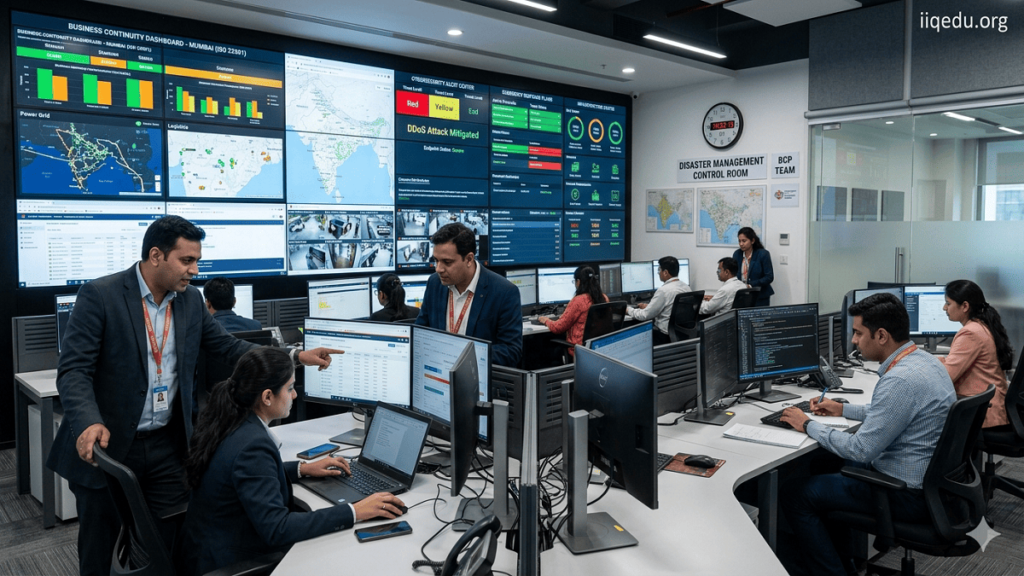
ISO 22301, the international standard for Business Continuity Management Systems (BCMS), provides a structured framework for organizations to prepare, respond, and recover from disruptive incidents. When combined with Disaster Management practices, it ensures industries can maintain critical operations and protect assets, people, and reputation.
1. Banking and Financial Services
Application
- Banks, insurance companies, and fintech platforms implement ISO 22301 to maintain uninterrupted transactions, ATM services, and online banking.
Implementation
- Risk assessment for cyberattacks and IT outages
- Business Impact Analysis (BIA) to prioritize critical functions
- Backup data centers and redundant servers
Impact
- Ensures continuous financial services
- Protects customer data
- Minimizes operational and financial losses
2. Healthcare and Hospitals
Application
- Hospitals, clinics, and telemedicine services adopt Disaster Management with ISO 22301 to ensure critical patient care and medical services continue during emergencies.
Implementation
- Continuity plans for critical care units and IT systems
- Alternate power supply and secure patient data storage
- Staff training and emergency drills
Impact
- Saves lives during disruptions
- Protects sensitive patient data
- Ensures operational resilience
3. Information Technology and Telecom
Application
- IT companies, cloud service providers, and telecom operators require ISO 22301 to maintain network services, data centers, and software platforms during crises.
Implementation
- Disaster recovery plans with redundant infrastructure
- Cybersecurity measures integrated with continuity protocols
- Regular testing of backup and failover systems
Impact
- Reduces service downtime
- Maintains data integrity
- Builds trust with clients and users
4. Manufacturing and Industry 4.0
Application
- Manufacturing plants, factories, and supply chain operations adopt these standards to prevent production halts and logistical disruptions.
Implementation
- Backup machinery, alternate production sites
- Supply chain risk assessment
- Employee safety and emergency response plans
Impact
- Minimizes production losses
- Ensures timely delivery of goods
- Maintains employee and operational safety
5. Government and Public Services
Application
- Government agencies, municipal services, and emergency response units adopt ISO 22301 for e-governance systems, citizen services, and disaster response coordination.
Implementation
- Continuity planning for critical departments
- Emergency communication systems
- Coordination with national disaster management authorities
Impact
- Ensures public services remain operational
- Supports citizen safety and welfare
- Strengthens trust in public administration
6. Education Sector
Application
- Schools, colleges, and online learning platforms use Disaster Management and ISO 22301 to ensure uninterrupted education services.
Implementation
- Backup digital platforms for remote learning
- Emergency protocols for campus safety
- Continuity plans for academic administration
Impact
- Prevents disruption in learning
- Maintains student data security
- Enhances institutional resilience
7. Energy and Utilities
Application
- Power plants, water supply systems, and gas pipelines implement ISO 22301 to maintain critical utility services during natural or technical disruptions.
Implementation
- Alternate energy sources and backup systems
- Risk analysis for natural hazards
- Monitoring and alert systems for operational continuity
Impact
- Prevents widespread utility failures
- Ensures public safety
- Reduces economic and operational losses
8. Logistics and Transportation
Application
- Airports, railways, metro systems, and shipping companies adopt Disaster Management with ISO 22301 to avoid operational delays and maintain safety.
Implementation
- Risk mapping for critical transport routes
- Contingency plans for passenger and cargo services
- Emergency response teams and communication protocols
Impact
- Reduces delays and losses
- Ensures safety of passengers and cargo
- Maintains operational efficiency
Conclusion
Disaster Management combined with ISO 22301 is universally applicable across industries where operational continuity is critical. From banking and healthcare to IT, manufacturing, and government services, adopting these frameworks ensures organizations can withstand disruptions, recover quickly, and maintain stakeholder trust.
#Disaster Management & ISO 22301 in Mumbai
Ask FAQs
What is Disaster Management & ISO 22301?
Disaster Management is the structured approach to preparing for, responding to, and recovering from disruptive events, whether natural or man-made. ISO 22301 is the international standard for Business Continuity Management Systems (BCMS), providing organizations with a framework to maintain critical operations, reduce downtime, and recover efficiently from incidents.
Why is ISO 22301 required in disaster management?
ISO 22301 ensures organizations have formalized processes and plans for continuity during disruptions. It helps:
Identify critical business functions
Implement preventive measures
Reduce operational and financial losses
Maintain stakeholder and customer trust
It transforms disaster management from reactive to proactive and systematic.
Who needs to implement Disaster Management & ISO 22301?
All organizations handling critical operations, infrastructure, or data should implement ISO 22301. This includes:
Banks and financial institutions
Hospitals and healthcare providers
IT, telecom, and data centers
Manufacturing units and supply chains
Government and public service organizations
How is ISO 22301 implemented in organizations?
Implementation involves:
Risk assessment and Business Impact Analysis (BIA)
Developing business continuity plans for critical functions
Allocating resources and responsibilities
Staff training and emergency simulations
Monitoring, testing, auditing, and continuous improvement
These steps ensure the organization can respond effectively and recover quickly from disruptions.
What are the benefits of implementing Disaster Management & ISO 22301?
Operational resilience: Critical functions continue during disruptions
Reduced downtime: Minimizes financial and operational losses
Regulatory compliance: Meets legal and industry standards
Stakeholder confidence: Demonstrates reliability and preparedness
Continuous improvement: Lessons from incidents strengthen long-term resilience
Source: Prabh Nair
Table of Contents
Disclaimer:
This content is intended for informational and educational purposes only. It does not constitute official guidance or legal advice. Organizations should refer to ISO 22301 standards and government regulations for authoritative instructions on disaster management and business continuity.