Future Skills in Quality Management
Quality Management has evolved from basic inspection and control to becoming a strategic driver of organisational performance. Rapid technological change, customer expectations, and competitive pressures are redefining the skill sets needed for quality professionals. To remain relevant and effective, practitioners must cultivate a blend of technical, analytical, leadership, and digital competencies.
1. Data Literacy and Analytical Skills
Quality decisions are increasingly data‑driven. Professionals must be able to collect, interpret, and draw actionable insights from large datasets. Skills in statistical analysis, performance measurement, process capability, and predictive modelling enable quality leaders to identify trends, reduce defects, and improve processes. Familiarity with tools such as Minitab, R, Python, and SQL strengthens analytical capability. Organisations also demand understanding of real‑time data and dashboards for continuous monitoring.
Further reading: Harvard Business Review – Data Science and Analytics (https://hbr.org/)
2. Digital Quality Tools and Technology Adoption
Digital transformation is reshaping quality functions. Knowledge of Industry 4.0 technologies such as the Internet of Things (IoT), artificial intelligence (AI), machine learning, and automation is crucial. Quality professionals should understand how to integrate these technologies into quality systems to improve predictive maintenance, anomaly detection, and process automation.
ISO 9001 is also evolving with technology; professionals must interpret and apply digital quality management system requirements. Familiarity with quality management software (QMS) enhances efficiency.
Reference: International Organization for Standardization – ISO 9001:2015 Quality Management Systems (https://www.iso.org/standard/62085.html)
3. Problem Solving and Continuous Improvement Leadership
Traditional problem solving such as root cause analysis remains essential, but future quality leaders must drive continuous improvement in complex environments. Mastery of methodologies like Lean, Six Sigma, Kaizen, and Design for Six Sigma (DFSS) empowers professionals to systematically eliminate waste and variation. Beyond technical expertise, the ability to lead cross‑functional improvement initiatives, coach teams, and embed a culture of quality is key.
Lean Six Sigma information: ASQ Lean Six Sigma Overview (https://asq.org/quality-resources/lean-six-sigma)
4. Strategic Thinking and Business Acumen
Quality is no longer isolated in operations; it intersects with overall business strategy. Future quality professionals must link quality outcomes with customer experience, financial performance, and organisational risk. Strategic planning, change management, and performance measurement are necessary to align quality initiatives with goals like customer satisfaction, regulatory compliance, and sustainability.
5. Soft Skills: Communication, Collaboration, and Adaptability
Effective communication is vital for translating quality data into insights that influence stakeholders. Collaboration skills help quality professionals work across departments and cultures. Adaptability and lifelong learning ensure professionals stay current with emerging standards, technologies, and market expectations.
Conclusion
The future of quality management demands a combination of digital fluency, analytical strength, strategic insight, and leadership capability. Investing in these skills prepares professionals to lead quality innovation and drive organisational excellence in a rapidly changing environment.
#Future Skills in Quality Management in India
What is Future Skills in Quality Management?
Future Skills in Quality Management refer to the evolving set of competencies that quality professionals need to remain effective and relevant in modern, technology-driven, and customer-focused organizations. Unlike traditional quality management, which primarily emphasized inspection, compliance, and basic process control, future skills encompass strategic, analytical, digital, and leadership capabilities that align quality initiatives with organizational goals and innovation.
1. Data Analytics and Digital Fluency
With the rise of big data, artificial intelligence (AI), and the Internet of Things (IoT), quality management is increasingly data-driven. Future professionals must be skilled in data collection, statistical analysis, predictive modeling, and performance measurement to detect defects, optimize processes, and make informed decisions. Familiarity with tools like Minitab, Python, R, and quality management software (QMS) is essential. Real-time data monitoring and digital dashboards are becoming standard for continuous process improvement.
Reference: Harvard Business Review – Data Science and Analytics
2. Technology Integration and Industry 4.0
The adoption of Industry 4.0 technologies is transforming quality processes. Skills in automation, AI, machine learning, and IoT are critical for predictive maintenance, anomaly detection, and process optimization. Future quality managers must also understand how to implement digital quality systems in accordance with evolving standards such as ISO 9001:2015.
Reference: ISO 9001:2015 Quality Management Systems
3. Problem Solving and Continuous Improvement Leadership
Proficiency in Lean, Six Sigma, Kaizen, and other continuous improvement methodologies remains vital. Future skills emphasize the ability to lead cross-functional improvement initiatives, coach teams, and foster a culture of continuous quality enhancement rather than relying solely on compliance or inspection.
Reference: ASQ – Lean Six Sigma Overview
4. Strategic Thinking and Business Acumen
Quality management is no longer isolated within operations; it directly impacts customer satisfaction, risk management, and financial outcomes. Future quality professionals need strategic planning skills to align quality initiatives with organizational objectives, anticipate risks, and contribute to innovation and sustainability goals.
5. Soft Skills: Communication, Collaboration, and Adaptability
Effective communication of quality insights to stakeholders, collaborative teamwork across departments, and adaptability to technological and regulatory changes are critical. Lifelong learning ensures professionals can continuously upgrade their skills to match industry evolution.
Conclusion
Future skills in quality management represent a shift from operational control to strategic leadership, digital fluency, and data-driven decision-making. Professionals equipped with these competencies can drive innovation, improve customer experiences, and ensure organizational excellence in a rapidly evolving business environment.
#Future Skills in Quality Management in Maharashtra
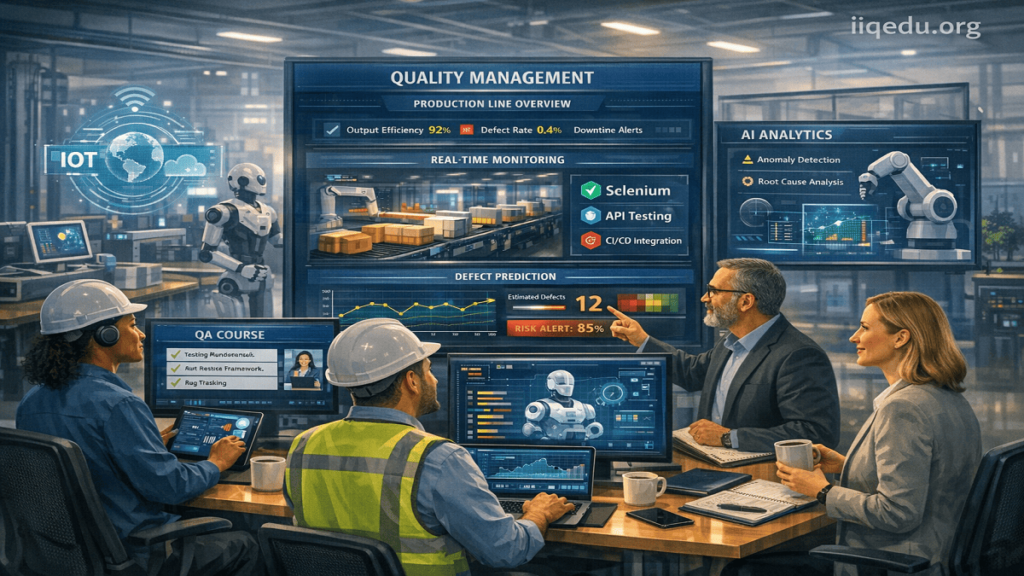
Who is Future Skills in Quality Management required?
Future Skills in Quality Management are required by a broad range of professionals across industries, especially as organizations increasingly rely on technology, data, and continuous improvement to remain competitive. These skills are essential not only for traditional quality roles but also for leadership, operational, and strategic positions that influence processes, products, and customer satisfaction.
1. Quality Professionals and Managers
Traditional roles such as Quality Assurance (QA) engineers, Quality Control (QC) inspectors, and Quality Managers must acquire future skills to stay relevant. Beyond compliance and inspection, they now need data analytics, digital tool proficiency, and leadership abilities to drive process optimization, predictive maintenance, and continuous improvement initiatives.
2. Process Improvement Specialists
Lean Six Sigma practitioners, process engineers, and operational excellence leaders benefit from future skills in predictive analytics, automation, and strategic thinking. These competencies enable them to design data-driven solutions, reduce operational inefficiencies, and implement advanced quality frameworks aligned with organizational goals.
3. IT and Digital Transformation Teams
As quality management increasingly integrates with Industry 4.0 technologies, professionals in IT, data science, and digital operations must understand quality standards, data integrity, and process reliability. Collaboration with quality teams ensures that automated systems, AI applications, and IoT devices meet compliance and enhance performance.
4. Leadership and Strategic Roles
Senior leaders, operations directors, and supply chain managers require future quality skills to align quality initiatives with corporate strategy. Strategic thinking, risk management, and the ability to interpret data for decision-making are essential to maintain customer satisfaction, regulatory compliance, and organizational resilience.
5. Cross-Functional Teams
In modern organizations, quality impacts every department, from production and logistics to product development and customer service. Employees in these areas need awareness of quality principles, continuous improvement practices, and digital tools to contribute effectively to organizational goals.
Why These Skills Are Required
- Technological Integration: Automation, AI, and IoT are transforming how quality is monitored and managed. Professionals need skills to implement and leverage these technologies.
- Data-Driven Decision Making: Organizations increasingly rely on real-time analytics to reduce defects, improve customer experience, and optimize operations.
- Competitive Pressure: Continuous improvement, faster product development, and innovation require agile, strategic, and collaborative quality management.
- Regulatory and Compliance Demands: Industries such as healthcare, manufacturing, and pharmaceuticals require rigorous standards that evolve with technology and globalization.
In summary, future skills in quality management are required for anyone responsible for processes, products, or services that impact customer satisfaction, operational efficiency, and business performance. They are particularly critical for roles that combine technical expertise with strategic leadership, digital literacy, and continuous improvement capabilities.
#Future Skills in Quality Management in Delhi
When is Future Skills in Quality Management required?
Future Skills in Quality Management are required in multiple contexts, primarily driven by the pace of technological advancement, evolving customer expectations, regulatory changes, and organizational transformation. These skills are not optional—they are needed whenever an organization seeks to improve processes, ensure product or service excellence, and remain competitive in a dynamic environment.
1. During Digital Transformation Initiatives
As companies adopt Industry 4.0 technologies—such as AI, machine learning, IoT, and automation—quality management must evolve. Professionals need digital literacy, data analytics, and technology integration skills to monitor and control quality in automated or connected systems. For example, predictive maintenance and automated defect detection require quality teams to interpret data from smart sensors and AI-driven systems.
2. In Process Improvement and Continuous Improvement Projects
Whenever an organization implements Lean, Six Sigma, Kaizen, or Total Quality Management (TQM) initiatives, future skills become critical. Data-driven problem-solving, statistical analysis, and cross-functional collaboration are necessary to identify root causes, reduce variation, and optimize processes.
3. During Strategic Planning and Organizational Growth
Future skills are required when quality management must align with organizational strategy, such as entering new markets, launching new products, or complying with international standards. Skills like strategic thinking, business acumen, and risk management ensure quality decisions contribute to broader organizational goals.
4. In Response to Regulatory or Industry Changes
Industries such as healthcare, manufacturing, aerospace, and pharmaceuticals face evolving regulatory requirements. Professionals need continuous learning, adaptability, and compliance knowledge to implement updated quality standards, including ISO 9001:2015, ISO 13485, or GMP guidelines.
5. When Customer Expectations Increase
As customer expectations for product reliability, sustainability, and service excellence rise, quality management must respond with real-time monitoring, predictive quality, and customer feedback integration. Data literacy, digital tools, and communication skills become essential for meeting these expectations and maintaining competitive advantage.
6. During Crisis or Operational Disruptions
Future skills are particularly important in scenarios such as supply chain disruptions, recalls, or sudden shifts in production requirements. Analytical thinking, problem-solving, and adaptability allow quality teams to quickly identify issues, mitigate risks, and maintain product or service integrity.
Conclusion
Future skills in quality management are required whenever organizations face change, complexity, or the need for improvement. They are not limited to specific roles or departments but are essential across operational, technological, strategic, and customer-facing functions. Investing in these skills ensures quality professionals can drive organizational resilience, innovation, and sustainable growth.
#Future Skills in Quality Management in Banglore
Where is Future Skills in Quality Management required?
Future Skills in Quality Management are required across virtually all industries and organizational environments, particularly where quality, efficiency, and customer satisfaction are critical to success. As technology, data, and global competition reshape operations, these skills are increasingly in demand in specific organizational contexts, departments, and geographic regions.
1. Manufacturing and Production Facilities
Quality management has traditionally been central to manufacturing, but the integration of Industry 4.0 technologies—including automation, IoT, and robotics—requires future-ready skills. Professionals must monitor real-time data, implement predictive maintenance, and optimize production processes to minimize defects and waste. Factories producing high-precision products, such as automotive components, electronics, or aerospace parts, particularly demand these skills.
2. Healthcare and Pharmaceuticals
In highly regulated sectors like healthcare, pharmaceuticals, and medical devices, quality management is crucial for patient safety and compliance. Skills such as regulatory knowledge, risk management, process validation, and digital record-keeping ensure adherence to standards such as ISO 13485 and Good Manufacturing Practices (GMP). The rise of telehealth and digital health devices also necessitates data analytics and digital system management competencies.
Reference: ISO 13485 – Medical Devices Quality Management
3. Service and Technology Organizations
Service industries—IT, logistics, finance, and customer support—require quality management for process optimization, service consistency, and customer satisfaction. Future skills like data analysis, digital tools proficiency, and process automation enable organizations to reduce errors, streamline workflows, and enhance customer experience.
4. Supply Chain and Logistics
Global supply chains involve complex networks where quality must be maintained across multiple vendors and regions. Professionals need skills in real-time monitoring, predictive analytics, and cross-functional collaboration to manage risk, ensure compliance, and maintain product quality throughout the supply chain.
5. Research, Development, and Product Innovation
Organizations that innovate—whether in technology, consumer products, or pharmaceuticals—require quality professionals who can integrate quality principles early in product design. Skills in Design for Six Sigma (DFSS), risk assessment, and data-driven testing are essential to ensure new products meet reliability, safety, and performance standards.
6. Corporate and Strategic Functions
Quality management extends to corporate strategy and governance. Future skills are required in departments focused on organizational excellence, strategic planning, and regulatory compliance, ensuring quality aligns with business goals, customer expectations, and sustainability objectives.
Conclusion
Future skills in quality management are required wherever operational performance, product integrity, and customer satisfaction are priorities. They are essential across industries—manufacturing, healthcare, IT, logistics, and R&D—and across organizational functions, from production floors to strategic leadership. Organizations that cultivate these skills are better positioned to leverage technology, meet regulatory demands, and drive continuous improvement in a competitive global market.
#Future Skills in Quality Management in Singapore
How is Future Skills in Quality Management required?
Future Skills in Quality Management are required through deliberate strategies, training programs, and practical application that enable organizations and professionals to adapt to technological, operational, and strategic changes. The “how” focuses on the processes, methods, and approaches by which these skills are integrated into organizational workflows and individual competency development.
1. Through Digital Technology Adoption
Organizations must implement digital quality management systems (QMS) and advanced tools such as IoT sensors, AI-powered inspection, and predictive analytics. Quality professionals need to learn how to leverage these technologies to monitor processes in real-time, detect defects proactively, and optimize operations. This requires both technical training and hands-on experience with digital platforms.
Reference: ISO 9001:2015 – Quality Management Systems
2. Via Data-Driven Decision Making
Quality management increasingly relies on large datasets. Future skills are required in data collection, statistical analysis, process capability evaluation, and predictive modeling. Professionals learn to use tools like Minitab, Python, R, and SQL to analyze performance metrics, identify trends, and implement continuous improvement initiatives. Embedding data-driven practices ensures that quality decisions are objective, measurable, and impactful.
3. Through Continuous Improvement Methodologies
Future skills are applied through Lean, Six Sigma, Kaizen, and Design for Six Sigma (DFSS) initiatives. Professionals must understand how to lead process improvement projects, conduct root-cause analysis, reduce variation, and eliminate waste. This requires structured training programs, mentoring, and participation in cross-functional improvement teams.
Reference: ASQ – Lean Six Sigma
4. By Integrating Strategic and Business Competencies
Quality professionals are required to link operational excellence with organizational goals. This includes strategic thinking, risk management, and alignment of quality metrics with business objectives. Skills are developed by participating in planning sessions, working on cross-department projects, and understanding customer expectations, market trends, and regulatory requirements.
5. Through Soft Skills Development
Communication, collaboration, and adaptability are required to translate quality insights into actionable strategies. Professionals engage in workshops, leadership training, and team-based projects to develop the ability to influence stakeholders, coordinate cross-functional initiatives, and adapt to evolving processes or technologies.
6. Via Lifelong Learning and Certification Programs
Future skills are reinforced through continuous professional development. Certifications such as Certified Quality Engineer (CQE), Lean Six Sigma Black Belt, ISO auditor training, and data analytics courses formalize expertise while providing practical application scenarios. Lifelong learning ensures professionals remain current with emerging trends, standards, and digital tools.
Conclusion
Future skills in quality management are required by systematically integrating digital tools, data analytics, continuous improvement methods, strategic alignment, and soft skills into daily operations. Organizations achieve this through structured training, technology adoption, cross-functional projects, and ongoing professional development. By doing so, quality professionals are equipped to drive efficiency, innovation, and customer satisfaction in a rapidly evolving business environment.
#Future Skills in Quality Management in Chennai
Case Study of Future Skills in Quality Management
Background and Context
Many modern manufacturers are transforming traditional quality management into Quality 4.0 by integrating digital technologies such as the Internet of Things (IoT), artificial intelligence (AI), machine learning (ML), big data analytics, and real‑time monitoring systems into their quality systems. This evolution moves quality management from reactive inspection and manual reporting to proactive prediction, continuous improvement, and strategic decision‑making. Such transformations require future skills including digital competency, data analytics expertise, and advanced problem‑solving techniques.
Organizational Objective
A global automotive manufacturer (represented in research on Quality 4.0 implementations) sought to significantly enhance product quality, reduce defect rates, and accelerate production processes by adopting digital quality management practices across its operations. The goal was to leverage real‑time data from sensors, advanced analytics platforms, and AI‑powered inspection tools to anticipate quality issues before they occurred, rather than relying solely on post‑production inspections.
Implementation of Future Skills and Technologies
- IoT‑Enabled Data Acquisition: IoT sensors were installed on critical production line equipment to collect continuous quality and performance data (e.g., temperature, vibration, cycle times). These sensors transmitted information to a centralized analytics system in real time, enabling engineers to monitor deviations as production progressed.
- Advanced Analytics and Predictive Models: Data from production, historical defect logs, and environmental variables were analyzed using machine learning models. These models identified patterns associated with quality defects before they manifested physically, allowing preventative adjustments to machine settings and process parameters.
- AI‑Assisted Visual Inspection: AI‑powered robotic inspection systems supplemented human quality checks. These systems used computer vision algorithms trained to detect subtle defects that traditional methods might miss while also capturing high‑resolution inspection data for further trend analysis.
- Digital Twin and Simulation Tools: Digital twin technology created virtual replicas of production processes, enabling quality engineers to simulate adjustments, forecast outcomes, and validate strategies before applying changes in the physical environment. This supported risk‑free experimentation and continuous improvement.
Application of Future Skills
- Data Analytics and Interpretation: Quality engineers used advanced analytics software and predictive models to derive actionable insights, shifting quality control from historical reporting to forward‑looking prevention.
- Cross‑Functional Collaboration: Teams across production, quality, and IT collaborated in data integration, model development, and dashboard visualization for quality reports.
- Strategic Decision‑Making: Real‑time quality indicators were incorporated into strategic planning and performance dashboards, enabling senior leaders to allocate resources and optimize workflows.
Outcomes and Impact
- Defect Reduction: The proactive use of predictive analytics and AI inspection resulted in a measurable decrease in defect rates and scrap levels.
- Faster Response: Real‑time monitoring significantly shortened the cycle time to detect and resolve quality anomalies compared to traditional inspection.
- Cost Improvement: Operational costs associated with waste, rework, and warranty claims were reduced due to better prediction and prevention of quality issues.
Conclusion
This case exemplifies how future skills in quality management—particularly data analytics, digital literacy with AI and IoT tools, and strategic integration of digital quality systems—can transform quality outcomes in manufacturing. Organizations that develop these competencies in their workforce are able to leverage emerging technologies for enhanced process visibility, proactive quality control, and continuous operational improvement.
#Future Skills in Quality Management in Ahemdabad

White Paper of Future Skills in Quality Management
Executive Summary
Quality Management (QM) has traditionally focused on inspection, compliance, and process control. However, in an era of rapid technological advancement, globalization, and customer-centric business models, the role of quality professionals is evolving. Future skills in quality management encompass digital literacy, data analytics, strategic thinking, leadership, and continuous improvement capabilities. These skills enable organizations to leverage emerging technologies, maintain competitive advantage, ensure compliance, and drive operational excellence.
1. Introduction
The concept of Future Skills in quality management arises from the intersection of technology, data-driven decision-making, and strategic business alignment. Organizations are increasingly adopting Industry 4.0 technologies such as IoT, artificial intelligence (AI), predictive analytics, and automated quality inspection. Quality professionals must therefore develop competencies that go beyond traditional methods to include technological fluency, analytical reasoning, and cross-functional collaboration.
2. Key Future Skills
2.1 Digital Literacy and Technology Integration
- Proficiency in digital quality management systems (QMS)
- Understanding of IoT devices, AI-driven inspections, and automation tools
- Ability to implement digital dashboards and predictive maintenance solutions
Reference: ISO 9001:2015 Quality Management Systems
2.2 Data Analytics and Decision-Making
- Collection and interpretation of large datasets for quality monitoring
- Predictive modeling to anticipate defects and failures
- Use of tools such as Python, R, SQL, and Minitab for process optimization
Reference: Harvard Business Review – Data Science and Analytics
2.3 Continuous Improvement and Problem Solving
- Lean, Six Sigma, Kaizen, and Design for Six Sigma (DFSS) expertise
- Root cause analysis, process capability evaluation, and waste reduction
Reference: ASQ – Lean Six Sigma Overview
2.4 Strategic Thinking and Business Acumen
- Aligning quality initiatives with organizational objectives
- Risk assessment, regulatory compliance, and customer satisfaction focus
- Linking operational excellence with financial and strategic outcomes
2.5 Leadership and Soft Skills
- Effective communication of quality insights across departments
- Collaboration with cross-functional teams for process improvement
- Adaptability and lifelong learning to manage evolving technology and standards
3. Implementation Framework
- Skills Assessment: Identify gaps in digital literacy, analytics, and strategic skills among quality teams.
- Training Programs: Implement certification courses (e.g., CQE, Lean Six Sigma, ISO auditor programs) and internal workshops.
- Technology Integration: Deploy QMS, IoT-enabled monitoring, and AI-based inspection tools.
- Cross-Functional Projects: Encourage collaboration between quality, IT, operations, and product teams.
- Continuous Evaluation: Monitor performance metrics and update training to match emerging trends.
4. Case Study Snapshot
A global automotive manufacturer implemented predictive analytics and AI-assisted inspections in its production lines. By integrating digital skills with Lean Six Sigma methodology, defect rates decreased, cycle times improved, and operational costs were reduced. This demonstrates the tangible impact of future skills on organizational performance.
5. Conclusion
Future skills in quality management are essential for organizations seeking resilience, innovation, and operational excellence. By cultivating competencies in digital tools, analytics, strategic alignment, continuous improvement, and leadership, quality professionals can drive value creation across industries.
References
- ISO. (2015). ISO 9001:2015 Quality Management Systems. https://www.iso.org/standard/62085.html
- ASQ. (n.d.). Lean Six Sigma Overview. https://asq.org/quality-resources/lean-six-sigma
- Harvard Business Review. (n.d.). Data Science and Analytics in Business. https://hbr.org/
- Scribd. (n.d.). Quality 4.0 Case Studies and Insights. https://www.scribd.com/document/732500637/Quality-4-0-1
#Future Skills in Quality Management in Hyderabad
Industry Application of Future Skills in Quality Management
Future skills in quality management are increasingly essential across industries due to the growing complexity of processes, the adoption of digital technologies, and heightened customer and regulatory expectations. These skills—encompassing data analytics, digital literacy, continuous improvement, strategic thinking, and leadership—are applied differently depending on the industry, process requirements, and regulatory context.
1. Manufacturing
In manufacturing, quality management has traditionally focused on defect detection and compliance. With the advent of Industry 4.0, future skills are applied in:
- Predictive Maintenance: IoT sensors and machine learning models monitor equipment performance in real-time, allowing proactive intervention before defects occur.
- Digital Quality Management Systems (QMS): Centralized digital systems collect production data, track deviations, and generate real-time dashboards for continuous monitoring.
- Lean and Six Sigma Application: Data-driven process improvement reduces waste, increases efficiency, and enhances product reliability.
Example: Automotive manufacturers use AI-driven visual inspections on assembly lines to detect defects invisible to the human eye, reducing scrap and warranty costs.
Reference: ISO 9001:2015 Quality Management Systems
2. Healthcare and Pharmaceuticals
Quality management in healthcare is critical for patient safety, regulatory compliance, and product efficacy. Future skills are applied through:
- Regulatory Compliance and Risk Management: Professionals interpret evolving standards (e.g., ISO 13485, GMP) while integrating digital recordkeeping for audits and traceability.
- Predictive Analytics in Manufacturing: Predictive models assess equipment performance in drug manufacturing to prevent batch failures.
- Digital Health and Telemedicine Quality: Quality teams ensure that software applications meet safety and reliability standards.
Example: Pharmaceutical companies implement digital batch monitoring systems and AI-enabled quality checks to reduce production errors and enhance regulatory compliance.
Reference: ISO 13485 – Medical Devices Quality Management
3. Information Technology and Services
IT and service industries apply future quality skills to optimize processes and ensure service reliability:
- Process Automation and Monitoring: Automated workflows reduce human error and improve operational consistency.
- Data Analytics for Customer Experience: Data-driven insights identify service bottlenecks and improve service quality.
- Agile Quality Practices: Quality professionals integrate testing, DevOps, and continuous feedback loops to maintain high standards.
Example: IT companies use predictive analytics to anticipate system failures, enhancing uptime and customer satisfaction.
4. Aerospace and Defense
Industries with high safety and regulatory requirements leverage future skills to maintain stringent quality standards:
- Simulation and Digital Twin Technology: Virtual replicas of aircraft or defense systems allow testing of quality processes before implementation.
- Advanced Analytics for Compliance: Data from production and maintenance is analyzed to predict potential failures and ensure regulatory compliance.
- Cross-Functional Collaboration: Engineers, quality managers, and IT specialists work together to integrate digital systems and continuous improvement initiatives.
Example: Aerospace manufacturers apply AI inspection of composite materials to detect microscopic flaws and prevent structural failures.
5. Supply Chain and Logistics
Future quality skills are applied to monitor and optimize quality across global supply networks:
- Real-Time Tracking: IoT-enabled monitoring of shipments ensures product integrity during transit.
- Data Analytics for Risk Management: Predictive models identify suppliers or logistics processes likely to produce quality issues.
- Process Optimization: Lean principles and Six Sigma are applied to reduce delays and defects across the supply chain.
Conclusion
Future skills in quality management are critical across industries where reliability, compliance, and efficiency are essential. By integrating digital tools, data analytics, and continuous improvement practices, industries can improve operational performance, reduce defects, and enhance customer satisfaction. These skills are especially vital in manufacturing, healthcare, IT, aerospace, and logistics, but their principles are applicable to almost every sector seeking sustainable operational excellence.
#Future Skills in Quality Management in Mumbai
Ask FAQs
What are “Future Skills” in Quality Management?
Future skills refer to the competencies that quality professionals need to remain effective in modern organizations. These include digital literacy, data analytics, process improvement expertise (Lean, Six Sigma), strategic thinking, leadership, and adaptability. They enable professionals to leverage technology, make data-driven decisions, and drive continuous improvement in complex and dynamic environments.
Why are future skills necessary in quality management?
Traditional quality management focused primarily on inspection and compliance. Future skills are necessary because organizations now operate in technology-driven, customer-focused, and competitive markets. These skills help reduce defects, improve operational efficiency, ensure regulatory compliance, and align quality initiatives with business strategy.
Which industries require future skills in quality management the most?
While all sectors benefit, industries with complex processes, high safety standards, or regulatory requirements require them most. Key sectors include manufacturing, aerospace, healthcare and pharmaceuticals, information technology, logistics, and automotive. These industries rely on predictive analytics, AI, digital tools, and process optimization to maintain high-quality standards.
How can organizations develop future skills in their quality teams?
Organizations can develop these skills through structured training programs, professional certifications (CQE, Lean Six Sigma, ISO auditor), technology adoption (IoT, AI, QMS software), cross-functional projects, and continuous learning initiatives. Mentorship and hands-on experience in data analysis, automation, and strategic decision-making are also crucial.
What is the impact of applying future skills in quality management?
Applying future skills leads to measurable benefits such as reduced defect rates, faster response to quality issues, improved compliance, lower operational costs, and enhanced customer satisfaction. It also enables proactive decision-making through predictive analytics and supports innovation by integrating quality considerations into strategic business processes.
Source: Leaders Talk – ThinkEduca
Table of Contents
Disclaimer:
The information provided in this document is for general informational and educational purposes only. While every effort has been made to ensure accuracy, it does not constitute professional advice. Organizations and individuals should consult relevant experts or regulatory guidelines before implementing quality management strategies or making business decisions.