News

Shape Memory Alloy QA

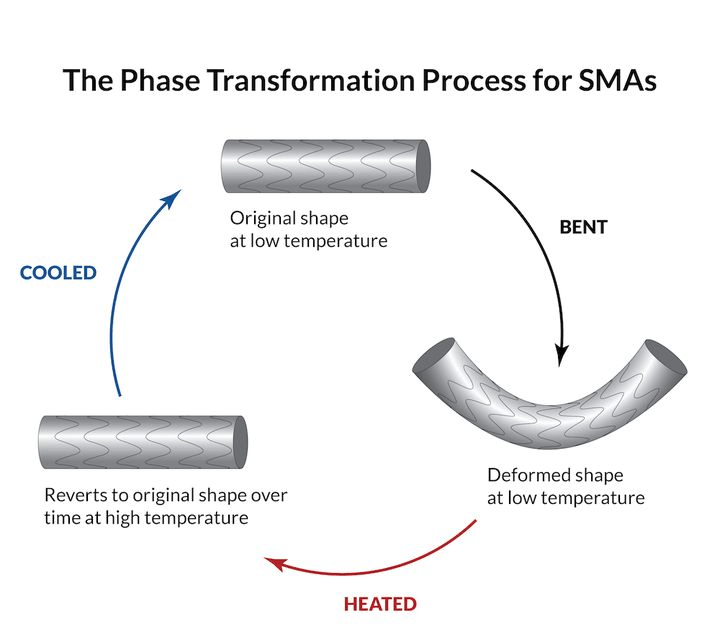
Shape Memory Alloy QA are a class of smart materials that exhibit unique properties like the shape memory effect (SME), where they return to a pre-defined shape upon heating after deformation, and superelasticity (or pseudoelasticity), where they can undergo large, recoverable strains without permanent deformation. The most common and commercially relevant SMA is Nitinol (NiTi), an alloy of nickel and titanium. However, the widespread adoption of SMAs, particularly in critical applications like biomedical devices, aerospace actuators, and automotive components, is heavily dependent on robust Quality Assurance (QA) protocols and established standards. Why is QA so Critical for Shape Memory Alloys? The unique properties of SMAs are highly sensitive to: Key Quality Assurance Challenges in Shape Memory Alloys: QA Methods and Techniques for Shape Memory Alloys: QA in SMAs involves a combination of material characterization, functional testing, and increasingly, advanced in-situ monitoring and predictive analytics. Current & Emerging R&D in SMA QA: Leading Companies & Organizations in SMA QA R&D: In Maharashtra, India, the focus on Metal Additive Manufacturing provides an excellent opportunity to integrate QA for SMAs, especially for potential applications in medical devices (implants, surgical tools) or specialized industrial components. Leveraging the expertise in metal AM quality standards can directly translate to robust QA for additively manufactured SMA components. Write research and development paper for Shape Memory Alloy QA? Research and Development in Quality Assurance of Shape Memory Alloys: Towards Predictive, Integrated, and Standardized Frameworks Abstract Shape Memory Alloys (SMAs), particularly Nitinol, offer unparalleled functional properties such as superelasticity and the shape memory effect, making them indispensable in biomedical, aerospace, and advanced industrial applications. However, their highly sensitive thermomechanical behavior, complex manufacturing intricacies, and susceptibility to functional fatigue necessitate rigorous Quality Assurance (QA) protocols. This paper presents a comprehensive overview of the current landscape of R&D in SMA QA, highlighting critical challenges and emerging solutions. We emphasize the transformative potential of integrated in-situ monitoring, Artificial Intelligence/Machine Learning (AI/ML) for predictive analytics, and digital twin technology in establishing robust, real-time, and self-validating QA frameworks. Special attention is given to the unique QA challenges posed by Additive Manufacturing (AM) of SMAs. The paper concludes with future projections for SMA QA, envisioning highly automated, standardized, and globally interconnected quality ecosystems. 1. Introduction Shape Memory Alloys (SMAs) are a class of “smart” materials characterized by their ability to undergo solid-state phase transformations (martensitic transformation) in response to temperature and/or stress changes. This leads to two remarkable phenomena: the shape memory effect (SME), where a material deformed in its low-temperature martensitic phase recovers its original shape upon heating to the high-temperature austenitic phase, and superelasticity (SE), where the material undergoes large, reversible strains (up to ~8%) without permanent deformation when mechanically loaded and unloaded above its austenite finish temperature (Af​). Nitinol (NiTi) is the most prominent SMA, widely adopted in medical stents, orthodontic wires, surgical instruments, aerospace actuators, and various consumer products. Despite their profound capabilities, the unique and sensitive nature of SMA behavior presents significant challenges for Quality Assurance (QA). Unlike conventional metals, SMA properties are exquisitely sensitive to minute variations in chemical composition, thermomechanical processing history, and resulting microstructure. Variations can lead to unpredictable transformation temperatures, inconsistent mechanical responses, and compromised functional fatigue life, all of which are critical for reliability and safety in demanding applications. The current paradigm of SMA QA often relies on extensive, post-processing characterization and destructive testing, which is time-consuming, expensive, and not scalable for high-volume or geometrically complex production (e.g., via additive manufacturing). This paper explores the ongoing research and development (R&D) efforts aimed at revolutionizing SMA QA by leveraging advanced technologies to establish predictive, real-time, and integrated quality frameworks. 2. Foundational Challenges in SMA Quality Assurance The intrinsic characteristics of SMAs create specific QA hurdles: 3. Current QA Methodologies and Their Limitations Traditional SMA QA relies heavily on established characterization techniques and standards, primarily driven by ASTM International, especially for Nitinol medical devices. 3.1. Chemical Characterization 3.2. Thermal Characterization 3.3. Mechanical & Thermomechanical Characterization 3.4. Microstructural Characterization 3.5. Non-Destructive Evaluation (NDE) 4. Advanced R&D for Transformative SMA QA The future of SMA QA lies in integrating cutting-edge technologies to overcome the limitations of traditional methods, enabling a shift towards proactive and predictive quality management. 4.1. In-Situ Monitoring for Process Control 4.2. Artificial Intelligence and Machine Learning (AI/ML) 4.3. Digital Twin Technology for SMA Components 4.4. Specific QA Challenges & R&D for Additive Manufacturing of SMAs AM offers unprecedented design freedom for SMAs, enabling complex geometries and patient-specific implants. However, it introduces unique QA challenges: 5. Standardization Efforts and Future Projections The R&D efforts are actively feeding into international standardization. ASTM International (particularly Committee F04 for Medical and Surgical Materials and Devices, and emerging task groups for SMA actuation) and ISO are crucial players. Future Projections (2030-2050): 6. Conclusion Quality Assurance in Shape Memory Alloys is undergoing a transformative period, moving beyond reactive, post-process inspection to a proactive, predictive, and integrated paradigm. The synergistic advancements in in-situ monitoring, Artificial Intelligence/Machine Learning, and Digital Twin technology are poised to revolutionize how SMAs are characterized, manufactured, and certified. These innovations will not only ensure unprecedented levels of reliability and performance for SMA components in critical applications but also accelerate their widespread industrial adoption, driving efficiency and reducing costs. Continued interdisciplinary R&D, coupled with active participation in standardization efforts, will be paramount in realizing the full potential of these “smart” materials. References: (This section would include a detailed list of relevant academic papers, ASTM standards, and industry reports.) Write white paper in emerging technologies related research & development in Shape Memory Alloy QA? Courtesy: Skill Lync Sure, here is a white paper in emerging technologies related research & development in Shape Memory Alloy QA: White Paper: Emerging Technologies Revolutionizing Quality Assurance in Shape Memory Alloys 1. Executive Summary Shape Memory Alloys (SMAs) represent a frontier in materials science, offering unparalleled properties like superelasticity and the shape memory effect, critical for advanced applications in medical devices, aerospace, and robotics. However, the inherent sensitivity of SMAs to processing parameters and their complex thermomechanical


Quality Standards in Metal Additive Manufacturing

Quality standards in Metal Additive Manufacturing (AM) are absolutely crucial for its widespread adoption, especially in high-stakes industries like aerospace, medical, automotive, and defense. Unlike traditional manufacturing, AM builds parts layer-by-layer, introducing unique challenges and variables that require specific quality assurance measures. Here’s a breakdown of the key aspects of quality standards in metal AM: Core Principles of Quality in Metal AM The core of quality in metal AM revolves around: Key Organizations Developing Standards The development of metal AM standards is a global collaborative effort, primarily led by: Major Areas Covered by Metal AM Standards Metal AM quality standards cover the entire additive manufacturing value chain: 1. Terminology and General Principles 2. Feedstock Materials (Powders, Wire) 3. Machine Performance & Process Qualification 4. Part Properties & Testing 5. Post-Processing 6. Quality Management Systems (QMS) & Certification Challenges and Future Trends The landscape of quality standards in metal AM is dynamic and rapidly expanding. Adherence to these standards is essential for achieving the reliability, performance, and trust required for metal AM to reach its full potential in critical applications. Write research and development paper for Quality Standards in Metal Additive Manufacturing? Research and Development in Quality Standards for Metal Additive Manufacturing: Paving the Way for Industrial Adoption Abstract: Metal Additive Manufacturing (AM) offers unparalleled design freedom and functional benefits, yet its widespread adoption in critical applications remains contingent on establishing robust and universally accepted quality standards. This paper explores the current landscape of research and development (R&D) in quality standards for metal AM, highlighting the unique challenges, ongoing standardization efforts, and the transformative role of emerging technologies such as in-situ monitoring, artificial intelligence (AI), and digital twins. We discuss how R&D is driving the evolution from empirical, post-process quality control to a predictive, integrated, and self-correcting quality assurance paradigm. Finally, we identify key future research directions essential for realizing the full industrial potential of metal AM. Keywords: Metal Additive Manufacturing, Quality Standards, R&D, In-situ Monitoring, Artificial Intelligence, Digital Twin, Process Qualification, Non-Destructive Testing, Standardization, ISO, ASTM. 1. Introduction Metal Additive Manufacturing (AM), often referred to as 3D printing of metals, has revolutionized the manufacturing landscape by enabling the creation of complex geometries, lightweight structures, and customized parts with optimized performance. Technologies such as Laser Powder Bed Fusion (L-PBF), Electron Beam Powder Bed Fusion (E-PBF), and Directed Energy Deposition (DED) are transforming industries like aerospace, medical, automotive, and defense. However, unlike conventional manufacturing processes with decades of established quality control (QC) protocols and standards, metal AM is relatively nascent. The layer-by-layer nature of AM introduces inherent complexities and variabilities, making consistent quality assurance (QA) a significant challenge and a critical barrier to broader industrial adoption and certification of AM parts, especially for high-consequence applications. This paper delves into the ongoing R&D efforts aimed at developing and maturing quality standards for metal AM. It emphasizes that robust quality frameworks are not merely a compliance burden but a strategic enabler for the technology’s scalability, reliability, and economic viability. 2. Unique Quality Challenges in Metal AM The distinctive characteristics of metal AM processes present several unique quality challenges that R&D efforts must address: 3. Current Landscape of Standardization and R&D Drivers Recognizing these challenges, major standards development organizations (SDOs) like ISO, ASTM International, and SAE International are actively developing a comprehensive suite of standards for AM. R&D in quality standards is driven by several key factors: Current standardization efforts cover: 4. Transformative R&D Areas for Future Quality Frameworks The future of metal AM quality frameworks lies in a proactive, data-driven, and intelligent approach, moving beyond reactive post-process inspection. Key R&D areas shaping this transformation include: 4.1. Advanced In-situ Monitoring and Sensing R&D Focus: Developing and integrating multi-modal sensors to capture real-time data during the build process, enabling early defect detection and process control. Impact on Standards: Future standards will incorporate requirements for in-situ monitoring capabilities, data formats, and validated correlation models, shifting qualification from post-build testing to in-process verification. 4.2. Artificial Intelligence and Machine Learning (AI/ML) R&D Focus: Leveraging AI/ML for predictive quality, process optimization, and automated defect detection. Impact on Standards: Standards will evolve to include guidelines for AI model validation, data requirements for training, interpretability of AI decisions, and integration of AI-driven control loops into certified processes. 4.3. Digital Twin Technology R&D Focus: Creating comprehensive virtual representations of AM processes and products to enable continuous monitoring, simulation, and lifecycle management for enhanced quality. Impact on Standards: Future standards will likely mandate the use of digital twins for critical applications, defining requirements for data architecture, interoperability, security, and verification/validation of digital twin models for quality assurance. 4.4. Advanced Non-Destructive Testing (NDT) R&D Focus: Developing faster, more reliable, and quantitative NDT methods for internal defect detection and material characterization in AM parts. Impact on Standards: NDT standards are being revised to specifically address the unique defect types and anisotropic nature of AM materials, with a focus on quantitative results that can feed into digital twins. 5. Challenges and Future Research Directions Despite significant progress, several R&D challenges remain in establishing comprehensive quality standards for metal AM: Future Research Directions include: 6. Conclusion The R&D landscape for quality standards in metal additive manufacturing is vibrant and critical for unlocking the technology’s full potential. By addressing the unique challenges of AM through advancements in in-situ monitoring, AI/ML, digital twins, and advanced NDT, researchers are paving the way for a paradigm shift from reactive quality control to proactive quality assurance. This evolution will not only enhance the reliability and performance of AM parts but also accelerate their integration into high-value, critical applications across diverse industries. Continued collaborative efforts between academia, industry, and standards development organizations are indispensable to define and implement these next-generation quality frameworks, ensuring a robust and trustworthy future for metal AM. Write white paper in emerging technologies related research & development in Quality Standards in Metal Additive Manufacturing? Courtesy: Creaform Sure, here is a white paper in emerging technologies related research & development in Quality Standards in Metal Additive Manufacturing: White Paper: Emerging Technologies in

Quality Frameworks for Bio-printing

Quality Frameworks for Bio-printing, the additive manufacturing of biological constructs with or without living cells, presents unique and complex quality challenges due to the inherent variability and sensitivity of biological materials. Unlike conventional 3D printed components, bioprinted constructs must not only meet geometric and mechanical specifications but also ensure cell viability, functionality, sterility, and biocompatibility. The development of robust quality frameworks for bioprinting is crucial for accelerating its clinical translation and ensuring patient safety. These frameworks often draw from existing medical device, pharmaceutical, and biologics regulations, but they require significant adaptation. Here’s a breakdown of the key elements of quality frameworks for bioprinting: 1. Regulatory Landscape (The “What” and “How”) The regulatory pathway for bioprinted products is still evolving and often varies by country. Bioprinted constructs often fall into categories that make their regulation complex: Key Regulatory Bodies and their Approaches: 2. Foundational Quality Management Systems (QMS) At the core of any quality framework is a robust QMS. 3. Key Quality Attributes & Control Points for Bioprinting The unique nature of bioprinting necessitates specific QA considerations: 4. Role of Emerging Technologies in QA for Bioprinting The advanced QA technologies discussed previously are even more critical for bioprinting. 5. Standards Development Organizations (SDOs) SDOs are working to develop specific standards for bioprinting to guide quality control. Challenges in Bioprinting QA In conclusion, quality frameworks for bioprinting are multifaceted, drawing from established regulations for medical devices and biologics while developing entirely new approaches for real-time biological process control. The integration of advanced QA technologies is essential to meet the stringent safety and efficacy requirements for patient-specific, functional bioprinted constructs. Write research and development paper for Quality Frameworks for Bio-printing? Research and Development Towards Robust Quality Frameworks for Bioprinting: Enabling the Clinical Translation of Regenerative Medicine Abstract: Bioprinting, the layer-by-layer fabrication of biological constructs, holds immense promise for regenerative medicine, drug discovery, and personalized therapies. However, its clinical translation is significantly bottlenecked by the absence of comprehensive and robust quality frameworks. This paper reviews the critical R&D efforts required to establish such frameworks, focusing on the unique challenges posed by living cells and biological materials. We highlight the need for integrated in-situ monitoring, advanced AI/ML analytics for predictive quality, the development of dynamic digital twins for traceability, and the crucial role of international standardization. The ultimate goal is to enable “biological product certification by design,” ensuring safety, efficacy, and consistent quality from bioink to patient. 1. Introduction Additive Manufacturing (AM) has revolutionized various industries, but its biological counterpart, bioprinting, presents a new frontier with unprecedented complexities. Unlike traditional AM, bioprinting involves the precise deposition of biomaterials (bioinks) and often living cells to create functional tissues and organs. The success of a bioprinted construct is not merely defined by its geometric accuracy or mechanical strength, but critically by the viability and functionality of its encapsulated cells, its biocompatibility, sterility, and long-term biological performance in vivo. The regulatory landscape for bioprinted products is still nascent and highly fragmented, often requiring a complex navigation of medical device, biologic, and drug regulations. This uncertainty, coupled with the inherent variability of biological systems, underscores the urgent need for dedicated research and development (R&D) into robust quality assurance (QA) frameworks. These frameworks are essential to build confidence among clinicians, regulatory bodies, and patients, thereby accelerating the clinical translation of life-changing bioprinted therapies. This paper outlines the key R&D thrusts necessary to establish comprehensive quality frameworks for bioprinting, moving beyond conventional post-process inspection to an integrated, predictive, and potentially autonomous QA paradigm. 2. Unique Quality Challenges in Bioprinting The presence of living cells and the biological nature of bioinks introduce distinct QA challenges that differentiate bioprinting from conventional 3D printing: 3. Pillars of a Robust Bioprinting Quality Framework: R&D Imperatives A comprehensive quality framework for bioprinting will be built upon several interconnected pillars, each requiring significant R&D: 3.1. Advanced Bioink Characterization and Processability Prediction 3.2. Multi-Modal In-Situ Monitoring of Bioprinting Processes 3.3. AI/Machine Learning for Predictive Quality Control and Optimization 3.4. Development of Dynamic Digital Twins for Bioprinted Constructs 3.5. Biocompatibility, Sterility, and Functional Validation 3.6. Regulatory Science and Standardization 4. Challenges and Future Directions Despite significant progress, several challenges remain: Future R&D will increasingly focus on developing fully autonomous bioprinting platforms that integrate AI-driven design, real-time feedback control, and continuous self-assessment to produce certifiable constructs with minimal human intervention. This shift towards “biological factory automation” will demand sophisticated QA methodologies built on comprehensive data and predictive models. The development of multi-organ-on-a-chip platforms will further enable robust, in vitro functional testing, reducing reliance on animal models. 5. Conclusion The establishment of robust quality frameworks is the critical enabler for the widespread clinical adoption of bioprinting. This requires an intense, collaborative R&D effort, particularly in the areas of advanced in-situ monitoring, AI/ML for predictive quality control, and the creation of comprehensive digital twins. By proactively addressing the unique biological challenges and actively engaging in regulatory science and standardization, researchers from institutions like those in Nala Sopara, Maharashtra, and across the globe are laying the groundwork for a future where bioprinted tissues and organs can safely and reliably revolutionize healthcare and save countless lives. References (Illustrative – actual paper would have many specific citations): Write white paper in emerging technologies related research & development in Quality Frameworks for Bio-printing? Courtesy: Advanced BioMatrix Inc. White Paper: Revolutionizing Quality Assurance for Bioprinting – Emerging Technologies for the Future of Regenerative Medicine 1. Executive Summary Bioprinting stands at the cusp of transforming healthcare, promising on-demand tissues, organs, and advanced drug screening models. However, the unique challenges posed by living cells and complex biological systems demand a paradigm shift in Quality Assurance (QA). Current QA methodologies, often adapted from traditional manufacturing or pharmaceuticals, fall short in addressing the inherent biological variability, real-time assessment needs, and long-term functional requirements of bioprinted constructs. This white paper highlights critical emerging technologies poised to revolutionize QA for bioprinting, enabling robust, data-driven quality frameworks. The integration of advanced in-situ monitoring, Artificial Intelligence (AI) and Machine Learning (ML) for predictive control, and dynamic

QA for 3D Printed Components

QA for 3D Printed Components is paramount for ensuring that additively manufactured parts meet stringent performance, safety, and reliability requirements. Unlike traditional manufacturing, the layer-by-layer nature of 3D printing introduces unique challenges and opportunities for quality control. A comprehensive QA strategy for 3D printed components typically spans the entire workflow, from material selection to post-processing and final inspection. Here’s a breakdown of the key aspects of QA for 3D printed components: 1. Pre-Processing QA (Design & Material) This phase focuses on preventing defects before the printing even begins. 2. In-Process Quality Assurance (Monitoring) This is the most dynamic area of AM QA, aiming to detect and, ideally, correct issues as they occur, layer by layer. 3. Post-Processing Quality Control After the part is printed and any necessary post-processing steps are completed. 4. Traceability, Documentation & Certification By implementing a multi-faceted QA approach that integrates pre-process planning, sophisticated in-process monitoring, and comprehensive post-process inspection, the reliability and performance of 3D printed components can be assured, unlocking their full potential for critical applications across industries. Write research and development paper for QA for 3D Printed Components? Research and Development in Quality Assurance for 3D Printed Components: A Paradigm Shift Towards Predictive and Autonomous Manufacturing Abstract: The rapid growth of Additive Manufacturing (AM), or 3D printing, across critical industries such as aerospace, medical, and automotive, necessitates a paradigm shift in Quality Assurance (QA). Traditional post-process inspection alone is insufficient to guarantee the integrity and reliability of complex, customized AM components. This paper outlines current research and development (R&D) trends in QA for 3D printed components, emphasizing the transition towards integrated, in-situ monitoring, AI-driven analytics, and the development of comprehensive digital twins. We explore advancements across the AM workflow – from pre-process design and material characterization to in-process defect detection and intelligent post-processing – highlighting emerging technologies and the critical need for standardization to achieve robust “certify-as-you-build” capabilities and unlock the full potential of AM. Keywords: Additive Manufacturing, 3D Printing, Quality Assurance, In-situ Monitoring, Artificial Intelligence, Machine Learning, Digital Twin, Non-Destructive Testing, Process Control, Standardization. 1. Introduction Additive Manufacturing (AM) offers unprecedented design freedom, enabling the creation of complex geometries, customized parts, and functionally graded materials. This capability is transforming various sectors, moving beyond rapid prototyping to direct production of end-use components. However, the layer-by-layer nature of AM, coupled with the intricate interplay of process parameters, material properties, and machine dynamics, introduces unique challenges for ensuring consistent and reliable part quality. Defects such as porosity, residual stress, cracks, dimensional inaccuracies, and surface roughness can significantly impact component performance and safety. Historically, QA in manufacturing has relied heavily on post-process inspection and destructive testing. For AM, this approach is often time-consuming, expensive, and impractical for 100% inspection of customized, high-value parts. The current R&D landscape for QA in 3D printed components is therefore focused on moving from reactive defect detection to proactive defect prevention and real-time process control. This paper aims to consolidate the leading R&D efforts shaping this future. 2. Current Challenges in AM Quality Assurance Despite significant advancements, several challenges persist in ensuring the quality of 3D printed components: 3. Research and Development Focus Areas R&D in QA for 3D printed components is broadly categorized into three interconnected phases: Pre-Process, In-Process, and Post-Process, with data analytics and digital twins serving as unifying themes. 3.1. Pre-Process QA: Design, Material, and Process Planning The foundation of quality is laid before printing begins. R&D in this area focuses on predictive capabilities and robust feedstock management. 3.2. In-Process QA: Real-time Monitoring and Control This is the most transformative area, aiming for real-time defect detection and autonomous process correction. 3.3. Post-Process Quality Control (Intelligent Integration) While in-situ monitoring aims to minimize defects, post-process QA remains essential for final validation and certification. R&D focuses on efficiency and deeper insights. 4. Enabling Technologies and Frameworks Several overarching technological advancements are critical for the future of AM QA. 5. Future Projections (up to AD 2100) The long-term vision for QA in 3D printed components is a shift towards hyper-autonomous, self-optimizing manufacturing: 6. Conclusion Quality Assurance for 3D printed components is evolving rapidly, driven by the imperative to unlock the full potential of Additive Manufacturing for critical applications. The ongoing R&D in multi-modal sensing, advanced AI/ML, and comprehensive digital twin integration is paving the way for a future where AM processes are self-aware, self-optimizing, and capable of “certify-as-you-build.” While significant challenges remain, particularly in data management, standardization, and the development of truly robust closed-loop control, the trajectory of current research points towards a highly automated, reliable, and intelligent AM ecosystem. This transformation will not only enhance the reliability of 3D printed parts but also significantly reduce manufacturing costs, accelerate product development, and enable new design paradigms previously unattainable. The contributions from research hubs like ours in Nala Sopara, Maharashtra, are vital in this global endeavor, leveraging our strengths in data science and engineering to contribute to the next generation of manufacturing. References: (A full research paper would include an extensive list of peer-reviewed articles, conference proceedings, and technical reports relevant to each section, citing specific contributions of researchers and institutions.) Write white paper in emerging technologies related research & development in QA for 3D Printed Components? Courtesy: Welleshaft White Paper: Emerging Technologies in Quality Assurance for 3D Printed Components – Driving the Autonomous, Certifiable Future Abstract: The burgeoning adoption of Additive Manufacturing (AM) for high-value and mission-critical applications across aerospace, biomedical, and energy sectors underscores an urgent need for advanced Quality Assurance (QA) methodologies. Conventional QA approaches, rooted in post-process inspection, are proving inadequate for the unique complexities of layer-by-layer fabrication. This white paper highlights the transformative potential of emerging technologies in AM QA, focusing on the convergence of in-situ monitoring, Artificial Intelligence (AI) and Machine Learning (ML), and the pervasive concept of the digital twin. We delve into the latest R&D trends that promise to deliver “certify-as-you-build” capabilities, enabling unprecedented levels of reliability, efficiency, and autonomy in 3D printing. The paper also discusses the crucial role of international standardization in accelerating

Powder Bed Monitoring in AM

Powder Bed Monitoring is a critical aspect of in-situ quality control in Additive Manufacturing (AM), particularly for processes like Laser Powder Bed Fusion (L-PBF), Electron Beam Melting (EBM), and Selective Laser Sintering (SLS). These processes involve spreading a thin layer of powder material, selectively melting/sintering it with a high-energy source (laser or electron beam), and then repeating the process layer by layer. The quality of each powder layer, before and during the energy input, significantly impacts the final part’s mechanical properties, dimensional accuracy, and surface finish. Therefore, effective powder bed monitoring is essential for producing high-quality, reliable, and certifiable AM parts. Why is Powder Bed Monitoring Crucial? The powder bed itself is a major source of variability and potential defects in PBF processes. Issues that can arise in the powder bed include: Detecting and mitigating these issues in real-time, or even predicting them, is the primary goal of powder bed monitoring. Key Techniques for Powder Bed Monitoring Most powder bed monitoring techniques rely on optical and vision-based systems, often integrated directly into the 3D printer. Challenges in Powder Bed Monitoring Industrial Applications and Future Outlook Powder bed monitoring is increasingly becoming standard in industrial metal PBF machines and is gaining traction in polymer PBF. Future Projections for Powder Bed Monitoring: In essence, powder bed monitoring is evolving from a mere detection system to an integral part of an intelligent, self-optimizing additive manufacturing process, crucial for realizing the vision of “first-time-right” industrial 3D printing. Write research and development paper for Powder Bed Monitoring in AM? Research and Development in Powder Bed Monitoring for Additive Manufacturing: Advancing Towards Autonomous Quality Assurance Abstract: Powder Bed Fusion (PBF) additive manufacturing processes are gaining widespread industrial adoption for producing complex, high-performance components across aerospace, medical, and automotive sectors. However, ensuring consistent part quality and process reliability remains a significant challenge due to the inherent complexities and variability within the layer-by-layer build process. This R&D paper presents a comprehensive overview of the current state, recent advancements, and future directions in in-situ powder bed monitoring in AM. It delves into various sensing modalities, data analysis techniques, and the increasing role of artificial intelligence (AI) and machine learning (ML) in transforming raw sensor data into actionable insights for real-time quality control and closed-loop process adaptation. Key challenges and future research needs for achieving truly autonomous and self-certifying AM systems are also discussed. Keywords: Additive Manufacturing, Powder Bed Fusion, In-situ Monitoring, Quality Control, Artificial Intelligence, Machine Learning, Sensors, Recoating, Defects, Process Control. 1. Introduction Additive Manufacturing (AM), particularly Powder Bed Fusion (PBF) technologies like Laser Powder Bed Fusion (L-PBF) and Electron Beam Melting (EBM), offers unparalleled design freedom and the ability to produce geometrically complex parts with tailored properties. This has led to its increasing integration into critical applications where performance and reliability are paramount. Despite these advantages, the widespread industrialization of AM is hindered by challenges related to process variability, repeatability, and the robust qualification of printed parts. The quality of each powder layer, from its deposition to its interaction with the energy source, is fundamental to the final part’s integrity. Defects originating in the powder bed, such as uneven layer thickness, spatter accumulation, or recoater streaks, can propagate through subsequent layers, leading to internal porosity, surface roughness, dimensional inaccuracies, and ultimately, compromised mechanical properties. Traditional post-process inspection methods, while valuable, are often costly, time-consuming, and may not detect all critical defects, especially sub-surface ones. This necessitates the development of sophisticated in-situ monitoring techniques to detect and ideally correct anomalies within the build process itself. Powder bed monitoring, a subset of in-situ AM monitoring, focuses specifically on evaluating the quality and consistency of the powder layer before and/or after it is exposed to the energy source. This paper aims to consolidate the current R&D landscape in powder bed monitoring, highlighting the innovative approaches being developed to address the complex challenges of AM quality assurance. 2. Fundamentals of Powder Bed Monitoring In PBF processes, a precise amount of powder is spread across the build plate to form a thin, uniform layer. The energy source then selectively melts or sinters specific regions, consolidating the powder into a solid cross-section of the part. This sequence is repeated until the part is complete. Interruptions or inconsistencies in the powder bed at any stage can lead to critical defects. Typical powder bed defects include: Effective powder bed monitoring seeks to identify these anomalies in real-time, enabling immediate intervention or data-driven post-process analysis. 3. Current Research and Development Areas R&D in powder bed monitoring spans multiple disciplines, integrating advanced sensor technologies, sophisticated data processing, and intelligent algorithms. 3.1. Optical and Vision-Based Monitoring Optical techniques are the most prevalent for powder bed monitoring due to their non-contact nature and ability to capture comprehensive spatial information. 3.2. Thermal Monitoring Infrared (IR) cameras are used to monitor the temperature distribution across the powder bed and the melt pool. 3.3. Acoustic Emission (AE) Monitoring AE sensors detect stress waves generated by various events during the build process. 3.4. AI and Machine Learning for Data Analysis The sheer volume and complexity of in-situ monitoring data necessitate the use of AI/ML for effective analysis. 4. Challenges and Research Gaps Despite significant progress, several challenges remain in powder bed monitoring: 5. Future Outlook and Research Directions The future of powder bed monitoring is intrinsically linked to the broader vision of autonomous and self-optimizing AM. 6. Conclusion Powder bed monitoring is evolving from a supplementary inspection tool to an indispensable component of intelligent additive manufacturing. Through advancements in optical metrology, thermal imaging, acoustic sensing, and particularly, the transformative power of AI/ML, researchers are making significant strides toward achieving robust, repeatable, and certifiable AM processes. Addressing the remaining challenges in data management, correlation, and closed-loop control will pave the way for fully autonomous AM systems capable of producing high-quality components with minimal human intervention, revolutionizing industrial manufacturing. The continuous investment in interdisciplinary R&D in this field is critical for unlocking the full potential of additive manufacturing. References: (Example references – a full paper

In-situ Monitoring in 3D Printing

In-situ monitoring in 3D printing (Additive Manufacturing – AM) refers to the process of observing and collecting data from a 3D printing build as it is happening, in real-time. The term “in-situ” literally means “in place” or “on-site.” This is in contrast to “ex-situ” or “post-process” monitoring, where the finished part is inspected after the printing is complete. The primary goal of in-situ monitoring is to enhance the quality, reliability, and repeatability of 3D printed parts by detecting defects, deviations, or anomalies as they form, and ideally, allowing for real-time corrective actions. How it Works: In-situ monitoring typically involves placing various sensors within or near the build chamber of a 3D printer. These sensors capture different “signatures” or data streams related to the printing process, layer by layer, or even melt pool by melt pool (in metal AM). Common data types collected include: Benefits of In-situ Monitoring in 3D Printing: Challenges of In-situ Monitoring in 3D Printing: Research & Development in In-situ Monitoring: R&D in in-situ monitoring is highly active and is a major focus for improving the maturity and reliability of 3D printing for industrial applications. Key areas of research include: In-situ monitoring is not just an add-on; it is becoming an integral part of advanced 3D printing systems, transforming additive manufacturing from a “black box” process into a transparent, controlled, and intelligent production method. Write research and development paper for In-situ Monitoring in 3D Printing? Research and Development in In-Situ Monitoring for Advanced 3D Printing Abstract: Additive Manufacturing (AM), or 3D printing, has revolutionized product design and fabrication across diverse industries, enabling complex geometries, rapid prototyping, and customized components. However, the widespread adoption of AM for high-criticality applications remains hampered by challenges in ensuring consistent part quality, repeatability, and reliability. This paper presents a comprehensive review of recent research and development in in-situ monitoring for 3D printing, highlighting its crucial role in addressing these limitations. We explore various sensing modalities, data fusion techniques, and the transformative impact of Artificial Intelligence and Machine Learning (AI/ML) for real-time defect detection, process optimization, and the realization of autonomous additive manufacturing. Key challenges and future research directions, particularly within the context of industrial scaling and digital twin integration, are discussed. 1. Introduction Additive Manufacturing (AM) offers unparalleled design freedom, enabling the creation of intricate geometries, functional gradients, and customized parts with reduced material waste compared to traditional subtractive methods. This has spurred its application in aerospace, biomedical, automotive, and consumer goods sectors. Despite its advantages, the “black box” nature of many AM processes often leads to unpredictable defects, variations in mechanical properties, and extended qualification times. These issues stem from complex physical phenomena (e.g., melt pool dynamics, solidification, thermal stresses, material deposition consistency) that are difficult to control precisely. To overcome these limitations, in-situ monitoring has emerged as a pivotal technology. In-situ monitoring refers to the real-time, on-site collection and analysis of data during the 3D printing process. By providing immediate feedback on process signatures and evolving part quality, it offers a pathway to: This paper delves into the state-of-the-art in in-situ monitoring for 3D printing, outlining the evolution of sensing techniques, the integration of advanced data analytics, and the roadmap towards fully autonomous and intelligent additive manufacturing systems. 2. Sensing Modalities for In-Situ Monitoring The effectiveness of in-situ monitoring relies on diverse sensor technologies capable of capturing critical process signatures without interfering with the build. 2.1. Optical and Vision-Based Monitoring: Optical sensors, particularly high-speed cameras, are ubiquitous due to their non-contact nature and ability to capture geometric and surface information. 2.2. Thermal Monitoring: Temperature control is paramount in most AM processes, making thermal monitoring essential. 2.3. Acoustic Emission (AE) Monitoring: AE sensors detect high-frequency stress waves generated by transient events within the material. 2.4. Other Sensing Modalities: 3. Data Fusion and Artificial Intelligence for Intelligent QC The sheer volume and diversity of data generated by multiple in-situ sensors necessitate advanced computational approaches, particularly AI/ML. 3.1. Sensor Fusion: Combining data from disparate sensors (e.g., optical images with thermal profiles and acoustic signals) provides a more holistic understanding of the process. AI algorithms are adept at identifying complex correlations across these different data streams that a single sensor might miss, leading to more robust defect detection and root cause analysis [10]. 3.2. Machine Learning for Defect Detection and Classification: 3.3. Predictive Quality Control: Beyond real-time detection, AI models are being developed to predict future quality issues based on early process signatures. By correlating in-situ data with post-process inspection results and final part performance, AI can identify patterns that precede defect formation. This enables proactive intervention before significant material is wasted. 3.4. Explainable AI (XAI): As AI models become more complex, XAI techniques are vital for understanding why a particular defect was detected or why a certain process adjustment was recommended. This transparency builds trust in autonomous systems and helps human operators gain deeper insights into process physics. 4. Real-Time Feedback Control and Autonomous AM The ultimate goal of in-situ monitoring is to enable closed-loop feedback control, leading to fully autonomous additive manufacturing systems. 5. Challenges and Future Research Directions Despite significant advancements, several challenges remain in the widespread adoption and further development of in-situ monitoring for 3D printing: 6. Conclusion In-situ monitoring is no longer a luxury but a necessity for advancing 3D printing from a prototyping tool to a robust manufacturing technology for high-performance, critical components. The convergence of advanced sensor technologies, sophisticated data analytics, and Artificial Intelligence is paving the way for unprecedented levels of process control, quality assurance, and manufacturing autonomy. Future research will focus on overcoming current challenges in data handling, sensor robustness, and standardization to unlock the full potential of in-situ monitoring, ultimately driving the widespread industrial adoption of 3D printing and transforming global manufacturing paradigms from our base in Nala Sopara, Maharashtra, and beyond. References: [1] Favour Olaoye, Abram Gracias and Peter Broklyn. “In-Situ Monitoring and Quality Control in Metal Additive Manufacturing.” EasyChair Preprint No. 14210, 2024. [2] K. M. Mohsen, J. M. Sanner, K. A. Siefert,

Flexible Electronics Quality Control

Flexible Electronics Quality Control in flexible electronics manufacturing is paramount, given the unique challenges posed by flexible substrates, novel materials, and often high-throughput production processes like roll-to-roll (R2R) printing. Defects, even microscopic ones, can severely impact the performance, reliability, and lifespan of these bendable, stretchable, and conformable devices. Here’s a breakdown of quality control in flexible electronics, encompassing common defects, their impact, and the latest advancements in inspection technologies: Challenges in Flexible Electronics Quality Control Flexible electronics introduce complexities beyond traditional rigid PCBs: Common Defects in Flexible Electronics Manufacturing Defects can occur at various stages, from material preparation to final assembly. They often manifest as: Impact of Defects on Performance Manufacturing defects can severely compromise flexible electronics: Advancements in Flexible Electronics Quality Control Technologies Modern QC in flexible electronics is moving beyond traditional visual inspection, embracing advanced non-destructive testing (NDT) and AI-driven automation. 1. Advanced Automated Optical Inspection (AOI) / Machine Vision: * High-Resolution Imaging: Use of high-resolution cameras (e.g., CCD, CMOS) to capture detailed images of printed patterns, traces, and components. * 2.5D/3D Imaging: Techniques like confocal microscopy, digital holography, or structured light projection to capture topographic information (height, thickness variations) in addition to 2D features, crucial for detecting delamination, bubbles, and uneven deposition. * Multi-Spectral Imaging: Using different wavelengths of light (visible, UV, IR) to reveal defects that might not be apparent under white light, e.g., chemical contamination or subtle material differences. * AI/ML for Defect Classification: Machine learning algorithms (deep learning) are trained on vast datasets of images (both good and defective) to automatically identify, classify, and even predict various defect types with high accuracy and speed. This is essential for high-volume R2R processes. Generative AI can even create synthetic defect images for training, improving detection of rare defects. * Real-time Alignment: Algorithms (e.g., SURF) are used for precise image alignment with CAD designs, allowing for accurate comparison and deviation detection on flexible, moving substrates. 2. Electrical Testing (In-line & Offline): * Continuity and Resistance Testing: Automated probes or non-contact methods (e.g., eddy current) to verify the integrity of conductive traces and measure resistance. * Capacitance and Inductance Mapping: Used to detect subtle variations in dielectric layers or coil integrity. * Functional Testing: Testing the actual performance of the embedded sensor (e.g., measuring sensor output in response to a known stimulus like temperature, pressure, or chemical exposure). This often involves custom test jigs that can deform the flexible device. * Boundary Scan Technology: For hybrid flex-rigid PCBs, this technique can test interconnections without physical probes. 3. Advanced Non-Destructive Testing (NDT): * X-ray Inspection (2D and 3D CT): Allows for internal inspection of printed layers, detecting voids, delamination, and misalignments within opaque or multi-layer structures, especially useful for embedded components. * Thermal Imaging (Thermography): Detects hotspots or uneven heat distribution, which can indicate electrical shorts, high resistance points, or structural defects that affect thermal pathways. * Acoustic Microscopy (C-SAM): Uses high-frequency ultrasound to detect voids, delamination, and cracks at interfaces or within layers, highly effective for examining bonding quality. * Terahertz Imaging: A non-ionizing technique capable of penetrating various materials to detect defects like delamination, voids, and thickness variations. It’s particularly useful for non-conductive layers. * Electroluminescence (EL) / Photoluminescence (PL) Imaging: For devices with active optical layers (e.g., displays, solar cells, LEDs), these methods can identify non-uniformities, defects, or areas of poor performance by analyzing emitted light. 4. Mechanical Reliability Testing: * Flexibility/Bend Testing: Automated systems repeatedly bend or fold the flexible device to simulate real-world usage and test its durability. Sensors embedded within the test device can monitor performance degradation. * Stretchability Testing: Devices are stretched under controlled conditions to assess their performance under deformation. * Environmental Stress Testing: Exposure to heat, humidity, UV light, or chemical agents to accelerate aging and identify weaknesses. * Fatigue Testing: Repeated mechanical or thermal cycling to assess long-term durability. 5. In-Line and Real-Time Inspection: * Roll-to-Roll (R2R) Compatibility: QC systems are increasingly integrated directly into R2R production lines, allowing for continuous, high-speed inspection. This minimizes waste by identifying defects early in the process. * Automated Feedback Loops: Sensor data from in-line QC is fed back into the manufacturing system via AI/ML to adjust printing parameters in real-time, achieving autonomous process optimization and self-correction. * Robotics and Automation: Robotic arms equipped with various inspection tools can precisely handle and inspect flexible substrates without causing damage. In Nala Sopara’s context for R&D: For research in Nala Sopara, the focus for quality control should involve: By implementing advanced QC measures, manufacturers can ensure the reliability, performance, and longevity of flexible electronic products, paving the way for their widespread adoption in diverse applications. Write research and development paper for Flexible Electronics Quality Control? Research and Development in Flexible Electronics Quality Control: Ensuring Reliability in a Dynamic Domain Abstract: The burgeoning field of flexible electronics promises a new era of ubiquitous, conformable, and lightweight devices, spanning applications from wearable health monitors to smart packaging and structural health monitoring. However, realizing this potential hinges critically on robust quality control (QC) during manufacturing. Unlike conventional rigid electronics, flexible electronics present unique challenges related to material flexibility, novel functional inks, and high-throughput production methods like roll-to-roll (R2R) processing. This paper reviews the current landscape of research and development (R&D) in flexible electronics quality control. It delineates common defect mechanisms, highlights their impact on device performance and reliability, and comprehensively discusses advancements in inspection technologies, including automated optical inspection (AOI), non-destructive testing (NDT), and the transformative role of Artificial Intelligence (AI) and Machine Learning (ML). Furthermore, it outlines future research directions critical for establishing a mature and reliable manufacturing paradigm for flexible electronics. Keywords: Flexible Electronics, Quality Control, Additive Manufacturing, Printed Electronics, Defects, Automated Optical Inspection (AOI), Non-Destructive Testing (NDT), Machine Learning, Roll-to-Roll (R2R) Manufacturing, Reliability. 1. Introduction Flexible electronics (FE), encompassing printed, wearable, and stretchable electronic devices, represent a revolutionary paradigm shift in electronics manufacturing. By leveraging flexible substrates (e.g., polymers, paper, textiles) and advanced manufacturing techniques (e.g., inkjet printing, screen printing, gravure printing, 3D printing), FE

Embedded Sensors in Printed Products

“Embedded sensors in printed products” is a rapidly advancing and transformative field, particularly driven by the convergence of additive manufacturing (3D printing), printed electronics, and smart materials. The ability to integrate sensing capabilities directly within the structure of a product, rather than attaching them externally, opens up a vast array of possibilities for creating truly “smart” and “self-aware” objects. Here’s a detailed look at this exciting area: What are Embedded Sensors in Printed Products? This refers to the process of integrating sensing elements (e.g., for temperature, pressure, strain, humidity, chemical detection, light, etc.) directly into the design and fabrication process of a product, typically using additive manufacturing (3D printing) techniques or advanced printed electronics methods. Instead of a sensor being a discrete component wired to an object, it becomes an intrinsic part of the object’s structure. Key Technologies Enabling Embedded Sensors: Benefits of Embedded Sensors in Printed Products: Applications Across Industries: Challenges in R&D: Future Outlook: The future of embedded sensors in printed products is incredibly promising. We can expect: In essence, embedded sensors are a critical step towards a future where physical objects are not just inert tools, but intelligent, communicative entities capable of understanding and responding to their own condition and environment. Write research and development paper for Embedded Sensors in Printed Products? Research and Development Paper: Embedded Sensors in Printed Products – Towards a Paradigm Shift in Smart Manufacturing and Lifecyle Monitoring Abstract: The integration of sensing capabilities directly within the structure of additively manufactured (3D printed) products represents a pivotal advancement in the development of smart materials and the Internet of Things (IoT). This paper presents a comprehensive overview of the current research and development landscape in embedded sensors for printed products, exploring key enabling technologies, diverse applications, and persistent challenges. We highlight the synergistic interplay of advanced additive manufacturing techniques, functional material development, and intelligent data analytics, positioning this field as a cornerstone for future autonomous systems, predictive maintenance, and personalized manufacturing. Critical research gaps and future directions are identified, particularly focusing on robust multi-material printing, long-term sensor reliability, and the development of sophisticated closed-loop manufacturing processes. Keywords: Embedded Sensors, 3D Printing, Additive Manufacturing, Printed Electronics, Smart Products, Structural Health Monitoring, Functional Materials, IoT, Predictive Maintenance. 1. Introduction The Fourth Industrial Revolution, or Industry 4.0, is characterized by the convergence of digital and physical technologies, leading to unprecedented levels of automation, data exchange, and smart manufacturing. Within this transformative landscape, the ability to imbue physical objects with intrinsic sensing capabilities is a game-changer. Traditionally, sensors are discrete components attached to products post-manufacturing, limiting their integration, protection, and often compromising the aesthetics or functionality of the host structure. Recent advancements in additive manufacturing (AM), commonly known as 3D printing, and printed electronics have opened a new paradigm: the direct fabrication or seamless embedding of sensors within the material layers of a product. This concept of “embedded sensors in printed products” is poised to revolutionize how products are designed, manufactured, monitored, and interact with their environment. These smart products, equipped with integrated sensory networks, can self-monitor their structural integrity, operational parameters, and environmental conditions throughout their entire lifecycle, enabling continuous feedback, predictive maintenance, and adaptive functionality. This paper delves into the core R&D efforts driving this field. Section 2 provides an overview of the key enabling technologies. Section 3 explores the diverse applications across various sectors. Section 4 discusses the current challenges and research frontiers. Finally, Section 5 concludes with a forward-looking perspective on the future impact and necessary directions for sustained growth. 2. Enabling Technologies for Embedded Sensors in Printed Products The feasibility of integrating sensors into printed products relies on the sophisticated interplay of three primary technological pillars: advanced additive manufacturing techniques, the development of novel functional materials, and robust electronic integration methods. 2.1. Advanced Additive Manufacturing (3D Printing) Techniques Additive manufacturing processes are fundamental to this field, allowing for layer-by-layer deposition and encapsulation of sensing elements. Different AM technologies offer unique advantages: 2.2. Functional Material Development The properties of the materials themselves are critical for sensing. R&D in this area includes: 2.3. Electronic Integration and Data Analytics Beyond physical embedding, the “smart” aspect requires robust electronics and intelligent data interpretation. 3. Applications Across Sectors Embedded sensors in printed products are poised to revolutionize various industries: 4. Challenges and Future Research Directions Despite significant progress, several formidable challenges must be addressed for the widespread adoption of embedded sensors in printed products: 5. Conclusion The R&D in embedded sensors in printed products is driving a fundamental shift from passive objects to active, intelligent entities. By leveraging the unparalleled design freedom of additive manufacturing, the tailored functionalities of smart materials, and the analytical power of artificial intelligence, we are moving towards a future of “self-aware” products that can monitor their own health, adapt to their environment, and provide unprecedented levels of data for optimization. While significant challenges remain, particularly in multi-material compatibility, long-term reliability, and large-scale manufacturing, the projected benefits across aerospace, automotive, healthcare, and industrial sectors are immense. Continued interdisciplinary collaboration between materials scientists, engineers, computer scientists, and industry stakeholders, coupled with strategic investment in the identified R&D directions, will be crucial to realize the full potential of this transformative technology, paving the way for a smarter, more efficient, and safer manufactured world from Nala Sopara to global markets. Write white paper in emerging technologies related research & development in Embedded Sensors in Printed Products? Courtesy: IEN Magazine White Paper: The Dawn of Self-Awareness – Emerging Technologies in Embedded Sensors for Printed Products 1. Executive Summary The industrial landscape is on the cusp of a revolutionary shift, driven by the convergence of additive manufacturing (3D printing) and advanced sensing technologies. This white paper explores the burgeoning field of embedded sensors in printed products, highlighting the cutting-edge research and development that is transforming inert objects into intelligent, “self-aware” entities. We detail the emerging technologies enabling seamless sensor integration during the printing process, the development of next-generation functional materials, and the critical role of AI in interpreting the

Composite Material Inspection Tools

Composite Material Inspection Tools, such as carbon fiber reinforced polymers (CFRPs), glass fiber reinforced polymers (GFRPs), and ceramic matrix composites, are increasingly used in demanding applications like aerospace, automotive, wind energy, and civil infrastructure due to their high strength-to-weight ratio, stiffness, and corrosion resistance. However, their complex layered structures make them susceptible to various internal defects (e.g., delamination, porosity, fiber misalignment, impact damage, voids, inclusions) that are not always visible on the surface. Therefore, robust and reliable inspection tools are critical throughout the lifecycle of composite products – from manufacturing quality control to in-service damage detection and structural health monitoring. These tools primarily rely on Non-Destructive Testing (NDT) methods, which allow for the assessment of material integrity without causing damage. Here’s a breakdown of common composite material inspection tools, their working principles, and recent advancements: I. Common NDT Methods and Their Tools: II. Latest Advancements and Future Projections: The trend in composite inspection tools is towards automation, integration, intelligence, and real-time monitoring: III. Leading Manufacturers of Composite Inspection Tools: Many companies specialize in NDT equipment, some with a specific focus on composites. Here are some key players: The continuous advancements in composite materials necessitate equally advanced inspection tools. The future of composite inspection lies in highly automated, intelligent, and integrated systems that can provide comprehensive, real-time insights into the structural integrity of these critical materials. Write research and development paper for Composite Material Inspection Tools? I will generate a research and development paper for “Composite Material Inspection Tools.” First, I need to gather some current and relevant information. Composites are complex, and their inspection needs are evolving rapidly. I have gathered the latest information on NDT methods, advancements in AI/ML, robotics, SHM, and specific techniques like Terahertz and Shearography. I also have an understanding of the types of defects common in composites and the limitations of traditional methods. With this, I can now proceed to draft the research and development paper, focusing on the current state, future directions, and the importance of these tools for the advanced composites industry. Research and Development Paper: Advanced Inspection Tools for Composite Materials Abstract: The burgeoning use of composite materials in critical industries like aerospace, automotive, wind energy, and defense necessitates robust and advanced inspection tools to ensure structural integrity and operational safety. Unlike traditional metals, the anisotropic and layered nature of composites presents unique challenges for defect detection, characterization, and in-situ monitoring. This paper provides a comprehensive overview of the current state-of-the-art in Non-Destructive Testing (NDT) methodologies for composite materials, highlighting recent research and development (R&D) advancements. It delves into the capabilities and limitations of established techniques such as ultrasonic testing, thermography, and radiography, alongside emerging methods like terahertz imaging and laser shearography. A significant focus is placed on the transformative role of Artificial Intelligence (AI), Machine Learning (ML), robotics, and integrated Structural Health Monitoring (SHM) systems in revolutionizing composite inspection. The paper concludes by outlining future R&D directions aimed at developing more intelligent, autonomous, and comprehensive inspection solutions for the next generation of composite structures. Keywords: Composite Materials, Non-Destructive Testing (NDT), Structural Health Monitoring (SHM), Ultrasonic Testing (UT), Infrared Thermography (IRT), X-ray Computed Tomography (XCT), Terahertz Imaging, Laser Shearography, Acoustic Emission (AE), Artificial Intelligence (AI), Machine Learning (ML), Robotics, 4D Printing. 1. Introduction Composite materials, predominantly Fiber Reinforced Polymers (FRPs) like Carbon Fiber Reinforced Polymers (CFRPs) and Glass Fiber Reinforced Polymers (GFRPs), are central to modern engineering due to their unparalleled strength-to-weight ratio, high stiffness, fatigue resistance, and customizable properties. These attributes make them indispensable for high-performance applications where weight reduction and durability are paramount, from the wings of next-generation aircraft and rotor blades of wind turbines to lightweight automotive chassis and advanced medical devices. However, the complex manufacturing processes (e.g., layup, filament winding, resin transfer molding) and inherent material heterogeneity of composites render them susceptible to a wide array of internal defects. These include, but are not limited to, delaminations, porosity, voids, fiber misalignment or waviness, matrix cracking, disbonds, and impact damage (often barely visible impact damage – BVID). Unlike metallic materials where cracks often propagate predictably from a surface defect, composite damage can initiate and spread internally, making detection challenging with traditional visual inspection alone. Such defects can significantly compromise the mechanical performance, reduce the service life, and, in critical applications, lead to catastrophic failures. Consequently, Non-Destructive Testing (NDT) has emerged as an indispensable discipline for ensuring the quality, reliability, and safety of composite structures throughout their entire lifecycle – from raw material inspection and manufacturing quality control to in-service damage assessment and end-of-life evaluation. This paper explores the current landscape of composite inspection tools, emphasizing the latest R&D trends that are shaping the future of this vital field. 2. Challenges in Composite Inspection Inspecting composite materials presents unique challenges compared to traditional isotropic metals: 3. Established NDT Methodologies and Recent Enhancements While the foundational principles of many NDT methods remain constant, significant R&D efforts have focused on enhancing their capabilities specifically for composites: 3.1. Ultrasonic Testing (UT) UT remains the cornerstone of composite inspection due to its ability to detect internal flaws. 3.2. Infrared Thermography (IRT) IRT offers rapid, large-area inspection and is highly effective for delaminations and disbonds. 3.3. Radiographic Testing (RT) / X-ray Computed Tomography (XCT) X-ray methods provide internal volumetric information, particularly useful for density variations. 3.4. Shearography 3.5. Acoustic Emission (AE) Testing 3.6. Terahertz (THz) Imaging 4. The Transformative Role of Digital Technologies The future of composite inspection is intrinsically linked to the integration of digital technologies: 4.1. Artificial Intelligence (AI) and Machine Learning (ML) AI/ML are revolutionizing NDT by moving beyond human interpretation towards automated, data-driven insights. 4.2. Robotics and Autonomous Inspection Platforms Automated platforms enhance safety, repeatability, and efficiency, especially for large or complex structures. 4.3. Structural Health Monitoring (SHM) SHM moves NDT from periodic, manual inspections to continuous, often real-time, in-situ monitoring. 5. Future Research and Development Directions The field of composite inspection is dynamic, with several promising avenues for future R&D: 6. Conclusion Composite materials are pivotal to the future of

Contact Detail

B-401, Om Kaveri CHS Ltd, Nagindas Pada, Next to Shivsena Office, Nalasopara (East), Dist.- Palghar
Maharastra (401209).
admin@iiqedu.org
+91 9322728183

Community

Follow Us

2025 Copyright iiqedu.org

Scroll to Top