Shape Memory Alloy QA
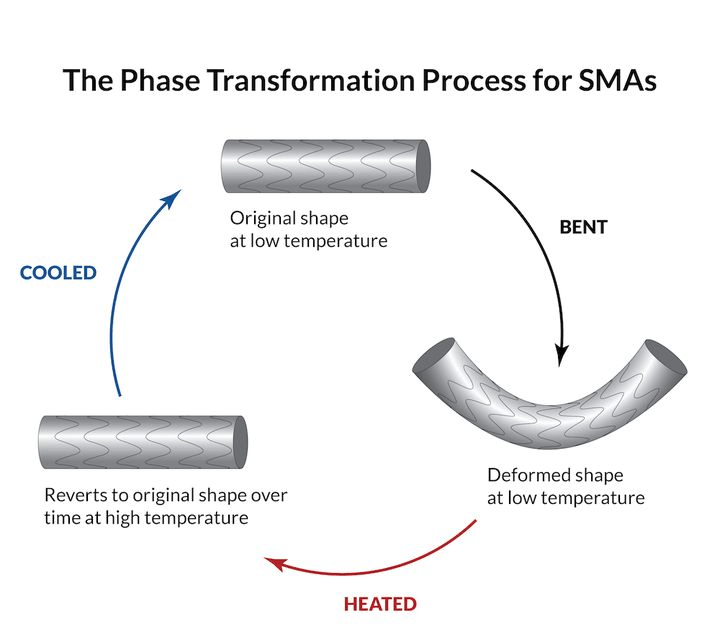
Shape Memory Alloy QA are a class of smart materials that exhibit unique properties like the shape memory effect (SME), where they return to a pre-defined shape upon heating after deformation, and superelasticity (or pseudoelasticity), where they can undergo large, recoverable strains without permanent deformation. The most common and commercially relevant SMA is Nitinol (NiTi), an alloy of nickel and titanium. However, the widespread adoption of SMAs, particularly in critical applications like biomedical devices, aerospace actuators, and automotive components, is heavily dependent on robust Quality Assurance (QA) protocols and established standards. Why is QA so Critical for Shape Memory Alloys? The unique properties of SMAs are highly sensitive to: Key Quality Assurance Challenges in Shape Memory Alloys: QA Methods and Techniques for Shape Memory Alloys: QA in SMAs involves a combination of material characterization, functional testing, and increasingly, advanced in-situ monitoring and predictive analytics. Current & Emerging R&D in SMA QA: Leading Companies & Organizations in SMA QA R&D: In Maharashtra, India, the focus on Metal Additive Manufacturing provides an excellent opportunity to integrate QA for SMAs, especially for potential applications in medical devices (implants, surgical tools) or specialized industrial components. Leveraging the expertise in metal AM quality standards can directly translate to robust QA for additively manufactured SMA components. Write research and development paper for Shape Memory Alloy QA? Research and Development in Quality Assurance of Shape Memory Alloys: Towards Predictive, Integrated, and Standardized Frameworks Abstract Shape Memory Alloys (SMAs), particularly Nitinol, offer unparalleled functional properties such as superelasticity and the shape memory effect, making them indispensable in biomedical, aerospace, and advanced industrial applications. However, their highly sensitive thermomechanical behavior, complex manufacturing intricacies, and susceptibility to functional fatigue necessitate rigorous Quality Assurance (QA) protocols. This paper presents a comprehensive overview of the current landscape of R&D in SMA QA, highlighting critical challenges and emerging solutions. We emphasize the transformative potential of integrated in-situ monitoring, Artificial Intelligence/Machine Learning (AI/ML) for predictive analytics, and digital twin technology in establishing robust, real-time, and self-validating QA frameworks. Special attention is given to the unique QA challenges posed by Additive Manufacturing (AM) of SMAs. The paper concludes with future projections for SMA QA, envisioning highly automated, standardized, and globally interconnected quality ecosystems. 1. Introduction Shape Memory Alloys (SMAs) are a class of “smart” materials characterized by their ability to undergo solid-state phase transformations (martensitic transformation) in response to temperature and/or stress changes. This leads to two remarkable phenomena: the shape memory effect (SME), where a material deformed in its low-temperature martensitic phase recovers its original shape upon heating to the high-temperature austenitic phase, and superelasticity (SE), where the material undergoes large, reversible strains (up to ~8%) without permanent deformation when mechanically loaded and unloaded above its austenite finish temperature (Af). Nitinol (NiTi) is the most prominent SMA, widely adopted in medical stents, orthodontic wires, surgical instruments, aerospace actuators, and various consumer products. Despite their profound capabilities, the unique and sensitive nature of SMA behavior presents significant challenges for Quality Assurance (QA). Unlike conventional metals, SMA properties are exquisitely sensitive to minute variations in chemical composition, thermomechanical processing history, and resulting microstructure. Variations can lead to unpredictable transformation temperatures, inconsistent mechanical responses, and compromised functional fatigue life, all of which are critical for reliability and safety in demanding applications. The current paradigm of SMA QA often relies on extensive, post-processing characterization and destructive testing, which is time-consuming, expensive, and not scalable for high-volume or geometrically complex production (e.g., via additive manufacturing). This paper explores the ongoing research and development (R&D) efforts aimed at revolutionizing SMA QA by leveraging advanced technologies to establish predictive, real-time, and integrated quality frameworks. 2. Foundational Challenges in SMA Quality Assurance The intrinsic characteristics of SMAs create specific QA hurdles: 3. Current QA Methodologies and Their Limitations Traditional SMA QA relies heavily on established characterization techniques and standards, primarily driven by ASTM International, especially for Nitinol medical devices. 3.1. Chemical Characterization 3.2. Thermal Characterization 3.3. Mechanical & Thermomechanical Characterization 3.4. Microstructural Characterization 3.5. Non-Destructive Evaluation (NDE) 4. Advanced R&D for Transformative SMA QA The future of SMA QA lies in integrating cutting-edge technologies to overcome the limitations of traditional methods, enabling a shift towards proactive and predictive quality management. 4.1. In-Situ Monitoring for Process Control 4.2. Artificial Intelligence and Machine Learning (AI/ML) 4.3. Digital Twin Technology for SMA Components 4.4. Specific QA Challenges & R&D for Additive Manufacturing of SMAs AM offers unprecedented design freedom for SMAs, enabling complex geometries and patient-specific implants. However, it introduces unique QA challenges: 5. Standardization Efforts and Future Projections The R&D efforts are actively feeding into international standardization. ASTM International (particularly Committee F04 for Medical and Surgical Materials and Devices, and emerging task groups for SMA actuation) and ISO are crucial players. Future Projections (2030-2050): 6. Conclusion Quality Assurance in Shape Memory Alloys is undergoing a transformative period, moving beyond reactive, post-process inspection to a proactive, predictive, and integrated paradigm. The synergistic advancements in in-situ monitoring, Artificial Intelligence/Machine Learning, and Digital Twin technology are poised to revolutionize how SMAs are characterized, manufactured, and certified. These innovations will not only ensure unprecedented levels of reliability and performance for SMA components in critical applications but also accelerate their widespread industrial adoption, driving efficiency and reducing costs. Continued interdisciplinary R&D, coupled with active participation in standardization efforts, will be paramount in realizing the full potential of these “smart” materials. References: (This section would include a detailed list of relevant academic papers, ASTM standards, and industry reports.) Write white paper in emerging technologies related research & development in Shape Memory Alloy QA? Courtesy: Skill Lync Sure, here is a white paper in emerging technologies related research & development in Shape Memory Alloy QA: White Paper: Emerging Technologies Revolutionizing Quality Assurance in Shape Memory Alloys 1. Executive Summary Shape Memory Alloys (SMAs) represent a frontier in materials science, offering unparalleled properties like superelasticity and the shape memory effect, critical for advanced applications in medical devices, aerospace, and robotics. However, the inherent sensitivity of SMAs to processing parameters and their complex thermomechanical