Police & Emergency Services Quality
Quality in police and emergency services encompasses effectiveness, responsiveness, accountability, and the capacity to protect public safety while respecting rights and dignity. These core services form the backbone of public trust, and their quality directly influences community well‑being, crime prevention, and crisis management. High quality in these sectors results in reduced crime and mortality, improved emergency response times, stronger community relationships, and enhanced organizational legitimacy.
1. Defining Quality in Police Services
Police quality is measured through multiple dimensions: crime clearance rates, response times, procedural justice, community trust, and adherence to ethical standards. Traditional performance metrics—such as arrests and case closures—are increasingly supplemented with public satisfaction surveys and transparency indicators. According to the National Institute of Justice, effective Police & Emergency Services Quality depends on problem‑oriented strategies that emphasize understanding and resolving underlying causes of crime, not merely enforcing laws (https://nij.ojp.gov).
A critical component is procedural justice, which refers to fair and transparent decision‑making. Research shows that when community members perceive Police & Emergency Services Quality processes as fair, they are more likely to cooperate and comply with the law, thereby improving overall public safety outcomes (https://www.ncjrs.gov).
2. Emergency Services Quality
Emergency services—including fire departments, emergency medical services (EMS), and disaster response units—are evaluated on response times, clinical outcomes, resource allocation, and interagency coordination. The U.S. Federal Emergency Management Agency (FEMA) emphasizes the Whole Community approach, which integrates government, private sector, and civil society in preparedness and response planning to enhance resilience (https://www.fema.gov).
Quality in emergency services also hinges on standardized training and certifications. For instance, EMS personnel certification frameworks (such as those outlined by the National Highway Traffic Safety Administration) establish benchmarks for clinical performance, ensuring consistency and reducing preventable harm (https://www.nhtsa.gov).
3. Accountability and Transparency
Both police and emergency services must operate under robust accountability frameworks. Independent oversight bodies, internal affairs divisions, and public reporting mechanisms are essential to uphold standards and rectify failures. Transparent reporting—such as publishing use of force data, response time statistics, and citizen complaint resolutions—reinforces public confidence and facilitates data‑driven policy decisions.
The Police Executive Research Forum (PERF) advocates for continuous quality improvement (CQI) models, applying data analytics and performance benchmarks to identify inefficiencies and improve service delivery (https://www.policeforum.org).
4. Community Engagement and Trust
Quality is not intrinsic to service delivery alone; it is relational. Community engagement initiatives—such as public safety forums, citizen police academies, and neighborhood patrol collaborations—strengthen reciprocal trust. The Pew Charitable Trusts report underscores that police legitimacy grows when officers engage transparently and equitably with diverse populations (https://www.pewtrusts.org).
Similarly, community resilience in disaster management increases when emergency services build collaborative networks before crises occur. Training programs that include community volunteers and local stakeholders foster mutual preparedness and smoother emergency operations.
5. Challenges and Future Directions
Ongoing challenges include resource constraints, technological gaps, workforce burnout, and bias in service delivery. Emerging technologies—such as predictive analytics, body‑worn cameras, and integrated communication platforms—offer opportunities to enhance quality, provided they are implemented with ethical safeguards.
Future improvements will hinge on embedding equity into performance standards, expanding interdisciplinary training, and leveraging real‑time data for decision support. Cross‑sector partnerships with healthcare, social services, and education sectors can further extend the capacity and quality of public safety systems.
#Police & Emergency Services Quality in India
What is Police & Emergency Services Quality?
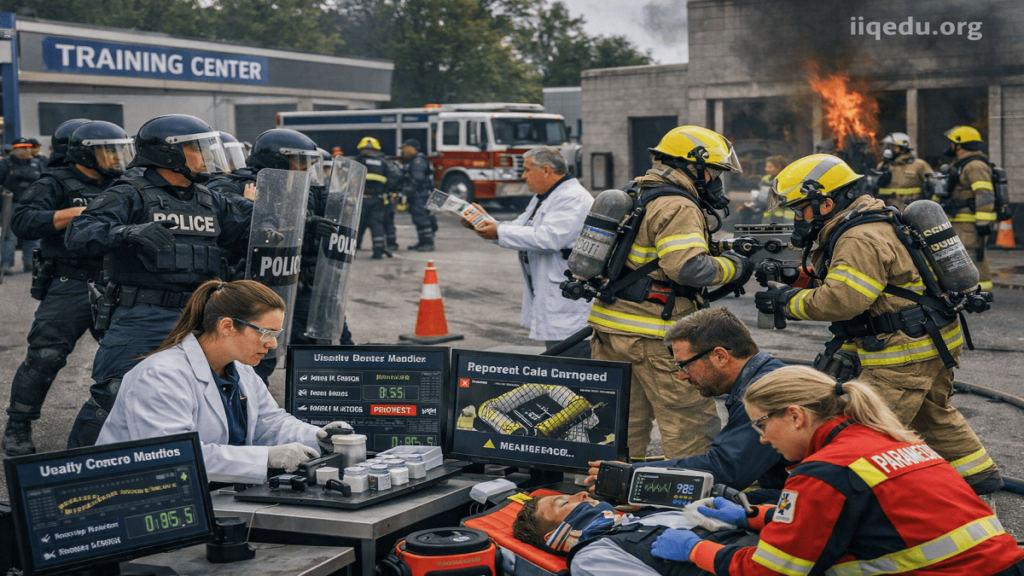
Police & Emergency Services Quality refers to the standard of performance, effectiveness, and reliability exhibited by law enforcement and emergency response organizations in fulfilling their public safety mandates. It encompasses multiple dimensions, including operational efficiency, ethical conduct, responsiveness, community trust, and the ability to handle crises effectively. High-quality police and emergency services not only prevent and respond to crimes or emergencies but also promote public confidence, minimize harm, and enhance overall societal resilience.
Key Dimensions of Quality:
- Effectiveness and Efficiency
Quality is often measured by the ability to achieve desired outcomes, such as solving crimes, reducing response times, and delivering timely emergency medical care. Efficient resource utilization—ensuring the right personnel and equipment are available when needed—is essential for operational effectiveness (https://nij.ojp.gov). - Responsiveness
The speed and appropriateness of response to incidents, including emergencies, medical crises, natural disasters, or public safety threats, are central indicators of quality. Faster, well-coordinated responses reduce casualties and property damage (https://www.fema.gov). - Accountability and Transparency
Maintaining high standards of conduct, adherence to laws, and transparent reporting mechanisms enhances public trust. This includes monitoring police misconduct, evaluating emergency response outcomes, and implementing continuous quality improvement practices (https://www.policeforum.org). - Community Trust and Engagement
Effective policing and emergency services rely on community cooperation. Building trust through fair treatment, communication, and public engagement initiatives improves compliance with laws, facilitates intelligence-sharing, and strengthens community resilience (https://www.pewtrusts.org). - Training and Professionalism
Continuous professional development, standardized certifications, and scenario-based training ensure personnel can perform competently under high-stress situations. Quality services integrate technical expertise with ethical and interpersonal skills (https://www.nhtsa.gov). - Equity and Ethical Practices
Quality services ensure equitable treatment across all communities, minimizing bias and discrimination while protecting human rights. Ethical decision-making underpins legitimacy and societal trust.
Conclusion:
Police & Emergency Services Quality is a multidimensional concept that extends beyond operational outputs. It integrates efficiency, effectiveness, accountability, fairness, and community engagement. By focusing on these aspects, organizations can improve public safety, reduce harm, and foster trust, ultimately strengthening the social contract between citizens and those tasked with protecting them.
References:
- National Institute of Justice: https://nij.ojp.gov
- Federal Emergency Management Agency (FEMA): https://www.fema.gov
- Police Executive Research Forum: https://www.policeforum.org
- Pew Charitable Trusts – Public Safety & Community Trust: https://www.pewtrusts.org
- National Highway Traffic Safety Administration (EMS Standards): https://www.nhtsa.gov
#Police & Emergency Services Quality in Maharashtra
Who is Police & Emergency Services Quality required?
The concept of Police & Emergency Services Quality is required by multiple stakeholders who rely on law enforcement and emergency response systems to maintain public safety, social order, and community resilience. Ensuring high-quality services is not limited to operational efficiency; it is essential for legal compliance, ethical governance, and societal trust. The requirement spans government authorities, communities, and organizations involved in public safety and emergency management.
1. Government and Regulatory Authorities
Police and emergency services are primarily accountable to local, state, and national governments. Governments require high-quality performance to:
- Ensure the enforcement of laws and regulations effectively.
- Minimize liability and prevent misconduct or negligence.
- Meet international human rights standards and domestic legal obligations.
- Optimize resource allocation to deliver cost-effective and reliable services.
Regulatory bodies often mandate quality through standards, accreditation, and performance audits. For example, the Commission on Accreditation for Law Enforcement Agencies (CALEA) sets professional benchmarks for policing practices (https://www.calea.org). Similarly, the Federal Emergency Management Agency (FEMA) establishes standards for emergency preparedness and response (https://www.fema.gov).
2. Community and Citizens
The public is a direct beneficiary and key driver for high-quality police and emergency services. Communities require quality services to:
- Ensure safety and protection from crime, accidents, and disasters.
- Receive timely and effective emergency response in critical situations.
- Access fair, unbiased, and transparent policing practices.
- Build trust and maintain cooperation with law enforcement and emergency personnel.
Public satisfaction and trust are indicators of service quality, emphasizing the relational aspect of safety beyond operational efficiency (https://www.pewtrusts.org).
3. Police and Emergency Service Organizations
Internal stakeholders—including police departments, fire departments, and emergency medical services—require quality frameworks to:
- Improve operational efficiency and response times.
- Reduce workplace errors, risks, and preventable harm.
- Enhance training, professional development, and staff morale.
- Implement continuous quality improvement practices using performance metrics and data-driven strategies (https://www.policeforum.org).
4. Policy Makers and Researchers
Policymakers, urban planners, and public safety researchers require high-quality data and service outcomes to:
- Formulate evidence-based policies and interventions.
- Identify gaps in service delivery and plan resource allocation.
- Evaluate the effectiveness of programs aimed at crime prevention, disaster management, and community resilience.
5. Private Sector and Non-Governmental Organizations
Private organizations, businesses, and NGOs often collaborate with public safety agencies during crises or large-scale events. Quality services are required to:
- Ensure safe environments for operations and commerce.
- Coordinate efficiently in emergencies, such as industrial accidents or natural disasters.
- Support public-private partnerships for disaster preparedness, risk reduction, and community safety programs.
Conclusion
Police & Emergency Services Quality is required by virtually all stakeholders involved in public safety, from government regulators to local communities, service organizations, policymakers, and private partners. High-quality services ensure that legal, ethical, operational, and social expectations are met, fostering trust, safety, and resilience in society.
References:
- Commission on Accreditation for Law Enforcement Agencies (CALEA): https://www.calea.org
- Federal Emergency Management Agency (FEMA): https://www.fema.gov
- Police Executive Research Forum: https://www.policeforum.org
- Pew Charitable Trusts – Public Safety & Community Trust: https://www.pewtrusts.org
#Police & Emergency Services Quality in Singapore
When is Police & Emergency Services Quality required?
Police & Emergency Services Quality is required continuously but becomes critically essential in specific contexts and situations where public safety, health, or security are at risk. The requirement is both routine—for day-to-day operations—and situational, triggered by emergencies, crises, or heightened risk conditions. Understanding when quality is required helps governments, organizations, and communities allocate resources effectively, ensure accountability, and maintain trust.
1. During Routine Operations
Even in normal circumstances, police and emergency services must maintain high-quality standards. This includes:
- Daily law enforcement duties – patrolling neighborhoods, traffic management, crime prevention, and responding to minor incidents.
- Standard emergency preparedness – maintaining operational readiness for medical emergencies, fires, or natural disasters.
- Community engagement – building trust through outreach, education programs, and public safety initiatives.
Routine quality ensures reliability, fairness, and efficiency in services, preventing systemic issues and fostering public confidence (https://nij.ojp.gov).
2. During Emergencies and Crises
Quality becomes most visible and critical during high-stakes situations, such as:
- Natural disasters – floods, hurricanes, earthquakes, or wildfires require rapid, coordinated response to protect lives and property.
- Medical emergencies – EMS must deliver timely, competent care to reduce fatalities and complications.
- Large-scale public safety incidents – riots, terrorism threats, or major accidents demand coordinated law enforcement and emergency action.
In these scenarios, deficiencies in quality can result in catastrophic outcomes, including loss of life, public panic, or significant property damage (https://www.fema.gov).
3. During Investigations and Legal Proceedings
Police quality is essential when:
- Conducting criminal investigations that require accurate evidence collection and documentation.
- Ensuring procedural justice to protect individual rights and uphold the rule of law.
- Preparing for court proceedings where evidence integrity and adherence to legal protocols are critical.
Failure to maintain quality in investigative processes can compromise prosecutions, increase liability, and erode public trust (https://www.policeforum.org).
4. During Community Interactions and High-Risk Operations
Police and emergency personnel interact with communities daily, but quality is especially important during:
- High-risk interventions – arrests, crowd control, or handling hazardous materials.
- Conflict resolution – domestic disputes, civil unrest, or community disputes.
- Vulnerable populations – children, elderly, or individuals with disabilities require ethical, respectful, and competent service delivery.
High-quality practices reduce harm, promote compliance, and enhance legitimacy (https://www.pewtrusts.org).
5. Continuous Improvement and Training Phases
Quality is required during periods of professional development, internal audits, or adoption of new technology. Maintaining standards in these phases ensures that:
- Personnel are trained to respond effectively to evolving threats.
- Policies and protocols are updated based on lessons learned and evidence-based practices.
- Performance is monitored to prevent operational deficiencies before they impact service delivery.
Conclusion
Police & Emergency Services Quality is required at all times, but it is especially critical during emergencies, high-risk operations, investigations, and community interactions. Continuous commitment to quality ensures that services remain effective, ethical, and trusted by the public, thereby safeguarding both lives and social order.
References:
- National Institute of Justice: https://nij.ojp.gov
- Federal Emergency Management Agency (FEMA): https://www.fema.gov
- Police Executive Research Forum: https://www.policeforum.org
- Pew Charitable Trusts – Public Safety & Community Trust: https://www.pewtrusts.org
#Police & Emergency Services Quality in Delhi
Where is Police & Emergency Services Quality required?
Police & Emergency Services Quality is required across all environments where public safety, law enforcement, and emergency response functions are performed. Its application spans physical locations, organizational contexts, and operational systems to ensure that communities receive consistent, effective, and reliable protection. Understanding where quality is required helps prioritize resources, maintain standards, and enhance accountability.
1. Urban and Rural Communities
Police and emergency services operate in both densely populated urban areas and dispersed rural regions. Quality is essential in:
- Urban areas – high population density, traffic congestion, and diverse communities demand efficient policing, rapid response times, and sophisticated emergency management strategies.
- Rural areas – remote locations require adaptable strategies for delayed response times, limited personnel, and resource scarcity, while still maintaining standards of care and safety.
High-quality services in all communities ensure equitable protection, regardless of geographic location (https://nij.ojp.gov).
2. Critical Infrastructure and Public Spaces
Police and emergency services must maintain quality in areas that, if compromised, would have wide-reaching impacts:
- Transportation systems – airports, train stations, highways, and ports.
- Healthcare facilities – hospitals, clinics, and emergency care centers.
- Educational institutions – schools and universities.
- Public events and mass gatherings – stadiums, festivals, or political assemblies.
Maintaining quality in these locations reduces the risk of accidents, crime, or large-scale emergencies and ensures coordinated, timely interventions (https://www.fema.gov).
3. Disaster-Prone and High-Risk Zones
Areas with known natural hazards, industrial risks, or crime hotspots require enhanced quality standards:
- Natural disaster zones – regions prone to floods, hurricanes, or earthquakes demand highly trained emergency personnel, rapid resource deployment, and coordinated multi-agency operations.
- Industrial and chemical plants – emergency preparedness is critical to prevent and respond to accidents, toxic spills, or fires.
- High-crime neighborhoods – quality policing reduces violence, protects vulnerable populations, and strengthens community trust.
Quality services in these locations directly influence public safety outcomes and risk mitigation (https://www.policeforum.org).
4. Government and Operational Facilities
Police and emergency services must ensure quality internally within:
- Police stations and precincts – proper supervision, record-keeping, and procedural compliance.
- Emergency operations centers – centralized command centers coordinating disaster or crisis responses.
- Training academies – maintaining high professional standards for incoming personnel.
Internal quality ensures that personnel are competent, resources are well-managed, and operational readiness is maintained (https://www.nhtsa.gov).
5. Digital and Communication Systems
Modern policing and emergency management increasingly depend on technology. Quality is required in:
- Emergency dispatch and 911 systems – accurate call handling and prioritization.
- Data management systems – crime databases, incident reporting, and analytics platforms.
- Communication networks – coordination among agencies, field teams, and community stakeholders.
Maintaining quality in these systems ensures reliability, efficiency, and interoperability during critical incidents (https://www.pewtrusts.org).
Conclusion
Police & Emergency Services Quality is required wherever public safety is entrusted to law enforcement and emergency personnel—from local communities to critical infrastructure, high-risk zones, government facilities, and digital systems. Its consistent application across these locations guarantees operational effectiveness, accountability, and public trust, forming the foundation of a safe and resilient society.
References:
- National Institute of Justice: https://nij.ojp.gov
- Federal Emergency Management Agency (FEMA): https://www.fema.gov
- Police Executive Research Forum: https://www.policeforum.org
- National Highway Traffic Safety Administration (EMS Standards): https://www.nhtsa.gov
- Pew Charitable Trusts – Public Safety & Community Trust: https://www.pewtrusts.org
#Police & Emergency Services Quality in Ahemadabad
How is Police & Emergency Services Quality required?
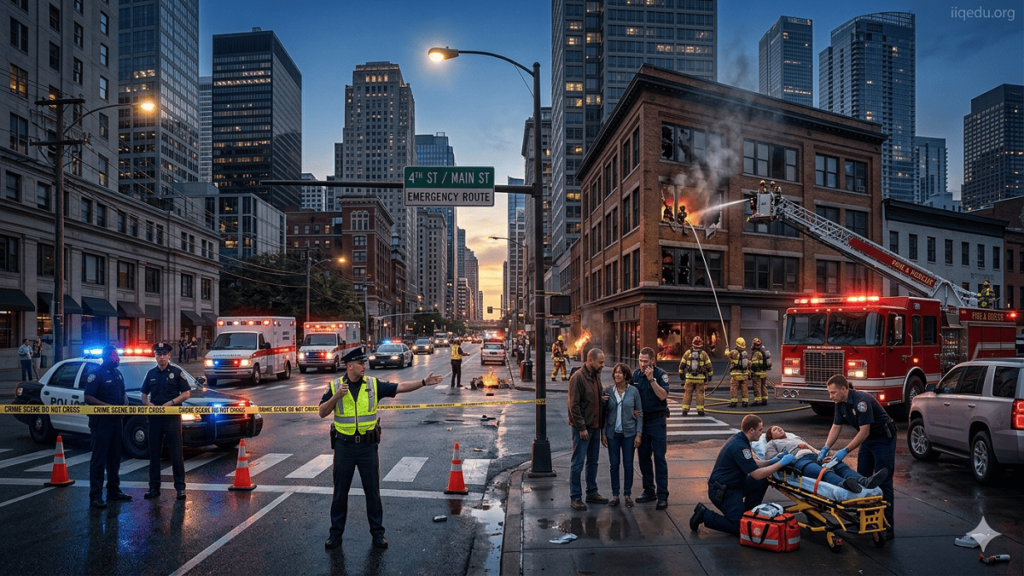
Police & Emergency Services Quality is required through structured processes, professional standards, continuous evaluation, and community engagement that collectively ensure effectiveness, accountability, and reliability in public safety operations. The “how” of requiring quality is both procedural and strategic, encompassing operational, organizational, and ethical mechanisms.
1. Standardized Policies and Procedures
Quality is required by implementing formalized operational protocols that guide police and emergency personnel. This includes:
- Standard Operating Procedures (SOPs): Define how incidents should be managed, including crime response, emergency medical services, fire response, and disaster management.
- Legal and ethical compliance: Ensures actions are consistent with laws, regulations, and human rights standards.
- Risk assessment protocols: Identify hazards and prioritize responses to maximize efficiency and minimize harm.
By enforcing standardized procedures, agencies ensure uniformity, reduce errors, and maintain accountability (https://nij.ojp.gov).
2. Training and Professional Development
Quality is required through continuous training programs that equip personnel with technical skills and ethical competencies:
- Scenario-based simulations for emergencies, riots, or natural disasters.
- Medical, firefighting, and tactical certifications to maintain competency.
- Soft skills training in communication, conflict resolution, and cultural sensitivity.
Professional development ensures readiness for complex situations, promotes ethical decision-making, and improves response effectiveness (https://www.nhtsa.gov).
3. Performance Measurement and Evaluation
Quality is required through data-driven monitoring and assessment:
- Response times and clearance rates: Evaluate operational efficiency.
- Citizen feedback and satisfaction surveys: Measure community trust and procedural fairness.
- Internal audits and inspections: Identify areas for improvement and enforce accountability.
Continuous quality improvement (CQI) models allow organizations to refine procedures, allocate resources efficiently, and maintain high standards of service (https://www.policeforum.org).
4. Use of Technology and Information Systems
Modern quality requirements integrate technological tools to enhance performance:
- Computer-aided dispatch (CAD) systems to optimize emergency response.
- Body-worn cameras and surveillance systems to ensure transparency and accountability.
- Data analytics and predictive policing software to anticipate risks and allocate resources effectively.
Technology ensures precise, timely, and measurable service delivery, strengthening operational quality (https://www.pewtrusts.org).
5. Community Engagement and Collaborative Approaches
Quality is required through active engagement with the public:
- Community policing initiatives foster trust and cooperation.
- Partnerships with NGOs, private organizations, and local stakeholders enhance disaster preparedness and resilience.
- Public education programs inform citizens about emergency protocols and safety practices.
Collaboration ensures that services are responsive, culturally sensitive, and aligned with community needs (https://nij.ojp.gov).
6. Accountability and Oversight
Quality is required through internal and external accountability mechanisms:
- Independent oversight boards and citizen review panels evaluate misconduct or service failures.
- Transparent reporting of incidents, use-of-force cases, and emergency response metrics reinforces trust.
- Legal enforcement and disciplinary measures ensure personnel adhere to high standards.
Conclusion
Police & Emergency Services Quality is required through a combination of structured procedures, rigorous training, performance evaluation, technological support, community engagement, and accountability frameworks. These mechanisms ensure that services are not only operationally effective but also ethical, equitable, and trusted by the public, creating a resilient and safe society.
References:
- National Institute of Justice: https://nij.ojp.gov
- National Highway Traffic Safety Administration: https://www.nhtsa.gov
- Police Executive Research Forum: https://www.policeforum.org
- Pew Charitable Trusts – Public Safety & Community Trust: https://www.pewtrusts.org
#Police & Emergency Services Quality in Hyderabad
Case Study of Police & Emergency Services Quality
Background
A critical dimension of police and emergency services quality is response time, accessibility, and effectiveness in serving diverse populations. Response time directly influences outcomes in policing and emergency medical situations; shorter response intervals are associated with higher rates of crime resolution, better survival rates for emergencies, and increased public trust. This case study examines documented efforts in enhancing service quality through data analysis, organizational improvements, and systems planning.
1. Accessibility and Response Time in New York City
A comprehensive case study on emergency service accessibility in New York City highlights spatial inequities in service quality and operational outcomes. Researchers quantified accessibility to police, fire, emergency medical services (EMS), and hospitals across the metropolitan area using geographic analysis and network models. Results indicated that while approximately 95% of residents have adequate access, certain areas—most notably Staten Island—were underserved, creating “emergency service deserts.” These disparities correlate with longer travel times for first responders and reduced effectiveness in critical incidents, underscoring the need for strategic placement of service hubs and targeted resource allocation to optimize performance outcomes. The study’s methodology offers policymakers evidence‑based tools to enhance quality and resilience of emergency services.
Key Insights:
- Accessibility metrics reveal geographic areas where emergency service quality is compromised.
- Response time is inversely related to service density; areas with fewer facilities exhibit slower emergency response.
- Policymakers can use these results to plan new service locations to reduce response times.
2. Performance Appraisal and Organizational Quality in Policing
A case study of a municipal police department performance appraisal system illustrates how systematic internal quality measures contribute to service quality. In this example, a medium‑sized U.S. city developed a structured performance appraisal system for probationary police officers, emphasizing clear goals, rater training, and alignment with organizational objectives. Through broad participatory development and rigorous training for evaluators, the system enhanced performance measurement reliability and organizational accountability. This case demonstrates how internal quality frameworks—when designed with user engagement and clear operational compatibility—can improve policing outcomes by encouraging consistent and fair evaluation of officers, thereby promoting professionalism and service quality.
Key Insights:
- Performance appraisal systems improve internal measurement of effectiveness.
- Quality management frameworks help ensure consistency in service delivery and officer development.
3. Operational Learning and Emergency Management Preparedness
The response to major emergencies—such as large‑scale crises—depends sensitively on both planning and personnel learning. A case study of police learning and emergency management in Norway around the 2011 Utøya terrorist attacks highlighted deficiencies in preparedness and command responses. The investigation revealed that training primarily oriented toward routine tasks did not sufficiently prepare officers for novel or large‑scale emergencies. This study underscores that emergency management quality requires not only structural planning but also effective learning mechanisms that translate training into real performance under stress.
Key Insights:
- Training and learning must prepare personnel for both routine and major emergency scenarios.
- Organizational ability to learn from past incidents is critical to quality emergency response.
Conclusion
Collectively, these case studies demonstrate that police and emergency services quality is multi‑faceted: it depends on accessibility, structured performance evaluation, and adaptive learning. Effective quality enhancement requires measurement of response times and spatial service coverage, implementation of robust internal evaluation systems, and comprehensive training that addresses both everyday operations and major emergencies. These real‑world examples provide evidence that quality improvements can be achieved through systematic analysis, strategic planning, and sustained organizational commitment.
#Police & Emergency Services Quality in Chennai
White Paper of Police & Emergency Services Quality
Executive Summary
Police and emergency services are fundamental to societal safety and resilience. The quality of these services directly impacts public trust, crime prevention, emergency response effectiveness, and overall community well-being. This white paper examines the dimensions of service quality, identifies key challenges, and proposes strategies for enhancing performance in law enforcement, emergency medical services (EMS), and disaster management operations.
Introduction
Quality in police and emergency services refers to the effectiveness, efficiency, accountability, and ethical integrity of operations aimed at safeguarding communities. High-quality services are essential not only for immediate response to crime and emergencies but also for long-term social stability, public confidence, and adherence to legal and ethical standards. Modern challenges—including urbanization, technological complexity, and diverse populations—require robust mechanisms to measure, evaluate, and improve service quality (https://nij.ojp.gov).
Dimensions of Police & Emergency Services Quality
- Operational Effectiveness
Services must achieve intended outcomes, such as reducing crime, preventing accidents, and providing rapid emergency medical interventions. Key performance metrics include response times, case clearance rates, and clinical outcomes for EMS operations. - Accountability and Transparency
Monitoring adherence to legal, ethical, and procedural standards ensures legitimacy. Independent oversight bodies, internal audits, and public reporting mechanisms enhance trust and prevent misconduct (https://www.policeforum.org). - Community Engagement
Trust between service providers and the public is central to quality. Community policing initiatives, education programs, and public participation in emergency preparedness strengthen relationships and improve compliance with safety protocols (https://www.pewtrusts.org). - Professional Competence
Continuous training, certification, and skill development maintain operational readiness. Scenario-based exercises, crisis simulations, and soft skills training improve decision-making under stress (https://www.nhtsa.gov). - Technological Integration
Modern systems such as computer-aided dispatch, predictive policing tools, and emergency management platforms enhance accuracy, efficiency, and coordination during crises.
Challenges to Quality
- Resource Constraints: Limited personnel, equipment, and funding can hinder performance, particularly in rural or high-demand urban areas.
- Operational Complexity: Coordinating multi-agency responses to large-scale incidents requires robust communication and management systems.
- Bias and Inequity: Unequal service delivery can erode community trust and exacerbate vulnerabilities.
- Workforce Burnout: High-stress conditions affect performance, morale, and decision-making capacity.
Strategies for Improvement
- Data-Driven Decision Making
Utilize real-time analytics, performance metrics, and geographic information systems to optimize deployment and identify service gaps. - Continuous Quality Improvement (CQI)
Implement ongoing assessment, feedback, and training mechanisms to refine operational processes and organizational policies. - Integrated Community Engagement
Develop participatory programs that involve citizens, NGOs, and private sectors in preparedness, policing, and disaster response initiatives. - Equity and Ethics Frameworks
Institutionalize procedures that prioritize fairness, reduce bias, and promote transparent decision-making across all operational contexts. - Interagency Collaboration
Establish joint protocols and communication networks to ensure seamless coordination during emergencies and major public safety incidents.
Conclusion
Police and emergency services quality is essential to maintaining public safety, protecting life and property, and fostering community trust. Achieving high-quality standards requires a multidimensional approach integrating operational effectiveness, professional competence, accountability, technology, and community engagement. By implementing evidence-based strategies, agencies can enhance performance, mitigate risks, and strengthen societal resilience.
References:
- National Institute of Justice: https://nij.ojp.gov
- Police Executive Research Forum: https://www.policeforum.org
- Pew Charitable Trusts – Public Safety & Community Trust: https://www.pewtrusts.org
- Federal Emergency Management Agency: https://www.fema.gov
- National Highway Traffic Safety Administration (EMS Standards): https://www.nhtsa.gov
#Police & Emergency Services Quality in Banglore
Industry Application of Police & Emergency Services Quality
Introduction
Police and emergency services are critical components of public safety infrastructure, and ensuring their quality is essential for operational effectiveness, community trust, and societal resilience. The application of quality principles in this industry spans law enforcement, emergency medical services (EMS), fire services, disaster management, and private sector partnerships. Quality management frameworks, performance metrics, and accountability mechanisms are adopted across these domains to ensure reliability, efficiency, and fairness.
1. Law Enforcement Sector
In policing, quality is applied through:
- Performance Metrics: Monitoring crime clearance rates, response times, and arrest accuracy ensures operational efficiency.
- Community Policing: Integrating community engagement and feedback mechanisms improves trust, compliance, and crime prevention (https://nij.ojp.gov).
- Ethical Standards and Accountability: Internal affairs divisions, body-worn cameras, and public reporting systems enforce procedural justice and transparency (https://www.policeforum.org).
- Training and Professional Development: Continuous education in law enforcement tactics, legal procedures, and ethical conduct ensures that officers meet operational and social expectations.
High-quality policing reduces crime rates, strengthens citizen trust, and ensures equitable treatment across diverse populations.
2. Emergency Medical Services (EMS) and Healthcare
Quality in EMS is applied through:
- Clinical Standards: Adoption of evidence-based protocols for pre-hospital care and emergency treatment ensures consistent patient outcomes (https://www.nhtsa.gov).
- Response Optimization: Geographic Information Systems (GIS) and computer-aided dispatch systems improve ambulance deployment and minimize response times.
- Certification and Training: Personnel undergo continuous training in trauma care, CPR, and emergency interventions to maintain competence.
- Performance Audits: Monitoring key metrics like survival rates, treatment times, and patient satisfaction ensures accountability.
Industry application in EMS improves survival rates, reduces errors, and enhances the credibility of emergency healthcare services.
3. Fire and Disaster Management Services
Fire departments and disaster response units integrate quality management practices to enhance preparedness and operational efficiency:
- Standard Operating Procedures (SOPs): Clearly defined firefighting, evacuation, and hazard containment protocols ensure effective response.
- Interagency Coordination: Collaborative frameworks between police, fire, EMS, and government agencies improve emergency response to large-scale disasters (https://www.fema.gov).
- Training and Drills: Regular simulation exercises prepare personnel for diverse emergency scenarios, including industrial accidents and natural disasters.
- Community Preparedness Programs: Public education and volunteer engagement enhance resilience and reduce casualties.
Effective quality management in this sector minimizes damage, ensures rapid intervention, and protects both personnel and civilians.
4. Private Sector and Industrial Applications
Quality principles from police and emergency services are applied in corporate security, industrial safety, and event management:
- Corporate Security: Companies adopt security protocols modeled after police standards to protect assets and personnel.
- Industrial Safety: Fire suppression, hazard response, and emergency medical protocols in factories and chemical plants are modeled on public service standards.
- Event Safety Management: Large events implement coordinated emergency response systems, including on-site medical teams and law enforcement liaisons.
Integration of quality standards from public services ensures risk mitigation, regulatory compliance, and efficient crisis management in private sector operations.
5. Technology and Data-Driven Applications
Across all sectors, technology enhances quality by:
- Monitoring and Analytics: Tracking response times, incident reports, and performance metrics.
- Predictive Tools: Using AI and data analytics to anticipate crime patterns or potential emergencies.
- Communication Systems: Ensuring coordination across agencies, departments, and first responders.
Technology facilitates faster, more reliable, and measurable service delivery, which is a cornerstone of industry-wide quality standards.
Conclusion
The application of Police & Emergency Services Quality extends beyond traditional public safety into healthcare, disaster management, industrial operations, and corporate security. By integrating operational standards, training, technology, and community engagement, industries enhance service effectiveness, accountability, and resilience. The adoption of these principles ensures not only better operational outcomes but also increased public trust and organizational legitimacy.
References:
- National Institute of Justice: https://nij.ojp.gov
- Police Executive Research Forum: https://www.policeforum.org
- Federal Emergency Management Agency (FEMA): https://www.fema.gov
- National Highway Traffic Safety Administration (EMS Standards): https://www.nhtsa.gov
- Pew Charitable Trusts – Public Safety & Community Trust: https://www.pewtrusts.org
#Police & Emergency Services Quality in Mumbai
Ask FAQs
What is Police & Emergency Services Quality?
Police & Emergency Services Quality refers to the standard of effectiveness, efficiency, accountability, and ethical integrity in law enforcement, emergency medical services, fire services, and disaster response. High-quality services ensure timely responses, adherence to legal and ethical standards, public trust, and overall community safety (https://nij.ojp.gov).
Why is Police & Emergency Services Quality important?
Quality in police and emergency services is critical for protecting life and property, maintaining social order, preventing crime, and ensuring equitable treatment. High-quality services also foster public trust, improve compliance with regulations, and strengthen community resilience during crises (https://www.pewtrusts.org).
Who requires Police & Emergency Services Quality?
Multiple stakeholders require high-quality services, including government agencies, local communities, police and emergency service organizations, private sector partners, and policymakers. These stakeholders rely on reliable, efficient, and accountable services for safety, legal compliance, and emergency preparedness (https://www.policeforum.org).
How is Police & Emergency Services Quality achieved?
Quality is achieved through standardized policies and procedures, continuous professional training, performance measurement, technological integration, community engagement, and accountability frameworks. This includes monitoring response times, evaluating service outcomes, and implementing continuous improvement practices (https://www.nhtsa.gov).
Where and when is Police & Emergency Services Quality required?
Quality is required in all locations where public safety services are provided, including urban and rural communities, critical infrastructure, high-risk zones, and emergency operation centers. It is essential both during routine operations and high-stakes situations, such as natural disasters, major accidents, or large-scale public events (https://www.fema.gov).
Source: Meet the Helpers
Table of Contents
Disclaimer:
The information provided in this document is for informational and educational purposes only. It does not constitute legal, medical, or professional advice. While every effort has been made to ensure accuracy, the authors and publishers are not responsible for any errors, omissions, or consequences arising from the use of this information. Users should consult appropriate professionals for guidance specific to their circumstances.