
In today’s rapidly evolving global economy, the boundaries between traditional professions are blurring, and new careers are emerging at an unprecedented pace. Navigating a professional journey can be challenging without a clear understanding of the skills, qualifications, and milestones required to progress. A Professions Roadmap serves as a strategic framework that guides individuals through various stages of career development, from foundational learning to expert leadership roles, within specific industries or multidisciplinary fields.
This document presents a detailed overview of the Professions Roadmap concept, its components, its benefits, and its application across sectors such as quality, compliance, technology, healthcare, finance, and more.
A Professions Roadmap is a structured visual and narrative guide that:
Defines roles and career stages within a profession or sector.
Lists the knowledge, skills, certifications, and experience required at each level.
Provides direction for professional growth, skill alignment, and career transitions.
Serves as a benchmarking tool for employers, educators, and individuals.
It helps answer key questions:
“Where do I begin?”
“What comes next?”
“What competencies do I need to grow?”
“What are my long-term career options?”
Entry-Level – Assistant, Trainee, Junior Analyst
Mid-Level – Executive, Coordinator, Engineer, Specialist
Senior-Level – Manager, Lead, Advisor
Leadership-Level – Director, Vice President, CXO
Expert-Level – Consultant, Fellow, Board Member
Technical skills
Behavioral competencies
Managerial capabilities
Regulatory and compliance knowledge
Strategic thinking and innovation
Academic degrees
Industry certifications (e.g., ISO, PMP, CPA, Six Sigma, AWS)
Specialized training programs
Mandatory licenses (for healthcare, engineering, etc.)
Minimum years of experience
Types of projects handled
Roles in cross-functional or global teams
Micro-credentials
MOOCs and online certifications
Internal development programs
Research and publication opportunities
Progressive Clarity: Shows how each stage connects to the next.
Cross-Functional Bridges: Supports lateral movement between roles.
Future-Focused: Incorporates emerging technologies and skills.
Customizable: Adaptable to individuals, companies, and regions.
Inclusive: Considers various entry points, including non-traditional paths.
Roadmap Example:
Quality Assistant / Trainee Auditor
Quality Executive / Internal Auditor
Quality Manager / Compliance Officer
Quality Director / Chief Compliance Officer
Global Head of Quality / Governance Expert
Key Skills:
ISO standards, auditing, root cause analysis, risk assessment, QMS
Certifications:
ISO Lead Auditor, Six Sigma Green Belt, TQM, Regulatory Compliance
Roadmap Example:
Software Developer / IT Support
System Analyst / DevOps Engineer
IT Manager / Security Architect
CTO / CIO / Enterprise Architect
Key Skills:
Programming, cybersecurity, cloud platforms, AI, agile methods
Certifications:
AWS Certified Solutions Architect, CISSP, PMP, Microsoft Azure
Roadmap Example:
Medical Assistant / Junior Nurse
Registered Nurse / General Physician
Department Head / Consultant
Chief Medical Officer / Health System Director
Key Skills:
Clinical procedures, patient care, diagnostics, public health
Certifications:
Medical licensing, CPR/BLS, specialty board certification
Roadmap Example:
Accounting Clerk / Finance Assistant
Financial Analyst / Accountant
Finance Manager / Auditor
CFO / Risk Director / Investment Banker
Key Skills:
Financial reporting, taxation, risk analysis, budgeting
Certifications:
CA, CPA, CFA, IFRS, ACCA
Roadmap Example:
Technician / Apprentice Engineer
Process Engineer / Maintenance Executive
Production Manager / Quality Engineer
Plant Head / Chief Engineer / COO
Key Skills:
CAD/CAM, lean manufacturing, process optimization, TPM
Certifications:
Lean Six Sigma, OSHA, PMP, Industrial Engineering degrees
Clarifies career direction and goals
Identifies skill gaps and next steps
Encourages proactive learning and development
Supports talent planning and retention
Builds internal career pathways
Enables targeted training investments
Aligns curricula with industry demands
Bridges academia–industry gaps
Develops competency-based learning outcomes
Soft skills are integral to professional success and are included at every level:
Entry-Level: Communication, teamwork, adaptability
Mid-Level: Problem-solving, conflict resolution, time management
Senior-Level: Coaching, negotiation, project leadership
Leadership-Level: Strategic thinking, stakeholder management, innovation
Digital Transformation: AI, machine learning, automation redefine skills needed
Sustainability and ESG: Green jobs and compliance roles rise in demand
Remote and Hybrid Work: Skills in digital collaboration and virtual leadership grow
Globalization: Multilingual, multicultural competencies matter more
Interdisciplinary Careers: Hybrid roles (e.g., data scientist in healthcare)
Self-Assessment: Understand your strengths, interests, and values.
Explore Career Options: Use sector-specific roadmaps and job trend reports.
Identify Skills and Gaps: Compare your current skills with those required.
Set Short- and Long-Term Goals: Use SMART (Specific, Measurable, Achievable, Relevant, Time-bound) principles.
Pursue Education and Certifications: Enroll in recognized programs aligned with your goals.
Track and Update Progress: Revisit your roadmap regularly based on changing interests or industry shifts.
LinkedIn Career Explorer
National Career Service (India)
Coursera Career Academy
CareerOneStop (USA)
OECD Skills for Jobs Database
Company-specific LMS and IDPs (Individual Development Plans)
The Professions Roadmap is more than a guide—it is a lifelong career management tool. Whether you’re a student planning your first job, a mid-career professional considering a transition, or an organization looking to empower its workforce, this roadmap provides the clarity and structure needed to navigate complex career landscapes. In an age of rapid disruption and opportunity, those with a clear roadmap are best equipped to reach their full potential.
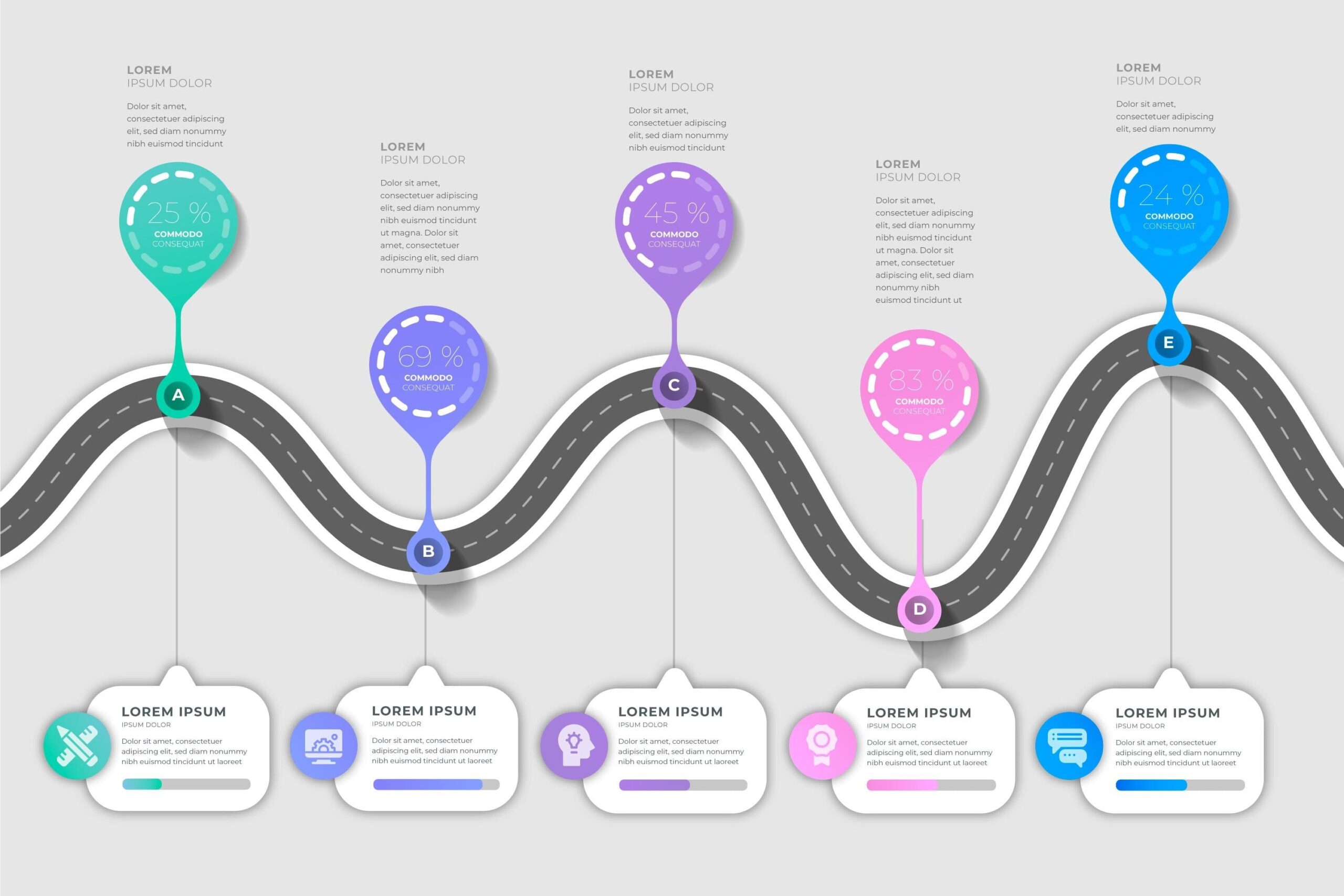
A Professions Roadmap is more than a career guide—it is a well-structured, strategic, and evolving framework that defines how individuals grow within a chosen profession or sector. It systematically lays out the progression of job roles, the required skills and competencies, relevant qualifications, and possible transitions across roles or industries.
This descriptive document explores how the Professions Roadmap functions, how it is designed, implemented, and used by professionals, employers, educators, and institutions for informed decision-making and career navigation.
The central purpose of a Professions Roadmap is to:
Clarify possible career paths within a profession.
Link roles to skills, certifications, and performance indicators.
Support workforce planning and individual development.
Align education and training with industry requirements.
Promote transparent career mobility and upskilling opportunities.
It embodies a forward-looking vision, anticipating evolving industry demands and adapting learning pathways accordingly.
The creation of a Professions Roadmap follows a multi-phase process, often driven by industry bodies, professional associations, HR planners, or workforce development agencies:
Identify key roles within a profession across experience levels.
Include traditional roles and emerging roles (e.g., “Compliance Data Analyst” in regulatory professions).
Define technical and soft skills per role.
Align competencies with frameworks like ESCO (EU), NSQF (India), or O*NET (USA).
Associate educational requirements and certifications to each role.
Integrate formal degrees, diplomas, micro-credentials, and licenses.
Model vertical (promotion), lateral (transition), and diagonal (cross-functional) paths.
Map years of experience, performance benchmarks, and role expectations.
Involve industry experts, HR leaders, training institutions, and professionals.
Pilot test roadmap with real users and revise based on feedback.
A well-designed Professions Roadmap is usually presented in layers or tiers, with increasing responsibility and expertise as one ascends. Here’s a simplified structure:
| Level | Sample Titles | Core Skills | Certifications/Qualifications |
|---|---|---|---|
| Entry | Assistant, Intern | Basic operations, MS Office | Diploma, foundational training |
| Mid | Executive, Analyst | Domain expertise, analysis | Bachelor’s degree, industry certs |
| Senior | Manager, Specialist | Leadership, audit, strategy | Master’s, PMP, Six Sigma |
| Expert | Director, Consultant | Governance, risk, compliance | Chartered, ISO Lead Auditor |
| Thought Leader | CXO, Advisor | Innovation, policy, transformation | Global credentials, publications |
Each tier connects seamlessly to the next, encouraging a lifelong learning approach.
Career Planning Tool: Helps individuals chart a roadmap that aligns with their aspirations.
Gap Analysis: Users can assess where they currently stand and what they need to progress.
Skill Acquisition: Provides a learning checklist to remain competitive in the job market.
Talent Development: Drives internal mobility, succession planning, and skill benchmarking.
Job Descriptions and Evaluations: Standardizes role expectations and assessment criteria.
Workforce Readiness: Identifies future skill requirements and facilitates proactive hiring.
Curriculum Alignment: Designs training content to meet real-world job competencies.
Industry Engagement: Uses the roadmap to partner with employers and tailor offerings.
Accreditation and Funding: Supports program validation and government or institutional grants.
Entry: Document Controller
Mid: Quality Executive
Senior: Compliance Manager
Expert: Chief Quality Officer
Used for ISO implementation, audit management, regulatory alignment.
Entry: Engineering Trainee
Mid: Process Engineer
Senior: Project Lead
Expert: Chief Engineer
Helps manage licensing, safety compliance, lean processes.
Entry: Nursing Assistant
Mid: Registered Nurse
Senior: Department Head
Expert: Clinical Director
Used to manage credentials, patient safety, and care standards.
Entry: Support Analyst
Mid: DevOps Engineer
Senior: Security Lead
Expert: CTO
Tracks certifications like AWS, Microsoft, cybersecurity standards.
Today’s roadmaps are often digitized through:
Interactive Platforms: Dynamic maps, filters by interest, skills, and region.
Learning Management Systems (LMS): Roadmaps integrated with e-learning content.
AI and Analytics: Personalized career guidance using user profiles and performance.
Career Portals: Examples include LinkedIn Career Explorer, NSDC India, Coursera, etc.
These tools allow real-time updates, personalized feedback, and scalable access.
Clarity and Motivation: Clear visibility on ‘what’s next’ motivates learners and employees.
Future-Readiness: Responds to job disruptions through reskilling pathways.
Workforce Inclusion: Supports non-linear careers, second careers, and diversity goals.
Standardization: Brings uniformity to roles across companies and regions.
Sustainability: Enables upskilling without mass hiring, supporting talent retention.
While powerful, the implementation of Professions Roadmaps may face obstacles such as:
Lack of data standardization across sectors.
Resistance to career framework restructuring.
Skills that become obsolete rapidly.
Inaccessibility for workers in informal or gig sectors.
Variability in recognition of certifications across geographies.
Regular updates, stakeholder collaboration, and government-industry partnerships are essential to maintain roadmap relevance.
Integration with AI & ML: Predict career transitions and future roles.
Micro-Pathways: Smaller, modular journeys for fast skill development.
Global Recognition: Harmonization of certifications for global mobility.
Sustainability-Centric Careers: Growth of ESG, green jobs, and compliance roles.
The Professions Roadmap functions as a compass, blueprint, and toolkit—enabling individuals, employers, and educators to move in sync toward a skilled, competent, and adaptive workforce. When thoughtfully developed and actively maintained, it becomes a dynamic asset for personal growth, organizational planning, and national workforce competitiveness.
The Professions Roadmap is not merely a theoretical career planning tool—it is an industrially transformative model that supports workforce development, talent mobility, organizational strategy, and operational excellence. Industries across sectors such as manufacturing, IT, healthcare, finance, education, logistics, and compliance have adopted profession-based roadmaps to ensure their human capital is skilled, agile, and aligned with business goals.
This document explores how various industries apply the Professions Roadmap to structure internal development, recruitment, training, and succession planning.
In industries, a Professions Roadmap supports:
Standardization of Roles across functions and geographies.
Talent Gap Identification for strategic hiring and upskilling.
Internal Career Progression promoting employee retention.
Compliance and Risk Management through defined competencies.
Alignment with Regulatory Frameworks, especially in sectors like healthcare, energy, and financial services.
Industries that deal with certifications, audits, safety regulations, or innovation cycles benefit most from clear profession pathways.
Manufacturers use roadmaps to define levels from Machine Operator → Process Technician → Production Supervisor → Plant Manager → Operations Director. Each level is tied to specific skills, safety training, lean certifications (e.g., Six Sigma), and regulatory knowledge.
Applications:
Training plans based on roadmap stages.
Technician-to-supervisor internal promotion pipelines.
Reduced machine downtime due to skilled resource allocation.
Better planning of apprenticeship and shift leader roles.
Hospitals and pharma companies rely on profession maps to outline pathways from Nursing Assistant → Registered Nurse → Head Nurse → Clinical Manager → Healthcare Director.
Applications:
Regulatory compliance with national healthcare boards.
Standardization of competencies across clinical settings.
Linking Continuous Medical Education (CME) to career stages.
Optimized patient care by matching professionals with suitable expertise levels.
In fast-evolving sectors like IT, companies apply roadmaps for roles such as Junior Developer → Software Engineer → Tech Lead → Engineering Manager → CTO.
Applications:
Employee onboarding tied to competency models.
Role-based certifications (AWS, Azure, Kubernetes) mapped to roadmap levels.
Agile project resourcing based on proven skill milestones.
Tech retention strategies using transparent growth ladders.
Organizations apply roadmap frameworks for QA roles such as QA Assistant → Internal Auditor → Compliance Manager → Lead Auditor → Chief Compliance Officer.
Applications:
ISO 9001, 14001, 45001 role accountability.
Integration with IRCA, CQI, Six Sigma certifications.
Internal audit program development by aligning teams with maturity levels.
Risk mitigation by assigning qualified professionals to critical audits.
Roadmaps guide roles like Teaching Assistant → Lecturer → Senior Faculty → Academic Dean → Institutional Director.
Applications:
Faculty training aligned with roadmap-based skills (pedagogy, research).
National Qualification Framework (NQF) alignment in higher education.
Career progression clarity for academic staff.
Tailored mentorship and academic leadership programs.
From Warehouse Associate → Inventory Supervisor → Logistics Coordinator → Operations Manager → Supply Chain Director, each level in logistics is defined in terms of technology, inventory control, safety norms, and transport regulation.
Applications:
Safety certification mapping (e.g., OSHA compliance).
Equipment handling licenses tied to job levels.
Reduction in supply chain disruptions via skilled interventions.
Data-driven fleet and workforce management.
Energy companies use roadmaps for critical roles like Technician → Field Engineer → Grid Supervisor → Asset Manager → Chief Technical Officer.
Applications:
Ensuring certified and qualified personnel are assigned to high-voltage tasks.
Roadmap alignment with NEBOSH, IOSH, and ISO 50001 standards.
Risk-based training allocation.
Transparent union negotiations around career progression.
Career paths such as Accounts Assistant → Internal Auditor → Risk Analyst → Compliance Head → Chief Risk Officer are roadmaped for strategic planning.
Applications:
AML, KYC, and financial compliance roles defined by regulation.
Role transitions supported by Chartered Accountant (CA), CIA, CFA credentials.
Integration with fintech platforms using roadmap-based reskilling.
Risk control through documented professional journeys.
Government bodies use profession roadmaps to manage civil servant career stages, such as Clerk → Section Officer → Undersecretary → Joint Secretary → Director General.
Applications:
Transparent promotions and lateral transfers.
Digital transformation teams reskilled using roadmap benchmarks.
Training investment aligned with roadmap forecasts.
Better public delivery through professionalized governance.
| Benefit | Impact |
|---|---|
| Talent Retention | Staff see clear growth opportunities and stay longer |
| Learning Investment Optimization | Training budgets are better utilized based on roadmap stages |
| Operational Consistency | Standardized roles lead to predictable outputs |
| Reduced Compliance Risk | Skilled personnel reduce audit failures and fines |
| Strategic Workforce Planning | HR forecasts workforce needs more accurately |
| Industry-Academia Collaboration | Curricula are co-developed with industry inputs |
| Certification Recognition | Industry-wide standards unify qualification value |
Industries increasingly use digital platforms to:
Automate roadmap tracking via Learning Management Systems (LMS)
Apply People Analytics to assess progression and predict churn
Integrate with credentialing systems like Credly, Coursera, or NSDC
Use AI to personalize development pathways and skill recommendations
These integrations make the roadmap dynamic and data-driven.
The industrial application of the Professions Roadmap transforms how organizations build capabilities, manage transitions, and meet performance targets. By connecting roles, responsibilities, and learning outcomes, industries can elevate individual careers while boosting organizational resilience and competitiveness.
In today’s rapidly evolving global economy, the boundaries between traditional professions are blurring, and new careers are emerging at an unprecedented pace. Navigating a professional journey can be challenging without a clear understanding of the skills, qualifications, and milestones required to progress. A Professions Roadmap serves as a strategic framework that guides individuals through various stages of career development, from foundational learning to expert leadership roles, within specific industries or multidisciplinary fields.
This document presents a detailed overview of the Professions Roadmap concept, its components, its benefits, and its application across sectors such as quality, compliance, technology, healthcare, finance, and more.
A Professions Roadmap is a structured visual and narrative guide that:
Defines roles and career stages within a profession or sector.
Lists the knowledge, skills, certifications, and experience required at each level.
Provides direction for professional growth, skill alignment, and career transitions.
Serves as a benchmarking tool for employers, educators, and individuals.
It helps answer key questions:
“Where do I begin?”
“What comes next?”
“What competencies do I need to grow?”
“What are my long-term career options?”
Entry-Level – Assistant, Trainee, Junior Analyst
Mid-Level – Executive, Coordinator, Engineer, Specialist
Senior-Level – Manager, Lead, Advisor
Leadership-Level – Director, Vice President, CXO
Expert-Level – Consultant, Fellow, Board Member
Technical skills
Behavioral competencies
Managerial capabilities
Regulatory and compliance knowledge
Strategic thinking and innovation
Academic degrees
Industry certifications (e.g., ISO, PMP, CPA, Six Sigma, AWS)
Specialized training programs
Mandatory licenses (for healthcare, engineering, etc.)
Minimum years of experience
Types of projects handled
Roles in cross-functional or global teams
Micro-credentials
MOOCs and online certifications
Internal development programs
Research and publication opportunities
Progressive Clarity: Shows how each stage connects to the next.
Cross-Functional Bridges: Supports lateral movement between roles.
Future-Focused: Incorporates emerging technologies and skills.
Customizable: Adaptable to individuals, companies, and regions.
Inclusive: Considers various entry points, including non-traditional paths.
Roadmap Example:
Quality Assistant / Trainee Auditor
Quality Executive / Internal Auditor
Quality Manager / Compliance Officer
Quality Director / Chief Compliance Officer
Global Head of Quality / Governance Expert
Key Skills:
ISO standards, auditing, root cause analysis, risk assessment, QMS
Certifications:
ISO Lead Auditor, Six Sigma Green Belt, TQM, Regulatory Compliance
Roadmap Example:
Software Developer / IT Support
System Analyst / DevOps Engineer
IT Manager / Security Architect
CTO / CIO / Enterprise Architect
Key Skills:
Programming, cybersecurity, cloud platforms, AI, agile methods
Certifications:
AWS Certified Solutions Architect, CISSP, PMP, Microsoft Azure
Roadmap Example:
Medical Assistant / Junior Nurse
Registered Nurse / General Physician
Department Head / Consultant
Chief Medical Officer / Health System Director
Key Skills:
Clinical procedures, patient care, diagnostics, public health
Certifications:
Medical licensing, CPR/BLS, specialty board certification
Roadmap Example:
Accounting Clerk / Finance Assistant
Financial Analyst / Accountant
Finance Manager / Auditor
CFO / Risk Director / Investment Banker
Key Skills:
Financial reporting, taxation, risk analysis, budgeting
Certifications:
CA, CPA, CFA, IFRS, ACCA
Roadmap Example:
Technician / Apprentice Engineer
Process Engineer / Maintenance Executive
Production Manager / Quality Engineer
Plant Head / Chief Engineer / COO
Key Skills:
CAD/CAM, lean manufacturing, process optimization, TPM
Certifications:
Lean Six Sigma, OSHA, PMP, Industrial Engineering degrees
Clarifies career direction and goals
Identifies skill gaps and next steps
Encourages proactive learning and development
Supports talent planning and retention
Builds internal career pathways
Enables targeted training investments
Aligns curricula with industry demands
Bridges academia–industry gaps
Develops competency-based learning outcomes
Soft skills are integral to professional success and are included at every level:
Entry-Level: Communication, teamwork, adaptability
Mid-Level: Problem-solving, conflict resolution, time management
Senior-Level: Coaching, negotiation, project leadership
Leadership-Level: Strategic thinking, stakeholder management, innovation
Digital Transformation: AI, machine learning, automation redefine skills needed
Sustainability and ESG: Green jobs and compliance roles rise in demand
Remote and Hybrid Work: Skills in digital collaboration and virtual leadership grow
Globalization: Multilingual, multicultural competencies matter more
Interdisciplinary Careers: Hybrid roles (e.g., data scientist in healthcare)
Self-Assessment: Understand your strengths, interests, and values.
Explore Career Options: Use sector-specific roadmaps and job trend reports.
Identify Skills and Gaps: Compare your current skills with those required.
Set Short- and Long-Term Goals: Use SMART (Specific, Measurable, Achievable, Relevant, Time-bound) principles.
Pursue Education and Certifications: Enroll in recognized programs aligned with your goals.
Track and Update Progress: Revisit your roadmap regularly based on changing interests or industry shifts.
LinkedIn Career Explorer
National Career Service (India)
Coursera Career Academy
CareerOneStop (USA)
OECD Skills for Jobs Database
Company-specific LMS and IDPs (Individual Development Plans)
The Professions Roadmap is more than a guide—it is a lifelong career management tool. Whether you’re a student planning your first job, a mid-career professional considering a transition, or an organization looking to empower its workforce, this roadmap provides the clarity and structure needed to navigate complex career landscapes. In an age of rapid disruption and opportunity, those with a clear roadmap are best equipped to reach their full potential.

A Professions Roadmap is more than a career guide—it is a well-structured, strategic, and evolving framework that defines how individuals grow within a chosen profession or sector. It systematically lays out the progression of job roles, the required skills and competencies, relevant qualifications, and possible transitions across roles or industries.
This descriptive document explores how the Professions Roadmap functions, how it is designed, implemented, and used by professionals, employers, educators, and institutions for informed decision-making and career navigation.
The central purpose of a Professions Roadmap is to:
Clarify possible career paths within a profession.
Link roles to skills, certifications, and performance indicators.
Support workforce planning and individual development.
Align education and training with industry requirements.
Promote transparent career mobility and upskilling opportunities.
It embodies a forward-looking vision, anticipating evolving industry demands and adapting learning pathways accordingly.
The creation of a Professions Roadmap follows a multi-phase process, often driven by industry bodies, professional associations, HR planners, or workforce development agencies:
Identify key roles within a profession across experience levels.
Include traditional roles and emerging roles (e.g., “Compliance Data Analyst” in regulatory professions).
Define technical and soft skills per role.
Align competencies with frameworks like ESCO (EU), NSQF (India), or O*NET (USA).
Associate educational requirements and certifications to each role.
Integrate formal degrees, diplomas, micro-credentials, and licenses.
Model vertical (promotion), lateral (transition), and diagonal (cross-functional) paths.
Map years of experience, performance benchmarks, and role expectations.
Involve industry experts, HR leaders, training institutions, and professionals.
Pilot test roadmap with real users and revise based on feedback.
A well-designed Professions Roadmap is usually presented in layers or tiers, with increasing responsibility and expertise as one ascends. Here’s a simplified structure:
| Level | Sample Titles | Core Skills | Certifications/Qualifications |
|---|---|---|---|
| Entry | Assistant, Intern | Basic operations, MS Office | Diploma, foundational training |
| Mid | Executive, Analyst | Domain expertise, analysis | Bachelor’s degree, industry certs |
| Senior | Manager, Specialist | Leadership, audit, strategy | Master’s, PMP, Six Sigma |
| Expert | Director, Consultant | Governance, risk, compliance | Chartered, ISO Lead Auditor |
| Thought Leader | CXO, Advisor | Innovation, policy, transformation | Global credentials, publications |
Each tier connects seamlessly to the next, encouraging a lifelong learning approach.
Career Planning Tool: Helps individuals chart a roadmap that aligns with their aspirations.
Gap Analysis: Users can assess where they currently stand and what they need to progress.
Skill Acquisition: Provides a learning checklist to remain competitive in the job market.
Talent Development: Drives internal mobility, succession planning, and skill benchmarking.
Job Descriptions and Evaluations: Standardizes role expectations and assessment criteria.
Workforce Readiness: Identifies future skill requirements and facilitates proactive hiring.
Curriculum Alignment: Designs training content to meet real-world job competencies.
Industry Engagement: Uses the roadmap to partner with employers and tailor offerings.
Accreditation and Funding: Supports program validation and government or institutional grants.
Entry: Document Controller
Mid: Quality Executive
Senior: Compliance Manager
Expert: Chief Quality Officer
Used for ISO implementation, audit management, regulatory alignment.
Entry: Engineering Trainee
Mid: Process Engineer
Senior: Project Lead
Expert: Chief Engineer
Helps manage licensing, safety compliance, lean processes.
Entry: Nursing Assistant
Mid: Registered Nurse
Senior: Department Head
Expert: Clinical Director
Used to manage credentials, patient safety, and care standards.
Entry: Support Analyst
Mid: DevOps Engineer
Senior: Security Lead
Expert: CTO
Tracks certifications like AWS, Microsoft, cybersecurity standards.
Today’s roadmaps are often digitized through:
Interactive Platforms: Dynamic maps, filters by interest, skills, and region.
Learning Management Systems (LMS): Roadmaps integrated with e-learning content.
AI and Analytics: Personalized career guidance using user profiles and performance.
Career Portals: Examples include LinkedIn Career Explorer, NSDC India, Coursera, etc.
These tools allow real-time updates, personalized feedback, and scalable access.
Clarity and Motivation: Clear visibility on ‘what’s next’ motivates learners and employees.
Future-Readiness: Responds to job disruptions through reskilling pathways.
Workforce Inclusion: Supports non-linear careers, second careers, and diversity goals.
Standardization: Brings uniformity to roles across companies and regions.
Sustainability: Enables upskilling without mass hiring, supporting talent retention.
While powerful, the implementation of Professions Roadmaps may face obstacles such as:
Lack of data standardization across sectors.
Resistance to career framework restructuring.
Skills that become obsolete rapidly.
Inaccessibility for workers in informal or gig sectors.
Variability in recognition of certifications across geographies.
Regular updates, stakeholder collaboration, and government-industry partnerships are essential to maintain roadmap relevance.
Integration with AI & ML: Predict career transitions and future roles.
Micro-Pathways: Smaller, modular journeys for fast skill development.
Global Recognition: Harmonization of certifications for global mobility.
Sustainability-Centric Careers: Growth of ESG, green jobs, and compliance roles.
The Professions Roadmap functions as a compass, blueprint, and toolkit—enabling individuals, employers, and educators to move in sync toward a skilled, competent, and adaptive workforce. When thoughtfully developed and actively maintained, it becomes a dynamic asset for personal growth, organizational planning, and national workforce competitiveness.
Courtesy: TechWorld with Nana
The Professions Roadmap is not merely a theoretical career planning tool—it is an industrially transformative model that supports workforce development, talent mobility, organizational strategy, and operational excellence. Industries across sectors such as manufacturing, IT, healthcare, finance, education, logistics, and compliance have adopted profession-based roadmaps to ensure their human capital is skilled, agile, and aligned with business goals.
This document explores how various industries apply the Professions Roadmap to structure internal development, recruitment, training, and succession planning.
In industries, a Professions Roadmap supports:
Standardization of Roles across functions and geographies.
Talent Gap Identification for strategic hiring and upskilling.
Internal Career Progression promoting employee retention.
Compliance and Risk Management through defined competencies.
Alignment with Regulatory Frameworks, especially in sectors like healthcare, energy, and financial services.
Industries that deal with certifications, audits, safety regulations, or innovation cycles benefit most from clear profession pathways.
Manufacturers use roadmaps to define levels from Machine Operator → Process Technician → Production Supervisor → Plant Manager → Operations Director. Each level is tied to specific skills, safety training, lean certifications (e.g., Six Sigma), and regulatory knowledge.
Applications:
Training plans based on roadmap stages.
Technician-to-supervisor internal promotion pipelines.
Reduced machine downtime due to skilled resource allocation.
Better planning of apprenticeship and shift leader roles.
Hospitals and pharma companies rely on profession maps to outline pathways from Nursing Assistant → Registered Nurse → Head Nurse → Clinical Manager → Healthcare Director.
Applications:
Regulatory compliance with national healthcare boards.
Standardization of competencies across clinical settings.
Linking Continuous Medical Education (CME) to career stages.
Optimized patient care by matching professionals with suitable expertise levels.
In fast-evolving sectors like IT, companies apply roadmaps for roles such as Junior Developer → Software Engineer → Tech Lead → Engineering Manager → CTO.
Applications:
Employee onboarding tied to competency models.
Role-based certifications (AWS, Azure, Kubernetes) mapped to roadmap levels.
Agile project resourcing based on proven skill milestones.
Tech retention strategies using transparent growth ladders.
Organizations apply roadmap frameworks for QA roles such as QA Assistant → Internal Auditor → Compliance Manager → Lead Auditor → Chief Compliance Officer.
Applications:
ISO 9001, 14001, 45001 role accountability.
Integration with IRCA, CQI, Six Sigma certifications.
Internal audit program development by aligning teams with maturity levels.
Risk mitigation by assigning qualified professionals to critical audits.
Roadmaps guide roles like Teaching Assistant → Lecturer → Senior Faculty → Academic Dean → Institutional Director.
Applications:
Faculty training aligned with roadmap-based skills (pedagogy, research).
National Qualification Framework (NQF) alignment in higher education.
Career progression clarity for academic staff.
Tailored mentorship and academic leadership programs.
From Warehouse Associate → Inventory Supervisor → Logistics Coordinator → Operations Manager → Supply Chain Director, each level in logistics is defined in terms of technology, inventory control, safety norms, and transport regulation.
Applications:
Safety certification mapping (e.g., OSHA compliance).
Equipment handling licenses tied to job levels.
Reduction in supply chain disruptions via skilled interventions.
Data-driven fleet and workforce management.
Energy companies use roadmaps for critical roles like Technician → Field Engineer → Grid Supervisor → Asset Manager → Chief Technical Officer.
Applications:
Ensuring certified and qualified personnel are assigned to high-voltage tasks.
Roadmap alignment with NEBOSH, IOSH, and ISO 50001 standards.
Risk-based training allocation.
Transparent union negotiations around career progression.
Career paths such as Accounts Assistant → Internal Auditor → Risk Analyst → Compliance Head → Chief Risk Officer are roadmaped for strategic planning.
Applications:
AML, KYC, and financial compliance roles defined by regulation.
Role transitions supported by Chartered Accountant (CA), CIA, CFA credentials.
Integration with fintech platforms using roadmap-based reskilling.
Risk control through documented professional journeys.
Government bodies use profession roadmaps to manage civil servant career stages, such as Clerk → Section Officer → Undersecretary → Joint Secretary → Director General.
Applications:
Transparent promotions and lateral transfers.
Digital transformation teams reskilled using roadmap benchmarks.
Training investment aligned with roadmap forecasts.
Better public delivery through professionalized governance.
| Benefit | Impact |
|---|---|
| Talent Retention | Staff see clear growth opportunities and stay longer |
| Learning Investment Optimization | Training budgets are better utilized based on roadmap stages |
| Operational Consistency | Standardized roles lead to predictable outputs |
| Reduced Compliance Risk | Skilled personnel reduce audit failures and fines |
| Strategic Workforce Planning | HR forecasts workforce needs more accurately |
| Industry-Academia Collaboration | Curricula are co-developed with industry inputs |
| Certification Recognition | Industry-wide standards unify qualification value |
Industries increasingly use digital platforms to:
Automate roadmap tracking via Learning Management Systems (LMS)
Apply People Analytics to assess progression and predict churn
Integrate with credentialing systems like Credly, Coursera, or NSDC
Use AI to personalize development pathways and skill recommendations
These integrations make the roadmap dynamic and data-driven.
The industrial application of the Professions Roadmap transforms how organizations build capabilities, manage transitions, and meet performance targets. By connecting roles, responsibilities, and learning outcomes, industries can elevate individual careers while boosting organizational resilience and competitiveness.
B-401, Om Kaveri CHS Ltd, Nagindas Pada, Next to Shivsena Office, Nalasopara (East), Dist.- Palghar
Maharastra (401209).
admin@iiqedu.org
+91 9322728183






2025 Copyright iiqedu.org