QA for 3D Printed Components
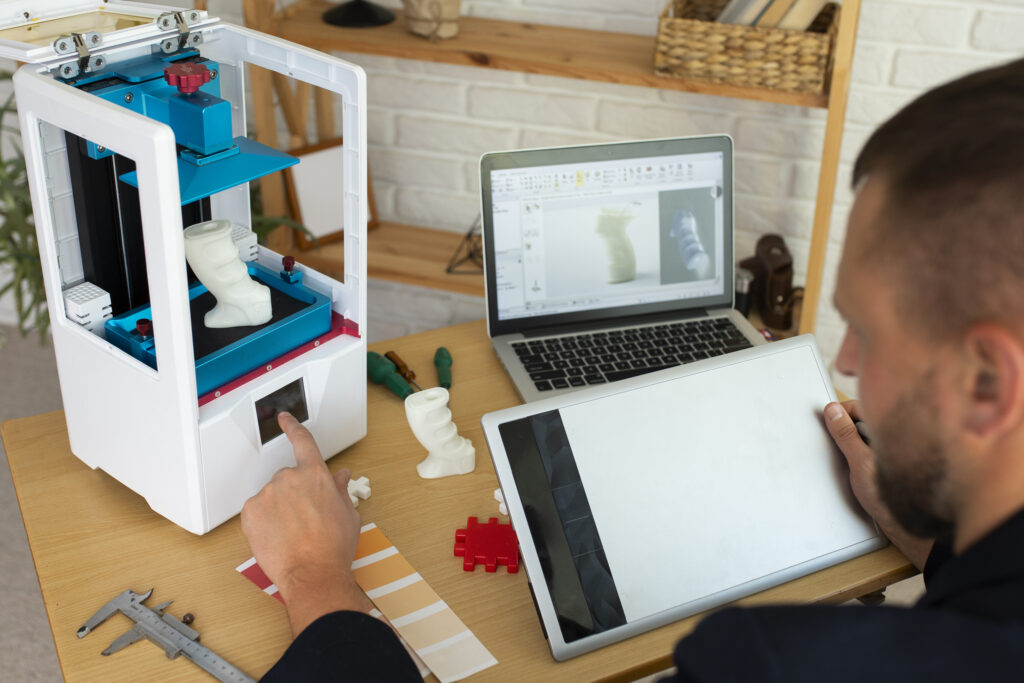
QA for 3D printed components is a complex and multi-faceted process that spans the entire manufacturing workflow, from initial design to final part validation. Unlike traditional manufacturing methods where material properties and process outcomes are well-established, AM introduces unique variables that necessitate a robust and adaptable QA framework.
Here’s a comprehensive overview of QA for 3D printed components:
The Imperative for QA in 3D Printing
The unique characteristics of 3D printing (layer-by-layer fabrication, complex geometries, novel material properties) lead to specific quality challenges:
- Defect Formation: Susceptibility to porosity, cracks, delamination, residual stresses, and warping.
- Part-to-Part Variation: Achieving consistent quality and properties across different builds or even within the same build.
- Material Sensitivity: Behavior of powders, filaments, or resins can vary significantly with processing parameters and environmental conditions.
- Hidden Defects: Many critical defects are internal and not visible to the naked eye, requiring advanced inspection.
- Certification Burden: Proving reliability for critical applications (aerospace, medical) demands rigorous validation and traceability.
Therefore, effective QA in AM aims to prevent defects, ensure repeatability, guarantee performance, and provide comprehensive traceability.
Key Stages and Practices for QA in 3D Printing
QA in AM can be broadly categorized into three main stages: Pre-Build, In-Build (In-Situ Monitoring), and Post-Build.
1. Pre-Build Quality Assurance
This stage focuses on setting up the conditions for a successful print.
- 1.1. Design for Additive Manufacturing (DfAM) Validation:
- What it is: Reviewing the 3D model to ensure it’s printable, optimized for the chosen AM process, and meets desired performance criteria. This includes assessing wall thickness, overhangs, support structure requirements, and potential distortion.
- How it’s done: Using simulation software to predict buildability, material behavior, and potential stress points.
- 1.2. Material Characterization & Qualification:
- What it is: Verifying the quality, consistency, and properties of the raw material (powder, filament, resin) before printing.
- How it’s done:
- Powder: Sieve analysis (particle size distribution), flowability tests, chemical composition analysis (e.g., using ICP-OES, XRF), morphology assessment (SEM), moisture content analysis.
- Filaments/Resins: Viscosity, thermal properties (DSC, TGA), mechanical property testing (tensile, flexural).
- Supplier Verification: Auditing material suppliers and ensuring proper material handling and storage (e.g., controlled humidity for polymers).
- 1.3. Machine Calibration & Maintenance:
- What it is: Ensuring the 3D printer is calibrated, in good working order, and maintained according to manufacturer specifications.
- How it’s done: Regular calibration checks (e.g., laser power, beam focus, build plate leveling, recoater mechanism alignment, temperature sensors), preventative maintenance schedules, and print test parts for validation (e.g., dimensional accuracy test cubes).
- 1.4. Process Parameter Definition:
- What it is: Establishing optimized and validated printing parameters (e.g., laser power, scan speed, layer thickness, build chamber temperature, infill density) for specific materials and geometries.
- How it’s done: Design of Experiments (DoE) and empirical testing to determine robust process windows that yield desired part properties.
2. In-Build (In-Situ) Quality Assurance
This stage involves real-time monitoring of the printing process as it occurs, layer by layer. This is a critical differentiator for AM QA.
- 2.1. Powder Bed Monitoring (for Powder Bed Fusion):
- What it is: Real-time assessment of each freshly spread powder layer.
- How it’s done:
- Overhead cameras: Capture 2D images of the powder bed to detect streaks, gaps, denudation, spatter, or uplifted features.
- 3D Profilometry/Structured Light: Measure the precise surface topography (height map) of the powder bed for deviations in flatness and thickness.
- Benefit: Early detection of issues that can lead to internal defects, allowing for potential build aborts, saving time and material.
- 2.2. Melt Pool Monitoring (for Powder Bed Fusion):
- What it is: Real-time observation of the molten material pool generated by the laser or electron beam.
- How it’s done:
- Co-axial photodiodes/pyrometers: Measure emitted light intensity and temperature of the melt pool.
- High-speed cameras: Capture melt pool geometry, stability, and spatter events.
- Spectroscopy: Analyze plasma plume characteristics for process stability.
- Benefit: Provides insights into energy absorption, solidification behavior, and potential for porosity or material inconsistencies.
- 2.3. Thermal Monitoring:
- What it is: Tracking temperature distribution throughout the build (e.g., build plate, part, chamber).
- How it’s done: Infrared (IR) cameras.
- Benefit: Helps manage residual stresses, warping, and ensures consistent cooling rates for desired microstructure.
- 2.4. Acoustic Emission (AE) Monitoring:
- What it is: Detecting high-frequency sound waves generated by dynamic events during the build.
- How it’s done: Piezoelectric sensors attached to the build plate or machine frame.
- Benefit: Can indicate micro-cracking, delamination, or spatter events.
- 2.5. Data Analytics & Machine Learning (AI/ML):
- What it is: Processing and interpreting the vast amounts of sensor data collected in-situ.
- How it’s done: AI/ML algorithms learn from historical data to automatically detect anomalies, classify defect types, predict potential issues, and correlate in-situ events with post-process part quality.
- Benefit: Provides automated quality flags, enables faster decision-making, and forms the basis for future closed-loop control.
3. Post-Build Quality Assurance
After the printing process is complete, the part undergoes various inspections and tests.
- 3.1. Post-Processing Quality Control:
- What it is: Ensuring quality during and after steps like support removal, heat treatment, surface finishing, or machining.
- How it’s done: Visual inspection, dimensional checks, surface roughness measurements after each post-processing step.
- 3.2. Visual Inspection:
- What it is: A basic but essential check for obvious surface defects.
- How it’s done: Human inspection or automated machine vision systems checking for cracks, warping, un-melted powder, delamination, or excessive surface roughness.
- 3.3. Dimensional Inspection & Metrology:
- What it is: Verifying that the printed part meets the specified dimensions and tolerances.
- How it’s done:
- Contact-based: CMM (Coordinate Measuring Machine), calipers, micrometers.
- Non-contact: Optical scanners, laser scanners, structured light systems, industrial CT (Computed Tomography) scanning for complex internal geometries.
- 3.4. Non-Destructive Testing (NDT):
- What it is: Inspecting the internal structure of the part for defects without damaging it.
- How it’s done:
- X-ray Computed Tomography (CT): Provides detailed 3D volumetric images, excellent for detecting internal porosity, cracks, lack-of-fusion, and foreign inclusions, as well as for dimensional validation of internal features.
- Ultrasonic Testing (UT): Uses sound waves to detect internal flaws and characterize material properties.
- Eddy Current Testing: For detecting surface and near-surface defects in conductive materials.
- Liquid Penetrant Inspection (LPI) / Dye Penetrant Inspection (DPI): For surface-breaking defects.
- 3.5. Destructive Testing (DT):
- What it is: Testing mechanical properties by subjecting sacrificial parts or test coupons to destructive forces.
- How it’s done:
- Tensile Testing: Measures strength, ductility, and elastic modulus.
- Fatigue Testing: Assesses resistance to cyclic loading.
- Hardness Testing: Measures material resistance to indentation.
- Impact Testing: Determines material toughness.
- Metallography/Microstructure Analysis: Microscopic examination of cross-sections to assess grain structure, porosity, and defect morphology.
- Chemical Analysis: Verifying final part chemistry.
Overarching QA Frameworks
Beyond individual steps, an integrated quality management system (QMS) is crucial for AM.
- Standard Operating Procedures (SOPs): Detailed instructions for every step of the AM process, from powder handling to post-processing.
- Personnel Training & Certification: Ensuring that operators, technicians, and QA personnel are adequately trained and qualified.
- Documentation & Traceability: Maintaining meticulous records of every build (material batch, machine logs, in-situ data, inspection results, post-processing parameters) to create a comprehensive audit trail for each part.
- Continuous Improvement (PDCA Cycle): Regularly reviewing QA data, identifying root causes of defects, implementing corrective actions, and continuously refining processes and parameters.
- Industry Standards & Certifications: Adherence to relevant standards (e.g., ISO 9001 for QMS, ISO/ASTM 52900 for AM terminology, industry-specific standards like AS9100 for aerospace or ISO 13485 for medical devices) demonstrates a commitment to quality.
Conclusion
QA for 3D printed components is not a single test, but a holistic, multi-layered approach that integrates stringent controls at every stage of the manufacturing workflow. From meticulous material characterization and precise machine calibration to real-time in-situ monitoring and comprehensive post-build inspection, each step contributes to building confidence in the integrity and performance of additive manufactured parts. As AM continues to mature, sophisticated QA processes will be the cornerstone enabling its widespread adoption for critical, high-value applications across all industrial sectors.
What is QA for 3D Printed Components?
Quality Assurance (QA) for 3D printed components refers to the comprehensive system of processes, procedures, and checks implemented throughout the entire additive manufacturing (AM) workflow to ensure that the final printed parts consistently meet specified quality standards, performance requirements, and regulatory compliance.
It’s a proactive approach designed to prevent defects from occurring, rather than just detecting them after the fact.
Here’s a breakdown of what QA for 3D printed components entails:
Why is QA so Important for 3D Printed Components?
3D printing introduces unique complexities compared to traditional manufacturing, making robust QA critical:
- Layer-by-Layer Nature: Each layer is a potential point of failure. Defects at one layer can propagate and worsen in subsequent layers.
- Process Variability: Numerous parameters (laser power, scan speed, temperature, material flow, etc.) interact in complex ways, leading to potential inconsistencies.
- Material Behavior: The way materials react to rapid heating and cooling cycles, or how they flow, can significantly impact final part quality.
- Internal Defects: Many critical defects like internal porosity, micro-cracks, or un-melted powder are hidden from visual inspection and require advanced techniques to detect.
- Performance Criticality: 3D printing is increasingly used for high-value, safety-critical applications (aerospace, medical, automotive), where part failure can have severe consequences.
- Traceability & Certification: Industries require detailed records and proof that parts meet stringent standards for certification and audit purposes.
Key Pillars of QA for 3D Printed Components
QA in 3D printing covers the entire lifecycle of a part, typically broken down into three main phases:
1. Pre-Build QA (Planning & Preparation): This phase focuses on ensuring that everything is set up correctly before printing begins to minimize the chances of defects.
- Design for Additive Manufacturing (DfAM) Validation:
- Reviewing the 3D model to ensure it’s printable with the chosen AM technology.
- Optimizing features like wall thickness, overhangs, and support structures to prevent build issues.
- Using simulation software to predict potential warping, distortion, or stress concentrations.
- Material Qualification & Characterization:
- Ensuring the raw material (powder, filament, resin) meets specifications for purity, particle size distribution, flowability, moisture content, etc.
- Verifying material properties (chemical, mechanical, thermal) through supplier certifications and in-house testing.
- Proper material handling, storage, and recycling procedures.
- Machine Calibration & Maintenance:
- Regular calibration of all critical machine components (e.g., laser power, beam focus, build plate leveling, recoater alignment, temperature sensors).
- Implementing a robust preventative maintenance schedule to ensure consistent machine performance and prevent wear-related issues.
- Process Parameter Definition:
- Establishing and validating the optimal printing parameters (e.g., layer thickness, build speed, infill patterns, energy density) through rigorous testing and Design of Experiments (DoE).
2. In-Build QA (In-Situ Monitoring): This is a unique and increasingly critical aspect of 3D printing QA, involving real-time observation and data collection during the print process itself.
- Powder Bed Monitoring (for PBF):
- Using cameras and 3D scanners to inspect each fresh powder layer for uniformity, gaps, streaks, spatter, or uplifted areas before it’s fused.
- How it helps: Catches issues early, potentially allowing for build aborts to save material and time.
- Melt Pool Monitoring (for PBF):
- Observing the molten material pool (size, shape, temperature, stability) as the laser or electron beam fuses the powder.
- How it helps: Provides direct insight into the energy interaction and solidification, indicating potential porosity or material defects.
- Thermal Monitoring:
- Using infrared cameras to monitor temperature distribution across the build plate and part.
- How it helps: Helps manage thermal stresses, prevent warping, and ensure consistent cooling for desired microstructure.
- Acoustic Emission Monitoring:
- Detecting high-frequency sounds that can indicate micro-cracking or delamination during the build.
- Data Analytics & Machine Learning (AI/ML):
- Processing the vast amount of in-situ sensor data to automatically detect anomalies, classify defect types, predict potential flaws, and provide actionable insights in real-time.
- How it helps: Automates quality checks, provides a “digital birth certificate” for each layer, and enables future closed-loop control.
3. Post-Build QA (Inspection & Validation): After the part is printed and any necessary post-processing steps (like support removal, heat treatment, surface finishing) are completed.
- Visual Inspection:
- Manual or automated inspection for obvious surface defects, warping, or delamination.
- Dimensional Metrology:
- Verifying that the printed part meets the specified dimensions and tolerances using tools like CMMs (Coordinate Measuring Machines), optical scanners, or industrial CT (Computed Tomography) scanning for internal features.
- Non-Destructive Testing (NDT):
- X-ray Computed Tomography (CT): The gold standard for internal inspection, revealing porosity, cracks, inclusions, and lack of fusion. It also provides precise internal dimensional data.
- Ultrasonic Testing (UT): Uses sound waves to detect internal flaws.
- Dye Penetrant Inspection (DPI): For detecting surface-breaking defects.
- Destructive Testing (DT):
- Testing mechanical properties (e.g., tensile strength, fatigue life, hardness, impact resistance) on sacrificial parts or test coupons.
- Metallography/Microstructure Analysis: Microscopic examination of cross-sections to analyze grain structure, porosity, and defect morphology.
- Chemical Analysis: Confirming the final material composition.
- Functional Testing:
- Testing the actual performance of the part in its intended application if applicable.
Overarching QA Principles for 3D Printing
- Standard Operating Procedures (SOPs): Detailed, documented procedures for every step.
- Personnel Training & Certification: Ensuring operators and QA staff are highly skilled and knowledgeable.
- Documentation & Traceability: Maintaining meticulous records of every parameter, material batch, and inspection result for each part. This creates a comprehensive audit trail.
- Continuous Improvement: Regularly reviewing data, identifying root causes of non-conformances, and implementing corrective and preventive actions.
- Adherence to Standards: Compliance with industry-specific standards (e.g., AS9100 for aerospace, ISO 13485 for medical) and general quality management standards (ISO 9001).
In essence, QA for 3D printed components is a holistic, data-driven, and continuously evolving process that is absolutely essential for bringing AM parts into demanding industrial applications with confidence and reliability.
Who is require QA for 3D Printed Components?
Courtesy: Welleshaft
The simple answer is: Anyone who needs reliable, consistent, and safe 3D printed components requires robust Quality Assurance (QA).
However, the level and stringency of QA required vary significantly depending on the application and industry. Here’s a breakdown of who specifically needs QA for 3D printed components, ranging from essential to highly critical:
1. Manufacturers of Critical and High-Value Components (Highest QA Requirements)
These are the industries where part failure can have catastrophic consequences (loss of life, severe environmental damage, massive financial loss). They demand the most stringent and comprehensive QA.
- Aerospace & Defense:
- Parts: Engine components, structural brackets, rocket parts, satellite components, drone parts.
- Why: Even microscopic defects (porosity, micro-cracks) can lead to catastrophic failure under extreme operating conditions. QA is essential for flight safety, mission success, and meeting stringent regulatory standards (e.g., FAA, AS9100). Full traceability and a “digital birth certificate” for each part are often mandated.
- Medical Devices:
- Parts: Custom implants (hips, knees, spinal cages), surgical instruments, prosthetics, dental devices.
- Why: Direct impact on patient safety and health. Implants must be biocompatible, structurally sound, dimensionally accurate, and have controlled porosity for bone ingrowth. QA ensures reliability, prevents adverse patient outcomes, and meets strict regulations (e.g., FDA, ISO 13485).
- Automotive (High-Performance & EV):
- Parts: Lightweight structural components, critical engine parts, complex cooling systems for batteries.
- Why: Safety and performance are paramount. As AM scales for production, consistent quality across high volumes is crucial. Defect prevention saves significant costs from recalls or failures.
- Energy Sector (Oil & Gas, Power Generation):
- Parts: Turbine components, complex valves, impellers, parts for nuclear applications.
- Why: Components operate under extreme temperatures, pressures, and corrosive environments. Reliability and resistance to failure are critical for operational safety and efficiency.
- Tooling & Molds:
- Parts: Injection molds with conformal cooling channels, specialized dies.
- Why: High-value tools where defects can lead to significant production delays, scrap, and rework. Ensuring the integrity of complex internal cooling channels is vital for tool performance.
2. Contract Manufacturers & 3D Printing Service Bureaus
These companies produce parts for a wide range of clients, often for the critical industries listed above.
- Why: They must guarantee part quality to their customers. Robust QA processes, including adherence to industry standards (like ISO 9001), allow them to build trust, differentiate their services, and reduce liability. They act as the quality gatekeepers for their clients’ AM projects.
3. Companies Seeking Process Qualification and Industrialization of AM
Any company looking to move AM beyond prototyping into consistent, repeatable production requires comprehensive QA.
- Why:
- Repeatability: QA ensures that parts produced today are identical in quality and performance to parts produced tomorrow.
- Cost Reduction: By preventing defects early, QA significantly reduces scrap, rework, and costly post-process inspections.
- Scalability: A well-defined QA framework is essential for scaling AM production reliably.
- Risk Mitigation: Understanding and controlling the process reduces manufacturing risks.
4. Research and Development (R&D) Institutions & New Material Developers
While not producing end-use parts, R&D needs QA to validate their work.
- Why:
- Understanding Process Physics: QA data helps researchers understand how different parameters and materials behave.
- New Material Qualification: QA is essential for characterizing and validating new AM materials for specific applications.
- Developing New AM Processes/Machines: QA methodologies are used to test and refine new AM technologies.
5. Any User Prioritizing Reliability and Cost-Efficiency
Even for non-safety-critical parts, if the cost of failure (e.g., a high number of scrapped parts, customer dissatisfaction, reputation damage) outweighs the cost of QA, then QA is required.
- Why: Reduces waste, improves customer satisfaction, and builds a reputation for quality products.
In essence, the more critical the application, the higher the value of the component, and the greater the need for consistent, repeatable results, the more stringent and comprehensive the QA for 3D printed components becomes. For complex, high-performance parts, QA is not an option; it’s a necessity.
When is require QA for 3D Printed Components?
QA for 3D printed components is required whenever you need to ensure the reliability, performance, safety, and consistency of the manufactured parts. It’s not a one-size-fits-all, “always on” switch, but rather a necessity that scales with the criticality and application of the printed component.
Here are the key scenarios and times when QA for 3D printed components becomes explicitly required:
1. For Critical, Safety-Sensitive, or High-Value Applications:
This is the most significant driver for comprehensive QA. If a part’s failure could lead to:
- Loss of Life or Serious Injury: (e.g., medical implants, aerospace components, automotive safety parts).
- Significant Environmental Damage: (e.g., parts in chemical processing, nuclear facilities).
- Massive Financial Loss: (e.g., expensive, complex tooling; components in high-value machinery, long-duration space missions).
- Regulatory Non-Compliance: (e.g., parts needing FAA, FDA, or ISO certifications).
When required: From the very initial design phase (DfAM) through material selection, printing, post-processing, and final inspection. Every step must be rigorously controlled and documented. This includes in-situ monitoring during the print, as discussed previously, as it’s a critical part of the QA chain for these applications.
2. During Process Development and Qualification:
Whenever a new material, a new printer, or a new part design is introduced, QA is essential to define and validate the manufacturing process.
- New Material Qualification: When a new powder, filament, or resin is adopted, QA processes (e.g., mechanical testing, microstructural analysis, chemical verification) are needed to establish its properties and optimal processing parameters.
- New Printer Installation/Validation: When a new 3D printer is acquired, QA protocols verify that it performs to specifications and can consistently produce parts of the required quality.
- New Part Design/Geometry: For novel designs, especially those leveraging AM’s complexity (e.g., lattice structures, internal channels), QA helps validate printability, dimensional accuracy, and structural integrity.
- Process Parameter Optimization: When engineers fine-tune parameters to achieve desired properties (e.g., maximizing density, improving surface finish), QA methods are used to measure and confirm the effectiveness of these changes.
When required: Throughout the entire R&D and pilot production phases.
3. For Achieving Consistent, Repeatable Production:
As 3D printing scales from prototyping to serial production, QA ensures uniformity.
- High-Volume Production: Even for non-safety-critical parts, if hundreds or thousands are being produced, QA ensures consistency, reduces variations, and minimizes scrap rates.
- Batch-to-Batch Consistency: QA verifies that parts produced today are identical in quality to those produced weeks or months ago, even if different material batches or slight environmental variations occur.
- Long Print Durations: For parts that take many hours or days to print, QA (especially in-situ monitoring) is required throughout the entire build to catch issues early and prevent complete build failures.
When required: Continuously throughout the entire production cycle, with regular checks, audits, and data analysis.
4. When External Certifications or Audits are Required:
Many industries demand adherence to specific quality management systems and standards.
- Industry Standards: Compliance with standards like ISO 9001 (general QMS), AS9100 (aerospace), ISO 13485 (medical devices), or specific ASTM/ISO AM standards.
- Customer Requirements: When customers specify certain quality metrics or demand a full audit trail for their parts.
When required: QA documentation and processes must be continuously maintained and available for review by auditors or customers.
5. To Manage Risk and Reduce Costs:
Ultimately, good QA is a strategic investment that pays off.
- Reducing Scrap & Rework: Detecting defects early (especially with in-situ monitoring) prevents wasted material, machine time, and post-processing efforts. This is particularly crucial for expensive AM materials.
- Improving Reputation: Consistently delivering high-quality parts builds customer trust and a strong market reputation.
- Predictive Maintenance: QA data (e.g., from in-situ monitoring) can sometimes indicate machine wear or performance degradation, allowing for proactive maintenance before a major breakdown.
When required: Continuously as part of an ongoing operational excellence strategy.
In summary, QA for 3D printed components is not just about a final inspection; it’s a holistic, continuous process that begins long before a print starts and extends throughout the entire part lifecycle. It is required precisely when confidence in the final part’s quality, performance, and reliability is non-negotiable.
Where is require QA for 3D Printed Components?

Quality Assurance (QA) for 3D printed components is not confined to a single physical location; rather, it’s a comprehensive, multi-stage process integrated across the entire additive manufacturing (AM) workflow. Think of it as a continuous thread of checks and balances that ensures quality from the initial design concept to the final, finished part.
Here are the key “wheres” where QA for 3D printed components is required:
1. Design and Pre-Production Planning Stage (Digital Environment / Engineering Office)
Even before any physical printing begins, QA is crucial in the digital realm.
- Where: Engineering workstations, CAD/CAM software, simulation software, Design for Additive Manufacturing (DfAM) software suites.
- What happens:
- Design Validation: Engineers review and optimize the 3D model for printability with the chosen AM process. This includes assessing wall thicknesses, overhangs, support structure requirements, and potential distortion or warpage based on the material and process.
- Process Simulation: Simulating the printing process helps predict thermal stresses, material behavior, and potential defects virtually, reducing costly physical prototypes.
- Parameter Definition: Establishing and optimizing specific print parameters (e.g., laser power, scan speed, layer thickness, build orientation, infill patterns) for the selected material and geometry, based on validated data.
- Why it’s required: To prevent costly errors downstream by identifying and addressing design- or process-related issues before any material is consumed or machine time is spent.
2. Material Storage and Preparation Area (Warehouse / Lab / Cleanroom)
The quality of the raw material is the fundamental starting point for a quality printed part.
- Where: Material storage facilities, dedicated material preparation labs, powder sieving stations, filament drying ovens, resin mixing areas. These might be climate-controlled rooms or cleanrooms, depending on the material and application.
- What happens:
- Incoming Material Inspection: Verifying supplier Certificates of Analysis (CoAs) and conducting in-house tests. For powders, this includes particle size distribution, flowability, chemical composition (e.g., using XRF or ICP-OES), and moisture content. For polymers, it might involve testing viscosity or thermal properties.
- Material Handling & Storage: Implementing strict protocols for storing materials (e.g., controlled humidity for hygroscopic polymers, inert atmosphere for reactive metal powders) to prevent degradation, contamination, or oxidation.
- Recycled Material Management: If unused powder is collected for reuse, QA ensures proper sieving, refreshing with virgin powder, and re-qualification to maintain desired properties.
- Why it’s required: To ensure the feedstock is consistently pure, free from contaminants, and performs predictably during the build, directly impacting the final part’s properties and defect rate.
3. Inside the 3D Printing Machine’s Build Chamber (Production Floor)
This is the core “where” for in-process QA, leveraging in-situ monitoring technologies.
- Where: Within the enclosed, controlled environment of the 3D printer’s build chamber.
- What happens:
- Machine Calibration: Regular, automated or manual checks of critical machine parameters such as laser power and focus, build plate leveling, recoater mechanism alignment, and temperature sensors.
- In-Situ Monitoring (Real-time QA): This is where sensors are actively collecting data during the build:
- Powder Bed Monitoring: High-resolution cameras and/or 3D scanners observe each freshly spread powder layer for uniformity, gaps, streaks, spatter, or uplifted features.
- Melt Pool Monitoring: Sensors analyze the molten material pool’s temperature, size, and stability as the energy source interacts with the powder/material.
- Thermal Monitoring: Infrared (IR) cameras track temperature distribution across the build and the part as it cools.
- Acoustic Emission (AE): Sensors detect sound waves that can indicate micro-cracking, delamination, or other rapid material events.
- Why it’s required: To detect and potentially correct anomalies as they occur, preventing defect propagation, enabling early build aborts (saving expensive materials and time), and providing crucial layer-by-layer traceability.
4. Post-Processing Stations (Production Floor / Finishing Area)
After the part is printed, it often undergoes several finishing steps, each requiring its own set of QA checks.
- Where: Support removal stations, heat treatment ovens (e.g., Hot Isostatic Pressing – HIP, stress relief furnaces), machining centers, surface finishing stations (e.g., shot peening, polishing, chemical baths).
- What happens:
- Visual Inspection: Checking for obvious surface defects, warping, or delamination after supports are removed or initial cleaning.
- Dimensional Checks: Verifying critical dimensions and tolerances after machining or surface finishing operations.
- Surface Roughness Measurement: Ensuring the specified surface finish is achieved.
- Cleaning Verification: Ensuring no residue from un-melted powder, support materials, or chemical processes remains.
- Why it’s required: To ensure that post-processing steps do not introduce new defects or compromise the part’s integrity, and that final surface and dimensional requirements are met.
5. Dedicated Quality Control Lab / Metrology Room (QA Department)
This is where detailed, advanced, and often destructive inspections and tests are performed, especially for critical parts.
- Where: Climate-controlled metrology rooms, Non-Destructive Testing (NDT) labs, destructive testing labs, material characterization labs.
- What happens:
- Dimensional Metrology: Using high-precision tools like CMMs (Coordinate Measuring Machines), optical scanners, or industrial Computed Tomography (CT) scanning (which can inspect internal features and dimensions non-destructively).
- Non-Destructive Testing (NDT): Beyond CT, this includes Ultrasonic Testing (UT) for internal flaws, Dye Penetrant Inspection (DPI) for surface-breaking defects, and Eddy Current Testing.
- Destructive Testing (DT): Performing mechanical tests (e.g., tensile strength, fatigue life, hardness, impact resistance) on sacrificial parts or test coupons.
- Metallography/Microstructure Analysis: Microscopic examination of cross-sections to assess grain structure, fusion quality, porosity, and defect morphology.
- Chemical Analysis: Verifying the final chemical composition of the printed part.
- Why it’s required: To provide definitive proof of a part’s quality, internal integrity, and performance, which is often essential for certification, regulatory compliance, and customer acceptance.
6. Data Management Systems / Cloud Platforms (IT Infrastructure)
The virtual “where” for storing, managing, and analyzing all the QA data collected throughout the process.
- Where: Local servers, secure cloud databases, digital twins platforms, Quality Management Software (QMS), enterprise resource planning (ERP) systems.
- What happens:
- Data Archiving: Storing all pre-build, in-situ, and post-build QA data, meticulously linked to specific build IDs, material batches, and part serial numbers.
- Traceability: Enabling complete traceability of every parameter, material property, and inspection result for each individual component.
- Trend Analysis: Analyzing aggregated QA data over time to identify long-term trends, process drifts, and areas for continuous improvement.
- Reporting: Generating comprehensive quality reports for internal use, customers, and regulatory bodies.
- Why it’s required: To provide a complete audit trail, support root cause analysis in case of issues, enable predictive quality insights, and ensure regulatory compliance in a digital environment.
In summary, QA for 3D printed components is a distributed, multi-point system, integrated at every stage where quality can be influenced, measured, or verified. It’s essential to ensure the reliability and performance of AM parts, especially in industries with high standards and critical applications.
How is require QA for 3D Printed Components?
You’re asking “How is QA required for 3D printed components?” This question delves into the methods and processes by which Quality Assurance is implemented and enforced in additive manufacturing. It’s about the practical steps taken to ensure quality.
Here’s a breakdown of how QA is required and implemented for 3D printed components:
1. By Implementing a Robust Quality Management System (QMS)
This is the overarching framework that dictates how quality is managed across the entire organization.
- How: Establishing formal procedures, policies, and documentation for every stage of the AM process. This includes:
- Standard Operating Procedures (SOPs): Detailed, step-by-step instructions for material handling, machine operation, post-processing, inspection, and documentation.
- Training & Certification: Ensuring all personnel involved (designers, operators, QA technicians) are properly trained and certified for their specific roles and the equipment they use.
- Continuous Improvement: Implementing feedback loops and methodologies (like Six Sigma, Lean Manufacturing, or PDCA cycles) to identify quality issues, analyze root causes, implement corrective actions, and continuously refine processes.
- Documentation & Traceability: Creating a comprehensive system for recording every piece of data related to a part’s production – from material batch numbers and machine logs to in-situ monitoring data and final inspection reports. This ensures complete traceability (“digital birth certificate”) for each component.
- Why it’s required: A QMS provides the structured backbone for consistent quality. It ensures that quality is not left to chance but is systematically built into every operation.
2. Through Strict Material Control and Characterization
The quality of the raw material fundamentally dictates the quality of the final part.
- How:
- Incoming Inspection: Every batch of raw material (powder, filament, resin) is subject to stringent incoming inspection. This involves:
- Verification of Supplier Certifications: Checking CoAs (Certificates of Analysis) from suppliers.
- Physical and Chemical Testing: In-house tests for particle size distribution, morphology (shape), flowability, chemical composition, moisture content, viscosity, thermal properties, etc. These tests often use techniques like laser diffraction, scanning electron microscopy (SEM), X-ray fluorescence (XRF), and differential scanning calorimetry (DSC).
- Controlled Storage & Handling: Implementing strict environmental controls (temperature, humidity, inert atmosphere for reactive metals) to prevent material degradation or contamination.
- Re-qualification of Recycled Material: If unused powder is recovered and reused, it must be sieved, blended with virgin material, and re-qualified to ensure its properties remain within acceptable limits.
- Incoming Inspection: Every batch of raw material (powder, filament, resin) is subject to stringent incoming inspection. This involves:
- Why it’s required: Inconsistent raw material directly leads to inconsistent part properties and increased defects. Controlling the material ensures a stable and predictable input to the AM process.
3. By Rigorous Machine Calibration and Process Control
The AM machine and its operating parameters are central to part quality.
- How:
- Routine Calibration: Regular calibration of critical machine components:
- Laser/electron beam power and focus.
- Build plate leveling and temperature uniformity.
- Recoater blade/roller alignment and speed.
- Gas flow and chamber atmosphere controls.
- Process Parameter Optimization (PPO): Using methodologies like Design of Experiments (DoE) and statistical process control (SPC) to identify and lock down the optimal set of printing parameters (e.g., laser power, scan speed, layer thickness, hatch spacing, build orientation) for each material and part geometry. This involves printing and testing numerous samples.
- Environmental Control: Maintaining stable ambient conditions (temperature, humidity) in the printing environment to minimize external influences on the process.
- Routine Calibration: Regular calibration of critical machine components:
- Why it’s required: Precise machine control and optimized parameters ensure that the material is processed consistently and correctly, leading to predictable microstructures and mechanical properties.
4. Via In-Situ (In-Process) Monitoring and Data Analytics
This is a hallmark of modern AM QA, providing real-time insights.
- How: Integrating various sensors directly into the 3D printer to collect data during the build:
- High-Resolution Cameras: Capture images of each powder layer (powder bed monitoring) to detect anomalies like streaks, gaps, spatter, or uplift.
- Pyrometers/Photodiodes: Measure temperature and intensity of the melt pool (melt pool monitoring) to assess thermal stability and fusion quality.
- Thermal Cameras (IR): Monitor temperature distribution across the build plate and the part to manage thermal stresses and prevent warping.
- Acoustic Emission Sensors: Detect micro-cracks or delamination events as they occur.
- Data Analytics & AI/ML: Sophisticated software processes this vast amount of real-time sensor data. AI/ML algorithms learn to identify patterns, classify defects, predict potential flaws, and can even trigger alerts or pause builds.
- Why it’s required: This proactive approach allows for early defect detection, potential build aborts (saving material and time), and provides a comprehensive digital record for traceability and root cause analysis. It’s crucial for achieving “first-time-right” parts.
5. Through Comprehensive Post-Build Inspection and Testing
After the part is printed and any necessary post-processing, it undergoes final validation.
- How:
- Visual Inspection: Checking for obvious surface defects, layer inconsistencies, or warping.
- Dimensional Metrology: Using precision tools like CMMs (Coordinate Measuring Machines), optical scanners, or industrial CT (Computed Tomography) scanning to verify that the part meets all specified dimensions and tolerances, including internal features.
- Non-Destructive Testing (NDT):
- X-ray Computed Tomography (CT): The gold standard for internal inspection, providing detailed 3D volumetric data to detect internal porosity, cracks, lack-of-fusion, and inclusions.
- Ultrasonic Testing (UT): Uses sound waves to find internal flaws.
- Dye Penetrant Inspection (DPI): For detecting surface-breaking defects.
- Destructive Testing (DT): Performing mechanical tests (e.g., tensile strength, fatigue life, hardness, impact resistance) on sacrificial parts or specifically designed test coupons to verify mechanical properties and material performance.
- Microstructural Analysis: Examining cross-sections of the part under a microscope to assess grain structure, fusion quality, and any micro-defects.
- Why it’s required: To provide the final validation that the part meets all design specifications and performance requirements, especially for critical applications where internal integrity is paramount.
In essence, QA is required for 3D printed components by:
- Establishing a structured QMS.
- Controlling and characterizing raw materials.
- Calibrating machines and optimizing processes.
- Monitoring the build in real-time with sensors and data analytics.
- Performing thorough post-build inspections and tests.
This multi-faceted approach ensures that quality is embedded throughout the entire AM value chain, from raw material to finished product, building confidence in the reliability and performance of 3D printed components.
Case study on QA for 3D Printed Components?
Courtesy: EOS 3D Printing
You’re looking for real-world examples of how Quality Assurance (QA) is applied to 3D printed components. These case studies highlight the critical nature of QA in ensuring reliability, safety, and performance, especially in demanding industries.
Here are a few illustrative case study examples, focusing on different aspects of QA:
Case Study 1: GE Aviation’s Leap-Engine Fuel Nozzle (Aerospace – Metal PBF)
Context: GE Aviation was one of the pioneers in industrializing Additive Manufacturing for critical aerospace components. Their fuel nozzle for the LEAP engine, used in commercial aircraft, was one of the first 3D printed parts to receive FAA certification. This part is incredibly complex, combining 20 traditionally manufactured pieces into a single, lighter, and more durable component.
QA Challenges:
- High stakes: Jet engine components are safety-critical. Failure could lead to catastrophic consequences.
- Complex geometry: The internal passages and features of the nozzle are highly intricate and difficult to inspect post-build.
- Material properties: Ensuring consistent mechanical properties (strength, fatigue life) of the additively manufactured superalloys.
- Certification: Meeting stringent FAA (Federal Aviation Administration) requirements for airworthiness.
How QA Was Required and Implemented:
- Material Qualification:
- Method: Rigorous testing of the nickel-based superalloy powder (e.g., chemical composition, particle size distribution, flowability, oxygen content) from multiple suppliers. This ensured batch-to-batch consistency.
- How it helped: Established a baseline for material quality and prevented issues stemming from inconsistent feedstock.
- Process Parameter Optimization & Control:
- Method: Extensive Design of Experiments (DoE) was conducted to identify the optimal laser power, scan speed, layer thickness, and build orientation that yielded the desired density and mechanical properties.
- How it helped: Created a robust process window that consistently produced high-quality parts, minimizing porosity and improving fatigue life.
- In-Situ Monitoring (Melt Pool & Powder Bed):
- Method: GE developed proprietary in-situ monitoring systems integrated with their Concept Laser M2 and M-Line printers. These systems likely included:
- Melt Pool Pyrometry: Measuring the temperature and size of the melt pool to ensure consistent energy input and stable melt behavior.
- Optical Imaging: Capturing images of each powder layer after recoating to detect any spreading inconsistencies (streaks, denudation) or spatter.
- How it helped: Allowed for real-time detection of process deviations. While not yet fully closed-loop corrective, it provided a “digital twin” of each layer, crucial for traceability and identifying the root cause of any detected anomalies. This data was integral to build approval.
- Method: GE developed proprietary in-situ monitoring systems integrated with their Concept Laser M2 and M-Line printers. These systems likely included:
- Post-Build Non-Destructive Testing (NDT):
- Method: Industrial X-ray Computed Tomography (CT) scanning was a primary QA tool. This allowed GE to “see inside” the complex nozzle, verifying internal geometry, detecting any trapped powder, and ensuring minimal porosity or internal defects that could compromise performance.
- How it helped: Provided a comprehensive 3D volumetric inspection, critical for parts with internal features that cannot be inspected by traditional means.
- Destructive Testing & Metallography:
- Method: A percentage of parts or dedicated test coupons from each build underwent destructive mechanical testing (tensile, fatigue, creep) and microstructural analysis (metallography) to confirm material properties and microstructure.
- How it helped: Validated the mechanical performance and internal integrity of the manufactured components, providing the final stamp of approval for flightworthiness.
Outcome: GE Aviation successfully qualified and brought the 3D printed fuel nozzle into mass production, demonstrating the viability of AM for highly critical aerospace applications through a rigorous, multi-layered QA approach. This case is often cited as a benchmark for industrial AM quality.
Case Study 2: Personalized Cranial Implants (Medical – Metal PBF/Bioprinting)
Context: A patient requires a custom cranial implant due to trauma or disease. These are highly patient-specific, meaning traditional mass-produced implants are not suitable. AM allows for precise anatomical fit and often features porous structures for bone ingrowth (osseointegration).
QA Challenges:
- Patient-specificity: Each implant is unique, making standardized “batch” testing difficult.
- Biocompatibility: Ensuring the material is safe for implantation and promotes desired biological response.
- Dimensional accuracy: The implant must fit perfectly with the patient’s anatomy to prevent complications.
- Structural integrity: The implant must withstand normal physiological loads without failure.
- Sterility: Ensuring the final device is sterile before implantation.
- Regulatory compliance: Meeting medical device regulations (e.g., FDA, CE mark, ISO 13485).
How QA Was Required and Implemented:
- Pre-Surgical Planning & Design Validation:
- Method: Using high-resolution CT/MRI scans of the patient, a precise 3D model of the defect and the intended implant is created. Surgeons and engineers review the design for anatomical fit, biomechanical stability (often with FEA simulations), and optimal porous structure design.
- How it helped: Ensured the “digital” part was correct before any physical manufacturing.
- Material Sourcing & Biocompatibility Testing:
- Method: Using only certified, medical-grade titanium powder or other biocompatible materials. Each batch is rigorously tested for chemical purity and freedom from contaminants. Sterilization compatibility is also verified.
- How it helped: Guaranteed patient safety and proper biological integration.
- Dedicated Machine & Environment Control:
- Method: Often, dedicated AM machines are used solely for medical implants, operating in cleanroom environments to minimize contamination. Strict environmental controls (temperature, humidity, air quality) are maintained.
- How it helped: Reduced the risk of contamination and ensured stable print conditions.
- In-Situ Monitoring & Build Documentation:
- Method: While potentially less mature than in aerospace, optical monitoring of the powder bed for uniformity and thermal monitoring of the build are increasingly used. Every print parameter, machine log, and monitoring data point is meticulously recorded for each unique implant.
- How it helped: Provides an auditable record for regulatory bodies and allows for retrospective analysis if any issues arise after implantation.
- Post-Processing & Cleaning Validation:
- Method: Rigorous cleaning protocols are developed and validated to remove all un-fused powder and any residues. Surface treatments (e.g., acid etching, grit blasting) are carefully controlled to achieve desired surface roughness for cell adhesion.
- How it helped: Ensured biocompatibility, proper surface characteristics for osseointegration, and sterility.
- High-Precision Metrology & NDT:
- Method:
- CT Scanning: Each implant often undergoes a CT scan to verify its internal and external dimensions against the CAD model, confirm the integrity of porous structures, and detect any internal defects (e.g., porosity).
- Dimensional Checks: Laser scanning or CMMs for overall dimensional accuracy.
- How it helped: Guaranteed the implant’s precise fit and structural integrity for patient safety and successful surgical outcome.
- Method:
- Sterilization Validation:
- Method: Validating the sterilization process (e.g., autoclaving, E-beam) to ensure a sterility assurance level (SAL) appropriate for an implantable device.
- How it helped: Critical for preventing infection post-surgery.
Outcome: By implementing a comprehensive QA strategy across all stages, manufacturers can reliably produce complex, patient-specific implants that meet stringent medical regulations, leading to improved patient outcomes and expanded treatment options.
These case studies illustrate that QA for 3D printed components is not just about a final inspection, but an integrated, multi-faceted approach crucial for ensuring part reliability, performance, and safety in high-stakes applications.
White paper on QA for 3D Printed Components?
As an AI, I cannot generate a physical white paper document or embed complex graphics. However, I can provide you with the comprehensive content for a white paper on “Quality Assurance for 3D Printed Components” in Markdown format, which you can then use to create your own document.
White Paper: Building Confidence – A Comprehensive Approach to Quality Assurance for 3D Printed Components
Executive Summary: Additive Manufacturing (AM), commonly known as 3D printing, has rapidly evolved from a prototyping tool to a robust method for producing end-use, mission-critical components across industries like aerospace, medical, automotive, and energy. This transformative shift, however, brings with it a unique set of quality challenges distinct from traditional manufacturing. Ensuring the consistent reliability, performance, and safety of 3D printed parts demands a sophisticated and integrated Quality Assurance (QA) framework that spans the entire manufacturing lifecycle. This white paper outlines the imperative for comprehensive QA in AM, detailing the critical stages, methodologies, and technologies required to build confidence in 3D printed components and unlock their full industrial potential.
1. Introduction: The Quality Imperative in Additive Manufacturing’s Industrial Dawn
The allure of Additive Manufacturing – unparalleled design freedom, rapid prototyping, mass customization, and reduced material waste – is undeniable. Yet, for AM to truly realize its promise as a primary manufacturing method for high-value and safety-critical applications, the question of consistent quality, repeatability, and reliability must be definitively answered.
Unlike subtractive or formative manufacturing, AM builds parts layer by layer, introducing a unique set of variables and potential defect mechanisms. Micro-scale variations in material behavior, energy interaction, and environmental conditions can lead to hidden internal flaws (e.g., porosity, micro-cracks, residual stresses) that are challenging to detect and can compromise a component’s structural integrity.
This white paper asserts that a reactive, “inspect-after-print” approach is insufficient for industrial AM. Instead, a proactive, end-to-end Quality Assurance (QA) strategy is essential. This strategy integrates robust controls and verification steps across the entire value chain, from design validation and material characterization to in-process monitoring and comprehensive post-build inspection, ensuring that quality is built into the component, not merely inspected for.
2. Why Traditional QA Falls Short: Unique Challenges in 3D Printing
The distinct nature of AM presents challenges that necessitate a specialized QA approach:
- Process Complexity & Interdependency: Numerous parameters (laser power, scan speed, layer thickness, powder flow, chamber temperature) interact dynamically, making it difficult to predict outcomes without robust control.
- Layer-by-Layer Defect Propagation: A minor inconsistency in one layer can cascade, leading to larger, more critical defects in subsequent layers that are difficult to mitigate.
- Hidden Internal Defects: Porosity, lack of fusion, and internal cracks are common and often invisible externally, requiring advanced inspection techniques.
- Material Behavior Variability: Raw material properties can change over time or between batches, and their behavior during the rapid thermal cycles of AM is complex.
- Part-to-Part Consistency: Achieving repeatable mechanical properties and dimensional accuracy across multiple builds, or even within a single build, is challenging.
- Post-Processing Influence: Support removal, heat treatments, and surface finishing can introduce new stresses or defects if not carefully controlled.
- Certification Burden: Regulatory bodies (e.g., FAA, FDA) demand unprecedented levels of traceability and confidence for flight-ready or implantable components.
3. The Pillars of Comprehensive QA for 3D Printed Components
An effective QA framework for AM integrates methodologies and technologies across three core stages: Pre-Build, In-Build (In-Situ), and Post-Build.
3.1. Pre-Build Quality Assurance: Planning for Success
This stage focuses on establishing the optimal conditions and validating all inputs before the printing process begins.
- Design for Additive Manufacturing (DfAM) & Simulation:
- Methodology: Thorough review and optimization of the 3D model. Utilizing simulation software (e.g., Finite Element Analysis – FEA, process simulation tools) to predict buildability issues (e.g., warping, support requirements, stress concentrations), optimize part orientation, and ensure the design is inherently robust for AM.
- QA Contribution: Prevents print failures and sub-optimal part performance by addressing issues in the digital phase.
- Material Qualification & Characterization:
- Methodology: Rigorous testing and verification of the raw material feedstock (powders, filaments, resins). This includes:
- Chemical Analysis: (e.g., XRF, ICP-OES) to confirm elemental composition and purity.
- Physical Properties: (e.g., particle size distribution via laser diffraction, flowability via Hall or Carney flow, morphology via SEM) for powders. Viscosity and thermal properties for resins/filaments.
- Moisture Content: Critical for preventing defects like porosity in metal powders or bubbling in polymer filaments.
- QA Contribution: Ensures consistent and predictable feedstock properties, which are fundamental for consistent part quality. Supplier audits and strict material handling protocols are also part of this.
- Methodology: Rigorous testing and verification of the raw material feedstock (powders, filaments, resins). This includes:
- Machine Calibration & Process Parameter Definition:
- Methodology: Regular, documented calibration of the AM machine’s critical components (e.g., laser/beam power and focus, build plate leveling, recoater system alignment, temperature sensors, material dosing systems). This is often complemented by printing and analyzing standard test coupons to validate machine performance.
- Process Parameter Optimization (PPO): Employing structured methodologies like Design of Experiments (DoE) and statistical process control (SPC) to establish and validate the optimal print parameters (e.g., laser power/scan speed, layer thickness, build chamber temperature, infill density) that yield the desired microstructure and mechanical properties for specific material-machine combinations.
- QA Contribution: Guarantees that the equipment is functioning optimally and that the process parameters are robust, minimizing variability and maximizing part integrity.
3.2. In-Build (In-Situ) Quality Assurance: Real-time Vigilance
This is the cutting edge of AM QA, offering unparalleled insights into the build process as it happens, layer by layer.
- Powder Bed Monitoring (for Powder Bed Fusion):
- Methodology: High-resolution cameras capture images of each newly spread powder layer before fusion. Advanced vision systems or profilometers can also generate 3D surface topography maps.
- QA Contribution: Detects inconsistencies like recoater streaks, powder denudation (gaps), spatter accumulation, or upward warping of solidified features. Early detection allows for potential build aborts (saving expensive material and machine time) or flags for further inspection.
- Melt Pool Monitoring (for Powder Bed Fusion):
- Methodology: Sensors (e.g., co-axial photodiodes, pyrometers, high-speed cameras, spectrometers) integrated into the optical path observe the molten material pool generated by the energy source. They measure parameters like temperature, size, shape, stability, and emitted light spectra.
- QA Contribution: Provides direct insight into the energy absorption, melt pool stability, and solidification behavior, which are direct indicators of fusion quality, density, and potential for porosity.
- Thermal Monitoring:
- Methodology: Infrared (IR) cameras monitor the temperature distribution across the build plate and the solidifying part.
- QA Contribution: Helps manage thermal gradients, residual stresses, and warping. Ensures consistent cooling rates for desired microstructures and prevents thermally induced defects.
- Acoustic Emission (AE) Monitoring:
- Methodology: Acoustic sensors attached to the build plate or machine components detect high-frequency sound waves generated by dynamic events within the material.
- QA Contribution: Can identify micro-cracking, delamination, or other stress-relief events that produce distinct acoustic signatures during solidification.
- Data Analytics & Machine Learning (AI/ML):
- Methodology: Processing the immense volume of real-time sensor data from in-situ monitoring. AI/ML algorithms learn from “good” and “bad” build data to automatically detect and classify anomalies, predict potential defects, and provide immediate alerts.
- QA Contribution: Automates quality checks, provides a comprehensive “digital birth certificate” (layer-by-layer history) for each part, enables predictive quality models, and forms the foundation for future closed-loop process control.
3.3. Post-Build Quality Assurance: Final Validation
After the printing and post-processing steps are complete, comprehensive final inspections confirm part quality.
- Post-Processing Quality Control:
- Methodology: QA checks at each post-processing step (e.g., support removal, heat treatment, machining, surface finishing). This includes visual inspections, dimensional checks, and surface roughness measurements after each operation.
- QA Contribution: Ensures that post-processing doesn’t introduce new defects and that the part meets final surface and dimensional specifications.
- Visual Inspection:
- Methodology: Manual or automated (machine vision) inspection of the part’s external surfaces for obvious defects like cracks, delamination, warping, un-sintered powder, or excessive roughness.
- QA Contribution: Basic, but essential for immediately identifying gross defects.
- Dimensional Metrology:
- Methodology: Precise measurement of the part’s external and internal dimensions against the CAD model. Tools include:
- Contact-based: Coordinate Measuring Machines (CMMs).
- Non-contact: Optical scanners, laser scanners, structured light systems.
- Industrial X-ray Computed Tomography (CT) Scanning: Provides highly accurate 3D volumetric data for both external and complex internal dimensions.
- QA Contribution: Verifies that the part meets specified tolerances and fits its intended assembly.
- Methodology: Precise measurement of the part’s external and internal dimensions against the CAD model. Tools include:
- Non-Destructive Testing (NDT):
- Methodology: Inspecting the internal structure of the part for defects without damaging it.
- Industrial CT Scanning: The gold standard for AM, providing detailed 3D volumetric images of internal porosity, cracks, lack-of-fusion, and foreign inclusions.
- Ultrasonic Testing (UT): Uses sound waves to detect internal flaws and characterize material properties.
- Eddy Current Testing: For detecting surface and near-surface defects in conductive materials.
- Liquid Penetrant Inspection (LPI) / Dye Penetrant Inspection (DPI): For surface-breaking defects.
- QA Contribution: Crucial for critical parts where hidden internal flaws could lead to catastrophic failure.
- Methodology: Inspecting the internal structure of the part for defects without damaging it.
- Destructive Testing (DT):
- Methodology: Subjecting sacrificial parts or representative test coupons to forces that cause failure to determine mechanical properties.
- Tensile Testing: Measures strength, ductility, and elastic modulus.
- Fatigue Testing: Assesses resistance to cyclic loading over time.
- Hardness Testing: Measures material resistance to indentation.
- Impact Testing: Determines material toughness.
- Metallography/Microstructure Analysis: Microscopic examination of cross-sections to assess grain structure, porosity, and defect morphology, correlating with process parameters.
- Chemical Analysis: Verifying the final part’s chemical composition.
- QA Contribution: Provides definitive validation of material performance and microstructure, often required for material and part qualification.
- Methodology: Subjecting sacrificial parts or representative test coupons to forces that cause failure to determine mechanical properties.
4. Overarching Principles and Best Practices
Beyond the individual stages, an effective AM QA framework relies on:
- Integrated Data Management: A robust system to collect, store, and analyze all QA data from every stage, creating comprehensive digital records and enabling full traceability for each component.
- Adherence to Standards & Regulations: Compliance with industry-specific quality standards (e.g., AS9100 for aerospace, ISO 13485 for medical) and general quality management systems (ISO 9001, ASTM/ISO AM standards).
- Personnel Training & Competency: Ensuring that all individuals involved in the AM process, from design to inspection, are highly trained, qualified, and understand the critical QA requirements.
- Supplier Quality Management: Extending QA principles to material suppliers and external post-processing providers.
- Root Cause Analysis & Corrective Actions: A systematic approach to investigating non-conformances, identifying their root causes, and implementing effective corrective and preventive actions to avoid recurrence.
5. Conclusion: Building Confidence, Unlocking Potential
Quality Assurance for 3D printed components is not an optional extra; it is the cornerstone for industrializing Additive Manufacturing. By implementing a comprehensive, multi-stage QA framework that leverages advanced technologies like in-situ monitoring, sophisticated metrology, and data analytics, manufacturers can:
- Prevent defects proactively: Reducing costly scrap and rework.
- Ensure consistent quality and repeatability: Critical for serial production.
- Accelerate qualification and certification: Providing the necessary confidence for critical applications.
- Optimize processes: Driving continuous improvement and innovation.
As AM continues its rapid advancement, robust QA systems will be the decisive factor in building trust, mitigating risks, and ultimately unlocking the full potential of 3D printing to deliver high-performance, reliable, and certifiable components across the global industrial landscape.
Industrial Application of QA for 3D Printed Components?
Quality Assurance (QA) is not just a theoretical concept in 3D printing; it’s a practical necessity driving the adoption of Additive Manufacturing (AM) in critical industrial applications. Here are several industrial sectors where QA for 3D printed components is rigorously applied, along with examples of how it’s implemented:
1. Aerospace & Defense
Application: Jet engine components (e.g., fuel nozzles, turbine blades, brackets), satellite parts, structural components for aircraft, replacement parts for aging fleets.
How QA is Applied:
- Materials: Strict incoming material inspection for metal powders (e.g., Titanium alloys, Nickel-based superalloys). This includes particle size distribution, chemical composition, flowability, and oxygen content checks, often to AS9100 standards. Suppliers must provide extensive Certificates of Analysis (CoAs).
- Process Control: Rigorous qualification of specific machines and process parameters for each material and part family. This involves extensive Design of Experiments (DoE) and statistical process control (SPC) to establish and maintain robust process windows.
- In-Situ Monitoring: Real-time monitoring of every layer during the build.
- Melt Pool Monitoring: Using pyrometers or high-speed cameras to analyze melt pool temperature, size, and stability. Deviations can indicate porosity or other defects.
- Powder Bed Monitoring: Cameras inspect each recoated layer for uniform powder distribution, streaks, or part uplift.
- Thermal Imaging: Monitoring temperature gradients to manage residual stresses and prevent warping.
- Post-Build NDT:
- X-ray Computed Tomography (CT) Scanning: The primary method for internal inspection, detecting porosity, cracks, lack of fusion, and foreign inclusions. Crucial for complex internal geometries (like those in fuel nozzles).
- Ultrasonic Testing (UT): For defect detection and material characterization in thicker sections.
- Dimensional Metrology: High-precision CMMs or 3D optical scanners verify external geometry; CT scans verify internal dimensions.
- Destructive Testing: Regular mechanical testing (tensile, fatigue, creep) on test coupons built alongside critical parts or on sacrificial parts themselves. Microstructural analysis confirms desired grain structure and density.
- Traceability: A comprehensive “digital thread” or “digital birth certificate” for every part, linking material batch, machine parameters, in-situ data, and all inspection results to a unique serial number for full traceability.
Example: GE Aviation’s LEAP engine fuel nozzle (as described in the previous case study) is a prime example of QA enabling mass production of 3D printed critical aerospace components.
2. Medical Devices & Implants
Application: Patient-specific orthopedic implants (hips, knees, spinal cages), custom prosthetics, surgical guides and instruments, dental crowns and bridges, anatomical models for surgical planning.
How QA is Applied:
- Biocompatible Materials: Sourcing and rigorous testing of medical-grade materials (e.g., Ti6Al4V ELI, PEEK, biocompatible resins). This includes chemical purity, cytotoxicity, and sterilization compatibility.
- Cleanroom Environments: Often, 3D printing for implants occurs in ISO Class 7 or 8 cleanroom environments to minimize contamination.
- Patient-Specific QA: For custom implants, QA involves verifying the accuracy of the patient’s scan data (CT/MRI), the fidelity of the 3D model derived from it, and the precise replication of that model in the printed implant.
- Dimensional Accuracy: High-resolution 3D scanners and CT scans verify the exact dimensions and complex porous structures required for osseointegration.
- Surface Finish: QA ensures surface roughness is optimized for biological response (e.g., cell adhesion).
- Sterilization Validation: Rigorous validation of sterilization processes (e.g., autoclave, gamma irradiation, e-beam) to achieve the required Sterility Assurance Level (SAL).
- Regulatory Compliance: Adherence to strict medical device regulations (e.g., FDA 21 CFR Part 820, ISO 13485) throughout the entire process, requiring extensive documentation and validation.
Example: Companies like Stryker and Zimmer Biomet use AM to produce porous titanium implants for orthopedics. Each implant undergoes meticulous QA, including CT scanning to confirm internal structure and porosity, ensuring proper bone ingrowth and long-term stability.
3. Automotive Industry
Application: Lightweight structural components, custom tooling, jigs and fixtures, complex fluid management systems (e.g., cooling lines for EV batteries), spare parts for vintage vehicles.
How QA is Applied:
- Material Qualification for Performance: Testing high-performance polymers (e.g., PA12, Ultem, Carbon Fiber reinforced composites) or metal alloys for specific automotive requirements like impact resistance, fatigue strength, heat deflection, and chemical resistance.
- Process Repeatability: Implementing SPC to ensure consistency in part properties across large production batches, particularly as AM moves beyond prototyping into end-use parts.
- Dimensional Accuracy & Surface Finish: Using CMMs and optical scanners for checking dimensions, and surface profilometers for surface finish, critical for mating parts or aesthetic components.
- Functional Testing: Testing 3D printed tooling and fixtures in their actual production environment to ensure they meet performance and ergonomic requirements. For end-use parts, this includes performance testing under simulated vehicle operating conditions.
- Traceability: For critical components, maintaining detailed build records to track material batches, machine parameters, and inspection data.
Example: Porsche uses AM for various applications, including custom components for limited-edition vehicles and complex cooling circuits for electric vehicle battery packs. QA ensures these parts meet the stringent performance and safety standards of high-performance automobiles, focusing on material density and absence of critical defects. BMW also leverages AM for tooling and jigs, where QA on dimensional accuracy and durability is key to maintaining production line efficiency.
4. Tooling, Jigs, and Fixtures
Application: Conformal cooling inserts for injection molds, custom jigs for assembly, drill guides, inspection fixtures.
How QA is Applied:
- Dimensional Accuracy: High-precision measurement (CMM, laser scanners) is crucial to ensure tools fit correctly into existing production lines or mold cavities.
- Material Hardness & Wear Resistance: Testing printed tools for hardness and wear properties, especially for materials like tool steels, to ensure longevity in production environments.
- Internal Channel Verification (for conformal cooling): CT scanning is essential to verify the integrity and cleanliness of complex internal cooling channels within mold inserts, which are critical for efficient heat transfer and cycle time reduction.
- Functional Testing: “Trial runs” of the 3D printed tooling in the actual production process to confirm fit, function, and performance under operational loads.
- Defect Detection: Visual inspection for surface flaws that could transfer to molded parts, and NDT for internal defects that could compromise tool life.
Example: Companies like Moldflow and EOS collaborate to ensure the quality of 3D printed mold inserts with conformal cooling. QA involves verifying the complex internal channel geometry via CT scanning and then validating the heat transfer performance through thermal imaging during molding trials.
5. Energy Sector (Oil & Gas, Power Generation)
Application: Impellers, complex valve components, heat exchangers, replacement parts for aging infrastructure, components for extreme environments (high temperature, pressure, corrosive).
How QA is Applied:
- Material Purity & Integrity: Extremely strict control over metal powder purity to ensure optimal material properties in harsh operating environments.
- High-Density & Low Porosity: Intensive NDT (especially CT scanning and UT) to ensure very low porosity levels, as defects can propagate under extreme stress.
- Mechanical Property Verification: Rigorous mechanical testing, including creep and fatigue testing, due to the high temperatures and pressures these components endure.
- Corrosion Resistance: Specific tests to ensure the printed material maintains its corrosion resistance properties after the AM process.
- Traceability & Certification: Detailed documentation for every step, often required for regulatory approval and safety standards in power plants and offshore platforms.
Example: Siemens Energy utilizes AM for gas turbine components, such as burner tips and turbine blades. QA ensures these parts can withstand extreme temperatures and pressures, relying heavily on NDT, extensive destructive testing for high-temperature mechanical properties, and rigorous process control to minimize defects and achieve required material densities.
In all these applications, the underlying principle is that the level of QA directly correlates with the criticality of the component. The more severe the consequences of failure, the more comprehensive, sophisticated, and integrated the QA approach must be.
References
[edit]
- ^ “Additive manufacturing — General Principles — Overview of process categories and feedstock”. ISO/ASTM International Standard. 17296-2:2015(E). 2015.
- ^ Bickel, B.; Cignoni, P.; Malomo, L.; Pietroni, N. (2018). “State of the Art on Stylized Fabrication” (PDF). Computer Graphics Forum. 37 (6): 325–342. doi:10.1111/cgf.13327. hdl:10453/129681. S2CID 51870522.
- ^ Jump up to:a b Sames, W. (2016). “The metallurgy and processing science of metal additive manufacturing”. International Materials Reviews. 61 (5): 315–360. Bibcode:2016IMRv…61..315S. doi:10.1080/09506608.2015.1116649. OSTI 1267051. S2CID 39704506.
- ^ Jane Bird (2012-08-08). “Exploring the 3D printing opportunity”. The Financial Times. Retrieved 2012-08-30.
- ^ Ibrahim, Yazan; Hilal, Nidal (2023). “The potentials of 3D-printed feed spacers in reducing the environmental footprint of membrane separation processes”. Journal of Environmental Chemical Engineering. 11: 109249. doi:10.1016/j.jece.2022.109249. S2CID 255328712.
- ^ Hamzah, Hairul Hisham; Shafiee, Saiful Arifin; Abdalla, Aya; Patel, Bhavik Anil (2018). “3D printable conductive materials for the fabrication of electrochemical sensors: A mini review”. Electrochemistry Communications. 96: 27–31. doi:10.1016/j.elecom.2018.09.006. S2CID 105586826.
- ^ FDM is a proprietary term owned by Stratasys. All 3-D printers that are not Stratasys machines and use a fused filament process are referred to as or fused filament fabrication (FFF).
- ^ Manolis Sherman, Lilli (November 15, 2007). “A whole new dimension – Rich homes can afford 3D printers”. The Economist.
- ^ Wohlers, Terry. “Factors to Consider When Choosing a 3D Printer (WohlersAssociates.com, Nov/Dec 2005)”. Archived from the original on 2020-11-04. Retrieved 2017-02-24.
- ^ “Casting aluminum parts directly from 3D printed PLA parts”. 3ders.org. 2012-09-25. Retrieved 2013-10-30.
- ^ Jump up to:a b “Researchers Develop a Low-Cost Metal 3D Printer Using MIG Welding”. October 8, 2018.
- ^ Vidler, C.; Halwes, M.; Kolesnik, K (2024). “Dynamic interface printing”. Nature. 634 (8036): 1096–1102. arXiv:2403.15144. Bibcode:2024Natur.634.1096V. doi:10.1038/s41586-024-08077-6. PMC 11525192. PMID 39478212.
- ^ “Affordable 3D Printing with new Selective Heat Sintering (SHS) technology”. blueprinter. Archived from the original on 2014-08-09. Retrieved 2017-02-24.
- ^ Schopphoven, Thomas; Gasser, Andres; Backes, Gerhard (2017). “EHLA: Extreme High-Speed Laser Material Deposition”. Laser Technik Journal. 14 (4): 26–29. doi:10.1002/latj.201700020.
- ^ Jump up to:a b Webster, Edward (2000). Print unchained: fifty years of digital printing, 1950-2000 and beyond: a saga of invention and enterprise. West Dover, VT: DRA of Vermont, Inc. p. 116. ISBN 0-9702617-0-5. OCLC 46611664.
- ^ Kenyon, R.W. (1996). “Thermal printing”. Chemistry and Technology of Printing and Imaging Systems. Dordrecht: Springer Netherlands. pp. 115–118. doi:10.1007/978-94-011-0601-6_6. ISBN 978-94-010-4265-9.
- ^ Gregory, P., ed. (1996). Chemistry and technology of printing and imaging systems. London: Blackie Academic & Professional. ISBN 978-94-011-0601-6. OCLC 669699931.
- ^ Howard, Robert (2009). Connecting the dots: my life and inventions, from X-rays to death rays. New York: Welcome Rain. ISBN 978-1-56649-957-6. OCLC 455879561.
- ^ Chee Kai Chua; Kah Fai Leong; Chu Sing Lim (2003). Rapid Prototyping. World Scientific. p. 124. ISBN 978-981-238-117-0.
- ^ Palermo, Elizabeth (19 September 2013). “Fused Deposition Modeling: Most Common 3D Printing Method”. Livescience. Retrieved February 9, 2017.
- ^ Optimizing the Properties of Recycled 3D Printing Materials https://3dprint.com/223571/optimizing-recycled-materials/
- ^ Woern, Aubrey; Byard, Dennis; Oakley, Robert; Fiedler, Matthew; Snabes, Samantha; Pearce, Joshua (2018). “Fused Particle Fabrication 3-D Printing: Recycled Materials’ Optimization and Mechanical Properties”. Materials. 11 (8): 1413. Bibcode:2018Mate…11.1413W. doi:10.3390/ma11081413. PMC 6120030. PMID 30103532.
- ^ Mohammed, M., Mohan, M., Das, A., Johnson, M.D., Badwal, P.S., McLean, D. and Gibson, I., 2017, January. A low carbon footprint approach to the reconstitution of plastics into 3D-printer filament for enhanced waste reduction. In DesTech 2016: Proceedings of the International Conference on Design and Technology (pp. 234-241). Knowledge E.
- ^ Baechler, C., DeVuono, M. and Pearce, J.M., 2013. Distributed recycling of waste polymer into RepRap feedstock. Rapid Prototyping Journal, 19(2), pp.118-125.
- ^ Zhong, S. and Pearce, J.M., 2018. Tightening the loop on the circular economy: Coupled distributed recycling and manufacturing with recyclebot and RepRap 3-D printing. Resources, Conservation and Recycling, 128, pp.48-58.
- ^ Despeisse, M., Baumers, M., Brown, P., Charnley, F., Ford, S.J., Garmulewicz, A., Knowles, S., Minshall, T.H.W., Mortara, L., Reed-Tsochas, F.P. and Rowley, J., 2017. Unlocking value for a circular economy through 3D printing: A research agenda. Technological Forecasting and Social Change, 115, pp.75-84.
- ^ “PTFE Tubing Benefits & Applications”. Fluorotherm Polymers, Inc. 2015-11-17. Retrieved 17 November 2015.
- ^ “Non-beam-based metal additive manufacturing enabled by additive friction stir deposition”. researchgate.net. April 2018. Retrieved August 20, 2024.
- ^ Anderson-Wedge, K.; Avery, D.Z.; Daniewicz, S.R.; Sowards, J.W.; Allison, P.G.; Jordon, J.B.; Amaro, R.L. (2021). “Characterization of the fatigue behavior of additive friction stir-deposition AA2219”. International Journal of Fatigue. 142. doi:10.1016/j.ijfatigue.2020.105951. S2CID 225011973.
- ^ Ibrahim, Yazan; Hilal, Nidal (2023). “The potentials of 3D-printed feed spacers in reducing the environmental footprint of membrane separation processes”. Journal of Environmental Chemical Engineering. 11: 109249. doi:10.1016/j.jece.2022.109249. S2CID 255328712.
- ^ “How Selective Heat Sintering Works”. THRE3D.com. Archived from the original on 3 February 2014. Retrieved 3 February 2014.
- ^ “Aluminum-powder DMLS-printed part finishes race first”. 2014-03-03.
- ^ “Selective Laser Sintering, Birth of an Industry – Department of Mechanical Engineering”. me.utexas.edu.
- ^ Deckard, C., “Method and apparatus for producing parts by selective sintering”, U.S. patent 4,863,538, filed October 17, 1986, published September 5, 1989.
- ^ States4247508 United States 4247508, R. Houshoulder, “Molding Process”, published 27 January 1981
- ^ Ibrahim, Yazan; Hilal, Nidal (2023). “The potentials of 3D-printed feed spacers in reducing the environmental footprint of membrane separation processes”. Journal of Environmental Chemical Engineering. 11: 109249. doi:10.1016/j.jece.2022.109249. S2CID 255328712.
- ^ Smith, T. M.; Thompson, A. C.; Gabb, T. P.; Bowman, C. L.; Kantzos, C. A. (2020-06-15). “Efficient production of a high-performance dispersion strengthened, multi-principal element alloy”. Scientific Reports. 10 (1). Springer Science and Business Media LLC: 9663. Bibcode:2020NatSR..10.9663S. doi:10.1038/s41598-020-66436-5. PMC 7296023. PMID 32541782.
- ^ Hiemenz, Joe (9 March 2007). “Rapid prototypes move to metal components (EE Times, 3/9/2007)”. Archived from the original on 2012-11-02. Retrieved 2024-10-17.
- ^ “Rapid Manufacturing by Electron Beam Melting”. SMU.edu. Archived from the original on September 26, 2015.
- ^ “Binder Jetting process”.
- ^ U.S. patent 4,575,330
- ^ Jump up to:a b Wang, Xifan; Schmidt, Franziska; Hanaor, Dorian; Kamm, Paul H.; Li, Shuang; Gurlo, Aleksander (2019). “Additive manufacturing of ceramics from preceramic polymers: A versatile stereolithographic approach assisted by thiol-ene click chemistry”. Additive Manufacturing. 27: 80–90. arXiv:1905.02060. doi:10.1016/j.addma.2019.02.012. S2CID 104470679.
- ^ Jacobs, Paul Francis (1992-01-01). Rapid Prototyping & Manufacturing: Fundamentals of Stereolithography. Society of Manufacturing Engineers. ISBN 978-0-87263-425-1.
- ^ “EnvisionTEC Perfactory”. EnvisionTEC. Archived from the original on 2013-10-13.
- ^ Butler Millsaps, Bridget (6 March 2015). “Comparing LUXeXceL’s Printoptical Technology to Transparent Polyjet, SLA & MJM 3D Printing”. 3DPRINT.com. Retrieved 15 February 2018.
- ^ Johnson, R. Colin (30 March 2007). “Cheaper avenue to 65 nm? (EE Times, 3/30/2007)”.
- ^ “The World’s Smallest 3D Printer”. TU Wien. 12 September 2011. Archived from the original on 20 September 2011. Retrieved 24 February 2017.
- ^ Jump up to:a b c d “3D-printing multi-material objects in minutes instead of hours”. Kurzweil Accelerating Intelligence. November 22, 2013.
- ^ Jump up to:a b St. Fleur, Nicholas (17 March 2015). “3-D Printing Just Got 100 Times Faster”. The Atlantic. Retrieved 19 March 2015.
- ^ Jump up to:a b Castelvecchi, Davide (17 March 2015). “Chemical trick speeds up 3D printing”. Nature. Retrieved 19 March 2015.