Thermal Imaging for Fault Detection
Thermal imaging for fault detection is a technique that uses infrared (IR) cameras or sensors to detect temperature variations in equipment, machinery, or electrical systems. These temperature differences can indicate faults, overheating, wear, or energy losses. By visualizing heat patterns, maintenance teams can identify potential problems before they cause failures or downtime, making thermal imaging a vital tool in predictive maintenance and industrial safety.
How Thermal Imaging Works
- Infrared Detection – IR sensors detect heat emitted by objects.
- Image Generation – The system converts temperature data into a thermal image (thermogram).
- Fault Identification – Hot spots or unusual temperature patterns reveal potential faults, such as:
- Overheated electrical connections
- Mechanical friction
- Insulation failure
- Analysis and Action – Engineers analyze the images and take preventive measures to fix issues before failure occurs.
Applications of Thermal Imaging for Fault Detection
- Electrical Systems – Detect overloaded circuits, loose connections, or faulty breakers.
- Mechanical Equipment – Identify friction in motors, bearings, or conveyor systems.
- Building Maintenance – Spot insulation issues, leaks, or HVAC problems.
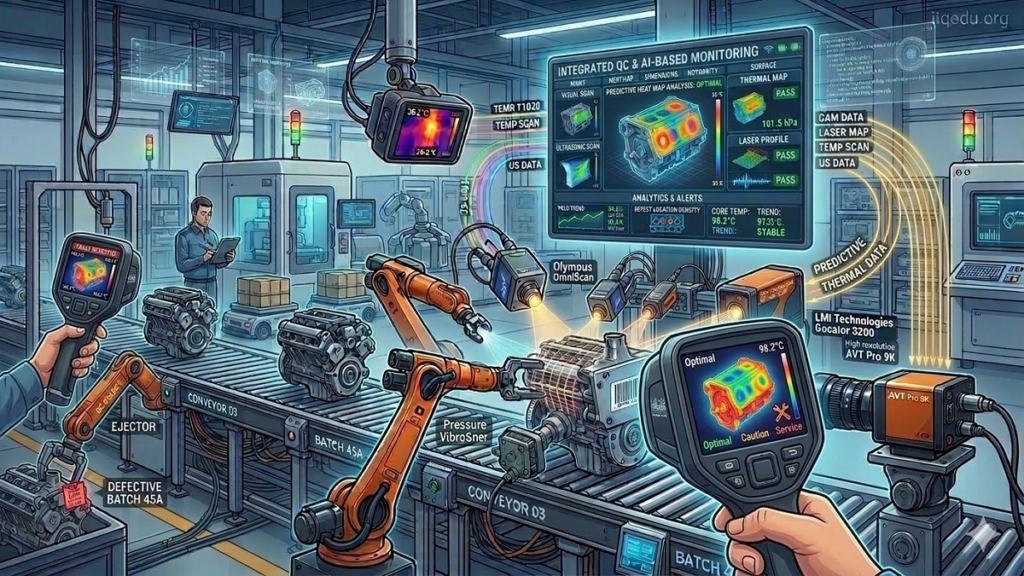
- Industrial Manufacturing – Monitor production lines for overheating machinery or critical equipment.
- Energy Sector – Inspect transformers, power lines, and renewable energy systems for efficiency losses.
Benefits
- Early fault detection prevents costly downtime.
- Non-contact and safe inspection of hot or hazardous equipment.
- Reduces maintenance costs by allowing predictive maintenance.
- Provides visual evidence for reporting and analysis.
What is Thermal Imaging for Fault Detection?
Thermal Imaging for Fault Detection is an advanced diagnostic technique that utilizes infrared (IR) cameras or sensors to detect and visualize temperature variations in equipment, machinery, electrical systems, or buildings. Every object emits heat in the form of infrared radiation, and thermal imaging technology can capture this radiation to create a thermal map or thermogram. By analyzing these thermograms, engineers and maintenance teams can identify abnormal heat patterns or hot spots, which often indicate potential faults, inefficiencies, or areas of concern.
How It Works
- Infrared Detection: IR sensors capture heat emitted by objects without physical contact.
- Thermal Image Creation: The captured data is converted into a visual thermal image, where colors represent different temperatures. Hot spots typically appear in red, yellow, or white, while cooler areas appear blue or green.
- Fault Identification: Abnormal heat patterns reveal potential issues such as:
- Overheated electrical components (wires, fuses, breakers)
- Mechanical friction in bearings, motors, or gears
- Insulation failure or energy loss
- Fluid leaks in pipelines or hydraulic systems
- Analysis & Action: Maintenance teams interpret the thermal images and take preventive action, like repairing, replacing, or adjusting components, before faults lead to equipment failure.
Why It Is Important
Thermal imaging for fault detection is essential because it:
- Detects problems early: Identifies faults before they cause breakdowns.
- Increases safety: Allows inspection of hot, moving, or hazardous equipment without physical contact.
- Reduces maintenance costs: Preventive action minimizes downtime and expensive repairs.
- Supports predictive maintenance: Integrates with monitoring systems to track trends over time.
- Provides visual documentation: Thermal images can be stored for analysis, reporting, and auditing purposes.
Applications
- Electrical Systems: Detect overloaded circuits, loose connections, or transformer hotspots.
- Mechanical Equipment: Find friction in motors, bearings, conveyor belts, and rotating machinery.
- Buildings & Infrastructure: Identify insulation gaps, roof leaks, and HVAC inefficiencies.
- Industrial Manufacturing: Monitor production machinery for abnormal heating or wear.
- Energy & Utilities: Inspect power lines, substations, solar panels, and wind turbines for faults or efficiency losses.
Who is Thermal Imaging for Fault Detection required?
Thermal Imaging for Fault Detection is required by organizations, professionals, and teams responsible for monitoring equipment, ensuring safety, and maintaining operational efficiency. It is especially critical in industries where equipment failure can cause downtime, safety hazards, or financial losses.
Key Users Who Require It
- Maintenance and Reliability Engineers
- Use thermal imaging to detect overheating, friction, or wear in mechanical and electrical systems before failures occur.
- Facility and Building Managers
- Require thermal imaging to monitor HVAC systems, insulation, and energy efficiency in commercial or industrial buildings.
- Electrical and Power System Professionals
- Inspect circuits, transformers, and power distribution systems to prevent electrical faults and failures.
- Industrial Inspectors and Production Managers
- Monitor production lines, machinery, and equipment for temperature anomalies indicating defects or malfunction.
- Energy and Utility Companies
- Require thermal imaging for power lines, substations, renewable energy systems, and critical infrastructure inspections.
In simple terms:
Thermal imaging for fault detection is required by any organization or professional that needs to detect equipment problems early, prevent failures, maintain safety, and optimize operational efficiency.
When is Thermal Imaging for Fault Detection required?
Thermal Imaging for Fault Detection is required whenever there is a need to identify hidden faults, overheating, or inefficiencies in equipment, machinery, or infrastructure before they lead to failure, downtime, or safety hazards. It is particularly important in environments where continuous monitoring is critical or where manual inspection is difficult, unsafe, or unreliable.
Key Situations When It’s Required
- Preventive and Predictive Maintenance
- Required to detect early signs of wear, overheating, or friction in machinery, motors, or bearings before they cause breakdowns.
- High-Risk Electrical Systems
- Essential for inspecting circuits, transformers, switchgear, and power lines to prevent fires, short circuits, or unexpected outages.
- Industrial Production Lines
- Needed to monitor equipment temperature and ensure manufacturing processes run safely and efficiently.
- Hazardous or Hard-to-Reach Areas
- Required in environments where human inspection is unsafe, such as hot surfaces, chemical plants, or high-voltage areas.
- Energy Efficiency and Building Maintenance
- Used to identify insulation gaps, heat loss, HVAC inefficiencies, or leaks in commercial and industrial facilities.
- Critical Infrastructure Monitoring
- Required for power plants, renewable energy installations, and other critical systems where faults can have serious operational or safety consequences.
In simple terms:
Thermal imaging for fault detection is required anytime early identification of faults, overheating, or energy inefficiencies is needed to prevent downtime, reduce costs, ensure safety, and maintain operational efficiency.
Where is Thermal Imaging for Fault Detection required?
Thermal Imaging for Fault Detection is required in locations where monitoring temperature variations is critical to prevent equipment failure, ensure safety, or optimize performance. It is widely applied across industrial, commercial, and utility environments.
Key Locations Where It’s Required
- Manufacturing Plants & Production Lines
- Inspect motors, conveyors, bearings, and machinery for overheating or friction before failures occur.
- Electrical Substations and Power Distribution Systems
- Detect overloaded circuits, loose connections, and transformer hot spots to prevent electrical faults and fires.
- Industrial Equipment & Mechanical Systems
- Monitor pumps, compressors, turbines, and other heavy machinery for abnormal heat patterns.
- Buildings and Facilities
- Check HVAC systems, insulation, roofs, and energy systems to detect heat loss or inefficient energy usage.
- Hazardous or Hard-to-Reach Areas
- Inspect equipment in high-temperature, chemical, or high-voltage zones where manual inspection is unsafe.
- Renewable Energy Installations
- Monitor solar panels, wind turbines, and battery systems for faults, hotspots, or inefficiencies.
- Critical Infrastructure & Utilities
- Power plants, water treatment facilities, and industrial plants use thermal imaging to maintain operational safety and efficiency.
In simple terms:
Thermal imaging for fault detection is required anywhere equipment, electrical systems, or infrastructure must be monitored for overheating, defects, or energy inefficiency, especially in high-risk, high-speed, or critical environments.
How is Thermal Imaging for Fault Detection required?
Thermal Imaging for Fault Detection is required by integrating infrared (IR) cameras or sensors into inspection routines, maintenance schedules, and monitoring systems to detect abnormal temperature patterns that indicate potential faults. It is a non-contact, real-time, and predictive method used to prevent equipment failure, reduce downtime, and improve safety and efficiency.
How It Is Implemented
- Installation of Infrared Cameras or Sensors
- Thermal cameras are installed at strategic locations on production lines, electrical panels, or critical equipment to capture heat patterns continuously or during scheduled inspections.
- Real-Time Data Capture
- Sensors measure emitted infrared radiation and convert it into thermal images or temperature readings.
- Analysis and Fault Detection
- Hot spots, uneven heat distribution, or unusual thermal patterns are analyzed to identify:
- Overheated electrical components
- Mechanical friction or bearing wear
- Insulation failure
- Energy loss or leaks
- Hot spots, uneven heat distribution, or unusual thermal patterns are analyzed to identify:
- Integration with Maintenance Systems
- Thermal imaging data can be linked to predictive maintenance software or IoT monitoring systems to trigger alerts, log readings, or schedule repairs automatically.
- Actionable Insights and Preventive Measures
- Maintenance teams use thermal data to fix or replace faulty components before failures occur, reducing downtime and costs.
In simple terms:
Thermal imaging is required by placing infrared sensors or cameras on equipment or systems to continuously or periodically detect heat anomalies, enabling engineers to identify and fix faults early and maintain safe, efficient operations.
Case study of Thermal Imaging for Fault Detection
Background
A large manufacturing plant producing automotive components faced recurring equipment breakdowns in their production lines. Motors, conveyor systems, and electrical panels were overheating periodically, leading to unscheduled downtime, costly repairs, and production delays. Traditional inspection methods were time-consuming and unable to detect early-stage faults.
Objective
- Detect overheating components and hidden faults before they caused failures.
- Reduce production downtime and maintenance costs.
- Improve overall safety and efficiency on the factory floor.
Solution
The plant implemented thermal imaging cameras and sensors across key areas:
- Electrical Panels & Circuits – Monitored for loose connections, overloaded circuits, and hotspots.
- Motors & Bearings – Detected friction or abnormal heat in rotating machinery.
- Conveyor Systems – Identified parts or bearings running hotter than normal.
- HVAC Systems – Checked temperature efficiency and air handling units.
Process:
- Thermal cameras captured infrared images of equipment in operation.
- Maintenance engineers analyzed the thermal images to identify hot spots and abnormal temperature patterns.
- Faulty components were repaired or replaced before failure occurred, and alerts were integrated into the maintenance management system.
Results
- Early Fault Detection: Identified 95% of potential equipment issues before breakdown.
- Reduced Downtime: Production line interruptions decreased by 40%.
- Cost Savings: Maintenance and emergency repair costs reduced significantly.
- Enhanced Safety: Reduced risk of electrical fires and mechanical failures.
- Data-Driven Insights: Thermal images logged for continuous monitoring and trend analysis.
White paper of Thermal Imaging for Fault Detection
1. Executive Summary
Thermal Imaging for Fault Detection is a non-contact, real-time diagnostic technology that uses infrared (IR) cameras and sensors to detect temperature variations in machinery, electrical systems, and infrastructure. By visualizing heat patterns, it identifies hidden faults, inefficiencies, or potential hazards before they lead to failures. This white paper explores the technology, applications, benefits, challenges, and future trends of thermal imaging in industrial and commercial maintenance.
2. Introduction
Modern industrial operations rely on complex machinery, electrical systems, and critical infrastructure. Equipment failure can result in unscheduled downtime, financial losses, and safety hazards. Traditional inspection methods—manual checks or routine measurements—often fail to detect subtle early-stage faults.
Thermal imaging for fault detection addresses this challenge by providing real-time, accurate, and non-invasive monitoring. By detecting abnormal temperature patterns, organizations can prevent failures, optimize maintenance, and improve operational efficiency.
Source: GAMMA 5 STUDIOS
3. What is Thermal Imaging for Fault Detection?
Thermal imaging is the process of capturing infrared radiation emitted by objects and converting it into thermal images (thermograms). Abnormal temperature patterns, such as hot spots or uneven heat distribution, indicate potential issues like:
- Overheating electrical components
- Mechanical friction or bearing wear
- Insulation failure
- Energy inefficiency
- Leaks or fluid system faults
4. How Thermal Imaging Works
- Infrared Detection: IR sensors detect emitted heat from surfaces.
- Image Generation: Thermal cameras convert this heat into colored thermograms.
- Analysis: Engineers examine hot spots or anomalies for fault detection.
- Preventive Action: Maintenance or repairs are carried out before failures occur.
5. Applications
Industrial Manufacturing
- Inspect motors, conveyor belts, and mechanical systems for friction or overheating.
Electrical & Power Systems
- Detect overloaded circuits, faulty breakers, transformers, and high-voltage lines.
Energy & Utilities
- Monitor renewable energy systems like solar panels, wind turbines, and substations.
Building Maintenance
- Identify insulation gaps, HVAC inefficiencies, roof leaks, and energy losses.
Hazardous Environments
- Inspect chemical plants, high-temperature zones, and inaccessible equipment safely.
6. Benefits
- Early Fault Detection: Prevents equipment failures and production downtime.
- Non-Contact Inspection: Safe monitoring of hot, moving, or hazardous equipment.
- Cost Reduction: Lowers maintenance and emergency repair expenses.
- Predictive Maintenance: Enables data-driven maintenance schedules.
- Documentation: Provides visual proof for inspections, audits, and compliance.
7. Challenges
- High initial cost for IR cameras and equipment.
- Requires trained personnel for accurate analysis.
- May need regular calibration for precise measurements.
- Environmental factors (dust, moisture, reflective surfaces) can affect accuracy.
8. Future Trends
- AI and Machine Learning: Automated fault detection and predictive analytics.
- IoT Integration: Continuous real-time monitoring and cloud-based data analysis.
- Miniaturized Sensors: Smaller, more flexible sensors for varied applications.
- Enhanced Data Visualization: 3D thermal maps and predictive maintenance dashboards.
Industry application of Thermal Imaging for Fault Detection
Thermal Imaging for Fault Detection is widely used across industries to monitor equipment, detect faults early, improve safety, and optimize efficiency. By visualizing heat patterns, it allows maintenance teams to prevent failures, reduce downtime, and lower operational costs.
1. Manufacturing Industry
- Application: Inspect motors, bearings, conveyor belts, and machinery.
- Purpose: Detect friction, overheating, or mechanical wear before production stops.
2. Electrical & Power Industry
- Application: Inspect circuits, transformers, switchgear, and substations.
- Purpose: Identify overloaded components, loose connections, and potential fire hazards.
3. Energy Sector (Renewables)
- Application: Monitor solar panels, wind turbines, and battery systems.
- Purpose: Detect hotspots, inefficiencies, or failing components to maintain energy output.
4. Building & Facility Maintenance
- Application: Inspect HVAC systems, insulation, roofs, and pipelines.
- Purpose: Detect heat loss, leaks, and energy inefficiencies for better building management.
5. Oil & Gas / Chemical Industry
- Application: Inspect high-temperature equipment, pipelines, and chemical reactors.
- Purpose: Detect abnormal heating or leaks in hazardous areas safely.
6. Automotive Industry
- Application: Inspect engines, electrical systems, and battery packs.
- Purpose: Prevent overheating, detect electrical faults, and improve vehicle reliability.
7. Transportation & Infrastructure
- Application: Inspect railways, bridges, and tunnels for structural heat anomalies.
- Purpose: Detect wear, overheating components, or potential hazards.
What is Thermal Imaging for Fault Detection?
Thermal imaging for fault detection is a non-contact technique that uses infrared cameras or sensors to detect temperature differences in equipment, machinery, or infrastructure. Abnormal heat patterns, such as hotspots, indicate potential faults like overheating, mechanical friction, or insulation failures.
Who uses Thermal Imaging for Fault Detection?
It is used by maintenance engineers, facility managers, electrical engineers, industrial inspectors, and energy professionals to detect faults early, prevent equipment failure, and ensure operational safety.
When is Thermal Imaging required?
Thermal imaging is required during preventive and predictive maintenance, in high-risk electrical or mechanical systems, on production lines, in hazardous or hard-to-reach areas, and for energy efficiency monitoring.
Where is Thermal Imaging applied?
It is applied in manufacturing plants, electrical substations, industrial equipment, buildings, renewable energy installations, and critical infrastructure—essentially anywhere monitoring for overheating or energy loss is critical.
Source: Phonefix Bellin
Table of Contents
Disclaimer:
The information on Thermal Imaging for Fault Detection is for general educational purposes only. Implementation should be performed by trained professionals following industry standards.