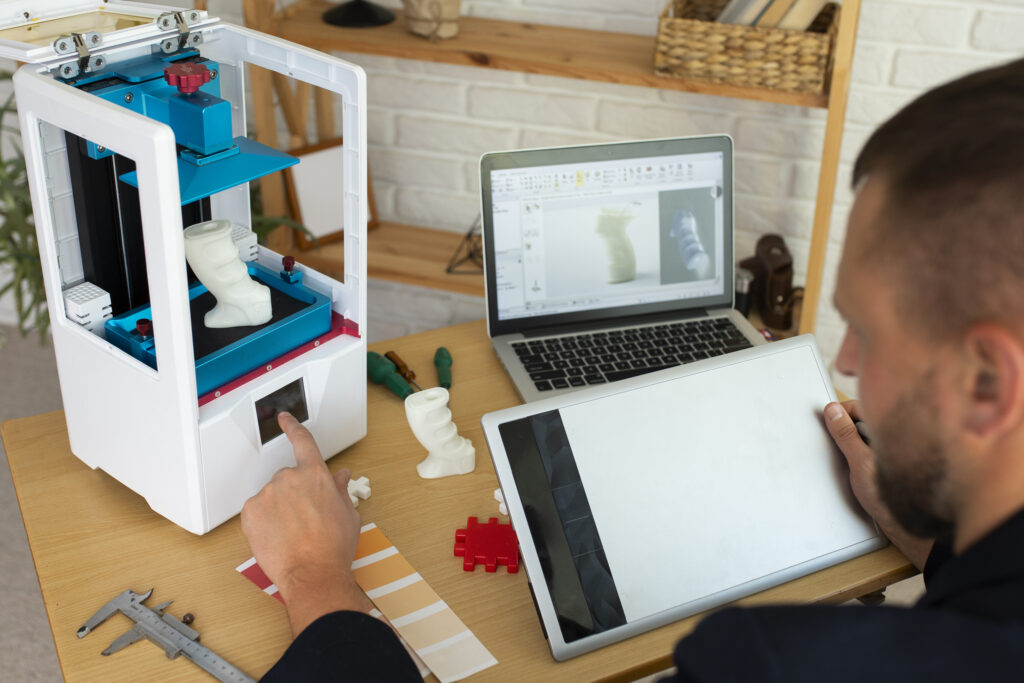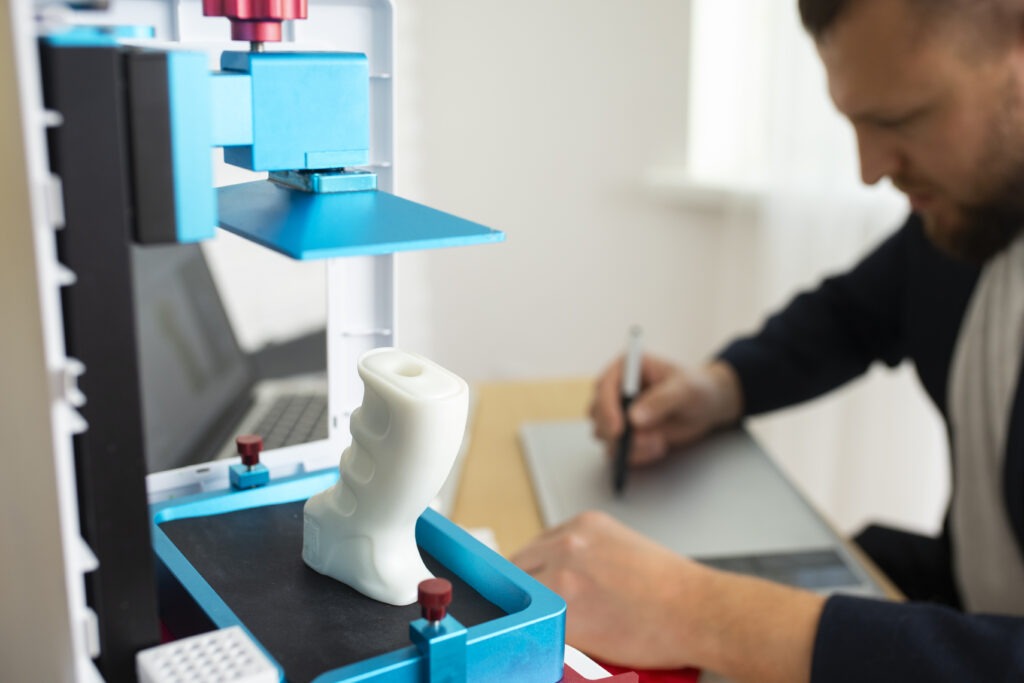
Additive Manufacturing & Smart Materials

Additive Manufacturing & Smart Materials

Additive Manufacturing & Smart Materials, Smart Materials with Self-Healing Properties

Smart Materials with Self-Healing Properties

“Smart materials with self-healing properties” are a fascinating subset of advanced materials that possess the inherent ability to autonomously repair damage, such as cracks, scratches, or punctures, without external human intervention. This capability is inspired by biological systems, where living organisms regenerate and heal their own tissues. The goal of self-healing materials is to extend the lifespan of products, reduce maintenance costs, improve reliability, and prevent catastrophic failures, especially in applications where inspection and repair are difficult or expensive. How Self-Healing Materials Work (Mechanisms): Self-healing mechanisms can broadly be categorized into two main types: Types of Materials Being Developed for Self-Healing: Self-healing properties are being explored across various material classes: Industrial Applications and Benefits: The potential impact of self-healing materials spans numerous industries: Benefits: Research and Development in India (Maharashtra focus): India, particularly Maharashtra, has a strong and growing research ecosystem in materials science. While specific commercial products might still be emerging, research institutes and some companies are actively working on self-healing materials: The field of self-healing smart materials is still evolving rapidly, moving from lab-scale demonstrations to commercial applications. The ability to autonomously repair damage without human intervention holds immense promise for improving the longevity, safety, and sustainability of a vast array of products and infrastructure. What is Smart Materials with Self-Healing Properties? Smart materials with self-healing properties are an advanced class of materials that possess the inherent capability to autonomously detect and repair damage (such as cracks, scratches, or punctures) within themselves, without requiring external human intervention. This ability mimics biological healing processes, where living organisms regenerate and mend their own tissues. The primary goal of developing self-healing materials is to extend the lifespan of products, reduce maintenance and repair costs, enhance reliability, and prevent catastrophic failures, especially in applications where accessibility for repair is difficult, dangerous, or expensive. Core Concept: Autonomy in Repair The “smart” aspect comes from the material’s ability to sense damage and initiate a repair mechanism on its own. This self-repair capability can be categorized by the method of healing: Types of Materials Incorporating Self-Healing Properties: Self-healing capabilities are being developed across various material categories: Why are these “Smart Materials” Important? The significance of self-healing materials lies in their potential to revolutionize numerous industries by addressing fundamental challenges: The development of smart materials with self-healing properties represents a paradigm shift, moving towards materials that are not merely passive structural components but active participants in maintaining their own integrity and extending their functional lifetime. Sources Who is require Smart Materials with Self-Healing Properties? Courtesy: Top 10 You Should Know Smart materials with self-healing properties are required by any industry or application where: Here’s a breakdown of the key sectors and specific applications that require self-healing smart materials: 1. Construction and Infrastructure This is arguably the largest potential market, given the pervasive issue of material degradation (cracks, corrosion) in buildings, bridges, and roads. 2. Aerospace and Defense High-performance, lightweight materials are critical, and structural integrity is non-negotiable. 3. Automotive Industry Focus on safety, durability, aesthetics, and reducing maintenance for consumers. 4. Consumer Electronics Driven by the demand for more durable, flexible, and aesthetically pleasing devices. 5. Energy Sector Improving the longevity and efficiency of energy generation and storage systems. 6. Biomedical and Healthcare For implants, drug delivery, and diagnostic tools where long-term stability and biocompatibility are paramount. 7. Robotics and Soft Robotics Enhancing the durability and adaptability of robotic components. In essence, anyone seeking to reduce lifecycle costs, enhance product reliability, improve safety, and push the boundaries of material durability for their products and infrastructure is in need of smart materials with self-healing properties. The growing research and development in India, particularly in institutions like IIT Bombay and NCL Pune, indicates a rising domestic interest and capability in delivering these transformative solutions for various industrial applications. When is require Smart Materials with Self-Healing Properties? Smart materials with self-healing properties are required when the consequences of material degradation or damage outweigh the current cost and complexity of implementing such advanced solutions. This often translates to situations where: Here’s a breakdown of when self-healing smart materials are required, often corresponding to specific stages of a product’s lifecycle or ongoing operational needs: 1. During the Design & Development Phase (When Designing for Durability & Reliability) 2. In Manufacturing (When Ensuring Long-Term Quality and Reducing Defects) 3. During Installation & Initial Operation (When Mitigating Early Damage) 4. Throughout the Operational Lifespan (When Facing Continuous Wear & Tear) 5. In Remote, Inaccessible, or Hazardous Environments 6. When Lifecycle Cost Reduction is a Key Performance Indicator In essence, smart materials with self-healing properties are required whenever the conventional approach of “inspect and repair/replace” becomes inefficient, unsafe, or economically unsustainable, pushing the boundaries towards “self-sustaining” or “self-managing” material systems. Where is require Smart Materials with Self-Healing Properties? Smart materials with self-healing properties are required in virtually any environment or application where material degradation, damage, or wear and tear is a recurring problem, and where intervention (inspection, maintenance, repair, or replacement) is costly, difficult, dangerous, or needs to be minimized. Here’s a breakdown of “where” these materials are needed, spanning various industries and specific locations/components: 1. Construction and Infrastructure 2. Aerospace and Defense 3. Automotive Industry 4. Consumer Electronics 5. Energy Sector 6. Biomedical and Healthcare 7. Robotics and Soft Robotics 8. Coatings and Adhesives Industry In summary, self-healing materials are required globally wherever durability, reliability, and reduced maintenance costs are critical performance indicators, especially in challenging environments or for long-lived assets. From the massive civil infrastructure projects in India’s growing cities (like Mumbai’s metro, new highways) to its burgeoning aerospace and electronics industries, the demand for materials that can intelligently manage their own integrity is only set to increase. How is require Smart Materials with Self-Healing Properties? The requirement for Smart Materials with Self-Healing Properties is fundamentally about how we ensure that the healing capability is present, effective, and reliable throughout the material’s intended lifespan. This involves a specialized approach to Quality Assurance (QA) that goes beyond traditional material testing, focusing on

Additive Manufacturing & Smart Materials, Shape Memory Alloy QA

Shape Memory Alloy QA

Shape Memory Alloy QA, particularly Nickel-Titanium (NiTi or Nitinol), possess unique thermomechanical properties like the Shape Memory Effect (SME) and Superelasticity (SE) (also known as Pseudoelasticity). These properties make them highly attractive for advanced applications in demanding sectors. However, their unique behavior also necessitates a specialized approach to Quality Assurance (QA). Here’s a breakdown of QA for Shape Memory Alloys: 1. Key Properties Requiring Rigorous QA for SMAs: Unlike conventional metals, the QA of SMAs extends beyond typical mechanical properties to include their functional, temperature-dependent behavior. 2. QA Methodologies and Techniques for SMAs: To ensure the quality of SMAs, a combination of specialized and conventional testing methods is used: 3. Relevant QA Standards and Guidelines: Several ASTM standards are specifically developed for Nitinol and other SMAs, particularly due to their widespread use in medical devices. While many are specific to NiTi, the principles apply broadly to other SMAs. 4. QA in the SMA Product Lifecycle: In conclusion, QA for Shape Memory Alloys is about ensuring the predictable and repeatable functional behavior of these “smart” materials. It goes beyond conventional material testing to encompass their unique phase transformation characteristics and thermomechanical response. This specialized QA approach is critical for the reliable and safe deployment of SMAs in their growing range of advanced industrial applications. What is Shape Memory Alloy QA? Shape Memory Alloy (SMA) Quality Assurance (QA) is a specialized and critical process that goes beyond conventional metallurgy to ensure these unique “smart” materials consistently exhibit their extraordinary thermomechanical properties: the Shape Memory Effect (SME) and Superelasticity (SE). Unlike typical metals where QA focuses primarily on strength, hardness, and ductility, SMA QA must also rigorously control and verify: The “How” of SMA QA in Practice: SMA QA is implemented through: In essence, SMA QA ensures that the “memory” and “superelasticity” of these alloys are not just inherent properties, but are consistently and predictably engineered into the final product, meeting the stringent demands of their advanced applications. Who is require Shape Memory Alloy QA? Courtesy: Science In Society Shape Memory Alloy (SMA) Quality Assurance (QA) is required by anyone who designs, manufactures, or uses SMA components in applications where their unique functional properties (Shape Memory Effect or Superelasticity) are critical to performance, reliability, and safety. This is especially true for industries where product failure can have severe consequences. Here are the key players and industries that require SMA QA: 1. Medical Device Manufacturers This is by far the largest and most stringent sector for SMA QA, particularly for Nitinol (Nickel-Titanium) alloys. 2. Aerospace & Defense Industry SMAs are gaining traction for lightweighting, morphing structures, actuators, and vibration damping in aircraft and spacecraft. 3. Automotive Industry SMAs are used in niche applications for actuators, sensors, and sometimes even for aesthetic or safety features. 4. Consumer Electronics & Robotics SMAs find applications in miniaturized actuators, haptic feedback devices, and flexible components in smartphones, wearables, and small robots. 5. Industrial & General Actuation Beyond specific industries, any application using SMAs as actuators, sensors, or connectors (e.g., thermal valves, anti-scalding devices, couplings) requires QA. 6. Research & Development (R&D) Institutions & Material Suppliers While not producing end-user products, these entities are crucial to SMA QA. In summary, SMA QA is required by any entity in the supply chain that contributes to the functional performance or safety of a product containing a Shape Memory Alloy component. This includes raw material producers, part manufacturers, integrators, and ultimately, regulatory bodies that oversee the safety and efficacy of products in critical domains. when is require Shape Memory Alloy QA? Shape Memory Alloy (SMA) Quality Assurance (QA) is not a single event but a continuous and intensifying process that is required at every stage of the SMA component’s lifecycle, from the initial raw material production through manufacturing, assembly, and even into its operational life. The level of rigor for QA increases significantly as the component moves towards final product integration and deployment, especially in critical applications. Here’s a breakdown of “when” SMA QA is required: 1. Raw Material Production (Melting, Forging, Drawing of SMA Alloys) 2. Component Manufacturing / Fabrication (Wire Forming, Stamping, Machining, Additive Manufacturing) 3. Assembly & Integration into a Larger Device/System 4. Final Product Release Testing 5. Regulatory Submission & Certification 6. Post-Market Surveillance (for Commercialized Products) In essence, SMA QA is required continuously throughout the material and product journey. It’s built in from the ground up, verified at critical junctures, and monitored even after deployment, reflecting the unique and critical nature of Shape Memory Alloys. where is require Shape Memory Alloy QA? Shape Memory Alloy (SMA) Quality Assurance (QA) is required wherever the reliable and predictable functional performance of an SMA component is critical to the safety, efficacy, or intended operation of a product or system. This encompasses both specific stages of the product lifecycle and the industries involved. Here’s a breakdown of “where” SMA QA is required: I. Where in the Product Lifecycle: SMA QA is not a one-time check but a continuous process integrated into every phase of a product’s development and manufacturing: II. Where in Industries & Applications: SMA QA is most rigorously applied in industries with high stakes for product failure: In summary, SMA QA is required throughout the entire product value chain and across diverse industries where the unique functional characteristics of Shape Memory Alloys are leveraged for critical applications, demanding uncompromising reliability and performance. How is require Shape Memory Alloy QA? You’re asking “How is Shape Memory Alloy (SMA) QA required?” This question delves into the practical implementation, methodologies, and systematic approaches that organizations must adopt to ensure the quality of SMA components. It’s about the processes, tests, and management systems that are put in place. Here’s a detailed explanation of how SMA QA is required: 1. By Implementing a Robust Quality Management System (QMS) This is the foundational and overarching requirement. A QMS provides the framework for all quality activities within an organization dealing with SMAs. 2. Through Precise Material Characterization & Control This focuses on verifying the fundamental

Additive Manufacturing & Smart Materials, Quality Standards in Metal Additive Manufacturing

Quality Standards in Metal Additive Manufacturing

Quality standards in Metal Additive Manufacturing (AM), often referred to as metal 3D printing, are crucial for ensuring the reliability, performance, and safety of parts produced, especially for demanding applications in aerospace, medical, automotive, and energy sectors. Unlike traditional manufacturing, AM introduces unique complexities in material behavior, process control, and post-processing, necessitating specific standards. The development of these standards is largely driven by ISO (International Organization for Standardization) and ASTM International (American Society for Testing and Materials), often through joint working groups (e.g., ISO/ASTM 529XX series). Here’s a breakdown of the key areas and specific standards/practices involved: 1. General Terminology and Principles 2. Materials (Feedstock) Standards The quality of the metal powder feedstock is paramount, as it directly impacts the final part’s properties and the printing process. 3. Process Standards (Machine & Build Process) These standards focus on how the AM machine operates and how the part is built. 4. Post-Processing Standards Metal AM parts almost always require post-processing to achieve final desired properties. 5. Part Characterization and Testing Standards Evaluating the final properties of the printed part. 6. Quality Management Systems (QMS) Why are these standards critical? As metal AM technology continues to evolve, new standards are constantly being developed and refined to address emerging materials, processes, and applications, ensuring that quality remains at the forefront of this transformative manufacturing method. What is Quality Standards in Metal Additive Manufacturing? Quality standards in Metal Additive Manufacturing (AM) are a set of guidelines, specifications, and procedures designed to ensure that metal 3D printed parts meet specific performance, reliability, and safety requirements. They are crucial because, unlike traditional manufacturing, AM processes introduce unique variables and complexities that can significantly impact the final product’s quality. These standards cover the entire AM value chain, from the raw materials used to the final properties of the finished part, and the management systems overseeing the process. The primary organizations driving these standards globally are ISO (International Organization for Standardization) and ASTM International (American Society for Testing and Materials), often working in collaboration (e.g., ISO/ASTM 529xx series). Here’s a breakdown of what “Quality Standards in Metal Additive Manufacturing” entails: 1. Common Language and Classification (Fundamental) 2. Feedstock (Metal Powder) Quality Standards 3. Process (Machine and Build) Quality Standards 4. Post-Processing Quality Standards 5. Part Characterization and Testing Standards 6. Quality Management Systems (QMS) In essence, quality standards in Metal Additive Manufacturing provide the rules, methods, and benchmarks that enable manufacturers to produce reliable, high-performance, and safe metal parts consistently. They are vital for increasing confidence in AM technology and driving its adoption in demanding industrial sectors. Who is require Quality Standards in Metal Additive Manufacturing? Courtesy: ZEISS Industrial Quality Solutions Quality standards in Metal Additive Manufacturing (AM) are required by virtually everyone involved in the lifecycle of an AM part, from research and development to end-use application and regulatory oversight. The “who” can be broken down by their role and the industry they operate in: 1. Manufacturers of Metal AM Parts This is the most direct group. 2. Industries with Demanding Applications These industries have strict performance, safety, and regulatory requirements, making robust AM quality standards absolutely essential. 3. Raw Material (Metal Powder) Suppliers 4. AM Machine and Software Manufacturers 5. Regulatory Bodies and Government Agencies 6. Standardization Organizations 7. Researchers and Academics In summary, everyone in the value chain of metal additive manufacturing who has an impact on the final product’s performance, reliability, and safety ultimately requires adherence to, or compliance with, metal AM quality standards. This distributed responsibility ensures that the unique capabilities of metal AM can be leveraged confidently in critical applications. When is require Quality Standards in Metal Additive Manufacturing? Quality standards in Metal Additive Manufacturing (AM) are not a one-time requirement, but rather an ongoing and escalating necessity that applies at every single stage of the product lifecycle, from initial design to in-service use and even decommissioning. The level of rigor and the specific standards required increase significantly depending on the intended application and its associated risks. Here’s a breakdown of “when” these quality standards are required: 1. Early Research & Development / Concept & Design Phase 2. Material Procurement & Qualification Phase 3. Machine and Process Qualification Phase 4. During the Build Process (In-Process Monitoring) 5. Post-Processing Phase 6. Final Part Characterization & Testing Phase 7. Throughout the Entire Lifecycle (Quality Management System) In conclusion, quality standards in Metal Additive Manufacturing are not an optional add-on but an integral part of every stage. They are required from the moment a concept is conceived, through material procurement, processing, post-processing, final testing, and continuous QMS oversight, becoming increasingly stringent for critical, regulated applications. This ensures that the promise of AM — producing complex, high-performance parts — can be reliably and safely delivered. Where is require Quality Standards in Metal Additive Manufacturing? Quality standards in Metal Additive Manufacturing (AM) are required in several key “locations” or contexts, encompassing both physical places where manufacturing occurs and the broader industrial and regulatory environments. Here’s a breakdown of “where” these standards are applied: 1. Manufacturing Facilities / Production Sites This is the most direct physical “where.” Any company actively producing metal AM parts needs to implement these standards. This includes: Examples of what’s applied here: 2. Supply Chain (Across Different Companies) The “where” extends beyond a single company’s walls, encompassing the entire supply chain involved in creating a metal AM part. 3. Design & Engineering Departments 4. Certification Bodies & Regulatory Agencies These are not physical “locations” in the manufacturing sense, but they are crucial “locations” where compliance with quality standards is assessed and required. 5. Research & Development Laboratories (Universities, R&D Centers) In essence, quality standards for Metal Additive Manufacturing are required wherever a decision or action impacts the final quality, performance, or safety of an AM part. This spans the entire ecosystem, from the raw materials and machines, through the design and manufacturing processes, to the final inspection and regulatory oversight of the finished component. How is require Quality Standards in Metal Additive Manufacturing?

Additive Manufacturing & Smart Materials, Quality Frameworks for Bio-printing

Quality Frameworks for Bio-printing

Quality Frameworks for Bio-printing the process of 3D printing living cells and biomaterials to create functional tissues and organs, operates at the intersection of additive manufacturing, biology, medicine, and engineering. Given its direct impact on human health and potential for therapeutic applications, the quality assurance (QA) framework for bioprinting is exceptionally stringent and multifaceted. Unlike typical industrial 3D printing, bioprinting QA must account for the viability, function, and long-term behavior of living cells, in addition to the mechanical and structural integrity of the printed construct. Here’s a breakdown of the key quality frameworks and their application in bioprinting: 1. Regulatory Frameworks These are the foundational legal and governmental guidelines that dictate how bioprinted products are developed, manufactured, and used in clinical settings. They are the primary drivers of QA requirements. 2. Quality Management Systems (QMS) These are organizational systems designed to ensure consistent product quality. For bioprinting, a QMS is not just about compliance but about building quality into every step of the highly complex process. 3. Standards and Guidelines (ASTM, ISO, etc.) These provide specific technical requirements and test methods. While often voluntary, they are widely adopted and can become de facto requirements by regulatory bodies or industry best practice. 4. Technical QA & Validation Processes Specific to Bioprinting Beyond the overarching frameworks, granular QA is applied at each stage. Conclusion The quality framework for bioprinting is an intricate ecosystem of regulations, QMS standards, technical guidelines, and advanced analytical methodologies. Its primary goal is to ensure the safety, efficacy, and reproducibility of bioprinted tissues and organs, enabling their successful translation from research labs to clinical applications. As the field advances, these frameworks will continue to evolve, becoming more specific and comprehensive to address the unique complexities of creating living therapeutic products. What is Quality Frameworks for Bio-printing? Bioprinting is a complex and highly interdisciplinary field that combines aspects of additive manufacturing, cell biology, biomaterials science, and regenerative medicine. Given its ultimate goal of creating functional tissues and organs for therapeutic use, the Quality Frameworks for Bioprinting are exceptionally rigorous and multi-layered, focused on ensuring safety, efficacy, and reproducibility. Unlike traditional 3D printing QA which primarily focuses on mechanical properties and dimensional accuracy of inert materials, bioprinting QA must additionally address the viability, function, and long-term behavior of living cells, and the biological compatibility and degradation of biomaterials (bioinks). Here are the key components of the quality framework for bioprinting: 1. Regulatory Frameworks (The Overarching Rules) These are the fundamental legal and governmental guidelines that dictate how bioprinted products are developed, manufactured, and ultimately used in patients. 2. Quality Management Systems (QMS) These are the operational systems implemented by organizations to ensure consistent product quality and regulatory compliance. 3. Standards and Guidelines (Technical Specifications) These provide specific technical requirements, test methods, and best practices for materials and processes. 4. Technical QA & Validation Processes Specific to Bioprinting These are the practical, scientific methods used at each stage of the bioprinting workflow. Conclusion The Quality Framework for Bioprinting is a comprehensive and dynamic system that ensures the safety, efficacy, and reproducibility of bioprinted products. It integrates rigorous regulatory compliance (FDA, EU MDR, ATMP), robust QMS (ISO 13485, GMP), specific technical standards (ISO 10993, ASTM F3659, VDI Bio), and advanced analytical techniques at every stage of the bioprinting workflow. This multi-layered approach is essential to build confidence in this transformative technology and successfully translate bioprinted tissues and organs from research into clinical realities. Who is require Quality Frameworks for Bio-printing? Courtesy: Advanced BioMatrix Inc. Quality Frameworks for Bioprinting are required by anyone involved in the research, development, manufacturing, and clinical translation of bioprinted tissues, organs, or related products, especially if those products are intended for use in humans or for regulated applications like drug testing. Here’s a breakdown of who specifically needs to adhere to and implement these quality frameworks: 1. Biopharmaceutical and Medical Device Companies 2. Academic Research Institutions and Universities 3. Contract Research Organizations (CROs) and Contract Development and Manufacturing Organizations (CDMOs) 4. Bioink and Bioprinter Manufacturers 5. Regulatory Bodies and Government Agencies 6. Standardization Organizations In summary, the requirement for Quality Frameworks in bioprinting extends to anyone who impacts the quality, safety, and efficacy of a bioprinted product, particularly those intended for clinical application or other regulated uses. This holistic responsibility ensures that the incredible potential of bioprinting can be translated safely and effectively from the lab to patient care. When is require Quality Frameworks for Bio-printing? Quality Frameworks for Bioprinting are required at every stage of the bioprinted product’s lifecycle, but the intensity and specific types of frameworks applied increase significantly as a product moves from early research towards clinical translation and commercialization. Here’s a breakdown of “when” these frameworks become increasingly critical: 1. Early Research & Development (Lab / Benchtop Scale) 2. Pre-Clinical Development (In Vitro & In Vivo Testing) 3. Clinical Development (Human Trials) 4. Commercialization & Post-Market Surveillance In essence, the requirement for Quality Frameworks for Bioprinting is not a singular event, but a continually escalating demand that intensifies as the bioprinted product matures along the research-to-clinic pipeline. The closer a product gets to human application, the more formal, comprehensive, and stringently regulated the QA framework becomes. Where is require Quality Frameworks for Bio-printing? Quality Frameworks for Bioprinting are required in various “locations” or contexts, encompassing both physical spaces where bioprinting occurs and the regulatory and organizational environments that govern the entire process. Here’s a breakdown of “where” these frameworks are applied: 1. Manufacturing Facilities (Physical Location) This is the most direct “where” for implementing bioprinting QA. 2. Regulatory Jurisdictions (Geographical & Legal Location) The specific country or region where the bioprinted product is developed, manufactured, or intended for use dictates the primary regulatory framework. 3. Organizational Structures (Within Companies/Institutions) Quality frameworks are embedded within the operational structure of organizations involved in bioprinting. 4. Standardization Bodies (Virtual & Collaborative Spaces) While not physical locations in the traditional sense, these are the “places” where the standards themselves are developed and agreed upon, which then get

Additive Manufacturing & Smart Materials, Quality Frameworks for Bio-printing

QA for 3D Printed Components

QA for 3D printed components is a complex and multi-faceted process that spans the entire manufacturing workflow, from initial design to final part validation. Unlike traditional manufacturing methods where material properties and process outcomes are well-established, AM introduces unique variables that necessitate a robust and adaptable QA framework. Here’s a comprehensive overview of QA for 3D printed components: The Imperative for QA in 3D Printing The unique characteristics of 3D printing (layer-by-layer fabrication, complex geometries, novel material properties) lead to specific quality challenges: Therefore, effective QA in AM aims to prevent defects, ensure repeatability, guarantee performance, and provide comprehensive traceability. Key Stages and Practices for QA in 3D Printing QA in AM can be broadly categorized into three main stages: Pre-Build, In-Build (In-Situ Monitoring), and Post-Build. 1. Pre-Build Quality Assurance This stage focuses on setting up the conditions for a successful print. 2. In-Build (In-Situ) Quality Assurance This stage involves real-time monitoring of the printing process as it occurs, layer by layer. This is a critical differentiator for AM QA. 3. Post-Build Quality Assurance After the printing process is complete, the part undergoes various inspections and tests. Overarching QA Frameworks Beyond individual steps, an integrated quality management system (QMS) is crucial for AM. Conclusion QA for 3D printed components is not a single test, but a holistic, multi-layered approach that integrates stringent controls at every stage of the manufacturing workflow. From meticulous material characterization and precise machine calibration to real-time in-situ monitoring and comprehensive post-build inspection, each step contributes to building confidence in the integrity and performance of additive manufactured parts. As AM continues to mature, sophisticated QA processes will be the cornerstone enabling its widespread adoption for critical, high-value applications across all industrial sectors. What is QA for 3D Printed Components? Quality Assurance (QA) for 3D printed components refers to the comprehensive system of processes, procedures, and checks implemented throughout the entire additive manufacturing (AM) workflow to ensure that the final printed parts consistently meet specified quality standards, performance requirements, and regulatory compliance. It’s a proactive approach designed to prevent defects from occurring, rather than just detecting them after the fact. Here’s a breakdown of what QA for 3D printed components entails: Why is QA so Important for 3D Printed Components? 3D printing introduces unique complexities compared to traditional manufacturing, making robust QA critical: Key Pillars of QA for 3D Printed Components QA in 3D printing covers the entire lifecycle of a part, typically broken down into three main phases: 1. Pre-Build QA (Planning & Preparation): This phase focuses on ensuring that everything is set up correctly before printing begins to minimize the chances of defects. 2. In-Build QA (In-Situ Monitoring): This is a unique and increasingly critical aspect of 3D printing QA, involving real-time observation and data collection during the print process itself. 3. Post-Build QA (Inspection & Validation): After the part is printed and any necessary post-processing steps (like support removal, heat treatment, surface finishing) are completed. Overarching QA Principles for 3D Printing In essence, QA for 3D printed components is a holistic, data-driven, and continuously evolving process that is absolutely essential for bringing AM parts into demanding industrial applications with confidence and reliability. Who is require QA for 3D Printed Components? Courtesy: Welleshaft The simple answer is: Anyone who needs reliable, consistent, and safe 3D printed components requires robust Quality Assurance (QA). However, the level and stringency of QA required vary significantly depending on the application and industry. Here’s a breakdown of who specifically needs QA for 3D printed components, ranging from essential to highly critical: 1. Manufacturers of Critical and High-Value Components (Highest QA Requirements) These are the industries where part failure can have catastrophic consequences (loss of life, severe environmental damage, massive financial loss). They demand the most stringent and comprehensive QA. 2. Contract Manufacturers & 3D Printing Service Bureaus These companies produce parts for a wide range of clients, often for the critical industries listed above. 3. Companies Seeking Process Qualification and Industrialization of AM Any company looking to move AM beyond prototyping into consistent, repeatable production requires comprehensive QA. 4. Research and Development (R&D) Institutions & New Material Developers While not producing end-use parts, R&D needs QA to validate their work. 5. Any User Prioritizing Reliability and Cost-Efficiency Even for non-safety-critical parts, if the cost of failure (e.g., a high number of scrapped parts, customer dissatisfaction, reputation damage) outweighs the cost of QA, then QA is required. In essence, the more critical the application, the higher the value of the component, and the greater the need for consistent, repeatable results, the more stringent and comprehensive the QA for 3D printed components becomes. For complex, high-performance parts, QA is not an option; it’s a necessity. When is require QA for 3D Printed Components? QA for 3D printed components is required whenever you need to ensure the reliability, performance, safety, and consistency of the manufactured parts. It’s not a one-size-fits-all, “always on” switch, but rather a necessity that scales with the criticality and application of the printed component. Here are the key scenarios and times when QA for 3D printed components becomes explicitly required: 1. For Critical, Safety-Sensitive, or High-Value Applications: This is the most significant driver for comprehensive QA. If a part’s failure could lead to: When required: From the very initial design phase (DfAM) through material selection, printing, post-processing, and final inspection. Every step must be rigorously controlled and documented. This includes in-situ monitoring during the print, as discussed previously, as it’s a critical part of the QA chain for these applications. 2. During Process Development and Qualification: Whenever a new material, a new printer, or a new part design is introduced, QA is essential to define and validate the manufacturing process. When required: Throughout the entire R&D and pilot production phases. 3. For Achieving Consistent, Repeatable Production: As 3D printing scales from prototyping to serial production, QA ensures uniformity. When required: Continuously throughout the entire production cycle, with regular checks, audits, and data analysis. 4. When External Certifications or Audits

Additive Manufacturing & Smart Materials, Powder Bed Monitoring in AM

Powder Bed Monitoring in AML

Powder Bed Monitoring in AML the quality of the powder bed is foundational to the final part’s integrity. Any inconsistencies at this stage can directly lead to defects in the printed component. Powder bed monitoring in Additive Manufacturing (AML), particularly in Powder Bed Fusion (PBF) processes like Laser Powder Bed Fusion (LPBF) and Electron Beam Melting (EBM), is a critical aspect of in-situ monitoring. It focuses specifically on assessing the quality and consistency of each powder layer before and/or during the energy input (laser or electron beam) that fuses it to the previous layer. Why is Powder Bed Monitoring Required? The uniformity and characteristics of the powder bed directly impact several critical aspects of the 3D printing process and the final part quality: Key Techniques for Powder Bed Monitoring: Most powder bed monitoring systems rely on optical sensing techniques, often combined with advanced image processing and machine learning. Industrial Applications and Benefits: Powder bed monitoring is crucial in industries where part quality and reliability are non-negotiable: Benefits of effective powder bed monitoring: In essence, powder bed monitoring is a vital component of a comprehensive in-situ quality assurance strategy in AM, addressing issues at the very beginning of each new layer to ensure the integrity of the final 3D printed component. What is Powder Bed Monitoring in AML? Powder Bed Monitoring is a crucial aspect of in-situ monitoring in Additive Manufacturing (AM), specifically within Powder Bed Fusion (PBF) processes. These processes include common 3D printing techniques like: In PBF, a thin layer of powdered material (metal, polymer, ceramic) is spread across a build platform. A high-energy source (laser or electron beam) then selectively melts or sinters sections of this powder to form a solid layer, which fuses to the previous one. This process repeats, layer by layer, until the entire 3D object is built. Powder bed monitoring specifically refers to the real-time or near-real-time assessment of the quality and consistency of this freshly spread powder layer before or during its interaction with the energy source. Why is Powder Bed Monitoring Critical? The quality of the powder bed is foundational to the final part’s integrity. Any inconsistencies at this stage can directly lead to significant defects in the printed component, impacting its mechanical properties, density, and dimensional accuracy. Here’s why it’s so important: How is Powder Bed Monitoring Typically Performed? Powder bed monitoring primarily relies on optical sensing techniques coupled with sophisticated image processing and often machine learning algorithms: Benefits of Powder Bed Monitoring: In essence, powder bed monitoring is a fundamental component of achieving high-quality, repeatable, and certifiable parts in powder bed fusion 3D printing. Who is require Powder Bed Monitoring in AML? Courtesy: RT compliance Singapore Powder bed monitoring in Additive Manufacturing (AM) is required by a specific set of users and industries who are seeking to achieve high quality, reliability, and consistency in their 3D printed parts, particularly those using Powder Bed Fusion (PBF) technologies. Here’s a breakdown of who specifically requires powder bed monitoring: 1. Manufacturers of Critical, High-Value Components This is the primary driver for powder bed monitoring. Industries where component failure has severe consequences or where parts operate under extreme conditions absolutely need this level of quality control. 2. Companies Seeking Process Qualification and Certification For AM to move beyond prototyping to mainstream manufacturing, processes and parts need to be qualified and certified. 3. Research & Development Institutions and Material Developers These entities are at the forefront of advancing AM technology and discovering new materials. 4. Users Aiming for Automated and Closed-Loop AM Processes The ultimate goal for advanced AM is self-correcting machines. Powder bed monitoring is a key enabler for this. In essence, anyone for whom “print-and-pray” is not an option – those dealing with high costs, high risks, or high volume production where quality and consistency are paramount – will require powder bed monitoring in their additive manufacturing workflow. When is require Powder Bed Monitoring in AML? Powder bed monitoring in Additive Manufacturing (AML) is required in specific situations and at critical junctures within the 3D printing process, particularly for Powder Bed Fusion (PBF) technologies. It’s not always a necessity for every print, but it becomes indispensable when certain conditions or goals are present. Here’s when powder bed monitoring is required: 1. When Printing Critical or High-Value Components: This is the foremost reason. If the failure of a 3D printed part has severe consequences (safety, financial, or operational), powder bed monitoring is a must. 2. During Process Development and Parameter Optimization: When establishing new AM processes, experimenting with new materials, or fine-tuning existing parameters, powder bed monitoring provides crucial feedback. 3. For Ensuring Batch-to-Batch Consistency and Repeatability in Production: Even after a process is deemed stable, external factors or subtle machine wear can introduce variability. 4. When Implementing Automated Quality Assurance and “Digital Twins”: To move towards Industry 4.0 and smart factories, automated quality checks are essential. 5. To Enable Future Closed-Loop Control: The ultimate goal of in-situ monitoring is often to enable self-correcting 3D printers. In summary, powder bed monitoring is required whenever there is a demand for high reliability, strict quality control, cost efficiency through defect reduction, or the need for comprehensive data for process understanding and certification in Powder Bed Fusion AM. It’s a key investment that transitions 3D printing from a prototyping tool to a robust, industrial-scale manufacturing process. Where is require Powder Bed Monitoring in AML? Powder bed monitoring in Additive Manufacturing (AML) is fundamentally required within the 3D printing machine itself, specifically in the build chamber where the powdered material layers are successively deposited and fused. Here’s a more detailed breakdown of where it’s required, considering both the physical location and the broader context: 1. Inside the 3D Printer’s Build Chamber (Primary Location) This is the most direct and essential “where” for powder bed monitoring. The sensors and systems must have a clear, unobstructed view or access to the powder bed. Specific Sensor Placements: 2. Within the 3D Printer’s Control System (Software Layer) The data collected by

Additive Manufacturing & Smart Materials, Flexible Electronics Quality Control

Flexible Electronics Quality Control

Flexible electronics present unique challenges and opportunities for quality control compared to traditional rigid electronics. Their ability to bend, stretch, and conform introduces new failure modes and necessitates specialized inspection techniques. Here’s a comprehensive overview of Quality Control (QC) in Flexible Electronics: I. Unique Challenges in Flexible Electronics Quality Control II. Key Quality Control Methods and Tools for Flexible Electronics QC in flexible electronics involves a multi-stage approach, combining traditional electronics QC methods with specialized techniques for flexibility. A. Early Stages: Incoming Materials and Component Inspection B. During Production: In-Process Inspection and Monitoring C. Post-Production: Functional and Reliability Testing III. Emerging Trends and Future Directions in Flexible Electronics QC By implementing a rigorous and specialized quality control framework, manufacturers can ensure the reliability, functionality, and longevity of flexible electronic products, enabling their wider adoption across diverse and demanding applications. What is Flexible Electronics Quality Control? Flexible Electronics Quality Control (QC) is the comprehensive system of processes and procedures implemented to ensure that electronic devices fabricated on flexible, stretchable, or conformable substrates meet specified quality standards, performance requirements, and reliability targets throughout their lifecycle. It’s a specialized discipline within electronics manufacturing QC that addresses the unique challenges posed by the mechanical compliance and novel materials used in flexible electronics, which are significantly different from those of traditional rigid circuit boards. Core Objectives of Flexible Electronics QC: Why Flexible Electronics QC is Crucial: The inherent characteristics of flexible electronics introduce new failure modes that are not as prevalent in rigid electronics. Without specialized QC, manufacturers risk: Key Aspects that Differentiate Flexible Electronics QC: In essence, Flexible Electronics Quality Control is a holistic approach that ensures the robust performance and reliability of these new-generation electronic devices, accounting for their unique material properties, manufacturing processes, and the dynamic mechanical stresses they are designed to endure. Who is require Flexible Electronics Quality Control? Flexible electronics quality control (QC) is required by virtually every entity involved in the design, manufacturing, and application of products that incorporate flexible, stretchable, or conformable electronic components. This includes a broad spectrum of industries and professional roles, driven by the unique demands and potential failure modes of these innovative technologies. Here’s a breakdown of who requires flexible electronics quality control: 1. Manufacturers of Flexible Electronic Components: These are the primary stakeholders who absolutely require stringent QC. They are responsible for producing the flexible PCBs, flexible displays, flexible sensors, and other foundational components. 2. Original Equipment Manufacturers (OEMs) and Product Integrators: These companies design and assemble final products that incorporate flexible electronics. 3. Research & Development Institutions and Universities: These entities are at the forefront of developing new flexible electronic materials, manufacturing processes, and application concepts. 4. Certification Bodies and Regulatory Agencies: These organizations set standards and ensure compliance, especially for critical applications. 5. Test Equipment and Metrology Solution Providers: Companies that develop the specialized tools and systems for flexible electronics QC. In summary, anyone involved in the lifecycle of a flexible electronic product – from the fundamental material science and manufacturing processes to the final product integration and regulatory approval – requires a deep understanding and implementation of rigorous Flexible Electronics Quality Control. This is because the very nature of flexibility introduces complexities that demand dedicated and specialized quality assurance measures. Sources When is require Flexible Electronics Quality Control? Flexible electronics quality control is not a one-time event but a continuous and multi-stage process that is required at virtually every phase of the product lifecycle, from initial design to post-market surveillance. Its “when” is driven by the need to mitigate risks, ensure reliability, and prevent failures inherent to the unique properties of flexible materials. Here’s a breakdown of when flexible electronics quality control is required: 1. Pre-Production (Design & Material Selection) 2. During Production (In-Process Control) 3. Post-Production (Final Product Testing & Certification) 4. Post-Market (In-Field Monitoring & Failure Analysis) In essence, Flexible Electronics Quality Control is not a single checkpoint but an integrated and ongoing commitment to ensuring that these innovative products meet the rigorous demands of their applications throughout their entire lifecycle. Where is require Flexible Electronics Quality Control? Courtesy: Z-AXIS, Inc. Flexible electronics quality control is required wherever flexible electronic products are designed, manufactured, or utilized, particularly in applications where reliability, safety, and performance under mechanical stress are critical. This encompasses a wide range of geographical locations, types of facilities, and end-use environments. Here’s a breakdown of “where” flexible electronics QC is required: 1. Manufacturing Facilities 2. Research and Development (R&D) Laboratories 3. Testing and Certification Laboratories 4. End-Use Environments (In-Field Monitoring for “Smart” Products) In essence, Flexible Electronics Quality Control is required everywhere innovation with flexible materials meets the need for reliable, high-performance, and safe electronic functionality. It’s a critical enabler for the widespread adoption of these cutting-edge technologies. How is require Flexible Electronics Quality Control? Flexible electronics quality control (QC) is required how by establishing a comprehensive and rigorous system that addresses the unique challenges of flexible materials and manufacturing processes. It goes beyond traditional electronics QC by incorporating specialized testing and monitoring methods to ensure both electrical and mechanical integrity. Here’s how flexible electronics QC is required: I. How it’s Required Through Proactive Design & Material Selection II. How it’s Required Through Rigorous In-Process Monitoring and Control III. How it’s Required Through Specialized Post-Production Reliability Testing IV. How it’s Required Through Documentation & Traceability In essence, Flexible Electronics Quality Control is required by implementing a holistic, multi-faceted approach that spans the entire product lifecycle, ensuring that these highly specialized products can bend, twist, and stretch without compromising their critical electronic functionality. It’s about building reliability into the very fabric of the device. Case study on Flexible Electronics Quality Control? Courtesy: gandbelectronics Let’s delve into a case study focusing on Quality Control for Flexible Hybrid Electronics (FHE) in a medical device application. This scenario highlights the unique challenges and the critical need for robust QC. Case Study: Quality Control for a Flexible Hybrid Electronic (FHE) Wearable Health Patch Industry: Medical Devices, Wearable Technology, Flexible Hybrid

Additive Manufacturing & Smart Materials, Embedded Sensors in Printed Products

Embedded Sensors in Printed Products

The integration of sensors directly within the structure of a product during its manufacturing process, particularly through additive manufacturing (3D printing), represents a significant leap towards “smart” or “aware” products. This concept, often called embedded sensing or functional printing, allows products to monitor their own condition, environment, or performance in real-time, opening up a vast array of new capabilities and applications. What are Embedded Sensors in Printed Products? Embedded sensors are miniature sensing elements, circuits, and sometimes even power sources, that are incorporated within the bulk material of a product during its fabrication. Instead of attaching a sensor to the surface of an object after it’s made, 3D printing techniques allow for layer-by-layer deposition of both structural and functional (conductive, sensing) materials, creating a monolithic part with integrated intelligence. This differs from simply surface-mounting sensors because: How are Sensors Embedded in Printed Products? The process typically involves advanced additive manufacturing (AM) techniques capable of handling multiple materials, including conductive inks/filaments and structural polymers/metals. Key methods include: Types of Sensors Being Embedded: Applications of Embedded Sensors in Printed Products: The possibilities are vast and transformative: Challenges: Despite the immense potential, several challenges need to be overcome: Conclusion: Embedded sensors in printed products represent a paradigm shift from passive objects to active, “aware” systems. By combining the geometric freedom of additive manufacturing with the intelligence of integrated sensing, this technology is poised to revolutionize product design and functionality across a multitude of industries, leading to safer, more efficient, and truly smart artifacts of the future. The ongoing research and development in multi-material printing and functional inks will continue to push the boundaries of what’s possible. What is Embedded Sensors in Printed Products? Embedded sensors in printed products refer to the integration of sensing elements, circuits, and sometimes even power sources directly into the bulk material or structure of a product during its manufacturing process, particularly using additive manufacturing (3D printing) techniques. Instead of manufacturing a product and then attaching sensors to its surface or inside cavities, this approach creates a monolithic, “smart” product where the sensor is an intrinsic part of the object’s physical form. This concept is a significant leap towards creating “aware” or “intelligent” products that can monitor their own condition, their environment, or their performance in real-time. Key Characteristics: How it Works (General Process): The process typically involves a multi-material 3D printer that can switch between different materials during the layering process: Types of Sensors Commonly Embedded: Why are Embedded Sensors in Printed Products important? In essence, embedded sensors in printed products represent the next frontier in manufacturing, moving beyond simply creating physical forms to creating functional, responsive, and data-rich physical entities. Who is require Embedded Sensors in Printed Products? Courtesy: Charbax Embedded sensors in printed products are required by a diverse range of industries, organizations, and professionals who need to monitor conditions, enhance functionality, ensure safety, and optimize the performance and lifespan of their products in ways that traditional manufacturing and sensor integration cannot achieve. Here’s a breakdown of who specifically benefits from and requires embedded sensors in printed products: I. Industries & Sectors: II. Professionals & Organizations: In essence, anyone who envisions creating products that are not just static structures but dynamic, self-aware, and responsive entities will require embedded sensors in printed products. This technology is a cornerstone of the future of smart manufacturing and intelligent systems. When is require Embedded Sensors in Printed Products? Embedded sensors in printed products are required when the limitations of traditional sensor integration methods become a bottleneck for a product’s performance, safety, cost-effectiveness, or functionality. The “when” often relates to specific stages of a product’s lifecycle or the inherent nature of its application: I. When Traditional Sensor Integration is Insufficient or Problematic: II. For Enhanced Product Functionality and “Smartness”: III. At Specific Stages of the Product Lifecycle: In essence, embedded sensors in printed products are required whenever the value proposition of a “smart” product outweighs the complexities of their integration, and when traditional sensing methods cannot meet the demands for protection, precision, miniaturization, real-time data, or custom functionality. This intersection of advanced manufacturing and sensor technology is redefining what products can do. Where is require Embedded Sensors in Printed Products? Embedded sensors in printed products are required in a variety of physical locations and environments where traditional, separate sensors would be impractical, vulnerable, or less effective. The “where” often dictates the type of sensor needed and the additive manufacturing technique employed. Here are the key locations where embedded sensors in printed products are increasingly required: 1. Within Structural Components (for Structural Health Monitoring – SHM) 2. Within Medical Devices and Implants 3. In Harsh or Inaccessible Industrial Environments 4. Within Consumer Products and Wearables 5. In Research and Development (R&D) Environments In essence, embedded sensors in printed products are required in any location where intelligence, robustness, precision, miniaturization, and seamless integration are paramount to the product’s function, safety, or economic viability, often in environments that are challenging for conventional sensor placement. How is require Embedded Sensors in Printed Products? The requirement for embedded sensors in printed products is dictated by a fundamental shift in how we envision and utilize physical objects. It’s about moving from passive, static components to active, intelligent entities that can sense, interpret, and respond to their environment or internal state. The “how” of this requirement boils down to achieving capabilities and benefits that are simply not possible or practical with traditional manufacturing and external sensor attachment. Here’s how embedded sensors are required to enable these advancements: I. How They Enable Real-time Monitoring and Data Acquisition: II. How They Enhance Product Functionality and Intelligence: III. How They Overcome Limitations of Traditional Sensor Integration: IV. How They Facilitate Innovation and New Product Development: In essence, the requirement for embedded sensors in printed products is driven by the strategic imperative to create smarter, more durable, more efficient, and more capable products that can adapt to changing conditions and provide actionable insights throughout their operational life. It’s about leveraging the

Additive Manufacturing & Smart Materials, Composite Material Inspection Tools

Composite Material Inspection Tools

Composite materials, such as Carbon Fiber Reinforced Polymers (CFRPs) and Glass Fiber Reinforced Polymers (GFRPs), are increasingly used across various industries due to their high strength-to-weight ratio, corrosion resistance, and design flexibility. However, their complex layered structure and manufacturing processes make them susceptible to various defects (e.g., delaminations, voids, disbonds, impact damage, fiber misalignment). Effective inspection tools are crucial for ensuring the quality, safety, and longevity of composite structures throughout their lifecycle, from manufacturing to in-service maintenance. These tools largely fall under Non-Destructive Testing (NDT) methods, as they inspect the material without causing damage. Here’s an overview of common and advanced composite material inspection tools: I. Visual Inspection Tools While seemingly basic, visual inspection is often the first step and can detect surface-level defects. II. Ultrasonic Testing (UT) This is one of the most widely used and versatile NDT methods for composites. It uses high-frequency sound waves to detect internal flaws. III. Thermography (Infrared Testing) This method detects defects by observing thermal patterns on the material’s surface, as defects can alter heat flow. IV. Shearography (Laser Shearography) An optical NDT technique that measures out-of-plane displacement gradients on a surface under load to detect defects. V. Radiography (X-ray & CT Scanning) Uses X-rays or gamma rays to produce images of the internal structure. VI. Other Emerging and Specialized Tools: The choice of inspection tool depends on the composite material type, the expected defect types, the size and geometry of the component, the accessibility of the inspection area, the required sensitivity, and cost considerations. Often, multiple NDT methods are employed in combination to achieve a comprehensive assessment of composite material integrity. What is Composite Material Inspection Tools? Composite material inspection tools are specialized equipment and techniques used to assess the quality, integrity, and structural health of composite materials without causing damage to the material itself. These tools are crucial because composites, unlike metals, can have complex internal structures (layers of fibers and resin) and are susceptible to various defects that are not visible on the surface. The primary goal of these tools is to detect and characterize flaws that could compromise the material’s performance, safety, and lifespan. Such flaws can arise during manufacturing (e.g., voids, porosity, delaminations, fiber misalignment, resin-rich or resin-starved areas) or during service (e.g., impact damage, fatigue cracks, disbonding of layers, water ingress). These tools fall under the umbrella of Non-Destructive Testing (NDT) or Non-Destructive Evaluation (NDE) methods. Why are these tools “required” for composite materials? Key Categories of Composite Material Inspection Tools: The tools utilize different physical principles to “see” inside or evaluate the material’s properties. In essence, composite material inspection tools are the diagnostic instruments for composite structures, allowing engineers and technicians to ensure quality, identify flaws, and predict performance, thereby guaranteeing safety and reliability in diverse industrial applications. Who is require Composite Material Inspection Tools? Courtesy: mtcaving Composite material inspection tools are required by a wide range of individuals, organizations, and industries where the integrity and performance of composite structures are critical for safety, efficiency, and quality. Here’s a breakdown of who specifically requires these tools and why: I. Industries that Extensively Use Composites: II. Professionals and Organizations: In essence, anyone involved in the design, manufacturing, quality assurance, maintenance, or regulation of composite materials requires access to and expertise in composite material inspection tools. The complex nature and critical applications of composites make robust and reliable inspection indispensable. When is require Composite Material Inspection Tools? Composite material inspection tools are required at various critical stages throughout the entire lifecycle of a composite product, from raw material assessment to in-service monitoring. This ensures quality, safety, and performance, especially given the hidden nature of many composite defects. Here’s a breakdown of when these tools are essential: I. During Manufacturing (Quality Control & Assurance): This is a crucial phase where the majority of defects can be introduced. Inspections here prevent costly rework or scrap later. II. During Assembly: III. During In-Service Life (Maintenance, Repair, and Overhaul – MRO): Regular and incident-based inspections are vital for safety and extending the lifespan of composite structures. IV. During Research & Development (R&D): In summary, composite material inspection tools are indispensable at every major juncture in a composite product’s life, from its birth in manufacturing to its ongoing service, ensuring that these high-performance materials deliver on their promise of strength, durability, and safety. Where is require Composite Material Inspection Tools? Composite material inspection tools are required in virtually any sector or location where composite materials are manufactured, assembled, or maintained, due to the critical need for quality assurance, safety, and performance. Here’s a breakdown of the “where” these tools are indispensable: I. Manufacturing Facilities: This is the primary location for initial quality control and defect detection. II. Maintenance, Repair, and Overhaul (MRO) Facilities: These locations focus on inspecting in-service components for wear, damage, and fatigue. III. Research & Development (R&D) Laboratories: IV. Specialized NDT Service Providers: In essence, composite material inspection tools are required wherever the hidden integrity of a composite component is critical to its performance, safety, and longevity. This spans the entire value chain, from the creation of the raw material to its operational life and eventual retirement. How is require Composite Material Inspection Tools? The requirement for Composite Material Inspection Tools is fundamentally about how to achieve reliable, safe, and cost-effective operations when using these advanced materials. It’s about addressing the unique challenges presented by composites compared to traditional materials like metals. Here’s how composite material inspection tools are required to meet various objectives: I. How They Ensure Quality and Reliability during Manufacturing: II. How They Ensure Safety and Extend Service Life in Operations (MRO): III. How They Support Design and Development: In summary, composite material inspection tools are required as essential diagnostic instruments that allow industries to: Without these tools, the widespread, safe, and efficient use of composite materials in demanding applications would be impossible. Case study on Composite Material Inspection Tools? Courtesy: ScanMaster Systems IRT Case studies are an excellent way to illustrate the practical application and

Additive Manufacturing & Smart Materials

Additive Manufacturing & Smart Materials

Additive Manufacturing & Smart Materials, often known as 3D printing, and smart materials are two rapidly evolving fields that are increasingly converging, leading to exciting innovations like 4D printing. Additive Manufacturing: Current State and Advancements Additive manufacturing has moved beyond just prototyping and is now a significant player in the production of end-use parts across various industries. Current State: Latest Advancements: Smart Materials: Definition, Types, and Applications in AM Smart materials (also known as responsive or intelligent materials) are substances that can sense and react to external stimuli (such as temperature, light, electricity, magnetic fields, stress, or chemicals) in a predictable and often reversible manner, changing their properties or shape. Types of Smart Materials relevant to AM: Applications of Smart Materials in Additive Manufacturing (4D Printing): The combination of additive manufacturing and smart materials has given rise to 4D printing, where the “fourth dimension” refers to the ability of a 3D-printed object to change its shape, properties, or function over time when exposed to external stimuli. Key applications include: Challenges in Additive Manufacturing of Smart Materials Despite the immense potential, several challenges need to be addressed: The convergence of additive manufacturing and smart materials is a powerful driver for innovation, promising a future of customizable, highly functional, and adaptive products across numerous sectors. Overcoming the existing challenges through continued research and development will be key to unlocking the full potential of this synergistic relationship. What is Additive Manufacturing & Smart Materials? Additive Manufacturing (AM), often referred to as 3D printing, and smart materials are two distinct but increasingly intertwined fields. Here’s a breakdown of each: Additive Manufacturing (AM) What it is: Additive Manufacturing is a revolutionary process of creating a three-dimensional object by building it up layer by layer from a digital design (typically a CAD model). Unlike traditional “subtractive” manufacturing methods, which involve cutting or removing material from a larger block, AM adds material only where it’s needed. How it works (General Concept): Key Characteristics: Smart Materials What they are: Smart materials, also known as intelligent or responsive materials, are substances designed to sense and react to changes in their environment or external stimuli in a controllable and often reversible manner. They can modify one or more of their properties (e.g., shape, color, electrical conductivity, mechanical stiffness) in response to stimuli like temperature, light, electricity, magnetic fields, moisture, pressure, or chemical compounds. How they work (General Concept): The “smartness” of these materials comes from their unique internal structure or composition, which allows for a direct, inherent response to specific external cues, without the need for additional sensors or actuators. When a stimulus is applied, a molecular or structural change occurs within the material, leading to a noticeable alteration in its macroscopic properties. When the stimulus is removed (or a reverse stimulus is applied), the material often returns to its original state. Types of Smart Materials (Examples): The Synergy: Additive Manufacturing & Smart Materials (4D Printing) The combination of additive manufacturing and smart materials is particularly powerful, leading to the concept of 4D printing. In 4D printing, the “fourth dimension” refers to the ability of a 3D-printed object to change its shape, properties, or function over time when exposed to external stimuli. How they work together: AM provides the ability to precisely create complex 3D structures. When these structures are made from smart materials, they can then be “programmed” to transform or react in specific ways after printing. This allows for the creation of: In essence, additive manufacturing provides the form, while smart materials provide the dynamic function, enabling a new generation of “intelligent” and highly responsive products. Who is require Additive Manufacturing & Smart Materials? Courtesy: 3Dnatives Additive Manufacturing (AM) and smart materials, especially when combined in the context of 4D printing, are increasingly required by a wide range of individuals, industries, and sectors that seek innovation, efficiency, customization, and advanced functionality. Here’s a breakdown of who benefits and why: 1. Industries and Sectors: 2. Professionals and Organizations: In essence, anyone looking to break free from the limitations of traditional manufacturing, seeking highly customized solutions, desiring products with embedded intelligence and adaptive capabilities, or aiming for more sustainable and efficient production processes, will find Additive Manufacturing and Smart Materials indispensable. Sources When is require Additive Manufacturing & Smart Materials? Additive Manufacturing (AM) and smart materials are not always “required” in the sense of being the only option, but they become highly desirable and often the superior choice in specific scenarios where traditional manufacturing falls short. Here’s when they are most often required or offer significant advantages: When Additive Manufacturing is Required/Highly Beneficial: When Smart Materials (and 4D Printing) are Required/Highly Beneficial: Smart materials are specifically required when a product or system needs to adapt, react, or change its properties/shape in response to its environment or a specific stimulus, without external mechanical or electronic components. This often involves the concept of 4D printing, where the “fourth dimension” is time-dependent transformation. In summary, you need Additive Manufacturing when you want to make complex, customized, or low-volume physical objects efficiently and with design freedom. You need Smart Materials (and the ability to integrate them via AM) when those objects also need to be dynamic, interactive, self-adapting, or self-repairing over time. The convergence of these two fields unlocks capabilities for truly “intelligent” products and systems. Where is require Additive Manufacturing & Smart Materials? Additive Manufacturing (AM) and smart materials are required across a broad spectrum of industries and applications, primarily where traditional manufacturing methods fall short in terms of complexity, customization, functionality, or efficiency. The synergy between AM and smart materials, often termed 4D printing, is particularly impactful in creating dynamic and responsive products. Here’s a breakdown of “where” they are required, focusing on specific industries and their needs: 1. Aerospace & Defense: 2. Healthcare & Medical Devices: 3. Automotive Industry: 4. Consumer Goods & Electronics: 5. Construction & Civil Engineering: 6. Robotics & Actuators: In summary, the “where” for additive manufacturing is increasingly everywhere that benefits from complexity, customization, rapid iteration,

Contact Detail

B-401, Om Kaveri CHS Ltd, Nagindas Pada, Next to Shivsena Office, Nalasopara (East), Dist.- Palghar
Maharastra (401209).
admin@iiqedu.org
+91 9322728183

Community

Follow Us

2025 Copyright iiqedu.org

Scroll to Top