Digital Pathology QA
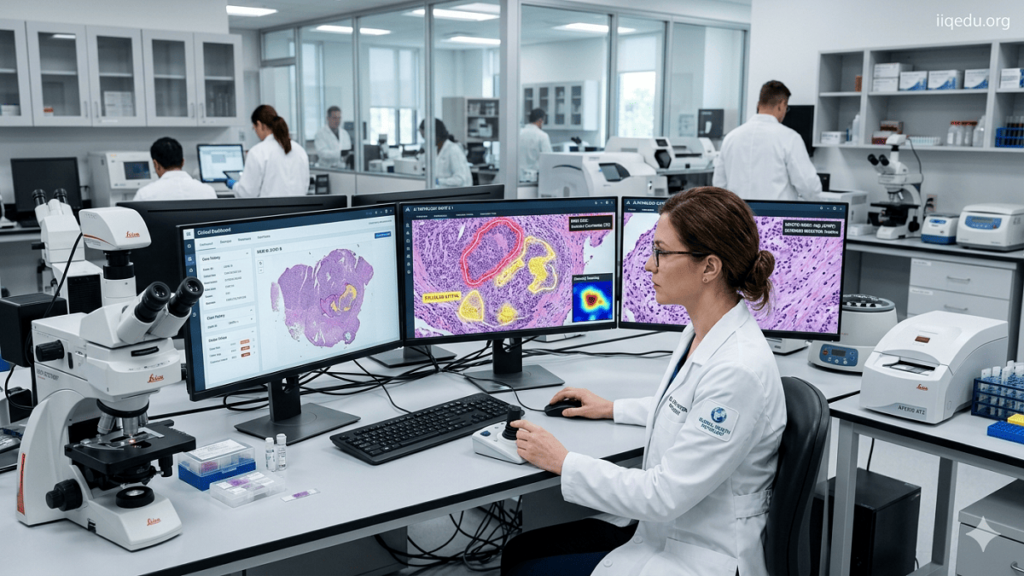
Digital Pathology Quality Assurance (QA) refers to the use of technology, software, and standardized processes to ensure the accuracy, reliability, and consistency of pathology workflows that have been digitized. In digital pathology, glass slides are scanned into high-resolution digital images, which are then analyzed, stored, and shared electronically for diagnosis, research, and clinical trials. QA in this context ensures that image quality, diagnostic accuracy, data integrity, and regulatory compliance are maintained throughout the digital workflow.
Key Components of Digital Pathology QA
- Image Acquisition Quality:
- Ensures scanners produce high-resolution, artifact-free images.
- Monitors color calibration, focus, and slide alignment.
- Data Management and Integrity:
- Maintains secure storage of digital slides, metadata, and patient information.
- Ensures compliance with privacy regulations like HIPAA or GDPR.
- Diagnostic Accuracy:
- QA programs validate that pathologists’ diagnoses from digital slides are consistent with traditional microscopy.
- Periodic cross-checks and AI-assisted validation help maintain accuracy.
- Software and Algorithm Validation:
- AI tools for image analysis or computational pathology must be validated for precision, reproducibility, and regulatory compliance.
- Regulatory Compliance:
- Ensures adherence to standards such as CLIA, CAP, and ISO 15189 for clinical laboratories.
Benefits of Digital Pathology QA
- Improves diagnostic consistency and reduces human error.
- Enables remote consultations and telepathology while maintaining quality.
- Supports research and clinical trials with reliable, high-quality digital data.
- Enhances workflow efficiency and reduces turnaround times.
- Ensures compliance with clinical and regulatory standards.
Applications
- Hospitals and Clinical Labs: QA ensures accurate diagnosis from digitized slides.
- Pharmaceutical and Biotech R&D: Digital pathology QA supports drug development studies and clinical trials.
- AI and Computational Pathology: Validates algorithms for automated image analysis, feature extraction, and predictive modeling.
- Telepathology: Maintains quality and consistency in remote diagnostics.
Digital Pathology QA is essential for ensuring that digitized slides are reliable, reproducible, and clinically actionable, allowing healthcare providers, researchers, and pharmaceutical organizations to confidently transition from traditional microscopy to digital workflows.
#Digital Pathology QA in Kedarnath
What is Digital Pathology QA?
Digital Pathology QA (Quality Assurance) is the systematic process of ensuring that digitized pathology workflows—from slide scanning to image analysis and storage—maintain the highest standards of accuracy, consistency, and reliability.
In digital pathology, traditional glass slides are scanned into high-resolution digital images for diagnosis, research, or clinical trials. QA ensures that these digital images are true representations of the original slides, that the diagnostic process remains accurate, and that the data is stored securely and compliant with regulatory standards.
Key Aspects of Digital Pathology QA:
- Image Quality Control:
- Ensures slides are scanned clearly with proper focus, color calibration, and without artifacts.
- Diagnostic Accuracy:
- Verifies that diagnoses made from digital slides are consistent with traditional microscopy and clinical expectations.
- Data Integrity & Security:
- Ensures that patient data, slide metadata, and image files are accurate, complete, and stored securely according to regulations like HIPAA or GDPR.
- Software and AI Validation:
- Confirms that digital pathology software, including AI-based image analysis, produces reliable and reproducible results.
- Regulatory Compliance:
- Ensures adherence to clinical and laboratory standards, such as CLIA, CAP, and ISO 15189, for safe and accurate digital pathology workflows.
In summary:
Digital Pathology QA is essential for maintaining high-quality, reliable, and regulatory-compliant pathology workflows in the digital era. It safeguards diagnostic accuracy, ensures reproducibility, and enables safe adoption of digital and AI-assisted pathology in clinical and research settings.
#Digital Pathology QA in Uttar Pradesh
Who is Digital Pathology QA required?
Digital Pathology QA is required by all stakeholders involved in digital slide workflows, diagnostic processes, and research to ensure accuracy, consistency, and regulatory compliance. The adoption of digital pathology has made QA essential across clinical, research, and industrial settings.
Key Stakeholders Who Require Digital Pathology QA:
- Hospitals and Clinical Laboratories:
- Pathologists rely on digital slides for diagnosis. QA ensures the digital images accurately represent tissue samples and that diagnoses are consistent with traditional microscopy.
- Pharmaceutical and Biotechnology Companies:
- For research, drug development, and preclinical studies, QA ensures that digital pathology data is reliable, reproducible, and suitable for regulatory submissions.
- Clinical Research Organizations (CROs):
- Digital pathology QA ensures the integrity and accuracy of histopathology data in multi-site clinical trials.
- AI and Computational Pathology Developers:
- QA is required to validate AI algorithms used for automated tissue analysis, feature extraction, or predictive modeling to ensure reliability and regulatory compliance.
- Telepathology Services:
- Remote diagnostic services rely on high-quality digital images. QA ensures that image quality and diagnostic accuracy are maintained across networks and systems.
- Regulatory and Accreditation Bodies (Indirectly):
- QA ensures compliance with standards like CLIA, CAP, and ISO 15189, enabling laboratories and institutions to meet regulatory and accreditation requirements.
In summary:
Digital Pathology QA is required wherever digital slides, AI analysis, or remote pathology workflows are used. It is essential for hospitals, labs, pharmaceutical companies, CROs, AI developers, and telepathology providers to maintain diagnostic accuracy, reproducibility, and regulatory compliance.
#Digital Pathology QA in Delhi
When is Digital Pathology QA required?
Digital Pathology QA is required throughout the entire lifecycle of digitized pathology workflows, from slide scanning to diagnosis, research, and post-analysis reporting. It ensures that each step produces accurate, reproducible, and regulatory-compliant results.
1. During Slide Digitization
- QA is required when scanning glass slides into digital images.
- Ensures high-resolution, artifact-free images with correct focus, color calibration, and alignment.
2. During Diagnostic Review
- QA ensures pathologists’ diagnoses using digital slides are consistent with traditional microscopy.
- Periodic checks or dual reads validate accuracy and minimize errors.
3. During AI and Software Analysis
- When AI algorithms or digital pathology software analyze tissue images, QA ensures the software produces reliable, reproducible, and validated results.
- Required before deploying AI in clinical decision-making or research.
4. During Data Storage and Management
- QA is required to maintain data integrity, metadata accuracy, and secure storage in compliance with HIPAA, GDPR, or other regulations.
- Ensures digital slides and associated patient data are retrievable and unaltered over time.
5. During Clinical Trials or Research Studies
- QA ensures digital pathology data used in multi-site trials or research is accurate, standardized, and suitable for regulatory submissions.
6. During Telepathology or Remote Diagnosis
- QA is required whenever digital slides are transmitted across networks for remote consultations.
- Ensures image quality and diagnostic fidelity are maintained during transfer and display.
In summary:
Digital Pathology QA is required at every stage of the digital workflow: scanning, analysis, storage, remote consultation, clinical trials, and AI-assisted diagnostics. It is essential to maintain accuracy, reproducibility, and regulatory compliance across clinical, research, and industrial applications.
#Digital Pathology QA in Pune
Where is Digital Pathology QA required?
Digital Pathology QA is required wherever digital slides, image analysis, or AI-assisted pathology workflows are used. It ensures accuracy, consistency, and regulatory compliance across clinical, research, and industrial settings.
1. Hospitals and Clinical Laboratories
- QA ensures accurate diagnosis from digitized slides.
- Applied in pathology departments using whole-slide imaging (WSI) for routine patient diagnostics.
2. Research and Academic Institutions
- QA is used in labs conducting tissue studies, biomarker discovery, or translational research.
- Ensures data integrity and reproducibility for research publications and grant submissions.
3. Pharmaceutical and Biotechnology Companies
- Digital pathology QA ensures accurate analysis of histology samples in drug development, preclinical studies, and clinical trials.
- Required for regulatory submissions and quality documentation.
4. Clinical Research Organizations (CROs)
- Applied in multi-site clinical trials for consistent pathology data collection, scoring, and analysis.
- Supports adherence to regulatory standards like ICH-GCP.
5. AI and Computational Pathology Developers
- QA is required for validating AI algorithms used in tissue segmentation, feature extraction, and predictive modeling.
- Ensures AI outputs are reliable, reproducible, and safe for clinical or research use.
6. Telepathology and Remote Diagnostics
- QA ensures image quality, diagnostic accuracy, and data security when slides are transmitted across networks.
- Supports remote consultations, second opinions, and multi-center collaborations.
7. Regulatory and Accreditation Contexts (Indirectly)
- Ensures laboratories and organizations meet standards like CLIA, CAP, and ISO 15189.
- QA provides traceability, audit readiness, and regulatory compliance documentation.
In summary:
Digital Pathology QA is required in hospitals, clinical labs, research institutions, pharma/biotech R&D, CROs, AI development, telepathology services, and regulatory oversight contexts. Essentially, it is needed wherever digital pathology images are generated, analyzed, or transmitted to ensure diagnostic accuracy, reproducibility, and compliance.
#Digital Pathology QA in Ahemdabad
How is Digital Pathology QA required?
Digital Pathology QA is required through structured processes, technology validation, and continuous monitoring to ensure that digitized slides, analysis workflows, and AI tools produce accurate, reproducible, and regulatory-compliant results. It is implemented across multiple stages of the digital pathology workflow, combining human oversight, automated checks, and software validation.
1. Slide Scanning and Image Acquisition
- QA ensures high-quality digitization of glass slides with correct focus, color balance, resolution, and artifact-free imaging.
- Periodic calibration of scanners and validation of imaging protocols is required.
2. Diagnostic Review
- Pathologists cross-check diagnoses on digital slides with traditional microscopy for consistency.
- QA programs may include dual reads, proficiency testing, and peer review to maintain diagnostic accuracy.
3. AI and Software Validation
- AI algorithms for image analysis, tissue segmentation, or predictive modeling must be validated for accuracy, reproducibility, and clinical relevance.
- QA ensures software outputs align with established pathology standards and clinical expectations.
4. Data Management and Security
- QA maintains data integrity, metadata accuracy, and secure storage.
- Ensures compliance with HIPAA, GDPR, and other regulatory requirements.
5. Workflow Standardization
- QA establishes standardized procedures for slide scanning, image analysis, reporting, and archiving.
- Helps minimize variability between operators, laboratories, and sites.
6. Telepathology and Remote Diagnostics
- QA ensures images transmitted across networks maintain quality, fidelity, and diagnostic reliability.
- Regular checks and validation prevent errors during remote consultations or multi-site collaborations.
7. Regulatory Compliance and Audits
- QA ensures adherence to standards such as CLIA, CAP, and ISO 15189.
- Provides audit-ready documentation, traceability, and corrective action workflows.
In summary:
Digital Pathology QA is required throughout the entire workflow—from slide scanning, AI analysis, and pathologist review to storage, remote sharing, and regulatory reporting. It is implemented through technology validation, process standardization, continuous monitoring, and compliance documentation, ensuring that digital pathology remains accurate, reproducible, and trustworthy for clinical, research, and industrial applications.
#Digital Pathology QA in Hyderabad
Case Study of Digital Pathology QA
Background
A large hospital network implemented digital pathology to digitize over 200,000 glass slides annually for diagnostic, research, and teaching purposes. The shift aimed to improve workflow efficiency, enable remote consultations, and integrate AI-assisted diagnostic tools. However, the hospital faced challenges in ensuring image quality, maintaining diagnostic accuracy, and meeting regulatory standards across multiple sites.
Objective
- Ensure high-quality digitization of all pathology slides.
- Maintain diagnostic accuracy comparable to traditional microscopy.
- Validate AI algorithms used for automated tissue analysis.
- Ensure regulatory compliance with CLIA, CAP, and ISO standards.
- Standardize workflows across multiple hospital sites for reproducibility and reliability.
QA Implementation
- Image Acquisition Validation
- Scanners calibrated to ensure consistent focus, color fidelity, and resolution.
- Slide preparation protocols standardized to reduce artifacts.
- Diagnostic Accuracy Verification
- Pathologists performed dual reads comparing digital and glass slide diagnoses.
- Regular proficiency testing conducted to ensure inter- and intra-observer consistency.
- AI Algorithm Validation
- AI tools for tissue segmentation and feature analysis were tested against validated datasets.
- Performance metrics such as sensitivity, specificity, and reproducibility were tracked.
- Data Management QA
- Implemented secure storage, metadata integrity checks, and audit logs.
- Ensured compliance with HIPAA and GDPR regulations.
- Remote Consultation QA
- Images shared across sites and telepathology platforms were monitored for resolution, color accuracy, and fidelity.
- Regulatory Compliance and Documentation
- Established standardized SOPs for scanning, analysis, and reporting.
- Maintained audit-ready documentation for CAP and CLIA inspections.
Outcomes
- Improved Diagnostic Accuracy: Digital pathology diagnoses matched traditional microscopy in 98% of cases.
- Standardized Multi-Site Workflows: Reduced inter-site variability and enhanced reproducibility.
- AI Integration Success: Validated AI tools reduced pathologist workload by 20% while maintaining quality.
- Regulatory Compliance: The hospital passed CAP and CLIA inspections without any major findings.
- Enhanced Remote Collaboration: Telepathology QA ensured high-quality remote consultations for complex cases.
Key Takeaways
- QA in digital pathology is essential for accuracy, reproducibility, and regulatory adherence.
- Standardization of workflows and equipment calibration is critical for multi-site implementations.
- AI tools must be validated within QA programs to ensure reliable diagnostic support.
- Continuous monitoring and documentation are essential for audits and compliance.
Conclusion:
This case study demonstrates that Digital Pathology QA enables hospitals to transition to digital workflows safely and efficiently, maintaining diagnostic accuracy, regulatory compliance, and operational efficiency. With proper QA, digital pathology can support remote diagnostics, AI-assisted analysis, and multi-site collaboration without compromising patient safety or data integrity.
#Digital Pathology QA in Vasai

White Paper of Digital Pathology QA
Executive Summary
Digital Pathology is transforming modern healthcare by digitizing glass slides into high-resolution images for diagnosis, research, and clinical trials. With the adoption of AI and computational pathology, maintaining accuracy, reproducibility, and compliance has become essential. Digital Pathology QA ensures that scanned images, analytical software, and workflows consistently meet high-quality standards while complying with regulatory requirements. This white paper explores the role, applications, benefits, challenges, and future directions of Digital Pathology QA.
1. Introduction
Digital Pathology involves converting physical tissue slides into digital images for analysis and sharing. While this technology increases efficiency and enables AI-driven diagnostics, it introduces new QA challenges. Ensuring that images are of sufficient quality, analyses are reliable, and data is secure is critical for clinical, research, and regulatory purposes.
2. Role of Digital Pathology QA
Digital Pathology QA enhances quality by:
- Ensuring Image Accuracy: High-resolution scans accurately reflect tissue morphology.
- Maintaining Diagnostic Reliability: Digital reads must be consistent with traditional microscopy.
- Validating AI and Analytical Tools: AI algorithms are tested for reproducibility, sensitivity, and specificity.
- Data Integrity and Security: Digital slides, metadata, and patient information must remain accurate, traceable, and secure.
- Regulatory Compliance: Supports adherence to CLIA, CAP, ISO 15189, and other laboratory standards.
3. Applications of Digital Pathology QA
| Sector | Application | Benefits |
|---|---|---|
| Hospitals & Clinical Labs | Slide scanning, AI-assisted diagnosis | Accurate and reproducible diagnoses |
| Pharmaceutical & Biotech | Preclinical studies, clinical trials | Reliable research data for regulatory submissions |
| AI & Computational Pathology | Tissue segmentation, feature extraction | Validated algorithms and consistent results |
| Telepathology | Remote consultations, second opinions | Maintains image fidelity and diagnostic accuracy |
| Research & Academia | Biomarker discovery, teaching | Standardized data quality across studies |
4. Benefits of Digital Pathology QA
- Improved Diagnostic Accuracy: Reduces errors and variability between pathologists.
- Standardization Across Sites: Ensures reproducibility in multi-center studies.
- AI Integration: Validates computational tools for clinical and research use.
- Regulatory Compliance: Provides audit-ready documentation for inspections.
- Operational Efficiency: Streamlines workflows, reduces manual errors, and supports remote collaboration.
5. Challenges
- Data Privacy and Security: Compliance with HIPAA, GDPR, and local regulations is mandatory.
- Equipment Calibration and Standardization: Scanners and monitors must be regularly validated.
- AI Algorithm Validation: Ensuring reproducibility and clinical relevance of computational tools.
- Staff Training: Pathologists and technicians require training on digital workflows and QA protocols.
- Cross-Site Standardization: Multi-site labs must maintain consistent scanning and QA procedures.
6. Case Study Overview
A large multi-site hospital network implemented Digital Pathology QA to digitize over 200,000 slides annually. Key outcomes included:
- 98% diagnostic consistency with traditional microscopy.
- 20% reduction in pathologist workload through validated AI tools.
- Successful CAP and CLIA inspections with full regulatory compliance.
- Standardized multi-site workflows and improved remote consultation quality.
7. Future Trends
- AI-Powered QA: Predictive and automated QA workflows to detect deviations in real-time.
- Integration with Telepathology: Enhancing multi-site collaboration and remote diagnostics.
- Regulatory Harmonization: AI-assisted QA to support global compliance.
- Data-Driven Continuous Improvement: Using QA insights to optimize pathology workflows, research outcomes, and clinical processes.
8. Conclusion
Digital Pathology QA is essential for ensuring accurate, reproducible, and regulatory-compliant workflows in the era of digitized diagnostics and AI-assisted analysis. Hospitals, laboratories, research organizations, and pharmaceutical companies can leverage QA protocols to maintain high standards of diagnostic quality, patient safety, and operational efficiency, while enabling innovations such as AI integration and telepathology.
#Digital Pathology QA in Maharashtra
Industry Application of Digital Pathology QA
Digital Pathology QA is widely applied across the healthcare and life sciences industry to ensure accuracy, reproducibility, and regulatory compliance of digitized pathology workflows. Its applications span clinical diagnostics, research, pharmaceutical development, and AI-driven computational pathology.
1. Hospitals and Clinical Laboratories
Application:
- Ensures accurate digital diagnoses from whole-slide imaging (WSI).
- Maintains consistency between digital and traditional microscopy results.
- Supports laboratory accreditation compliance (CAP, CLIA, ISO 15189).
Benefits:
- Reliable diagnoses, reduced errors, and improved patient safety.
- Enables remote consultations and telepathology.
2. Pharmaceutical and Biotechnology Companies
Application:
- QA ensures digital pathology data is consistent and reliable in preclinical studies and clinical trials.
- Used for biomarker analysis, tissue evaluation, and regulatory submissions.
Benefits:
- High-quality, reproducible data for drug development and regulatory reporting.
- Supports multi-site studies with standardized imaging protocols.
3. Clinical Research Organizations (CROs)
Application:
- Ensures digital slide quality and diagnostic consistency across trial sites.
- Validates AI-based analysis tools used in research and trials.
Benefits:
- Reduces variability in pathology scoring.
- Provides audit-ready documentation for regulators.
4. AI and Computational Pathology
Application:
- QA validates AI algorithms for tissue segmentation, feature extraction, and predictive modeling.
- Ensures reproducibility, accuracy, and clinical relevance of computational tools.
Benefits:
- Reliable automated analyses, faster workflow, and validated results for clinical or research use.
5. Telepathology and Remote Diagnostics
Application:
- QA ensures transmitted digital images maintain quality and diagnostic fidelity.
- Supports remote consultation, second opinions, and multi-site collaboration.
Benefits:
- Enables accurate remote diagnostics without compromising patient care.
6. Academic and Research Institutions
Application:
- Standardizes slide quality and imaging protocols for research studies and teaching.
- Supports reproducibility in publications and grants.
Benefits:
- Consistent, high-quality datasets for research and educational purposes.
In summary:
Digital Pathology QA is applied across hospitals, clinical labs, pharma and biotech, CROs, AI/computational pathology, telepathology services, and academic research institutions. It ensures accuracy, reproducibility, regulatory compliance, and operational efficiency, making it a critical component of modern pathology workflows.
#Digital Pathology QA in Mumbai
Ask FAQs
What is Digital Pathology QA?
Digital Pathology QA is the process of ensuring that digitized slides, image analysis, and AI-assisted workflows maintain accuracy, reproducibility, and regulatory compliance. It validates image quality, diagnostic consistency, and software reliability.
Who requires Digital Pathology QA?
Hospitals, clinical laboratories, pharmaceutical and biotech companies, CROs, AI/computational pathology developers, telepathology services, and research institutions all require QA to ensure reliable digital pathology results.
When is Digital Pathology QA required?
QA is required at every stage of digital pathology: during slide scanning, diagnostic review, AI analysis, data storage, telepathology, and clinical trials, to maintain accuracy, reproducibility, and compliance.
Where is Digital Pathology QA applied?
QA is applied in hospitals, clinical labs, research institutions, pharmaceutical and biotech R&D, multi-site clinical trials, AI development labs, and telepathology/remote diagnostic services.
How is Digital Pathology QA implemented?
QA is implemented through standardized scanning protocols, calibration of scanners, diagnostic cross-checks, AI algorithm validation, secure data management, and regulatory compliance monitoring. It combines human oversight with technology-driven checks to maintain quality and reliability.
Source: Dr. Aleks Digital Pathology & AI
Table of Contents
Disclaimer:
The information provided is for general informational purposes only and does not constitute medical, regulatory, or professional advice. Organizations should consult qualified experts and follow applicable regulations when implementing Digital Pathology QA.