FDA, EMA, and International Pharma Regulations
Pharmaceutical companies operating globally must navigate a complex regulatory landscape to ensure product safety, efficacy, and quality. Key regulatory authorities such as the U.S. Food and Drug Administration (FDA) and the European Medicines Agency (EMA) establish standards for drug approval, manufacturing, labeling, and post-market surveillance. Compliance with these regulations is essential to access international markets, protect public health, and maintain corporate reputation.
1. U.S. Food and Drug Administration (FDA)
The FDA is the primary regulatory body in the United States for drugs, biologics, medical devices, and dietary supplements. Key responsibilities and requirements include:
- Drug Approval Process:
- Preclinical testing, Investigational New Drug (IND) applications, clinical trials (Phase I–III), and New Drug Application (NDA) submission.
- Good Manufacturing Practices (GMP):
- Facilities must comply with strict production, cleanliness, and quality control standards to ensure product safety and consistency.
- Labeling and Advertising Compliance:
- Accurate product labeling, dosage instructions, and approved promotional content are mandatory.
- Post-Market Surveillance:
- Adverse event reporting, product recalls, and ongoing inspections help maintain safety and efficacy.
2. European Medicines Agency (EMA)
The EMA regulates medicinal products across the European Union. Key aspects include:
- Centralized Marketing Authorization:
- Provides a single approval for marketing in all EU member states, facilitating market access across multiple countries.
- Good Manufacturing Practice (GMP) Compliance:
- Ensures high-quality production standards similar to FDA regulations.
- Pharmacovigilance:
- Ongoing monitoring of drug safety and efficacy after market approval, including reporting adverse reactions.
- Labeling and Packaging Requirements:
- Must meet EU-specific language, safety, and consumer information standards.
3. International Pharmaceutical Regulations
Beyond the FDA and EMA, multinational pharmaceutical companies must also comply with various regional and international frameworks:
- ICH Guidelines (International Council for Harmonisation):
- Provides harmonized technical requirements for drug registration, including quality, safety, and efficacy.
- WHO Good Manufacturing Practices:
- Offers international standards for pharmaceutical production, especially for countries lacking stringent regulatory frameworks.
- Country-Specific Authorities:
- Examples include Health Canada, TGA (Australia), PMDA (Japan), and CDSCO (India), each with unique submission and approval processes.
4. Key Challenges in Cross-Border Pharmaceutical Compliance
- Regulatory Divergence: Differing requirements for clinical trials, labeling, and approval timelines.
- Quality Standards Harmonization: Ensuring GMP and quality control processes are consistent across all production sites.
- Post-Market Monitoring: Reporting and addressing adverse events according to varying country regulations.
- Documentation and Traceability: Maintaining comprehensive records to satisfy inspections and audits in multiple jurisdictions.
5. Best Practices for Compliance
- Implement a global regulatory affairs team to manage multi-country submissions.
- Align quality management systems (QMS) with international standards such as ISO 9001 and ICH Q10.
- Conduct regular internal audits and training to ensure staff are familiar with diverse regulations.
- Maintain digital traceability and pharmacovigilance systems to monitor product safety and regulatory reporting.
Conclusion:
Compliance with FDA, EMA, and international pharmaceutical regulations is critical for global market access and patient safety. Multinational pharmaceutical companies must integrate robust quality management systems, harmonized production standards, and vigilant post-market monitoring to succeed across diverse regulatory environments. Effective regulatory compliance not only prevents legal and financial risks but also strengthens brand credibility and public trust worldwide.
What is FDA, EMA, and International Pharma Regulations?
and standards that govern the development, manufacturing, approval, distribution, and post-market surveillance of pharmaceutical products across the globe. These regulations are designed to ensure that medicines and medical devices are safe, effective, and of high quality, protecting public health while enabling international trade in pharmaceuticals.
1. FDA (U.S. Food and Drug Administration)
The FDA is the regulatory authority in the United States overseeing drugs, biologics, medical devices, and dietary supplements. Its primary responsibilities include:
- Approval of New Drugs and Devices: Through processes such as Investigational New Drug (IND) applications and New Drug Applications (NDA).
- Good Manufacturing Practices (GMP): Ensuring production meets safety, quality, and cleanliness standards.
- Labeling and Marketing Compliance: Accurate instructions, warnings, and promotional content.
- Post-Market Surveillance: Monitoring adverse events, product recalls, and ongoing inspections.
2. EMA (European Medicines Agency)
The EMA regulates medicinal products within the European Union. Key aspects include:
- Centralized Marketing Authorization: One approval allows access to all EU member states.
- GMP Compliance: Manufacturing standards aligned with international safety and quality norms.
- Pharmacovigilance: Continuous monitoring of drug safety after approval.
- Regulatory Compliance Across Member States: Ensures labeling, packaging, and usage instructions meet EU standards.
3. International Pharmaceutical Regulations
Beyond the FDA and EMA, global pharmaceutical compliance is guided by:
- ICH Guidelines (International Council for Harmonisation): Standardizes technical requirements for safety, quality, and efficacy across major markets.
- WHO Good Manufacturing Practices: Global guidance for quality assurance, especially in countries with emerging regulatory systems.
- Country-Specific Authorities: Such as Health Canada, PMDA (Japan), TGA (Australia), and CDSCO (India), each with their own submission, approval, and monitoring requirements.
In summary:
FDA, EMA, and international pharmaceutical regulations collectively ensure that medicines and medical devices meet strict safety, efficacy, and quality standards worldwide. They provide a structured framework for manufacturers to comply with legal and safety requirements, maintain consistent quality across borders, and protect public health.
#FDA, EMA, and International Pharma Regulations in Delhi
Who is FDA, EMA, and International Pharma Regulations required?
FDA, EMA, and International Pharmaceutical Regulations are required by multiple stakeholders involved in the development, manufacture, distribution, and use of pharmaceutical products. These regulations are not optional—they ensure safety, efficacy, and quality across global markets. Below is a detailed explanation of who requires them and why:
1. Pharmaceutical Manufacturers
- Reason: Manufacturers must comply with regulatory standards to legally produce, market, and export drugs and medical devices.
- Examples of Requirements: Good Manufacturing Practices (GMP), quality control, product testing, and accurate labeling.
- Impact: Non-compliance can result in fines, production halts, product recalls, or rejection from key markets.
2. Regulatory Authorities and Governments
- Reason: Agencies like the FDA (USA), EMA (EU), and national authorities in other countries enforce regulations to protect public health.
- Responsibilities: Approving new drugs, monitoring safety, conducting inspections, and enforcing pharmacovigilance.
- Impact: Ensures that only safe, effective, and high-quality products reach consumers.
3. Healthcare Providers and Pharmacists
- Reason: Physicians, hospitals, and pharmacists rely on regulated products to ensure patient safety and effective treatment.
- Requirements: Proper labeling, verified dosage, and approved formulations according to regulatory standards.
- Impact: Compliance prevents medical errors, adverse reactions, and promotes confidence in treatment outcomes.
4. Consumers and Patients
- Reason: Regulations protect patients from unsafe, ineffective, or substandard medications.
- Examples: Proper testing, post-market surveillance, and accurate labeling.
- Impact: Ensures that medicines meet quality standards, are safe to use, and provide intended therapeutic effects.
5. Distributors and Exporters
- Reason: Companies distributing or exporting pharmaceuticals must adhere to international regulations to access global markets.
- Requirements: Compliance with customs, import/export standards, labeling, and documentation.
- Impact: Prevents shipment delays, product rejection, and legal liabilities in foreign markets.
6. Investors and Stakeholders
- Reason: Investors, insurers, and partners require regulatory compliance to mitigate financial and reputational risks.
- Impact: Ensures business continuity, legal security, and long-term viability in global pharmaceutical markets.
Conclusion:
FDA, EMA, and international pharmaceutical regulations are required by all participants in the pharmaceutical ecosystem—from manufacturers and regulators to distributors, healthcare providers, and patients. Compliance ensures product safety, market access, legal protection, and trust in global healthcare systems.
#FDA, EMA, and International Pharma Regulations in Varanasi

When is FDA, EMA, and International Pharma Regulations required?
FDA, EMA, and International Pharmaceutical Regulations are required at multiple stages of a pharmaceutical product’s lifecycle to ensure safety, efficacy, and regulatory compliance across domestic and international markets. Compliance is not limited to a single point—it is continuous, from early development through post-market monitoring. Here’s a detailed breakdown:
1. During Drug Discovery and Development
- Requirement: Compliance with regulations begins at the research and development stage.
- Examples:
- Conducting preclinical studies according to FDA or EMA guidelines.
- Adhering to International Council for Harmonisation (ICH) protocols for safety and efficacy.
- Purpose: Ensures that experimental compounds are studied safely and can progress to human trials.
2. During Clinical Trials
- Requirement: Regulatory approval is needed before starting clinical trials in humans.
- Examples:
- Submitting an Investigational New Drug (IND) application to the FDA.
- Obtaining EMA authorization for clinical trials in the EU.
- Following Good Clinical Practice (GCP) standards.
- Purpose: Protects patient safety and ensures that trials generate valid, reliable data for regulatory evaluation.
3. During Manufacturing and Production
- Requirement: Compliance with Good Manufacturing Practices (GMP) for quality and safety.
- Examples:
- Maintaining clean, controlled production environments.
- Conducting quality control testing for each batch.
- Purpose: Ensures that the product is safe, consistent, and free from contamination before reaching the market.
4. Pre-Market Approval and Product Registration
- Requirement: Approval is required before a product can be sold or exported.
- Examples:
- Submitting a New Drug Application (NDA) to the FDA.
- Applying for Marketing Authorization through the EMA.
- Complying with country-specific regulatory submissions for other international markets.
- Purpose: Confirms the drug meets safety, efficacy, and quality standards for human use.
5. During Distribution and Export
- Requirement: Compliance continues when products are transported across borders.
- Examples:
- Ensuring proper labeling and documentation.
- Maintaining cold-chain conditions for temperature-sensitive pharmaceuticals.
- Purpose: Protects product integrity and ensures compliance with international trade regulations.
6. Post-Market Surveillance
- Requirement: Ongoing compliance after the product reaches consumers.
- Examples:
- Monitoring adverse events and reporting to the FDA, EMA, or local authorities.
- Conducting post-market studies and periodic quality audits.
- Purpose: Maintains long-term safety, monitors real-world efficacy, and ensures continuous regulatory compliance.
Conclusion:
FDA, EMA, and international pharmaceutical regulations are required throughout the entire pharmaceutical lifecycle—from research and clinical trials to manufacturing, market approval, distribution, and post-sale monitoring. Continuous adherence ensures product safety, regulatory compliance, market access, and protection of public health.
#FDA, EMA, and International Pharma Regulations in Banglore
Where is FDA, EMA, and International Pharma Regulations required?
FDA, EMA, and International Pharmaceutical Regulations are required at every critical location and stage where pharmaceutical products are developed, produced, distributed, and used. Compliance is location-specific because regulations differ by country, and global standards must be maintained across borders. Here’s a detailed breakdown of where these regulations are required:
1. Research and Development Facilities
- Location: Laboratories and R&D centers.
- Requirement: Compliance with FDA, EMA, and ICH guidelines during preclinical studies.
- Purpose: Ensures that experimental drugs are tested safely and according to internationally recognized scientific standards.
2. Clinical Trial Sites
- Location: Hospitals, clinics, or contract research organizations (CROs) conducting human trials.
- Requirement: Adherence to Good Clinical Practice (GCP) and approval from the relevant regulatory authority.
- Purpose: Protects patient safety and ensures clinical trial data are valid and acceptable for regulatory review.
3. Manufacturing Plants
- Location: Pharmaceutical production facilities worldwide.
- Requirement: Compliance with Good Manufacturing Practices (GMP) and quality control standards as enforced by FDA, EMA, or local authorities.
- Purpose: Guarantees that products are consistently produced with the required safety, quality, and efficacy.
4. Packaging and Labeling Centers
- Location: Packaging facilities, often separate from manufacturing plants.
- Requirement: Regulatory compliance for labeling, safety warnings, dosage instructions, and language requirements.
- Purpose: Ensures that products are legally marketable and correctly informative for global consumers.
5. Distribution Centers and Warehouses
- Location: Logistics hubs, storage facilities, and export/import warehouses.
- Requirement: Maintenance of product integrity, including cold-chain storage for temperature-sensitive products, and adherence to regulatory documentation.
- Purpose: Preserves quality and ensures compliance during transit to global markets.
6. Import/Export Checkpoints
- Location: Ports, airports, and border inspection facilities.
- Requirement: Verification of regulatory documentation, certifications, and compliance with local and international laws.
- Purpose: Ensures that only approved and compliant products enter the country.
7. Pharmacies, Hospitals, and Healthcare Providers
- Location: End-user distribution points.
- Requirement: Compliance with local regulations for dispensing, labeling, and storage of pharmaceutical products.
- Purpose: Ensures patient safety and proper usage of medications.
8. Post-Market Surveillance and Monitoring Locations
- Location: Central regulatory offices, company pharmacovigilance centers, and global monitoring teams.
- Requirement: Ongoing monitoring and reporting of adverse events to the FDA, EMA, or other authorities.
- Purpose: Maintains long-term safety and ensures products continue to meet regulatory requirements in all markets.
Conclusion:
FDA, EMA, and international pharmaceutical regulations are required wherever pharmaceutical products are developed, tested, manufactured, packaged, distributed, or used. Compliance is a continuous responsibility across laboratories, clinical sites, manufacturing plants, logistics hubs, healthcare facilities, and regulatory offices worldwide. Ensuring adherence at every location protects public health, guarantees product integrity, and facilitates access to international markets.
#FDA, EMA, and International Pharma Regulations in Vasai
How is FDA, EMA, and International Pharma Regulations required?
FDA, EMA, and International Pharmaceutical Regulations are required through structured processes, systems, and practices that ensure pharmaceutical products meet safety, efficacy, and quality standards across all stages of the product lifecycle. Compliance is not optional; it is implemented through legal, operational, and technical mechanisms in every country where a product is developed, manufactured, or marketed. Below is a detailed explanation of how these regulations are required:
1. Through Regulatory Approval Processes
- How: Companies must submit extensive documentation for regulatory review before products can be marketed.
- Examples:
- FDA: Investigational New Drug (IND) applications and New Drug Applications (NDA).
- EMA: Marketing Authorization Applications (MAA) for EU-wide approval.
- Other countries: Submission to local authorities like PMDA (Japan) or CDSCO (India).
- Purpose: Ensures that products are thoroughly evaluated for safety, efficacy, and quality before reaching patients.
2. Through Good Manufacturing Practices (GMP)
- How: Facilities producing pharmaceuticals must implement standardized processes, quality checks, and documentation.
- Examples:
- Controlled cleanrooms, calibrated equipment, and batch testing.
- Regular internal and external inspections by regulatory authorities.
- Purpose: Guarantees consistent product quality and prevents contamination or variability in production.
3. Through Clinical Trial Compliance
- How: Clinical trials must follow Good Clinical Practice (GCP) guidelines and be approved by the relevant regulatory authority.
- Examples:
- Informed consent, ethical review boards, and standardized trial protocols.
- Accurate recording and reporting of trial results to regulators.
- Purpose: Protects patient safety and ensures that trial data are valid for regulatory review.
4. Through Documentation and Labeling
- How: All products must include proper labeling, packaging, and documentation aligned with regulatory standards.
- Examples:
- Drug facts, dosage instructions, warnings, and batch numbers.
- Compliance with language and format requirements in target markets.
- Purpose: Ensures safe usage by healthcare professionals and patients while meeting legal obligations.
5. Through Supply Chain and Distribution Controls
- How: Regulatory compliance extends to storage, handling, and transportation of pharmaceutical products.
- Examples:
- Temperature-controlled logistics for biologics and vaccines.
- Secure and traceable shipment documentation for exports.
- Purpose: Maintains product quality from manufacturing sites to international markets.
6. Through Post-Market Surveillance
- How: Companies monitor products after they reach the market to ensure ongoing compliance.
- Examples:
- Adverse event reporting to FDA, EMA, and local authorities.
- Periodic safety updates and audits of manufacturing facilities.
- Purpose: Detects issues early, maintains public safety, and meets legal obligations for continued market access.
7. Through Training and Organizational Governance
- How: Staff are trained on regulatory requirements, quality standards, and compliance procedures.
- Examples:
- Internal audits, workshops, and digital compliance monitoring systems.
- Centralized regulatory affairs teams managing cross-border submissions.
- Purpose: Ensures consistent adherence to regulations across all departments and locations.
Conclusion:
FDA, EMA, and international pharmaceutical regulations are required through formal regulatory submissions, standardized manufacturing practices, rigorous clinical trials, accurate labeling, controlled supply chains, post-market surveillance, and organizational governance. Compliance is systemic, continuous, and integrated into every stage of a pharmaceutical product’s lifecycle, ensuring safety, efficacy, and international market access.
#FDA, EMA, and International Pharma Regulations in Maharashtra
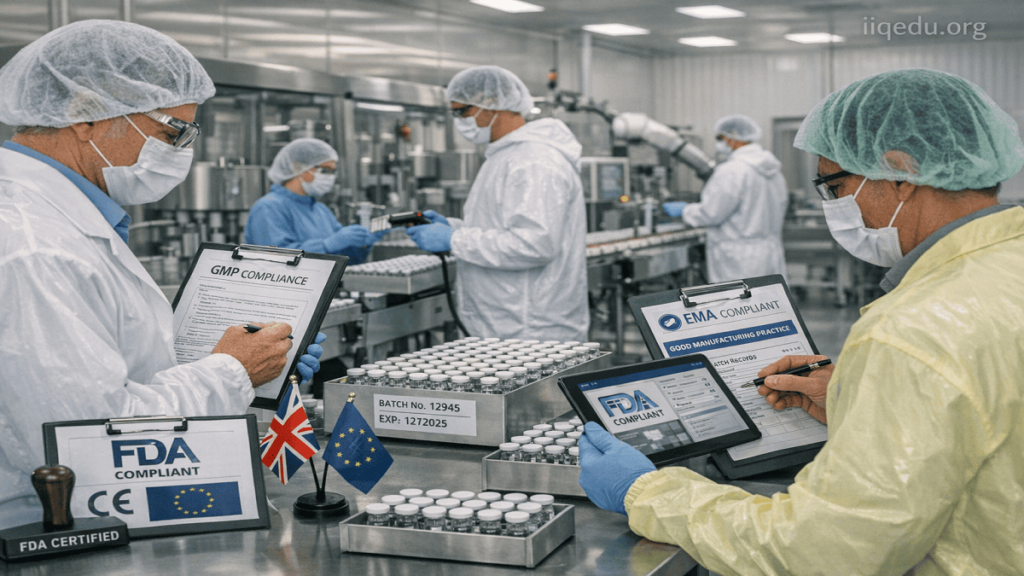
Case Study of FDA, EMA, and International Pharma Regulations
Background
A large global pharmaceutical company sought to bring a new therapy to market across multiple major regions including the United States, the European Union, and select Asia‑Pacific countries. To achieve this, it had to navigate complex pharmaceutical regulatory frameworks dictated by the U.S. Food and Drug Administration (FDA), the European Medicines Agency (EMA), and international requirements such as ICH guidelines and country‑specific authorities.
The company faced evolving regulatory expectations, diverse documentation standards across regions, and lengthy review timelines—which posed risks to timely approvals and commercial success. It partnered with regulatory and compliance advisors to build a global regulatory strategy, streamline submissions, and ensure ongoing compliance across all jurisdictions.
Challenges
- Divergent Regulations Across Markets: The FDA and EMA have different submission formats, templates, and expectations for clinical data, labeling, and quality documentation.
- Extended Approval Timelines: Variations in regional review processes threatened to delay product launch in key markets.
- Complex Compliance Requirements: In addition to FDA and EMA rules, compliance with additional regional regulators (such as those in Asia‑Pacific) required continuous monitoring and adaptation.
- Post‑Approval Obligations: Once approved, products still needed ongoing safety reporting, pharmacovigilance, and lifecycle compliance.
Strategic Actions Taken
1. Regulatory Intelligence and Expert Engagement
The company engaged regulatory experts with former experience in FDA, EMA, and Asia‑Pacific frameworks to track evolving requirements and tailor submission strategies accordingly. Real‑time insights helped refine documentation and anticipate regulatory questions.
2. Harmonized Submission Approach
A harmonized eCTD (electronic Common Technical Document) format was developed, allowing the dossier to meet both FDA and EMA standards with minimal duplication of effort. The approach included structured modules that could be region‑adapted without reshaping the entire file.
3. Pre‑Submission Meetings & Ongoing Dialogue
Strategic meetings were held with regulatory bodies prior to submission to clarify expectations, prioritize critical data elements, and reduce the likelihood of requests for major revisions. This proactive engagement helped shorten review cycles, especially for clinical sections.
4. Post‑Approval Compliance Planning
A global pharmacovigilance system was established to collect, analyze, and report adverse event data in compliance with FDA, EMA, and other regional post‑marketing requirements. This included automated reporting systems and standard operating procedures aligned with international regulations.
Results
- Accelerated Approvals: Through regulatory strategy and expert input, approval timelines in the U.S. and EU were reduced by nearly a year, allowing earlier market access.
- Successful Multi‑Region Launch: The therapy obtained marketing authorizations in the U.S., EU, and three additional markets, demonstrating compliance with all relevant pharmaceutical regulations.
- Improved Quality and Documentation Standards: Harmonized submission practices and continuous regulatory intelligence reduced the risk of deficiencies and regulatory queries.
- Stronger Post‑Market Compliance: A global monitoring framework ensured adherence to safety reporting and ongoing compliance requirements across regions.
Key Learnings
- Proactive Regulatory Engagement: Early and transparent discussions with regulators can identify potential gaps and align expectations ahead of formal review.
- Harmonized Regulatory Strategy: A unified approach to dossier preparation (such as using eCTD standards) reduces redundancy and improves efficiency across regions.
- Continuous Intelligence: Staying updated with changing regulations in all target markets is critical to avoid delays and compliance slips.
- Post‑Market Vigilance: Compliance does not end with approval; robust pharmacovigilance systems are essential for sustained regulatory adherence and patient safety.
Conclusion
This case study illustrates how integrating expert knowledge, harmonized documentation strategies, and proactive regulatory planning enables pharmaceutical companies to successfully navigate the complex landscapes of FDA, EMA, and international regulations. By addressing regional differences and implementing a global compliance framework, the company ensured safer, faster, and more efficient market entry while maintaining high standards of quality and patient safety.
#FDA, EMA, and International Pharma Regulations in Pune
White Paper of FDA, EMA, and International Pharma Regulations
Executive Summary
The pharmaceutical industry operates within one of the most highly regulated sectors in the global economy. Effective regulation ensures that medicines and related products reaching patients across countries are both safe and effective. In major markets, regulatory frameworks such as those administered by the U.S. Food and Drug Administration (FDA) and the European Medicines Agency (EMA) set high standards for drug development, approval, manufacturing, labeling, and post‑market surveillance. Combined with international harmonization efforts like the International Council for Harmonisation (ICH) and country‑specific authorities, these regulations form a comprehensive architecture that governs the global lifecycle of pharmaceutical products.
This white paper explains the key elements, purposes, and strategic implications of these regulatory systems, and outlines best practices for multinational compliance.
1. Introduction
Pharmaceutical regulation emerged in response to historical public health failures linked to unsafe medicines and inconsistent quality. Modern frameworks seek to protect patient safety while facilitating innovation and international market access. Regulatory bodies evaluate clinical data, inspect manufacturing facilities, monitor safety once products are marketed, and enforce standards through legal authority. Robust regulatory compliance is essential for companies seeking global distribution of medicinal products.
2. Overview of Key Regulatory Authorities
2.1 U.S. Food and Drug Administration (FDA)
The FDA is a national regulatory agency in the United States responsible for safeguarding public health through oversight of drugs, biologics, and medical devices. Its principal functions include:
- Pre‑market Review: Evaluation of clinical trial data and safety before approval (e.g., Investigational New Drug (IND) and New Drug Application (NDA) processes).
- Good Manufacturing Practices (GMP): Enforcement of standardized, documented manufacturing quality systems to ensure consistent drug production.
- Labeling and Promotional Oversight: Regulation of product labels, instructions, and marketing claims to ensure accuracy and truthfulness.
- Post‑Market Surveillance: Monitoring adverse events and compliance through reporting systems and facility inspections.
The FDA’s decisions significantly influence global standards due to the size and importance of the U.S. pharmaceutical market.
2.2 European Medicines Agency (EMA)
The EMA is the centralized regulatory body for medicinal products in the European Union. It evaluates applications for Marketing Authorization (MA) that are valid across all EU member states. Key aspects include:
- Centralized Authorization Procedure: Single application granting EU‑wide approval, reducing duplication.
- Good Manufacturing Practice (GMP) Oversight: Harmonized inspections and compliance expectations across member states.
- Pharmacovigilance System: Ongoing monitoring of safety data post‑approval, including adverse reaction reporting.
- Regulatory Alignment: Coordination with EU member states’ national authorities on localized labeling, packaging, and distribution requirements.
The EMA’s integration model enables broad market access within Europe and influences international regulatory alignment.
3. International Regulatory Frameworks
In addition to FDA and EMA, international regulations and harmonization initiatives shape the global regulatory environment:
3.1 International Council for Harmonisation (ICH)
The ICH brings together regulators and industry representatives from multiple regions to harmonize technical requirements for pharmaceuticals. Its guidelines cover quality (Q), safety (S), efficacy (E), and multidisciplinary topics (M) such as electronic submission standards. Harmonization helps reduce redundant testing and conflicting requirements across markets.
3.2 World Health Organization (WHO)
The WHO develops global guidance on pharmaceutical quality, safety, and efficacy, including international Good Manufacturing Practices and prequalification programs that support access in low‑ and middle‑income countries.
3.3 National Regulatory Authorities (NRAs)
Countries outside the U.S. and EU have their own authorities with unique requirements, such as:
- Health Canada
- Pharmaceuticals and Medical Devices Agency (PMDA) — Japan
- Therapeutic Goods Administration (TGA) — Australia
- Central Drugs Standard Control Organization (CDSCO) — India
Understanding local requirements alongside FDA and EMA frameworks is essential for multinational product strategies.
4. Regulatory Requirements Across the Product Lifecycle
Pharmaceutical regulations apply at multiple stages:
4.1 Drug Development and Clinical Trials
Regulators assess preclinical data and authorize human trials under ethical and scientific standards (e.g., Good Clinical Practice). Approval pathways differ by region but are underpinned by common expectations for patient safety and data integrity.
4.2 Marketing Authorization
Submission dossiers (often in standardized formats such as the electronic Common Technical Document, eCTD) are reviewed for quality, safety, and efficacy. FDA and EMA evaluations may involve advisory committee input and public transparency.
4.3 Manufacturing and Quality Systems
GMP compliance is enforced through regular inspections, quality control testing, and documented procedures governing production, equipment, personnel, and facility conditions.
4.4 Labeling and Packaging Compliance
Regulatory approval extends to product labeling and packaging, including dosage instructions, warnings, and language requirements specific to each market.
4.5 Post‑Market Surveillance
After approval, companies must continuously monitor safety through adverse event reporting, periodic safety updates, and risk management plans. Regulatory authorities may require corrective actions, labeling changes, or product withdrawals if safety concerns arise.
5. Challenges in Global Regulatory Compliance
5.1 Divergent Standards and Timelines
Although harmonization initiatives exist, regulatory requirements and review timelines can differ significantly across regions. Aligning clinical data, quality documentation, and labeling to satisfy multiple authorities remains complex.
5.2 Documentation and Submission Complexity
Preparing and maintaining global submission dossiers requires advanced document management systems, expertise in multiple regulatory languages, and coordination across internal and external stakeholders.
5.3 Post‑Market Regulatory Dynamics
Ongoing safety reporting obligations and regulatory inspections can vary, requiring robust internal quality systems and pharmacovigilance infrastructures.
6. Best Practices for Regulatory Compliance
To effectively navigate FDA, EMA, and international regulations, pharmaceutical companies should:
- Build a Centralized Global Regulatory Affairs Team: Coordinate submissions, tracking, and compliance across regions.
- Adopt Harmonized Quality Management Systems: Align production and quality controls with international standards such as ICH Q10 and ISO frameworks.
- Use Standardized Submission Formats (eCTD): Facilitate multiple market submissions with version control and audit tracking.
- Invest in Pharmacovigilance and Safety Reporting Systems: Ensure real‑time monitoring and compliance with reporting mandates.
- Engage Regulators Early: Use pre‑submission meetings to clarify expectations and reduce review cycle uncertainties.
7. Strategic Implications for Global Pharmaceutical Leaders
Regulatory compliance is not merely a legal obligation—it is a strategic asset. Companies that integrate regulatory planning into early development processes and maintain continuous compliance systems can:
- Achieve faster market access
- Reduce costs associated with re‑submissions and recalls
- Build stronger relationships with regulators and healthcare providers
- Increase patient trust and product adoption
Conclusion
FDA, EMA, and international pharmaceutical regulations form the backbone of global drug safety and efficacy standards. While regulators operate through distinct legal frameworks, the shared purpose of protecting public health drives ongoing harmonization efforts. For pharmaceutical companies, mastering this regulatory landscape is essential for successful global market entry, sustained compliance, and long‑term competitiveness.
Effective regulatory strategy requires expertise, collaboration, and an integrated global compliance infrastructure that spans development, manufacturing, approval, and post‑market surveillance.
#FDA, EMA, and International Pharma Regulations in India
Industry Application of FDA, EMA, and International Pharma Regulations
Pharmaceutical regulations set by the FDA (U.S. Food and Drug Administration), EMA (European Medicines Agency), and other international authorities are central to the pharmaceutical and biotechnology industries. Their application ensures that medicines, biologics, and medical devices are safe, effective, and of high quality across global markets. Below is a detailed overview of their industry applications:
1. Pharmaceutical Manufacturing
- Application: Ensures that all drug production facilities comply with Good Manufacturing Practices (GMP), including cleanliness, equipment calibration, batch testing, and documentation.
- Industry Impact:
- Minimizes contamination risks.
- Guarantees product consistency across batches and sites.
- Facilitates global market access by meeting FDA, EMA, and regional standards.
2. Drug Development and Clinical Trials
- Application: Regulatory compliance governs preclinical testing, clinical trial design, and human subject protection. Guidelines from FDA, EMA, and ICH (International Council for Harmonisation) are implemented to ensure ethical and scientifically sound studies.
- Industry Impact:
- Enables approval of investigational drugs in multiple countries.
- Reduces regulatory delays during submission of IND (FDA) or CTA (EMA) applications.
- Supports multinational clinical studies by harmonizing safety and efficacy requirements.
3. Regulatory Affairs and Documentation
- Application: Companies submit regulatory dossiers (e.g., NDAs, MAAs) that conform to FDA, EMA, or other national requirements. Electronic submission standards like eCTD are commonly used.
- Industry Impact:
- Streamlines global product registration.
- Reduces errors, rejections, and submission delays.
- Provides structured documentation for audits and inspections.
4. Quality Assurance and Control
- Application: QA/QC departments implement standardized protocols to meet regulatory specifications, including testing for active ingredients, impurities, sterility, and stability.
- Industry Impact:
- Ensures that products meet strict international quality standards.
- Prevents recalls and legal penalties.
- Supports continuous improvement through feedback from inspections and audits.
5. Supply Chain and Distribution
- Application: FDA, EMA, and international regulations require secure, traceable supply chains. For temperature-sensitive products, cold-chain logistics must meet prescribed standards.
- Industry Impact:
- Maintains product integrity during shipping.
- Ensures proper labeling, storage, and handling across borders.
- Supports regulatory compliance for global exports.
6. Post-Market Surveillance
- Application: Regulatory bodies mandate pharmacovigilance systems to monitor adverse events, track product performance, and report safety issues.
- Industry Impact:
- Protects patient safety and maintains brand reputation.
- Helps companies meet ongoing compliance obligations.
- Enables rapid corrective actions, including labeling updates or product recalls if needed.
7. Biotechnology and Emerging Therapeutics
- Application: Regulations guide the development and approval of biologics, vaccines, gene therapies, and personalized medicines. Requirements often include additional clinical data, specialized manufacturing, and safety monitoring.
- Industry Impact:
- Ensures that advanced therapies meet stringent safety and efficacy criteria.
- Facilitates entry into global markets with regulatory alignment.
- Supports innovation while mitigating risks associated with novel therapies.
Conclusion
The application of FDA, EMA, and international pharmaceutical regulations is foundational across the pharmaceutical industry, encompassing every stage from drug discovery to post-market monitoring. Companies that effectively integrate these regulations into manufacturing, clinical development, supply chain, and quality assurance processes gain:
- Faster global market access
- Reduced compliance risks and recalls
- Enhanced product safety, efficacy, and quality
- Stronger regulatory relationships and brand credibility
By embedding regulatory compliance into operations, pharmaceutical and biotechnology companies ensure both patient safety and sustainable business growth in the competitive global market.
#FDA, EMA, and International Pharma Regulations in Mumbai
Ask FAQs
What are FDA, EMA, and International Pharmaceutical Regulations?
These are legal and technical frameworks that govern the development, manufacturing, approval, distribution, and monitoring of pharmaceutical products. They ensure that medicines and medical devices are safe, effective, and of consistent quality across domestic and international markets.
Why are FDA, EMA, and international regulations important?
They protect public health by setting standards for safety, efficacy, and quality. Compliance also enables pharmaceutical companies to access global markets, avoid legal penalties, maintain brand reputation, and prevent costly recalls or product withdrawals.
Who must comply with these regulations?
Compliance is required by pharmaceutical manufacturers, contract research organizations (CROs), distributors, healthcare providers, and regulatory affairs teams. Essentially, anyone involved in drug development, production, distribution, and post-market monitoring must adhere to these regulations.
When are these regulations required?
Regulations apply throughout the entire product lifecycle: during preclinical research, clinical trials, manufacturing, marketing authorization, distribution, and post-market surveillance. Continuous compliance ensures product safety and legal market access.
How can companies ensure compliance with FDA, EMA, and international regulations?
Companies can ensure compliance by implementing:
Robust quality management systems (QMS) and Good Manufacturing Practices (GMP)
Standardized submission processes like eCTD for regulatory filings
Ongoing pharmacovigilance and post-market safety monitoring
Staff training and internal audits to maintain adherence across all operations
These practices reduce risks and support consistent global regulatory compliance.
Source: Pharmaguideline
Table of Contents
Disclaimer:
The information provided is for general educational and informational purposes only. It does not constitute legal, regulatory, or medical advice. Companies should independently verify all requirements with the relevant regulatory authorities before taking action.