Industrial Internet of Things (IIoT) for QC
The Industrial Internet of Things (IIoT) for Quality Control (QC) refers to the use of connected sensors, devices, machines, and data analytics systems to monitor, analyze, and improve product quality in real time during manufacturing and production processes. IIoT enables a shift from traditional reactive quality inspection to proactive and predictive quality management.
1. What is IIoT in Quality Control?
IIoT in QC involves embedding sensors and smart devices into machines and production lines to continuously collect data such as temperature, pressure, vibration, and dimensional measurements. This data is transmitted to centralized systems where it is analyzed to ensure products meet quality standards.
2. Key Components of IIoT for QC
- Sensors and Smart Devices: Capture real-time process and product data
- Connectivity (IoT Networks): Enable communication between machines and systems
- Data Platforms (Cloud/Edge): Store and process large volumes of data
- Analytics and AI: Identify patterns, detect anomalies, and predict defects
- Dashboards and Alerts: Provide real-time insights to operators and engineers
3. Applications in Quality Control
a. Real-Time Process Monitoring
- Continuous tracking of production parameters
- Immediate detection of deviations from quality standards
b. Automated Inspection
- Use of vision systems and sensors to inspect products
- Reduction in manual inspection errors
c. Predictive Quality
- Predicting defects before they occur using historical and real-time data
- Preventing downtime and product failures
d. Traceability
- Tracking components and processes throughout production
- Enabling quick root cause analysis
4. Benefits of IIoT for QC
- Improved Product Quality: Continuous monitoring ensures consistent output
- Reduced Defects and Waste: Early detection minimizes scrap and rework
- Faster Decision-Making: Real-time data enables quick corrective actions
- Cost Savings: Lower operational and warranty costs
- Enhanced Compliance: Better documentation and traceability
5. Technologies Enabling IIoT in QC
- IoT sensors and devices
- Cloud computing and edge computing
- Artificial Intelligence and Machine Learning
- Big data analytics
- Digital dashboards and visualization tools
6. Industry Applications
- Automotive: Monitoring assembly line quality and component performance
- Electronics: Detecting defects in micro-components during production
- Pharmaceuticals: Ensuring batch quality and regulatory compliance
- Food and Beverage: Monitoring hygiene, temperature, and packaging quality
7. Challenges
- Integration with legacy systems
- Data security and privacy concerns
- High initial investment
- Managing large volumes of data
- Need for skilled workforce
8. Conclusion
The Industrial Internet of Things (IIoT) for Quality Control is transforming manufacturing by enabling real-time monitoring, predictive analytics, and automated quality management. It helps organizations move from reactive inspection to intelligent, data-driven quality assurance, resulting in higher efficiency, reduced costs, and improved product reliability.
#Industrial Internet of Things (IIoT) for QC in India
What is Industrial Internet of Things (IIoT) for QC?
The Industrial Internet of Things (IIoT) for Quality Control (QC) refers to the use of connected sensors, machines, and digital technologies to monitor, analyze, and improve product quality throughout the manufacturing process in real time.
It involves collecting data from production equipment, inspection systems, and environmental conditions, and using that data to ensure products consistently meet defined quality standards.
Key Explanation
In traditional quality control, defects are often detected after production through manual inspection. In contrast, IIoT enables:
- Real-time monitoring of production processes
- Automated data collection from machines and sensors
- Immediate detection of quality deviations
- Predictive analysis to prevent defects before they occur
How IIoT Works in QC
- Sensors and Devices collect data such as temperature, pressure, vibration, Industrial Internet of Things and dimensions.
- Connectivity systems transmit this data to centralized platforms.
- Data analytics and AI tools analyze the data to detect anomalies or trends.
- Alerts and dashboards notify operators for corrective action.
Purpose of IIoT in Quality Control
- Ensure consistent product quality
- Reduce defects, scrap, and rework
- Improve production efficiency
- Enable faster decision-making
- Support compliance and traceability
#Industrial Internet of Things (IIoT) for QC in Kolkata
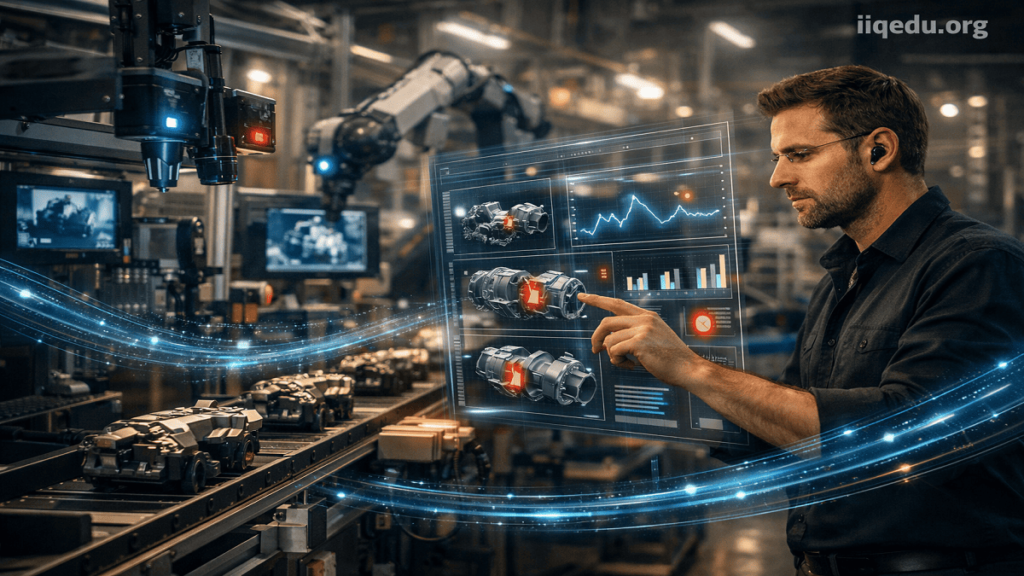
Who is Industrial Internet of Things (IIoT) for QC required?
The Industrial Internet of Things (IIoT) for Quality Control (QC) is required by organizations and professionals involved in manufacturing, production, and quality management, especially where maintaining high product standards, Industrial Internet of Things, efficiency, and compliance is critical.
1. Manufacturing Companies
IIoT for QC is essential for manufacturers producing goods at scale, Industrial Internet of Things, such as in automotive, electronics, pharmaceuticals, and consumer goods.
Why they need it:
- To monitor production processes in real time
- To reduce defects and ensure consistent product quality
- To improve operational efficiency and reduce costs
2. Quality Assurance and Quality Control Teams
Quality professionals rely on IIoT to enhance traditional inspection methods.
Why they need it:
- To automate inspection and data collection
- To identify defects early in the production process
- To perform faster and more accurate root cause analysis
3. Production and Operations Managers
Managers responsible for production efficiency and output quality require IIoT systems.
Why they need it:
- To track machine performance and process stability
- To ensure production meets quality standards
- To make real-time, data-driven decisions
4. Engineering and Maintenance Teams
Engineers and maintenance personnel use IIoT for monitoring equipment health and performance.
Why they need it:
- To detect equipment issues that may affect product quality
- To implement predictive maintenance
- To minimize downtime and production disruptions
5. Organizations in Regulated Industries
Industrial Internet of Things such as pharmaceuticals, aerospace, and food processing require strict quality compliance.
Why they need it:
- To maintain traceability and documentation
- To comply with regulatory standards and audits
- To ensure safety and reliability of products
6. Supply Chain and Operations Teams
IIoT is also required by teams managing suppliers and logistics.
Why they need it:
- To track quality of incoming materials
- To ensure consistency across suppliers
- To maintain visibility across the supply chain
7. Business Leaders and Decision-Makers
Executives and strategic planners use IIoT insights for business improvement.
Why they need it:
- To reduce costs related to defects and recalls
- To improve customer satisfaction
- To gain competitive advantage through better quality
Conclusion
IIoT for Quality Control is required by any organization or professional responsible for ensuring product quality, efficiency, and compliance. It is especially critical in environments where real-time monitoring, high precision, and data-driven decision-making are essential for success.
#Industrial Internet of Things (IIoT) for QC in Maharashtra
When is Industrial Internet of Things (IIoT) for QC required?
The Industrial Internet of Things (IIoT) for Quality Control (QC) is required in situations where organizations need real-time monitoring, higher accuracy, and proactive quality management. It becomes essential when traditional quality methods are no longer sufficient to handle complexity, speed, or precision.
1. When Real-Time Quality Monitoring is Needed
IIoT is required when manufacturers must continuously monitor production processes rather than relying on end-of-line inspection.
Example:
- High-speed production lines where defects must be detected instantly
2. When Defects and Rework Are High
If an organization experiences frequent quality issues, scrap, or rework, Industrial Internet of Things IIoT becomes necessary to:
- Identify defects early
- Reduce waste and production costs
- Improve process stability
3. When Product Complexity Increases
As products become more complex (e.g., electronics, automotive systems), IIoT is required to:
- Monitor multiple parameters simultaneously
- Ensure all components meet strict quality standards
4. During Digital Transformation Initiatives
When companies adopt Industry 4.0 technologies, Industrial Internet of Things, IIoT is required to:
- Integrate machines, systems, Industrial Internet of Things and data
- Enable smart manufacturing and automation
- Support advanced analytics and AI-driven quality control
5. When Predictive Quality is Needed
IIoT is essential when organizations want to move from reactive to predictive quality management.
It helps to:
- Predict defects before they occur
- Prevent machine-related quality issues
- Optimize production processes
6. When Regulatory Compliance is Critical
In industries such as pharmaceuticals, aerospace, and food processing, IIoT is required when:
- Strict quality standards must be maintained
- Complete traceability and documentation are needed
- Audit readiness is essential
7. When Operating at Large Scale or Multiple Locations
Organizations with large-scale or multi-site operations require IIoT to:
- Maintain consistent quality across locations
- Enable centralized monitoring and control
- Standardize processes globally
8. When Downtime and Equipment Failures Affect Quality
IIoT is required when equipment issues directly impact product quality.
It enables:
- Predictive maintenance
- Early detection of machine faults
- Reduction in production interruptions
Conclusion
IIoT for Quality Control is required whenever organizations need continuous, data-driven, and proactive quality management. It is especially important in complex, high-speed, and regulated environments, where maintaining consistent product quality is critical to operational success and customer satisfaction.
#Industrial Internet of Things (IIoT) for QC in Delhi
Where is Industrial Internet of Things (IIoT) for QC required?
The Industrial Internet of Things (IIoT) for Quality Control (QC) is required across various stages of production, operational environments, and industrial sectors where maintaining consistent product quality is essential. It is applied wherever data can be collected, analyzed, and used to improve quality outcomes.
1. On the Shop Floor (Manufacturing Environment)
IIoT is most commonly required directly on the production floor.
Applications:
- Monitoring machines and production lines in real time
- Tracking process parameters such as temperature, pressure, and speed
- Detecting defects during manufacturing
2. Quality Inspection and Testing Areas
In inspection zones, IIoT enhances both manual and automated quality checks.
Applications:
- Automated inspection using sensors and vision systems
- Real-time measurement and defect detection
- Recording inspection results digitally
3. Supply Chain and Incoming Material Inspection
IIoT is required in supply chain operations to ensure quality before production begins.
Applications:
- Monitoring the quality of raw materials from suppliers
- Tracking environmental conditions during transportation (e.g., temperature, humidity)
- Ensuring supplier compliance with quality standards
4. Warehouse and Storage Facilities
Quality can be affected by storage conditions, making IIoT important in these areas.
Applications:
- Monitoring storage conditions such as temperature and humidity
- Preventing product degradation or contamination
- Ensuring proper handling of sensitive goods
5. Production Across Multiple Plants
Organizations operating in different locations require IIoT for centralized quality management.
Applications:
- Maintaining consistent quality standards across plants
- Remote monitoring of operations
- Sharing real-time data between facilities
6. Product Usage and Field Environment
IIoT extends beyond production into real-world product usage.
Applications:
- Collecting performance data from products in use
- Monitoring reliability and detecting failures
- Feeding data back to improve design and production quality
7. Maintenance and Service Operations
IIoT is required in maintenance environments to ensure equipment reliability.
Applications:
- Monitoring equipment health
- Predicting failures that could affect product quality
- Scheduling preventive maintenance
8. Across Enterprise Systems
IIoT is also required within digital systems that manage operations.
Applications:
- Integration with Manufacturing Execution Systems (MES)
- Connection with Enterprise Resource Planning (ERP) systems
- Use in Quality Management Systems (QMS) for data-driven decisions
Conclusion
IIoT for Quality Control is required wherever product quality can be influenced by processes, materials, equipment, or environmental conditions. From the shop floor to the supply chain and even product usage, IIoT ensures continuous monitoring, traceability, and improvement of quality across the entire lifecycle.
#Industrial Internet of Things (IIoT) for QC in Singapore
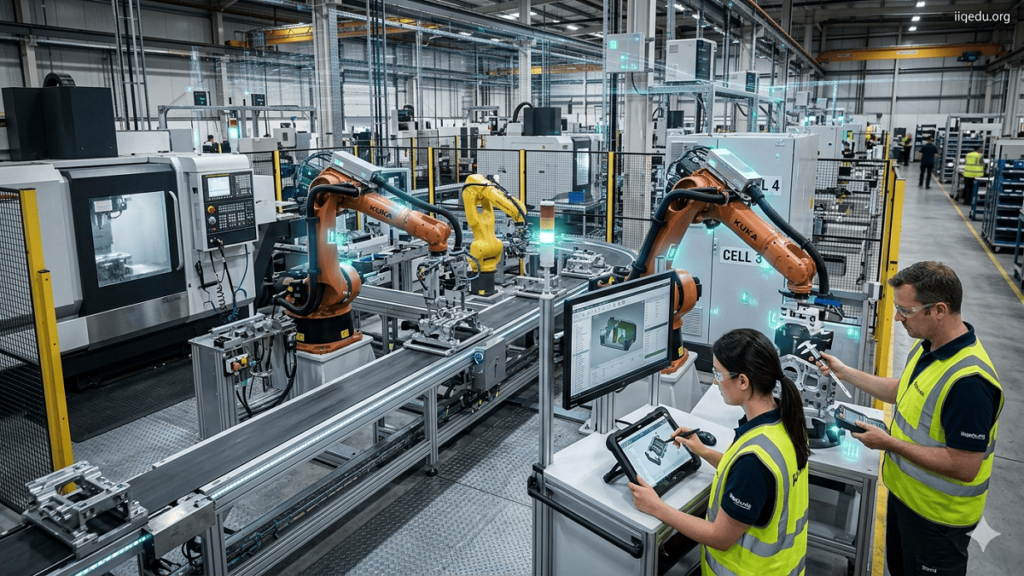
How is Industrial Internet of Things (IIoT) for QC required?
The Industrial Internet of Things (IIoT) for Quality Control (QC) is required through the integration of connected devices, real-time data collection, and advanced analytics to monitor and improve product quality continuously. It is implemented as a systematic, data-driven approach that connects machines, processes, and quality systems.
1. Deployment of Sensors and Smart Devices
IIoT begins with installing sensors and smart devices on machines and production lines.
Function:
- Capture real-time data such as temperature, pressure, vibration, and dimensions
- Monitor product and process conditions continuously
2. Connectivity and Data Transmission
Collected data is transmitted through industrial networks.
Technologies used:
- IoT protocols (MQTT, OPC-UA)
- Wireless and wired communication systems
Purpose:
- Enable seamless communication between machines and central systems
3. Data Storage and Processing (Cloud/Edge)
The collected data is stored and processed using modern computing platforms.
Approach:
- Edge computing: Processes data near the source for quick response
- Cloud computing: Stores large volumes of data for deeper analysis
4. Data Analytics and Artificial Intelligence
Advanced analytics tools analyze the collected data.
Capabilities:
- Detect anomalies and deviations from quality standards
- Identify patterns and trends
- Predict defects before they occur (predictive quality)
5. Real-Time Monitoring and Visualization
Data is presented through dashboards and monitoring systems.
Features:
- Live tracking of production and quality metrics
- Alerts and notifications for deviations
- Easy visualization for operators and managers
6. Automated Quality Control and Decision-Making
IIoT systems enable automation in quality processes.
Examples:
- Automatic rejection of defective products
- Adjustment of machine parameters in real time
- Integration with control systems for corrective actions
7. Integration with Enterprise Systems
IIoT is connected with key business systems to ensure end-to-end quality management.
Systems involved:
- Manufacturing Execution Systems (MES)
- Enterprise Resource Planning (ERP)
- Quality Management Systems (QMS)
8. Closed-Loop Feedback and Continuous Improvement
IIoT supports continuous improvement through feedback loops.
Process:
- Data from production and product usage is analyzed
- Insights are fed back into design and process optimization
- Quality improvements are implemented continuously
9. Data Governance and Security
Proper management of data is essential for reliable IIoT implementation.
Requirements:
- Data accuracy and validation
- Secure data transmission and storage
- Access control and compliance with regulations
Conclusion
IIoT for Quality Control is required through a combination of connected devices, real-time data flow, analytics, and system integration. It transforms traditional quality control into a proactive, automated, and intelligent process, ensuring consistent product quality and operational efficiency.
#Industrial Internet of Things (IIoT) for QC in Chennai
Case Study of Industrial Internet of Things (IIoT) for QC
1. Overview of the Case
A practical example of Industrial Internet of Things (IIoT) for Quality Control (QC) can be seen in the automotive manufacturing sector, particularly in companies like Toyota. Automotive production involves high precision, large volumes, and strict quality standards, making it ideal for IIoT-based quality control.
2. Problem Statement
Before adopting IIoT, automotive manufacturers faced several quality challenges:
- Defects detected only at the end of production
- High rework and scrap costs
- Limited visibility into machine performance
- Difficulty in identifying root causes of defects
These issues led to production delays, increased costs, and reduced customer satisfaction.
3. IIoT Implementation for QC
a. Sensor Deployment
- Sensors were installed on machines to monitor parameters such as temperature, torque, vibration, and alignment.
b. Real-Time Data Collection
- Data from production lines was continuously collected and transmitted to central systems.
c. Analytics and Monitoring
- Advanced analytics tools analyzed data to detect deviations and anomalies.
- Dashboards provided real-time visibility to operators and engineers.
d. Automated Quality Control
- Systems automatically flagged or rejected defective components.
- Machines were adjusted in real time to maintain quality standards.
e. Predictive Maintenance Integration
- Equipment health was monitored to prevent failures that could affect product quality.
4. Results and Impact on Quality
The implementation of IIoT led to significant improvements:
- Reduction in Defects: Early detection minimized defective products
- Lower Rework and Scrap: Improved process control reduced waste
- Faster Root Cause Analysis: Real-time data enabled quick identification of issues
- Improved Production Efficiency: Reduced downtime and smoother operations
- Enhanced Product Reliability: Consistent quality across production batches
5. Key Technologies Used
- IoT sensors and smart devices
- Industrial communication networks
- Cloud and edge computing platforms
- Data analytics and machine learning tools
- Real-time monitoring dashboards
6. Lessons Learned
- Real-Time Monitoring is Critical: Immediate visibility helps prevent defects
- Data Integration Improves Decisions: Combining machine and quality data enhances accuracy
- Automation Reduces Human Error: Automated inspection ensures consistency
- Predictive Approach is Effective: Preventing issues is more efficient than fixing them
7. Conclusion
This case study demonstrates that IIoT for Quality Control enables organizations to transition from reactive inspection to proactive and predictive quality management. By leveraging real-time data, automation, and analytics, manufacturers can achieve higher product quality, reduced costs, and improved operational efficiency.
8. References
- Toyota. Manufacturing and Quality Practices – https://www.toyota-global.com
- McKinsey & Company. The IIoT in Manufacturing – https://www.mckinsey.com
- IBM. IIoT for Quality Management – https://www.ibm.com
#Industrial Internet of Things (IIoT) for QC in Ahemadabad
White Paper of Industrial Internet of Things (IIoT) for QC
1. Abstract
The Industrial Internet of Things (IIoT) for Quality Control (QC) represents a transformative approach to ensuring product quality through real-time data collection, connectivity, and advanced analytics. By integrating sensors, machines, and digital platforms, IIoT enables organizations to move from reactive inspection to proactive and predictive quality management, improving efficiency, reducing defects, and enhancing overall product reliability.
2. Introduction
In modern manufacturing, increasing product complexity and global competition demand higher quality standards and faster production cycles. Traditional quality control methods, which rely heavily on manual inspection and isolated systems, are no longer sufficient.
IIoT introduces a connected ecosystem where machines, systems, and processes communicate seamlessly, enabling continuous monitoring and improvement of product quality.
3. Definition of IIoT for QC
IIoT for Quality Control refers to the use of interconnected industrial devices and data-driven technologies to monitor, analyze, and control quality in real time across manufacturing processes.
It combines:
- Smart sensors and devices
- Communication networks
- Cloud and edge computing
- Data analytics and artificial intelligence
4. Problem Statement
Organizations face several quality-related challenges:
- Delayed detection of defects
- High scrap and rework costs
- Lack of real-time visibility into production processes
- Inefficient manual inspection methods
- Difficulty in maintaining consistent quality across multiple locations
These challenges result in increased operational costs and reduced customer satisfaction.
5. IIoT Framework for Quality Control
a. Data Acquisition Layer
- Sensors capture real-time data from machines and products
- Includes parameters such as temperature, pressure, vibration, and dimensions
b. Connectivity Layer
- Enables communication using industrial protocols (MQTT, OPC-UA)
- Connects devices to centralized platforms
c. Data Processing Layer
- Edge computing for immediate analysis
- Cloud computing for large-scale storage and processing
d. Analytics and Intelligence Layer
- Machine learning models identify patterns and anomalies
- Predictive analytics prevents defects and failures
e. Application and Visualization Layer
- Dashboards and alerts provide actionable insights
- Supports decision-making and automated control
6. Role of IIoT in Quality Control
- Real-Time Monitoring
Continuous tracking of production processes ensures immediate detection of quality deviations. - Predictive Quality Management
Data analytics helps anticipate defects before they occur. - Automated Inspection
Reduces reliance on manual inspection and improves accuracy. - Traceability
Enables tracking of materials, components, and processes. - Continuous Improvement
Feedback loops enhance product design and manufacturing processes.
7. Implementation Approach
Step 1: Assessment and Planning
- Identify quality challenges and define objectives
- Evaluate existing systems and infrastructure
Step 2: Sensor Deployment
- Install IoT sensors on machines and production lines
- Enable data collection from critical points
Step 3: System Integration
- Connect IIoT systems with MES, ERP, and QMS
- Ensure seamless data flow across platforms
Step 4: Data Management
- Establish data governance and standardization
- Ensure data accuracy and security
Step 5: Analytics Deployment
- Implement AI and machine learning models
- Develop dashboards for monitoring and control
Step 6: Continuous Optimization
- Use insights to improve processes and product quality
- Implement feedback loops for ongoing improvement
8. Key Benefits
- Improved Product Quality: Continuous monitoring ensures consistency
- Reduced Costs: Lower scrap, rework, and warranty expenses
- Enhanced Efficiency: Faster detection and resolution of issues
- Better Decision-Making: Real-time insights enable informed actions
- Regulatory Compliance: Improved documentation and traceability
9. Industry Applications
- Automotive: Real-time monitoring of assembly line quality
- Electronics: Detection of micro-level defects in components
- Pharmaceuticals: Ensuring batch quality and compliance
- Food and Beverage: Monitoring safety and storage conditions
- Industrial Manufacturing: Improving machine performance and product reliability
10. Challenges and Considerations
- Integration with legacy systems
- Data security and cybersecurity risks
- High initial investment
- Managing large volumes of data
- Skill gaps in workforce
11. Future Trends
- Increased adoption of AI-driven quality analytics
- Integration with Digital Twin technology
- Growth of edge computing for faster decision-making
- Expansion of smart factories and Industry 4.0 ecosystems
12. Conclusion
The Industrial Internet of Things (IIoT) for Quality Control is a critical enabler of modern manufacturing excellence. By leveraging real-time data, connectivity, and analytics, organizations can achieve proactive quality management, operational efficiency, and continuous improvement.
As industries continue to evolve, IIoT will play a central role in ensuring high-quality, reliable, and competitive products.
13. References (White Papers & Sources)
- IBM. Industrial IoT for Quality Management
https://www.ibm.com - McKinsey & Company. The Internet of Things in Manufacturing
https://www.mckinsey.com - Siemens. IIoT and Smart Manufacturing
https://www.siemens.com - PTC. Industrial IoT Solutions for Quality
https://www.ptc.com
#Industrial Internet of Things (IIoT) for QC in Hyderabad
Industry Application of Industrial Internet of Things (IIoT) for QC
The Industrial Internet of Things (IIoT) for Quality Control (QC) is widely applied across industries that require high precision, consistency, and regulatory compliance. By enabling real-time monitoring and data-driven decision-making, IIoT enhances product quality and operational efficiency.
1. Automotive Industry
Companies such as Toyota and Tesla use IIoT to manage large-scale and complex production systems.
Applications:
- Monitoring assembly line operations in real time
- Ensuring precise component fitting and alignment
- Tracking quality of parts throughout production
Impact on Quality:
- Reduced defects and recalls
- Improved vehicle safety and reliability
- Faster production with consistent quality
2. Electronics and Semiconductor Industry
Organizations like Intel and Samsung Electronics apply IIoT for precision manufacturing.
Applications:
- Detecting micro-level defects in chips and circuits
- Monitoring environmental conditions (clean rooms)
- Automating inspection processes
Impact on Quality:
- Higher accuracy and product consistency
- Reduced failure rates
- Improved yield in production
3. Pharmaceutical Industry
Companies such as Pfizer use IIoT to ensure product safety and compliance.
Applications:
- Monitoring batch production processes
- Tracking temperature and humidity conditions
- Ensuring regulatory compliance and documentation
Impact on Quality:
- Improved drug safety and effectiveness
- Reduced risk of contamination
- Faster response to quality deviations
4. Food and Beverage Industry
IIoT is critical in maintaining quality and safety in food production.
Applications:
- Monitoring storage and processing conditions
- Ensuring hygiene and safety standards
- Tracking supply chain conditions
Impact on Quality:
- Improved product safety and freshness
- Compliance with food safety regulations
- Reduced spoilage and waste
5. Aerospace and Defense Industry
Companies like Boeing and Airbus rely on IIoT for high-precision manufacturing.
Applications:
- Monitoring critical component production
- Ensuring traceability of parts and materials
- Predicting equipment failures
Impact on Quality:
- Enhanced safety and reliability
- Faster defect detection and resolution
- Improved compliance with strict standards
6. Industrial Manufacturing
Organizations such as General Electric implement IIoT in heavy machinery and equipment production.
Applications:
- Monitoring machine performance and production processes
- Implementing predictive maintenance
- Automating quality inspections
Impact on Quality:
- Reduced downtime and defects
- Improved production efficiency
- Consistent product quality
7. Energy and Utilities
Companies like Siemens Energy use IIoT for infrastructure and equipment quality.
Applications:
- Monitoring performance of power generation equipment
- Ensuring reliability of energy systems
- Predicting failures in critical assets
Impact on Quality:
- Increased system reliability
- Reduced operational risks
- Improved lifecycle management
Conclusion
The Industrial Internet of Things (IIoT) for Quality Control is applied across diverse industries where quality, safety, and efficiency are critical. Its ability to provide real-time insights, predictive analytics, and automation enables organizations to achieve higher product quality, reduced costs, and improved operational performance.
References
- IBM. Industrial IoT for Quality Management – https://www.ibm.com
- McKinsey & Company. The Internet of Things in Manufacturing – https://www.mckinsey.com
- Siemens. IIoT and Smart Manufacturing – https://www.siemens.com
#Industrial Internet of Things (IIoT) for QC in Mumbai
Ask FAQs
What is IIoT for Quality Control (QC)?
IIoT for Quality Control refers to the use of connected sensors, machines, and data analytics to monitor and improve product quality in real time during manufacturing processes.
Why is IIoT important for quality control?
IIoT is important because it enables real-time monitoring, early defect detection, and predictive analysis, helping organizations reduce errors, improve efficiency, and maintain consistent product quality.
Which industries use IIoT for QC?
Industries such as automotive, electronics, pharmaceuticals, food and beverage, aerospace, and industrial manufacturing widely use IIoT to ensure high standards of quality and compliance.
What technologies are used in IIoT for QC?
Key technologies include IoT sensors, cloud and edge computing, data analytics, artificial intelligence, and industrial communication networks, which work together to enable smart quality management.
What are the main benefits of IIoT in quality control?
The main benefits include improved product quality, reduced defects and waste, faster decision-making, cost savings, and enhanced traceability and compliance.
Source: 5 Minutes Engineering
Table of Contents
Disclaimer
This content is provided for educational and informational purposes only. The information on IIoT for Quality Control is based on general industry practices and may vary by organization. For specific implementation or technical guidance, consult industry professionals or official sources.