Digital Thread for Product Quality
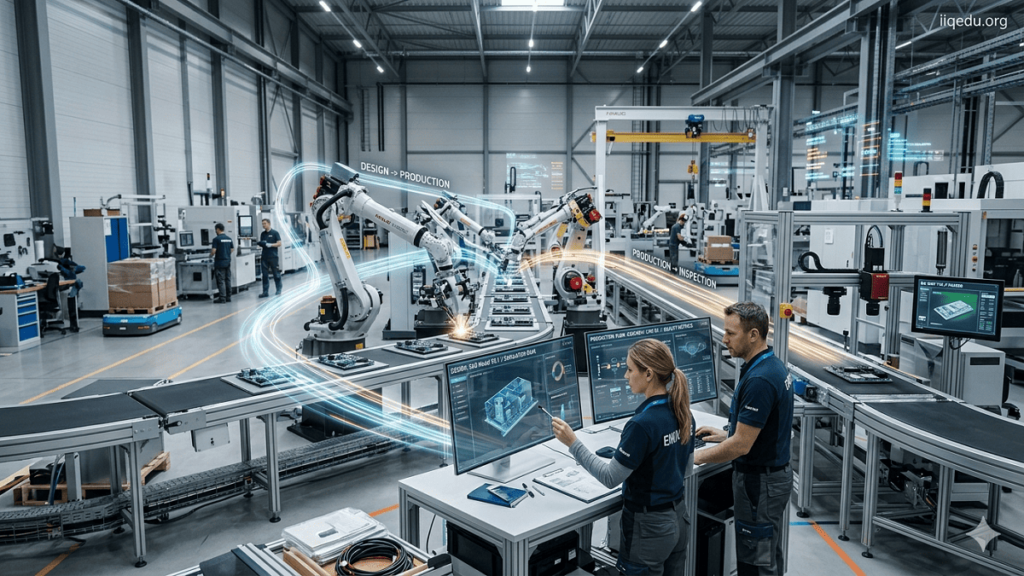
The concept of the Digital Thread is increasingly critical in modern manufacturing and product development. It refers to a connected data framework that integrates information across the entire product lifecycle, from design and engineering through manufacturing, supply chain, usage, and maintenance. By creating a seamless flow of information, organizations can achieve improved product quality, traceability, and operational efficiency.
1. Understanding Digital Thread
The Digital Thread for Product Quality is not a single technology but a framework combining digital models, data analytics, and process integration. It ensures that every stage of the product lifecycle has access to accurate and up-to-date information. Key components include:
- Product Design Data: CAD models, engineering specifications, simulation results.
- Manufacturing Execution Data: Shop floor operations, process parameters, quality inspection data.
- Operational and Maintenance Data: Field performance, sensor data, maintenance logs.
- Supply Chain Data: Supplier information, component traceability, inventory levels.
By connecting these datasets, a Digital Thread for Product Quality provides a “single source of truth” that enables cross-functional decision-making, reducing errors and miscommunication.
2. Role in Product Quality
Product quality is highly dependent on the ability to monitor, control, and optimize the product throughout its lifecycle. The Digital Thread for Product Quality enables this in several ways:
- Design for Quality (DfQ): Integration of design and manufacturing feedback ensures designs are optimized for manufacturability and reliability before production begins.
- Traceability: Full visibility into the materials, processes, and components used in a product allows organizations to trace defects to their source quickly.
- Predictive Quality Analytics: By leveraging historical and real-time data, manufacturers can predict potential quality issues and implement corrective actions proactively.
- Continuous Improvement: Data collected from field performance and maintenance can feed back into design and manufacturing processes, creating a closed-loop system for continuous quality enhancement.
3. Benefits
Implementing a Digital Thread for Product Quality for product quality brings tangible benefits:
- Reduced Defects and Rework: Real-time data allows immediate detection of deviations from quality standards.
- Faster Root Cause Analysis: Traceability accelerates identification of failure sources.
- Improved Regulatory Compliance: Comprehensive data collection ensures products meet industry standards.
- Enhanced Collaboration: Engineers, manufacturers, and suppliers can work with consistent data, reducing misinterpretation and errors.
4. Technologies Enabling Digital Thread
The Digital Thread for Product Quality relies on a combination of modern technologies:
- PLM (Product Lifecycle Management) Systems: Centralize design, engineering, and manufacturing data.
- IoT Sensors and Digital Thread for Product Quality Twins: Enable real-time monitoring of product performance and process parameters.
- Advanced Analytics and AI: Identify patterns, predict failures, and recommend quality improvements.
- Cloud and Data Integration Platforms: Facilitate seamless sharing of data across global operations.
5. Implementation Considerations
Successful adoption of a Digital Thread requires careful planning:
- Data Governance: Ensure consistency, accuracy, and accessibility of data across systems.
- Process Standardization: Harmonize engineering, manufacturing, and inspection processes.
- Integration with Existing Systems: Ensure PLM, ERP, MES, and quality management systems communicate effectively.
- Change Management: Train employees to utilize digital tools effectively and align them with quality objectives.
6. Industry Applications
- Aerospace and Defense: Traceability of parts and maintenance records is critical for safety and compliance.
- Automotive: Continuous feedback from connected vehicles informs design improvements and recalls.
- Medical Devices: Digital Thread ensures regulatory compliance and supports quality management in highly regulated environments.
7. References and Further Reading
- Siemens. Digital Thread in Manufacturing. Available at: https://www.plm.automation.siemens.com/global/en/our-story/glossary/digital-thread/65426
- PTC. Digital Thread and Product Lifecycle Management. Available at: https://www.ptc.com/en/technologies/digital-thread
- IndustryWeek. How the Digital Thread Improves Product Quality. Available at: https://www.industryweek.com/technology-and-iiot/article/21128416/how-the-digital-thread-improves-product-quality
#Digital Thread for Product Quality in India
What is Digital Thread for Product Quality?
A Digital Thread for Product Quality is a comprehensive, connected flow of data across the entire product lifecycle that enables organizations to monitor, manage, and improve product quality at every stage—from initial design to end-of-life. It is not a single tool, but a framework that integrates data from design, engineering, manufacturing, supply chain, and field operations, ensuring that every decision is based on accurate, real-time information.
Key Components
- Design and Engineering Data: Includes CAD models, engineering specifications, and simulation results. This ensures that designs meet quality and manufacturability standards from the start.
- Manufacturing Data: Captures shop floor operations, production parameters, and inspection results to monitor and control quality during production.
- Field Performance Data: Data from sensors, maintenance logs, and customer feedback is collected to understand how products perform in real-world conditions.
- Supply Chain Data: Provides traceability of raw materials and components, enabling quick identification of issues caused by suppliers.
How It Improves Product Quality
- Traceability: Each part and process step can be traced back to its origin, enabling fast root-cause analysis for defects.
- Predictive Quality: Historical and real-time data are analyzed to predict potential failures before they occur.
- Design Feedback Loop: Field and manufacturing insights feed back into design improvements, creating a continuous quality improvement cycle.
- Collaboration Across Teams: Engineers, manufacturers, and suppliers have access to consistent, up-to-date information, reducing miscommunication and errors.
Benefits
- Fewer defects and rework
- Faster identification and resolution of quality issues
- Regulatory compliance through comprehensive data records
- Continuous improvement in product design and manufacturing
Enabling Technologies
- PLM (Product Lifecycle Management) systems
- IoT and Digital Twins for real-time monitoring
- Data Analytics and AI for predictive insights
- Cloud Platforms for integrating distributed data
Industry Applications
- Aerospace: Ensures safety and compliance through traceable parts and maintenance records.
- Automotive: Uses connected vehicle data to improve design and prevent recalls.
- Medical Devices: Maintains strict quality control and regulatory compliance.
References
- Siemens. Digital Thread in Manufacturing. Link
- PTC. Digital Thread and Product Lifecycle Management. Link
- IndustryWeek. How the Digital Thread Improves Product Quality. Link
#Digital Thread for Product Quality in Delhi
Who is Digital Thread for Product Quality required?
A Digital Thread for Product Quality is required by any organization that seeks high product reliability, compliance, and efficiency across the product lifecycle. While the concept originates from advanced manufacturing, it is applicable wherever complex products, regulated industries, or high customer expectations are involved.
1. Manufacturers of Complex Products
Industries that produce intricate products with many components, such as aerospace, automotive, defense, and electronics, require a Digital Thread to:
- Track every part and process step.
- Ensure consistent quality across multiple production sites.
- Quickly identify defects and implement corrective actions.
2. Regulated Industries
Sectors like medical devices, pharmaceuticals, and aerospace face strict regulatory standards (e.g., FDA, ISO 9001, AS9100). A Digital Thread ensures:
- Full traceability of materials, components, and processes.
- Evidence of compliance for audits and certifications.
- Rapid recall management in case of product defects.
3. Organizations Pursuing Continuous Improvement
Companies committed to lean manufacturing, Six Sigma, or quality excellence programs require real-time and historical data integration to:
- Analyze root causes of defects.
- Feed field performance and manufacturing insights back into design.
- Optimize processes for reduced waste and higher product reliability.
4. Global or Multi-Site Enterprises
Organizations with distributed design, manufacturing, and supply chain networks need a Digital Thread to:
- Maintain consistent product quality across locations.
- Share accurate product and process information in real-time.
- Coordinate design changes, supplier updates, and maintenance activities efficiently.
5. Product Development and Engineering Teams
Design and R&D teams benefit from the Digital Thread by:
- Incorporating manufacturing and field feedback during early design stages.
- Reducing redesign cycles and minimizing errors.
- Aligning engineering decisions with operational realities.
6. Quality and Compliance Managers
Quality assurance teams need a Digital Thread to:
- Monitor product performance across its lifecycle.
- Implement predictive quality management.
- Meet regulatory and industry compliance standards effectively.
7. Key Benefits Across Stakeholders
- Engineers: Better design decisions and fewer revisions.
- Manufacturing Teams: Real-time quality monitoring and process optimization.
- Supply Chain Managers: Visibility into component quality and traceability.
- Executives: Data-driven insights into product performance, risk, and cost management.
References for Further Reading
- Siemens. Digital Thread in Manufacturing. Link
- PTC. Digital Thread and Product Lifecycle Management. Link
- IndustryWeek. How the Digital Thread Improves Product Quality. Link
#Digital Thread for Product Quality in Maharashtra
When is Digital Thread for Product Quality required?
A Digital Thread for Product Quality is required when organizations need end-to-end visibility, traceability, and control over product data and processes throughout the lifecycle. It becomes especially important in situations where maintaining consistent quality is complex, high-risk, or critical to business success.
1. During Complex Product Development
When products involve multiple components, intricate designs, and cross-functional teams, managing quality through disconnected systems becomes inefficient and error-prone. A Digital Thread is required to:
- Ensure alignment between design, engineering, and manufacturing.
- Detect design flaws early using integrated data and simulations.
- Reduce costly redesigns and late-stage quality issues.
2. When Operating in Regulated Environments
Industries such as aerospace, automotive, and medical devices require strict compliance with standards and regulations. A Digital Thread becomes necessary when:
- Full traceability of materials, processes, and decisions is mandatory.
- Audit readiness and documentation are critical.
- Rapid identification and containment of quality issues or recalls is needed.
3. When Quality Issues Are Frequent or Costly
Organizations facing recurring defects, rework, or customer complaints require a Digital Thread to:
- Identify root causes quickly using connected lifecycle data.
- Implement corrective and preventive actions efficiently.
- Reduce waste, scrap, and warranty costs.
4. During Digital Transformation Initiatives
When companies adopt Industry 4.0 technologies such as IoT, automation, and smart manufacturing, a Digital Thread is essential to:
- Integrate data from machines, systems, and processes.
- Enable real-time quality monitoring and analytics.
- Support digital twins and predictive quality models.
5. When Managing Global or Distributed Operations
Organizations with multiple plants, suppliers, or engineering centers need a Digital Thread when:
- Consistent product quality must be maintained across locations.
- Real-time collaboration and data sharing are required.
- Changes in design or process must be synchronized globally.
6. When Lifecycle Feedback Is Critical
A Digital Thread is required when organizations want to close the loop between product usage and design, such as:
- Collecting field performance and customer feedback data.
- Feeding insights back into design and manufacturing improvements.
- Enhancing product reliability and customer satisfaction over time.
7. When Traceability and Risk Management Are Priorities
In scenarios where product failure can lead to safety risks, financial loss, or reputational damage, a Digital Thread ensures:
- Complete visibility into every component and process.
- Faster response to failures or recalls.
- Better risk assessment and mitigation strategies.
Conclusion
A Digital Thread for Product Quality is required whenever an organization needs accurate, connected, and real-time information across the product lifecycle to ensure consistent quality and continuous improvement. It is particularly critical in complex, regulated, and data-intensive environments, where traditional disconnected systems cannot provide the necessary level of control and insight.
References
- Siemens. Digital Thread in Manufacturing. https://www.plm.automation.siemens.com/global/en/our-story/glossary/digital-thread/65426
- PTC. Digital Thread and Product Lifecycle Management. https://www.ptc.com/en/technologies/digital-thread
- IndustryWeek. How the Digital Thread Improves Product Quality. https://www.industryweek.com/technology-and-iiot/article/21128416/how-the-digital-thread-improves-product-quality
#Digital Thread for Product Quality in Kolkata
Where is Digital Thread for Product Quality required?
A Digital Thread for Product Quality is required across the entire product lifecycle and value chain, wherever data is generated, analyzed, or used to make quality-related decisions. It ensures that all stages and stakeholders are connected through a continuous, reliable flow of information.
1. Product Design and Engineering
The Digital Thread is essential in the early stages of product development where quality is first defined. It is used to:
- Integrate design specifications, simulations, and validation data.
- Ensure designs meet performance, safety, and manufacturability requirements.
- Capture design decisions and changes for future traceability.
This stage is critical because many quality issues originate from design flaws, and early visibility helps prevent downstream problems.
2. Manufacturing and Production
On the shop floor, the Digital Thread connects machines, operators, and quality systems. It is required to:
- Monitor production processes in real time.
- Capture process parameters, inspection results, and deviations.
- Ensure products are manufactured according to design specifications.
It helps maintain consistent quality across batches and reduces defects and rework.
3. Quality Assurance and Testing
In quality control environments, the Digital Thread supports:
- Inspection data collection and analysis.
- Non-conformance tracking and corrective actions.
- Validation and verification processes.
This ensures that quality standards are consistently met before products reach customers.
4. Supply Chain and Supplier Management
The Digital Thread extends beyond internal operations to suppliers and partners. It is required to:
- Track raw materials and components from suppliers.
- Ensure supplier quality compliance and performance monitoring.
- Maintain traceability of parts across the supply chain.
This is especially important in industries where component failure can impact the entire product.
5. Distribution and Logistics
During distribution, maintaining product quality requires visibility into handling and transportation conditions. The Digital Thread helps:
- Track environmental conditions (e.g., temperature, humidity).
- Ensure proper handling and storage.
- Maintain traceability throughout delivery.
6. Product Usage and Field Operations
Once the product is in use, the Digital Thread continues to play a role by:
- Collecting real-time performance data through sensors and connected devices.
- Monitoring product reliability and usage patterns.
- Identifying potential failures or quality issues in real-world conditions.
7. Maintenance, Service, and End-of-Life
In the later stages of the lifecycle, the Digital Thread is required for:
- Tracking maintenance history and service records.
- Supporting predictive maintenance and failure analysis.
- Managing product recalls or end-of-life processes.
8. Across Enterprise Systems
The Digital Thread operates across integrated enterprise systems such as:
- Product Lifecycle Management (PLM)
- Manufacturing Execution Systems (MES)
- Enterprise Resource Planning (ERP)
- Quality Management Systems (QMS)
It ensures seamless data flow between these systems, eliminating silos and enabling informed decision-making.
Conclusion
A Digital Thread for Product Quality is required everywhere data influences product quality, from initial design to final disposal. Its true value lies in connecting all these stages into a unified system, enabling end-to-end visibility, traceability, and continuous improvement.
References
- Siemens. Digital Thread in Manufacturing. https://www.plm.automation.siemens.com/global/en/our-story/glossary/digital-thread/65426
- PTC. Digital Thread and Product Lifecycle Management. https://www.ptc.com/en/technologies/digital-thread
- IndustryWeek. How the Digital Thread Improves Product Quality. https://www.industryweek.com/technology-and-iiot/article/21128416/how-the-digital-thread-improves-product-quality
#Digital Thread for Product Quality in Singapore
How is Digital Thread for Product Quality required?
A Digital Thread for Product Quality is required through the systematic integration, connection, and continuous flow of data across all stages of the product lifecycle. It is implemented by combining technologies, processes, and organizational practices that ensure quality-related information is captured, shared, and utilized effectively.
1. Integration of Lifecycle Data
The Digital Thread is established by connecting data from different lifecycle stages, including:
- Design and engineering systems (CAD, simulation tools)
- Manufacturing systems (MES, production equipment)
- Quality systems (inspection, testing, non-conformance records)
- Field data sources (IoT sensors, customer feedback)
This integration eliminates data silos and creates a unified, consistent data environment for quality management.
2. Use of a Centralized Data Backbone
A Digital Thread relies on a centralized or federated data backbone, often enabled by:
- Product Lifecycle Management (PLM) systems
- Enterprise Resource Planning (ERP) systems
- Cloud-based data platforms
These systems act as a single source of truth, ensuring that all stakeholders access accurate and up-to-date quality information.
3. Real-Time Data Collection and Monitoring
To maintain product quality, data must be captured continuously from:
- Machines and production lines (process parameters, performance metrics)
- Inspection systems (measurements, defect data)
- Sensors embedded in products (operational conditions)
Real-time monitoring allows immediate detection of deviations and faster corrective actions.
4. Advanced Analytics and Predictive Quality
The Digital Thread incorporates analytics tools to:
- Identify patterns and trends in quality data
- Predict potential defects or failures before they occur
- Support data-driven decision-making
Techniques such as machine learning and statistical analysis enhance the ability to prevent quality issues proactively.
5. Closed-Loop Feedback Mechanism
A key requirement is the establishment of a closed-loop system, where:
- Manufacturing and field data are fed back into design and engineering
- Lessons learned from defects or failures are used to improve future products
- Continuous improvement processes are supported
This ensures that quality is continuously enhanced rather than only inspected at the end.
6. Standardization of Processes and Data
For effective implementation, organizations must:
- Define standardized data formats and quality metrics
- Align processes across departments and locations
- Ensure consistent documentation and reporting
Standardization enables seamless communication and reduces errors caused by inconsistencies.
7. Interoperability Between Systems
The Digital Thread requires that different systems and tools communicate effectively through:
- APIs and data integration platforms
- Industry standards and protocols
- Middleware solutions
This interoperability ensures smooth data exchange across the enterprise.
8. Strong Data Governance and Security
To maintain reliability and trust in the Digital Thread, organizations must implement:
- Data validation and accuracy controls
- Access management and cybersecurity measures
- Compliance with data protection regulations
9. Organizational Alignment and Change Management
Successful implementation also depends on:
- Training employees to use digital tools and interpret data
- Encouraging collaboration between departments
- Aligning business objectives with quality goals
Conclusion
A Digital Thread for Product Quality is required through a combination of integrated systems, real-time data capture, advanced analytics, and closed-loop feedback processes. It transforms quality management from a reactive process into a proactive, data-driven strategy, ensuring consistent product excellence across the lifecycle.
References
- Siemens. Digital Thread in Manufacturing. https://www.plm.automation.siemens.com/global/en/our-story/glossary/digital-thread/65426
- PTC. Digital Thread and Product Lifecycle Management. https://www.ptc.com/en/technologies/digital-thread
- IndustryWeek. How the Digital Thread Improves Product Quality. https://www.industryweek.com/technology-and-iiot/article/21128416/how-the-digital-thread-improves-product-quality
#Digital Thread for Product Quality in Ahemdabad
Case Study of Digital Thread for Product Quality
1. Overview of the Case
A well-known example of implementing a Digital Thread for Product Quality can be seen in the aerospace manufacturing industry, particularly in companies like Boeing. Aerospace products are highly complex, safety-critical, and require strict regulatory compliance, making them ideal for Digital Thread adoption.
2. Problem Statement
Before implementing a Digital Thread, aerospace manufacturers faced several quality-related challenges:
- Disconnected data across design, manufacturing, and maintenance systems
- Limited traceability of components and materials
- Delays in identifying root causes of defects
- High costs associated with rework, recalls, and compliance issues
These issues increased risks in production and affected overall product reliability.
3. Implementation of Digital Thread
To address these challenges, companies like Boeing implemented a Digital Thread by integrating data across the product lifecycle:
a. Design Integration
- All design data, including CAD models and simulation results, were stored in centralized systems.
- Engineers could validate product quality early through digital simulations.
b. Manufacturing Connectivity
- Shop floor systems were connected to capture real-time production data.
- Sensors and automated systems monitored process parameters and quality metrics.
c. Supply Chain Traceability
- Each component was digitally tracked from suppliers to final assembly.
- Any defect could be traced back to a specific supplier or batch.
d. Field Data Integration
- Aircraft in operation generated performance and maintenance data.
- This data was fed back into engineering systems for continuous improvement.
4. Results and Impact on Product Quality
The implementation of the Digital Thread resulted in significant improvements:
- Enhanced Traceability: Every component and process step could be tracked, improving accountability and compliance.
- Reduced Defects: Early detection of issues in design and manufacturing reduced defect rates.
- Faster Root Cause Analysis: Integrated data allowed engineers to quickly identify and resolve quality issues.
- Improved Regulatory Compliance: Complete digital records simplified audits and certification processes.
- Continuous Improvement: Feedback from real-world operations improved future product designs.
5. Key Technologies Used
- Product Lifecycle Management (PLM) systems
- Manufacturing Execution Systems (MES)
- IoT sensors and connected devices
- Advanced analytics and predictive maintenance tools
- Cloud-based data integration platforms
6. Lessons Learned
From this case study, several important lessons emerge:
- Data Integration is Critical: Quality improvements depend on connecting data across all lifecycle stages.
- Early Quality Focus: Addressing quality during the design phase reduces downstream issues.
- Closed-Loop Feedback: Continuous feedback from manufacturing and field operations is essential.
- Cross-Functional Collaboration: Successful implementation requires coordination across engineering, manufacturing, and quality teams.
7. Conclusion
This case study demonstrates that a Digital Thread for Product Quality enables organizations to move from reactive quality control to proactive quality management. By ensuring seamless data flow and lifecycle integration, companies can achieve higher reliability, lower costs, and improved customer satisfaction, especially in complex and regulated industries.
References
- Siemens. Digital Thread in Manufacturing. https://www.plm.automation.siemens.com/global/en/our-story/glossary/digital-thread/65426
- PTC. Digital Thread and Product Lifecycle Management. https://www.ptc.com/en/technologies/digital-thread
- IndustryWeek. How the Digital Thread Improves Product Quality. https://www.industryweek.com/technology-and-iiot/article/21128416/how-the-digital-thread-improves-product-quality
#Digital Thread for Product Quality in Chennai

White Paper of Digital Thread for Product Quality
1. Abstract
The Digital Thread for Product Quality is a data-driven framework that connects information across the entire product lifecycle, enabling organizations to ensure consistent quality, traceability, and continuous improvement. By integrating design, manufacturing, supply chain, and field data into a unified system, the Digital Thread transforms traditional quality management from reactive inspection to proactive, predictive control.
2. Introduction
Modern products are increasingly complex, involving multiple systems, global supply chains, and strict regulatory requirements. Traditional quality management approaches often rely on disconnected systems and manual processes, leading to inefficiencies and delayed issue resolution.
The Digital Thread addresses these challenges by creating a continuous, connected flow of product data, ensuring that accurate information is available at every stage of the lifecycle.
3. Definition of Digital Thread for Product Quality
A Digital Thread is defined as a data-driven architecture that links all product-related information across the lifecycle, forming a “single source of truth.”
In the context of product quality, it enables:
- End-to-end traceability of components and processes
- Real-time monitoring and analysis of quality data
- Closed-loop feedback between design, manufacturing, and field operations
4. Problem Statement
Organizations face several quality-related challenges:
- Data silos: Disconnected systems across departments hinder visibility
- Limited traceability: Difficulty tracking defects to their root cause
- Delayed decision-making: Lack of real-time insights
- Increased product complexity: Integration of hardware, software, and digital systems
These challenges reduce product reliability and increase operational costs.
5. Digital Thread Framework for Product Quality
a. Data Integration Layer
- Connects PLM, ERP, MES, and QMS systems
- Ensures seamless data flow across lifecycle stages
b. Data Management and Governance
- Maintains data accuracy, consistency, and security
- Establishes standardized data models
c. Analytics and Intelligence Layer
- Applies AI and machine learning for predictive quality
- Identifies trends, anomalies, and potential failures
d. Feedback and Closed-Loop System
- Feeds manufacturing and field data back into design
- Enables continuous improvement and innovation
6. Role of Digital Thread in Product Quality
- Traceability and Transparency
Enables tracking of materials, processes, and components across the lifecycle. - Predictive Quality Management
Uses analytics to anticipate defects before they occur. - Root Cause Analysis
Helps identify the origin of defects quickly using integrated data. - Continuous Improvement
Supports iterative enhancements through feedback loops. - Regulatory Compliance
Ensures complete documentation and audit readiness.
7. Implementation Approach
Step 1: Assessment and Strategy
- Identify gaps in current quality processes
- Define objectives for Digital Thread implementation
Step 2: System Integration
- Connect enterprise systems (PLM, MES, ERP, QMS)
- Enable interoperability using APIs and data platforms
Step 3: Data Standardization
- Define consistent formats and quality metrics
- Establish governance policies
Step 4: Technology Deployment
- Implement IoT sensors for real-time data collection
- Use cloud platforms for scalability
Step 5: Analytics and Optimization
- Apply predictive analytics and AI models
- Monitor KPIs and continuously improve processes
8. Key Benefits
- Improved Product Quality: Early detection and prevention of defects
- Reduced Costs: Lower rework, scrap, and warranty expenses
- Faster Time-to-Market: Streamlined product development processes
- Enhanced Collaboration: Unified data across teams
- Better Decision-Making: Real-time insights for stakeholders
Digital threads enable organizations to improve quality and efficiency by eliminating data silos and enabling seamless lifecycle connectivity.
9. Industry Applications
- Aerospace: Managing non-conformities and ensuring safety compliance
- Automotive: Enhancing vehicle quality through connected data
- Electronics: Reducing design errors and integration issues through synchronized workflows
- Medical Devices: Ensuring regulatory compliance and product reliability
10. Challenges and Considerations
- Integration of legacy systems
- Data security and governance
- High initial investment
- Organizational resistance to change
- Lack of standardization across platforms
11. Future Trends
- Integration with Digital Twin technology for real-time simulation
- Increased use of AI and machine learning for predictive quality
- Adoption of cloud-based and platform-driven ecosystems
- Expansion into sustainability and lifecycle optimization
12. Conclusion
The Digital Thread for Product Quality represents a fundamental shift in how organizations manage and improve product quality. By connecting data across the entire lifecycle, it enables proactive quality management, enhanced traceability, and continuous improvement.
As industries move toward Industry 4.0 and digital transformation, adopting a Digital Thread is no longer optional but a strategic necessity for maintaining competitiveness and delivering high-quality products.
13. References (White Papers & Sources)
- LTTS. Digital Thread: An Approach to Value Realization
https://www.ltts.com/whitepaper/digital-thread - Infosys. Digital Thread for Non-Conformities Management
https://www.infosys.com/engineering-services/insights/documents/digital-thread-non-conformities.pdf - TCS. Leveraging Digital Threads to Unlock Product Data Value
https://www.tcs.com/content/tcs/global/en/what-we-do/services/iot-digital-engineering/white-paper/digital-threads-product-data-value - Siemens. Digital Thread in Aerospace and Defense
https://resources.sw.siemens.com/sk-SK/white-paper-digital-thread/ - MachineMetrics. Weaving the Manufacturing Digital Thread
https://www.machinemetrics.com/weaving-the-manufacturing-digital-thread
#Digital Thread for Product Quality in Hyderabad
Industry Application of Digital Thread for Product Quality
The Digital Thread for Product Quality is widely applied across industries where product complexity, safety, compliance, and performance are critical. By enabling seamless data flow across the lifecycle, it helps organizations ensure consistent quality, reduce defects, and improve decision-making.
1. Aerospace and Defense Industry
Companies such as Boeing and Airbus use Digital Thread extensively due to the high safety and regulatory requirements.
Applications:
- End-to-end traceability of aircraft components
- Monitoring manufacturing processes for precision and compliance
- Integration of maintenance and operational data for continuous improvement
Impact on Quality:
- Reduced risk of component failure
- Faster root cause analysis of defects
- Improved compliance with aviation standards
2. Automotive Industry
Automotive manufacturers like Tesla and Toyota leverage Digital Thread to manage complex vehicle systems.
Applications:
- Integration of design, simulation, and production data
- Real-time monitoring of assembly lines
- Feedback from connected vehicles for quality improvement
Impact on Quality:
- Reduced recalls and warranty costs
- Improved vehicle reliability and safety
- Faster product development cycles
3. Medical Devices and Healthcare
Organizations such as Medtronic apply Digital Thread to meet strict regulatory standards.
Applications:
- Traceability of components and materials
- Documentation for regulatory compliance (FDA, ISO standards)
- Monitoring device performance in real-world usage
Impact on Quality:
- Enhanced patient safety
- Faster regulatory approvals
- Improved product reliability
4. Electronics and Semiconductor Industry
Technology companies like Intel and Samsung Electronics use Digital Thread to handle complex product architectures.
Applications:
- Synchronization of PCB design, manufacturing, and testing
- Real-time defect detection during production
- Lifecycle management of electronic components
Impact on Quality:
- Reduced design errors and defects
- Higher product consistency
- Faster innovation cycles
5. Industrial Manufacturing
Manufacturers such as General Electric implement Digital Thread in heavy machinery and equipment production.
Applications:
- Monitoring machine performance and production processes
- Predictive maintenance using sensor data
- Integration of quality inspection systems
Impact on Quality:
- Reduced downtime and defects
- Improved equipment reliability
- Enhanced production efficiency
6. Pharmaceutical Industry
Pharmaceutical companies like Pfizer use Digital Thread to ensure product safety and compliance.
Applications:
- Tracking raw materials and production batches
- Ensuring compliance with regulatory standards
- Monitoring environmental conditions during production and storage
Impact on Quality:
- Improved drug safety and efficacy
- Reduced risk of contamination
- Faster recall management
7. Energy and Utilities
Organizations such as Siemens Energy apply Digital Thread in power generation and infrastructure systems.
Applications:
- Monitoring equipment performance in real time
- Managing lifecycle data of critical assets
- Predictive maintenance and failure prevention
Impact on Quality:
- Increased reliability of energy systems
- Reduced operational risks
- Improved asset lifecycle management
Conclusion
The Digital Thread for Product Quality is applicable across multiple industries, particularly those dealing with complex systems, strict regulations, and high reliability requirements. Its ability to connect data across the lifecycle enables organizations to move from reactive quality control to proactive and predictive quality management, resulting in improved product performance, reduced costs, and enhanced customer satisfaction.
References
- Siemens. Digital Thread in Manufacturing
https://www.plm.automation.siemens.com/global/en/our-story/glossary/digital-thread/65426 - PTC. Digital Thread and Product Lifecycle Management
https://www.ptc.com/en/technologies/digital-thread - TCS. Leveraging Digital Threads to Unlock Product Data Value
https://www.tcs.com/content/tcs/global/en/what-we-do/services/iot-digital-engineering/white-paper/digital-threads-product-data-value
#Digital Thread for Product Quality in Mumbai
Ask FAQs
What is a Digital Thread for Product Quality?
A Digital Thread for Product Quality is a connected data framework that links information across the entire product lifecycle, from design and manufacturing to usage and maintenance. It ensures that all stakeholders have access to accurate, real-time data, enabling better quality control, traceability, and continuous improvement.
Why is a Digital Thread important for product quality?
A Digital Thread is important because it eliminates data silos and provides end-to-end visibility into product-related information. This allows organizations to detect defects early, perform faster root cause analysis, ensure regulatory compliance, and improve overall product reliability while reducing costs associated with rework and recalls.
Which industries benefit the most from a Digital Thread?
Industries that deal with complex products and strict regulations benefit the most, including aerospace, automotive, medical devices, electronics, and pharmaceuticals. These sectors require high levels of traceability, safety, and quality assurance, which the Digital Thread effectively supports.
What technologies enable a Digital Thread for product quality?
A Digital Thread is enabled by a combination of technologies such as:
Product Lifecycle Management (PLM) systems
Manufacturing Execution Systems (MES)
Enterprise Resource Planning (ERP)
Internet of Things (IoT) devices and sensors
Cloud computing and data integration platforms
Advanced analytics and artificial intelligence
These technologies work together to ensure seamless data flow and real-time insights.
What are the key challenges in implementing a Digital Thread?
The main challenges include:
Integration of legacy systems and data sources
Ensuring data accuracy and consistency
High initial investment and infrastructure requirements
Resistance to organizational change
Maintaining data security and governance
Despite these challenges, organizations that successfully implement a Digital Thread gain significant improvements in product quality and operational efficiency.
Source: PTC
Table of Contents
Disclaimer
This document is intended for educational and informational purposes only. The concepts and examples related to the Digital Thread for Product Quality are based on general industry practices and publicly available information. They may not reflect the specific implementations or policies of any particular organization. Readers are advised to consult official sources or industry experts for detailed and organization-specific guidance.