ISO 27001 and Cybersecurity Audits
Overview
ISO/IEC 27001 is an internationally recognized standard for Information Security Management Systems (ISMS). Published by the International Organization for Standardization (ISO) and the International Electrotechnical Commission (IEC), it provides a systematic framework for managing sensitive information, ensuring confidentiality, integrity, and availability.
The standard follows a risk-based approach, requiring organizations to identify potential information security threats, assess their impact, and implement controls to mitigate risks. It is applicable to organizations of all sizes and sectors and is particularly relevant for entities that handle personal, financial, or critical business data.
Key components of ISO 27001 and Cybersecurity Audits include:
- ISMS Scope and Context: Determining the boundaries of the system and understanding organizational context, stakeholders, and requirements.
- Leadership and Commitment: Top management must demonstrate commitment by establishing information security policies and integrating ISMS objectives with business strategy.
- Risk Assessment and Treatment: Identification of information security risks, evaluation of likelihood and impact, and implementation of appropriate controls.
- Controls and Annex A: ISO 27001 and Cybersecurity Audits provides a set of 114 controls categorized into 14 domains (Annex A), including asset management, access control, cryptography, and incident management.
- Continuous Improvement: Following the Plan-Do-Check-Act (PDCA) cycle, organizations must monitor, review, and improve the ISMS to address evolving risks.
Achieving ISO 27001 and Cybersecurity Audits certification demonstrates to clients, partners, and regulators that the organization follows globally recognized best practices for information security.
External References:
- ISO official page on ISO 27001: https://www.iso.org/isoiec-27001-information-security.html
- BSI Group on ISO 27001: https://www.bsigroup.com/en-GB/iso-27001-information-security/
Cybersecurity Audits: Overview
A cybersecurity audit is a formal evaluation of an organization’s information systems, policies, and procedures to determine how effectively they protect digital assets and comply with security standards. Cybersecurity audits assess the confidentiality, integrity, and availability of information, as well as adherence to regulatory and industry requirements.
Key purposes of a cybersecurity audit include:
- Risk Identification: Detect vulnerabilities in networks, applications, or processes that could be exploited by attackers.
- Compliance Verification: Ensure the organization meets internal policies, contractual obligations, or regulatory standards such as ISO 27001 and Cybersecurity Audits, NIST, GDPR, or HIPAA.
- Policy and Control Evaluation: Assess whether security controls are properly designed, implemented, and effective.
- Incident Preparedness: Evaluate the organization’s readiness to respond to data breaches, cyber attacks, or operational disruptions.
Cybersecurity audits can be internal (conducted by in-house teams) or external (performed by third-party auditors). Typical audit methodologies include:
- Interviews and Documentation Review: Evaluating policies, procedures, and governance structures.
- Technical Assessments: Penetration testing, vulnerability scanning, and configuration reviews.
- Compliance Checks: Mapping organizational practices against standards such as ISO 27001 and Cybersecurity Audits, PCI DSS, or NIST frameworks.
External References:
- ISACA on cybersecurity audits: https://www.isaca.org/resources/news-and-trends/newsletters/atisaca/2020/volume-1/what-is-a-cybersecurity-audit
- NIST Cybersecurity Framework: https://www.nist.gov/cyberframework
Relationship Between ISO 27001 and Cybersecurity Audits
ISO 27001 and cybersecurity audits are closely linked:
- ISO 27001 and Cybersecurity Audits provides the framework and controls for establishing a robust information security program.
- Cybersecurity audits verify the effectiveness of these controls and the organization’s compliance with the standard.
- Organizations seeking ISO 27001 and Cybersecurity Audits certification must undergo formal audits by accredited certification bodies. These audits assess whether the ISMS meets the standard’s requirements and whether risk management processes are appropriately implemented.
- Beyond certification, periodic cybersecurity audits ensure continuous improvement and help identify new threats, gaps, or weaknesses in the ISMS.
Practical Example:
A financial institution implementing ISO 27001 and Cybersecurity Audits will define risk controls for protecting customer data. A cybersecurity audit would then evaluate these controls, verify access management, test incident response capabilities, and produce a report for management and regulators, thereby reinforcing trust and accountability.
Conclusion
ISO 27001 and cybersecurity audits are integral to modern organizational risk management:
- ISO 27001 offers a globally recognized framework for managing information security risks systematically.
- Cybersecurity audits provide independent assessment, compliance validation, and actionable recommendations for improving security posture.
- Together, they enable organizations to minimize threats, meet regulatory requirements, and demonstrate commitment to information security.
#ISO 27001 and Cybersecurity Audits in India
What is ISO 27001 and Cybersecurity Audits?
ISO/IEC 27001 is an international standard for Information Security Management Systems (ISMS). It provides a structured framework for organizations to manage and protect sensitive information, including financial data, intellectual property, employee details, and customer information.
Key aspects of ISO 27001 and Cybersecurity Audits:
- Risk-Based Approach: Organizations identify potential security risks, assess their impact, and implement controls to mitigate them.
- Management System Framework: The standard follows the Plan-Do-Check-Act (PDCA) cycle to continuously improve security processes.
- Annex A Controls: It provides a set of 114 controls organized into 14 domains, covering areas such as access control, asset management, cryptography, incident management, and business continuity.
- Certification: Organizations can achieve ISO 27001 and Cybersecurity Audits certification through independent audits, demonstrating compliance with international best practices for information security.
ISO 27001 and Cybersecurity Audits is widely adopted across industries to enhance trust, comply with regulations, and reduce the risk of data breaches.
References:
- ISO: https://www.iso.org/isoiec-27001-information-security.html
- BSI Group: https://www.bsigroup.com/en-GB/iso-27001-information-security/
Cybersecurity Audits
A cybersecurity audit is a systematic evaluation of an organization’s information systems, security policies, and procedures to assess effectiveness, compliance, and risk exposure.
Key purposes of cybersecurity audits:
- Risk Identification: Detect vulnerabilities in networks, applications, and processes.
- Compliance Verification: Ensure adherence to standards such as ISO 27001 and Cybersecurity Audits, NIST, GDPR, or HIPAA.
- Control Assessment: Evaluate whether security controls are correctly implemented and effective.
- Incident Preparedness: Test readiness to respond to cyber threats or breaches.
Audits can be internal (conducted by in-house teams) or external (performed by third-party auditors). Methods often include documentation review, interviews, vulnerability scanning, and penetration testing.
References:
- ISACA: https://www.isaca.org/resources/news-and-trends/newsletters/atisaca/2020/volume-1/what-is-a-cybersecurity-audit
- NIST Cybersecurity Framework: https://www.nist.gov/cyberframework
Relationship Between ISO 27001 and Cybersecurity Audits
- ISO 27001 and Cybersecurity Audits defines the standards and controls for managing information security.
- Cybersecurity audits verify compliance with these standards and assess the effectiveness of implemented controls.
- ISO 27001 and Cybersecurity Audits certification itself requires formal audits by accredited bodies, while ongoing cybersecurity audits support continuous improvement and risk mitigation.
Summary: ISO 27001 and Cybersecurity Audits provides the blueprint for a secure organization, while cybersecurity audits evaluate and validate the effectiveness of security measures. Together, they strengthen organizational resilience against cyber threats and regulatory risks.
#ISO 27001 and Cybersecurity Audits in Maharashtra

Who is ISO 27001 and Cybersecurity Audits required?
ISO 27001 and Cybersecurity Audits is not legally mandatory, but it is essential for organizations that handle sensitive, confidential, or regulated information. The standard is applicable across industries, especially where trust, data protection, and regulatory compliance are critical.
Key sectors and entities that typically require ISO 27001 and Cybersecurity Audits:
- Financial Institutions – Banks, insurance companies, and investment firms must protect customer financial data and comply with regulations like PCI DSS or GDPR.
- Healthcare Organizations – Hospitals, clinics, and health IT providers need to secure patient health records and comply with HIPAA or similar healthcare privacy laws.
- Information Technology and Cloud Service Providers – Companies providing IT services, SaaS platforms, or cloud storage must demonstrate robust information security to clients.
- Government and Public Sector Agencies – Sensitive citizen data, critical infrastructure, and national security information demand compliance with international security standards.
- Telecommunications and Critical Infrastructure – To secure communication networks, operational technology, and industrial control systems.
- Organizations with Regulatory or Contractual Requirements – Many companies adopt ISO 27001 and Cybersecurity Audits to satisfy contractual obligations from clients, especially in supply chains handling sensitive information.
Benefits for these organizations include:
- Demonstrating commitment to information security.
- Reducing risk of data breaches.
- Facilitating business partnerships and client trust.
- Meeting regulatory and legal obligations.
References:
- ISO: https://www.iso.org/isoiec-27001-information-security.html
- BSI: https://www.bsigroup.com/en-GB/iso-27001-information-security/
Who Requires Cybersecurity Audits?
Cybersecurity audits are essential for any organization that relies on digital systems or processes sensitive information. Unlike ISO 27001 and Cybersecurity Audits, audits can be tailored for internal review or regulatory compliance, making them relevant to almost all modern businesses.
Entities that require cybersecurity audits include:
- Organizations Seeking Compliance – Companies subject to GDPR, HIPAA, PCI DSS, or SOX require audits to verify adherence to regulations.
- Enterprises Managing Sensitive Data – Businesses handling intellectual property, personal data, or financial information need audits to identify vulnerabilities.
- Third-Party Service Providers – Cloud providers, IT vendors, and managed services must undergo audits to reassure clients that security controls are effective.
- Critical Infrastructure Operators – Energy, transport, and telecommunications firms require audits to protect operations against cyber threats.
- Companies Preparing for ISO 27001 and Cybersecurity Audits Certification – Cybersecurity audits help assess readiness for certification by evaluating current policies, controls, and risks.
Benefits include:
- Identifying security gaps before they are exploited.
- Evaluating the effectiveness of current controls.
- Supporting regulatory compliance and reducing legal exposure.
- Enhancing overall cybersecurity posture and resilience.
References:
- ISACA: https://www.isaca.org/resources/news-and-trends/newsletters/atisaca/2020/volume-1/what-is-a-cybersecurity-audit
- NIST Cybersecurity Framework: https://www.nist.gov/cyberframework
Summary
- ISO 27001 and Cybersecurity Audits is required by organizations that need a structured information security framework, particularly those handling sensitive or regulated data.
- Cybersecurity audits are required for any organization that wants to verify security controls, maintain compliance, and protect digital assets.
- Together, they provide a complementary approach: ISO 27001 establishes the framework, while audits evaluate its effectiveness and identify areas for improvement.
#ISO 27001 and Cybersecurity Audits in Gujrat
When is ISO 27001 and Cybersecurity Audits required?
ISO 27001 is not legally mandatory in most countries, but it becomes necessary or highly recommended in specific situations:
- Regulatory Compliance Needs
- Organizations handling personal, financial, or health data often face regulations such as GDPR, HIPAA, PCI DSS, or local data protection laws. ISO 27001 helps meet these obligations.
- Before Signing Contracts with Security-Conscious Clients
- Companies providing services to clients in regulated sectors (financial institutions, healthcare, government) may be required to have ISO 27001 certification as part of contractual obligations.
- During Information Security Overhaul or Risk Management Initiatives
- Organizations undergoing digital transformation, deploying cloud services, or handling sensitive information may implement ISO 27001 to establish a formal Information Security Management System (ISMS).
- Proactive Risk Management
- Businesses aiming to mitigate cybersecurity risks, prevent data breaches, and protect intellectual property adopt ISO 27001 proactively.
- Periodic Recertification and Continuous Improvement
- Once certified, organizations must conduct annual internal audits and a 3-year certification cycle audit to maintain compliance.
References:
- ISO: https://www.iso.org/isoiec-27001-information-security.html
- BSI Group: https://www.bsigroup.com/en-GB/iso-27001-information-security/
#ISO 27001 and Cybersecurity Audits in Maharashtra
When are Cybersecurity Audits Required?
Cybersecurity audits are required whenever an organization needs to assess its information security posture, verify compliance, or identify vulnerabilities. Key scenarios include:
- Compliance with Standards and Regulations
- Organizations subject to ISO 27001, GDPR, HIPAA, PCI DSS, or SOX often require audits to demonstrate adherence.
- Before or After Implementing Major IT Changes
- Deploying new systems, cloud infrastructure, or network architectures may introduce risks that require auditing.
- Periodic Risk Assessment
- Most organizations perform cybersecurity audits annually or biannually to detect vulnerabilities, verify security controls, and maintain risk awareness.
- Incident Response and Post-Breach Review
- After a data breach, audit activities help identify root causes, evaluate the effectiveness of existing controls, and prevent recurrence.
- ISO 27001 Certification Preparation
- Organizations preparing for ISO 27001 certification conduct internal cybersecurity audits to ensure all controls are in place and effective.
References:
- ISACA: https://www.isaca.org/resources/news-and-trends/newsletters/atisaca/2020/volume-1/what-is-a-cybersecurity-audit
- NIST Cybersecurity Framework: https://www.nist.gov/cyberframework
Summary
| Activity | When Required | Purpose |
|---|---|---|
| ISO 27001 Implementation | When an organization wants formal ISMS, client assurance, regulatory compliance, or risk management | Establish structured framework for information security and obtain certification |
| Cybersecurity Audit | Before certification, after IT changes, periodically, or post-incident | Verify effectiveness of controls, identify vulnerabilities, ensure compliance |
In short: ISO 27001 is required for structured, ongoing information security management, often driven by regulation or client requirements, whereas cybersecurity audits are required periodically or situationally to verify that security controls are working effectively.
#ISO 27001 and Cybersecurity Audits in Kolkata
Where is ISO 27001 and Cybersecurity Audits required?
ISO 27001 is applicable globally, across all types of organizations, but it is particularly required or highly recommended in environments where information security is critical, regulated, or central to business operations. Some key contexts include:
- Geographical Requirements
- While ISO 27001 is an international standard, certain regions and countries adopt it as a preferred or recommended framework for regulatory compliance.
- Example:
- European Union – ISO 27001 helps demonstrate GDPR compliance.
- Middle East and Asia – Governments often require ISO 27001 for public sector IT projects.
- North America – ISO 27001 is recognized for contracts with federal and private clients seeking cybersecurity assurance.
- Industry-Specific Requirements
- Financial Services – Banks, investment firms, and fintech companies use ISO 27001 to protect sensitive customer data and comply with standards like PCI DSS.
- Healthcare – Hospitals, clinics, and health tech providers implement ISO 27001 to secure patient records and meet HIPAA or similar health data regulations.
- Information Technology & Cloud Services – SaaS companies, managed service providers, and data centers adopt ISO 27001 to build client trust and maintain contractual obligations.
- Government & Defense – Protecting sensitive citizen or national data requires ISO 27001-compliant ISMS.
- Telecommunications & Critical Infrastructure – Networks, energy, and transportation companies require ISO 27001 to safeguard operational continuity.
- Organizational Context
- Any organization that handles confidential business information, intellectual property, or third-party data can benefit from ISO 27001.
- Multinational corporations often require ISO 27001 certification across multiple offices or subsidiaries to ensure consistent security practices.
References:
- ISO: https://www.iso.org/isoiec-27001-information-security.html
- BSI Group: https://www.bsigroup.com/en-GB/iso-27001-information-security/
Where Cybersecurity Audits are Required
Cybersecurity audits are necessary wherever an organization relies on digital systems or handles sensitive data, and they are often required in the following contexts:
- Regulated Industries
- Finance, healthcare, and insurance sectors are commonly audited to meet compliance requirements and regulatory standards (e.g., GDPR, HIPAA, SOX).
- Critical Infrastructure and Public Sector
- Energy, transport, telecommunications, and government agencies conduct audits to protect essential services and citizen data.
- Third-Party Service Providers
- Organizations providing IT, cloud, or SaaS solutions are often required to undergo audits by clients to ensure proper cybersecurity controls are in place.
- Organizations Seeking ISO 27001 Certification
- Cybersecurity audits are conducted internally and externally as part of the ISO 27001 certification process.
- Geographic Scope
- Audits are relevant globally, especially for multinational organizations with offices in regions enforcing strict data protection laws (e.g., EU, US, Singapore, Australia).
References:
- ISACA: https://www.isaca.org/resources/news-and-trends/newsletters/atisaca/2020/volume-1/what-is-a-cybersecurity-audit
- NIST Cybersecurity Framework: https://www.nist.gov/cyberframework
Summary
| Standard / Audit | Where Required | Purpose |
|---|---|---|
| ISO 27001 | Globally, across regulated industries, public sector, IT/Cloud services, and any organization handling sensitive data | Establish ISMS, demonstrate security compliance, and protect critical information |
| Cybersecurity Audit | Globally, especially in regulated sectors, critical infrastructure, and organizations seeking certification | Assess control effectiveness, identify vulnerabilities, and ensure compliance with regulations and standards |
In essence: ISO 27001 is required wherever structured information security management is necessary, and cybersecurity audits are required wherever organizations need to verify, monitor, or validate security practices, regardless of geography.
#ISO 27001 and Cybersecurity Audits in Delhi
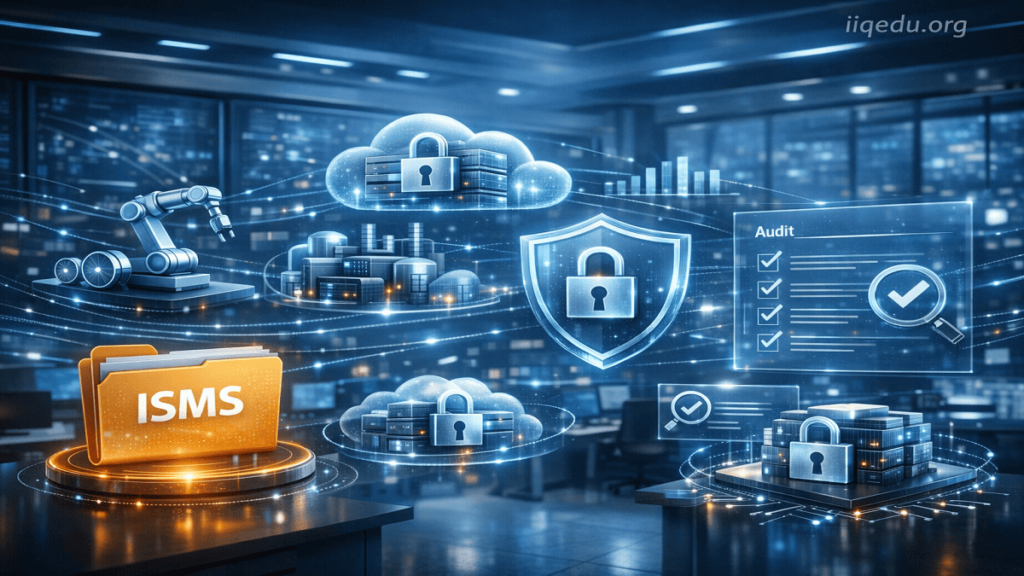
How is ISO 27001 and Cybersecurity Audits required?
ISO 27001 is required through a structured implementation process to establish a robust Information Security Management System (ISMS). Organizations adopt it when they need to systematically manage information security risks and demonstrate compliance. The “how” involves several steps:
- Define Scope and Objectives
- Organizations must identify which systems, processes, and information assets the ISMS will cover.
- Determine the business objectives, regulatory requirements, and risk appetite.
- Perform Risk Assessment
- Identify threats to information security, evaluate potential impact, and determine likelihood.
- Prioritize risks to implement appropriate controls.
- Establish Policies and Controls
- Implement information security policies, procedures, and controls based on Annex A of ISO 27001, which includes domains like access control, cryptography, incident management, and business continuity.
- Training and Awareness
- Educate employees and stakeholders about security responsibilities to ensure policies are understood and followed.
- Internal Audit and Management Review
- Conduct internal audits to evaluate ISMS performance and identify non-conformities.
- Management reviews ensure alignment with strategic objectives.
- Certification Audit (Optional but Common)
- External accredited certification bodies conduct a two-stage audit:
- Stage 1: Documentation review.
- Stage 2: On-site evaluation of controls, processes, and implementation.
- If compliant, the organization is issued an ISO 27001 certificate, usually valid for three years with annual surveillance audits.
- External accredited certification bodies conduct a two-stage audit:
References:
- ISO: https://www.iso.org/isoiec-27001-information-security.html
- BSI: https://www.bsigroup.com/en-GB/iso-27001-information-security/
How Cybersecurity Audits are Required
Cybersecurity audits are required through systematic evaluation processes to ensure security controls are effective and regulatory or contractual obligations are met. The process typically follows these steps:
- Scope Definition
- Identify systems, networks, applications, and processes to be audited.
- Determine objectives, e.g., regulatory compliance, risk assessment, or ISO 27001 preparation.
- Review Documentation and Policies
- Examine existing security policies, procedures, and controls.
- Check alignment with frameworks such as ISO 27001, NIST, PCI DSS, or organizational policies.
- Technical Assessment
- Conduct vulnerability scanning, penetration testing, configuration reviews, and other technical evaluations.
- Assess access controls, encryption, patch management, and logging mechanisms.
- Interviews and Observations
- Meet with staff to understand operational security practices.
- Evaluate employee awareness and adherence to policies.
- Report Findings and Recommendations
- Identify gaps, vulnerabilities, or non-compliance issues.
- Recommend improvements, risk mitigation, or remediation measures.
- Follow-Up and Continuous Monitoring
- Organizations implement recommended changes.
- Audits are repeated periodically or after major system changes to ensure ongoing security effectiveness.
References:
- ISACA: https://www.isaca.org/resources/news-and-trends/newsletters/atisaca/2020/volume-1/what-is-a-cybersecurity-audit
- NIST Cybersecurity Framework: https://www.nist.gov/cyberframework
Key Differences in How They Are Required
| Aspect | ISO 27001 | Cybersecurity Audit |
|---|---|---|
| Purpose | Implement a formal ISMS for ongoing risk management | Evaluate effectiveness of security controls and compliance |
| Mandatory vs. Optional | Optional, but often required by clients/regulators | Optional for internal checks, required for regulatory or contractual compliance |
| Implementation | Long-term, structured program with policy, risk assessment, and control deployment | Event-driven or periodic evaluation, technical and administrative assessments |
| Certification | Formal external certification possible | No certification; audit results provide recommendations or compliance reports |
Summary:
- ISO 27001 is required by organizations through a planned, step-by-step ISMS implementation, potentially leading to formal certification.
- Cybersecurity audits are required by organizations through structured evaluation and assessment processes to verify the effectiveness of security controls, regulatory compliance, and risk mitigation.
- Together, they create a continuous improvement cycle, where ISO 27001 provides the framework and audits validate its effectiveness.
#ISO 27001 and Cybersecurity Audits in Ahemdabad
Case Study of ISO 27001 and Cybersecurity Audits
Case Study 1: ISO 27001 Implementation and Audit — Bleaklow Ltd (UK)
Context: Bleaklow Ltd is an information management and technology provider supporting secure email services for over 100 NHS organizations. To provide secure email handling of sensitive patient data, the company was required to comply with the NHS Secure Email Specification (ISB 1596), which mandates information security at a level consistent with ISO 27001:2013.
Challenge:
- The email service handled confidential health information requiring robust protective controls.
- NHS clients and regulators demanded evidence that security controls met internationally recognized standards.
- Bleaklow needed both an Information Security Management System (ISMS) and formal audit evidence for compliance.
Audit Engagement:
- The organisation engaged an accredited security consultancy to conduct a formal ISO 27001 internal audit, scoped to examine the Microsoft Exchange email system and associated ISMS documentation.
- The audit covered multiple ISO 27001 clauses (policy, risk assessment, awareness, operations) and Annex A control areas (asset management, access control, incident management, business continuity).
- Interviews with governance leadership and technical staff were conducted alongside examination of procedural documentation.
Findings and Remediation:
- The audit produced findings of non-conformances and observations (security documentation or control gaps).
- A corrective action plan was developed collaboratively between Bleaklow and the auditors, which included updating policies, strengthening controls, and documenting evidence.
- Bleaklow implemented corrective actions and provided evidence to close audit findings.
Outcome:
- Following remediation, the auditors provided a compliance statement to NHS regulators confirming that the secure email service met ISO 27001:2013 requirements.
- Bleaklow gained accreditation allowing it to continue offering secure email services to clients.
- The organisation now schedules annual ISO 27001 audits as part of compliance maintenance.
- For more details: Romano Security Consulting internal audit case study.
Case Study 2: Dual ISO 27001 and SOC 2 Readiness — Rimsys (Med Tech)
Context: Rimsys, a cloud-based regulatory information management platform for medical technology companies, needed to demonstrate compliance against both ISO 27001 and SOC 2 within a tight timeframe to win a major customer contract.
Challenge:
- The client required auditable evidence of information security controls and risk management practices.
- Preparation for two audit frameworks simultaneously increased complexity (ISO 27001 standard compliance and SOC 2 attestation requirements).
Approach:
- A cybersecurity consultancy was engaged to perform a comprehensive readiness program involving:
- Formal risk assessments to identify high‑impact threats and vulnerabilities.
- Development of a structured ISMS with documented policies, objectives, and risk treatment plans.
- Internal audits performed before the official external audit to catch gaps proactively.
- Leadership training and management review sessions to ensure organizational alignment with audit expectations.
Outcomes:
- Rimsys completed both external ISO 27001 and SOC 2 audits within nine months without any non‑conformities.
- The successful audit outcomes enabled the company to secure its largest customer deal, enhancing business credibility and growth.
- The audit readiness work also strengthened internal security governance and documented control implementations.
- See ISO 27001 and SOC 2 audit readiness case summary.
Case Study 3: SME ISO 27001 Implementation Success — TechFlow Solutions
Context: TechFlow Solutions provides software development and cloud infrastructure services to healthcare and financial clients, both heavily regulated sectors where data security and client demands for certification drive compliance activities.
Initial Assessment:
- Gap analysis exposed deficiencies in access control, incident response, vendor management, and formal security governance documentation.
- Without structured security policies or defined responsibilities, the organisation could not demonstrate compliance readiness.
Implementation Strategy:
- The organisation extended its project timeline to build structured documentation, risk management, and control implementation.
- Leadership prioritized practical process improvements and cross‑functional involvement over superficial compliance.
- Internal teams were trained and empowered to manage ISO 27001 documentation and risk assessments rather than outsourcing entirely.
Audit Preparation:
- Internal audits helped identify remaining evidence gaps and control weaknesses before external audit submission.
- Management reviews were scheduled to align executive leadership with security objectives and audit expectations.
Outcome:
- TechFlow achieved ISO 27001 certification after demonstrating a functioning ISMS with documented risk assessment and control deployment ready for external audit scrutiny.
- Enhanced security posture and business credibility with regulated clients followed certification achievement.
- See TechFlow Solutions ISO 27001 audit success summary.
Case Study 4: ISO 27001 Readiness for Critical Service Delivery — JET Electrical
Context: JET Electrical Testing needed ISO 27001 compliance to meet contractual customer security requirements and to establish a robust long‑term security program.
Approach:
- A comprehensive ISO 27001 gap assessment identified governance and documentation weaknesses relative to the standard’s requirements.
- A strategic remediation plan was built from the ground up, focusing on establishing a scalable governance framework, audit‑ready documentation, and impartial internal audit evaluation.
- Independent internal auditors assessed the controls in an unbiased manner prior to certification audit, increasing audit readiness confidence.
Outcome:
- JET Electrical fulfilled compliance prerequisites and positioned itself for a successful ISO 27001 certification audit.
- The project also delivered a sustainable security governance program to support future compliance and risk management.
- See JET Electrical cybersecurity readiness overview.
Cybersecurity Audit Case Study Example: Basic Assessment for Risk Visibility
While not tied exclusively to ISO 27001 compliance, cybersecurity audits serve as a mechanism to evaluate security posture across people, processes, and technology. For example:
- A consulting engagement conducted a basic cybersecurity audit informed by industry best practices (ISO 27001, SOC 2, Cyber Essentials).
- The audit began with understanding the organisation’s infrastructure, historical incidents, and governance environment.
- Interviews with leadership, IT, and operational managers were conducted.
- The audit reviewed governance, data protection practices, risk management, incident handling, and third‑party supplier security.
- Based on findings, high‑level recommendations were provided to mitigate risk exposures and inform future security enhancements.
- See cybersecurity audit methodology overview.
Key Insights from These Case Studies
- Audit readiness is integral to certification success: ISO 27001 requires documented evidence of controls, risk management, and leadership involvement prior to external audit. Early gap assessments and internal audits improve readiness.
- Cross‑functional engagement matters: Participation from IT, risk, operations, and executive leadership enhances the quality of the ISMS and improves audit outcomes.
- Documentation and evidence are decisive: Auditors rely on documented controls, risk treatment plans, and management review records to validate compliance; inconsistent documentation often results in non‑conformances.
- Cybersecurity audits support operational maturity: Independent audits (whether aligned with ISO 27001 or broader frameworks) help reveal control weaknesses, inform remediation priorities, and strengthen security governance.
External Resources for Further Reading
- ISO 27001 official standard overview: https://www.iso.org/isoiec-27001-information-security.html
- NHS Secure Email Specification and ISO 27001 compliance requirements (Bleaklow case context): discussion from industry audit summary.
- ISO 27001 internal audit methodology example and detailed case outcomes.
#ISO 27001 and Cybersecurity Audits in Hyderabad
White Paper of ISO 27001 and Cybersecurity Audits
Executive Summary
Information security threats continue to evolve in sophistication and frequency, posing strategic, operational, and compliance risks to enterprises globally. Two foundational pillars of a mature information security program are:
- ISO/IEC 27001 (ISO 27001) — an international standard for Information Security Management Systems (ISMS); and
- Cybersecurity Audits — systematic evaluations that verify whether security controls, practices, and governance structures are effective and compliant.
This white paper explains what ISO 27001 and cybersecurity audits are, why they matter, how they interact, and how organizations should implement them to manage risk and meet stakeholder expectations.
External reference links allow deeper exploration of standards, frameworks, and audit methodologies.
1. Background and Context
1.1 The Information Security Landscape
Information security today encompasses protection of data through people, processes, and technology. Threats arise from:
- External actors (malware, ransomware, nation‑state activity);
- Internal risk (unauthorized access, weak controls);
- Regulatory pressure (GDPR, HIPAA, PCI DSS, SOX);
- Client and partner contractual requirements.
Organizations are increasingly measured not only on service quality but on their ability to safeguard data and infrastructure.
2. ISO 27001: Overview, Purpose, and Structure
2.1 What Is ISO 27001?
ISO/IEC 27001 is an internationally recognized standard for establishing, implementing, maintaining, and continually improving an Information Security Management System (ISMS). It is part of the ISO/IEC 27000 family, which includes related guidance documents.
Official ISO source: https://www.iso.org/isoiec-27001-information-security.html
2.2 Purpose and Objectives
The objectives of ISO 27001 include:
- Establishing a risk‑based approach to managing information security;
- Defining and implementing security controls aligned to business requirements;
- Fulfilling regulatory and contractual compliance;
- Demonstrating credibility and trust to stakeholders through certification.
ISO 27001 adopts the Plan‑Do‑Check‑Act (PDCA) lifecycle model to enable structured improvement.
3. ISO 27001 Requirements and Controls
3.1 ISMS Core Components
ISO 27001 requires documented policies and procedures covering:
- Context and scope of the ISMS;
- Leadership and governance;
- Risk assessment and risk treatment plans;
- Control implementation and monitoring;
- Internal audit and corrective action;
- Management review and continual improvement.
3.2 Annex A Controls
ISO 27001 Annex A provides a catalog of security controls grouped into domains:
- Access Control
- Cryptography
- Asset Management
- Human Resources Security
- Physical and Environmental Security
- Operations Security
- Communications Security
- Supplier Relationships
- Incident Management
- Business Continuity
These controls may be selected and tailored based on the organization’s risk profile.
Annex A controls reference: ISO 27001:2013 or later editions available through ISO.
4. Cybersecurity Audits: Definition and Purpose
4.1 What Is a Cybersecurity Audit?
A cybersecurity audit is an independent, objective evaluation of an organization’s information systems, security controls, policies, and governance. It assesses whether controls are:
- Designed appropriately;
- Operating effectively;
- Compliant with internal standards and external requirements.
4.2 Audit Types
Cybersecurity audits can be:
- Internal audits: Conducted by internal teams for governance, risk management, and preparedness;
- External audits: Conducted by third parties for compliance, certification, or assurance;
- Technical audits: Focused on configuration, penetration testing, and vulnerability assessments;
- Compliance audits: Measured against specific standards (ISO 27001, PCI DSS, SOC 2, NIST, etc.).
The audit scope, depth, and reporting criteria vary based on objectives.
ISACA description of cybersecurity audit: https://www.isaca.org/resources/news-and-trends/newsletters/atisaca/2020/volume-1/what-is-a-cybersecurity-audit
5. Interaction Between ISO 27001 and Cybersecurity Audits
5.1 ISO 27001 Certification Audits
ISO 27001 certification requires formal external audits by accredited certification bodies. These audits evaluate whether:
- The ISMS is implemented as documented;
- Risks are identified and treated appropriately;
- Controls are effectively operating;
- Evidence of monitoring, review, and improvement exists.
Certification audits generally include:
- Stage 1: Documentation review;
- Stage 2: On‑site implementation verification;
- Surveillance audits: Annual compliance checks;
- Recertification audits: Every three years.
5.2 Cybersecurity Audits as Operational Assurance
Independent cybersecurity audits—internal or external—support ISO 27001 by evaluating:
- Control effectiveness beyond documentation;
- System configurations and architectural risk exposures;
- Adherence to policy in daily operational practices;
- Technical vulnerabilities and patch status.
They provide assurance to stakeholders that “security is working,” not just documented.
6. Business Drivers for ISO 27001 and Cybersecurity Audits
6.1 Regulatory Compliance
Regulated industries such as finance, healthcare, and critical infrastructure require evidence of security controls to meet legal standards (for example GDPR, HIPAA, PCI DSS).
6.2 Contractual Requirements
Clients frequently require suppliers to demonstrate security maturity before awarding contracts.
6.3 Risk Management
Continuous risk assessment and audit validation help prevent breaches, reduce operational risk, and protect organizational reputation.
7. Implementation Approach: ISO 27001 and Audits
7.1 ISO 27001 Implementation Lifecycle
- Initiation and Scoping
Define information assets, boundaries, stakeholders, and risks. - Risk Assessment
Identify threats, assess impact, and prioritize treatment. - Control Selection and Implementation
Map Annex A controls to risk treatment plans. - Training and Awareness
Ensure personnel understand roles and responsibilities. - Documentation
Maintain evidence of policies, procedures, and metrics. - Internal Audit and Management Review
Evaluate compliance and effectiveness. - Certification Audit
Engage accredited body for formal evaluation.
7.2 Integrating Cybersecurity Audits
Cybersecurity audits should be integrated at key stages:
- Prior to certification readiness assessments;
- After significant infrastructure changes;
- As part of annual governance cycles;
- Post‑incident to assess remediation efficacy.
Together, these activities support continuous security improvement.
8. Challenges and Best Practices
8.1 Common Implementation Challenges
- Underestimating documentation efforts;
- Insufficient executive sponsorship;
- Treating ISO 27001 as a “check‑the‑box” exercise;
- Technical and governance misalignment.
8.2 Best Practices
- Engage stakeholders early (executive, IT, security, operations);
- Align risk treatment to business objectives;
- Automate evidence collection where feasible;
- Conduct periodic internal audits ahead of external certification;
- Maintain continuous monitoring and incident response capabilities.
9. Measuring Success
Key performance indicators (KPIs) to track include:
- Number and severity of identified vulnerabilities;
- Timeliness of corrective actions;
- Audit non‑conformances over time;
- Risk treatment progress;
- Certification audit results.
10. Conclusion
ISO 27001 establishes a strategic framework for managing information security risks, while cybersecurity audits provide the operational evidence required to validate those efforts. When implemented together, they provide:
- Strong governance and risk management;
- Regulatory and contractual compliance;
- Operational assurance of controls;
- Enhanced stakeholder confidence.
Enterprises should adopt both as part of a holistic security and compliance strategy that balances documentation, technical controls, and continuous verification.
References and External Resources
- ISO 27001 Official Standard Page (ISO): https://www.iso.org/isoiec-27001-information-security.html
- ISACA: What Is a Cybersecurity Audit?: https://www.isaca.org/resources/news-and-trends/newsletters/atisaca/2020/volume-1/what-is-a-cybersecurity-audit
- NIST Cybersecurity Framework: https://www.nist.gov/cyberframework
- ISO 27001—Annex A Control Mapping Overview (BSI example): https://www.bsigroup.com/en-GB/iso-27001-information-security/
#ISO 27001 and Cybersecurity Audits in Banglore
Industry Application of ISO 27001 and Cybersecurity Audits
1. Financial Services
Application:
Banks, insurance companies, investment firms, and fintech companies handle sensitive financial data, transactions, and customer information.
- ISO 27001:
- Establishes a formal ISMS to protect customer financial data.
- Supports compliance with standards like PCI DSS and regional financial regulations (e.g., GLBA in the US, PSD2 in the EU).
- Cybersecurity Audits:
- Periodic audits identify vulnerabilities in core banking systems, online platforms, and transaction processes.
- Audits validate control effectiveness and support regulatory examinations by authorities.
Impact: Enhances trust, reduces fraud, and ensures regulatory compliance.
Reference: https://www.bsigroup.com/en-GB/iso-27001-information-security/
2. Healthcare and Life Sciences
Application:
Hospitals, clinics, pharmaceutical companies, and health IT providers handle patient health information (PHI) and research data.
- ISO 27001:
- Implements structured policies for data privacy and security, covering electronic health records, lab systems, and patient communication platforms.
- Helps demonstrate compliance with HIPAA, GDPR, or local health data regulations.
- Cybersecurity Audits:
- Evaluate access controls, data encryption, backup and disaster recovery systems.
- Identify operational and technical vulnerabilities in medical devices, EHR systems, and cloud platforms.
Impact: Protects patient confidentiality, ensures operational continuity, and reduces regulatory penalties.
Reference: https://www.iso.org/isoiec-27001-information-security.html
3. Information Technology and Cloud Services
Application:
SaaS companies, cloud infrastructure providers, managed service providers, and IT consultancies manage large volumes of client data and cloud-hosted services.
- ISO 27001:
- Provides a framework for information security governance, risk management, and client assurance.
- Supports contractual obligations with enterprise customers and government clients.
- Cybersecurity Audits:
- Examine network configurations, system vulnerabilities, and incident response readiness.
- Often combined with SOC 2 or ISO 27017 cloud-specific audits.
Impact: Improves client confidence, enables business growth, and reduces risk of data breaches.
4. Government and Public Sector
Application:
Agencies handling citizen data, critical infrastructure, and public services.
- ISO 27001:
- Implements governance controls for sensitive national data and IT systems.
- Aligns with cybersecurity frameworks like NIST or regional government standards.
- Cybersecurity Audits:
- Assess effectiveness of security controls, operational compliance, and policy adherence.
- Often required before procurement or integration of external IT services.
Impact: Reduces risk to public trust, ensures continuity of services, and demonstrates accountability.
Reference: https://www.nist.gov/cyberframework
5. Telecommunications and Critical Infrastructure
Application:
Energy companies, transport networks, water supply, and telecom operators rely on complex networks and industrial control systems.
- ISO 27001:
- Protects operational technology (OT) and IT systems against cyber threats.
- Supports compliance with critical infrastructure security regulations.
- Cybersecurity Audits:
- Evaluate network segmentation, SCADA/ICS security, and incident response procedures.
- Include vulnerability scanning, penetration testing, and resilience assessments.
Impact: Ensures operational continuity, prevents cyber‑physical incidents, and mitigates regulatory risks.
Reference: https://www.bsigroup.com/en-GB/iso-27001-information-security/
6. Manufacturing and Industrial Sectors
Application:
Companies in automotive, electronics, and industrial manufacturing with connected systems, supply chain dependencies, and intellectual property.
- ISO 27001:
- Provides framework for safeguarding intellectual property, design data, and proprietary processes.
- Manages supply chain risk and vendor security compliance.
- Cybersecurity Audits:
- Test networked production lines, remote monitoring systems, and ERP platforms.
- Identify vulnerabilities in connected devices (IoT/IIoT).
Impact: Reduces downtime, protects intellectual property, and ensures supply chain security.
7. Education and Research Institutions
Application:
Universities, research labs, and educational technology providers manage sensitive student data and proprietary research.
- ISO 27001:
- Establishes policies for protecting student records, research data, and administrative systems.
- Supports collaboration with industry partners and government grants requiring compliance.
- Cybersecurity Audits:
- Examine access to research data, IT systems, and cloud collaboration platforms.
- Validate risk treatment for both academic and administrative systems.
Impact: Protects academic integrity, ensures compliance with privacy laws, and supports grant requirements.
Summary Table: Industry Applications
| Industry | ISO 27001 Purpose | Cybersecurity Audit Purpose | Key Benefits |
|---|---|---|---|
| Finance | Risk management, regulatory compliance | Validate transactional security, vulnerability assessment | Compliance, fraud reduction, trust |
| Healthcare | PHI protection, ISMS for systems | Evaluate EHR, devices, backup | Patient privacy, operational continuity |
| IT/Cloud | Client data governance, contractual compliance | Network, cloud, and SaaS audits | Client trust, growth, breach prevention |
| Government | National data protection, governance | Control effectiveness, policy compliance | Public trust, accountability, service continuity |
| Telecom/Critical Infrastructure | OT/IT protection | SCADA/ICS, resilience testing | Operational safety, regulatory compliance |
| Manufacturing | IP and production security | Connected devices, supply chain audit | Downtime reduction, IP protection |
| Education/Research | Student/research data security | System and cloud audits | Privacy, grant compliance, collaboration |
Key Insight:
Across industries, ISO 27001 provides the framework for information security governance, while cybersecurity audits validate that controls are effective and compliant. Their application varies by sector depending on regulatory pressures, operational risks, and the criticality of data and systems.
External References:
- ISO 27001 Official: https://www.iso.org/isoiec-27001-information-security.html
- ISACA: Cybersecurity Audit Overview: https://www.isaca.org/resources/news-and-trends/newsletters/atisaca/2020/volume-1/what-is-a-cybersecurity-audit
- NIST Cybersecurity Framework: https://www.nist.gov/cyberframework
#ISO 27001 and Cybersecurity Audits in Mumbai
Ask FAQs
What is ISO 27001 and why is it important?
ISO 27001 is an international standard for establishing, implementing, maintaining, and continually improving an Information Security Management System (ISMS). It provides a structured, risk-based approach to protecting sensitive information, managing threats, and ensuring business continuity. ISO 27001 is important because it helps organizations demonstrate compliance with regulations, reduce the risk of data breaches, and build stakeholder trust.
Reference: ISO Official Page
What is a cybersecurity audit and how does it differ from ISO 27001 certification?
A cybersecurity audit is an independent evaluation of an organization’s security controls, policies, and systems. While ISO 27001 certification assesses whether an ISMS meets the standard, a cybersecurity audit examines actual effectiveness, identifies vulnerabilities, and validates compliance. Audits may be internal, external, technical, or compliance-focused.
Reference: ISACA Cybersecurity Audit
Who needs ISO 27001 and cybersecurity audits?
ISO 27001 and cybersecurity audits are generally required by organizations that:
Handle sensitive or regulated data (financial, healthcare, government);
Provide IT or cloud services to clients requiring compliance;
Need to demonstrate risk management and security maturity to stakeholders.
Industries including finance, healthcare, IT, government, telecom, manufacturing, and research frequently implement these standards.
When should organizations conduct ISO 27001 implementation or cybersecurity audits?
Organizations should implement ISO 27001 when establishing a formal ISMS, undergoing regulatory compliance efforts, or preparing for client contractual requirements. Cybersecurity audits should be conducted:
Periodically (annual or biannual),
Before or after major IT changes,
Prior to ISO 27001 certification, and
Following security incidents to evaluate and improve controls.
Reference: NIST Cybersecurity Framework
What are the benefits of ISO 27001 and cybersecurity audits?
Enhanced information security governance and risk management;
Compliance with legal and contractual requirements;
Reduced likelihood of data breaches or operational disruptions;
Increased trust and credibility with clients, partners, and regulators;
Continuous improvement of security controls and processes.
Source: GRC Solutions
Table of Contents
Disclaimer:
The information provided in this document is for general informational purposes only and does not constitute legal, regulatory, or professional advice. Organizations should consult qualified experts or auditors to address specific compliance, certification, or cybersecurity requirements.