Mobile Phones & Global QC
What is Mobile Phones & Global QC?
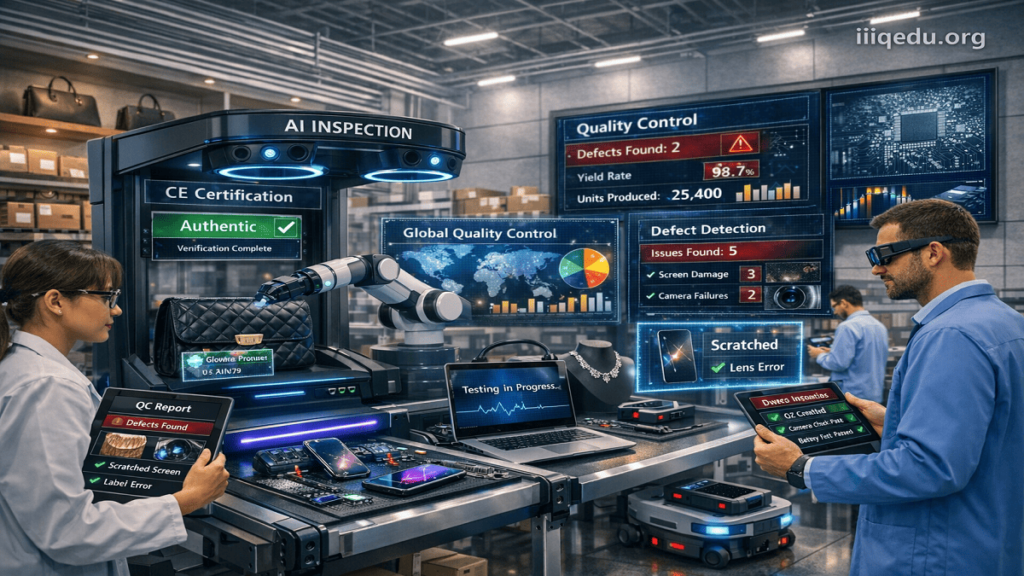
Global Quality Control (QC) for Mobile Phones refers to the processes and standards used to ensure that mobile devices meet international quality, safety, and performance requirements before reaching global markets. QC encompasses testing hardware, software, battery safety, network compatibility, and compliance with regulations across different countries. The goal is to deliver reliable, safe, and high-performing smartphones while reducing defects, recalls, and customer complaints.
Key Components of Mobile Phones Global QC
1. Hardware Testing
- Screen durability, battery performance, cameras, sensors, and circuit boards.
2. Software Testing
- OS stability, app performance, security, and firmware updates.
3. Regulatory Compliance
- CE, FCC, RoHS, SAR, and other country-specific certifications.
4. Network Compatibility
- Ensures devices work across 3G, 4G, 5G, Wi-Fi, and Bluetooth standards globally.
5. Environmental and Safety Testing
- Temperature, humidity, drop tests, and electromagnetic radiation testing.
Importance of Global QC for Mobile Phones
- Reduces defects, recalls, and warranty claims.
- Ensures safety and regulatory compliance in multiple markets.
- Enhances brand reputation and customer satisfaction.
- Enables consistent performance and reliability across devices sold worldwide.
Who is Mobile Phones & Global QC required?
When companies talk about Mobile Phones & Global QC, they are referring to the people and teams responsible for ensuring every mobile phone meets high quality standards globally. These are the key roles:
- Global Quality Manager
- Oversees the entire quality control process worldwide.
- Sets standards for design, manufacturing, and final inspection.
- Quality Assurance (QA) Engineers
- Plan and implement testing procedures for hardware and software.
- Make sure phones meet safety, performance, and compliance requirements.
- QC Inspectors / Technicians
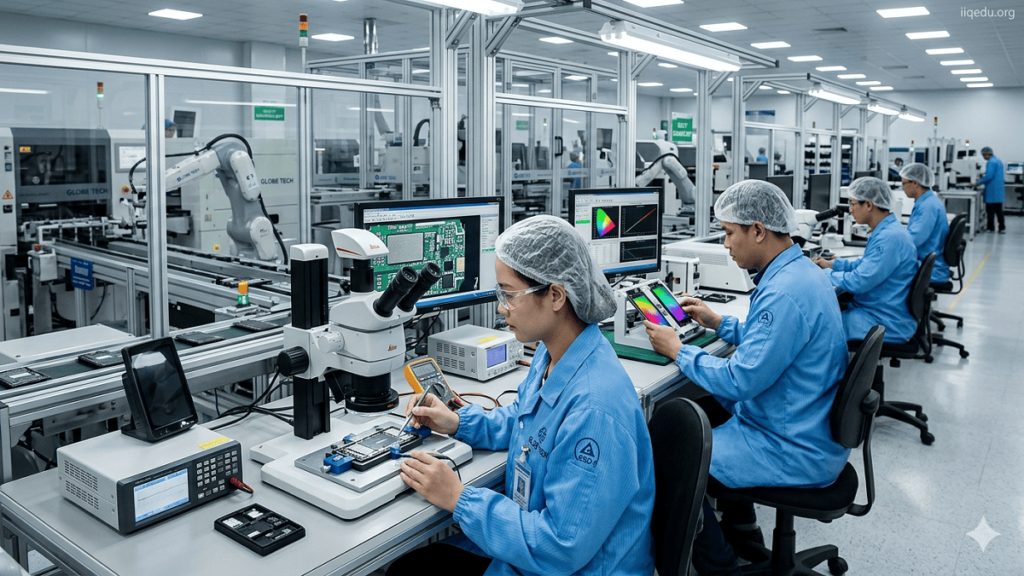
- Perform hands-on inspections in factories.
- Catch defects in assembly, screens, batteries, and other components.
- Regional Quality Leads
- Monitor local factories and markets to ensure they follow global standards.
- Supply-Chain Quality Specialists
- Check suppliers and vendors for component quality (like chips or screens).
When Are They Needed?
These roles are required throughout the mobile phone lifecycle:
- During design and prototyping – to catch potential problems early.
- During manufacturing – continuous monitoring of production quality.
- Before shipping – final inspection ensures only defect-free phones reach customers.
- After launch – monitoring real-world performance and handling complaints.
In short, any company producing mobile phones needs these people in place to maintain consistent quality across the globe. Without them, phones could be unreliable, unsafe, best institute in india or fail to meet regulations in different countries.
When is Mobile Phones & Global QC required?
Global Quality Control (QC) for mobile phones is not a one-time task. It is required at multiple stages, from design to after the phone reaches customers:
- Design & Prototyping Stage
- QC is needed early, even before production starts.
- Ensures the phone’s design is manufacturable, safe, and meets regulatory standards.
- Detects potential defects in hardware or software before mass production.
- During Manufacturing
- Continuous QC during assembly in factories.
- Inspect components like screens, batteries, cameras, and circuit boards.
- Ensures every batch meets specifications.
- Pre-Shipment / Final Inspection
- QC is required right before phones leave the factory.
- Final checks catch any issues that could affect customers.
- Confirms compliance with international safety and performance standards.
- Post-Launch / Field Monitoring
- Even after release, Global QC monitors real-world performance.
- Handles customer complaints, recalls, or software updates for defects.
- Helps improve future models by analyzing failure trends globally.
Key Takeaway
Global QC is required throughout the phone’s entire lifecycle—from design, through production, to after it’s in the hands of customers. The goal is to ensure consistency, safety, and quality worldwide.
Where is Mobile Phones & Global QC required?
Global Quality Control for mobile phones is required at multiple locations and stages throughout the production and distribution process:
- Design & R&D Centers
- QC starts in the research and development labs where new phone models are designed.
- Engineers test prototypes for safety, usability, and reliability before production.
- Manufacturing Facilities / Factories
- QC is crucial on the production line.
- Inspectors check assembly quality, components (screens, batteries, cameras), and software integration.
- Supplier & Vendor Sites
- QC is needed at component suppliers to ensure parts meet global standards.
- This includes chips, memory, displays, batteries, and other critical parts.
- Pre-Shipment / Warehouses
- QC happens at final inspection points before phones are shipped worldwide.
- Ensures only phones that meet standards are delivered to retailers or customers.
- Regional Offices / Global Monitoring
- After launch, QC teams in regional offices monitor performance and customer feedback.
- Helps detect and correct issues in specific markets quickly.
Key Takeaway
Mobile Phones & Global QC is required everywhere the phone is designed, made, inspected, and delivered, plus ongoing monitoring in best institute in mumbai the market. Basically, quality control has to be “global” to ensure every phone works safely and reliably, no matter where it’s sold.
How is Mobile Phones & Global QC required?
Global QC is not just a single step—it’s a systematic approach applied throughout the mobile phone lifecycle. Here’s how it’s typically done:
1. Setting Global Quality Standards
- Before anything is produced, companies define global standards for design, performance, safety, and reliability.
- These standards ensure every phone, no matter where it’s made or sold, meets the same high expectations.
2. Testing at the Design Stage
- Prototypes are thoroughly tested for hardware durability, battery safety, and software stability.
- Potential issues are fixed before mass production, saving time and reducing defects.
3. Quality Checks During Manufacturing
- QC teams monitor each step of assembly:
- Inspect screens, batteries, cameras, and other parts.
- Test software and connectivity features.
- Problems are flagged immediately, preventing defective phones from progressing down the line.
4. Supplier & Component QC
- Suppliers of critical components are also audited and tested.
- Ensures chips, batteries, and other parts meet global safety and performance standards before being used in assembly.
5. Final Pre-Shipment Inspection
- Completed phones go through rigorous final testing.
- Only units that pass all checks are shipped to customers worldwide.
6. Post-Launch Monitoring
- Even after release, QC continues globally:
- Monitor customer complaints and failure reports.
- Analyze trends to improve future models.
Key Takeaway
Global QC is required through a combination of standards, inspections, testing, and continuous monitoring. It ensures every mobile phone is safe, reliable, and consistent, no matter where it’s manufactured or sold.
Case study of Mobile Phones & Global QC
Industry
One of the most widely discussed examples of mobile phone global quality control failure is the case of the Samsung Electronics Galaxy Note 7 smartphone.
Background
The Galaxy Note 7 was released in August 2016 as a flagship phone. Shortly after launch, reports began to surface from users around the world that the device’s battery was overheating and, in some cases, catching fire.
What Went Wrong
Quality control issues centered around the battery manufacturing and testing process. Faulty batteries caused phones to explode or catch fire during charging or heavy use. Despite initial recalls, replacement devices also experienced failures, indicating that quality control processes did not properly detect or resolve the root cause before or after launch.
Global Impact
Samsung issued one of the largest smartphone recalls in history, pulling millions of Note 7 devices from markets worldwide. The company discontinued production of the model entirely and offered refunds or replacements. The situation caused reputational damage and financial losses, demonstrating what can happen when QC systems fail to catch critical safety issues before global distribution.
Lessons Learned
This case highlights several key quality control principles for mobile phone manufacturing:
- Rigorous testing of critical components such as batteries is essential before the product reaches the market.
- Global QC must account for variations in manufacturing batches, especially when multiple suppliers are involved.
- Continuous monitoring and early defect detection, even post-launch, can prevent large-scale recalls.
- Companies must act quickly and transparently when defects emerge to maintain consumer trust.
Why This Case Matters
The Samsung Galaxy Note 7 situation is often cited in industry training and quality control studies to show how even leading manufacturers can face global quality challenges if systems are not robust. Proper monitoring, testing, and supplier verification are essential to protect both users and brand reputation.
White paper of Mobile Phones & Global QC
Executive Summary
Quality control (QC) in the mobile phone industry has evolved from an optional checkpoint to a strategic necessity. As device complexity increases and global markets demand higher reliability, effective QC processes ensure product safety, performance consistency, regulatory compliance, and customer satisfaction worldwide. This white paper outlines the framework, Best institute in Vasai components, implementation strategies, and success metrics for Mobile Phones & Global QC.
1. Introduction
Mobile phones have become essential tools in daily life. A modern smartphone integrates sophisticated hardware, complex software, and global supply ecosystems. Ensuring consistent quality across such complexity requires a systematic, multi‑stage global QC strategy.
The goal of this white paper is to clarify:
- Where QC fits in the mobile phone lifecycle
- How QC is implemented globally
- Roles and responsibilities
- Metrics for success
- Common challenges and mitigation approaches
2. What is Mobile Phones & Global QC?
Mobile Phones & Global QC refers to the structured processes, standards, and activities applied throughout the design, manufacturing, inspection, distribution, and post‑market phases to ensure mobile phones meet predetermined quality requirements across all regions where they are sold.
Key characteristics include:
- Consistency across multiple manufacturing sites
- Compliance with international standards and local regulations
- End‑to‑end monitoring from component sourcing to customer experience
3. When and Where QC is Required
3.1 Lifecycle Stages
QC activities are required at:
- Design and Prototype Stage: Early validation of design feasibility, safety, and functionality
- Component Sourcing and Supplier QC: Verification of supplier quality, audits, incoming inspections
- Manufacturing and Assembly: In‑line checks during production
- Pre‑Shipment Final Inspection: Verification before market release or distribution
- Post‑Launch Monitoring: Field performance tracking and failure analysis
3.2 Locations
Global QC is required at:
- R&D and design centers
- Supplier facilities (e.g., battery, display, chipset vendors)
- Contract manufacturing factories
- Warehouses and logistics hubs
- Regional service and support centers
4. How Global QC is Implemented
4.1 Quality Standards and Frameworks
Effective QC begins by defining standards that align with:
- Industry best practices (e.g., ISO 9001)
- Regulatory requirements (e.g., SAR limits, CE/FCC compliance)
- Internal performance criteria (durability, reliability, interoperability)
4.2 Quality Control Activities
QC activities typically include:
- Design reviews
- Prototype testing
- Supplier assessments
- In‑process inspections
- Environmental and stress testing
- Final acceptance tests
- Statistical quality control sampling
4.3 Tools and Methods
Common QC tools and methods:
- Six Sigma and Lean principles
- Failure Mode and Effects Analysis (FMEA)
- Statistical Process Control (SPC)
- Automated inspection systems
- Field data analytics
5. Roles and Responsibilities
5.1 Global Quality Leadership
- Define global QC strategy
- Set quality standards and thresholds
- Coordinate cross‑regional activities
5.2 Quality Assurance (QA) Engineering
- Develop and maintain testing protocols
- Design verification and validation
- Data analysis and reporting
5.3 Quality Control Technicians
- Execute inspections
- Operate test equipment
- Document results
5.4 Supplier Quality Engineers
- Evaluate supplier performance
- Perform audits
- Manage supplier corrective actions
6. Metrics for Success
A global QC program should be measured using key performance indicators (KPIs) such as:
- Defect rates
- Return and failure rates
- Supplier performance indexes
- Audit compliance scores
- Time to detect and resolve quality issues
- Customer satisfaction and Net Promoter Scores
7. Challenges in Mobile QC and Mitigation Strategies
| Challenge | Mitigation |
|---|---|
| Multiple suppliers with varying capabilities | Standardized supplier qualification and scorecards |
| Rapid product iterations | Integrated automated testing and CI/CD pipelines |
| Regional regulatory differences | Local compliance teams and global harmonization frameworks |
| Cost pressures | Risk‑based QC prioritization and statistical sampling |
8. Case Integration Example (Hypothetical)
Scenario: A smartphone manufacturer identifies intermittent touchscreen calibration issues in a specific region.
QC Response Workflow:
- Data Collection: Field reports analyzed globally
- Root Cause Analysis: Failure linked to supplier process drift
- Supplier Audit: Verification of corrective actions
- Regression Testing: Redesign tests for manufacturing control
- Process Update: Introduce in‑line calibration checks
- Post‑Implementation Monitoring: Metrics tracked for recurrence
9. Conclusion
Global QC for mobile phones is essential to ensure safety, reliability, and market competitiveness. A mature QC program:
- Aligns design, manufacturing, and field data
- Improves reliability across geographies
- Reduces costs of failures and recalls
- Strengthens customer trust
Companies that embed quality into every phase of the product lifecycle are better positioned to succeed in a competitive global marketplace.
10. References and Standards (Indicative)
- ISO 9001 Quality Management Systems
- TS 16949 (Automotive Quality for supplier integration)
- IEC and regional certification requirements for RF safety and emissions
- Industry best practices from GSM/3GPP compliance specifications
Industry application of Mobile Phones & Global QC
Global Quality Control in mobile phones is not just a technical formality—it is a critical business function that ensures product reliability, best institute in the world safety, and market competitiveness. The concept is applied throughout the mobile phone industry, from design and manufacturing to post-sales monitoring.
1. Consumer Electronics Manufacturing
- Application: Ensures mobile phones meet design specifications, functional requirements, and safety standards before reaching consumers.
- Example: Companies like Samsung, Apple, and Xiaomi implement QC at every stage, from battery assembly to software verification, to minimize defects.
- Impact: Reduces warranty claims, product recalls, and increases consumer trust.
2. Component Supplier Management
- Application: QC is applied to suppliers of batteries, displays, processors, cameras, and other critical components.
- Process: Supplier audits, incoming component inspections, and testing against international standards.
- Impact: Ensures global consistency and prevents component-level failures that could affect the entire device.
3. Software and Firmware Development
- Application: Mobile phone QC includes software verification, operating system testing, and app compatibility checks.
- Tools Used: Automated testing, regression testing, Mobile phones & Global QC continuous integration, and field telemetry.
- Impact: Ensures devices function correctly, security vulnerabilities are minimized, and customer experience is consistent worldwide.
4. Regulatory Compliance and Certification
- Application: QC ensures devices comply with regional and international standards such as CE (Europe), FCC (USA), RoHS, and SAR safety limits.
- Impact: Helps mobile phone manufacturers legally sell devices globally and avoid fines, bans, or recalls.
5. Logistics and Distribution QC
- Application: Pre-shipment inspections at warehouses and logistic hubs to ensure devices are not damaged and meet quality standards before reaching retailers.
- Impact: Prevents customer dissatisfaction and returns due to shipping or packaging defects.
6. Post-Sales and Field Monitoring
- Application: QC extends beyond manufacturing; devices are monitored after release for performance, battery life, software issues, and failures.
- Process: Collecting real-world performance data, analyzing complaints, and feeding insights back into the production process.
- Impact: Supports continuous improvement and informs the design of next-generation devices.
7. Case Example: High-End Smartphones
- Flagship devices often integrate cutting-edge technology like foldable screens, 5G connectivity, or advanced cameras.
- Global QC ensures these advanced features work reliably across different regions, networks, and environmental conditions.
- Companies implement multi-location QC labs and field-testing teams to validate device performance worldwide before mass launch.
Key Takeaways
- Global QC is integral to the entire mobile phone ecosystem: design, suppliers, production, logistics, and post-sales.
- It minimizes defects, ensures regulatory compliance, and maintains brand reputation.
- In the fast-evolving mobile industry, robust QC processes are a competitive advantage, not just a cost center.
#bestinstituteintheworld #bestinstituteinindia #bestinstituteinmumbai #bestinstituteinvasai #mobilephonesnadglobalqcinmumbai ##mobilephonesnadglobalqcinindia #mobilephonesnadglobalqcinvasai
Ask FAQs
What is Mobile Phones & Global QC?
Mobile Phones & Global QC is a set of processes and standards used to ensure mobile phones meet consistent quality, safety, and performance requirements across all markets where they are sold. It covers everything from design and manufacturing to post-sale monitoring.
Why is Global QC important for mobile phones?
Global QC ensures that every phone is reliable, safe, and compliant with regulations. It reduces defects, prevents recalls, protects brand reputation, and enhances customer satisfaction worldwide.
Who is responsible for Global QC in mobile phone manufacturing?
Responsibility is shared across several roles: Global Quality Managers, QA Engineers, QC Inspectors, Supplier Quality Engineers, and Regional Quality Leads. Together, they monitor design, production, and post-market performance globally.
When is Global QC applied in the mobile phone lifecycle?
QC is applied at multiple stages: during design and prototyping, component sourcing, manufacturing and assembly, pre-shipment inspections, and post-launch monitoring to track real-world performance.
How is Global QC implemented effectively?
Effective QC combines global standards, supplier audits, in-process inspections, software and hardware testing, statistical process control, and continuous monitoring. It ensures consistency, compliance, and early detection of defects across all production locations.
Source: Sabin Civil Engineering
Table of Contents
Disclaimer:
This content is for informational and educational purposes only. While efforts have been made to ensure accuracy, it does not represent official guidelines or standards of any specific mobile phone manufacturer or organization. Readers should refer to relevant industry regulations and company policies for precise requirements.