Product Recalls & Quality Failures
Product recalls occur when a company removes a product from the market due to safety concerns, defects, or quality issues. These recalls are usually initiated to protect consumers and comply with regulations.
A recall can be voluntary (by the company) or enforced by regulatory authorities when a product poses risks.
What Are Quality Failures?
Quality failures happen when a product does not meet expected standards, specifications, or performance requirements. These failures can occur at any stage—design, manufacturing, or after the product reaches customers.
Common Causes of Product Recalls & Quality Failures
- Design Defects
Poor product design that leads to safety risks or malfunction. - Manufacturing Errors
Mistakes during production such as faulty assembly or poor workmanship. - Defective Components
Low-quality or faulty parts supplied by vendors. - Lack of Testing
Inadequate product testing before launch. - Regulatory Non-Compliance
Failure to meet safety or legal standards in different regions.
Real-World Example
A well-known example is the recall of the Samsung Galaxy Note 7, where battery defects caused overheating and fires. This case highlights how critical quality control is, especially for globally distributed products.
Impact of Product Recalls
- Financial Losses: Cost of refunds, replacements, and logistics
- Brand Reputation Damage: Loss of customer trust
- Legal Consequences: Fines, lawsuits, and penalties
- Operational Disruptions: Production delays and supply chain issues
How Companies Manage Product Recalls
- Identifying the issue quickly through data and customer feedback
- Notifying customers and regulatory authorities
- Recalling or replacing defective products
- Conducting root cause analysis
- Improving processes to prevent recurrence
How to Prevent Quality Failures
- Implement strong quality control systems
- Conduct thorough testing and inspections
- Maintain strict supplier quality checks
- Use data monitoring and feedback systems
- Follow global regulatory standards
Key Takeaway
Product Recalls & Quality Failures are serious challenges, but they also provide opportunities for improvement. Companies that respond quickly and strengthen their quality processes can rebuild trust and prevent future issues.
What are Product Recalls & Quality Failures?
Product Recalls
Product recalls occur when a company removes a product from the market because it is found to be unsafe, defective, or not compliant with regulations. The main goal of a recall is to protect consumers and prevent harm.
Recalls can be:
- Voluntary: Initiated by the company itself
- Mandatory: Ordered by government or regulatory authorities
Quality Failures
Quality failures happen when a product does not meet required standards or expectations in terms of performance, safety, or reliability. These failures can occur at any stage, including design, manufacturing, or after the product reaches customers.
Simple Difference
- Product Recall: Action taken after a problem is identified (removing the product)
- Quality Failure: The problem or defect that caused the issue
Example
If a smartphone battery overheats due to a defect, that defect is a quality failure. When the company pulls the phones from the market, that action is called a product recall.
Key Takeaway
Product recalls and quality failures are closely connected. A quality failure often leads to a product recall, and both highlight the importance of strong quality control systems in any industry.
Who are Product Recalls & Quality Failures required?
Product recalls and quality failures involve multiple stakeholders across industries. These are the key groups responsible or affected:
1. Manufacturers
- The primary responsibility lies with manufacturers.
- They must identify defects, ensure product safety, and initiate recalls if needed.
2. Quality Control (QC) & Quality Assurance (QA) Teams
- These teams monitor product quality during design and production.
- They detect failures early and help prevent large-scale recalls.
3. Suppliers & Vendors
- Suppliers provide components or raw materials.
- If a defect originates from a supplier, they are also responsible for quality failures.
4. Regulatory Authorities
- Government bodies enforce safety standards and may order mandatory recalls.
- They ensure companies comply with legal and safety requirements.
5. Distributors & Retailers
- They help in removing defective products from the market.
- Act as a link between companies and customers during recall processes.
6. Consumers (End Users)
- Consumers report defects and safety issues.
- Their feedback often triggers investigations and recalls.
Key Takeaway
Product recalls and quality failures are not the responsibility of one group alone. They require coordination between manufacturers, quality teams, suppliers, regulators, and consumers to ensure product safety and reliability.
When are Product Recalls & Quality Failures required?
Product Recalls
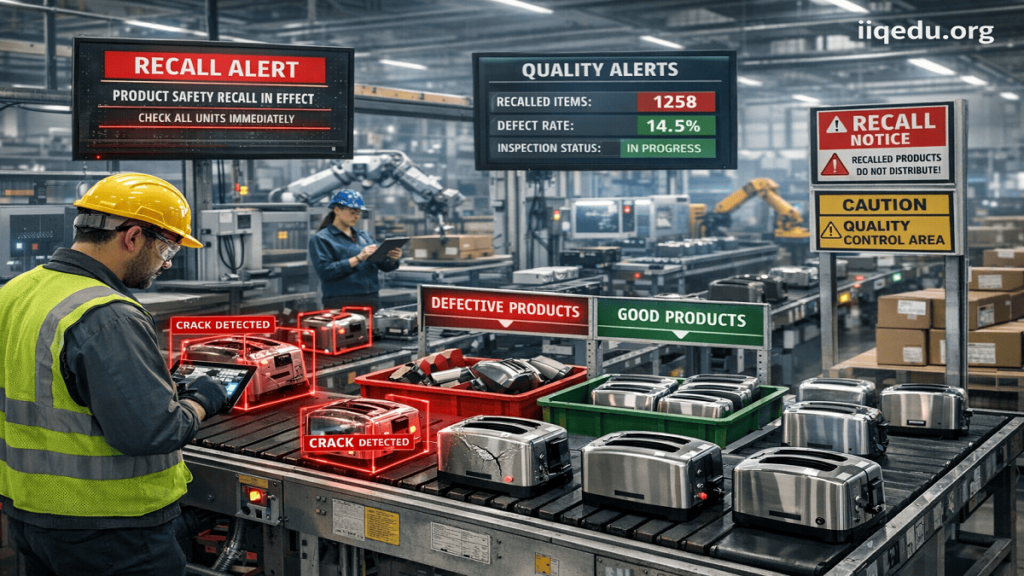
Product recalls are not planned or “required” in a normal situation, but they become necessary when a product has defects or safety risks. They are required to:
- Protect consumers from harm
- Comply with legal and regulatory standards
- Prevent further damage to brand reputation
In short, recalls are mandatory actions when something goes wrong.
Quality Failures
Quality failures are not required at all—they are undesirable problems that companies try to avoid. However, they may occur due to:
- Design errors
- Manufacturing defects
- Poor-quality materials
- Lack of proper testing
Simple Understanding
- Quality Failure: The defect or issue in the product
- Product Recall: The action taken to fix or remove that issue
Key Takeaway
Product recalls are required only when quality failures occur, especially if the issue affects safety, performance, or compliance. The goal of every company is to minimize quality failures so recalls are not needed.
Where are Product Recalls & Quality Failures required?
Product recalls and quality failures are relevant across multiple locations and stages in the product lifecycle. They are not limited to one place—they can occur and be managed in several areas:
1. Manufacturing Facilities
- Quality failures often originate in factories due to production errors or defective components.
- Recalls may be initiated here once defects are identified during internal inspections.
2. Supply Chain & Supplier Locations
- Issues can arise at supplier sites where raw materials or components are produced.
- Defective parts can lead to large-scale recalls if not detected early.
3. Warehouses & Distribution Centers
- Products are checked before shipping to retailers or customers.
- Recalls may be executed here by stopping distribution and removing faulty products.
4. Retail Stores & Marketplaces
- Defective products already available for sale are removed from shelves during a recall.
- Retailers play a key role in returning products back to manufacturers.
5. Customer Locations (End Users)
- Many quality failures are discovered after products reach customers.
- Recalls extend to consumers, who are asked to return, repair, or replace the product.
6. Global Markets
- For internationally sold products, recalls happen across multiple countries.
- Companies must coordinate recalls according to different regional regulations.
Key Takeaway
Product Recalls & Quality Failures are required wherever products are designed, produced, distributed, or used. This makes them a global and end-to-end responsibility across the entire supply chain.
How are Product Recalls & Quality Failures required?
Product recalls and quality failures are managed through a structured and systematic process. While quality failures are unintended problems, recalls are the organized response to address those problems effectively.
1. Detection of Quality Failure
- Issues are identified through testing, inspections, or customer complaints.
- Data from service centers, returns, or feedback helps detect problems early.
2. Investigation & Root Cause Analysis
- Companies analyze the issue to find the exact cause (design defect, manufacturing error, or supplier issue).
- Techniques like testing and failure analysis are used to understand the problem.
3. Risk Assessment
- The severity of the issue is evaluated.
- If the product poses safety risks or violates regulations, a recall becomes necessary.
4. Decision to Recall
- Management decides whether to initiate a voluntary recall or comply with a mandatory recall ordered by authorities.
5. Recall Execution
- Customers, distributors, and retailers are notified.
- Defective products are:
- Recalled (returned)
- Repaired
- Replaced
- Refunded
6. Corrective Actions
- The company fixes the root cause by improving design, Recalls & Quality Failures, processes, or supplier quality.
- Preventive measures are implemented to avoid future failures.
7. Post-Recall Monitoring
- Companies track the effectiveness of the recall.
- Continuous monitoring ensures the issue does not reoccur.
Key Takeaway
Product Recalls & Quality Failures are required through a step-by-step process involving detection, analysis, decision-making, and corrective action. This structured approach helps protect consumers and improve product quality over time.
Case Study of Product Recalls & Quality Failures
Background
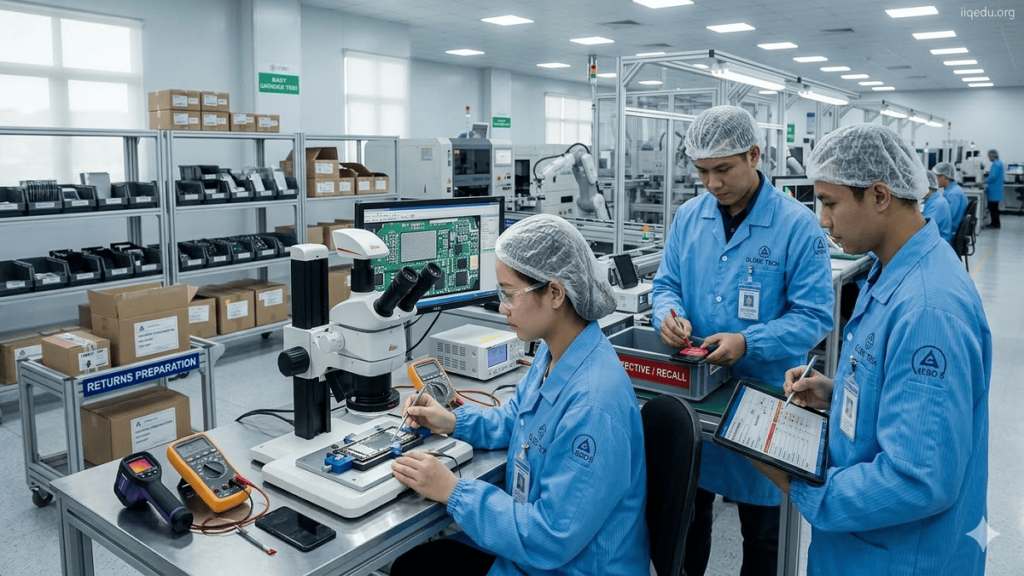
In 2016, Samsung Electronics launched the Galaxy Note 7 as a premium smartphone with advanced features. It quickly gained popularity worldwide due to its design and performance.
The Quality Failure
Shortly after release, users reported that the phone’s battery was overheating, catching fire, and even exploding.
The root cause was linked to:
- Faulty battery design
- Manufacturing defects from suppliers
- Inadequate testing under real-world conditions
This was a serious Product Recalls & quality failures, especially because it involved safety risks.
The Product Recall
In response, Samsung Electronics initiated a global product recall:
- Millions of devices were recalled worldwide
- Replacement units were provided, but some also failed
- Eventually, the company stopped production completely
This became one of the largest smartphone recalls in history.
Impact of the Recall
1. Financial Losses
- Billions of dollars lost in recalls, replacements, and halted production
2. Brand Reputation Damage
- Loss of consumer trust globally
3. Regulatory Pressure
- Airlines even banned the device due to safety concerns
Lessons Learned
- Strict Quality Testing is Critical
Especially for high-risk components like batteries - Supplier Quality Must Be Controlled
Multiple suppliers can increase risk if not managed properly - Speed Matters in Crisis Response
Delayed or incomplete action can worsen the situation - Global QC Must Be Strong
Issues can spread quickly when products are distributed worldwide
Key Takeaway
This case clearly shows how a quality failure can lead to a large-scale product recall, affecting finances, reputation, and customer safety. Recalls & Quality Failures. Strong quality control systems and quick response strategies are essential to prevent such situations.
White Paper of Product Recalls & Quality Failures
Executive Summary
Product recalls and quality failures are critical challenges faced by industries worldwide. They directly impact consumer safety, brand reputation, and financial performance. This white paper explores the causes, processes, impacts, and prevention strategies related to product recalls & quality failures, providing a structured approach for organizations to manage and minimize risks effectively.
1. Introduction
In today’s competitive and globalized market, maintaining product quality is essential. However, despite advanced technologies and quality systems, Producy Recalls & quality failures defects and failures can still occur. When these issues pose risks to consumers or violate regulations, companies must initiate product recalls & quality failures.
This paper aims to:
- Define product recalls & quality failures
- Explain their relationship
- Identify causes and impacts
- Provide prevention and management strategies
2. Definition and Concepts
2.1 Product Recalls
A product recall is the process of removing defective or unsafe products from the market. It is initiated to protect consumers and ensure compliance with safety regulations.
2.2 Quality Failures
Quality failures refer to defects or issues that prevent a product from meeting required standards, performance expectations, or safety requirements.
2.3 Relationship Between the Two
Quality failures often trigger product recalls, especially when the issue affects safety or compliance.
3. Causes of Product Recalls & Quality Failures
Common causes include:
- Design Defects: Poor product design leading to malfunction or safety risks
- Manufacturing Errors: Faulty production processes or human errors
- Defective Components: Low-quality materials or supplier issues
- Inadequate Testing: Insufficient validation before product launch
- Regulatory Non-Compliance: Failure to meet legal standards
4. Lifecycle Stages Where Failures Occur
Quality failures can occur at any stage:
- Design Stage: Flawed concepts or insufficient validation
- Production Stage: Errors during manufacturing
- Distribution Stage: Damage during logistics
- Post-Market Stage: Issues discovered by customers
5. Product Recall Process
A typical recall process includes:
- Detection of Issue
Identification through testing, audits, or customer complaints - Risk Assessment
Evaluation of severity and impact - Decision Making
Determining whether a recall is required - Communication
Informing regulators, distributors, and customers - Execution
Product return, repair, replacement, or refund - Corrective Action
Fixing root causes and improving processes - Monitoring
Ensuring recall effectiveness and preventing recurrence
6. Impact Analysis
6.1 Financial Impact
- Cost of recalls, logistics, and compensation
- Loss of revenue and market share
6.2 Reputational Impact
- Loss of customer trust
- Negative media coverage
6.3 Legal and Regulatory Impact
- Fines and penalties
- Lawsuits and compliance issues
6.4 Operational Impact
- Production delays
- Supply chain disruptions
7. Prevention Strategies
Organizations can reduce risks through:
- Strong Quality Control Systems
- Supplier Quality Management
- Comprehensive Testing and Validation
- Regulatory Compliance Monitoring
- Use of Data Analytics for Early Detection
- Employee Training and Process Standardization
8. Best Practices
- Implement end-to-end quality management systems
- Use risk-based approaches such as Failure Mode and Effects Analysis (FMEA)
- Maintain traceability across the supply chain
- Develop a clear recall management plan
- Ensure transparent communication with stakeholders
9. Conclusion
Product recalls and quality failures are unavoidable risks in complex industries, but their impact can be minimized through proactive planning and strong quality systems. Recalls & Quality Failures, Organizations that invest in prevention, rapid response, and continuous improvement can protect consumers, maintain trust, and achieve long-term success.
10. References (Indicative)
- ISO 9001 Quality Management Systems
- Industry regulatory guidelines (FDA, CE, BIS, etc.)
- Quality management frameworks and best practices
Industry Application of Product Recalls & Quality Failures
Product recalls and quality failures are not limited to one sector—they are critical across multiple industries where product safety, reliability, and compliance are essential. Below are the key industry applications:
1. Automobile Industry
- Application: Ensures vehicles are safe for driving.
- Example Issues: Faulty airbags, brake failures, engine defects.
- Impact: Large-scale recalls to prevent accidents and ensure passenger safety.
2. Consumer Electronics Industry
- Application: Maintains performance and safety of devices like smartphones, laptops, and appliances.
- Example Issues: Battery overheating, software bugs, hardware malfunctions.
- Impact: Recalls help prevent hazards such as fire risks and ensure customer satisfaction.
3. Pharmaceutical Industry
- Application: Ensures medicines are safe, effective, and correctly manufactured.
- Example Issues: Contamination, incorrect dosage, labeling errors.
- Impact: Immediate recalls are critical to protect patient health and comply with strict regulations.
4. Food and Beverage Industry
- Application: Ensures food safety and hygiene standards.
- Example Issues: Contamination, expired ingredients, mislabeling (e.g., allergens).
- Impact: Recalls prevent health risks like food poisoning and allergic reactions.
5. Medical Devices Industry
- Application: Ensures devices like implants, diagnostic tools, and equipment function safely.
- Example Issues: Device malfunction, software errors, design flaws.
- Impact: Recalls are essential to avoid life-threatening situations.
6. Retail and E-commerce
- Application: Acts as a distribution channel for recalled products.
- Role: Removing defective products from shelves and notifying customers.
- Impact: Ensures efficient recall execution and customer communication.
7. Aerospace and Aviation Industry
- Application: Maintains safety of aircraft systems and components.
- Example Issues: Mechanical defects, system failures.
- Impact: Even minor quality failures can lead to major recalls due to high safety risks.
Key Takeaway
Product Recalls & Quality Failures are essential quality management tools across industries. They help:
- Protect consumer safety
- Ensure regulatory compliance
- Maintain brand reputation
- Drive continuous improvement
#bestinstituteintheworld #bestinstituteinmumbai #bestinstituteinindia #productrecallsandqualityfailuresinmaharashtra ##productrecallsandqualityfailuresinpune ##productrecallsandqualityfailuresinlakhnav #productrecallsandqualityfailuresinpatna #productrecallsandqualityfailuresinratnagiri #productrecallsandqualityfailuresinjonpur #productrecallsandqualityfailuresinjaipur #productrecallsandqualityfailuresingorakhpur #productrecallsandqualityfailuresinbangalore #productrecallsandqualityfailuresinvishakhapatnam #productrecallsandqualityfailuresinkochi #productrecallsandqualityfailuresinuttarakhand #productrecallsandqualityfailuresinamritsar #productrecallsandqualityfailuresinncr #productrecallsandqualityfailuresinamahadabad#productrecallsandqualityfailuresinarunachalpradesh #productrecallsandqualityfailuresinkolkata
Ask FAQs
What is a product recall?
A product recall is the process of removing a defective or unsafe product from the market to protect consumers and comply with safety regulations.
What is a quality failure?
A quality failure occurs when a product does not meet required standards, performance expectations, or safety requirements.
What causes product recalls and quality failures?
Common causes include design defects, manufacturing errors, faulty components, lack of proper testing, and non-compliance with regulations.
How do companies handle product recalls?
Companies identify the issue, assess the risk, inform customers and authorities, recall the product, and take corrective actions to fix the problem and prevent future failures
Why are product recalls important?
Product recalls are important because they protect consumer safety, ensure legal compliance, maintain brand reputation, and help companies improve their quality processes.
Source: How It Comes Together
Table of Contents
Disclaimer:
This content is for informational purposes only and does not constitute professional, legal, or regulatory advice. Companies and individuals should refer to official guidelines and industry standards for accurate procedures regarding product recalls and quality failures.