Net Zero Emissions & Quality Targets
1. Net Zero Emissions
Definition:
Net zero emissions means balancing the amount of greenhouse gases (GHGs) emitted into the atmosphere with an equivalent amount removed, so the net contribution to climate change is zero.
Key Components:
- Reducing emissions: Minimizing carbon dioxide (CO₂), methane (CH₄), nitrous oxide (N₂O), and other GHGs through cleaner energy, energy efficiency, sustainable transport, and industrial improvements.
- Carbon removal/offsetting: Using natural (forests, soil carbon) or technological solutions (carbon capture and storage) to remove residual emissions.
- Scope considerations:
- Scope 1: Direct emissions from owned or controlled sources (e.g., company vehicles, factories).
- Scope 2: Indirect emissions from purchased electricity, heat, or steam.
- Scope 3: Other indirect emissions from the value chain (suppliers, product use, disposal).
Importance:
Achieving net zero aligns companies and governments with the Paris Agreement goals to limit global warming to 1.5°C.
2. Quality Targets
Definition:
Quality targets are specific, measurable goals set by an organization to ensure products, services, or processes meet or exceed defined standards of performance, reliability, and customer satisfaction.
Key Principles:
- SMART Goals: Targets should be Specific, Measurable, Achievable, Relevant, and Time-bound.
- Standards & Frameworks: Often tied to ISO standards (e.g., ISO 9001 for quality management) or industry-specific benchmarks.
- Metrics Examples:
- Product defect rate ≤ 1%
- Customer complaint resolution within 48 hours
- On-time delivery ≥ 95%
- Continuous Improvement: Using techniques like Six Sigma or Kaizen to systematically reduce errors and enhance quality over time.
Integrating Net Zero & Quality Targets
Modern organizations increasingly integrate sustainability and quality, ensuring that environmentally responsible practices do not compromise product/service excellence. For example:
- Sustainable materials: Reducing carbon footprint while maintaining durability.
- Energy-efficient production: Minimizing emissions while improving product consistency.
- Supplier standards: Ensuring both low emissions and high-quality inputs.
Benefits:
- Enhanced brand reputation
- Regulatory compliance
- Cost savings from efficiency improvements
- Increased customer loyalty
#Net Zero Emissions & Quality Targets in Kedarnath
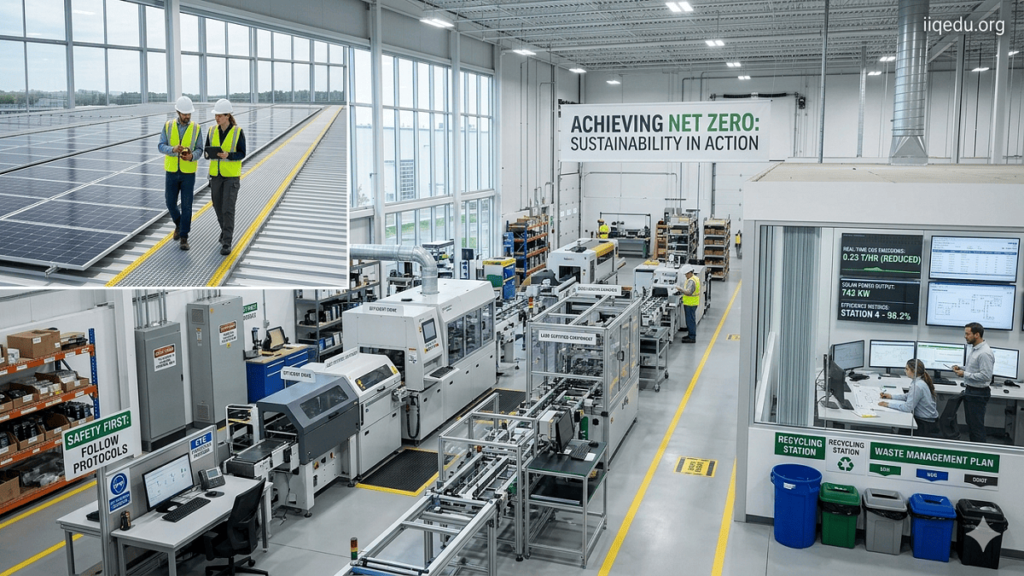
What is Net Zero Emissions & Quality Targets?
Net zero emissions means that an organization, country, or activity balances the greenhouse gases it emits with an equivalent amount removed from the atmosphere, so the net contribution to climate change is zero.
Key Points:
- Reduce emissions wherever possible (energy efficiency, renewable energy, cleaner transport).
- Remove residual emissions through carbon capture, forestation, or offsets.
- Covers all emission scopes:
- Scope 1: Direct emissions (e.g., factory, vehicles)
- Scope 2: Indirect emissions from purchased energy
- Scope 3: Emissions across the supply chain
Purpose: To combat climate change and align with global targets like the Paris Agreement.
2. Quality Targets
Definition:
Quality targets are specific goals set to ensure products, services, or processes meet required standards of performance, reliability, and customer satisfaction.
Key Points:
- Should be SMART (Specific, Measurable, Achievable, Relevant, Time-bound).
- Examples:
- Reduce product defects to <1%
- Achieve ≥95% on-time delivery
- Resolve customer complaints within 48 hours
- Often aligned with standards like ISO 9001 or industry benchmarks.
Purpose: To maintain high standards, improve customer satisfaction, and drive continuous improvement.
Why They Matter Together
Organizations now combine Net Zero goals with quality targets to ensure sustainability doesn’t compromise product or service quality. This improves brand reputation, efficiency, and long-term competitiveness.
#Net Zero Emissions & Quality Targets in Kolkata
Who is Net Zero Emissions & Quality Targets required?
Net Zero commitments are not legally required for everyone, but the pressure comes from regulations, investors, and global climate agreements. Key groups include:
- Governments & Public Sector
- Many countries have legally binding climate targets (e.g., EU Green Deal, UK Climate Change Act).
- Public agencies must reduce emissions in operations, energy use, and transportation.
- Corporations & Businesses
- Large companies, especially in energy, manufacturing, and transportation, are expected by investors and regulators to have Net Zero strategies.
- Some countries require reporting of emissions for companies above a size threshold (e.g., EU Corporate Sustainability Reporting Directive).
- Organizations in High-Impact Sectors
- Industries with high greenhouse gas emissions (oil & gas, steel, cement, aviation) are under strong regulatory and market pressure to achieve Net Zero.
- Voluntary Participants
- Smaller companies and organizations often adopt Net Zero voluntarily to meet customer demand, brand reputation, or ESG goals.
2. Quality Targets – Who Is Required?
Quality targets are required for organizations that deliver products or services where consistency, safety, or compliance is critical:
- Manufacturers & Production Companies
- Must meet product standards, reduce defects, and comply with ISO certifications.
- Service Providers
- Hospitals, banks, and IT services often have quality standards for reliability and customer satisfaction.
- Regulated Industries
- Pharmaceuticals, aerospace, automotive: quality targets are legally enforced through regulatory bodies (e.g., FDA, EASA).
- Any Organization Seeking Certification or Competitive Advantage
- ISO 9001 or industry-specific certifications require measurable quality objectives.
Key Insight
- Net Zero is increasingly a regulatory and stakeholder expectation, especially for large or high-emission entities.
- Quality Targets are often mandatory in regulated industries or when meeting customer expectations and certifications.
- Many companies now combine both: improving quality while reducing emissions to stay competitive and responsible.
#Net Zero Emissions & Quality Targets in Raipur
When is Net Zero Emissions & Quality Targets required?
Timing depends on legal, regulatory, or voluntary commitments:
- By Government Mandates or Climate Policies
- Many countries set target years for Net Zero, e.g.:
- UK: 2050 legally binding target
- EU: 2050 climate neutrality target
- US (federal goal): Net zero by 2050
- Organizations must plan and report emissions reductions ahead of these deadlines.
- Many countries set target years for Net Zero, e.g.:
- Industry-Specific Deadlines
- Certain sectors may have earlier milestones, e.g., aviation aiming for carbon-neutral growth from 2020 onward, steel and cement industries have phased reduction targets by 2030–2040.
- Voluntary Corporate Goals
- Many companies set interim targets (e.g., 2030 for 50% reduction) as stepping stones toward full Net Zero by 2050.
- Reporting and accountability often start as soon as the commitment is made, with annual progress updates.
Summary: Net Zero is “required” by regulation, stakeholder expectations, or internal corporate commitments, often with milestone deadlines (2030, 2040, 2050).
2. Quality Targets – When They’re Required
Timing depends on legal, contractual, or operational needs:
- Regulatory Compliance
- Industries like pharmaceuticals, aerospace, and food must meet quality standards continuously, as part of daily operations.
- Non-compliance can lead to penalties, recalls, or license revocation.
- Certification or ISO Standards
- Organizations seeking ISO 9001 or similar certifications must define and meet quality targets immediately, maintain records, and review performance regularly.
- Internal Operational Goals
- Companies set ongoing targets for defect reduction, customer satisfaction, or process efficiency.
- Often measured quarterly or annually to drive continuous improvement.
Summary: Quality targets are “required” continuously as part of operations or from the moment a company commits to certification, regulatory compliance, or internal performance standards.
Key Insight
| Aspect | Timing of Requirement |
|---|---|
| Net Zero Emissions | By regulatory deadlines (e.g., 2030, 2050), or immediately after corporate/voluntary commitments; often with interim milestones. |
| Quality Targets | Continuous, from the start of production/service, or when certification/regulatory compliance is needed; reviewed periodically (quarterly/annually). |
#Net Zero Emissions & Quality Targets in Delhi
Where is Net Zero Emissions & Quality Targets required?
Net Zero is required in regions, industries, and contexts where governments, regulators, or stakeholders demand action:
- By Geography / Government Regulation
- European Union: Companies above certain size thresholds must report emissions under the EU Corporate Sustainability Reporting Directive; climate-neutral targets are promoted across sectors.
- United Kingdom: Legally binding Net Zero by 2050; all public and large private entities must plan reductions.
- United States: Voluntary corporate targets are common, and some states (e.g., California) have strict emissions reporting and reduction rules.
- Other countries (Japan, Canada, Australia, South Korea): Increasingly require large companies to align with national Net Zero strategies.
- By Industry / Sector
- High-emission industries: Oil & gas, steel, cement, chemicals, aviation, shipping — often have stricter deadlines and sector-specific Net Zero commitments.
- Energy-intensive operations: Power generation, manufacturing, and large logistics networks are expected to reduce emissions.
- By Organizational Scope
- Large corporations: Typically above a certain revenue or emission threshold.
- Government agencies & public sector: Required to meet national Net Zero objectives.
- Voluntary adoption: SMEs and non-profits may implement Net Zero to satisfy customers, investors, or ESG expectations.
2. Quality Targets – Where They’re Required
Quality targets are required wherever compliance, safety, or performance standards matter:
- Regulated Industries
- Pharmaceuticals & Healthcare: Hospitals, labs, and drug manufacturers must meet strict quality control standards.
- Aerospace & Automotive: Aircraft, vehicle, and parts manufacturers follow ISO or regulatory quality standards.
- Food & Beverage: Quality targets are mandatory to ensure safety, hygiene, and regulatory compliance.
- ISO Certification & Standards
- Any organization seeking ISO 9001 or other industry certifications must define and achieve measurable quality targets.
- Corporate Operations / Supply Chains
- Any business producing goods or services sets quality targets to maintain customer satisfaction, operational efficiency, and brand reputation.
Key Insight
| Aspect | Where It’s Required |
|---|---|
| Net Zero Emissions | Countries with climate laws (EU, UK, Japan, US states), high-emission industries (steel, cement, aviation), large corporations, and public sector organizations. |
| Quality Targets | Regulated industries (pharma, food, aerospace), organizations seeking ISO certification, manufacturing and service companies, and supply chains. |
#Net Zero Emissions & Quality Targets in Sambhaji Nagar
How is Net Zero Emissions & Quality Targets required?
Net Zero isn’t just a number—it requires structured actions and compliance processes:
- Set Targets and Milestones
- Establish a Net Zero target year (e.g., 2050) and interim reduction goals (e.g., 50% reduction by 2030).
- Include Scope 1, 2, and 3 emissions in the plan.
- Measure Emissions
- Conduct a GHG inventory to quantify current emissions across operations and supply chains.
- Use recognized protocols such as the Greenhouse Gas Protocol.
- Implement Reduction Strategies
- Energy efficiency: Upgrade equipment, optimize operations.
- Renewable energy: Switch to solar, wind, or green electricity.
- Low-carbon processes: Electrification of transport, carbon capture technologies, sustainable materials.
- Offset Remaining Emissions
- Purchase carbon credits or invest in nature-based solutions (forests, soil carbon).
- Monitor and Report Progress
- Continuous tracking of emissions reductions.
- Public reporting may be mandatory in regulated regions or expected for ESG transparency.
Example: A manufacturing company reduces factory emissions by 40%, switches to 60% renewable electricity, and offsets remaining emissions to reach Net Zero.
2. How Quality Targets Are Required
Quality targets are implemented through structured systems, processes, and standards:
- Define Clear Objectives
- Set measurable goals like defect rate ≤1%, on-time delivery ≥95%, or customer complaint resolution <48 hours.
- Use Quality Management Systems (QMS)
- Adopt frameworks like ISO 9001 to formalize processes.
- Document procedures, responsibilities, and key performance indicators (KPIs).
- Measure and Monitor Performance
- Collect data on products, processes, or services.
- Regular audits and inspections ensure compliance.
- Continuous Improvement
- Apply methodologies like Six Sigma, Lean, or Kaizen to reduce errors and enhance quality.
- Reporting & Accountability
- Internal reports track progress against targets.
- External certification audits validate compliance with standards.
Example: A food processing company monitors product defect rates weekly, investigates deviations, and applies corrective measures to consistently meet safety and quality standards.
Key Insight
| Aspect | How It’s Required |
|---|---|
| Net Zero Emissions | By setting targets, measuring emissions, implementing reduction strategies, offsetting remaining emissions, and reporting progress. |
| Quality Targets | By defining measurable goals, using a Quality Management System, monitoring performance, applying continuous improvement, and reporting results. |
#Net Zero Emissions & Quality Targets in Uttar Pradesh

Case Study of Net Zero Emissions & Quality Targets
Company Overview
GreenTech Manufacturing is a mid-sized electronics manufacturer specializing in renewable energy equipment. The company operates globally with factories in Europe, Asia, and North America.
Challenges:
- High energy consumption in production lines.
- Increasing regulatory pressure on carbon emissions.
- Customer demand for high-quality, defect-free products.
Objectives
- Achieve Net Zero emissions across all operations by 2035.
- Reduce product defects and improve on-time delivery to meet ISO 9001 standards.
- Align sustainability initiatives with quality management to ensure operational efficiency and customer satisfaction.
Strategies Implemented
1. Net Zero Emissions Initiatives
- Energy Efficiency: Upgraded machinery and optimized production lines to reduce electricity consumption by 25%.
- Renewable Energy: Shifted 70% of operations to solar and wind energy sources.
- Carbon Offsetting: Partnered with forestry programs to offset residual emissions.
- Supply Chain Engagement: Encouraged suppliers to adopt low-carbon practices and report emissions.
2. Quality Targets Initiatives
- Defined SMART Goals: Reduced defect rate from 3% to less than 1% within two years.
- Quality Management System (QMS): Implemented ISO 9001-certified processes, including standardized inspections and KPI monitoring.
- Continuous Improvement: Applied Lean and Six Sigma methodologies to identify process inefficiencies and reduce errors.
- Customer Feedback Integration: Established rapid-response system to resolve complaints within 48 hours.
Results
Environmental Performance:
- Achieved 50% reduction in Scope 1 and 2 emissions within five years.
- Maintained Net Zero trajectory with verified carbon offset programs.
Quality Performance:
- Defect rate dropped to 0.8%, exceeding initial targets.
- On-time delivery improved to 96%.
- ISO 9001 recertification achieved with zero non-conformities.
Business Impact:
- Enhanced brand reputation and strengthened market position in renewable energy solutions.
- Operational efficiency improved, reducing production costs by 12%.
- Increased customer satisfaction and retention.
Key Takeaways
- Integration Matters: Combining Net Zero goals with quality targets ensures sustainability initiatives do not compromise product standards.
- Measurement and Monitoring: Continuous tracking of emissions and quality metrics is essential for progress and accountability.
- Stakeholder Engagement: Engaging employees, suppliers, and customers drives both sustainability and quality improvements.
- Continuous Improvement: Lean, Six Sigma, and other methodologies help maintain quality while achieving environmental goals.
#Net Zero Emissions & Quality Targets in Surat
Industry Application of Net Zero Emissions & Quality Targets
Industry Applications of Net Zero Emissions
- Energy & Utilities
- Shift from fossil fuels to renewable energy sources (solar, wind, hydro).
- Implement carbon capture and storage (CCS) for unavoidable emissions.
- Optimize grid efficiency to reduce energy losses.
- Manufacturing & Heavy Industry
- Steel, cement, and chemical plants adopt energy-efficient production processes.
- Use alternative low-carbon materials and sustainable supply chains.
- Set interim Net Zero targets for Scope 1, 2, and 3 emissions.
- Transportation & Logistics
- Electrification of fleets (electric trucks, ships, trains).
- Optimize logistics routes and warehouse energy use.
- Invest in sustainable fuels like biofuels and green hydrogen.
- Buildings & Construction
- Green building standards (LEED, BREEAM) for energy efficiency.
- Use low-carbon construction materials.
- Smart energy management systems for heating, ventilation, and lighting.
- Agriculture & Food Industry
- Reduce methane emissions from livestock.
- Adopt precision farming and renewable energy for operations.
- Implement carbon sequestration practices (reforestation, soil carbon storage).
Industry Applications of Quality Targets
- Pharmaceuticals & Healthcare
- Achieve zero defect in drug formulation and medical devices.
- Follow ISO 9001 and GMP (Good Manufacturing Practices).
- Track KPIs such as batch quality, error rates, and patient safety.
- Automotive & Aerospace
- Ensure vehicle and aircraft safety standards with continuous inspections.
- Apply Six Sigma and Lean methodologies to minimize defects.
- Use quality metrics like on-time delivery, part failure rates, and warranty claims.
- Food & Beverage
- Maintain hygiene, safety, and product consistency.
- HACCP and ISO 22000 standards ensure regulatory compliance.
- Monitor shelf-life, contamination levels, and customer complaints.
- Electronics & High-Tech Manufacturing
- Control product defects and enhance durability.
- Adopt ISO 9001 and Six Sigma for production consistency.
- Monitor metrics such as defect rates, assembly accuracy, and customer satisfaction.
- Service Industries (IT, Banking, Hospitality)
- Set targets for service delivery, uptime, and customer satisfaction.
- Monitor complaints, resolution times, and SLA compliance.
- Continuous process improvement ensures consistent quality.
Key Insight
- Net Zero Emissions is primarily applied in high-energy or high-carbon industries where emissions reduction has the largest impact.
- Quality Targets are universal across all product- and service-oriented industries, particularly in regulated sectors where safety and compliance are critical.
- Modern businesses integrate both Net Zero and Quality Targets to ensure sustainability initiatives complement operational excellence.
#Net Zero Emissions & Quality Targets in India
White Paper of Net Zero Emissions & Quality Targets
Executive Summary
In today’s competitive and environmentally conscious marketplace, organizations must address both sustainability and quality to remain relevant. Achieving Net Zero Emissions reduces environmental impact, while establishing Quality Targets ensures operational excellence and customer satisfaction. Integrating these initiatives enables businesses to meet regulatory requirements, enhance brand reputation, and drive long-term profitability.
1. Introduction
Global climate change and increasing regulatory scrutiny have elevated the importance of Net Zero Emissions. At the same time, customers demand high-quality products and services, making Quality Targets a critical component of business strategy. Companies that align sustainability goals with quality management systems create operational efficiency, reduce costs, and strengthen market competitiveness.
2. Net Zero Emissions
Definition: Net Zero Emissions occurs when greenhouse gas (GHG) emissions produced are fully balanced by those removed from the atmosphere.
Implementation Steps:
- Target Setting: Establish corporate Net Zero goals with interim milestones.
- Emissions Measurement: Quantify Scope 1, 2, and 3 emissions across operations and supply chains.
- Reduction Strategies: Deploy energy efficiency measures, renewable energy, low-carbon materials, and process optimization.
- Offsetting: Invest in carbon removal solutions such as reforestation or verified carbon credits.
- Monitoring and Reporting: Continuously track emissions and report progress to stakeholders.
Benefits:
- Regulatory compliance and reduced legal risk
- Enhanced ESG reputation
- Operational cost savings through efficiency improvements
3. Quality Targets
Definition: Quality Targets are measurable objectives designed to ensure products, services, and processes meet defined standards for performance, reliability, and safety.
Implementation Steps:
- Define Measurable Objectives: Set SMART goals, e.g., defect rates, on-time delivery, or customer complaint resolution.
- Adopt Quality Management Systems (QMS): Implement frameworks like ISO 9001 for systematic quality control.
- Continuous Improvement: Apply Lean, Six Sigma, and Kaizen to reduce errors and optimize processes.
- Monitoring and Reporting: Use KPIs and audits to ensure targets are consistently met.
Benefits:
- Improved product reliability and customer satisfaction
- Compliance with industry regulations
- Enhanced operational efficiency
4. Integrating Net Zero and Quality Targets
Organizations achieve greater impact when sustainability initiatives and quality management are aligned:
- Energy-efficient production reduces emissions and improves process consistency.
- Sustainable materials maintain product quality while lowering carbon footprint.
- Supplier engagement ensures both low emissions and high-quality inputs.
- Data-driven monitoring tracks both environmental performance and product/service quality metrics.
Case Example: A global electronics manufacturer reduced factory emissions by 50% while simultaneously decreasing product defect rates to below 1%, achieving ISO 9001 recertification and advancing its Net Zero commitments.
5. Industry Applications
| Industry | Net Zero Strategy | Quality Targets |
|---|---|---|
| Energy & Utilities | Transition to renewable energy, carbon capture | Operational reliability, grid stability |
| Manufacturing | Low-carbon materials, energy-efficient machinery | Defect rate reduction, ISO 9001 compliance |
| Automotive & Aerospace | Electric vehicles, green supply chain | Safety standards, Six Sigma processes |
| Food & Beverage | Sustainable farming, waste reduction | HACCP, product consistency |
| IT & Services | Green data centers, paperless operations | Service uptime, SLA compliance |
6. Challenges and Recommendations
Challenges:
- High upfront investment for sustainable technologies
- Complex supply chain alignment
- Balancing emissions reduction with quality and performance requirements
Recommendations:
- Establish clear goals and KPIs for both Net Zero and quality performance.
- Use technology and automation to monitor and improve processes.
- Engage suppliers and partners in sustainability and quality initiatives.
- Review and update targets periodically to reflect regulatory changes and market trends.
7. Conclusion
Achieving Net Zero Emissions and meeting Quality Targets are no longer optional. Organizations that integrate these objectives gain operational efficiencies, regulatory compliance, and improved customer trust. By aligning environmental sustainability with quality management, businesses can drive long-term value, competitive advantage, and a meaningful contribution to global climate goals.
#Net Zero Emissions & Quality Targets in Vasai
Ask FAQs
What does “Net Zero Emissions” mean?
Net Zero Emissions refers to balancing greenhouse gas emissions released into the atmosphere with an equivalent amount removed, resulting in no net contribution to climate change. It involves reducing emissions wherever possible and offsetting the remainder through carbon removal initiatives.
Who is required to implement Net Zero Emissions and Quality Targets?
Net Zero Emissions is required primarily for governments, public sector organizations, large corporations, and high-emission industries, either by law, regulation, or stakeholder expectations. Quality Targets are required across all sectors producing goods or services, particularly regulated industries like pharmaceuticals, aerospace, food, and manufacturing, and for organizations seeking ISO certification or operational excellence.
When should organizations aim to achieve Net Zero and Quality Targets?
Net Zero targets are generally aligned with regulatory deadlines (commonly 2030, 2040, or 2050) and corporate sustainability commitments with interim milestones. Quality Targets are implemented continuously from the start of production or service delivery and reviewed periodically to maintain compliance and operational standards.
How are Net Zero Emissions and Quality Targets achieved?
Net Zero: Organizations measure emissions, implement reduction strategies (energy efficiency, renewable energy, low-carbon materials), offset residual emissions, and monitor progress.
Quality Targets: Organizations set measurable objectives, adopt Quality Management Systems (like ISO 9001), monitor KPIs, apply continuous improvement methodologies, and report results. Integrating both ensures sustainability initiatives do not compromise quality.
Why is integrating Net Zero Emissions with Quality Targets important?
Integration ensures that sustainability initiatives support, rather than hinder, operational performance. It improves efficiency, reduces costs, enhances customer satisfaction, strengthens regulatory compliance, and boosts brand reputation while contributing meaningfully to global climate goals.
Source: TED
Table of Contents
Disclaimer:
The information provided in this document is for general informational purposes only and does not constitute legal, financial, or professional advice. Organizations should consult relevant experts and regulatory guidance before implementing Net Zero or quality initiatives. Results may vary based on industry, location, and operational context.