Quality in Automotive (IATF 16949)
1. Introduction
The automotive industry demands extremely high standards of quality, safety, and consistency due to the direct impact on vehicle performance and passenger safety. IATF 16949 is an internationally recognized Quality Management System (QMS) standard for automotive manufacturers and suppliers. It integrates the general principles of ISO 9001 with specific requirements for automotive production and service parts organizations, focusing on defect prevention, process improvement, and supply chain management.
2. What is IATF 16949?
IATF 16949 is a global standard for automotive quality management, developed by the International Automotive Task Force (IATF). It is designed to:
- Improve product and process quality across the automotive supply chain.
- Prevent defects and minimize variation in production.
- Ensure customer satisfaction through continuous improvement.
- Align automotive QMS with ISO 9001 requirements while adding industry-specific criteria.
The standard is widely adopted by OEMs (Original Equipment Manufacturers) and suppliers worldwide to ensure uniform quality and compliance.
3. Key Requirements of IATF 16949
IATF 16949 builds upon ISO 9001 and includes additional automotive-specific requirements, such as:
- Defect Prevention: Strategies to identify and eliminate causes of defects in production.
- Customer-Specific Requirements (CSR): Compliance with standards set by automotive OEMs.
- Risk Management: Proactively addressing risks in production and supply chain operations.
- Supplier Management: Monitoring and evaluating supplier performance and quality metrics.
- Process Monitoring and Control: Ensuring consistent production processes through statistical and analytical methods.
- Continuous Improvement: Using corrective and preventive actions to enhance efficiency and quality over time.
4. Who Requires IATF 16949?
IATF 16949 certification is required by:
- Automotive Manufacturers (OEMs): Companies producing cars, trucks, motorcycles, or vehicle components.
- Tier 1, 2, and 3 Suppliers: Organizations supplying materials, parts, or services to OEMs.
- Automotive Subcontractors: Companies providing specialized manufacturing, assembly, or technical services.
- Maintenance and Service Providers: Businesses that handle automotive parts and service critical components under OEM guidelines.
5. Benefits of IATF 16949
Implementing IATF 16949 provides several advantages:
- Improved Product Quality: Reduced defects and increased reliability of automotive components.
- Supply Chain Efficiency: Streamlined supplier performance and traceability.
- Customer Satisfaction: Meeting OEM requirements consistently.
- Regulatory Compliance: Aligns with automotive industry regulations and standards.
- Operational Excellence: Enhanced process control, reduced waste, and continuous improvement initiatives.
6. Implementation of IATF 16949
Implementation involves:
- Gap Analysis: Assessing current processes versus IATF 16949 requirements.
- Documentation: Developing QMS manuals, procedures, and process records.
- Training: Educating staff and management on automotive-specific quality practices.
- Internal Audits: Conducting periodic checks to ensure compliance and effectiveness.
- Certification Audit: External audit by an IATF-recognized certification body.
- Continuous Improvement: Leveraging performance metrics, customer feedback, and audit findings to refine processes.
7. Conclusion
IATF 16949 represents the gold standard of automotive quality management, ensuring manufacturers and suppliers maintain consistent quality, minimize defects, and comply with customer and regulatory requirements. By implementing IATF 16949, automotive organizations improve product reliability, operational efficiency, and customer trust, maintaining a competitive edge in the global automotive market.
#Quality in Automotive (IATF 16949) in Singapore
Who is Quality in Automotive (IATF 16949) required?
Quality in Automotive (IATF 16949) is required for organizations involved in the design, production, and supply of automotive products and components. Specifically, it applies to:
- Automotive Manufacturers (OEMs):
Companies that produce vehicles, engines, transmissions, or other automotive systems must implement IATF 16949 to ensure product quality, safety, and regulatory compliance. - Tier 1, Tier 2, and Tier 3 Suppliers:
Suppliers providing critical parts, materials, or services to OEMs must comply with IATF 16949 to maintain consistent quality and meet customer-specific requirements. - Subcontractors and Specialized Service Providers:
Organizations performing specialized manufacturing, assembly, or technical services within the automotive supply chain require IATF 16949 certification to ensure defect prevention and process control. - Maintenance and Aftermarket Service Providers:
Companies handling automotive components, repairs, or aftermarket parts must follow IATF 16949 to maintain quality, traceability, and compliance with OEM standards. - Engineering and Design Firms in Automotive Development:
Firms involved in product design, prototyping, or system integration implement IATF 16949 to manage risk, maintain process control, and ensure adherence to automotive standards.
In summary: IATF 16949 is required for any organization that affects the quality, safety, or reliability of automotive products or services, ensuring consistency, defect prevention, and compliance across the entire automotive supply chain.
#Quality in Automotive (IATF 16949) in Ahemdabad
When is Quality in Automotive (IATF 16949) required?
Quality in Automotive (IATF 16949) is required throughout the entire lifecycle of automotive products and services whenever an organization is responsible for ensuring consistent quality, safety, and compliance. Specifically:
- During Design and Development:
IATF 16949 is required when designing vehicles, components, or systems to ensure that processes incorporate defect prevention, risk assessment, and compliance with customer-specific requirements. - During Manufacturing and Production:
Whenever automotive parts or vehicles are produced, IATF 16949 ensures standardized processes, process monitoring, and consistent quality across all production lines. - During Supply Chain Operations:
Suppliers of parts, materials, or services must implement IATF 16949 to guarantee defect-free components and adherence to OEM requirements. - During Maintenance, Repair, and Aftermarket Services:
When performing inspections, repairs, or modifications on automotive components, IATF 16949 ensures standardized procedures, traceability, and compliance with quality standards. - During Audits and Regulatory Compliance:
IATF 16949 is required whenever organizations undergo internal, customer, or certification audits to verify that the Quality Management System meets automotive industry standards.
In short: IATF 16949 is required anytime an organization impacts the quality, safety, or reliability of automotive products or services, from design and production to supply chain management and aftersales service.
#Quality in Automotive (IATF 16949) in Maharashtra

Where is Quality in Automotive (IATF 16949) required?
Quality in Automotive (IATF 16949) is required across all locations and operations that impact the design, production, supply, and maintenance of automotive products and components. Specifically:
- Manufacturing Plants and Production Lines:
IATF 16949 is implemented in facilities producing vehicles, engines, transmissions, and automotive parts to ensure standardized processes, defect prevention, and compliance with OEM requirements. - Supplier and Subcontractor Sites:
All suppliers providing materials, components, or specialized services must adhere to IATF 16949 to maintain consistent quality across the automotive supply chain. - Engineering and Design Offices:
Design and development centers apply IATF 16949 to manage risk, control product configuration, and ensure compliance with customer-specific requirements. - Maintenance, Repair, and Aftermarket Facilities:
Workshops and service centers use IATF 16949 to standardize repair procedures, ensure traceability, and maintain high-quality service standards. - Corporate Quality and Compliance Departments:
Headquarters and quality offices implement IATF 16949 for monitoring, auditing, continuous improvement, and regulatory compliance.
In summary: IATF 16949 is required wherever automotive products or services are designed, manufactured, supplied, or maintained, ensuring quality, safety, and compliance at every stage of the automotive lifecycle.
#Quality in Automotive (IATF 16949) in Kolkata
How is Quality in Automotive (IATF 16949) required?
Quality in Automotive (IATF 16949) is required through the implementation of a structured Quality Management System (QMS) that standardizes processes, manages risks, ensures compliance, and drives continuous improvement across the automotive lifecycle. Specifically, it is applied in the following ways:
1. Establishing a Quality Management System (QMS)
Organizations must define policies, procedures, and responsibilities to manage all activities affecting product quality, safety, and regulatory compliance. This includes developing manuals, process documentation, and standard operating procedures (SOPs) aligned with IATF 16949 requirements.
2. Standardizing Processes
All stages of automotive operations—design, production, maintenance, and supply chain—must follow standardized procedures. This ensures consistency, reduces variability, and prevents defects. Examples include process control plans, work instructions, and inspection protocols.
3. Risk Management and Defect Prevention
IATF 16949 emphasizes proactively identifying and mitigating risks in production and supply chain operations. Organizations implement preventive measures, such as Failure Mode and Effects Analysis (FMEA), to anticipate potential defects and ensure product safety.
4. Supplier and Subcontractor Oversight
Suppliers must be qualified, monitored, and audited to guarantee compliance with IATF 16949 standards. Key performance indicators (KPIs) track quality performance, delivery, and defect rates to maintain supply chain integrity.
5. Monitoring, Auditing, and Corrective Actions
Organizations conduct internal audits, process monitoring, and data analysis to detect non-conformities. Corrective and preventive actions (CAPA) are implemented to resolve issues and prevent recurrence.
6. Training and Competency Development
Personnel involved in design, production, or maintenance are trained in IATF 16949 requirements. Competency assessments ensure staff can perform tasks correctly and consistently, Quality in Automotive (IATF 16949), maintaining quality across all operations.
7. Continuous Improvement
IATF 16949 requires organizations to analyze performance metrics, customer feedback, and audit results to continuously improve processes, reduce waste, and enhance product quality. Tools like Six Sigma, Lean, and root cause analysis are commonly used.
In short: IATF 16949 is required by establishing a robust QMS, standardizing processes, managing risks, monitoring supplier performance, and continuously improving operations, ensuring that automotive products are safe, reliable, and meet customer and regulatory requirements.
#Quality in Automotive (IATF 16949) in Hyderabad
Case Study of Quality in Automotive (IATF 16949)
Company Background
AutoParts Solutions Ltd. is a mid-sized automotive component manufacturer supplying parts to multiple OEMs, including engine and transmission components. The company experienced quality inconsistencies, supplier non-compliance, and rising warranty claims due to process variability and insufficient quality oversight.
Problem Statement
- High defect rates in critical components leading to warranty claims.
- Lack of standardized processes for production, supplier management, and inspections.
- Difficulty in tracking supplier quality performance, resulting in inconsistent component quality.
- Limited documentation and traceability, Quality in Automotive (IATF 16949), complicating regulatory audits and customer evaluations.
Implementation of IATF 16949
AutoParts Solutions adopted IATF 16949 to strengthen its Quality Management System (QMS). The key steps included:
- Gap Analysis:
- Evaluated existing processes against IATF 16949 requirements.
- Identified gaps in risk management, supplier oversight, and documentation practices.
- Process Standardization:
- Developed standard operating procedures (SOPs) for manufacturing, inspection, and testing.
- Implemented process control plans and statistical monitoring tools to reduce variability.
- Supplier Management:
- Introduced a supplier qualification and audit program to ensure compliance with automotive standards.
- Established KPIs to track supplier quality, delivery, and defect rates.
- Risk Management and Defect Prevention:
- Integrated FMEA (Failure Mode and Effects Analysis) into design and production processes.
- Implemented preventive actions to reduce defects before they reached customers.
- Training and Competency Development:
- Trained employees on IATF 16949 requirements, SOPs, and quality inspection techniques.
- Conducted competency assessments to ensure consistent execution of procedures.
- Auditing and Continuous Improvement:
- Established internal audits and corrective/preventive action (CAPA) processes.
- Used audit data and customer feedback to continuously improve processes.
Results and Benefits
Within one year of IATF 16949 implementation, AutoParts Solutions achieved:
- Reduction in Defects: Warranty claims decreased by 50%, and defect rates dropped significantly.
- Improved Supplier Compliance: 95% of suppliers met quality standards consistently.
- Enhanced Operational Efficiency: Process standardization reduced rework and production waste by 20%.
- Regulatory and Customer Compliance: Successfully passed multiple OEM audits with zero major non-conformities.
- Stronger Customer Confidence: Improved reputation with OEM clients and increased repeat business.
Conclusion
The AutoParts Solutions case demonstrates that implementing IATF 16949 delivers measurable improvements in product quality, process efficiency, and supply chain reliability. By standardizing processes, strengthening supplier oversight, Quality in Automotive (IATF 16949) and integrating risk management, automotive organizations can reduce defects, enhance safety, and maintain compliance with stringent OEM requirements.
#Quality in Automotive (IATF 16949) in Banglore
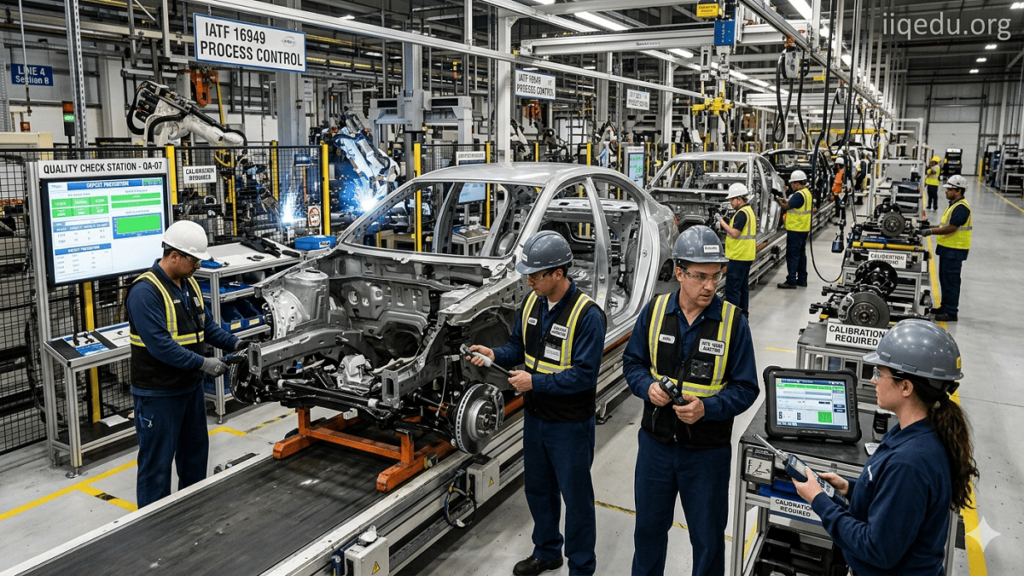
White Paper of Quality in Automotive (IATF 16949)
Executive Summary
The automotive industry faces intense pressure to deliver high-quality, safe, and reliable products while meeting regulatory and customer-specific requirements. IATF 16949 is the global standard for quality management in automotive manufacturing and supply, Quality in Automotive (IATF 16949) providing a structured framework to prevent defects, improve processes, and ensure supplier compliance. This white paper explores the standard’s requirements, implementation strategies, benefits, and industry impact.
1. Introduction
Automotive products—vehicles, engines, transmissions, and critical components—require stringent quality management because even minor defects can have significant safety and operational consequences. IATF 16949 extends ISO 9001 principles with automotive-specific requirements, Quality in Automotive (IATF 16949) focusing on defect prevention, continuous improvement, and supply chain consistency.
2. Overview of IATF 16949
Developed by the International Automotive Task Force (IATF), IATF 16949 is recognized by major OEMs and suppliers worldwide. Key elements include:
- Defect Prevention: Systematic measures to reduce production defects.
- Customer-Specific Requirements (CSR): Compliance with OEM or client-specific quality expectations.
- Risk Management: Identifying, assessing, and mitigating risks across all processes.
- Supplier Management: Auditing, qualifying, and monitoring supplier performance.
- Process Monitoring and Control: Statistical methods and process controls to ensure consistency.
- Continuous Improvement: CAPA (Corrective and Preventive Actions) and performance metrics to enhance quality.
3. Who Requires IATF 16949
IATF 16949 is required by:
- OEMs (Original Equipment Manufacturers): Automotive vehicle and engine manufacturers.
- Tier 1, 2, and 3 Suppliers: Organizations supplying parts, materials, or services.
- Subcontractors: Companies providing specialized production or technical services.
- Maintenance and Aftermarket Providers: Businesses servicing automotive components under OEM standards.
- Engineering and Design Firms: Organizations responsible for automotive product development or prototyping.
4. When and Where IATF 16949 is Applied
IATF 16949 applies throughout the automotive product lifecycle:
- Design and Development: Ensures risk assessment, defect prevention, and traceability.
- Manufacturing and Production: Standardizes processes, monitors quality, and ensures compliance.
- Supply Chain Operations: Ensures suppliers meet performance and quality expectations.
- Maintenance and Aftermarket Services: Maintains consistency in repair, inspection, and service operations.
- Corporate Quality Departments: Supports audits, documentation, and continuous improvement initiatives.
5. Implementation Strategy
Successful implementation of IATF 16949 involves:
- Gap Analysis: Assess current processes against standard requirements.
- Documentation: Develop QMS manuals, SOPs, and process records.
- Training: Educate employees on quality practices and customer-specific requirements.
- Monitoring and Auditing: Conduct internal audits and track key performance indicators (KPIs).
- Certification Audit: Undergo an external audit by an IATF-recognized certification body.
- Continuous Improvement: Use audit results, customer feedback, and metrics to refine processes.
6. Benefits of IATF 16949 Implementation
- Enhanced Product Quality: Fewer defects, higher reliability.
- Improved Supply Chain Performance: Stronger supplier compliance and traceability.
- Customer Satisfaction: Meeting OEM expectations consistently.
- Regulatory Compliance: Alignment with international automotive standards.
- Operational Efficiency: Streamlined workflows, reduced waste, and continuous improvement culture.
7. Case Example
AutoParts Solutions Ltd., a mid-sized automotive component manufacturer, implemented IATF 16949 to address inconsistent quality and supplier performance. Within one year:
- Defect rates dropped by 50%
- Supplier compliance reached 95%
- Warranty claims and rework decreased significantly
- Successfully passed multiple OEM audits with zero major non-conformities
This demonstrates how IATF 16949 drives measurable improvements in quality, efficiency, and compliance.
8. Challenges and Mitigation
- Resistance to Change: Mitigated through training and leadership support.
- Initial Investment: Addressed with phased implementation and prioritization of critical processes.
- Supplier Alignment: Managed through audits, KPIs, and collaboration programs.
- Regulatory Updates: Monitored continuously to maintain compliance with evolving standards.
9. Conclusion
IATF 16949 is the cornerstone of automotive quality management, ensuring that manufacturers and suppliers produce safe, reliable, and defect-free products. By implementing the standard, organizations achieve operational excellence, reduce risks, enhance customer trust, and maintain a competitive advantage in the global automotive market.
#Quality in Automotive (IATF 16949) in Delhi
Industry Application of Quality in Automotive (IATF 16949)
IATF 16949 is the globally recognized Quality Management System (QMS) standard for the automotive industry. It is applied across all sectors involved in automotive product design, manufacturing, supply, and service to ensure defect prevention, process consistency, and compliance with OEM requirements.
1. Automotive Manufacturing
- Application: Production of vehicles, engines, transmissions, and automotive systems.
- Focus Areas: Standardization of processes, risk management, defect prevention, and quality control.
- Impact: Reduces defects, ensures consistent product quality, and enhances reliability.
2. Supplier and Subcontractor Management
- Application: Tier 1, 2, and 3 suppliers providing components, materials, or services.
- Focus Areas: Supplier qualification, auditing, performance monitoring, and adherence to customer-specific requirements.
- Impact: Ensures consistent quality across the supply chain and minimizes defective components.
3. Engineering and Design Services
- Application: Product design, prototyping, software integration, and system engineering for vehicles.
- Focus Areas: Risk analysis, change management, and adherence to OEM quality standards.
- Impact: Prevents defects early in the design phase, ensures traceability, and enhances overall product quality.
4. Maintenance, Repair, and Aftermarket Services
- Application: Automotive service centers, workshops, and aftermarket part providers.
- Focus Areas: Standardized procedures, inspection protocols, traceability, and regulatory compliance.
- Impact: Maintains product reliability, safety, and customer satisfaction after production.
5. Regulatory Compliance and Certification
- Application: Automotive organizations must comply with international and OEM-specific standards.
- Focus Areas: Internal audits, CAPA (Corrective and Preventive Actions), and documentation for certification.
- Impact: Avoids non-compliance penalties, enhances customer confidence, and strengthens market credibility.
6. Technological Integration
- Application: Using digital tools for monitoring quality, risk assessment, and process optimization.
- Focus Areas: Quality management software, predictive maintenance systems, and automated process controls.
- Impact: Increases process visibility, reduces human errors, and supports continuous improvement initiatives.
Conclusion
IATF 16949 is applied across all facets of the automotive industry—from manufacturing and design to supply chain and service operations. Its adoption ensures defect prevention, operational consistency, compliance, and enhanced customer satisfaction, giving organizations a competitive edge in a highly regulated and quality-driven market.
#Quality in Automotive (IATF 16949) in Mumbai
Ask FAQs
What is IATF 16949 in automotive quality?
IATF 16949 is an internationally recognized Quality Management System (QMS) standard for the automotive industry. It combines ISO 9001 requirements with automotive-specific standards to ensure defect prevention, process consistency, supplier compliance, and customer satisfaction.
Who needs IATF 16949 certification?
IATF 16949 is required by automotive manufacturers (OEMs), Tier 1–3 suppliers, subcontractors, aftermarket service providers, and engineering or design firms that impact the quality and reliability of automotive products and services.
When is IATF 16949 required?
IATF 16949 is required throughout the automotive product lifecycle, including design, manufacturing, supply chain operations, and maintenance. It is also required during internal, customer, and certification audits to ensure compliance and quality consistency.
Where is IATF 16949 applied in the automotive industry?
IATF 16949 is applied in manufacturing plants, supplier and subcontractor facilities, engineering and design offices, maintenance and service workshops, and corporate quality departments responsible for audits, documentation, and process improvement.
How is IATF 16949 implemented?
IATF 16949 is implemented by establishing a structured QMS, standardizing processes, managing risks, monitoring supplier performance, training employees, conducting audits, and continuously improving operations using tools like CAPA, FMEA, and statistical process control.
Source: Quality HUB India
Table of Contents
Disclaimer:
The information provided is for general educational and informational purposes only and does not constitute legal, regulatory, or professional advice. Organizations should consult certified professionals and relevant authorities to ensure full compliance with IATF 16949 and applicable automotive standards.