Smart Sensors with Edge AI
Smart Sensors with Edge AI are advanced sensing devices that combine data collection with on-device artificial intelligence (AI) processing. Unlike traditional sensors that only capture and transmit raw data to a central server, smart sensors with Edge AI can analyze data locally, make decisions, and trigger actions in real time.
Key Features:
- Embedded AI algorithms for predictive analytics
- Local data processing at the sensor (Edge Computing)
- Low-latency decision-making without cloud dependency
- Connectivity via IoT protocols for reporting or coordination
Reference: IEEE – Edge AI for Smart Sensors
When is Smart Sensor with Edge AI Required?
Smart Sensors with Edge AI are needed when:
- Immediate decisions are critical: autonomous vehicles, industrial robotics
- Low latency is essential: factory automation, smart grids
- Bandwidth is limited or costly: remote IoT deployments
- Data privacy is a concern: healthcare monitoring or sensitive industrial data
Where is it Used?
Applications span multiple sectors:
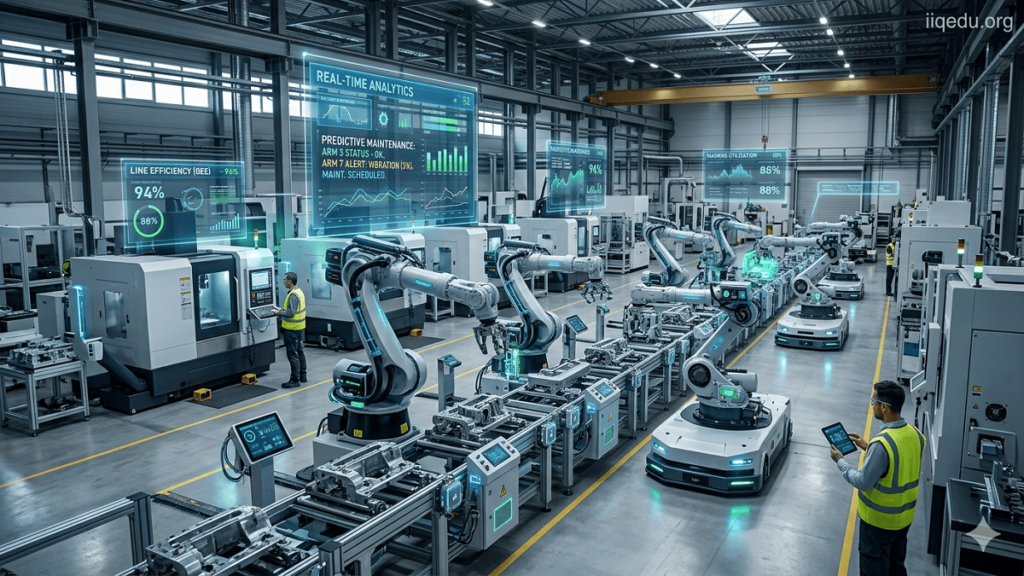
- Manufacturing: Detect anomalies on production lines in real time
- Healthcare: Monitor patient vitals locally with immediate alerts
- Energy & Utilities: Predict equipment failures on turbines, pipelines, or smart grids
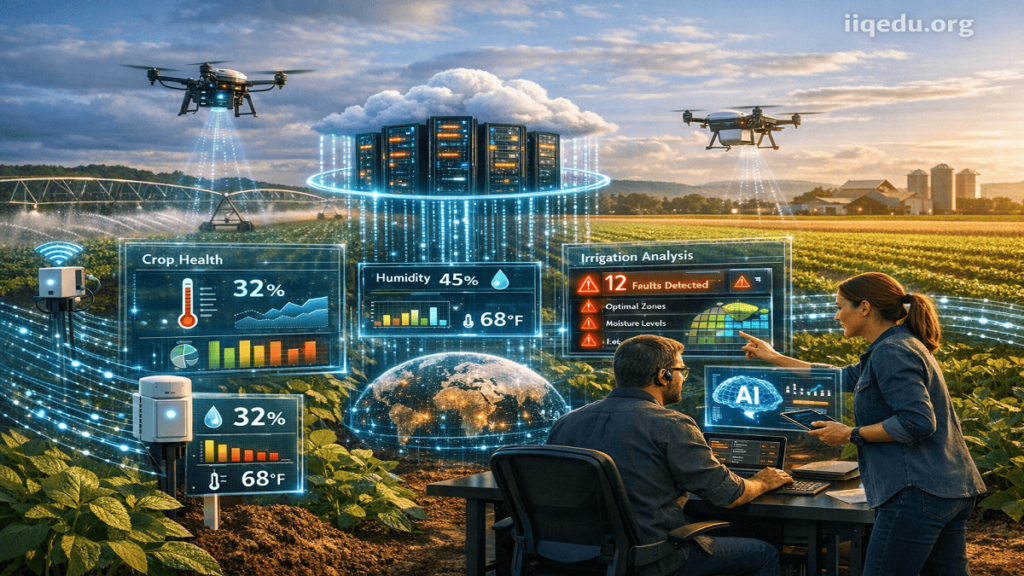
- Agriculture: Analyze soil, moisture, and crop health data in-field
- Smart Cities: Monitor traffic, air quality, or infrastructure conditions
Who Uses Smart Sensors with Edge AI?
- Industrial Engineers: Real-time fault detection in machinery
- Healthcare Professionals: Remote patient monitoring and alerts
- Agronomists and Farmers: Crop monitoring and irrigation control
- City Planners & Utilities Managers: Urban infrastructure monitoring
- Data Scientists & AI Developers: Deploy AI models at the edge for real-time analytics
How Smart Sensors with Edge AI Work
- Data Capture: Sensor collects measurements (temperature, vibration, images, pressure, etc.)
- Local Processing: AI model runs on the sensor or edge device to detect patterns or anomalies
- Decision Making: Alerts, triggers, or control actions are executed immediately
- Data Transmission: Processed or aggregated results are sent to central systems for further analysis
- Continuous Learning: AI models may update on-device or via periodic cloud retraining
Example Technologies:
- Embedded microcontrollers with AI accelerators (e.g., NVIDIA Jetson, Google Coral)
- Industrial vibration sensors with anomaly detection
- Smart cameras with on-device object recognition
Benefits
- Real-time decision-making with minimal latency
- Reduced bandwidth and cloud dependency
- Enhanced data privacy and security
- Predictive maintenance and operational efficiency
- Scalability for distributed IoT environments
Reference: NCBI – Edge AI in IoT Systems
Industry Applications
| Industry | Application | Benefits |
|---|---|---|
| Manufacturing | Predictive maintenance, anomaly detection | Reduced downtime, higher efficiency |
| Healthcare | Wearable monitoring, ICU alerts | Immediate intervention, improved patient safety |
| Agriculture | Crop health and irrigation control | Optimized yield, resource efficiency |
| Energy | Smart grids, turbine monitoring | Predictive maintenance, energy savings |
| Smart Cities | Traffic monitoring, infrastructure health | Safety, congestion reduction |
#Smart Sensors with Edge AI in India
What is Smart Sensors with Edge AI?
Smart Sensors with Edge AI are advanced devices that combine sensing capabilities with on-device artificial intelligence (AI) processing. Unlike traditional sensors, which simply collect and transmit raw data to a central server for analysis, these smart sensors can process and analyze data locally at the edge, make immediate decisions, and trigger automated actions without needing constant cloud connectivity.
Key Features:
- Embedded AI Algorithms:
Sensors run AI models locally for predictive analytics, anomaly detection, or pattern recognition. - Real-Time Processing:
Immediate insights are generated at the source, enabling low-latency decision-making. - IoT Connectivity:
While analysis occurs locally, processed results or alerts can still be transmitted to central dashboards for monitoring or reporting. - Data Efficiency and Privacy:
By processing data locally, only relevant insights are sent to the cloud, reducing bandwidth usage and protecting sensitive information.
Examples of Smart Sensors with Edge AI:
- Vibration sensors detecting equipment anomalies in industrial machinery.
- Cameras performing on-device object recognition for security or quality inspection.
- Wearables monitoring health vitals and generating alerts for abnormal conditions.
- Soil and crop sensors in agriculture that automatically adjust irrigation or fertilization.
Summary:
Smart Sensors with Edge AI enable autonomous, intelligent decision-making at the point of data collection, improving efficiency, responsiveness, and reliability across industries such as manufacturing, healthcare, agriculture, and smart cities.
Reference: IEEE – Edge AI for Smart Sensors
#Smart Sensors with Edge AI in Maharashtra
Who is Smart Sensors with Edge AI required?
Smart Sensors with Edge AI are required by organizations and professionals who need real-time, autonomous monitoring and decision-making in environments where speed, accuracy, and data efficiency are critical. These systems are particularly valuable in industries with distributed operations, safety-critical processes, or high volumes of data that cannot be fully transmitted to a central server for analysis.
1. Industrial and Manufacturing Engineers
- Role: Maintain equipment performance, production quality, and operational efficiency.
- Need for Smart Sensors with Edge AI: Detect anomalies or defects on production lines instantly, enabling immediate corrective actions.
- Example: Vibration or temperature sensors on motors or CNC machines identifying early signs of failure.
2. Healthcare Professionals and Medical Technicians
- Role: Monitor patient health and ensure timely medical intervention.
- Need for Smart Sensors with Edge AI: Wearable devices and ICU sensors can detect abnormal vitals and trigger alerts without relying on cloud-based analysis.
- Example: Heart rate or oxygen level monitors generating real-time warnings for critical patients.
3. Agricultural Experts and Farmers
- Role: Optimize crop health, irrigation, and resource usage.
- Need for Smart Sensors with Edge AI: Sensors in fields analyze soil moisture, temperature, and nutrient levels locally, automatically adjusting irrigation or fertilization systems.
- Example: Smart irrigation systems responding immediately to soil dryness.
4. Smart City Planners and Urban Managers
- Role: Monitor traffic, air quality, public safety, and infrastructure conditions.
- Need for Smart Sensors with Edge AI: Edge AI enables real-time alerts for traffic congestion, pollution spikes, or structural anomalies in bridges or roads.
- Example: Smart traffic lights adjusting timing based on live congestion patterns.
5. Energy and Utilities Operators
- Role: Maintain critical infrastructure like turbines, grids, and pipelines.
- Need for Smart Sensors with Edge AI: Early detection of anomalies prevents downtime, reduces maintenance costs, and ensures energy delivery reliability.
- Example: Sensors monitoring vibration in wind turbines and triggering preventive maintenance actions.
Summary:
Smart Sensors with Edge AI are required by engineers, healthcare professionals, farmers, urban planners, and utilities operators—anyone who relies on real-time, intelligent data analysis at the source to enhance safety, efficiency, and operational decision-making.
Reference: NCBI – Edge AI in IoT Systems
#Smart Sensors with Edge AI in Pune
When is Smart Sensors with Edge AI required?
Smart Sensors with Edge AI are required in situations where real-time decision-making, low-latency processing, and autonomous monitoring are critical. They are particularly useful in environments where traditional cloud-based data processing would be too slow, expensive, or insecure.
1. Time-Critical Operations
- Scenario: Industrial automation, autonomous vehicles, and medical monitoring.
- Requirement: Decisions must be made in milliseconds, such as stopping a faulty machine, alerting healthcare staff to patient distress, or preventing vehicle collisions.
2. Data-Intensive Environments
- Scenario: High-volume production lines, surveillance systems, or IoT sensor networks.
- Requirement: Edge AI processes data locally to reduce bandwidth usage and avoid cloud congestion while maintaining real-time insights.
3. Remote or Limited Connectivity Areas
- Scenario: Offshore oil rigs, agricultural fields, or mining operations in rural areas.
- Requirement: Reliable monitoring is needed even when internet connectivity is intermittent or unavailable.
4. Safety and Risk-Critical Processes
- Scenario: Nuclear plants, chemical processing, or healthcare ICUs.
- Requirement: Sensors must detect anomalies instantly to prevent accidents, maintain compliance, and protect human life.
5. Privacy-Sensitive Applications
- Scenario: Hospitals, smart homes, or industrial facilities with confidential operations.
- Requirement: On-device processing ensures that sensitive data does not need to leave the premises, reducing privacy risks.
Summary:
Smart Sensors with Edge AI are required whenever real-time, autonomous, and secure decision-making at the data source is necessary, particularly in time-sensitive, data-heavy, remote, or safety-critical environments.
Reference: IEEE – Edge AI for Smart Sensors
#Smart Sensors with Edge AI in Delhi
Where is Smart Sensors with Edge AI required?
Smart Sensors with Edge AI are required in industries and environments where real-time monitoring, low latency, and autonomous decision-making are essential. These locations often involve distributed operations, critical processes, or remote conditions where relying solely on centralized cloud processing is insufficient.
1. Manufacturing Facilities
- Application: Production lines, machinery, and assembly systems.
- Requirement: Detect defects, monitor equipment health, and optimize output in real time.
- Example: Vibration or temperature sensors on industrial motors that trigger preventive maintenance automatically.
2. Healthcare and Hospitals
- Application: Patient monitoring systems, ICUs, and wearable devices.
- Requirement: Continuous monitoring of vitals with immediate alerts for abnormal conditions.
- Example: Edge AI-enabled wearable devices that alert medical staff instantly when a patient’s oxygen levels drop.
3. Agricultural Fields and Greenhouses
- Application: Crop monitoring, soil analysis, and irrigation control.
- Requirement: Analyze soil moisture, temperature, and plant health locally for rapid automated adjustments.
- Example: Smart irrigation systems that adjust water supply based on sensor data processed on-site.
4. Energy and Utilities
- Application: Power plants, wind turbines, pipelines, and smart grids.
- Requirement: Early detection of equipment faults or anomalies to prevent downtime and ensure safety.
- Example: Edge AI sensors monitoring turbine vibration and triggering preventive maintenance before failure.
5. Smart Cities and Urban Infrastructure
- Application: Traffic management, air quality monitoring, and public safety.
- Requirement: Real-time monitoring of urban systems to optimize flow and safety.
- Example: Smart traffic lights adjusting based on live traffic patterns detected by edge sensors.
6. Remote and Hazardous Locations
- Application: Mining sites, offshore platforms, and disaster-prone areas.
- Requirement: Continuous monitoring where human presence is risky or impractical.
- Example: Edge AI sensors detecting gas leaks or structural stress in isolated or hazardous locations.
Summary:
Smart Sensors with Edge AI are required across manufacturing, healthcare, agriculture, energy, smart cities, and remote hazardous sites—anywhere real-time, intelligent monitoring is critical for safety, efficiency, and decision-making.
Reference: NCBI – Edge AI in IoT Systems
#Smart Sensors with Edge AI in Chennai
How is Smart Sensors with Edge AI required?
Smart Sensors with Edge AI are required in a way that combines data collection, local processing, real-time decision-making, and integration with operational systems. The implementation depends on the industry, operational goals, and environment in which they are deployed.
1. Sensor Deployment and Installation
- How: Smart sensors are installed on machinery, equipment, or infrastructure at critical points where monitoring is needed.
- Example: Vibration sensors on industrial motors, soil sensors in agricultural fields, or cameras in smart city intersections.
2. Edge AI Model Integration
- How: AI models are embedded directly on the sensors or nearby edge devices. These models process incoming data locally to detect anomalies, predict failures, or trigger automated responses.
- Example: A smart camera analyzing production line defects in real time without sending raw video data to the cloud.
3. Real-Time Monitoring and Alerts
- How: Sensors continuously capture data, process it on-device, and trigger alerts when thresholds or patterns indicate a problem.
- Example: ICU monitors in hospitals alerting staff immediately when a patient’s vitals are abnormal.
4. Connectivity and Data Transmission
- How: Relevant insights, alerts, or aggregated data are transmitted to central dashboards or cloud platforms for further analysis, reporting, or compliance documentation.
- Example: Edge sensors in wind turbines sending processed maintenance alerts to a central SCADA system.
5. Integration with Operational Systems
- How: Edge AI sensors integrate with enterprise systems like ERP, MES, or IoT platforms to automate workflows or trigger corrective actions.
- Example: A factory line sensor automatically stopping machinery when a defect is detected, reducing scrap and downtime.
6. Continuous Learning and Optimization
- How: AI models on edge devices can be updated periodically with new data to improve accuracy and adapt to changing conditions.
- Example: Agriculture sensors adjusting irrigation algorithms seasonally based on historical soil moisture and crop yield data.
Summary:
Smart Sensors with Edge AI are required by deploying intelligent sensors at critical points, integrating AI models locally, enabling real-time alerts, connecting to operational systems, and continuously optimizing performance. This implementation ensures low-latency decision-making, operational efficiency, safety, and scalability across industries.
Reference: IEEE – Edge AI for Smart Sensors
#Smart Sensors with Edge AI in Kolkata
Case Study of Smart Sensors with Edge AI
Background
A global automotive manufacturer faced challenges in maintaining consistent quality across multiple assembly lines. Traditional quality checks were manual, slow, and prone to errors, leading to delayed defect detection, higher scrap rates, and increased operational costs.
Problem:
- Defects in real-time production lines went undetected until end-of-line inspections.
- Manual inspections were labor-intensive and inconsistent.
- Equipment downtime due to delayed fault detection impacted productivity.
Solution
The company implemented Smart Sensors with Edge AI across key points of the production lines:
- IoT-Enabled Sensors:
- Vibration sensors on robotic arms and motors.
- Temperature and torque sensors on assembly equipment.
- Edge AI Integration:
- AI models embedded on edge devices processed data locally in real time.
- Anomalies, deviations, and potential defects were detected instantly.
- Real-Time Alerts and Automation:
- Immediate alerts sent to operators when anomalies were detected.
- Automated line stoppages or adjustments to prevent defective parts from progressing.
- Dashboard and Reporting:
- Centralized dashboards displayed live production data and trends.
- Historical logs supported predictive maintenance and quality audits.
Implementation Results
- Reduced Defective Products: Defect rate decreased by 35% within three months.
- Operational Efficiency: Reduced manual inspection hours by 40%, freeing staff for higher-value tasks.
- Predictive Maintenance: Early detection of equipment faults prevented unplanned downtime, saving costs.
- Real-Time Decision-Making: On-site operators could act immediately without waiting for cloud analysis.
Key Takeaways
- Smart Sensors with Edge AI enable instant quality monitoring and autonomous decision-making.
- Local AI processing reduces latency and dependence on cloud infrastructure.
- Integration with operational systems allows proactive maintenance and defect prevention.
- The solution is highly scalable across multiple production lines and facilities.
Reference:
#Smart Sensors with Edge AI in Hyderabad
White Paper of Smart Sensors with Edge AI
1. Executive Summary
Smart Sensors with Edge AI represent a significant evolution in sensing and data processing technology. These systems augment traditional sensors with on‑device artificial intelligence (AI) capabilities, allowing real‑time data analysis, autonomous decision-making, and reduced reliance on centralized cloud systems. By combining sensing, computation, and connectivity at the edge of the network, organizations gain faster insights, lower latency, improved privacy, and operational efficiency across industries such as manufacturing, healthcare, agriculture, and smart infrastructure.
2. Introduction
Traditional sensor networks collect data and transmit it to remote servers or the cloud for processing. While effective for many use cases, this model suffers from latency, bandwidth consumption, and potential data privacy challenges. The emergence of Edge AI — deploying AI inference directly on or near the sensor — addresses these limitations, enabling real‑time analytics and decision support where data is generated.
This white paper explains the definitions, architecture, use cases, benefits, challenges, and future trends for Smart Sensors with Edge AI.
3. Definitions and Concepts
3.1 Smart Sensors
Smart sensors are devices that not only measure physical phenomena (temperature, vibration, motion, etc.) but also perform pre‑processing, calibration, or digital conversion before data transmission.
3.2 Edge AI
Edge AI refers to running AI algorithms locally on embedded processors, microcontrollers, or edge servers rather than in centralized data centers. This approach reduces network dependency and enables real‑time responses.
3.3 Smart Sensors with Edge AI
This integrated class of devices captures data, processes it via embedded AI models, and makes decisions locally, sending only relevant insights to higher‑level systems.
4. System Architecture
A typical Smart Sensor with Edge AI system includes the following layers:
4.1 Sensing Layer
- Hardware: Physical sensors (temperature, pressure, vibration, cameras, LIDAR).
- Function: Raw data capture.
4.2 Edge Compute Layer
- Components: Microcontrollers, AI accelerators (e.g., Google Coral, NVIDIA Jetson), embedded processors.
- Function: Local execution of AI models for classification, anomaly detection, pattern recognition, or prediction.
4.3 Connectivity Layer
- Protocols: MQTT, OPC UA, BLE, LoRaWAN, 5G.
- Function: Efficient and secure data transmission of insights or summary results to the cloud or central systems.
4.4 Analytics and Integration Layer
- Systems: Cloud platforms, data lakes, enterprise applications (MES, ERP).
- Function: Long‑term analysis, reporting, model training, and system orchestration.
5. Key Capabilities
| Capability | Description |
|---|---|
| Real‑time Analytics | Data is processed where it is generated, enabling immediate responses. |
| Reduced Latency | Edge processing eliminates the time cost of cloud round‑trip communication. |
| Lower Bandwidth | Only evaluated/analyzed results are transmitted, reducing network load. |
| Data Privacy | Sensitive data can be processed locally, reducing exposure. |
| Autonomous Actions | Devices can trigger automated responses (alerts, control signals) without human intervention. |
6. Use Cases and Industry Applications
6.1 Manufacturing and Industry
- Predictive Maintenance: Detect equipment failures before they occur by analyzing vibration, temperature, or acoustic signatures locally.
- Quality Inspection: Edge AI in vision systems analyzes product defects in real time on assembly lines.
Reference: https://ieeexplore.ieee.org/document/9273081
6.2 Healthcare
- Patient Monitoring: Edge AI models on wearables or bedside sensors detect anomalies (heart rate irregularities) and trigger alerts instantly.
- Medical Imaging: On‑device image classification reduces data transfer needs and enhances diagnosis speed.
Reference: https://www.ncbi.nlm.nih.gov/pmc/articles/PMC7578822/
6.3 Agriculture
- Field Monitoring: Soil moisture and crop health sensors use local AI to adjust irrigation or trigger alerts for pests.
- Autonomous Tractors: Smart sensors with embedded AI control machinery based on real‑time conditions.
6.4 Smart Cities & Infrastructure
- Traffic Control: Edge AI on cameras and sensors optimizes signal timing based on real‑time pedestrian and vehicle patterns.
- Environmental Monitoring: Continuous analysis of air quality and noise levels with local decision layers.
6.5 Energy & Utilities
- Grid Stability: Smart sensors analyze load, frequency, and voltage anomalies locally to improve grid responsiveness and reliability.
7. Benefits
- Reduced Latency and Faster Decisions
Local processing enables immediate action, crucial in autonomous systems and safety‑critical environments. - Cost Savings
Lower network and cloud processing costs due to pre‑processing at the edge. - Improved Data Privacy and Security
Processing sensitive data locally reduces exposure and regulatory risk. - Scalability
Edge AI systems scale without proportional increase in cloud compute resources. - Resilience to Connectivity Issues
Smart sensors can operate reliably even with intermittent network access.
8. Implementation Challenges
| Challenge | Description |
|---|---|
| Model Deployment & Updates | Ensuring models remain accurate and updated at the edge. |
| Hardware Constraints | Limited compute, memory, and power on edge devices. |
| Integration Complexity | Interfacing with existing IT/OT systems and legacy infrastructure. |
| Security Risks | Protecting edge devices from tampering or cyberattacks. |
| Data Quality | Ensuring sensor calibration and signal integrity. |
9. Best Practices for Deployment
- Select Appropriate Edge Hardware: Balance compute power with power efficiency and cost.
- Optimize AI Models: Use model compression, quantization, or pruning for edge suitability.
- Secure Firmware and Data: Implement secure boot, encryption, and authentication.
- Monitor and Update Models: Use hybrid cloud-edge retraining and version control.
- Standardize Communication Protocols: Adopt industry standard protocols for interoperability.
10. Future Trends
10.1 Federated Learning at the Edge
Allows AI models to be trained collaboratively across edge devices without centrally aggregating raw data.
10.2 Hybrid Edge‑Cloud AI
Combined edge decisioning with cloud‑based long‑term learning and analytics.
10.3 TinyML Expansion
Deployment of extremely compact machine learning models on microcontroller‑level sensors.
10.4 AI‑Native Sensors
Future sensors may natively integrate neuromorphic computing for ultra‑low power AI tasks.
11. Conclusion
Smart Sensors with Edge AI are transforming how data is collected and acted upon in real time. By integrating sensing, computing, and analytics at the source of data generation, organizations enhance responsiveness, operational efficiency, and data governance. As industries adopt increasingly autonomous systems, Edge AI sensors will form the foundation of intelligent, resilient, and scalable digital ecosystems.
References
- IEEE Xplore – Edge AI for Smart Sensors
https://ieeexplore.ieee.org/document/9273081 - NCBI – Edge AI in IoT Systems
https://www.ncbi.nlm.nih.gov/pmc/articles/PMC7578822/ - InfluxData – Time‑Series Databases for Real‑Time Processing
https://www.influxdata.com/time-series-database/ - Edge AI Frameworks (Google Coral, NVIDIA Jetson)
https://coral.ai/
https://developer.nvidia.com/embedded/jetson
#Smart Sensors with Edge AI in Banglore
Industry Application of Smart Sensors with Edge AI
Smart Sensors with Edge AI combine real-time sensing, local AI processing, and autonomous decision-making, making them highly applicable across multiple industries where speed, efficiency, and predictive insights are critical.
1. Manufacturing and Industrial Automation
- Application: Predictive maintenance, quality inspection, and operational optimization.
- How It Works: Edge AI-enabled vibration, temperature, and visual sensors detect anomalies or defects in machinery and production lines in real time.
- Benefits: Reduced downtime, fewer defective products, and enhanced process efficiency.
Reference: IEEE – Edge AI in Manufacturing
2. Healthcare and Medical Devices
- Application: Patient monitoring, ICU alerts, wearable health devices, and diagnostic imaging.
- How It Works: Smart sensors analyze vital signs locally, detect abnormalities, and generate immediate alerts without cloud latency.
- Benefits: Faster medical intervention, improved patient safety, and reduced network dependency.
Reference: NCBI – Edge AI in Healthcare
3. Agriculture and Smart Farming
- Application: Crop health monitoring, irrigation management, and soil analysis.
- How It Works: Sensors track soil moisture, nutrient levels, and environmental conditions, using on-device AI to optimize irrigation and fertilization automatically.
- Benefits: Increased crop yield, reduced resource usage, and autonomous field management.
4. Energy and Utilities
- Application: Smart grids, renewable energy monitoring, and predictive maintenance of turbines or pipelines.
- How It Works: Edge AI sensors detect anomalies in turbines, transformers, or pipelines and trigger preventive actions locally.
- Benefits: Reduced unplanned downtime, increased energy efficiency, and improved infrastructure reliability.
5. Smart Cities and Urban Infrastructure
- Application: Traffic monitoring, air quality management, structural health monitoring, and public safety systems.
- How It Works: Cameras and environmental sensors process data locally, adjusting traffic signals, triggering alerts for pollution spikes, or detecting structural stress.
- Benefits: Real-time urban management, reduced congestion, improved citizen safety, and energy-efficient city operations.
6. Transportation and Logistics
- Application: Fleet management, cold chain monitoring, and autonomous vehicles.
- How It Works: Edge AI sensors track vehicle performance, package conditions, and environmental parameters, generating alerts or adjusting operations instantly.
- Benefits: Reduced transit delays, safer operations, and optimized logistics performance.
Summary
Smart Sensors with Edge AI are highly versatile, transforming how industries monitor, analyze, and respond to operational data. By combining real-time intelligence at the edge with seamless integration into broader enterprise systems, they enhance efficiency, safety, compliance, and sustainability across manufacturing, healthcare, agriculture, energy, smart cities, and transportation.
#Smart Sensors with Edge AI in Mumbai
Ask FAQs
What are Smart Sensors with Edge AI?
Smart Sensors with Edge AI are advanced sensors that collect data and process it locally using embedded AI algorithms. Unlike traditional sensors, they can make real-time decisions, detect anomalies, and trigger automated actions without sending all data to a central server.
Why are Smart Sensors with Edge AI important?
They provide low-latency insights, reduce bandwidth usage, improve data privacy, and enable autonomous decision-making. This is critical in industries like manufacturing, healthcare, agriculture, and smart cities where real-time monitoring and immediate responses are essential.
Where can Smart Sensors with Edge AI be applied?
They are used across industries including:
Manufacturing: Predictive maintenance and quality control
Healthcare: Patient monitoring and alerts
Agriculture: Crop and soil health monitoring
Energy: Grid and turbine monitoring
Smart Cities: Traffic, pollution, and infrastructure management
Who benefits from using Smart Sensors with Edge AI?
Industrial engineers and production managers
Healthcare professionals and hospital administrators
Farmers and agronomists
Urban planners and utility operators
Data scientists and IoT developers
Anyone who requires real-time insights and automated responses at the point of data collection.
How do Smart Sensors with Edge AI work?
Data Collection: Sensors capture physical data (temperature, vibration, images, etc.).
Local Processing: Embedded AI analyzes the data at the edge.
Decision-Making: Immediate alerts or automated actions are triggered.
Connectivity: Processed insights are transmitted to central dashboards for monitoring and reporting.
Source: RealPars
Table of Contents
Disclaimer:
The information provided about Smart Sensors with Edge AI is for educational and informational purposes only. Implementation and results may vary depending on industry, technology, and operational environment. Users should consult qualified professionals before deploying any hardware, software, or AI solutions.