Space Tech & Aerospace Quality
Space technology refers to the engineering, scientific, and technological methods used to design, develop, and operate systems that explore, utilize, and observe Space Tech & Aerospace Quality. It encompasses satellites, launch vehicles, space stations, interplanetary probes, space habitats, and related support infrastructure on Earth, such as ground stations and control systems.
Key Areas in Space Technology
- Launch Systems:
Launch vehicles are critical for delivering payloads into orbit. They range from small satellite launchers like Rocket Lab’s Electron to heavy-lift rockets like SpaceX’s Falcon Heavy and NASA’s Space Launch System (SLS). Modern trends include reusability, cost reduction, and green propellants.- Reference: NASA Launch Vehicles
- Satellite Systems:
Satellites perform communication, Earth observation, navigation, and scientific missions. Advanced technologies include miniaturization (CubeSats), high-throughput communication, and on-orbit servicing.- Reference: European Space Agency Satellite Technology
- Space Propulsion:
Propulsion systems include chemical rockets, ion thrusters, Hall-effect thrusters, and emerging nuclear thermal propulsion. Efficient propulsion directly impacts mission duration, payload capacity, and interplanetary travel feasibility.- Reference: NASA Advanced Propulsion
- Space Habitats & Life Support Systems:
Human spaceflight requires closed-loop life support, radiation shielding, and reliable habitat design. The International Space Station (ISS) remains a prime example of long-term human habitation technologies. Future Mars and Moon missions demand sustainable and autonomous systems.- Reference: NASA Human Spaceflight
- Space Robotics & AI:
Robotics play an essential role in exploration (rovers, landers), satellite servicing, and debris management. Artificial intelligence assists in autonomous navigation, system diagnostics, and predictive maintenance.- Reference: ESA Space Robotics
Aerospace Quality
Aerospace quality refers to the processes, standards, and systems that ensure aerospace products and technologies meet stringent safety, reliability, and performance requirements. Given the extreme operational environments of Space Tech & Aerospace Quality, aerospace quality is critical for mission success.
Key Components of Aerospace Quality
- Standards & Certification:
Aerospace products follow rigorous standards, including:- ISO 9001: General quality management
- AS9100: Aerospace-specific quality management
- ECSS (European Cooperation for Space Standardization): Space Tech & Aerospace Quality project standards for engineering, testing, and procurement
Compliance ensures traceability, reliability, and safety in manufacturing and operations. - Reference: AS9100 Aerospace Standard
- Design Assurance & Reliability Engineering:
Aerospace components undergo extensive design verification and validation. Reliability engineering involves fault tree analysis (FTA), failure modes and effects analysis (FMEA), and probabilistic risk assessment (PRA) to anticipate failures and mitigate risks.- Reference: NASA Systems Engineering Handbook
- Testing & Inspection:
Aerospace systems undergo rigorous testing under simulated environmental conditions: vibration, thermal cycling, vacuum, and radiation exposure. Non-destructive testing (NDT) methods—ultrasonic, radiographic, and optical inspections—ensure structural integrity.- Reference: ESA Quality & Testing
- Supply Chain Quality & Traceability:
High-reliability aerospace systems depend on certified suppliers, controlled materials, and traceable manufacturing processes. Traceability allows identification of defects and ensures corrective actions in future designs.- Reference: Space Safety & Quality
- Continuous Improvement & Risk Management:
Aerospace quality emphasizes continual process improvement, feedback loops, and risk-based decision-making. Organizations like NASA and ESA employ rigorous lessons learned programs and probabilistic risk assessments to prevent recurrence of failures.
Integration of Space Technology and Aerospace Quality
High-quality aerospace engineering is inseparable from advanced space technology. Success in space missions requires:
- Robust systems engineering that integrates reliability from concept through operations.
- Adherence to standards to ensure interoperability, safety, and sustainability.
- Innovation in materials, propulsion, and robotics while maintaining rigorous testing and validation.
- Cultural commitment to quality across multidisciplinary teams and international collaborations.
In essence, cutting-edge space technology can only realize its potential when underpinned by meticulous aerospace quality systems.
Further Reading & References:
- NASA Systems Engineering Handbook
- European Space Agency – Technology & Quality
- AS9100 Aerospace Standard
- NASA Advanced Propulsion
- Space Technology Overview – ESA
#Space Tech & Aerospace Quality in India
What is Space Tech & Aerospace Quality?
Space Technology
Space Technology refers to the collection of tools, systems, and engineering techniques used to explore, utilize, and operate in outer space. It includes spacecraft, satellites, launch vehicles, space stations, robotic systems, propulsion technologies, and associated ground support infrastructure. The purpose of Space Tech & Aerospace Quality technology is to enable scientific discovery, communication, navigation, Earth observation, defense, and human presence beyond Earth.
Key Areas of Space Technology
- Launch Vehicles: Rockets that transport payloads—satellites, probes, or humans—into space. Modern Space Tech & Aerospace Quality technology emphasizes reusable rockets and cost-effective launch systems. Examples include SpaceX’s Falcon 9 and NASA’s Space Launch System.
- Satellite Systems: Used for communication, weather monitoring, navigation, and scientific research. Advanced satellite technology includes miniaturized CubeSats, high-throughput communication satellites, and Earth observation satellites.
- Propulsion Systems: Spacecraft use chemical rockets, electric propulsion, or nuclear propulsion to travel through space. Propulsion efficiency is critical for mission duration and payload capacity.
- Space Habitats and Life Support: Human space exploration requires reliable life support systems, radiation protection, and sustainable habitats, such as the International Space Station.
- Robotics and AI: Robots and AI systems perform tasks that are hazardous or impossible for humans, such as planetary exploration, satellite maintenance, and debris removal.
Space Tech & Aerospace Quality technology is interdisciplinary, combining aerospace engineering, materials science, robotics, AI, and telecommunications. It is a foundation for exploration, scientific discovery, and commercial applications.
- Reference: NASA Space Technology
Aerospace Quality
Aerospace Quality refers to the systems, processes, and standards used to ensure that aerospace products—aircraft, spacecraft, satellites, and components—meet extremely high levels of safety, reliability, and performance. Given the harsh environments of space and the high cost of failure, quality assurance is a critical component of aerospace engineering.
Key Elements of Aerospace Quality
- Standards and Certifications: Aerospace quality adheres to strict international standards, including:
- AS9100 – Aerospace Quality Management System
- ISO 9001 – General Quality Management System
- ECSS – European Space Standards for engineering, testing, and procurement
- Design Assurance and Reliability Engineering: Engineers use methodologies such as Failure Modes and Effects Analysis (FMEA) and Fault Tree Analysis (FTA) to predict and prevent failures. Reliability is built into design from the earliest stages.
- Testing and Validation: Aerospace systems undergo extreme environmental tests, including vibration, thermal cycling, vacuum, and radiation exposure. Non-destructive testing ensures structural integrity.
- Supply Chain Quality and Traceability: High-reliability components must come from certified suppliers with traceable manufacturing processes. This ensures defects can be identified and mitigated.
- Continuous Improvement and Risk Management: Organizations apply lessons learned, probabilistic risk assessments, and quality audits to reduce failure risk in future projects.
Aerospace quality ensures that Space Tech & Aerospace Quality technology functions reliably under extreme conditions, protecting human life, assets, and investment.
- Reference: AS9100 Aerospace Standard
- Reference: ESA Quality Assurance
Relationship Between Space Technology and Aerospace Quality
Space technology and aerospace quality are closely intertwined:
- Innovative Space Tech & Aerospace Quality technology must meet stringent quality standards to function safely in harsh environments.
- Aerospace quality processes ensure that satellites, rockets, and spacecraft operate reliably during launch, orbit, and extended missions.
- Together, they enable successful space exploration, scientific missions, and commercial applications.
In short, space technology provides the capability, and aerospace quality ensures that capability is safe, reliable, and sustainable.
#Space Tech & Aerospace Quality in Maharashtra
Who is Space Tech & Aerospace Quality required?
- Government Space Agencies:
- Agencies such as NASA, ESA, ISRO, JAXA, and CNSA require advanced Space Tech & Aerospace Quality technology to conduct scientific research, explore other planets, operate space stations, and maintain satellite networks.
- Example: NASA’s Artemis program relies on sophisticated launch vehicles, lunar landers, and deep-space communication systems.
- Reference: NASA Space Technology
- Defense and Security Organizations:
- Space Tech & Aerospace Quality technology is crucial for national security, surveillance, reconnaissance, and secure communication. Military satellites, missile detection systems, and strategic navigation (e.g., GPS, Galileo) depend on reliable space systems.
- Reference: U.S. Space Force
- Commercial and Private Sector Companies:
- Companies in satellite communications, remote sensing, space tourism, and space logistics require advanced technology for cost-effective launches, payload delivery, and space operations.
- Examples: SpaceX, Blue Origin, and OneWeb.
- Reference: SpaceX Commercial Launch
- Scientific Research Institutions:
- Universities, laboratories, and research organizations use Space Tech & Aerospace Quality technology to study Earth’s climate, deep space phenomena, and planetary sciences. Satellites and telescopes are essential tools.
- Reference: ESA Science and Technology
Requirement of Aerospace Quality:
- Spacecraft Manufacturers and Integrators:
- Companies designing satellites, launch vehicles, and spacecraft require aerospace quality to ensure components meet safety, reliability, and performance standards.
- Government Regulatory Bodies:
- Agencies enforce quality standards to minimize mission failure risk and protect human life. For example, NASA’s Engineering and Safety Center (NESC) audits aerospace projects to ensure compliance.
- Reference: NASA Systems Engineering Handbook
- Defense and Strategic Operations:
- Military satellites, missile systems, and reconnaissance platforms require rigorous quality assurance to avoid system failures that could compromise national security.
- International and Commercial Collaborations:
- Aerospace quality is required for interoperability and trust in joint space projects, such as international space stations, multinational satellite constellations, and shared research missions.
Why It’s Required
- Safety: Space is unforgiving; failures can result in loss of human life, spacecraft, or critical data.
- Reliability: Long-duration missions to the Moon, Mars, or deep space require components that perform consistently over years.
- Economic Efficiency: High-quality design reduces rework, mission failures, and launch costs.
- Strategic Advantage: Nations and corporations rely on Space Tech & Aerospace Quality technology for communication, navigation, security, and scientific leadership.
- Regulatory Compliance: International and national standards demand strict adherence to aerospace quality to operate legally and safely in space.
Summary
- Space Tech & Aerospace Quality Technology is required by governments, defense agencies, private companies, and research institutions to explore, operate, and utilize space.
- Aerospace Quality is required wherever Space Tech & Aerospace Quality technology is applied, to ensure missions are safe, reliable, cost-effective, and compliant with international standards.
In essence, any organization involved in designing, launching, or operating in space needs both Space Tech & Aerospace Quality technology and aerospace quality. One without the other risks failure, loss of investment, or catastrophic consequences.
#Space Tech & Aerospace Quality in Jaipur
When is Space Tech & Aerospace Quality required?
Space technology is required at every stage of a space mission, from concept to operation:
- Concept and Feasibility Phase
- Early planning, mission design, and technology assessment rely on Space Tech & Aerospace Quality technology expertise to determine what is technically achievable.
- Examples: Selection of propulsion systems, satellite architecture, or robotic systems for exploration.
- Reference: NASA Systems Engineering Handbook
- Development and Design Phase
- Advanced materials, electronics, sensors, and software technologies are required to develop spacecraft and launch vehicles.
- CAD modeling, simulation, and prototyping are applied to validate designs before production.
- Manufacturing and Integration Phase
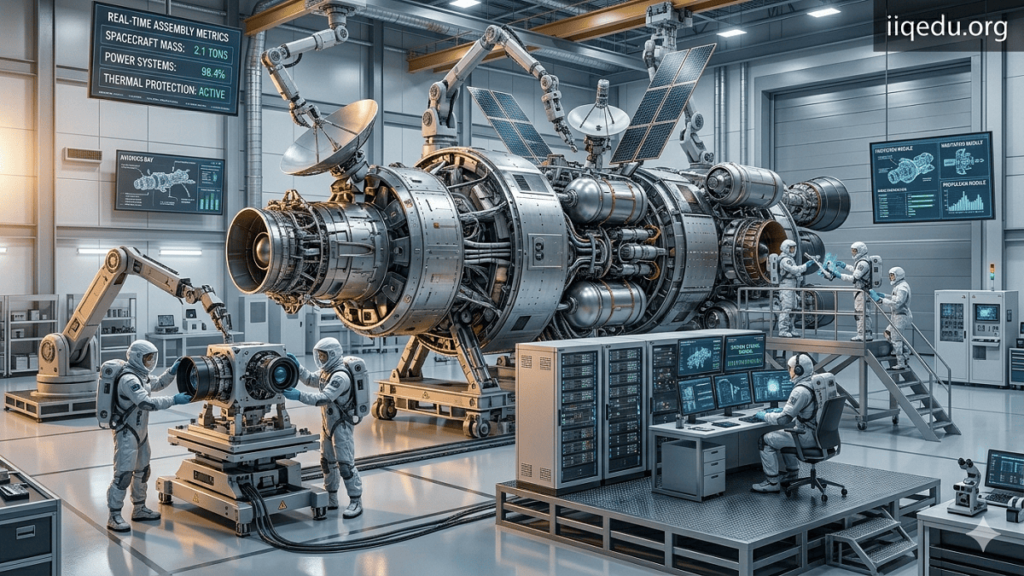
- Production of spacecraft and components relies on precision Space Tech & Aerospace Quality technology in manufacturing processes, assembly, and integration.
- Example: CubeSat assembly, rocket stage integration, payload encapsulation.
- Testing and Validation Phase
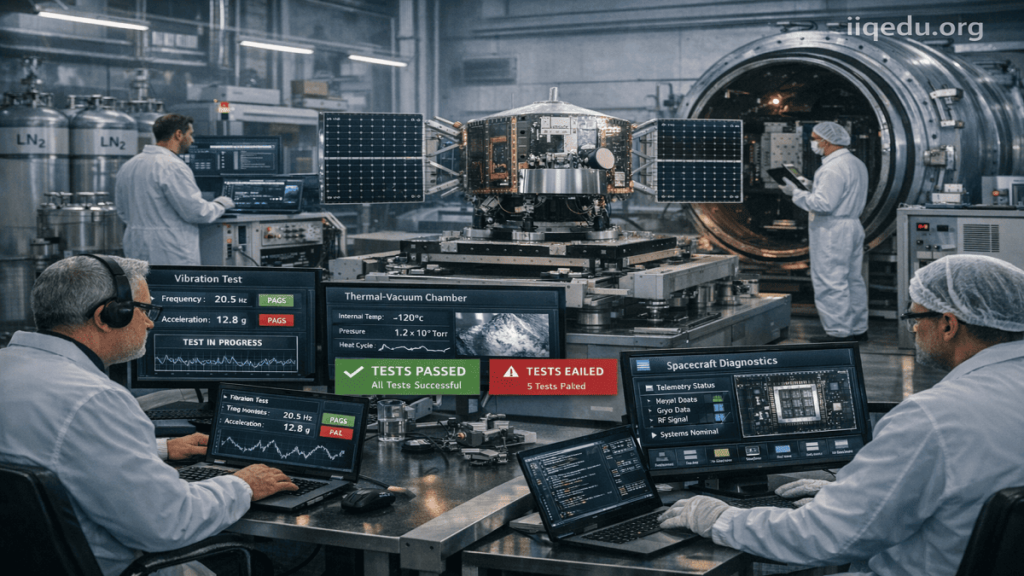
- Space Tech & Aerospace Quality technology enables environmental simulation (thermal vacuum chambers, vibration tables) to ensure systems function in extreme conditions.
- Launch and Deployment Phase
- Launch vehicle technology, ground support systems, and mission control rely on Space Tech & Aerospace Quality technology to deploy payloads safely into orbit.
- Operational and Mission Phase
- On-orbit operations, satellite communication, navigation, Earth observation, and interplanetary missions depend on advanced Space Tech & Aerospace Quality technology for functionality and monitoring.
- Decommissioning and Space Debris Management
- End-of-life disposal, controlled deorbiting, and debris mitigation require specialized technology to minimize risks to other spacecraft.
- Reference: ESA Space Debris Mitigation
Requirement of Aerospace Quality:
Aerospace quality is required whenever reliability, safety, or compliance is critical, which essentially covers the entire life cycle of a space project:
- Design Phase
- Quality systems ensure that design meets all functional and safety requirements. Reliability engineering, FMEA, and fault tree analysis are implemented to prevent design flaws.
- Manufacturing Phase
- Strict quality control is required to maintain material specifications, assembly tolerances, and supplier certification. Traceability and documentation are mandatory.
- Testing Phase
- Aerospace quality ensures that all systems are rigorously tested under simulated operational conditions and pass verification criteria.
- Launch and Mission Operations
- Continuous quality monitoring during launch operations and in-orbit missions prevents failures and ensures mission success.
- Maintenance and Lifecycle Management
- Aerospace quality ensures that replacement parts, software updates, and repairs meet original safety and reliability standards.
- Collaboration and Regulatory Compliance
- Any time multiple organizations or countries are involved in a project, aerospace quality is required to ensure standardization, certification, and accountability.
Summary
Space Tech & Aerospace Quality technology is required whenever there is a need to explore, operate, or utilize space, covering all phases from concept to decommissioning.
Aerospace quality is required at every stage where safety, reliability, and regulatory compliance are critical, effectively the same periods as space technology but with a focus on verification, validation, and control.
In essence:
| Phase | Space Technology Needed | Aerospace Quality Needed |
|---|---|---|
| Concept & Feasibility | Yes | Yes |
| Design & Development | Yes | Yes |
| Manufacturing & Integration | Yes | Yes |
| Testing & Validation | Yes | Yes |
| Launch & Operations | Yes | Yes |
| Maintenance & Disposal | Yes | Yes |
- Reference: NASA Systems Engineering Handbook
- Reference: ESA Quality Assurance
#Space Tech & Aerospace Quality in Chennai
Where is Space Tech & Aerospace Quality required?
Space Tech & Aerospace Quality technology is required wherever humans, instruments, or systems operate beyond or interact with Earth’s atmosphere. Its applications span multiple environments and platforms:
- Launch Facilities
- Space Tech & Aerospace Quality technology is essential at rocket launch sites for vehicle assembly, fueling, and launch operations.
- Examples: Kennedy Space Center (USA), Baikonur Cosmodrome (Kazakhstan), Guiana Space Centre (French Guiana).
- Reference: NASA Launch Facilities
- Spacecraft and Satellite Systems
- Technology is required onboard satellites, spacecraft, space stations, and landers to enable communications, Earth observation, navigation, and scientific research.
- Examples: International Space Station (ISS), Hubble Space Telescope, Mars rovers.
- Reference: ESA Satellite Technology
- Ground Control Centers
- Ground stations use advanced Space Tech & Aerospace Quality technology to communicate with and control spacecraft. This includes tracking antennas, telemetry, and mission control software.
- Example: NASA’s Johnson Space Center Mission Control.
- Interplanetary and Extraterrestrial Environments
- Space Tech & Aerospace Quality technology is required on the Moon, Mars, or other celestial bodies for robotic exploration, human habitats, scientific experiments, and resource utilization.
- Reference: NASA Human Spaceflight
- Aerospace Manufacturing and Testing Facilities
- Facilities producing rockets, spacecraft, and satellites require Space Tech & Aerospace Quality technology for precision fabrication, assembly, and environmental testing.
- Example: Thermal vacuum chambers, vibration tables, cleanrooms.
Requirement of Aerospace Quality:
Aerospace quality is required wherever Space Tech & Aerospace Quality technology is designed, manufactured, operated, or maintained, to ensure safety, reliability, and compliance:
- Design and Engineering Facilities
- Aerospace quality ensures that spacecraft designs meet safety, performance, and regulatory standards. Engineers apply quality management and reliability analysis in these locations.
- Manufacturing and Assembly Sites
- All components, from rockets to satellites, must comply with strict quality control. Aerospace quality is required to certify materials, production processes, and supplier reliability.
- Examples: SpaceX Hawthorne factory, Airbus Defence and Space manufacturing sites.
- Reference: AS9100 Aerospace Quality Standard
- Testing and Verification Laboratories
- Environmental testing for thermal, vibration, vacuum, and radiation resistance relies on aerospace quality systems to ensure all tests are accurate and traceable.
- Launch and Mission Operations Centers
- Aerospace quality governs launch readiness reviews, mission monitoring, and anomaly management to ensure mission success.
- Maintenance, Upgrades, and End-of-Life Management
- For reusable rockets, satellites, or space stations, aerospace quality ensures all maintenance and upgrades meet the original specifications and safety standards.
- Collaborative and International Projects
- When multiple organizations or nations collaborate, aerospace quality ensures interoperability, regulatory compliance, and standardized documentation.
- Example: International Space Station operations involve NASA, ESA, JAXA, Roscosmos, and private contractors.
Summary
- Space Tech & Aerospace Quality Technology is required:
- Anywhere spacecraft or satellites are built, launched, operated, or explored—both on Earth (launch sites, manufacturing facilities, control centers) and in space (orbit, lunar or planetary surfaces).
- Aerospace Quality is required:
- Everywhere Space Tech & Aerospace Quality technology is designed, manufactured, tested, deployed, or maintained, including collaborative international environments.
In essence, Space Tech & Aerospace Quality technology defines the “where” for operational capability, while aerospace quality ensures safety and reliability across all those locations.
- Reference: NASA Systems Engineering Handbook
- Reference: ESA Quality Assurance
#Space Tech & Aerospace Quality in Kolkata
How is Space Tech & Aerospace Quality required?
Space Tech & Aerospace Quality technology is required through structured engineering, operational, and technological processes that ensure systems function effectively in space. The requirement arises from the need to design, develop, deploy, operate, and maintain spacecraft and related systems.
1. Engineering and Design Implementation
- Space Tech & Aerospace Quality technology is applied in the conceptual and detailed design of spacecraft, launch vehicles, satellites, and robotic systems.
- Engineers use advanced modeling, simulation, and CAD tools to predict system behavior in extreme conditions.
- Example: Thermal protection systems on re-entry vehicles rely on space material technology to withstand high temperatures.
- Reference: NASA Systems Engineering Handbook
2. Manufacturing and Integration
- Precise manufacturing processes—such as cleanroom assembly, additive manufacturing, and precision machining—are required to produce components that meet the exacting tolerances of space systems.
- Integration of subsystems (propulsion, power, communication, and payload) uses specialized assembly techniques to ensure functionality.
3. Testing and Validation
- Space Tech & Aerospace Quality technology is implemented in environmental testing, including thermal-vacuum testing, vibration testing, shock testing, and radiation exposure simulations.
- These tests replicate space conditions on Earth to verify that systems operate reliably.
- Example: CubeSats undergo vibration tests simulating rocket launch stresses.
4. Operational Deployment
- Space Tech & Aerospace Quality technology is required during launch, orbit insertion, and in-orbit operations.
- Mission control centers rely on telemetry, navigation, and communication systems to operate spacecraft safely.
- Robotics and autonomous systems apply Space Tech & Aerospace Quality technology to perform tasks remotely, like asteroid sampling or satellite servicing.
5. Maintenance, End-of-Life, and Debris Management
- Space technology is used to extend satellite lifespans, perform software updates, or safely deorbit spacecraft at end-of-life.
- Debris mitigation technologies prevent collisions in space, preserving orbital safety.
Requirement of Aerospace Quality:
Aerospace quality is required through formalized processes, standards, and verification methods to ensure safety, reliability, and compliance throughout the space system life cycle.
1. Quality by Design
- Requirements are incorporated into design from the start to ensure reliability and minimize failures.
- Tools such as Failure Mode and Effects Analysis (FMEA), Fault Tree Analysis (FTA), and probabilistic risk assessments are applied to anticipate and mitigate risks.
2. Material and Component Control
- Aerospace quality requires strict control over materials, suppliers, and production processes.
- Traceability ensures that every component can be traced to its origin, preventing defective parts from compromising the system.
- Example: Components must meet AS9100 standards before integration.
- Reference: AS9100 Aerospace Quality Standard
3. Testing and Verification
- Quality systems verify that the spacecraft performs as expected under extreme conditions.
- Non-destructive testing (NDT), inspections, and environmental simulations are required to validate component and system reliability.
4. Operational Quality Assurance
- Continuous monitoring during launch, orbit, or mission operations ensures systems function correctly.
- Deviations trigger corrective actions guided by aerospace quality protocols, maintaining mission safety and integrity.
5. Regulatory Compliance and Documentation
- Aerospace quality requires adherence to national and international standards (NASA, ESA, ISO, ECSS).
- Proper documentation and audit trails are mandatory for certification, insurance, and international collaboration.
Summary: How They Work Together
| Process Stage | How Space Technology is Applied | How Aerospace Quality is Applied |
|---|---|---|
| Design & Concept | Advanced simulations, propulsion & payload selection | Quality by design, risk assessment, FMEA |
| Manufacturing & Integration | Precision assembly, cleanroom fabrication | Supplier control, traceability, inspections |
| Testing & Validation | Environmental testing, vibration, thermal, radiation | Verification & validation protocols, NDT |
| Launch & Operation | Rocket guidance, telemetry, robotics | Operational QA, monitoring, anomaly response |
| Maintenance & End-of-Life | Satellite servicing, deorbiting, debris mitigation | Compliance audits, maintenance QA |
In essence, space technology provides the tools and capabilities, while aerospace quality ensures those tools are safe, reliable, and mission-ready. One cannot function effectively without the other.
- Reference: NASA Systems Engineering Handbook
- Reference: ESA Quality Assurance
#Space Tech & Aerospace Quality in Ahemdabad
Case Study of Space Tech & Aerospace Quality
Background:
- The Mars Climate Orbiter was designed to enter Martian orbit and study atmospheric dynamics.
- The Mars Polar Lander was intended to land and analyze Martian polar soils.
Failure Causes:
- The MCO was lost because one engineering team used Imperial units (pound‑seconds) while other systems and navigation software expected metric units (newton‑seconds). This resulted in improper trajectory calculations and orbital insertion failure, causing the spacecraft to likely burn up in the Martian atmosphere or miss orbit entirely. This was attributed to a lack of verification of unit standards across teams, inadequate systems integration checks, and insufficient cross‑discipline review.
- The Mars Polar Lander failure was associated with incorrect software logic: the spacecraft’s landing legs triggered a false “touchdown” signal, prematurely shutting down thrusters and causing crash upon descent. Analysis revealed gaps in simulation and verification of software behavior in realistic mission conditions.
Aerospace Quality Lessons:
These failures underscored critical aerospace quality principles:
- Necessity of rigorous verification and validation (V&V) of all software interfaces and control systems across supplier and prime contractor boundaries.
- Importance of unit and configuration control, traceability, and formal systems engineering documentation.
- Requirement for cross‑organizational communication and standardized quality processes, especially when multiple teams develop mission‑critical software and hardware.
The MCO case is frequently studied in aerospace engineering and systems engineering courses to illustrate consequences of quality lapses in space missions.
Case Study 2 — James Webb Space Telescope (JWST)
In contrast to failures, the James Webb Space Telescope program represents a success rooted in advanced space technology and meticulous aerospace quality assurance over many years.
Challenge:
JWST is among the most technically complex scientific instruments ever built:
- A segmented primary mirror requiring nanometer‑scale precision alignment.
- A large multilayer sunshield that must deploy flawlessly in space.
- Global coordination of thousands of components and suppliers.
Quality Response:
NASA and partner agencies implemented intensive quality assurance programs that included:
- Repeat environmental testing on critical subsystems (thermal, vibration, deployment sequences), with hundreds of full‑mission rehearsals on the ground.
- Dedicated metrology and cryogenic testing on mirror segments and structures to ensure accuracy under operational conditions.
- Supplier oversight and performance verification at every stage of manufacturing and integration.
These quality practices were essential because JWST could not be serviced once in orbit at its operational position near the second Lagrange point.
Outcome:
The telescope’s successful deployment and early scientific results have validated the long, quality‑driven development cycle, demonstrating how aerospace quality systems enable exceptionally complex space technology to operate reliably.
Case Study 3 — Boeing CST‑100 Starliner Crewed Mission (2024–2025)
A contemporary case illustrates the consequences when technical issues and organizational quality problems converge in a human spaceflight context.
Incident Summary:
The Starliner crewed test flight launched in June 2024 with two NASA astronauts bound for the International Space Station (ISS). The mission encountered multiple technical anomalies, including thruster failures and helium system issues, which prevented a nominal docking and forced the crew to remain aboard ISS for an extended period. NASA classified the event as a Type A mishap, the agency’s most serious mission failure category.
Quality and Management Insights:
NASA’s post‑mission investigation cited not only technical system failures but also organizational and oversight deficiencies:
- Breakdowns in communication between the prime contractor and NASA engineers.
- Delays in conflict resolution and integration of engineering feedback during the mission.
- Cultural and leadership issues that impacted adherence to engineering quality standards under pressure.
This case highlights that aerospace quality is as much about technical verification as it is about organizational processes, decision‑making, and contractor oversight.
Case Study 4 — NASA Space Shuttle Challenger (1986)
The Challenger disaster remains a seminal case study in aerospace quality, systems engineering, and risk communication.
Background:
Shortly after liftoff, the Space Shuttle Challenger disintegrated due to an O‑ring failure in a solid rocket booster joint, exacerbated by cold weather conditions. Subsequent investigations revealed that engineers had raised concerns about seal performance, but management proceeded with the launch without adequate mitigation.
Quality and Safety Lessons:
- Importance of independent safety reviews and hazard analysis free from schedule pressure.
- Requirement for robust risk communication channels within organizations.
- Recognition that engineering reservations must be documented, escalated, and resolved before proceeding with high‑risk operations.
Challenger catalyzed major reforms in NASA’s systems engineering, safety, and quality assurance processes.
Key Insights Across Case Studies
Across these examples, the intersection of space technology and aerospace quality reveals consistent principles:
- Rigorous Verification & Validation (V&V): Comprehensive testing under operationally realistic conditions is indispensable.
- Systems Integration Discipline: Interfaces among subsystems and software modules must be controlled and tested end‑to‑end.
- Organizational Quality Culture: Quality assurance must permeate technical execution, program management, and contractor relationships.
- Documentation and Traceability: Decisions, tests, and change histories must be recorded clearly to support audits and future learning.
- Learning from Failures: Post‑mission analysis and lessons learned are systemic drivers for improved future mission assurance.
Programs such as NASA’s lessons‑learned repositories and quality assurance standards (e.g., AS9100) formalize these practices to reduce recurrence of past errors.
References and Further Reading:
- NASA Systems Engineering Handbook — NASA principles for design and mission assurance.
- AS9100 Aerospace Quality Management Standard — International quality standard for aerospace systems.
- Case analyses on Mars Climate Orbiter verification failures and JWST quality assurance processes.
#Space Tech & Aerospace Quality in Hyderabad
White Paper of Space Tech & Aerospace Quality
Executive Summary
Space technology and aerospace quality are critical pillars for the safe, reliable, and effective exploration and utilization of space. Space technology encompasses the tools, systems, and methodologies enabling human and robotic activity in space, including satellites, launch vehicles, propulsion systems, robotics, and communication networks. Aerospace quality ensures these systems meet stringent safety, reliability, and performance standards, reducing risks associated with high-cost and high-stakes space missions.
This white paper provides an overview of key space technologies, explains aerospace quality frameworks, presents case studies, and highlights best practices for organizations and stakeholders involved in space programs.
1. Introduction
The modern space industry is characterized by rapid technological advancement, growing commercial participation, and expanding exploration ambitions. While space technology enables missions and applications, aerospace quality ensures that these missions are executed safely, reliably, and efficiently.
Without stringent aerospace quality management, even advanced space technologies can fail, resulting in financial loss, scientific setbacks, or endangerment of human life.
2. Space Technology Overview
Space technology refers to the engineering, scientific, and operational methods that allow humans to explore, operate, and utilize space. Major domains include:
- Launch Systems: Rockets and launch vehicles designed to deliver payloads into orbit or interplanetary trajectories. Trends include reusability, cost reduction, and green propellants.
- Satellite Systems: Platforms for communication, navigation, Earth observation, and scientific missions, including CubeSats, geostationary satellites, and high-throughput constellations.
- Propulsion Technologies: Chemical rockets, ion engines, Hall-effect thrusters, and nuclear thermal propulsion systems for interplanetary travel.
- Space Habitats and Life Support: Closed-loop life support systems, radiation shielding, and autonomous habitats for human spaceflight.
- Robotics and Artificial Intelligence: Autonomous systems for planetary exploration, satellite servicing, and debris management.
Key Considerations: Systems must operate under extreme conditions including vacuum, radiation, thermal cycles, and mechanical vibration.
Reference: NASA Space Technology
3. Aerospace Quality Overview
Aerospace quality ensures that all space systems conform to high safety, reliability, and performance standards. The aerospace industry relies on formalized processes, verification, validation, and standards compliance to manage risk.
3.1 Standards and Certifications
- AS9100: International quality management system standard for aerospace manufacturers.
- ISO 9001: General quality management system framework.
- ECSS (European Cooperation for Space Standardization): Space-specific engineering and procurement standards.
3.2 Key Processes
- Design Assurance & Reliability Engineering: FMEA, FTA, probabilistic risk assessments.
- Testing and Verification: Thermal-vacuum, vibration, shock, and radiation testing.
- Supply Chain Quality & Traceability: Certified suppliers, material verification, and full component traceability.
- Operational Quality Assurance: Continuous monitoring during launch and mission operations.
- Documentation and Compliance: Thorough reporting, audit trails, and lessons learned.
Reference: AS9100 Aerospace Standard
4. Integration of Space Technology and Aerospace Quality
Successful missions depend on the integration of advanced technology with rigorous quality assurance:
- Space technology defines capability: propulsion, payload, robotics, communication.
- Aerospace quality ensures capability is delivered reliably and safely.
The two must function in tandem at every stage of a mission life cycle: concept, design, manufacturing, testing, launch, operation, and decommissioning.
5. Case Studies
5.1 Mars Climate Orbiter and Mars Polar Lander
- Cause of failure: software misalignment (metric vs. Imperial units) and inadequate software validation.
- Lesson: Cross-disciplinary quality checks and verification are essential.
- Reference: NASA Lessons Learned
5.2 James Webb Space Telescope (JWST)
- Success due to intensive quality assurance: environmental testing, supplier oversight, and meticulous integration.
- Lesson: Rigorous aerospace quality enables highly complex technology to function reliably in space.
5.3 Boeing CST-100 Starliner Crewed Mission
- Technical anomalies highlighted the importance of organizational quality processes in addition to technical verification.
- Lesson: Aerospace quality encompasses both engineering and management practices.
5.4 Space Shuttle Challenger Disaster
- O-ring failure exacerbated by management and procedural issues.
- Lesson: Aerospace quality must be embedded at every organizational level.
6. Recommendations and Best Practices
- Embed Quality Early: Integrate aerospace quality in design and development.
- Comprehensive Testing: Simulate operational conditions to validate performance and reliability.
- Robust Systems Engineering: Apply end-to-end verification and risk analysis.
- Supplier Oversight: Certify and monitor all suppliers for compliance with aerospace standards.
- Continuous Learning: Maintain lessons learned programs to prevent recurrence of failures.
- Cultural Commitment: Promote an organizational culture where quality and safety are prioritized over schedule pressures.
7. Conclusion
The combination of cutting-edge space technology with rigorous aerospace quality management is essential for mission success. Lessons from past failures and successes demonstrate that technological innovation alone is insufficient; it must be paired with disciplined processes, standards, and verification methods. Organizations that integrate these two pillars effectively can reduce risk, protect human life, and achieve sustainable success in space exploration and commercialization.
References
- NASA Space Technology
- AS9100 Aerospace Standard
- ESA Quality Assurance
- Mars Climate Orbiter Lessons Learned
- JWST Quality Assurance Overview
#Space Tech & Aerospace Quality in Delhi
Industry Application of Space Tech & Aerospace Quality
1. Aerospace and Defense Industry
Applications:
- Satellite Systems: Communications, navigation (GPS/Galileo), reconnaissance, and early warning systems.
- Launch Vehicles: Development of reusable rockets and expendable launch systems for strategic and commercial purposes.
- Missile Defense and Space Surveillance: Tracking objects in orbit, anti-satellite capabilities, and defense communications.
Role of Aerospace Quality:
- Ensures reliability and safety of military satellites and spacecraft.
- Certifies launch vehicles for human-rated or sensitive payloads.
- Implements risk assessment and failure prevention protocols, such as FMEA and probabilistic risk analysis.
Example:
- The U.S. Space Force and private contractors like Lockheed Martin and Northrop Grumman apply rigorous aerospace quality management to maintain operational readiness and mission success.
Reference: U.S. Space Force
2. Commercial Space Sector
Applications:
- Satellite Communications: Providing broadband internet, TV, and global communication networks (e.g., Starlink, OneWeb).
- Earth Observation and Remote Sensing: Weather monitoring, climate tracking, agricultural mapping, and urban planning.
- Space Tourism and Habitats: Human spaceflight for research and private tourism (e.g., Blue Origin, Virgin Galactic).
Role of Aerospace Quality:
- Certifies commercial satellites and spacecraft to ensure operational reliability and longevity.
- Ensures payloads withstand launch stress, radiation, and environmental extremes.
- Manages supplier quality and compliance with international standards (AS9100, ISO 9001).
Example:
- SpaceX Falcon 9 demonstrates high reliability due to advanced aerospace quality practices combined with reusable space technology.
Reference: SpaceX Launches
3. Scientific Research and Exploration
Applications:
- Space Telescopes and Observatories: JWST, Hubble, and other observatories require advanced technology for deep-space imaging and analysis.
- Planetary Exploration: Mars rovers, lunar landers, and asteroid missions employ robotic systems, AI, and advanced propulsion.
- International Space Stations (ISS): Life support, robotics, and orbital operations rely on advanced space systems.
Role of Aerospace Quality:
- Ensures that scientific instruments function accurately under harsh space conditions.
- Validates complex deployment sequences (e.g., telescope mirrors or solar arrays).
- Monitors long-term system reliability for missions that cannot be serviced in orbit.
Example:
- The James Webb Space Telescope succeeded due to rigorous aerospace quality assurance in material testing, assembly, and integration.
Reference: NASA JWST
4. Telecommunication and Navigation Industries
Applications:
- Global positioning systems (GPS, Galileo, GLONASS) for navigation, logistics, and defense.
- Satellite-based communication networks for remote and underserved areas.
- High-throughput satellites for mobile and maritime communications.
Role of Aerospace Quality:
- Ensures precise orbit insertion and satellite reliability over decades.
- Confirms signal stability, timing accuracy, and communication integrity.
- Implements continuous monitoring and anomaly detection.
Example:
- Iridium and Inmarsat use aerospace quality systems to maintain uninterrupted global satellite communications.
Reference: ESA Satellite Applications
5. Manufacturing and Industrial Applications
Applications:
- Aerospace manufacturing incorporates high-precision materials, additive manufacturing, and robotics used in spacecraft production.
- Space-grade components for extreme environments, including radiation-hardened electronics, thermal shielding, and lightweight composites.
Role of Aerospace Quality:
- Certifies components for aerospace standards.
- Monitors supplier quality and material conformity.
- Reduces risk of mission failure due to component malfunction.
Example:
- Boeing and Airbus integrate aerospace quality into every production stage of rockets, satellites, and human-rated spacecraft.
Reference: AS9100 Aerospace Standard
Summary
Industry applications of space technology span:
- Defense and strategic operations.
- Commercial communications and tourism.
- Scientific research and planetary exploration.
- Navigation and telecommunications.
- Manufacturing of high-precision aerospace components.
Aerospace quality underpins all these applications, ensuring:
- Reliability and mission success.
- Safety of human crew and expensive payloads.
- Compliance with international standards and regulations.
- Long-term sustainability and risk mitigation in complex space operations.
#Space Tech & Aerospace Quality in Mumbai
Ask FAQs
What is the difference between Space Technology and Aerospace Quality?
Space Technology refers to the tools, systems, and methodologies used to explore, operate, and utilize space, including satellites, launch vehicles, propulsion systems, robotics, and communications. Aerospace Quality, on the other hand, is the set of standards, processes, and verification methods that ensure these technologies are safe, reliable, and meet performance requirements. While space technology provides capability, aerospace quality ensures that capability functions effectively under extreme conditions.
Why is Aerospace Quality critical in space missions?
Aerospace Quality is critical because space is a highly unforgiving environment where failures can lead to loss of spacecraft, scientific data, or human life. It ensures that components, systems, and processes meet strict safety and reliability standards through rigorous testing, verification, and supplier oversight. Historical failures like the Mars Climate Orbiter and Challenger disaster highlight that even small lapses in quality can cause mission failure, emphasizing the need for stringent aerospace quality protocols.
Which industries benefit most from Space Technology and Aerospace Quality?
Key industries include:
Defense and Aerospace: Military satellites, launch systems, and space surveillance.
Commercial Space: Satellite communications, Earth observation, space tourism, and orbital logistics.
Scientific Research: Space telescopes, planetary exploration, and International Space Station operations.
Telecommunications and Navigation: GPS systems, broadband satellites, and maritime communications.
Manufacturing: Aerospace-grade materials, precision components, and space-rated electronics.
In all cases, aerospace quality ensures mission reliability, regulatory compliance, and operational safety.
When and where is Space Technology and Aerospace Quality applied?
Space Technology is applied at all stages of a space mission: concept design, development, manufacturing, testing, launch, operational deployment, and end-of-life disposal. It is required in launch sites, manufacturing facilities, ground control centers, orbital and planetary environments. Aerospace Quality is applied simultaneously to verify and validate all components, systems, and operational procedures, ensuring compliance with international standards (AS9100, ISO 9001, ECSS) across Earth-based and space-based facilities.
How do organizations ensure successful integration of Space Technology and Aerospace Quality?
Successful integration requires a systems engineering approach, combining advanced technological development with rigorous quality management:
Design Assurance: Implementing FMEA, fault tree analysis, and risk assessment during the design phase.
Testing & Verification: Simulating operational environments with vibration, thermal, and radiation tests.
Supplier & Material Oversight: Certifying components and maintaining traceability.
Operational Quality Monitoring: Continuous monitoring during launch, in-orbit operations, and maintenance.
Organizational Culture: Embedding quality and safety into management, engineering, and contractor practices.
This integration reduces risk, ensures reliability, and enables successful execution of complex space missions.
Source: Career Convent
Table of Contents
Disclaimer:
The information provided in this document is for general informational and educational purposes only. While every effort has been made to ensure accuracy, the authors and affiliated organizations make no warranties or representations regarding the completeness, reliability, or applicability of the content. Readers should consult official sources and technical experts before making decisions based on this information.