IoT, IIoT & Cyber-Physical Systems
1. Internet of Things (IoT)
Definition:
The Internet of Things (IoT) refers to a network of physical devices, vehicles, home appliances, and other objects embedded with sensors, software, and connectivity that enables them to collect, exchange, and act on data over the internet.
Key Features:
- Connectivity via Wi-Fi, Bluetooth, Zigbee, or cellular networks.
- Data collection and remote monitoring.
- Smart decision-making and automation.
Applications:
- Smart homes (thermostats, lighting, security systems).
- Wearables (health monitors, fitness trackers).
- Consumer electronics with remote control and analytics.
Reference: IoT Overview – IEEE
2. Industrial Internet of Things (IIoT)
Definition:
The Industrial Internet of Things (IIoT) is a subset of IoT specifically applied in industrial and enterprise environments to optimize operational efficiency, predictive maintenance, and process automation.
Key Features:
- Integration with industrial machinery, SCADA systems, and PLCs.
- Real-time data analytics for operational optimization.
- High reliability, security, and low-latency communication.
Applications:
- Manufacturing: predictive maintenance of machinery.
- Energy: monitoring power plants, grid optimization.
- Transportation and logistics: fleet monitoring and predictive scheduling.
Reference: IIoT Insights – Industry 4.0
3. Cyber-Physical Systems (CPS)
Definition:
Cyber-Physical Systems (CPS) are systems that integrate computational algorithms and physical processes. Embedded computers and networks monitor and control physical processes, usually with feedback loops where physical processes affect computations and vice versa.
Key Features:
- Tight integration of physical and digital systems.
- Real-time interaction between sensors, actuators, and control software.
- High reliability and deterministic behavior for critical systems.
Applications:
- Smart grids and energy systems.
- Autonomous vehicles (self-driving cars).
- Industrial automation and robotics.
- Healthcare devices and monitoring systems.
Reference: National Science Foundation CPS Program
4. Key Differences
| Feature | IoT | IIoT | Cyber-Physical Systems (CPS) |
|---|---|---|---|
| Focus | Consumer, general purpose | Industrial operations | Integration of computation & physical processes |
| Environment | Home, office, city | Factory, plant, enterprise | Critical systems, industrial & infrastructure |
| Reliability & Security | Moderate | High | Very high, safety-critical |
| Example | Smart thermostat | Predictive maintenance in factory | Autonomous car controlling vehicle dynamics |
Summary:
- IoT → General connectivity and smart devices.
- IIoT → Industrial-grade IoT for optimized operations.
- CPS → Deep integration of digital and physical systems, often critical and real-time.
These three technologies are interrelated: IoT provides the base connectivity, IIoT applies it to industrial settings, and Cyber-Physical Systems ensures the tight feedback and control between digital and physical processes in complex systems.
#IoT, IIoT & Cyber-Physical Systems in India
What is IoT, IIoT & Cyber-Physical Systems?
1. Internet of Things (IoT)
The Internet of Things (IoT) refers to a network of interconnected physical devices that can collect, exchange, and act on data over the internet. These devices—ranging from home appliances to wearable gadgets—use sensors, software, and connectivity to enable automation, remote monitoring, and data-driven decision-making.
Example Applications: Smart homes, wearable health monitors, connected vehicles, and consumer electronics.
Reference: IEEE IoT Overview
2. Industrial Internet of Things (IIoT)
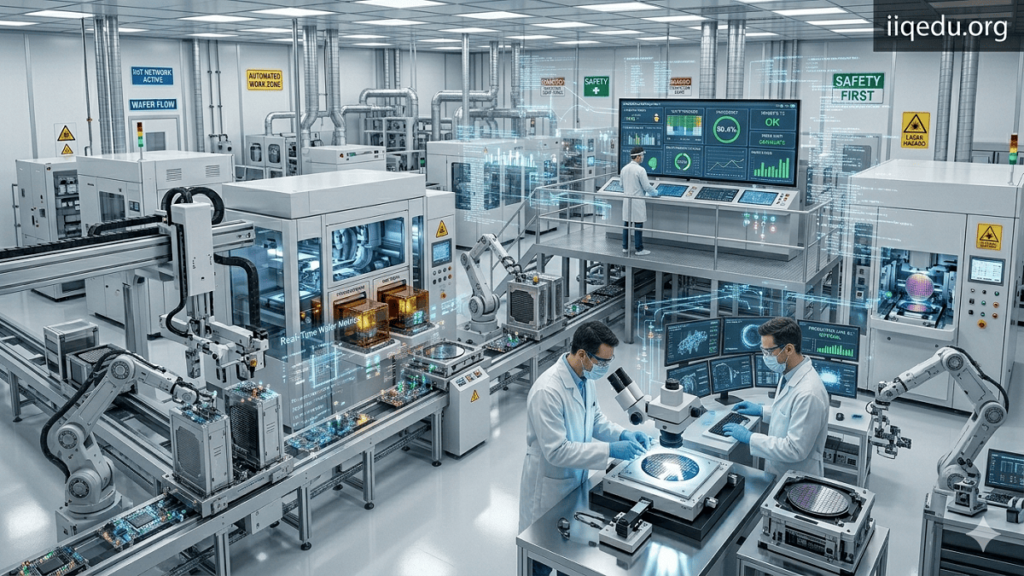
The Industrial Internet of Things (IIoT) is the application of IoT principles in industrial environments. It connects machinery, sensors, and control systems to enable predictive maintenance, process optimization, and real-time monitoring. IIoT & Cyber-Physical Systems focuses on operational efficiency, safety, and reliability in sectors like manufacturing, energy, transportation, and logistics.
Example Applications: Factory automation, smart grids, oil and gas pipeline monitoring, and fleet management.
Reference: IIoT Industry Insights
3. Cyber-Physical Systems (CPS)
Cyber-Physical Systems (CPS) are integrations of computational algorithms and physical components. They use embedded computers and networks to monitor and control physical processes with real-time feedback loops, where the physical environment influences computational behavior and vice versa. Cyber-Physical Systems is foundational for critical systems requiring high reliability, determinism, and safety.
Example Applications: Autonomous vehicles, industrial robotics, smart grids, medical devices, and aerospace control systems.
Reference: NSF CPS Program
Summary:
- IoT → General connectivity of smart devices.
- IIoT → Industrial application of IoT for efficiency and predictive analytics.
- CPS → Tight integration of computation and physical processes for real-time control and safety-critical operations.
These three concepts form a continuum: IoT provides connectivity, IIoT & Cyber-Physical Systems applies it to industrial processes, and Cyber-Physical Systems ensures real-time interaction between digital and physical worlds.
#IoT, IIoT & Cyber-Physical Systems in Ahemdabad
Who is IoT, IIoT & Cyber-Physical Systems required?
1. IoT (Internet of Things)
Who Needs It:
- Consumers and households – For smart home devices, wearable health monitors, and connected appliances.
- Retail and service industries – To track inventory, customer behavior, and personalized services.
- Healthcare providers – For remote monitoring, telemedicine devices, and connected diagnostic tools.
- Transportation and mobility companies – For connected vehicles, ride-sharing platforms, and real-time fleet management.
Purpose: IoT is required by anyone or any organization that needs remote monitoring, automation, real-time data insights, or device interconnectivity.
2. IIoT (Industrial Internet of Things)
Who Needs It:
- Manufacturing companies – To monitor production lines, predict equipment failures, and improve efficiency.
- Energy and utility providers – For smart grids, pipeline monitoring, and predictive maintenance.
- Logistics and supply chain operators – For real-time tracking, inventory management, and route optimization.
- Process industries (oil, gas, chemical) – To ensure operational safety and regulatory compliance.
Purpose: IIoT & Cyber-Physical Systems is required by industrial organizations and enterprises that need operational efficiency, predictive analytics, and industrial automation.
3. Cyber-Physical Systems (CPS)
Who Needs It:
- Autonomous vehicle developers – For self-driving cars, drones, and robotic vehicles requiring real-time control.
- Industrial automation engineers – To integrate computation with robotics and machinery for safety-critical operations.
- Energy sector – Smart grids, automated power distribution, and renewable energy integration.
- Healthcare technology providers – For real-time medical monitoring and connected surgical systems.
- Aerospace and defense organizations – For spacecraft, avionics systems, and missile guidance requiring high reliability.
Purpose: CPS is required by organizations and industries where real-time integration of digital computation and physical systems is critical, often for safety, precision, or mission-critical applications.
Summary:
- IoT → Individuals, businesses, and service providers needing device connectivity and automation.
- IIoT → Industrial enterprises aiming for efficiency, predictive maintenance, and operational intelligence.
- CPS → Safety-critical, high-reliability industries where computation and physical processes must interact seamlessly.
Reference Links:
#IoT, IIoT & Cyber-Physical Systems in Hyderabad
When is IoT, IIoT & Cyber-Physical Systems required?
1. Internet of Things (IoT)
When Required:
- Real-time monitoring: When individuals or businesses need to track devices, assets, or environmental conditions remotely.
- Automation and convenience: For tasks that can be automated, such as smart home controls, wearable health alerts, or intelligent lighting systems.
- Data-driven decision-making: When actionable insights are needed from device-generated data for consumer behavior, logistics, or healthcare applications.
- Connectivity-dependent applications: When multiple devices or systems need to communicate seamlessly over the internet.
Example: Smart thermostats adjust home temperatures automatically based on occupancy patterns.
2. Industrial Internet of Things (IIoT)
When Required:
- Predictive maintenance: When machinery or industrial equipment must be monitored to anticipate failures and reduce downtime.
- Operational optimization: When real-time data is needed to improve production efficiency, quality control, or resource allocation.
- Safety and regulatory compliance: When industrial processes involve high-risk materials or environments, requiring constant monitoring.
- Supply chain and logistics management: When enterprises need real-time visibility across transportation, warehousing, and distribution networks.
Example: A factory uses sensor-enabled equipment to predict machine failures before production stops, reducing costly downtime.
3. Cyber-Physical Systems (CPS)
When Required:
- Real-time control: When physical systems require instantaneous computational responses, such as autonomous vehicles or robotic arms.
- Safety-critical operations: When human life, expensive equipment, IIoT & Cyber-Physical Systems or mission-critical operations are involved, necessitating deterministic behavior.
- Complex integration of systems: When multiple physical and digital subsystems must operate in synchrony, such as in smart grids or aerospace control systems.
- Autonomous decision-making: When systems must self-adjust based on sensor input without manual intervention.
Example: An autonomous drone navigating obstacles in real-time while performing inspections on a high-voltage power line.
Summary:
- IoT → Required whenever devices or systems need connectivity, monitoring, or automation.
- IIoT → Required during industrial operations to enhance efficiency, IIoT & Cyber-Physical Systems, safety, and predictive insights.
- CPS → Required in critical systems where computational control and physical processes must interact in real-time and reliably.
References:
#IoT, IIoT & Cyber-Physical Systems in Delhi
Where is IoT, IIoT & Cyber-Physical Systems required?
1. Internet of Things (IoT)
Where Required:
- Homes and residential spaces – Smart appliances, thermostats, lighting, and security systems.
- Offices and commercial buildings – Automated lighting, HVAC control, and occupancy monitoring.
- Healthcare facilities – Remote patient monitoring, wearable devices, and telemedicine systems.
- Urban infrastructure – Smart city applications like connected streetlights, traffic monitoring, and environmental sensors.
Example: A smart home system adjusting lighting and temperature based on occupancy and preferences.
2. Industrial Internet of Things (IIoT)
Where Required:
- Manufacturing plants and factories – Real-time machine monitoring, predictive maintenance, and process optimization.
- Energy and utility sites – Smart grids, renewable energy management, and pipeline monitoring.
- Transportation hubs – Fleet tracking, logistics, and real-time cargo monitoring.
- Oil, gas, and chemical plants – Safety monitoring, leak detection, and regulatory compliance systems.
Example: A manufacturing plant using sensor-enabled equipment to detect machine faults before they cause production delays.
3. Cyber-Physical Systems (CPS)
Where Required:
- Autonomous vehicles and drones – Real-time navigation, obstacle avoidance, and decision-making.
- Industrial automation environments – Robotics, IIoT & Cyber-Physical Systems, CNC machinery, and process control systems.
- Energy and utility infrastructure – Smart grids, automated power distribution, IIoT & Cyber-Physical Systems and renewable energy management.
- Aerospace and defense sectors – Spacecraft, avionics, missile guidance, and mission-critical systems.
- Healthcare and medical devices – Surgical robots, IIoT & Cyber-Physical Systems, ICU monitoring systems, and remote diagnostic equipment.
Example: A smart grid dynamically balancing energy supply and demand using real-time sensor data and automated control.
Summary:
- IoT → Homes, offices, healthcare, and urban infrastructure.
- IIoT → Industrial plants, energy sites, transportation hubs, and high-risk process environments.
- CPS → Critical infrastructure, autonomous vehicles, robotics, IIoT & Cyber-Physical Systems, aerospace, and medical systems.
References:
#IoT, IIoT & Cyber-Physical Systems in Kolkata
How is IoT, IIoT & Cyber-Physical Systems required?
1. Internet of Things (IoT)
How Required:
- Device Connectivity: IoT devices are equipped with sensors and communication modules to connect to the internet, enabling real-time data collection.
- Data Monitoring and Analytics: Collected data is processed to provide actionable insights for users or automated systems.
- Automation and Remote Control: Devices can be controlled remotely or programmed to operate autonomously based on sensor feedback.
- Cloud Integration: IoT systems often rely on cloud platforms to store, process, and analyze large volumes of data.
Example: Smart home systems that adjust lighting and temperature automatically based on occupancy patterns.
2. Industrial Internet of Things (IIoT)
How Required:
- Sensor Deployment: Industrial machinery and equipment are embedded with advanced sensors to track performance, temperature, IIoT & Cyber-Physical Systems, vibration, and operational parameters.
- Real-Time Analytics and AI: Data from sensors is analyzed using AI and machine learning algorithms to detect anomalies, optimize processes, and predict failures.
- Integration with Control Systems: IIoT systems are integrated with SCADA, PLCs, IIoT & Cyber-Physical Systems or other industrial control systems for automated decision-making.
- Cybersecurity and Reliability Measures: Industrial environments implement high-reliability protocols, encrypted communications, and redundancy to prevent operational downtime.
Example: A manufacturing plant using IIoT & Cyber-Physical Systems sensors to perform predictive maintenance, reducing equipment downtime and operational costs.
3. Cyber-Physical Systems (CPS)
How Required:
- Embedded Computing: Physical systems such as vehicles, robots, or industrial machines are embedded with microcontrollers or processors to control operations.
- Real-Time Feedback Loops: Sensors continuously monitor the physical environment, and actuators respond automatically based on computational analysis.
- Systems Integration: CPS integrates hardware, software, and network components to operate cohesively, often in safety-critical or high-precision environments.
- Simulation and Testing: CPS implementations often undergo extensive simulation, modeling, and testing to ensure reliability before deployment.
Example: Autonomous vehicles continuously process sensor data to navigate safely in real time, adjusting speed and trajectory according to environmental conditions.
Summary:
- IoT → Implemented via connected devices, cloud analytics, and automation for consumer and business applications.
- IIoT → Implemented through industrial sensors, AI-driven analytics, and integration with control systems for operational efficiency.
- CPS → Implemented by embedding computation into physical systems with real-time feedback loops and tight integration for safety-critical operations.
References:
#IoT, IIoT & Cyber-Physical Systems in Banglore
Case Study of IoT, IIoT & Cyber-Physical Systems
1. Background
Siemens, a global leader in industrial technology, sought to improve operational efficiency, predictive maintenance, and real-time monitoring across its manufacturing plants and energy infrastructure. The challenge was to reduce downtime, optimize production, and ensure safety while integrating advanced digital technologies into physical operations.
2. Objectives
- Deploy IoT devices for monitoring equipment, energy usage, and environmental conditions.
- Implement IIoT & Cyber-Physical Systems solutions for predictive maintenance and process optimization.
- Integrate Cyber-Physical Systems (CPS) to enable real-time feedback and autonomous operational adjustments.
- Improve overall safety, reliability, and energy efficiency across multiple facilities.
3. Implementation
Step 1: IoT Deployment
- Sensors were installed on machinery, HVAC systems, and energy grids to collect real-time data.
- Cloud-based platforms were used to store and process device data, providing dashboards for facility managers.
Step 2: IIoT Integration
- Industrial-grade sensors were connected to manufacturing systems and SCADA controllers.
- AI and machine learning algorithms analyzed operational data to detect anomalies and predict equipment failures.
- Automated alerts and maintenance schedules were created to reduce unplanned downtime.
Step 3: Cyber-Physical Systems Implementation
- Robotics and automated machines were embedded with CPS for real-time operational adjustments.
- Feedback loops allowed systems to adjust speed, temperature, and operational parameters automatically.
- CPS enabled integration across production lines, energy systems, and logistics, ensuring coordinated and safe operations.
4. Outcomes
- Operational Efficiency: 15–20% reduction in unplanned downtime across manufacturing plants.
- Predictive Maintenance: Reduced equipment failures by 30% due to AI-driven analysis.
- Energy Optimization: Smart energy management decreased energy consumption by 12%.
- Safety Improvements: Real-time CPS monitoring reduced workplace hazards and ensured regulatory compliance.
- Scalable Model: The integrated IoT, IIoT & Cyber-Physical Systems, and CPS framework became a blueprint for other Siemens facilities worldwide.
5. Lessons Learned
- Data Accuracy is Critical: The quality of sensor data directly impacts predictive analytics and system reliability.
- Integration Complexity: CPS requires careful synchronization between physical devices, software, and networks.
- Cybersecurity Matters: IIoT & Cyber-Physical Systems and CPS deployments need robust cybersecurity protocols to prevent unauthorized access and operational risks.
- Incremental Deployment: Gradual integration of IoT, IIoT & Cyber-Physical Systems, and CPS ensures smoother transitions and minimizes operational disruptions.
6. Conclusion
This case study demonstrates that the combined implementation of IoT, IIoT, and CPS can dramatically improve efficiency, safety, and reliability in industrial environments. Organizations that integrate these technologies effectively gain a competitive edge by enabling predictive maintenance, real-time operational control, and intelligent automation.
References:
#IoT, IIoT & Cyber-Physical Systems in Pune
White Paper of IoT, IIoT & Cyber-Physical Systems
1. Executive Summary
The convergence of Internet of Things (IoT), Industrial IoT (IIoT), and Cyber-Physical Systems (CPS) is transforming industrial, commercial, and technological landscapes. These technologies enable real-time monitoring, automation, predictive maintenance, and intelligent decision-making. This white paper explores definitions, applications, integration strategies, challenges, and future trends to provide organizations with insights for leveraging these systems effectively.
2. Introduction
2.1 Definitions
- IoT: A network of interconnected devices capable of collecting, exchanging, and acting on data.
- IIoT: Industrial-grade IoT applied to factories, energy systems, transportation, and logistics for operational efficiency and predictive analytics.
- CPS: Systems integrating computational algorithms and physical processes, enabling real-time control and interaction between digital and physical systems.
2.2 Importance
The adoption of IoT, IIoT, and CPS is critical for organizations seeking efficiency, safety, reliability, and competitive advantage. Industries such as manufacturing, healthcare, transportation, energy, and aerospace increasingly rely on these technologies for digital transformation.
3. Industry Applications
| Technology | Applications | Key Benefits |
|---|---|---|
| IoT | Smart homes, wearable devices, connected vehicles, urban sensors | Convenience, remote monitoring, data-driven insights |
| IIoT | Manufacturing process monitoring, predictive maintenance, logistics tracking | Operational efficiency, reduced downtime, cost optimization |
| CPS | Autonomous vehicles, industrial robotics, smart grids, aerospace control systems | Real-time control, safety, integration of digital and physical systems |
Example Case: Siemens integrated IoT, IIoT, and CPS across its manufacturing plants to reduce downtime, optimize energy consumption, and improve operational safety.
4. How These Systems Are Implemented
- IoT Implementation: Device connectivity, cloud analytics, remote monitoring, automation of routine tasks.
- IIoT Implementation: Industrial sensor deployment, AI-driven analytics, integration with SCADA/PLC systems, cybersecurity measures.
- CPS Implementation: Embedded computing in physical devices, real-time feedback loops, coordinated control of multiple subsystems, simulation and validation for safety-critical operations.
Integration Approach: A phased deployment is recommended, starting with IoT device connectivity, followed by IIoT analytics integration, and finally CPS implementation for mission-critical operations.
5. Benefits of Adoption
- Improved operational efficiency and productivity
- Predictive maintenance reduces downtime and costs
- Enhanced safety and regulatory compliance
- Energy optimization and sustainability
- Data-driven decision-making for strategic advantages
6. Challenges
- Data Management: Handling large volumes of sensor-generated data requires robust infrastructure.
- Cybersecurity Risks: Connected systems are vulnerable to attacks and require strong encryption, monitoring, and access controls.
- Integration Complexity: CPS requires precise synchronization between software, hardware, and networks.
- High Initial Costs: Implementation may require significant capital investment for sensors, devices, and analytics platforms.
7. Future Trends
- Edge Computing: Processing data closer to devices for faster response times.
- AI and Machine Learning: Advanced predictive analytics and autonomous decision-making.
- 5G Connectivity: High-speed, low-latency networks enhancing real-time operations.
- Digital Twins: Virtual replicas of physical systems for simulation, optimization, and monitoring.
8. Conclusion
IoT, IIoT, and CPS are foundational technologies for the next industrial and technological revolution. Organizations that strategically integrate these systems gain efficiency, predictive insights, operational safety, and competitive advantage. Adoption requires careful planning, robust cybersecurity, and continuous innovation.
References
#IoT, IIoT & Cyber-Physical Systems in Maharashtra
Industry Application of IoT, IIoT & Cyber-Physical Systems
1. Manufacturing Industry
Applications:
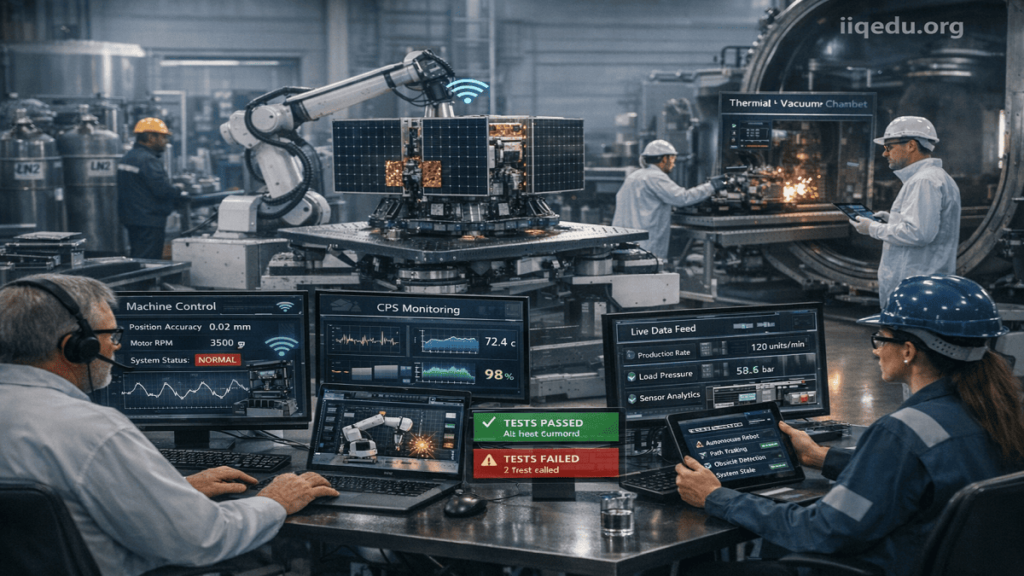
- Smart Factories: IIoT sensors monitor production lines, detect machine failures, and optimize workflows.
- Robotics & Automation (CPS): Cyber-physical systems integrate robotics with real-time feedback for precision manufacturing.
- Predictive Maintenance: Sensors and IIoT analytics predict equipment failures to minimize downtime and reduce operational costs.
Impact: Improved efficiency, reduced production errors, energy savings, and safer working environments.
Example: Siemens and Bosch implement IIoT and CPS in factories to automate operations and enable predictive analytics.
Reference: Siemens IIoT Solutions
2. Energy and Utilities
Applications:
- Smart Grids: CPS and IIoT monitor energy supply and demand in real-time, balancing loads across the network.
- Renewable Energy Optimization: Sensors track wind turbines, solar panels, and hydro plants for predictive maintenance and efficiency.
- Power Distribution: Real-time analytics optimize energy distribution, reduce losses, and prevent blackouts.
Impact: Enhanced energy efficiency, operational reliability, and sustainability.
Example: General Electric uses IIoT-enabled sensors and CPS for predictive maintenance in power plants.
Reference: GE Digital Energy Solutions
3. Transportation and Logistics
Applications:
- Fleet Management: IIoT devices track vehicles, monitor fuel consumption, and optimize routes.
- Autonomous Vehicles (CPS): Real-time navigation and obstacle avoidance using sensor networks and embedded computing.
- Supply Chain Monitoring: IoT sensors monitor cargo conditions and shipment location for quality and efficiency.
Impact: Reduced operational costs, improved delivery times, and enhanced safety.
Example: DHL uses IIoT and CPS to track packages and optimize warehouse operations.
Reference: DHL Innovation Center
4. Healthcare Industry
Applications:
- Remote Patient Monitoring (IoT): Wearable devices monitor vital signs in real-time and send alerts to doctors.
- Medical Robotics (CPS): Robotic surgery systems integrate sensors and computation for precise procedures.
- Hospital Automation (IIoT): Connected equipment and asset tracking improve efficiency and reduce errors.
Impact: Improved patient care, faster response times, and reduced medical errors.
Example: Hospitals use IoT-enabled monitoring systems and CPS-based surgical robots to enhance treatment outcomes.
Reference: IEEE IoT Healthcare Applications
5. Aerospace and Defense
Applications:
- Autonomous Drones (CPS): Real-time control for surveillance, delivery, and military operations.
- Satellite Monitoring (IoT & IIoT): Sensors track satellite health, positioning, and payload status.
- Aircraft Systems Optimization: IIoT and CPS monitor engines, flight systems, and safety-critical components.
Impact: Increased reliability, mission safety, and operational efficiency.
Example: NASA and SpaceX implement IIoT and CPS for spacecraft monitoring and autonomous operations.
Reference: NASA CPS and IoT Applications
Summary
| Industry | Technology Used | Key Applications | Benefits |
|---|---|---|---|
| Manufacturing | IIoT, CPS | Smart factories, predictive maintenance, robotics | Efficiency, safety, cost reduction |
| Energy & Utilities | IIoT, CPS | Smart grids, renewable energy optimization | Reliability, sustainability, energy savings |
| Transportation | IoT, IIoT, CPS | Fleet tracking, autonomous vehicles, cargo monitoring | Cost efficiency, safety, timely delivery |
| Healthcare | IoT, IIoT, CPS | Remote monitoring, medical robotics, hospital automation | Patient safety, accuracy, efficiency |
| Aerospace & Defense | IoT, IIoT, CPS | Satellite monitoring, drones, aircraft systems | Mission reliability, safety, performance |
Conclusion:
IoT, IIoT, and CPS have become essential across industries, driving automation, efficiency, predictive analytics, and real-time control. Their adoption is critical for organizations aiming to remain competitive, sustainable, and technologically advanced in the digital era.
#IoT, IIoT & Cyber-Physical Systems in Mumbai
Ask FAQs
What is the difference between IoT, IIoT, and CPS?
What is the dIoT (Internet of Things) focuses on connecting devices and sensors for general-purpose data collection, automation, and remote monitoring.
IIoT (Industrial IoT) applies these principles specifically to industrial environments to improve process efficiency, predictive maintenance, and operational control.
CPS (Cyber-Physical Systems) integrates computational algorithms with physical systems to allow real-time feedback and autonomous control, often in safety-critical or high-precision environments.
In short, IoT is consumer and general-purpose, IIoT is industrial-focused, and CPS is real-time integration of digital and physical systems.
Why are these technologies important for industries?
IoT, IIoT, and CPS enable organizations to optimize operations, reduce downtime, improve safety, and enable predictive decision-making. Industries like manufacturing, healthcare, energy, transportation, and aerospace use these technologies to enhance efficiency, reduce operational costs, and maintain competitive advantage through automation and real-time data analytics.
Who requires IoT, IIoT, and CPS?
IoT is required by consumers, businesses, and service providers seeking device connectivity and automation.
IIoT is required by industrial enterprises such as factories, energy plants, and logistics operators for efficiency and predictive analytics.
CPS is required in safety-critical sectors like aerospace, defense, autonomous vehicles, robotics, and healthcare where precise, real-time control is necessary.
When and where are these systems required?
IoT is required for smart homes, offices, healthcare monitoring, and urban infrastructure where remote monitoring or automation is needed.
IIoT is required in manufacturing plants, energy facilities, process industries, and transportation hubs for operational monitoring and predictive maintenance.
CPS is required in environments demanding real-time integration of computation and physical processes, including autonomous vehicles, robotics, smart grids, aerospace, and medical systems.
How are IoT, IIoT, and CPS implemented?
IoT: Connected devices collect data, which is sent to cloud or edge platforms for monitoring and automated decision-making.
IIoT: Industrial sensors and controllers integrate with SCADA or PLC systems. AI and analytics predict equipment failures and optimize processes.
CPS: Embedded computing systems interact with physical components in real-time, using sensors and actuators to autonomously control operations.
Implementation requires careful planning, cybersecurity measures, and continuous monitoring to ensure reliability, safety, and efficiency.
Source: India Science
Table of Contents
Disclaimer:
The information provided is for general informational and educational purposes only. While every effort has been made to ensure accuracy, IIQ Edu and its contributors make no warranties regarding completeness or applicability. Users should consult technical experts or official sources before making decisions based on this content.