Environment, Sustainability & Green Quality
1. Environment
- Focuses on reducing negative environmental impacts from production and operations.
- Key elements include:
- Resource efficiency: Minimizing energy, water, and raw material consumption.
- Waste reduction: Limiting solid, liquid, and gaseous waste through better process control.
- Pollution control: Ensuring emissions and effluents meet environmental standards.
- Example: Implementing closed-loop water systems in a manufacturing plant to reduce water waste.
2. Sustainability
- Refers to meeting present needs without compromising the ability of future generations to meet theirs.
- In quality management, sustainability includes:
- Sustainable sourcing: Using raw materials responsibly (e.g., recycled or certified materials).
- Lifecycle approach: Designing products with durability, recyclability, and minimal environmental footprint.
- Energy and carbon management: Reducing carbon footprint through efficient processes or renewable energy.
- Example: Designing electronic devices that are energy-efficient, repairable, and recyclable at end-of-life.
3. Green Quality
- A quality management approach that combines traditional QA principles with environmental and sustainability goals.
- Key focus areas:
- Eco-design: Incorporating environmental criteria into product design (e.g., low emissions, biodegradable materials).
- Green process control: Ensuring manufacturing processes minimize pollution, energy use, and hazardous chemicals.
- Compliance and certification: Meeting ISO 14001 (Environmental Management Systems), ISO 50001 (Energy Management), or other green standards.
- Example: Automotive companies implementing QA processes to ensure vehicles meet emission norms while maintaining performance quality.
4. Integration of Green Quality into Industry
- Manufacturing: Use of energy-efficient machines, recycling scrap, and optimizing logistics to reduce carbon footprint.
- Construction: Materials selection with low embodied energy, waste management, and sustainable building certifications.
- Consumer Goods: Reducing packaging waste, using biodegradable materials, and ensuring product safety and longevity.
- Electronics: Eco-design for reduced e-waste, energy-efficient operations, and sustainable materials.
5. Benefits
- Environmental Protection: Reduces pollution, emissions, and natural resource depletion.
- Cost Efficiency: Lower energy consumption, waste management costs, and material use.
- Regulatory Compliance: Ensures adherence to environmental and sustainability standards.
- Brand Value: Promotes corporate responsibility and customer trust.
- Long-Term Viability: Aligns product and process quality with sustainability goals.
Key Insight:
Environment, Sustainability & Green Quality transforms traditional quality management from purely performance-focused to a holistic approach, integrating environmental stewardship, social responsibility, and sustainable resource management while ensuring products and processes meet high-quality standards.
What is Environment, Sustainability & Green Quality?
Environment, Sustainability & Green Quality is an integrated approach to managing products, processes, and organizations so that quality performance aligns with environmental protection and sustainable development goals. It goes beyond traditional quality management, adding ecological and social responsibility considerations. Here’s a detailed explanation:
1. Environment
- Refers to the natural surroundings and resources impacted by industrial or organizational activities.
- Focuses on reducing negative environmental impacts, such as:
- Air, water, and soil pollution
- Excessive energy consumption
- Resource depletion and waste generation
- Example: Using energy-efficient machinery or reducing hazardous emissions in a production plant.
2. Sustainability
- Sustainability is about meeting current needs without compromising the ability of future generations to meet theirs.
- In a quality context, sustainability means designing products, services, and processes that are:
- Resource-efficient – minimal use of raw materials, water, and energy
- Durable and repairable – longer product life reduces waste
- Environmentally responsible – reduced carbon footprint and minimized ecological impact
- Example: Using recycled materials in manufacturing or designing products that are recyclable at end-of-life.
3. Green Quality
- Green Quality integrates environmental and sustainability considerations into quality management practices.
- Key focus areas include:
- Eco-design: Creating products that are safe, energy-efficient, and environmentally friendly.
- Green processes: Optimizing production to reduce waste, emissions, and energy use.
- Compliance: Following standards such as ISO 14001 (Environmental Management) and ISO 50001 (Energy Management).
- Example: Ensuring packaging meets quality standards while being biodegradable or recyclable.
4. Key Benefits
- Environmental Protection – lowers pollution and conserves natural resources.
- Cost Savings – reduces energy use, waste, and material costs.
- Regulatory Compliance – helps meet local and global environmental laws.
- Brand Reputation – enhances public trust and corporate responsibility.
- Long-Term Viability – ensures processes and products remain sustainable for the future.
Summary
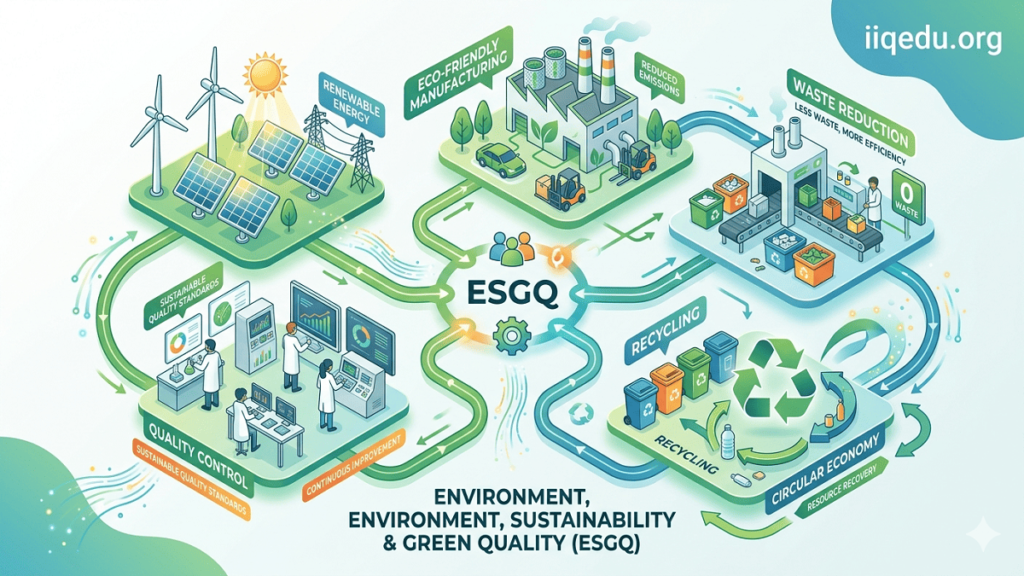
Environment, Sustainability & Green Quality represents a holistic approach to organizational and product quality, linking traditional quality objectives with eco-friendly practices and sustainable development goals. It ensures that high-quality standards are met while also caring for the planet and resources for future generations.
Who is Environment, Sustainability & Green Quality required?
Environment, Sustainability & Green Quality (ESGQ) is required by organizations, industries, and stakeholders that need to ensure quality while minimizing environmental impact and promoting sustainable practices. It’s not just a regulatory requirement—it’s increasingly a strategic, operational, and ethical necessity. Here’s a breakdown:
1. Industries with High Environmental Impact
Organizations whose processes significantly affect the environment are required to adopt ESGQ principles, including:
- Manufacturing – heavy industries, electronics, automotive, aerospace
- Chemical and Pharmaceutical – production of chemicals, drugs, and packaging
- Food and Beverage – processing, packaging, and distribution
- Construction and Infrastructure – building materials, energy consumption, and waste management
Reason: These industries consume substantial resources and generate emissions or waste. Green quality ensures sustainable production while maintaining product standards.
2. Companies Facing Regulatory and Compliance Pressures
- Organizations must meet environmental regulations (e.g., emission limits, waste disposal, energy efficiency) and international standards such as:
- ISO 14001 (Environmental Management)
- ISO 50001 (Energy Management)
- ISO 26000 (Social Responsibility)
- ESGQ ensures compliance while maintaining product or process quality.
3. Companies Committed to Corporate Social Responsibility (CSR)
- Businesses looking to improve their brand reputation and stakeholder trust adopt ESGQ to show commitment to sustainable and responsible practices.
- Example: Electronics companies adopting eco-design standards to reduce e-waste while meeting product quality.
4. Organizations with High Consumer Awareness
- In markets where consumers demand eco-friendly and sustainable products, ESGQ is required to satisfy expectations for both product quality and environmental responsibility.
- Example: Food, beverage, and packaging industries using biodegradable or recyclable materials that also meet strict quality standards.
5. Supply Chain Partners
- Suppliers and logistics partners are increasingly required to implement ESGQ principles to ensure sustainability across the supply chain.
- Example: Automotive OEMs may mandate suppliers to reduce energy consumption, emissions, and waste while maintaining high QA standards.
Key Insight
Environment, Sustainability & Green Quality is required whenever:
- The organization’s operations impact the environment.
- Compliance with environmental regulations or sustainability standards is mandatory.
- There is a need to balance product quality with ecological responsibility.
- Stakeholders, including consumers and partners, demand sustainable practices.
When is Environment, Sustainability & Green Quality required?
1. During Product Design and Development
- When designing new products, ESGQ should be integrated from the start.
- Ensures:
- Eco-friendly materials are used
- Energy efficiency and recyclability are considered
- Product lifecycle impact is minimized
- Example: Electronics manufacturers designing energy-efficient devices that meet quality standards.
2. When Manufacturing Processes Have Environmental Impact
- Required whenever production generates waste, emissions, or consumes large amounts of energy or water.
- Helps identify ways to reduce environmental impact while maintaining product quality.
- Example: Automotive plants optimizing paint shops or assembly lines to minimize VOC emissions.
3. During Regulatory Compliance
- ESGQ is mandatory when laws, industry standards, or certifications require environmental and sustainability compliance.
- Relevant standards include:
- ISO 14001 – Environmental Management
- ISO 50001 – Energy Management
- ISO 26000 – Social Responsibility
- Example: Food and pharmaceutical companies ensuring packaging and waste management comply with regulations.
4. When Entering Markets with Green or Eco Requirements
- Required when products are sold in regions or markets demanding eco-labeled, sustainable, or low-carbon products.
- Demonstrates corporate responsibility and meets consumer expectations.
- Example: Beverage companies producing biodegradable packaging to comply with local environmental regulations.
5. When Aiming for Corporate Sustainability Goals
- Required when organizations set long-term sustainability targets, including carbon neutrality, resource efficiency, and waste reduction.
- ESGQ ensures that quality is maintained while meeting sustainability KPIs.
6. During Supply Chain Management
- Required when the supply chain needs to meet environmental and sustainability standards, ensuring that all suppliers follow eco-friendly practices without compromising quality.
- Example: Automotive OEMs requiring suppliers to implement energy-efficient production and quality monitoring.
Key Insight
Environment, Sustainability & Green Quality is required:
- At the start of product design for eco-friendly and efficient products
- Throughout production where environmental impact occurs
- For regulatory compliance and sustainability certifications
- To meet market and consumer expectations
- Across supply chains to ensure consistent green quality
It is essentially required whenever quality management intersects with environmental responsibility and sustainability goals.
Where is Environment, Sustainability & Green Quality required?
1. Manufacturing Facilities
- Where: Factories producing goods, chemicals, electronics, food, automotive parts, pharmaceuticals, or packaging.
- Why: Manufacturing often consumes energy, water, and raw materials and generates waste and emissions. ESGQ ensures environmental impact is minimized while maintaining product quality.
2. Product Design and R&D Centers
- Where: Research and development departments, prototyping labs, and engineering offices.
- Why: Early integration of sustainability principles ensures that new products are energy-efficient, recyclable, and environmentally friendly while meeting quality standards.
3. Supply Chains
- Where: Across suppliers, logistics centers, and distribution networks.
- Why: Sustainable and environmentally responsible practices are required along the supply chain to maintain overall green quality and compliance with standards.
4. High-Impact Industries
- Where: Industries with significant environmental footprints or regulatory obligations, such as:
- Automotive and aerospace
- Chemicals and pharmaceuticals
- Food and beverage processing
- Electronics and semiconductors
- Construction and heavy machinery
- Why: ESGQ ensures regulatory compliance, reduces ecological impact, and enhances public trust.
5. Markets or Regions with Environmental Regulations
- Where: Countries or regions that enforce strict environmental or sustainability laws.
- Why: ESGQ ensures compliance with local or international standards, such as ISO 14001, ISO 50001, RoHS, or REACH.
6. Consumer-Facing Operations
- Where: Retail packaging, product labeling, and service delivery areas.
- Why: Growing consumer demand for sustainable and eco-friendly products requires that quality is aligned with environmental responsibility.
Key Insight
ESGQ is required anywhere a product, process, or organization impacts the environment or interacts with sustainability-conscious stakeholders.
How is Environment, Sustainability & Green Quality required?
1. Policy and Leadership
- Organizations must establish green quality policies and sustainability goals.
- Leadership commitment is critical for enforcing environmental practices alongside traditional quality goals.
- Example: A company setting corporate goals for zero waste, reduced carbon emissions, and eco-friendly product standards.
2. Design and Development Stage
- Green product design: Select eco-friendly, recyclable, or biodegradable materials.
- Sustainable process design: Optimize product lifecycle to reduce resource consumption and environmental impact.
- Example: Designing electronics that are energy-efficient, durable, and recyclable, while meeting functional quality requirements.
3. Process Implementation
- Eco-efficient production: Minimize energy, water, and raw material use in manufacturing.
- Pollution control: Implement emission controls, recycling, and waste reduction measures.
- Monitoring: Use sensors, data analytics, and quality audits to ensure environmental and sustainability standards are met.
- Example: Automotive plants monitoring VOC emissions during painting processes while maintaining product quality.
4. Standards and Compliance
- Follow international standards such as:
- ISO 14001 – Environmental Management Systems
- ISO 50001 – Energy Management Systems
- ISO 26000 – Social Responsibility Guidelines
- ESGQ is required to meet regulatory compliance and certifications in many industries.
- Example: Food or pharmaceutical companies ensuring packaging and waste disposal meet environmental and safety standards.
5. Supply Chain Integration
- Require suppliers and logistics partners to adopt ESGQ principles.
- Align procurement policies to favor sustainable, certified, and environmentally responsible suppliers.
- Example: Automotive OEMs requiring suppliers to reduce energy use, emissions, and waste while meeting QA standards.
6. Continuous Improvement and Feedback
- ESGQ is implemented as an ongoing process, not a one-time action.
- Use audits, KPIs, and feedback loops to track environmental performance, resource use, and product quality.
- Example: Monitoring CO₂ emissions per product unit and improving manufacturing efficiency over time.
7. Training and Awareness
- Employees, operators, and engineers must be trained on:
- Sustainable practices in production
- Green quality principles
- Environmental compliance procedures
- Ensures ESGQ practices are embedded in day-to-day operations.
Key Insight
Environment, Sustainability & Green Quality is required as an integrated part of the entire organizational workflow—from design to production, supply chain, compliance, and continuous improvement.
- It combines quality management, environmental stewardship, and sustainable development into measurable practices.
- Without structured implementation, ESGQ goals cannot be reliably achieved.
Case Study of Environment, Sustainability & Green Quality
1. Case: Manufacturing Sector – Green Manufacturing Practices
A study of several manufacturing firms in Guangdong Province, China, examined how sustainable operations and operational transparency influence environmental sustainability. The firms implemented environmental business practices (EBPr) such as resource efficiency, emission controls, and waste minimization. Researchers found that sustainable operations and transparency acted as mediators between environmental practices and actual sustainability results, meaning that firms that openly tracked performance and optimized operations showed measurable environmental improvement.
Key Outcomes:
- Reduction in pollutant emissions.
- Improved compliance with environmental performance standards.
- Enhanced operational quality through optimized sustainable workflows.
This case demonstrates how integrating environmental management with operational quality systems can produce sustainability gains without sacrificing product or process quality.
2. Case: Eco‑Friendly Manufacturing Practices in Vietnam
A case study of manufacturing companies in Vietnam focused on green innovation practices in their product and process designs. One company producing furniture targeted environmental impact by reducing natural wood consumption and adopting greener materials, while another in the electric cable industry modernized production lines to reduce waste and support sustainable output.
Key Outcomes:
- Adoption of sustainable materials reduced environmental footprint.
- Modern production systems improved both product quality and environmental performance.
- Green innovation became a competitive differentiator.
This case shows how sustainability can be integrated directly into product quality standards and manufacturing processes.
3. Broader Corporate Sustainability Example
General case examples from multiple industries show successful sustainability initiatives that also align with quality outcomes:
- A manufacturing company implemented energy‑efficient systems, resulting in a 20% reduction in energy use and measurable cuts in emissions, while cost savings improved overall operational quality.
- A technology company switched to renewable energy sources, cutting its carbon footprint by up to 50% and strengthening quality assurance frameworks by stabilizing energy inputs.
- A retail company implemented waste reduction and recycling programs that reduced landfill impact by 50%, improving environmental performance without weakening product quality.
These examples illustrate how sustainability initiatives — from energy management to waste reduction — are tied directly to green quality outcomes like improved efficiency, reduced environmental impact, and stronger compliance with environmental standards.
4. Corporate Governance and Environmental Performance
In a study of listed firms in the USA, researchers investigated how corporate governance influences environmental sustainability outcomes. They found that strong governance mechanisms can positively impact a firm’s environmental sustainability performance, particularly when environmental plans are integrated into broader business strategy and stakeholder accountability is emphasized.
Key Findings:
- Governance structures tied to sustainability can improve environmental scores.
- Effectiveness varies depending on business scenarios, but overall governance was linked to better environmental performance.
This case underscores the importance of governance and quality systems in driving environmentally sustainable outcomes at the corporate level.
Summary of Key Lessons
Across these case studies and examples:
- Sustainability and quality systems can be integrated to improve environmental performance without compromising operational excellence.
- Modern manufacturing practices that emphasize transparent tracking, lean operations, and resource efficiency deliver measurable sustainability gains.
- Green innovation and governance frameworks support long‑term environmental performance while enhancing product and process quality.
- Corporate strategies that embed environmental goals into quality frameworks help firms meet regulatory expectations, reduce emissions, and improve competitiveness.
White Paper of Environment, Sustainability & Green Quality
1. Executive Summary
Environment, Sustainability & Green Quality (ESGQ) represents an integrated approach where environmental stewardship, sustainable development, and quality management converge. Traditional quality systems focus on product and process excellence. ESGQ expands that focus to include environmental performance and sustainable practices throughout the product lifecycle—design, production, use, and end‑of‑life. This holistic framework helps organisations meet regulatory requirements, satisfy stakeholder expectations, and remain competitive in markets where sustainability has become a core expectation.
2. Definitions and Scope
2.1 Environment
Refers to the natural ecosystem and resources affected by organisational activities. It includes:
- Resource consumption (energy, water, raw materials)
- Emissions to air, water, and soil
- Waste generation and management
The focus is on reducing environmental impact, including pollutants and ecological degradation.
(Environment and sustainability terms are commonly used in sustainability frameworks and environmental reporting standards.)
2.2 Sustainability
Sustainability means meeting present needs without compromising future generations’ ability to meet theirs. ESGQ embeds sustainability through:
- Resource efficiency
- Lifecycle minimisation of environmental impact
- Support for Sustainable Development Goals (SDGs)
Structured sustainability management is increasingly a strategic necessity, not merely an add‑on.
2.3 Green Quality
Green Quality integrates environmental and sustainability considerations into formal quality frameworks (e.g., ISO 9001 quality management, ISO 14001 environmental management). It emphasises:
- Eco‑design principles
- Sustainable supply chain practices
- Environmental performance alongside quality metrics
This ensures products are not only high‑quality in function but also environmentally and socially responsible in impact.
3. Framework and Management Systems
3.1 Integrated Management Systems
Best practice organisations integrate Environmental Management Systems (EMS) like ISO 14001 with Quality Management Systems (QMS) such as ISO 9001. Studies show that organisations operating QMS and EMS together achieve higher overall ESG performance, including environmental and governance pillars.
3.2 Environmental and Quality Standards
- ISO 14001 – Environmental Management: Framework for continuous improvement in environmental performance.
- Design for the Environment (DfE): Reduces environmental impact across product lifecycles.
- Eco‑labels & self‑declarations (e.g., Green Seal) help communicate verified sustainability attributes.
These frameworks support organisations in embedding ESGQ principles into formal business processes.
4. Implementation Practices
Implementation of ESGQ typically follows a structured path:
4.1 Policy and Leadership
Top management formalises an environmental and sustainability policy that aligns with business strategy. This commitment drives resource allocation, KPI setting, and accountability mechanisms.
4.2 Design and Development
Incorporate eco‑design and lifecycle thinking to minimise environmental footprint while meeting quality requirements.
4.3 Operations and Process Control
Apply green and lean practices to manufacturing:
- Reduce energy and raw material use
- Minimise waste and hazardous substances
- Optimise process flow and product quality
Research shows that green practices can improve both environmental and economic performance.
4.4 Measurement and Reporting
Establish KPIs for energy use, emissions, waste, and quality outcomes. Regularly monitor performance and integrate results into organizational reporting and continuous improvement.
4.5 Supply Chain Integration
Extend ESGQ principles to suppliers so that sustainability and quality are maintained across the value chain.
5. Benefits of ESGQ Integration
5.1 Environmental Impact
- Reduced emissions and waste
- Lower energy and resource consumption
- Better compliance with environmental laws
5.2 Business Value
- Increased operational efficiency
- Cost savings from reduced resource usage
- Better risk management in a regulatory landscape
5.3 Reputation and Market Position
Meeting ESGQ expectations enhances brand trust and responsiveness to sustainability‑oriented customers and investors.
5.4 Enhanced Performance
Integrated quality and environmental systems correlate with stronger ESG results, proving these frameworks are business tools, not just regulatory utilities.
6. Challenges and Considerations
- Data collection and measurement consistency remains a challenge in ESG reporting. Standards and frameworks help but require rigorous implementation.
- Integration of sustainability goals into existing organisational structures requires leadership, cross‑functional collaboration, and clarity of roles.
7. Conclusion
Environment, Sustainability & Green Quality represents a strategic evolution of quality systems in modern business. By integrating environmental performance and sustainability into quality management, organisations can not only meet regulatory requirements but also unlock competitive advantage, enhance stakeholder trust, and contribute to long‑term sustainable development. Formal frameworks like ISO 14001 and structured sustainability programs are key enablers of this approach.
Industry Application of Environment, Sustainability & Green Quality
1. Manufacturing and Heavy Industry
- Application: Factories producing automotive parts, machinery, electronics, and chemicals integrate ESGQ into production lines.
- Practices:
- Energy-efficient machinery and lighting
- Waste reduction and recycling programs
- Eco-friendly materials and process optimization
- Benefits: Reduced emissions, compliance with environmental regulations, and improved product quality.
- Example: Automotive plants monitor VOC emissions and optimize painting processes while maintaining part quality.
2. Automotive and Aerospace
- Application: Inspection and assembly of high-precision, safety-critical components.
- Practices:
- Green design for lightweight and recyclable components
- Minimizing material and energy consumption in assembly lines
- Integration of QA systems that reduce scrap and defects
- Benefits: Lower environmental impact, high safety standards, and cost reduction through process efficiency.
3. Food & Beverage
- Application: Production, packaging, and distribution processes adopt ESGQ.
- Practices:
- Biodegradable or recyclable packaging
- Water and energy-efficient production processes
- Waste reduction and contamination prevention
- Benefits: Environmental compliance, reduced resource use, and enhanced consumer trust.
4. Pharmaceuticals and Healthcare
- Application: Production of drugs, vaccines, and medical devices.
- Practices:
- Sterile and environmentally controlled QA processes
- Minimal chemical waste and energy-efficient manufacturing
- Sustainable packaging and cold-chain optimization
- Benefits: Regulatory compliance, reduced ecological footprint, and safe, high-quality products.
5. Electronics and Semiconductors
- Application: Fabrication of PCBs, semiconductors, and consumer electronics.
- Practices:
- Reduction of hazardous substances (RoHS compliance)
- Energy-efficient cleanroom operations
- Recyclable components and eco-design principles
- Benefits: Minimizes e-waste, ensures product quality, and improves energy efficiency.
6. Construction and Infrastructure
- Application: Sustainable building materials, energy-efficient designs, and eco-friendly construction methods.
- Practices:
- Use of low-carbon concrete, recycled materials, and sustainable insulation
- Waste management and water recycling on sites
- Quality checks that ensure durability and compliance with environmental standards
- Benefits: Reduces environmental footprint, improves long-term structural quality, and meets green building certifications (e.g., LEED).
7. Consumer Goods and Packaging
- Application: Production of household products, personal care, and packaged goods.
- Practices:
- Recyclable or biodegradable packaging
- Eco-design of products for energy efficiency
- QA systems ensuring products meet functional and environmental standards
- Benefits: Meets consumer sustainability expectations, reduces waste, and improves brand reputation.
Key Takeaways
- ESGQ is industry-agnostic; it applies wherever operations impact resources, the environment, or stakeholders.
- The implementation typically involves eco-design, green processes, sustainable sourcing, and compliance with environmental regulations while maintaining product quality.
- Industries benefit from cost savings, regulatory compliance, reduced ecological footprint, and stronger stakeholder trust.
#environment,sustainabilityandgreenqualityinindia #environment,sustainabilityandgreenqualityinmumbai #environment,sustainabilityandgreenqualityinvasai #environment,sustainabilityandgreenqualityinraipur #environment,sustainabilityandgreenqualityinkochi #environment,sustainabilityandgreenqualityinchandigarh #environment,sustainabilityandgreenqualityingoa #environment,sustainabilityandgreenqualityinkerala #environment,sustainabilityandgreenqualityinmaharashtra #environment,sustainabilityandgreenqualityinpunjab #environment,sustainabilityandgreenqualityinhariyana #environment,sustainabilityandgreenqualityinmadhyapradesh #environment,sustainabilityandgreenqualityingujrat #bestinstituteinmumbai #bestinstituteinindia #bestinstituteintheworld #bestinstituteinvasai
Ask FAQs
What is Environment, Sustainability & Green Quality (ESGQ)?
ESGQ is an integrated approach that combines quality management with environmental responsibility and sustainable practices. It ensures that products, processes, and operations meet high-quality standards while minimizing environmental impact and supporting long-term sustainability.
Why is ESGQ important for industries?
ESGQ is important because it:
Reduces environmental footprint (energy, waste, emissions)
Ensures regulatory compliance (ISO 14001, ISO 50001)
Enhances product quality and reliability
Improves brand reputation and stakeholder trust
Supports long-term operational and environmental sustainability
Which industries require ESGQ?
ESGQ is required in industries with significant environmental or regulatory impact, such as:
Manufacturing and heavy industry
Automotive and aerospace
Food and beverage
Pharmaceuticals and healthcare
Electronics and semiconductors
Construction and consumer goods
When should ESGQ be implemented?
ESGQ should be applied throughout the product lifecycle, including:
Product design and development
Manufacturing and process operations
Supply chain management
Packaging and distribution
End-of-life product management
It should also be considered when entering sustainability-conscious markets or meeting regulatory requirements.
How is ESGQ implemented in organizations?
ESGQ is implemented through a structured approach that includes:
Establishing policies and leadership commitment to sustainability
Eco-friendly product design and lifecycle thinking
Energy-efficient and waste-minimizing operations
Compliance with environmental and quality standards (ISO 14001, ISO 50001, ISO 9001)
Supplier engagement and supply chain sustainability
Continuous monitoring, auditing, and improvement
Source: Science Hub
Table of Contents
Disclaimer: The information provided is for general informational purposes only and does not constitute professional, legal, or regulatory advice. Organizations should consult relevant experts and standards before implementing Environment, Sustainability & Green Quality practices.