AI in Risk-Based Quality Management
Risk-Based Quality Management (RBQM) is an approach where organizations focus quality control and compliance efforts on the highest-risk areas instead of checking everything equally.
When Artificial Intelligence (AI) is applied to RBQM, it helps organizations identify, predict, and manage risks faster and more accurately using data analysis and machine learning.
What is Risk-Based Quality Management?
RBQM is widely used in industries like:
- Pharmaceuticals
- Clinical trials
- Manufacturing
- Healthcare
- Finance
- Aerospace
Core idea
Instead of inspecting everything, organizations:
- Identify potential risks
- Assess risk impact and probability
- Focus monitoring on critical processes
- Continuously improve quality
Typical RBQM tools include:
- Risk assessment matrices
- Key Risk Indicators (KRIs)
- Quality metrics
- Monitoring plans
2. How AI Enhances RBQM
AI improves RBQM by analyzing large datasets, detecting patterns, and predicting risks before failures occur.
Key AI Capabilities
| AI Capability | Role in RBQM |
|---|---|
| Predictive analytics | Predict quality failures |
| Machine learning | Identify hidden risk patterns |
| Natural Language Processing | Analyze audit reports, complaints |
| Anomaly detection | Identify unusual events in operations |
| Automation | Continuous monitoring |
3. Applications of AI in RBQM
1. Risk Identification
AI can scan huge volumes of data such as:
- historical quality records
- deviation reports
- equipment logs
- supplier data
It detects patterns linked to failures that humans might miss.
Example:
AI detects that temperature fluctuations during production increase defect rates.
2. Predictive Risk Assessment
Traditional RBQM → reactive
AI-RBQM → predictive
AI models can estimate:
- probability of deviations
- batch failure risks
- supplier reliability
Example:
AI predicts high contamination risk in a manufacturing batch before production begins.
3. Intelligent Monitoring
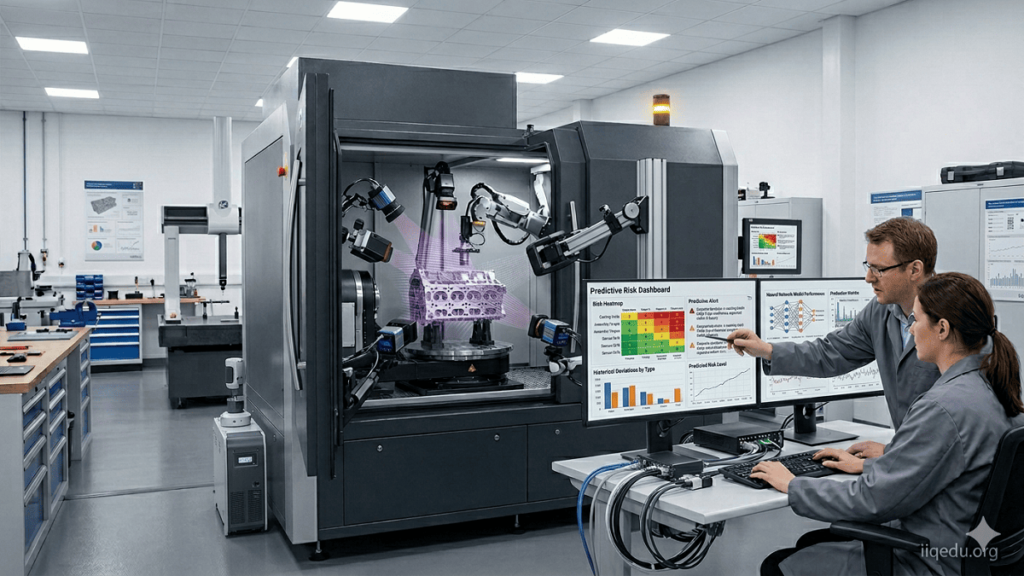
AI enables real-time monitoring of quality metrics.
Example signals monitored:
- process variability
- environmental conditions
- operator performance
- equipment performance
If risk exceeds a threshold → alerts are triggered.
4. Automated Quality Decision Support
AI helps quality teams prioritize actions:
- Which site needs audit
- Which supplier is high risk
- Which batch needs additional testing
This reduces manual review workload.
5. Continuous Improvement
AI systems learn from:
- CAPA data
- deviation reports
- audit findings
- customer complaints
They identify systemic issues and suggest improvements.
4. Example: AI in Clinical Trial RBQM
In clinical research, RBQM focuses on patient safety and data integrity.
AI can:
- detect data anomalies across trial sites
- identify fraud or protocol deviations
- prioritize high-risk sites for monitoring
Example signals:
- abnormal patient enrollment patterns
- inconsistent lab results
- missing data trends
5. Benefits of AI-Driven RBQM
| Benefit | Explanation |
|---|---|
| Early risk detection | Predict issues before they occur |
| Better decision making | Data-driven insights |
| Reduced monitoring cost | Less manual auditing |
| Improved compliance | Continuous monitoring |
| Faster quality improvements | AI learns from historical data |
6. Challenges
AI-RBQM also faces challenges:
Data Quality
AI requires clean and structured data.
Regulatory Compliance
Industries like pharma must validate AI systems.
Explainability
Quality teams must understand why AI predicts risk.
Integration
AI must integrate with:
- QMS
- ERP
- LIMS
- clinical data systems
7. Technologies Used
Typical AI technologies in RBQM include:
- Machine Learning models
- Deep learning
- Predictive analytics
- NLP for text analysis
- Process mining
- Digital twins
8. Future of AI in RBQM
The future includes:
- Self-learning quality systems
- Autonomous compliance monitoring
- Digital twins for risk simulation
- Real-time predictive quality control
Organizations are moving toward Quality 4.0, where AI, IoT, and big data transform quality management.
In simple terms:
AI in Risk-Based Quality Management helps companies predict risks, focus on critical issues, and maintain high quality more efficiently.
What is AI in Risk-Based Quality Management?
Artificial Intelligence (AI) in Risk-Based Quality Management (RBQM) refers to the use of AI technologies such as machine learning, predictive analytics, and data analysis to identify, assess, and manage quality risks in processes, products, or systems.
RBQM itself is a quality management approach that focuses resources on the highest-risk areas rather than monitoring everything equally. When AI is integrated, it makes the process faster, more accurate, and predictive.
Simple Definition
AI in Risk-Based Quality Management is the application of artificial intelligence tools to automatically detect, predict, and manage quality risks so organizations can focus on the most critical issues affecting quality and compliance.
Key Roles of AI in RBQM
1. Risk Identification
AI analyzes large amounts of data such as:
- production records
- audit reports
- equipment data
- quality deviations
It identifies patterns or potential risks that humans may overlook.
2. Predictive Risk Assessment
AI models can predict the likelihood of quality failures or process deviations before they occur.
Example:
AI predicts a higher probability of defects in a production batch based on historical process data.
3. Real-Time Monitoring
AI systems continuously monitor:
- quality metrics
- process parameters
- environmental conditions
If abnormal behavior is detected, alerts are generated immediately.
4. Decision Support
AI helps quality teams decide:
- which processes need closer monitoring
- which suppliers or sites are high risk
- where to focus audits and inspections.
Benefits of AI in RBQM
- Early detection of quality risks
- Improved decision-making using data
- Reduced manual monitoring and costs
- Better regulatory compliance
- Continuous improvement of quality processes
Example
In clinical trials or pharmaceutical manufacturing, AI can analyze data from multiple trial sites or production batches and detect unusual patterns, helping organizations quickly address risks that could affect patient safety or product quality.
✅ In short:
AI in Risk-Based Quality Management uses intelligent data analysis to predict and manage quality risks proactively, ensuring better quality, safety, and efficiency.
Who is AI in Risk-Based Quality Management required?
Risk-Based Quality Management (RBQM) is mainly required by organizations that must ensure product quality, patient safety, and regulatory compliance. It is strongly recommended or required by regulatory authorities and industry guidelines, especially in healthcare and pharmaceuticals.
1. Pharmaceutical Companies
Drug manufacturers use RBQM to:
- maintain drug quality
- manage manufacturing risks
- ensure regulatory compliance
RBQM helps them focus on critical production processes that could affect medicine safety.
2. Clinical Trial Sponsors
Organizations that run clinical trials must implement RBQM to:
- protect patient safety
- ensure reliable clinical data
- monitor high-risk trial sites
Regulatory guidelines require sponsors to use risk-based monitoring strategies.
3. Contract Research Organizations (CROs)
CROs conduct clinical trials for sponsors. They use RBQM to:
- monitor trial performance
- detect data quality issues
- reduce operational risks
4. Medical Device Companies
Medical device manufacturers use RBQM to:
- identify design and manufacturing risks
- maintain product safety
- meet regulatory standards
5. Other High-Risk Industries
RBQM is also used in industries such as:
- healthcare organizations
- food and beverage manufacturing
- aerospace
- automotive manufacturing
These sectors require strict quality and safety management systems.
Regulatory Bodies That Encourage RBQM
Several global regulators promote or require RBQM approaches, such as:
- International clinical trial guidelines
- Drug regulatory authorities
- Quality management standards
These guidelines encourage companies to focus monitoring and quality control on the highest-risk areas.
✅ In simple terms:
RBQM is required by organizations involved in regulated industries—especially pharmaceuticals, clinical trials, and medical devices—to ensure safety, quality, and regulatory compliance.
When is AI in Risk-Based Quality Management required?
Risk-Based Quality Management (RBQM) is a structured approach used to manage and mitigate risks that may impact the quality of a product or process, particularly in highly regulated industries such as pharmaceuticals, medical devices, and clinical trials. It’s not just about managing quality, but also proactively identifying and controlling potential risks that could negatively affect the quality outcomes.
RBQM is generally required in the following situations:
1. Regulatory Requirements
- Pharmaceuticals & Medical Devices: Regulatory bodies like the FDA (U.S. Food and Drug Administration), EMA (European Medicines Agency), and ICH (International Council for Harmonisation) often mandate RBQM as part of Good Manufacturing Practice (GMP), Good Clinical Practice (GCP), and Good Laboratory Practice (GLP). These agencies emphasize risk-based approaches for clinical trials, manufacturing processes, and regulatory submissions.
- Clinical Trials: In clinical trials, the ICH E6(R2) guidelines (a framework for Good Clinical Practice) explicitly suggest using risk-based monitoring to ensure trial integrity while optimizing resources and ensuring patient safety.
2. Complex or High-Risk Projects
- Pharmaceutical Development: When developing new drugs, biologics, or medical devices, RBQM helps prioritize risks associated with product safety, efficacy, and regulatory compliance. This helps companies allocate resources effectively and avoid costly failures.
- Clinical Trials: Clinical trials are inherently risky due to human involvement, differing patient populations, and the possibility of adverse effects. RBQM in this context helps prioritize monitoring and data collection based on identified risks, improving patient safety and data integrity while managing trial costs.
3. New or Evolving Technologies
- Innovative Technologies: When implementing new or cutting-edge technologies (e.g., new manufacturing processes, digital health tools), RBQM helps identify potential risks associated with their use. Since new technologies often lack established data or historical performance metrics, risk management is critical.
- Emerging Markets: When entering emerging markets or using novel materials, it’s important to understand the potential risks related to local regulations, manufacturing quality, and supply chain integrity.
4. Regulatory Inspections and Audits
- Pre-Approval Inspections: During FDA pre-approval inspections or any similar regulatory body inspection, demonstrating an understanding of the risks and your approach to managing them can be essential for gaining approval.
- Post-Market Surveillance: RBQM is used in post-market activities to identify and address quality issues in products already in the market, based on user feedback, adverse event reports, and ongoing data collection.
5. Quality Systems and Continuous Improvement
- Quality Management Systems (QMS): If a company is transitioning to or upgrading a QMS (e.g., ISO 9001, ICH Q10), RBQM principles are often integrated to support continuous quality improvement. This proactive approach helps prioritize risks that affect product quality, customer satisfaction, and operational performance. AI in Risk-Based Quality Management.
- Process Optimization: When evaluating and optimizing existing processes or when making changes to them, RBQM helps identify critical quality attributes and associated risks to ensure quality is maintained. AI in Risk-Based Quality Management.
6. Data-Driven Decision-Making
- Big Data & Analytics: In situations where large datasets are being utilized (e.g., clinical trial data, manufacturing performance data), AI in Risk-Based Quality Management, risk-based management approaches are employed to assess which areas of the process carry the greatest risks. This allows for targeted monitoring, improving data quality and reducing waste.
7. Resource Constraints
- Limited Resources: When resources (e.g., budget, personnel, time) are limited, applying RBQM ensures that critical quality activities and processes are monitored effectively, AI in Risk-Based Quality Management, allowing for the best use of available resources. This is especially relevant in clinical trials or manufacturing, where resources must be allocated efficiently to ensure patient safety and product quality.
8. Supplier/Contractor Management
- Supply Chain Risks: If a product or process depends on third-party suppliers, the risks associated with their quality management systems, compliance history, AI in Risk-Based Quality Management, or performance are critical. RBQM is used to assess and mitigate these risks, ensuring the quality of materials and services supplied by external contractors meets the required standards.
Where is AI in Risk-Based Quality Management required?
1. Pharmaceutical Industry
- Drug Development and Manufacturing: In drug development and manufacturing, RBQM is used to identify and mitigate risks to product quality, AI in Risk-Based Quality Management, safety, and efficacy. Regulatory agencies such as the FDA, EMA, and ICH require companies to integrate risk management processes into their quality systems, especially during the clinical trials phase and post-market surveillance.
- GMP (Good Manufacturing Practice): RBQM is an integral part of GMP guidelines, ensuring that any potential risks to product quality are assessed, AI in Risk-Based Quality Management, managed, and minimized throughout the lifecycle of the product—from development to production.
2. Medical Devices
- Design and Manufacturing: RBQM is essential in the medical device industry to manage risks associated with device safety, performance, AI in Risk-Based Quality Management and regulatory compliance. The FDA, EMA, and other global regulatory bodies require manufacturers to implement risk-based approaches to ensure product quality.
- ISO 13485: This is the international standard for quality management systems in medical devices, and it emphasizes risk management throughout the product lifecycle. AI in Risk-Based Quality Management Companies are required to assess, prioritize, AI in Risk-Based Quality Management and control risks that could impact device quality, patient safety, or regulatory compliance.
3. Clinical Trials
- Good Clinical Practice (GCP): In clinical trials, RBQM helps prioritize monitoring and quality assurance activities based on identified risks to patient safety, data integrity, and regulatory compliance. The ICH E6(R2) guidelines recommend using risk-based monitoring to optimize resources and focus on the most critical risks.
- Risk-Based Monitoring (RBM): Instead of monitoring all sites and data uniformly, RBM focuses on higher-risk sites or processes, AI in Risk-Based Quality Management, improving efficiency and ensuring that patient safety and trial data quality are not compromised.
4. Biotechnology
- Product Development: Biotechnology companies developing biological products, including vaccines, biologics, and gene therapies, AI in Risk-Based Quality Management, must use RBQM to identify risks related to product safety, efficacy, and regulatory hurdles.
- Process Development: Risk management is crucial when developing and scaling up new biotechnological processes, ensuring consistent product quality and minimizing any risks that could affect patient health or regulatory compliance.
5. Food and Beverage Industry
- Quality Control and Safety: Food and beverage manufacturers implement RBQM to identify and mitigate risks related to product contamination, quality, AI in Risk-Based Quality Management and safety. This is especially relevant for businesses operating in countries with stringent food safety regulations.
- Hazard Analysis and Critical Control Points (HACCP): This risk-based approach is widely used in food production to ensure food safety. The system involves assessing risks at every stage of production and implementing control measures to reduce those risks.
6. Automotive Industry
- Product Design and Manufacturing: In the automotive industry, RBQM is used to manage risks associated with the safety and reliability of vehicles, especially in critical areas like crash safety and emissions control.
- ISO/TS 16949: This standard, which applies to automotive suppliers, requires manufacturers to adopt risk-based approaches to quality management in order to ensure that products meet safety and regulatory standards.
7. Aerospace and Defense
- Regulatory Compliance and Safety: The aerospace and defense industries use RBQM to manage the complex and high-risk aspects of designing and manufacturing aircraft, spacecraft, AI in Risk-Based Quality Management and military equipment. Safety is a top priority in these sectors due to the potential impact on human life and national security.
- AS9100: The quality management system for the aerospace industry includes a risk-based approach to ensure that every aspect of the design, production, AI in Risk-Based Quality Management and maintenance processes meets rigorous safety and performance standards.
8. Healthcare and Hospitals
- Patient Safety: Healthcare providers implement RBQM to identify and mitigate risks to patient safety, including infection control, medical errors, and treatment outcomes.
- Regulatory Compliance: Healthcare institutions also use RBQM to meet regulatory requirements, including those from FDA, CMS (Centers for Medicare & Medicaid Services), and Joint Commission accreditation. The focus is on minimizing risks associated with medical procedures, equipment, and pharmaceuticals.
9. Chemicals and Pharmaceuticals (Including API Manufacturing)
- Risk in Chemical Production: In industries producing chemicals, especially active pharmaceutical ingredients (APIs), RBQM helps identify process risks that could impact the safety and quality of the product. Regulatory agencies require risk assessments to minimize hazards in the production process, including chemical hazards, environmental risks, and contamination.
10. Energy and Utilities
- Safety Management: In industries like oil and gas, AI in Risk-Based Quality Management nuclear power, and renewable energy, RBQM is employed to manage risks related to operational safety, environmental impact, and regulatory compliance.
- ISO 9001 and ISO 14001: These international standards, which emphasize quality management and environmental responsibility, AI in Risk-Based Quality Management, also incorporate risk-based approaches to manage the potential negative impacts of operations.
11. Supply Chain Management
- Supplier Risk Management: Companies use RBQM to assess and manage risks in the supply chain. This includes evaluating the reliability of suppliers, the quality of raw materials, AI in Risk-Based Quality Management and any potential disruptions in production or distribution that could impact product quality.
- Vendor Qualification: Risk assessments are often carried out to ensure that third-party suppliers, contractors, and service providers meet the required quality and regulatory standards.
12. Information Technology (IT)
- Cybersecurity Risk Management: In the IT and software development industry, RBQM is applied to manage cybersecurity risks and data integrity. This includes assessing risks associated with software vulnerabilities, data breaches, and compliance with regulations like GDPR and HIPAA.
- IT Service Management (ITSM): Risk-based approaches are applied to ensure service quality, system availability, and compliance with service level agreements (SLAs).
13. Financial Services
- Risk-Based Auditing: In financial services, RBQM helps identify and mitigate risks related to fraud, compliance, and financial reporting. Risk-based audits prioritize areas of high financial risk or regulatory concern.
- Basel III Compliance: For banks and financial institutions, RBQM helps manage operational risks, credit risks, and market risks in line with Basel III requirements for capital and liquidity management.
How is AI in Risk-Based Quality Management required?
Risk-Based Quality Management (RBQM) is required in various industries and settings where quality, safety, and regulatory compliance are critical. It is particularly important in sectors where products or processes involve high risk, complexity, or regulatory scrutiny. Below are the key areas where RBQM is required:
1. Pharmaceutical Industry
- Drug Development and Manufacturing: In drug development and manufacturing, RBQM is used to identify and mitigate risks to product quality, safety, and efficacy. Regulatory agencies such as the FDA, EMA, and ICH require companies to integrate risk management processes into their quality systems, especially during the clinical trials phase and post-market surveillance.
- GMP (Good Manufacturing Practice): RBQM is an integral part of GMP guidelines, ensuring that any potential risks to product quality are assessed, managed, and minimized throughout the lifecycle of the product—from development to production.
2. Medical Devices
- Design and Manufacturing: RBQM is essential in the medical device industry to manage risks associated with device safety, performance, and regulatory compliance. The FDA, EMA, and other global regulatory bodies require manufacturers to implement risk-based approaches to ensure product quality.
- ISO 13485: This is the international standard for quality management systems in medical devices, and it emphasizes risk management throughout the product lifecycle. Companies are required to assess, prioritize, and control risks that could impact device quality, patient safety, or regulatory compliance.
3. Clinical Trials
- Good Clinical Practice (GCP): In clinical trials, RBQM helps prioritize monitoring and quality assurance activities based on identified risks to patient safety, data integrity, and regulatory compliance. The ICH E6(R2) guidelines recommend using risk-based monitoring to optimize resources and focus on the most critical risks.
- Risk-Based Monitoring (RBM): Instead of monitoring all sites and data uniformly, RBM focuses on higher-risk sites or processes, improving efficiency and ensuring that patient safety and trial data quality are not compromised.
4. Biotechnology
- Product Development: Biotechnology companies developing biological products, including vaccines, biologics, and gene therapies, must use RBQM to identify risks related to product safety, efficacy, and regulatory hurdles.
- Process Development: Risk management is crucial when developing and scaling up new biotechnological processes, ensuring consistent product quality and minimizing any risks that could affect patient health or regulatory compliance.
5. Food and Beverage Industry
- Quality Control and Safety: Food and beverage manufacturers implement RBQM to identify and mitigate risks related to product contamination, quality, and safety. This is especially relevant for businesses operating in countries with stringent food safety regulations.
- Hazard Analysis and Critical Control Points (HACCP): This risk-based approach is widely used in food production to ensure food safety. The system involves assessing risks at every stage of production and implementing control measures to reduce those risks.
6. Automotive Industry
- Product Design and Manufacturing: In the automotive industry, RBQM is used to manage risks associated with the safety and reliability of vehicles, especially in critical areas like crash safety and emissions control.
- ISO/TS 16949: This standard, which applies to automotive suppliers, requires manufacturers to adopt risk-based approaches to quality management in order to ensure that products meet safety and regulatory standards.
7. Aerospace and Defense
- Regulatory Compliance and Safety: The aerospace and defense industries use RBQM to manage the complex and high-risk aspects of designing and manufacturing aircraft, spacecraft, and military equipment. Safety is a top priority in these sectors due to the potential impact on human life and national security.
- AS9100: The quality management system for the aerospace industry includes a risk-based approach to ensure that every aspect of the design, production, and maintenance processes meets rigorous safety and performance standards.
8. Healthcare and Hospitals
- Patient Safety: Healthcare providers implement RBQM to identify and mitigate risks to patient safety, including infection control, medical errors, and treatment outcomes.
- Regulatory Compliance: Healthcare institutions also use RBQM to meet regulatory requirements, including those from FDA, CMS (Centers for Medicare & Medicaid Services), and Joint Commission accreditation. The focus is on minimizing risks associated with medical procedures, equipment, and pharmaceuticals.
9. Chemicals and Pharmaceuticals (Including API Manufacturing)
- Risk in Chemical Production: In industries producing chemicals, especially active pharmaceutical ingredients (APIs), RBQM helps identify process risks that could impact the safety and quality of the product. Regulatory agencies require risk assessments to minimize hazards in the production process, including chemical hazards, environmental risks, and contamination.
10. Energy and Utilities
- Safety Management: In industries like oil and gas, nuclear power, and renewable energy, RBQM is employed to manage risks related to operational safety, environmental impact, and regulatory compliance.
- ISO 9001 and ISO 14001: These international standards, which emphasize quality management and environmental responsibility, also incorporate risk-based approaches to manage the potential negative impacts of operations.
11. Supply Chain Management
- Supplier Risk Management: Companies use RBQM to assess and manage risks in the supply chain. This includes evaluating the reliability of suppliers, the quality of raw materials, and any potential disruptions in production or distribution that could impact product quality.
- Vendor Qualification: Risk assessments are often carried out to ensure that third-party suppliers, contractors, and service providers meet the required quality and regulatory standards.
12. Information Technology (IT)
- Cybersecurity Risk Management: In the IT and software development industry, RBQM is applied to manage cybersecurity risks and data integrity. This includes assessing risks associated with software vulnerabilities, data breaches, and compliance with regulations like GDPR and HIPAA.
- IT Service Management (ITSM): Risk-based approaches are applied to ensure service quality, system availability, and compliance with service level agreements (SLAs).
13. Financial Services
- Risk-Based Auditing: In financial services, RBQM helps identify and mitigate risks related to fraud, compliance, and financial reporting. Risk-based audits prioritize areas of high financial risk or regulatory concern.
- Basel III Compliance: For banks and financial institutions, RBQM helps manage operational risks, credit risks, and market risks in line with Basel III requirements for capital and liquidity management.
Conclusion
Risk-Based Quality Management is required in any industry or sector where quality, safety, and regulatory compliance are of paramount importance. It is particularly critical in heavily regulated industries like pharmaceuticals, medical devices, and clinical research, but it is also applied in other sectors such as food safety, automotive, aerospace, and IT. RBQM helps organizations proactively identify and manage risks, ensuring product quality, operational efficiency, and regulatory adherence.
Case study of Risk-Based Quality Management
Case Study: Risk-Based Quality Management (RBQM) in Clinical Trials
Overview
A global pharmaceutical company, PharmaGenix, was conducting a Phase III clinical trial for a new treatment aimed at patients with a rare form of cancer. The trial involved several hundred patients across multiple countries, and the company was under pressure to meet regulatory deadlines and ensure the safety and efficacy of the treatment. The trial was complex due to its multi-center design, with a large number of sites, investigators, and data points to manage.
Given the size and complexity of the trial, PharmaGenix chose to implement Risk-Based Quality Management (RBQM) to optimize monitoring efforts, mitigate risks to patient safety and data integrity, and ensure efficient use of resources.
Challenges Faced
- Large Scale and Complexity: The clinical trial was running at 50 different sites globally, each with varying levels of experience and capability.
- Regulatory Scrutiny: The trial was under intense scrutiny from regulatory bodies like the FDA and EMA, with strict timelines for submitting data.
- Patient Safety: The investigational drug involved was a novel treatment with limited prior clinical data. There were concerns about potential adverse effects that could arise during the trial.
- Data Integrity: Ensuring accurate and reliable data collection across all sites was crucial for the regulatory submission and future approval of the drug.
Risk-Based Quality Management Approach
To address these challenges, PharmaGenix implemented a Risk-Based Monitoring (RBM) strategy as part of their overall RBQM framework. The approach included the following key elements:
1. Risk Assessment and Prioritization
- Initial Risk Assessment: PharmaGenix conducted an initial risk assessment at the start of the trial, considering the complexity of the protocol, the novelty of the treatment, and the types of potential risks (e.g., patient safety, data integrity, regulatory compliance). This was done by cross-functional teams involving clinical, regulatory, safety, and data management experts.
- Risk Categorization: Sites were categorized based on various factors, including historical performance (e.g., past audit results, compliance), experience with the protocol, and investigator expertise. Sites with less experience or poor historical performance were considered higher risk and were monitored more closely.
2. Targeted Monitoring Based on Risk
- Centralized Data Monitoring: PharmaGenix implemented centralized monitoring using advanced data analytics. This system flagged potential issues in real-time, such as unusual data trends, discrepancies in patient records, or irregularities in adverse event reporting.
- On-Site Monitoring Focused on High-Risk Areas: Instead of sending monitors to every site uniformly, PharmaGenix focused monitoring resources on high-risk sites identified through the initial risk assessment. Monitoring visits were more frequent at sites where there were concerns about protocol adherence, investigator experience, or patient safety issues.
- Patient Safety Monitoring: Given the novelty of the drug, patient safety was a top priority. Real-time adverse event reporting and immediate data analysis helped identify potential issues early on. Sites with high numbers of adverse events were prioritized for more in-depth, on-site visits to ensure protocol adherence and proper handling of adverse events.
3. Data-Driven Decision Making
- Predictive Analytics: PharmaGenix used predictive analytics to assess data trends in real-time. This allowed them to quickly identify potential issues (e.g., patient dropout rates, irregular test results) and make adjustments to the trial design or monitoring plan as needed.
- Centralized Risk Dashboard: A centralized dashboard was created to track key risk indicators, such as patient enrollment, adverse events, data completeness, and protocol deviations. This dashboard provided trial managers and senior executives with a real-time overview of the trial’s risk profile.
4. Training and Support for Sites
- Investigator and Site Training: Sites were provided with extensive training on the risk-based monitoring approach and specific aspects of the protocol that required special attention. PharmaGenix also provided resources for investigators to help them identify and manage potential risks related to the trial drug and patient safety.
- Ongoing Support: High-risk sites received additional support from the central team, including remote monitoring tools, more frequent communication with the sponsor, and troubleshooting for any technical or protocol challenges.
5. Adaptation of the Monitoring Plan
- Ongoing Risk Review: Throughout the trial, PharmaGenix reviewed the risk assessment and monitoring strategy regularly. The plan was flexible, allowing the company to adjust monitoring activities based on emerging risks. For example, if new adverse events were detected early in the trial, additional resources were allocated to monitor the affected sites more intensively.
- Quality Metrics: Key quality metrics, including patient retention, data completeness, and protocol deviations, were reviewed regularly, allowing PharmaGenix to ensure that the trial stayed on track while minimizing unnecessary resource use.
Results and Benefits of RBQM
- Improved Patient Safety
- Early Detection of Safety Concerns: By focusing on real-time adverse event reporting and centralized monitoring, PharmaGenix was able to detect safety issues early in the trial. As a result, they could take corrective actions promptly, reducing the risk of harm to patients.
- Enhanced Data Accuracy: The targeted approach to monitoring and real-time data review helped ensure that data was accurate and complete, supporting the trial’s regulatory submission.
- Cost and Resource Efficiency
- Optimized Monitoring Visits: By focusing resources on high-risk sites and using centralized monitoring tools, PharmaGenix reduced the number of on-site visits needed. This resulted in significant cost savings and better utilization of monitoring staff.
- Faster Decision-Making: The use of predictive analytics and real-time risk dashboards enabled quicker decision-making, allowing the company to adapt to issues proactively and avoid potential delays in the trial timeline.
- Regulatory Compliance
- Streamlined Data for Submission: With real-time monitoring and centralized data management, PharmaGenix ensured that the data submitted to regulatory bodies like the FDA and EMA was accurate and robust, helping them meet regulatory deadlines without delays.
- Enhanced Risk Mitigation: The company was able to demonstrate to regulators that they had a comprehensive risk management plan in place, which provided assurance regarding patient safety and trial integrity.
- Increased Trial Success Rate
- Better Risk Mitigation: The early identification and mitigation of risks ensured that the trial was completed successfully without major issues, resulting in a smoother path to drug approval.
- Improved Site Performance: High-risk sites were closely monitored, resulting in improved performance and compliance with the trial protocol, which contributed to the overall success of the trial.
Conclusion
PharmaGenix’s implementation of Risk-Based Quality Management (RBQM) in their clinical trial provided a comprehensive, data-driven approach to managing risk while maintaining the integrity of the study. By integrating risk assessments, targeted monitoring, predictive analytics, and ongoing support for sites, the company was able to ensure patient safety, reduce costs, and meet regulatory requirements efficiently.
This case study demonstrates the power of RBQM in managing large-scale clinical trials with multiple variables, ultimately improving quality while minimizing risk. The same principles of RBQM can be applied across industries like pharmaceuticals, medical devices, and food safety to enhance overall quality while managing risks more effectively.
How is AI in Risk-Based Quality Management required?
Artificial Intelligence (AI) is increasingly being integrated into Risk-Based Quality Management (RBQM), particularly in industries such as pharmaceuticals, medical devices, clinical trials, and manufacturing. AI helps improve the effectiveness and efficiency of RBQM by offering advanced data analysis, real-time monitoring, and predictive capabilities that enhance decision-making and risk mitigation. Below are several ways in which AI is required and beneficial in RBQM:
1. Risk Identification and Assessment
- Predictive Analytics: AI can analyze vast amounts of historical and real-time data to identify potential risks early in the process. For example, in clinical trials, AI can process data from previous trials, patient histories, and similar studies to predict potential safety issues, such as adverse drug reactions, or issues with patient adherence.
- Natural Language Processing (NLP): AI-powered NLP tools can be used to analyze unstructured data such as reports, clinical notes, and regulatory documents. By scanning through thousands of documents, AI can flag emerging risks or potential compliance issues that might otherwise go unnoticed.
- Automated Risk Categorization: AI can automate the categorization of risks based on severity and likelihood, helping organizations prioritize which risks need immediate attention. For example, it can assess site performance in clinical trials and identify which sites have higher risks of protocol violations or data integrity issues based on historical performance data.
2. Real-Time Risk Monitoring
- Continuous Monitoring of Quality Metrics: AI systems can monitor key quality metrics (e.g., patient safety, manufacturing defects, data consistency) in real-time across multiple sites or locations. In the case of clinical trials, AI can track patient adverse events, deviations from the protocol, and drop-out rates, providing ongoing, live insights into risk levels across the trial.
- Anomaly Detection: Using machine learning (ML) algorithms, AI can automatically detect anomalies or outliers in data, such as unexpected fluctuations in production data, unusual adverse events, or sudden increases in patient dropouts. By spotting these anomalies early, AI helps mitigate risks before they escalate into major issues.
3. Predictive Risk Modeling
- Risk Forecasting: AI can be used to create predictive models that forecast potential future risks. For example, AI-powered tools can predict which sites in a clinical trial may experience high dropout rates based on historical data, or which manufacturing processes may be at risk of producing defective products. By forecasting these risks, organizations can take preemptive actions to avoid or minimize their impact.
- Simulation of “What-If” Scenarios: AI can simulate various risk scenarios (e.g., different levels of adverse events or supply chain disruptions) to understand the potential outcomes and impact on the project or process. This helps in decision-making, resource allocation, and understanding the likelihood of various risks affecting quality.
4. Automated Decision-Making
- Smart Monitoring Systems: In clinical trials, AI can automate many aspects of monitoring, such as detecting protocol violations, tracking the completion of key milestones, and identifying any irregularities in patient data. This reduces the need for manual monitoring and allows for faster, data-driven decision-making.
- Automated Alerts: AI can trigger automated alerts for quality assurance teams when a specific risk threshold is met, allowing for rapid interventions. For example, if the system detects a high rate of adverse events or a significant data inconsistency, it can automatically alert the team to investigate.
5. Improved Data Integrity and Compliance
- Data Validation: AI can be used to automatically validate data for accuracy and consistency, reducing human errors and ensuring high-quality data. This is especially important in clinical trials or manufacturing, where data integrity is critical for regulatory compliance and product safety.
- Regulatory Compliance: AI can help organizations ensure compliance with regulations like FDA requirements, ISO 13485, and GxP by automatically cross-referencing trial or production data with regulatory standards. It can also track changes in regulations and provide alerts if processes need to be updated to maintain compliance.
6. Enhanced Risk Mitigation in Clinical Trials
- Risk-Based Monitoring (RBM): AI supports Risk-Based Monitoring by using predictive algorithms to prioritize high-risk sites or patients. Rather than monitoring all trial sites equally, AI helps focus resources on the sites with the most significant risk, improving resource efficiency and ensuring that monitoring is done where it’s needed most.
- Patient Risk Stratification: AI can help stratify patients based on their risk of adverse events or non-compliance with the study protocol. This allows clinical teams to target interventions and monitoring efforts for those at higher risk, ensuring the safety of trial participants and maintaining data quality.
7. Supply Chain Risk Management
- Supply Chain Optimization: AI can predict and mitigate risks in the supply chain, such as delays, disruptions, or quality issues. In manufacturing or clinical trials, AI tools can track the performance of suppliers, identify potential risks in the supply chain, and help companies select the most reliable vendors.
- Demand Forecasting and Inventory Management: AI can analyze historical data and market trends to predict future demand for critical materials or products. In the pharmaceutical industry, this can help ensure that manufacturing processes are not delayed due to shortages of key ingredients, mitigating risks to production timelines.
8. Resource Allocation and Efficiency
- Optimal Resource Allocation: AI helps organizations efficiently allocate resources by identifying the areas that pose the highest risks and require the most attention. In clinical trials, AI can analyze various sites and patients to recommend where additional monitoring resources are needed, ensuring optimal use of time and budget.
- Cost-Efficiency: By focusing efforts on high-risk areas identified by AI, organizations can avoid unnecessary interventions, reducing costs while still ensuring quality standards are met. AI allows for more intelligent risk management, helping to balance safety and cost-efficiency.
9. Collaboration Across Teams
- Cross-Functional Collaboration: AI-driven platforms can facilitate better communication between different departments (e.g., clinical, regulatory, quality assurance, and supply chain management). By sharing real-time insights on risk levels and quality metrics, AI helps teams align on priorities and collaborate more effectively to address risks.
- Data Integration: AI can integrate data from multiple sources (e.g., clinical data, manufacturing data, regulatory reports, supplier performance) into a unified dashboard. This enables a holistic view of risks and quality metrics, supporting more informed decision-making.
Examples of AI in RBQM
- Clinical Trials (Risk-Based Monitoring)
- A pharmaceutical company uses AI to analyze historical clinical trial data and identifies patterns in patient adverse events across different trial sites. The AI tool flags certain sites as higher risk, prompting more frequent monitoring and intervention, while sites with lower risk are monitored less frequently.
- AI algorithms predict patient dropout rates based on demographic and clinical factors, allowing trial managers to take proactive steps, such as increasing patient engagement efforts at high-risk sites.
- Manufacturing (Quality Control)
- In a pharmaceutical manufacturing facility, AI is used to monitor production processes in real time. Machine learning models detect anomalies in the production line, such as variations in temperature or equipment malfunctions that could impact product quality. These anomalies are flagged, and corrective actions are recommended before they lead to defects.
- AI tools help prioritize inspections of high-risk batches or production lines, based on predictive analytics that assess the likelihood of quality failures or non-compliance with GMP standards.
Who is AI in Risk-Based Quality Management required?
1. Who Benefits from AI in RBQM?
AI in RBQM is required and benefits several stakeholders within industries like pharmaceuticals, medical devices, clinical trials, and manufacturing. These stakeholders typically include:
a) Pharmaceutical and Biotech Companies
- Clinical Operations: Clinical operations teams benefit from AI-powered Risk-Based Monitoring (RBM) tools that help identify and mitigate risks to patient safety and data integrity in clinical trials. AI helps prioritize site monitoring, predict patient outcomes, and identify high-risk areas, reducing operational costs and improving trial outcomes.
- Regulatory Affairs: Regulatory affairs teams use AI to ensure compliance with industry regulations by continuously assessing risk levels across clinical trials and manufacturing processes. AI tools can scan and track regulatory compliance data, flagging potential issues before they arise.
- Quality Assurance (QA) and Control: QA teams benefit from AI-driven real-time monitoring of manufacturing processes, helping to detect quality deviations, anomalies, or deviations from Good Manufacturing Practices (GMP). AI allows for early detection and correction, reducing the risk of quality failures.
b) Medical Device Manufacturers
- Design and Manufacturing: Medical device companies use AI to assess risks during product design and throughout the manufacturing lifecycle. AI systems can predict potential failure modes, automate inspections, and ensure compliance with regulations like ISO 13485 (Quality Management System for medical devices).
- Post-Market Surveillance: After a device reaches the market, AI is critical for monitoring patient feedback, adverse event reports, and product performance to ensure safety. AI can help identify potential risks that may not have been apparent during pre-market testing.
c) Clinical Research Organizations (CROs)
- Site Management: CROs that manage clinical trials for pharmaceutical companies use AI to optimize the allocation of resources across clinical trial sites. AI can predict which sites are most likely to experience issues (e.g., protocol violations, data discrepancies, patient safety concerns) and help target monitoring efforts where they’re most needed.
- Data Monitoring: CROs also benefit from AI’s ability to process vast amounts of trial data in real-time. AI can highlight anomalies in patient data or adverse events that might indicate emerging risks, improving both the speed and quality of decision-making.
d) Regulatory Agencies (FDA, EMA, etc.)
- Risk Assessment and Compliance: Regulatory bodies like the FDA and EMA can leverage AI in their risk-based assessment frameworks to review drug applications and clinical trial data. AI tools can help these agencies analyze large datasets more efficiently and identify compliance issues or risks that might not be immediately visible through traditional methods.
e) Suppliers and Third-Party Vendors
- Supply Chain Risk Management: AI is increasingly used to manage risks in the pharmaceutical, medical device, and food industries. Suppliers who provide raw materials or parts for manufacturing need AI systems to predict potential supply chain disruptions, quality problems, or regulatory issues, helping to ensure timely and safe delivery of goods.
- Vendor Auditing: AI-driven systems help vendors evaluate risks associated with supplier reliability, quality issues, and compliance with regulatory standards.
f) Healthcare Providers
- Patient Safety: Healthcare providers use AI-based Risk-Based Quality Management in the form of clinical decision support systems, patient monitoring tools, and predictive analytics. These tools can help identify high-risk patients or situations, ensuring that preventative measures are taken, improving outcomes, and reducing costs.
2. Who Is Responsible for Implementing AI in RBQM?
The implementation of AI in RBQM is typically a collaborative effort, with responsibility lying across various levels of the organization, including:
a) Senior Management and Executives
- Decision-Making and Strategy: Senior leaders in organizations are responsible for making strategic decisions about the adoption of AI tools in RBQM. They allocate resources, set priorities, and ensure that AI integration aligns with the company’s broader goals related to quality, safety, and risk management.
b) Data Science and IT Teams
- Development and Integration: Data scientists, engineers, and IT teams play a central role in developing and integrating AI systems into the RBQM framework. They are responsible for implementing machine learning models, natural language processing algorithms, and predictive analytics platforms that support risk identification, monitoring, and mitigation.
- Data Quality and Governance: AI models rely heavily on high-quality, accurate data. Therefore, data governance teams ensure that data used for training AI models is clean, accurate, and reliable. These teams also manage data privacy and security, ensuring compliance with regulations like GDPR or HIPAA.
c) Quality Management and Compliance Teams
- Implementation and Oversight: QA teams within pharmaceutical, biotech, and manufacturing companies are typically responsible for ensuring that AI solutions are applied correctly within the RBQM framework. They ensure that AI tools help identify quality issues, track compliance with regulations, and help mitigate risks, all while ensuring the integrity of data and the final product.
- Regulatory Compliance: Compliance officers play a key role in ensuring that AI solutions adhere to regulatory requirements. They may collaborate with AI specialists to ensure that risk management tools used in clinical trials or manufacturing meet industry standards.
d) Clinical Operations and Research Teams
- Risk-Based Monitoring: In clinical trials, clinical operations and research teams are often responsible for working with AI tools that support Risk-Based Monitoring (RBM). These teams use AI insights to prioritize sites, assess patient risk, and ensure protocol adherence.
- Clinical Data Management: Clinical data managers and biostatisticians use AI to analyze trial data and generate reports that identify potential risks related to patient safety, adverse events, and data integrity.
e) Regulatory Affairs Teams
- Ensuring Compliance: Regulatory affairs teams work closely with AI developers to ensure that the risk management processes implemented through AI comply with regulatory standards. This includes making sure that AI tools used for clinical trials and manufacturing support the regulatory requirements of agencies like the FDA, EMA, and Health Canada.
f) Vendors and Third-Party Providers
- External AI Providers: Many organizations may outsource AI development or buy AI-powered tools from third-party vendors. These vendors are responsible for developing the underlying AI algorithms and platforms. Pharmaceutical companies, medical device manufacturers, and CROs would collaborate with these vendors to ensure the tools meet industry-specific RBQM requirements.
Case study of AI in Risk-Based Quality Management
A global pharmaceutical company, PharmaGenix, was conducting a Phase III clinical trial for a new treatment aimed at patients with a rare form of cancer. The trial involved several hundred patients across multiple countries, and the company was under pressure to meet regulatory deadlines and ensure the safety and efficacy of the treatment. The trial was complex due to its multi-center design, with a large number of sites, investigators, and data points to manage.
Given the size and complexity of the trial, PharmaGenix chose to implement Risk-Based Quality Management (RBQM) to optimize monitoring efforts, mitigate risks to patient safety and data integrity, and ensure efficient use of resources.
Challenges Faced
- Large Scale and Complexity: The clinical trial was running at 50 different sites globally, each with varying levels of experience and capability.
- Regulatory Scrutiny: The trial was under intense scrutiny from regulatory bodies like the FDA and EMA, with strict timelines for submitting data.
- Patient Safety: The investigational drug involved was a novel treatment with limited prior clinical data. There were concerns about potential adverse effects that could arise during the trial.
- Data Integrity: Ensuring accurate and reliable data collection across all sites was crucial for the regulatory submission and future approval of the drug.
Risk-Based Quality Management Approach
To address these challenges, PharmaGenix implemented a Risk-Based Monitoring (RBM) strategy as part of their overall RBQM framework. The approach included the following key elements:
1. Risk Assessment and Prioritization
- Initial Risk Assessment: PharmaGenix conducted an initial risk assessment at the start of the trial, considering the complexity of the protocol, the novelty of the treatment, and the types of potential risks (e.g., patient safety, data integrity, regulatory compliance). This was done by cross-functional teams involving clinical, regulatory, safety, and data management experts.
- Risk Categorization: Sites were categorized based on various factors, including historical performance (e.g., past audit results, compliance), experience with the protocol, and investigator expertise. Sites with less experience or poor historical performance were considered higher risk and were monitored more closely.
2. Targeted Monitoring Based on Risk
- Centralized Data Monitoring: PharmaGenix implemented centralized monitoring using advanced data analytics. This system flagged potential issues in real-time, such as unusual data trends, discrepancies in patient records, or irregularities in adverse event reporting.
- On-Site Monitoring Focused on High-Risk Areas: Instead of sending monitors to every site uniformly, PharmaGenix focused monitoring resources on high-risk sites identified through the initial risk assessment. Monitoring visits were more frequent at sites where there were concerns about protocol adherence, investigator experience, or patient safety issues.
- Patient Safety Monitoring: Given the novelty of the drug, patient safety was a top priority. Real-time adverse event reporting and immediate data analysis helped identify potential issues early on. Sites with high numbers of adverse events were prioritized for more in-depth, on-site visits to ensure protocol adherence and proper handling of adverse events.
3. Data-Driven Decision Making
- Predictive Analytics: PharmaGenix used predictive analytics to assess data trends in real-time. This allowed them to quickly identify potential issues (e.g., patient dropout rates, irregular test results) and make adjustments to the trial design or monitoring plan as needed.
- Centralized Risk Dashboard: A centralized dashboard was created to track key risk indicators, such as patient enrollment, adverse events, data completeness, and protocol deviations. This dashboard provided trial managers and senior executives with a real-time overview of the trial’s risk profile.
4. Training and Support for Sites
- Investigator and Site Training: Sites were provided with extensive training on the risk-based monitoring approach and specific aspects of the protocol that required special attention. PharmaGenix also provided resources for investigators to help them identify and manage potential risks related to the trial drug and patient safety.
- Ongoing Support: High-risk sites received additional support from the central team, including remote monitoring tools, more frequent communication with the sponsor, and troubleshooting for any technical or protocol challenges.
5. Adaptation of the Monitoring Plan
- Ongoing Risk Review: Throughout the trial, PharmaGenix reviewed the risk assessment and monitoring strategy regularly. The plan was flexible, allowing the company to adjust monitoring activities based on emerging risks. For example, if new adverse events were detected early in the trial, additional resources were allocated to monitor the affected sites more intensively.
- Quality Metrics: Key quality metrics, including patient retention, data completeness, and protocol deviations, were reviewed regularly, allowing PharmaGenix to ensure that the trial stayed on track while minimizing unnecessary resource use.
White paper of AI in Risk-Based Quality Management
Abstract
Risk-Based Quality Management (RBQM) is a strategy that prioritizes and mitigates risks to ensure quality and compliance in highly regulated industries like pharmaceuticals, medical devices, clinical trials, and manufacturing. The integration of Artificial Intelligence (AI) in RBQM provides a powerful toolset for identifying, assessing, and mitigating risks efficiently, while enhancing decision-making and improving quality outcomes. This white paper explores the role of AI in RBQM, the technologies driving this transformation, and the potential benefits and challenges of AI implementation across industries.
1. Introduction
Risk-Based Quality Management (RBQM) has become a foundational approach in industries where product safety, regulatory compliance, and operational excellence are critical. In sectors like pharmaceuticals, medical devices, and clinical trials, traditional quality management methods often struggle to cope with large amounts of data, the complexity of operations, and evolving risks.
Artificial Intelligence (AI) offers a transformative solution, enabling organizations to analyze large datasets, identify emerging risks, and provide actionable insights. The application of AI in RBQM is a natural evolution, helping businesses transition from reactive to proactive quality management by leveraging predictive models, real-time monitoring, and automated decision-making.
This white paper outlines how AI is reshaping RBQM by providing innovative tools for risk assessment, monitoring, mitigation, and continuous improvement.
2. The Role of AI in Risk-Based Quality Management
2.1 What is Risk-Based Quality Management (RBQM)?
RBQM focuses on identifying and mitigating the risks that can negatively impact quality and compliance. Rather than monitoring all aspects of a process equally, RBQM allows companies to focus resources on higher-risk areas, enabling more efficient management of quality and safety.
Key principles of RBQM include:
- Risk Assessment: Identifying potential risks that could impact product quality, patient safety, or regulatory compliance.
- Risk Prioritization: Classifying risks based on their likelihood and impact, enabling focused resource allocation.
- Risk Mitigation: Developing strategies to prevent, reduce, or control identified risks.
- Continuous Monitoring: Ongoing evaluation of processes to detect emerging risks and maintain quality control.
2.2 AI’s Role in Enhancing RBQM
AI provides the tools needed to advance the principles of RBQM. By integrating AI into the RBQM framework, organizations can achieve more dynamic, data-driven, and scalable risk management. AI technologies such as machine learning (ML), natural language processing (NLP), and predictive analytics can be leveraged to optimize key aspects of RBQM.
Key areas where AI contributes to RBQM include:
- Risk Identification: AI can analyze vast datasets, identify hidden patterns, and highlight potential risks before they manifest.
- Predictive Risk Assessment: Machine learning algorithms can model risk scenarios and predict future risks based on historical data.
- Real-Time Monitoring: AI tools enable continuous monitoring of quality metrics, patient data, and manufacturing processes, detecting anomalies in real time.
- Automation of Risk Mitigation: AI-driven systems can autonomously trigger actions to address identified risks, reducing the need for manual interventions.
- Data Integrity: AI can be used to automate data validation processes, ensuring that data used for decision-making is accurate, complete, and compliant with regulations.
3. Key AI Technologies in RBQM
Several AI technologies are integral to the implementation of effective RBQM systems. These technologies enable organizations to enhance the accuracy, speed, and scalability of their risk management processes.
3.1 Machine Learning (ML)
Machine learning is at the heart of AI applications in RBQM. ML algorithms can analyze historical and real-time data to identify patterns and predict risks that may not be immediately apparent. Examples of how ML enhances RBQM include:
- Risk Prediction: ML models can predict which sites in a clinical trial are at high risk for adverse events or protocol violations based on patient demographics, site performance, and historical data.
- Anomaly Detection: ML algorithms can detect data anomalies that signal potential quality issues, such as unusual deviations in manufacturing processes or unexpected patient outcomes.
3.2 Natural Language Processing (NLP)
NLP is used to extract insights from unstructured data, such as clinical trial reports, patient medical histories, regulatory documents, and even social media. By processing vast quantities of text data, AI systems using NLP can:
- Risk Trend Identification: Identify emerging risks or safety concerns from unstructured reports, case studies, or patient feedback.
- Compliance Monitoring: Automatically check for regulatory compliance in documents, flagging any discrepancies or violations.
3.3 Predictive Analytics
Predictive analytics uses statistical algorithms and machine learning to forecast future risks. In RBQM, predictive models can help:
- Patient Safety: Predict which patients in a clinical trial may experience adverse events, allowing for early intervention.
- Manufacturing Risks: Forecast potential failures in production processes, helping to address issues proactively and reduce downtime.
- Supply Chain Risks: Predict disruptions in the supply chain, allowing companies to take steps to prevent delays or quality issues.
3.4 Automation and Robotics Process Automation (RPA)
RPA, combined with AI, enables organizations to automate repetitive tasks that are typically time-consuming and prone to human error. In RBQM, RPA can be used for:
- Automated Risk Mitigation: Automatically executing actions based on detected risks, such as reallocating resources or issuing alerts to stakeholders.
- Data Entry and Reporting: Automating data collection, validation, and reporting processes to maintain high-quality standards without manual oversight.
4. Benefits of AI in RBQM
The integration of AI into Risk-Based Quality Management offers several transformative benefits for organizations, including:
4.1 Improved Risk Detection and Mitigation
AI enhances the ability to identify risks at an early stage, allowing for faster and more accurate decision-making. By using predictive models and real-time monitoring, companies can spot potential risks (e.g., patient safety issues, product defects, regulatory violations) before they escalate.
4.2 Enhanced Operational Efficiency
AI enables more efficient use of resources by focusing monitoring efforts on high-risk areas. Instead of applying the same level of scrutiny across all sites or processes, AI helps prioritize where to allocate resources, reducing both costs and human error.
4.3 Data-Driven Insights for Better Decision-Making
AI systems can process and analyze vast amounts of structured and unstructured data, providing decision-makers with real-time insights into potential risks. This leads to more informed and proactive decision-making, resulting in better outcomes and minimized risks.
4.4 Scalability and Adaptability
AI-driven RBQM systems can scale to handle larger datasets and more complex operations. This adaptability is crucial as organizations grow, as they can handle increased risk management needs without adding significant manual oversight.
4.5 Regulatory Compliance and Reporting
AI enhances compliance by automating the monitoring and reporting of regulatory requirements. AI tools can track compliance across multiple regulations, flag potential violations, and generate compliance reports automatically, reducing the burden on human teams.
5. Challenges and Considerations
While AI offers significant benefits in RBQM, there are also challenges and considerations to keep in mind:
5.1 Data Quality and Availability
AI systems rely on high-quality, accurate data to make informed predictions and decisions. Poor data quality, gaps in data collection, or inconsistent formats can undermine the effectiveness of AI models.
5.2 Integration with Existing Systems
Integrating AI into existing RBQM systems can be complex. Organizations need to ensure that AI tools are compatible with current software infrastructure and that the transition to AI-driven processes does not disrupt ongoing operations.
5.3 Regulatory and Ethical Concerns
As AI models are often considered “black boxes,” there can be concerns regarding transparency, accountability, and fairness. In highly regulated industries, ensuring that AI-driven decisions are explainable and compliant with industry standards is critical.
5.4 Training and Skills Development
Successful AI integration requires employees to have the necessary skills to understand and operate AI tools. Companies need to invest in training their teams to leverage AI effectively, and data scientists must ensure the continuous improvement of AI models.
6. Future Trends
The role of AI in Risk-Based Quality Management is expected to continue evolving. Some key trends include:
- AI-Driven Real-Time Risk Alerts: As AI models become more sophisticated, they will offer real-time, automated alerts for immediate action.
- Increased Use of AI in Regulatory Affairs: Regulatory bodies are likely to adopt AI tools for more efficient and effective monitoring of compliance and risk management.
- Advancements in AI Ethics: As AI becomes more integrated into RBQM, organizations will need to prioritize ethical AI development, ensuring that algorithms are transparent, explainable, and fair.
7. Conclusion
AI is fundamentally transforming Risk-Based Quality Management by providing powerful tools for identifying, assessing, and mitigating risks in real-time. By enhancing predictive capabilities, automating monitoring processes, and improving decision-making, AI is enabling organizations to adopt a more proactive approach to quality management. However, for successful AI implementation, organizations must address data quality, integration challenges, and regulatory considerations. As AI technology continues to evolve, its role in RBQM will only grow, making it an indispensable part of quality management in highly regulated industries.

AI-powered systems help organizations identify, predict, and manage quality risks using real-time data analytics and intelligent decision support.
Industry Application of AI in Risk-Based Quality Management
Artificial Intelligence (AI) has made a significant impact across various industries, especially in Risk-Based Quality Management (RBQM), by enhancing the identification, assessment, monitoring, and mitigation of risks. Industries like pharmaceuticals, medical devices, clinical trials, and manufacturing are increasingly adopting AI to improve operational efficiency, ensure compliance, and manage quality risks more effectively. Below are some key industry applications of AI in RBQM:
1. Pharmaceutical Industry
The pharmaceutical industry faces complex regulatory requirements, stringent safety standards, and high risks related to product development and manufacturing. AI-driven RBQM is transforming how risks are managed across the product lifecycle.
Applications:
- Predictive Analytics in Drug Development:
- AI algorithms analyze historical data from preclinical and clinical trials to predict potential risks related to drug efficacy and safety. This allows for earlier identification of compounds with high-risk profiles, enabling companies to prioritize resources and focus on the most promising candidates.
- AI models can predict adverse drug reactions based on patient data, helping reduce the risk of harmful side effects and improving patient safety during clinical trials.
- Real-Time Monitoring in Clinical Trials:
- AI-Powered Risk-Based Monitoring (RBM) tools prioritize high-risk clinical trial sites for more frequent visits or increased scrutiny. This reduces costs and optimizes resource allocation by focusing monitoring efforts on sites most likely to have protocol deviations or safety concerns.
- AI can analyze electronic medical records (EMRs), lab results, and patient-reported outcomes in real-time to detect anomalies, protocol violations, or emerging adverse events faster than traditional methods.
- Regulatory Compliance:
- AI is used to monitor compliance with Good Clinical Practice (GCP) and Good Manufacturing Practice (GMP). By automating document review and flagging regulatory gaps, AI ensures that quality systems remain compliant with international regulations (e.g., FDA, EMA).
- AI tools can automate the generation of compliance reports, helping pharmaceutical companies meet stringent regulatory requirements without manual oversight.
Example:
- AI in Drug Discovery: AI platforms like IBM Watson for Drug Discovery use machine learning and natural language processing (NLP) to analyze vast amounts of scientific literature and clinical trial data. These tools help pharmaceutical companies identify new therapeutic targets, predict drug interactions, and optimize the drug development pipeline.
2. Medical Device Manufacturing
Medical devices are subject to rigorous safety and quality standards, as their failure can have serious consequences. AI is helping manufacturers manage risk at every stage of production, from design to post-market surveillance.
Applications:
- Design and Prototyping Risk Analysis:
- AI is used in the Design Control process, where predictive models assess the potential risks of device failure or non-compliance with regulatory standards during the design phase. AI can simulate potential failure modes and assess their impact on patient safety.
- Manufacturing and Process Monitoring:
- AI in Process Control: In medical device manufacturing, AI is used to monitor production processes in real-time. Machine learning models can predict failures in production equipment (e.g., injection molding machines, CNC machines), enabling preemptive maintenance or adjustments to maintain quality standards.
- AI also helps ensure that manufacturing processes meet ISO 13485 standards for quality management systems in medical devices by continuously monitoring critical quality parameters and flagging deviations.
- Post-Market Surveillance:
- AI-Driven Adverse Event Detection: Post-market surveillance involves monitoring the safety of devices once they are in use. AI tools like NLP can sift through electronic health records (EHR), patient feedback, and regulatory databases to identify potential device malfunctions or safety issues.
- AI can help automate the process of reporting adverse events and identifying trends that could indicate a larger problem, thus speeding up corrective actions and protecting patient safety.
Example:
- AI for Predictive Maintenance: A medical device company uses AI to monitor sensors in production machines. The system identifies patterns that precede failures, allowing maintenance teams to replace faulty components before they cause product defects.
3. Clinical Trials and CROs (Contract Research Organizations)
Clinical trials are complex, data-intensive processes involving multiple sites, patients, and stakeholders. AI-based Risk-Based Quality Management (RBQM) enhances the efficiency and safety of clinical trials by optimizing monitoring, reducing costs, and improving patient safety.
Applications:
- Risk-Based Monitoring (RBM):
- AI helps prioritize high-risk clinical trial sites for more frequent or focused monitoring. For example, sites that show high dropout rates or deviations from the protocol are flagged for further attention, ensuring that resources are used efficiently and that patient safety is maintained.
- AI-driven platforms analyze large volumes of clinical data to identify trends or anomalies in real-time, ensuring that potential risks such as adverse events, protocol violations, or data inconsistencies are detected early.
- Patient Risk Stratification:
- AI models predict which patients are at higher risk for adverse events or non-compliance with the protocol. This enables clinical trial teams to allocate resources to patients who may require more intensive monitoring or intervention, improving overall patient safety.
- Data Integrity and Compliance:
- AI-based systems can monitor the accuracy and completeness of clinical trial data, ensuring compliance with regulatory requirements. AI tools flag inconsistencies in real-time, reducing errors in reporting and increasing the quality of data used for regulatory submissions.
Example:
- AI-Powered Monitoring by Medidata: Medidata’s AI platform uses predictive analytics to identify and mitigate risks in clinical trials. By integrating data from various sources, including patient records and lab results, Medidata’s system predicts patient dropouts and potential safety concerns, enabling early intervention.
4. Manufacturing and Supply Chain
Manufacturing industries, particularly in sectors like automotive, aerospace, and food production, have increasingly adopted AI in their Risk-Based Quality Management frameworks to minimize risks related to defects, non-compliance, and supply chain disruptions.
Applications:
- Quality Control in Manufacturing:
- AI algorithms are used to monitor production lines, identifying deviations in product quality, and flagging potential defects before they reach the final product stage. By analyzing real-time sensor data from production equipment, AI can predict when defects are likely to occur, allowing for corrective actions to be taken in advance.
- Supply Chain Risk Management:
- AI-driven supply chain tools assess potential risks related to supplier performance, inventory shortages, and transportation delays. By analyzing data such as past supplier performance, market conditions, and geopolitical factors, AI models can forecast disruptions and help companies mitigate risks proactively.
- Predictive Maintenance:
- AI for Predicting Equipment Failures: AI-based predictive maintenance systems help manufacturers avoid unexpected breakdowns by analyzing historical data from equipment. These systems predict when machinery will require maintenance, reducing downtime and ensuring the production process remains efficient and quality standards are met.
Example:
- AI in Automotive Manufacturing: Tesla uses AI for predictive maintenance and quality control in its manufacturing plants. The AI system monitors the health of equipment and flags potential failures before they impact the production line, ensuring that manufacturing risks are minimized.
5. Food and Beverage Industry
The food industry faces quality risks that range from contamination and spoilage to compliance with health and safety standards. AI in RBQM helps minimize these risks by optimizing manufacturing processes, monitoring quality, and ensuring regulatory compliance.
Applications:
- Risk-Based HACCP (Hazard Analysis and Critical Control Points):
- AI can enhance the HACCP framework by analyzing historical data on food safety, production processes, and supply chain conditions. Machine learning models predict potential contamination risks, helping manufacturers take preventive actions before quality issues arise.
- Food Safety and Traceability:
- AI-powered traceability tools help companies track the provenance of ingredients throughout the supply chain. By monitoring and analyzing data from sensors, RFID tags, and production logs, AI helps ensure that products meet safety standards and that any potential risks to food quality are flagged early.
- Predictive Analytics for Quality Control:
- AI models predict spoilage, contamination, or temperature-related risks in real-time, helping manufacturers take corrective actions before products are compromised.
Example:
- AI in Food Safety by IBM Watson: IBM Watson uses AI to analyze food safety data and predict risks in the food supply chain. By applying machine learning models to historical data, the system predicts potential contamination risks and provides insights to improve food safety practices.
6. Energy and Utilities
In the energy sector, the integration of AI into RBQM helps mitigate risks associated with equipment failure, operational safety, and environmental compliance. AI enables companies to predict and prevent potential system failures while optimizing energy production.
Applications:
- Predictive Maintenance:
- AI-powered predictive maintenance systems are used to monitor critical equipment like turbines, transformers, and pipelines. These systems analyze sensor data to predict when equipment might fail, allowing energy companies to perform maintenance before failures occur, ensuring uninterrupted service and compliance with safety regulations.
- Risk-Based Asset Management:
- AI helps prioritize asset management strategies based on the risk profile of each asset. By analyzing data from equipment performance and environmental conditions, AI models can recommend asset replacement or maintenance schedules, reducing risks associated with equipment failure.
Example:
- AI for Grid Management: GE Digital uses AI to monitor electrical grid infrastructure. By analyzing real-time data from sensors on equipment, AI models can predict potential faults in the grid and help utilities take proactive steps to prevent service disruptions.
Ask FAQs
What is Risk-Based Quality Management (RBQM)?
Risk-Based Quality Management (RBQM) is an approach used in various industries, particularly in clinical trials and manufacturing, to identify, assess, and prioritize risks to product quality or operational outcomes. It focuses on directing resources and efforts towards the areas with the highest potential for risk, ensuring better management of quality while optimizing costs and resources.
How does AI contribute to Risk-Based Quality Management?
AI enhances RBQM by using advanced data analytics, machine learning, and predictive models to analyze large datasets, identify patterns, and predict potential risks. AI tools can help with:
Predicting quality issues before they occur based on historical data.
Automating risk assessments and providing real-time risk monitoring.
Optimizing decision-making by suggesting risk mitigation strategies.
Detecting anomalies in processes or results that may signify underlying risks.
Can AI predict risks in real-time in Risk-Based Quality Management?
Yes, AI can predict risks in real-time by continuously analyzing data from various sources such as sensors, production lines, or clinical trials. By identifying trends and anomalies, AI can flag potential issues as they emerge, allowing for immediate corrective actions to prevent quality failures or regulatory violations.
What are the benefits of using AI in RBQM?
Some key benefits of incorporating AI in Risk-Based Quality Management include:
Improved Efficiency: AI automates time-consuming tasks like risk assessments and quality monitoring, saving time and resources.
Proactive Risk Mitigation: AI identifies risks early, allowing for proactive strategies to minimize the impact on quality.
Data-Driven Decisions: AI uses real-time data for more accurate and informed decision-making.
Continuous Monitoring: AI can monitor processes 24/7, ensuring that risks are always assessed and managed, even in complex or remote environments.
What are the challenges of implementing AI in Risk-Based Quality Management?
Some key benefits of incorporating AI in Risk-Based Quality Management include:
Improved Efficiency: AI automates time-consuming tasks like risk assessments and quality monitoring, saving time and resources.
Proactive Risk Mitigation: AI identifies risks early, allowing for proactive strategies to minimize the impact on quality.
Data-Driven Decisions: AI uses real-time data for more accurate and informed decision-making.
Continuous Monitoring: AI can monitor processes 24/7, ensuring that risks are always assessed and managed, even in complex or remote environments.
5. What are the challenges of implementing AI in Risk-Based Quality Management?
Answer:
Implementing AI in RBQM can present some challenges, such as:
Data Quality and Availability: AI relies on large datasets, so poor or incomplete data can limit its effectiveness.
Integration with Existing Systems: AI tools may need to be integrated into legacy systems, which can be complex and costly.
Regulatory Compliance: In industries like pharmaceuticals, AI must adhere to strict regulatory requirements, making its implementation more challenging.
Skill Gaps: Companies may need skilled data scientists and AI experts to develop and manage AI systems, creating a potential skills gap.
Source: Avoca, A WCG Company
Table of Contents
Desclaimer:
The information provided is for general purposes only and should not be considered as professional or legal advice. While every effort is made to ensure accuracy, the use of AI in Risk-Based Quality Management involves complex factors, and results may vary. Always consult with qualified experts before making decisions based on this information.