Cyber-Physical Systems for Factory QA
What Are Cyber-Physical Systems (CPS) in Factory QA?
Cyber-Physical Systems (CPS) integrate computational algorithms with physical processes, enabling real-time monitoring, control, and automation of factory quality assurance (QA) operations. Cyber-Physical Systems for Factory QA connects sensors, machines, and control systems to ensure precise production standards, detect defects instantly, and maintain compliance with regulatory requirements.
Key Components:
- Sensors and IoT devices to monitor production parameters.
- Embedded computing for real-time data analysis.
- Actuators and robotics for automated adjustments.
- Data feedback loops for continuous process optimization.
Reference: NSF Cyber-Physical Systems
2. Why CPS is Required for Factory QA
- Ensures high product quality by continuously monitoring production lines.
- Reduces human error and increases precision in measurements.
- Enables predictive maintenance, preventing faulty outputs due to equipment failure.
- Supports compliance with industry standards and certifications.
3. When CPS is Required in QA
- During high-volume or precision manufacturing where real-time defect detection is critical.
- In regulated industries (automotive, aerospace, pharmaceuticals) requiring continuous monitoring.
- When production lines are highly automated and require minimal manual inspection.
4. Where CPS is Applied in Factory QA
- Automotive assembly lines – monitoring torque, alignment, and weld quality.
- Electronics manufacturing – inspecting circuit boards and component placement.
- Pharmaceutical production – ensuring dosage accuracy and packaging integrity.
- Food and beverage processing – monitoring temperature, hygiene, and packaging standards.
5. How CPS is Implemented for QA
- Sensor Integration: Install sensors on critical production points.
- Real-Time Analytics: Process data through embedded computers or edge devices to detect anomalies.
- Automated Response: Actuators and robotic systems adjust production parameters instantly.
- Data Logging: Maintain records for traceability, audits, and continuous improvement.
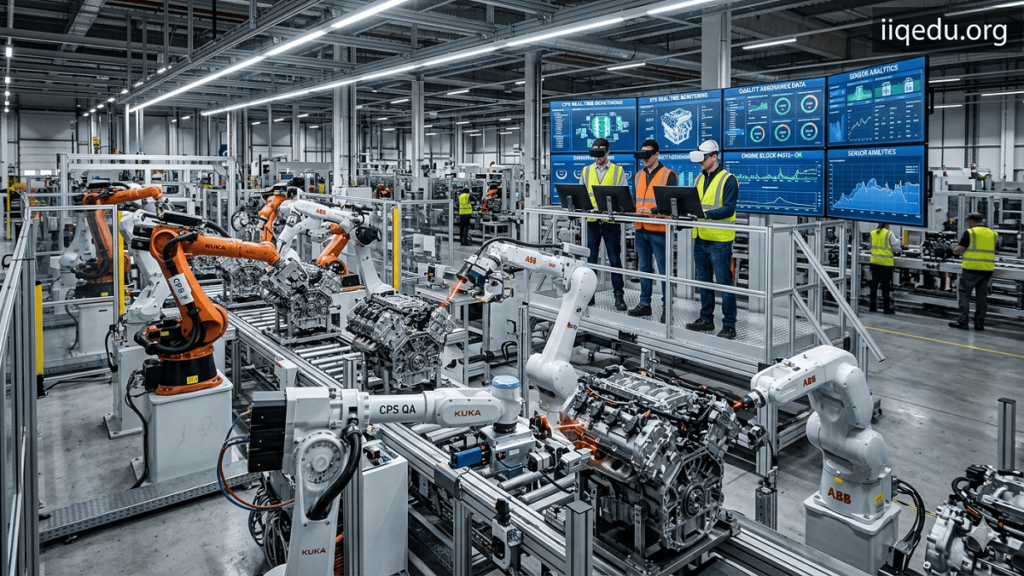
Example: A smart factory uses Cyber-Physical Systems for Factory QA to detect micro-defects in automotive engine components in real time, triggering robotic recalibration without stopping the assembly line.
6. Benefits of CPS for Factory QA
- Increased product consistency and quality.
- Reduced waste and defective units.
- Faster identification and correction of process deviations.
- Enhanced operational efficiency and cost savings.
#Cyber-Physical Systems for Factory QA in Banglore
Who are Cyber-Physical Systems for Factory QA required?
1. Manufacturing Companies
- Automotive Manufacturers: For monitoring assembly lines, weld quality, and engine components.
- Electronics Manufacturers: For precise inspection of circuit boards, microchips, and electronic components.
- Pharmaceutical Companies: For ensuring dosage accuracy, packaging integrity, and regulatory compliance.
- Food & Beverage Companies: For maintaining hygiene, temperature, and packaging standards during production.
Reason: These organizations require high-quality, defect-free outputs and consistent compliance with industry standards.
2. Quality Assurance Teams
- QA Engineers and Technicians: Use Cyber-Physical Systems for Factory QA data to detect defects and optimize production parameters.
- Process Improvement Specialists: Analyze Cyber-Physical Systems for Factory QA -generated insights to improve workflow efficiency and reduce waste.
Reason: Cyber-Physical Systems for Factory QA provides real-time, actionable insights that empower QA teams to maintain precision and reliability.
3. Industrial Automation & Robotics Teams
- Teams responsible for integrating robotics, PLCs, and sensor networks into production lines.
- Automation specialists use Cyber-Physical Systems for Factory QA to enable autonomous defect detection and correction.
Reason: Cyber-Physical Systems for Factory QA is required to allow machines and robots to self-adjust production processes based on real-time quality data.
4. Regulatory Compliance & Audit Teams
- Compliance officers in regulated industries (automotive, pharmaceutical, aerospace) monitor production to meet safety and quality standards.
- Cyber-Physical Systems for Factory QA provides traceable, reliable records for audits and certification purposes.
Reason: Cyber-Physical Systems for Factory QA ensures continuous monitoring and documentation, minimizing the risk of non-compliance or product recalls.
Summary:
Cyber-Physical Systems for Factory QA are required by manufacturers, QA teams, automation engineers, and compliance officers who need precision, reliability, real-time defect detection, and regulatory adherence in production environments.
Reference: NSF Cyber-Physical Systems Program
#Cyber-Physical Systems for Factory QA in Ahemdabad
When are Cyber-Physical Systems for Factory QA required?
1. High-Volume Manufacturing
CPS is essential when production lines operate at high speed or large scale, where manual quality checks are impractical. Real-time monitoring ensures that defects are detected immediately, preventing large batches of faulty products.
Example: Automotive engine assembly lines or electronics production with thousands of units per day.
2. Precision-Critical Production
When products require micrometer-level precision or tight tolerances, CPS ensures accurate measurements and adjustments in real time.
Example: Semiconductor manufacturing or aerospace component production.
3. Regulated Industries
In industries with strict regulatory requirements, such as pharmaceuticals, food & beverage, or aerospace, CPS is required to maintain compliance, traceability, and safety standards.
Example: Monitoring tablet dosages, packaging integrity, or aircraft component quality.
4. Complex or Automated Processes
CPS is needed when multiple machines, robots, or production subsystems interact, requiring continuous coordination to maintain quality standards.
Example: Smart factories with robotic arms, automated conveyors, and embedded sensor networks.
5. Predictive Maintenance and Fault Prevention
CPS is required when early detection of equipment faults is critical to avoid production stoppages or defective output. By analyzing sensor data, CPS can predict failures and trigger maintenance before defects occur.
Example: A robotic arm in an assembly line automatically adjusts operation based on vibration or torque anomalies detected in real time.
Summary:
Cyber-Physical Systems for Factory QA are required whenever production involves high speed, precision, regulatory compliance, automation complexity, or predictive fault detection. Their deployment ensures consistent quality, reduced waste, and operational efficiency.
Reference: NSF Cyber-Physical Systems Program
#Cyber-Physical Systems for Factory QA in Hyderabad
Where are Cyber-Physical Systems for Factory QA required?
1. Automotive Manufacturing Plants
- Applications: Engine assembly lines, welding stations, and body frame inspections.
- Purpose: Ensures precision in assembly, torque accuracy, weld quality, and reduces defect rates.
- Example: CPS monitors robotic arms and conveyor systems to detect misalignments or faulty welds in real time.
2. Electronics Manufacturing Facilities
- Applications: Circuit board production, microchip fabrication, and component placement.
- Purpose: Maintains high-precision assembly and ensures zero-defect outputs for sensitive electronic components.
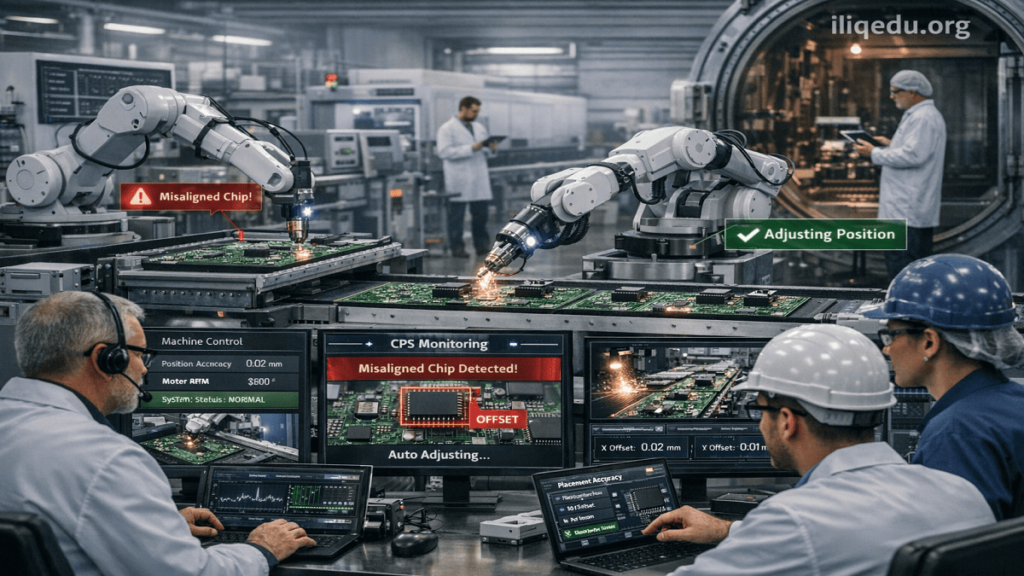
- Example: CPS-enabled visual inspection systems detect misaligned chips or soldering errors instantly.
3. Pharmaceutical and Medical Production Sites
- Applications: Tablet and capsule manufacturing, packaging, and sterilization processes.
- Purpose: Ensures dosage accuracy, packaging integrity, and compliance with regulatory standards.
- Example: CPS monitors filling machines and sealing lines, triggering corrective action if deviations occur.
4. Food & Beverage Processing Plants
- Applications: Bottling, packaging, temperature control, and hygiene monitoring.
- Purpose: Maintains food safety standards, consistency, and quality assurance in high-speed production.
- Example: CPS sensors detect misfilled bottles or packaging defects before products leave the line.
5. Aerospace & Defense Manufacturing
- Applications: Aircraft component assembly, turbine production, and precision machining.
- Purpose: Maintains extremely high precision, safety, and reliability standards for critical components.
- Example: CPS monitors machining tolerances and alignment of aerospace parts in real time to prevent defects.
6. Smart Factories and Industry 4.0 Environments
- Applications: Any automated production system integrating robotics, sensors, and real-time analytics.
- Purpose: Enables real-time monitoring, autonomous process corrections, and operational efficiency.
- Example: CPS systems coordinate multiple robotic arms and conveyor systems to maintain continuous quality control.
Summary:
Cyber-Physical Systems for Factory QA are required in industries and production environments where precision, safety, regulatory compliance, and real-time quality monitoring are critical, including automotive, electronics, pharmaceuticals, food & beverage, aerospace, and smart factories.
Reference: NSF Cyber-Physical Systems Program
#Cyber-Physical Systems for Factory QA in Delhi
How are Cyber-Physical Systems for Factory QA required?
1. Sensor Integration
CPS begins with embedding sensors on critical machinery, assembly lines, and production tools. These sensors monitor parameters such as temperature, pressure, vibration, torque, and alignment to detect deviations in real time.
Example: Torque sensors on automotive assembly robots detect misalignments during bolt fastening.
2. Real-Time Data Collection and Processing
Data from sensors is collected and processed using embedded computing systems, edge devices, or cloud platforms. CPS continuously analyzes this data to identify anomalies or deviations from quality standards.
Example: A PCB manufacturing line uses CPS to detect misaligned microchips immediately during placement.
3. Automated Feedback Loops
CPS includes actuators and control mechanisms that respond automatically to sensor inputs. If a defect or deviation is detected, the system can adjust machinery parameters or pause the process to prevent defective products from progressing.
Example: Robotic arms in a bottling plant automatically recalibrate filling levels when sensors detect underfilled bottles.
4. Integration with Production Systems
CPS is integrated with PLCs (Programmable Logic Controllers), SCADA systems, and robotic controllers to synchronize QA processes across multiple machines. This ensures coordinated, seamless operation and consistent quality.
Example: A smart factory uses CPS to coordinate welding robots, inspection cameras, and conveyors for fully automated QA.
5. Predictive Maintenance and Continuous Improvement
CPS enables predictive analytics by monitoring equipment health and performance trends. Maintenance can be scheduled before a machine failure affects product quality, reducing downtime and waste.
Example: Vibration and temperature data from CNC machines trigger maintenance alerts before production defects occur.
6. Data Logging and Compliance
CPS systems maintain traceable records of quality checks, deviations, and corrective actions. This documentation supports audits, regulatory compliance, and continuous process improvement.
Example: Pharmaceutical production lines use CPS logs to verify dosage accuracy and packaging integrity for FDA compliance.
Summary
Cyber-Physical Systems for Factory QA are required by implementing:
- Sensors for real-time monitoring.
- Embedded computing for immediate data analysis.
- Automated feedback loops for correction.
- Integration with production and robotic systems for synchronized operations.
- Predictive maintenance to prevent defects.
- Data logging for compliance and continuous improvement.
These steps enable real-time, autonomous quality assurance, ensuring high precision, reduced defects, and operational efficiency across modern manufacturing environments.
Reference: NSF Cyber-Physical Systems Program
#Cyber-Physical Systems for Factory QA in Kolkata
Case Study of Cyber-Physical Systems for Factory QA
1. Background
Bosch sought to improve quality assurance across its high-volume engine assembly lines. Manual inspection was insufficient for detecting subtle defects in precision components such as fuel injectors and engine mounts. The challenge was to maintain high throughput while ensuring zero-defect outputs.
2. Objectives
- Implement Cyber-Physical Systems to monitor production in real time.
- Reduce defective products and waste.
- Enable predictive maintenance for machinery to prevent downtime.
- Ensure compliance with automotive quality standards (ISO 9001, IATF 16949).
3. Implementation
Step 1: Sensor Deployment
- High-precision sensors installed on robotic arms, torque wrenches, and conveyor systems.
- Sensors monitored torque, alignment, vibration, and operational temperatures.
Step 2: Real-Time Data Processing
- Embedded computing devices processed sensor data instantly.
- Anomalies such as misaligned bolts or abnormal vibrations triggered immediate alerts.
Step 3: Automated Feedback Loops
- Robotic arms and assembly machines automatically adjusted parameters to correct deviations.
- Defective components were automatically diverted from the production line for further inspection.
Step 4: Predictive Maintenance Integration
- CPS analyzed trends in sensor data to predict equipment failure.
- Maintenance alerts were generated before failures impacted production quality.
Step 5: Compliance & Documentation
- All QA data logged and stored for regulatory compliance and audits.
- Dashboards provided management with real-time QA metrics.
4. Outcomes
- Defect Reduction: 28% decrease in faulty components per batch.
- Operational Efficiency: 15% faster throughput due to automated adjustments.
- Predictive Maintenance: 30% reduction in unplanned machine downtime.
- Compliance Assurance: Real-time documentation supported ISO and IATF audits without delays.
- Data-Driven Improvements: Continuous feedback enabled optimization of assembly processes and workflow adjustments.
5. Lessons Learned
- Accurate sensor placement and calibration are critical for CPS effectiveness.
- Integration with legacy machinery can be complex and requires careful planning.
- Predictive maintenance is most effective when combined with historical trend analysis.
- Training staff to interpret CPS analytics ensures smooth adoption and operational success.
6. Conclusion
The implementation of Cyber-Physical Systems in Factory QA enabled Bosch to achieve high precision, reduced defects, and operational efficiency. Real-time monitoring, automated corrective actions, and predictive maintenance transformed the assembly line into a smart, self-optimizing production system.
References:
- NSF Cyber-Physical Systems Program
- Bosch Industry 4.0 Solutions
- IATF 16949 Automotive Quality Standards
#Cyber-Physical Systems for Factory QA in Jaipur
White Paper of Cyber-Physical Systems for Factory QA
1. Executive Summary
Cyber-Physical Systems (CPS) are revolutionizing factory quality assurance (QA) by integrating sensors, computation, and real-time control into production processes. CPS enables automated defect detection, predictive maintenance, and process optimization, ensuring higher product quality, operational efficiency, and regulatory compliance. This white paper explores CPS implementation in QA, industry applications, benefits, challenges, and future trends.
2. Introduction
2.1 Definition
- Cyber-Physical Systems (CPS): Integration of computational algorithms and physical processes for real-time monitoring, control, and automation in industrial environments.
- Factory QA Context: CPS monitors critical quality parameters, detects anomalies instantly, and triggers automated corrective actions to maintain consistent product standards.
2.2 Importance
In high-volume, precision manufacturing, manual inspection is insufficient. CPS ensures accuracy, traceability, and efficiency, reducing defects, improving safety, and supporting regulatory compliance.
3. Industry Applications
| Industry | CPS Application | Key Benefits |
|---|---|---|
| Automotive Manufacturing | Engine assembly, robotic welding | Reduced defects, precision, regulatory compliance |
| Electronics Manufacturing | PCB inspection, microchip alignment | Zero-defect output, real-time monitoring |
| Pharmaceuticals | Tablet production, packaging QA | Dosage accuracy, compliance, reduced waste |
| Food & Beverage | Bottling, packaging, hygiene monitoring | Safety, quality consistency, reduced recalls |
| Aerospace & Defense | Component assembly, turbine QA | High-precision, safety-critical assurance |
Example Case: Bosch implemented CPS across its engine assembly line, reducing defects by 28% and unplanned downtime by 30%.
4. How CPS is Implemented for Factory QA
- Sensor Deployment: Place sensors on critical machinery and production points.
- Real-Time Data Processing: Use embedded computing or edge devices to analyze sensor inputs.
- Automated Feedback Loops: Actuators or robotic systems automatically correct deviations.
- Integration with Production Systems: Connect CPS to PLCs, SCADA systems, and robotics for synchronized QA.
- Predictive Maintenance: Analyze equipment trends to prevent downtime and defects.
- Data Logging & Compliance: Maintain audit-ready QA records and dashboards for continuous improvement.
5. Benefits of CPS for Factory QA
- Improved Product Quality: Real-time defect detection and correction.
- Operational Efficiency: Reduced downtime and faster throughput.
- Predictive Maintenance: Early detection of equipment faults.
- Regulatory Compliance: Automated, traceable QA documentation.
- Data-Driven Optimization: Continuous process improvement based on sensor analytics.
6. Challenges
- Integration Complexity: CPS must interface with legacy machinery and multiple production systems.
- High Initial Investment: Sensors, actuators, and computing infrastructure require capital.
- Cybersecurity: Connected systems are vulnerable to attacks, requiring strong security protocols.
- Staff Training: Teams need skills to interpret CPS analytics and manage automated systems.
7. Future Trends
- AI and Machine Learning: Enhanced predictive analytics for defect detection.
- Edge Computing: Faster processing of sensor data at the production site.
- Digital Twins: Virtual replicas of production systems for simulation and optimization.
- Autonomous QA Systems: Fully automated quality checks with minimal human intervention.
8. Conclusion
Cyber-Physical Systems in Factory QA provide a smart, automated, and reliable approach to maintaining product standards in high-volume, precision manufacturing. By integrating sensors, computation, and real-time control, CPS ensures higher quality, reduced waste, regulatory compliance, and operational efficiency, positioning manufacturers for success in Industry 4.0.
References
- NSF Cyber-Physical Systems Program
- Bosch Industry 4.0 Solutions
- IATF 16949 Automotive Quality Standards
#Cyber-Physical Systems for Factory QA in Maharashtra
Industry application of Cyber-Physical Systems for Factory QA
1. Automotive Industry
Applications:
- Engine assembly line monitoring for torque, alignment, and weld quality.
- Robotic welding and painting QA with real-time defect detection.
- Automated inspection of safety-critical components such as brake systems and airbags.
Benefits:
- Reduced defective components, improved assembly precision, and compliance with ISO 9001 and IATF 16949 standards.
2. Electronics and Semiconductor Manufacturing
Applications:
- Printed circuit board (PCB) inspection using CPS-enabled vision systems.
- Microchip alignment and soldering verification.
- Real-time monitoring of robotic pick-and-place systems.
Benefits:
- Zero-defect production, faster throughput, and precise component placement.
3. Pharmaceutical Industry
Applications:
- Tablet and capsule quality monitoring for size, weight, and dosage.
- Packaging and labeling verification using automated CPS systems.
- Sterility and contamination control in production lines.
Benefits:
- Ensures dosage accuracy, regulatory compliance (FDA, EMA), and reduced product recalls.
4. Food & Beverage Industry
Applications:
- Bottling, filling, and packaging inspection.
- Temperature and hygiene monitoring during processing.
- Detection of foreign objects or defective packaging.
Benefits:
- Consistent product quality, food safety compliance, and minimized waste.
5. Aerospace & Defense Manufacturing
Applications:
- Precision machining and assembly of aircraft components.
- Turbine and engine inspection using CPS sensors and actuators.
- Automated defect detection in high-value, safety-critical parts.
Benefits:
- High-precision production, enhanced safety, and reduced risk of operational failures.
6. Smart Factories & Industry 4.0
Applications:
- Integrated CPS systems coordinating robotics, conveyors, and QA inspection.
- Real-time production monitoring dashboards for management.
- Predictive maintenance for critical machinery to prevent defects.
Benefits:
- Full automation, continuous quality monitoring, reduced downtime, and data-driven process optimization.
Summary
Cyber-Physical Systems for Factory QA are applied wherever precision, regulatory compliance, high-volume production, and real-time quality monitoring are critical. Key industries include:
Automotive | Electronics | Pharmaceuticals | Food & Beverage | Aerospace | Smart Factories
CPS ensures reduced defects, operational efficiency, safety, and traceability across industrial production environments.
References:
#Cyber-Physical Systems for Factory QA in Mumbai
Ask FAQs
What are Cyber-Physical Systems in Factory QA?
Cyber-Physical Systems (CPS) integrate sensors, computing, and physical machinery to monitor and control production in real time. In Factory QA, CPS ensures accurate measurements, defect detection, and automated corrections to maintain consistent product quality.
Who requires CPS for Factory QA?
CPS is required by:
Manufacturers in automotive, electronics, pharmaceuticals, and food & beverage industries.
QA teams needing real-time defect detection.
Automation engineers integrating robotics and machinery.
Regulatory compliance officers ensuring audit-ready production records.
When is CPS for Factory QA required?
CPS is required when production involves:
High-volume or high-speed manufacturing.
Precision-critical components with tight tolerances.
Regulated industries needing strict compliance.
Complex automated processes where human monitoring is insufficient.
Where is CPS applied for Factory QA?
CPS is applied across industries and environments such as:
Automotive assembly lines for engines and safety components.
Electronics manufacturing for PCBs and microchips.
Pharmaceutical production for tablets and packaging.
Food & beverage processing for bottling and hygiene control.
Aerospace and defense for high-precision components.
How is CPS implemented for Factory QA?
Implementation involves:
Sensor integration to monitor critical production parameters.
Real-time data processing using embedded computing or edge devices.
Automated feedback loops for immediate corrective action.
Integration with PLCs and robotic systems for synchronized operation.
Predictive maintenance to prevent defects.
Data logging for compliance, audits, and continuous process improvement.
Source: Arihant Online Academy
Table of Contents
Disclaimer:
The information provided is for educational and informational purposes only. IIQ Edu makes no warranties regarding its accuracy or applicability. Users should consult technical experts or official sources before implementing any CPS solutions in factory QA.