Digital Twin Technology
At its core, a digital twin is a virtual replica of a physical object, system, or process. Imagine a jet engine, a factory production line, or even an entire city represented digitally. This replica doesn’t just exist as a static model; it dynamically mirrors the real-world counterpart in real-time, continuously updated with data from sensors and IoT devices.
By combining AI, big data, and cloud computing, digital twins provide a window into operations that allows for smarter decision-making, predictive maintenance, and scenario simulation—all without disrupting the physical system.
How It Works
The magic behind digital twins lies in the seamless integration of several components:
- Physical Entity – The real-world system or device you want to monitor.
- Digital Replica – A dynamic virtual model reflecting the entity’s structure and behavior.
- Data Connection – Real-time data flows from sensors to the digital twin.
- Analytics & AI – Processes the data to identify trends, predict failures, or simulate “what-if” scenarios.
This continuous loop of feedback ensures that the digital twin is always a true reflection of reality, allowing organizations to respond faster and smarter.
Real-World Applications
The versatility of digital twins is staggering, spanning multiple industries:
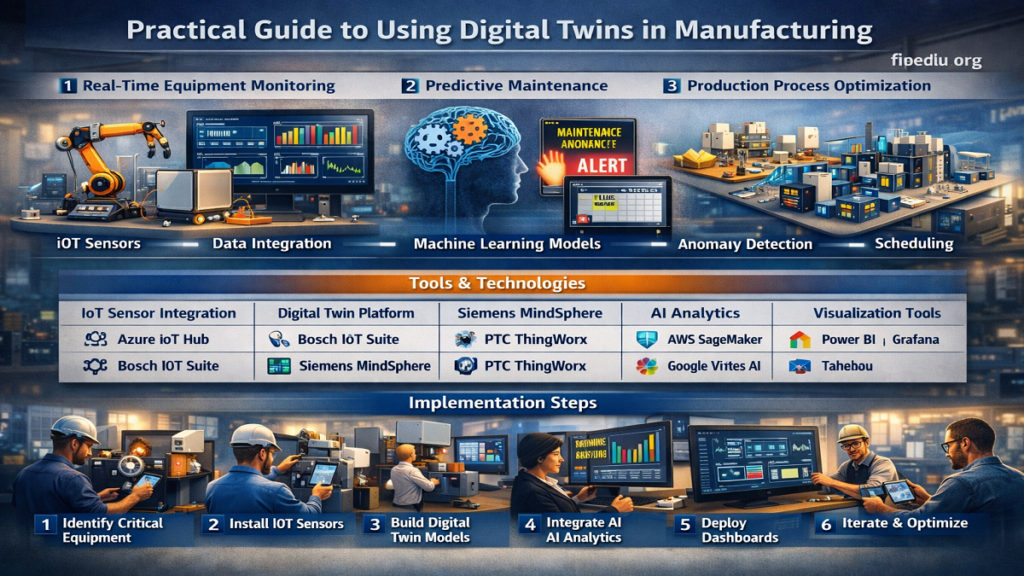
- Manufacturing: Optimizing production lines, reducing downtime, and improving quality control.
- Healthcare: Simulating patient treatments to predict outcomes and personalize care.
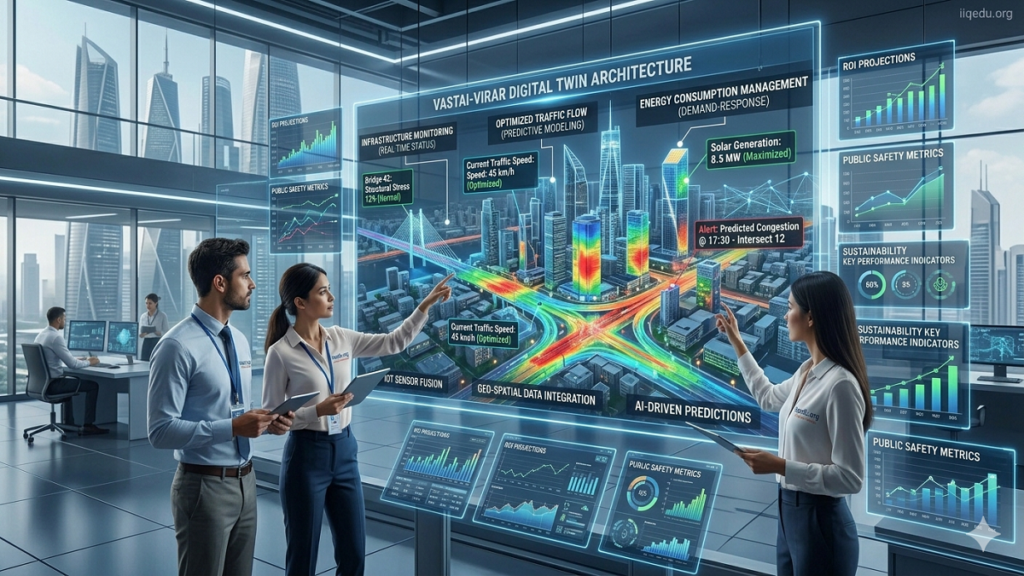
- Smart Cities: Managing traffic flow, energy usage, and urban planning efficiently.
- Aerospace & Automotive: Monitoring engine health, enhancing safety, and testing new designs virtually.
- Energy & Utilities: Optimizing grids, wind turbines, pipelines, and overall infrastructure management.
Why Businesses Are Embracing Digital Twins
The benefits are tangible and transformative:
- Predictive Maintenance: Identify potential failures before they happen.
- Cost Efficiency: Reduce wasted resources and unnecessary repairs.
- Faster Innovation: Test new designs in a virtual environment without building physical prototypes.
- Enhanced Decision-Making: Leverage real-time insights for smarter operations.
Challenges and Considerations
While digital twin technology is promising, it’s not without hurdles:
- Data Security: Safeguarding sensitive operational information is crucial.
- Integration Complexity: Combining multiple systems and sensors can be technically challenging.
- Initial Investment: Deploying digital twins requires hardware, software, and analytics capabilities.
- Data Accuracy: Flawed data can lead to incorrect predictions and costly mistakes.
The Future of Digital Twins
The future of digital twins is bright and rapidly evolving:
- AI-Powered Twins: Autonomous systems capable of self-optimization.
- Cross-Industry Integration: Linking multiple systems for holistic simulation and monitoring.
- Real-Time Twins: 5G and edge computing enable near-instantaneous updates.
- Sustainability: Tracking energy consumption and reducing environmental impact.
Digital twin technology is more than a trend—it’s a bridge between the physical and digital worlds, offering a new lens to see, simulate, and improve our environment. Businesses that adopt this technology are not just keeping up with innovation—they’re shaping the future.
What is Digital Twin Technology?
Digital Twin Technology is a cutting-edge concept that creates a digital replica of a physical object, system, or process. This virtual model mirrors the real-world entity’s structure, behavior, and performance in real time. By connecting sensors, IoT devices, and analytics platforms, a digital twin continuously receives data from its physical counterpart, allowing simulation, monitoring, and optimization without directly interfering with the real system.
Key Points About Digital Twin Technology
- Real-Time Monitoring
Digital twins continuously track the status and performance of the physical object, providing insights into current conditions. - Simulation and Testing
They allow businesses to run “what-if” scenarios virtually, testing designs, processes, or strategies without physical risks. - Predictive Maintenance
By analyzing data trends, digital twins can predict failures or maintenance needs before they happen, reducing downtime and costs. - Optimization
Organizations can use insights from digital twins to improve efficiency, productivity, and resource usage across industries.
Core Components
- Physical Entity: The actual object, machine, or process.
- Digital Replica: A virtual version that mimics the real-world entity.
- Data Connection: Sensors and IoT devices that feed real-time data.
- Analytics & AI: Tools that interpret the data for predictions, insights, and optimization.
Applications
- Manufacturing: Streamlining production lines and quality control.
- Healthcare: Modeling patients to predict treatment outcomes.
- Smart Cities: Managing traffic, energy, and infrastructure efficiently.
- Aerospace & Automotive: Monitoring performance and safety of engines or vehicles.
- Energy & Utilities: Optimizing grids, turbines, and pipelines.
Who is Digital Twin Technology required?
Digital Twin Technology isn’t just for tech enthusiasts—it’s required by anyone or any organization that wants real-time insight, predictive capabilities, and optimization of physical systems. Essentially, it’s most relevant where complex assets, processes, or systems need monitoring, simulation, or improvement.
Here’s a breakdown of who benefits the most:
1. Manufacturers
- Why needed: To monitor production lines, reduce machine downtime, and improve quality control.
- Benefit: Predictive maintenance and process optimization save time and money.
2. Healthcare Providers
- Why needed: To simulate patient-specific treatments or medical devices.
- Benefit: Personalized care, better treatment outcomes, and reduced risk of errors.
3. Smart City Planners
- Why needed: To manage infrastructure, traffic flow, utilities, and urban development.
- Benefit: Efficient resource allocation, reduced congestion, and improved sustainability.
4. Aerospace and Automotive Industries
- Why needed: To monitor engines, vehicles, or flight systems in real time.
- Benefit: Enhanced safety, predictive maintenance, and optimized performance.
5. Energy and Utility Companies
- Why needed: To track and optimize grids, pipelines, wind turbines, and power plants.
- Benefit: Reduced downtime, lower operational costs, and increased energy efficiency.
6. Construction and Infrastructure Firms
- Why needed: To model buildings, bridges, or large-scale infrastructure projects digitally.
- Benefit: Early detection of structural issues and improved project management.
7. Retail and Logistics Companies
- Why needed: To monitor supply chains and warehouse operations.
- Benefit: Streamlined operations, better inventory management, and demand forecasting.
In short: Any organization that relies on complex systems, expensive assets, or data-driven decisions can benefit from digital twin technology. It’s about turning real-world operations into actionable insights in a safe, controlled, and predictive digital environment.
Whe is Digital Twin Technology required?
Digital Twin Technology is required whenever real-time monitoring, predictive insights, or optimization of physical systems or processes is critical. In other words, it’s not just a nice-to-have—it’s essential when mistakes are costly, downtime is expensive, or complex systems need to be understood and improved.
Here are key situations when it’s required:
1. Predictive Maintenance
- When: Equipment failures can disrupt operations or be very expensive to repair.
- Why: Digital twins can forecast failures before they happen, saving time and costs.
2. Complex System Management
- When: Managing factories, power plants, smart cities, or transportation networks.
- Why: Digital twins provide a virtual overview of operations to identify inefficiencies or risks.
3. Design and Testing
- When: Launching new products, machinery, or infrastructure projects.
- Why: Virtual simulations let organizations test scenarios without physical prototypes, reducing errors and costs.
4. Safety-Critical Operations
- When: Industries like aerospace, automotive, or healthcare where errors can be catastrophic.
- Why: Digital twins allow scenario modeling and risk analysis without endangering people or assets.
5. Process Optimization
- When: Systems need to run efficiently with minimal waste.
- Why: Insights from the digital twin help adjust operations in real time to improve performance and reduce resource consumption.
6. Remote Monitoring
- When: Physical systems are spread across locations or in inaccessible areas.
- Why: Digital twins let managers observe and control operations without being on-site.
In short: Digital twin technology is required anytime you need to monitor, predict, or optimize a physical system—especially when efficiency, safety, and cost-effectiveness matter.
Where is Digital Twin Technology required?
Digital Twin Technology is required wherever complex physical systems, assets, or processes need monitoring, optimization, or predictive insights. Essentially, it’s most valuable in environments where real-time data, risk management, efficiency, and cost reduction are critical.
Here’s a breakdown of where it is typically applied:
1. Manufacturing Plants
- Why: To monitor machinery, optimize production lines, and predict maintenance needs.
- Example: Automotive factories using digital twins to track assembly line efficiency.
2. Healthcare Facilities
- Why: For patient monitoring, medical device simulation, and treatment planning.
- Example: Hospitals modeling organ or patient-specific responses for personalized care.
3. Smart Cities
- Why: To manage traffic systems, energy grids, and public infrastructure efficiently.
- Example: City planners simulating traffic flow to reduce congestion and energy consumption.
4. Energy and Utility Sites
- Why: To optimize power plants, pipelines, and renewable energy systems.
- Example: Wind farms using digital twins to monitor turbine performance and prevent downtime.
5. Aerospace and Automotive Industries
- Why: For monitoring engines, vehicles, and flight systems to improve safety and performance.
- Example: Aircraft manufacturers testing new engine designs digitally before production.
6. Construction and Infrastructure Projects
- Why: To model buildings, bridges, and large-scale projects for risk detection and planning.
- Example: Digital twins of skyscrapers to detect structural stress or energy inefficiencies.
7. Logistics and Supply Chains
- Why: To track inventory, optimize warehouse operations, and simulate demand scenarios.
- Example: E-commerce companies modeling distribution networks to improve delivery efficiency.
In short: Digital twin technology is required anywhere a physical system exists that benefits from real-time monitoring, simulation, and predictive analysis—from factories to cities, hospitals to power grids.
How is Digital Twin Technology required?
Digital Twin Technology is required by organizations and industries as a tool to monitor, simulate, predict, and optimize physical systems and processes. The “how” part refers to how it is implemented and why it becomes essential in practical terms.
Here’s a detailed explanation:
1. Through Real-Time Monitoring
- How it works: Sensors, IoT devices, and connected equipment feed live data from the physical system to its digital twin.
- Why it’s required: Organizations need constant insight into performance, condition, and potential issues of machines or processes.
- Example: Factories monitor machinery vibrations and temperature to prevent unexpected breakdowns.
2. Through Predictive Maintenance
- How it works: The digital twin analyzes data trends to predict when a component might fail.
- Why it’s required: Prevents costly downtime, reduces maintenance costs, and increases equipment lifespan.
- Example: Airlines use engine digital twins to forecast maintenance needs before a failure occurs.
3. Through Simulation and Testing
- How it works: Digital twins allow organizations to simulate “what-if” scenarios without impacting the real system.
- Why it’s required: Helps test new designs, process changes, or emergency responses safely.
- Example: Automotive companies test vehicle performance under extreme conditions digitally.
4. Through Optimization of Operations
- How it works: AI and analytics interpret digital twin data to suggest efficiency improvements.
- Why it’s required: Optimizes resources, energy usage, and workflow for cost savings and sustainability.
- Example: Smart cities adjust traffic signals and energy grids based on real-time digital twin insights.
5. Through Remote Monitoring and Control
- How it works: Operators can view and manage assets digitally from anywhere in the world.
- Why it’s required: Reduces the need for on-site visits, especially for inaccessible or hazardous locations.
- Example: Oil and gas pipelines are monitored digitally across thousands of kilometers.
In short: Digital twin technology is required by being integrated into physical systems via sensors, IoT, and data analytics, enabling organizations to monitor, predict, simulate, and optimize. It becomes essential wherever efficiency, safety, cost-effectiveness, and real-time insights are priorities.
Case Study of Digital Twin Technology
1. Manufacturing Efficiency at Indo Rama Synthetics
A detailed study explored how a digital twin was implemented in manufacturing operations at Indo Rama Synthetics.
- The digital twin created a virtual replica of production systems to monitor and simulate machine behavior with real‑time data.
- It helped improve operational efficiency, predictive maintenance, and decision-making processes by forecasting issues before they occurred.
- As a result, the manufacturing workflow became more responsive and better optimized overall.
2. Wind Turbine Optimization by General Electric
Global industrial company General Electric (GE) used digital twins to manage its wind farms.
- Each turbine had a digital replica fed with real‑time IoT data.
- Engineers used it to predict maintenance needs, optimize performance, and adjust operations proactively.
- This approach led to significant increases in turbine productivity and uptime.
3. Siemens Manufacturing Line Simulation
Siemens applied digital twin technology on its production line:
- By simulating assembly processes virtually, engineers were able to experiment with changes without stopping real production.
- This allowed them to test performance scenarios, enhance lead times, and reduce errors before applying changes on the factory floor.
4. Smart Port Management at VO Chidambaranar Port
The VO Chidambaranar Port Authority in India has become one of the first major ports in the country to use a digital twin platform for port operations.
- IoT sensors, GPS, drones, and cameras feed real‑time data to the digital twin of the port’s infrastructure.
- This enabled predictive analytics, intelligent scheduling, and scenario planning, cutting vessel congestion and turnaround time.
- The tech also helped with energy tracking and emissions monitoring for sustainability goals.
5. Urban Sustainability in Sydney
A Sydney urban digital twin case study examined how a city‑scale virtual model can support sustainable planning.
- The digital twin integrated real-time and historical data such as traffic, emissions, and weather.
- By analyzing this data with predictive models, planners could forecast crash risks and identify optimal development strategies.
- It served as a powerful tool for data‑driven urban decisions and future planning.
6. Water Infrastructure Management
Cities like St. Louis and Thames Water implemented digital twin solutions for their water systems.
- By modeling distribution networks virtually, they could simulate flow, detect failures earlier, and improve maintenance scheduling.
- The result was better service reliability and lower operational costs.
7. Accelerated Design and Prototype Testing
In product design, digital twins have shown dramatic effects:
- One company shortened its design process by around 30% because digital twin models allowed engineers to test designs virtually before building physical prototypes.
- This saved both time and costs while improving design accuracy.
What These Case Studies Show
Across industries—manufacturing, energy, urban planning, ports, and utilities—digital twin technology helps organizations to:
- Monitor systems in real time
- Predict future issues and maintenance needs
- Simulate scenarios safely
- Improve efficiency and reduce costs
White Paper of Digital Twin Technology
1. Executive Summary
Digital Twin Technology represents a paradigm shift in how organizations design, operate, and optimize physical systems. A digital twin is a dynamic, data-driven virtual representation of a physical asset, process, or system that continuously reflects real‑world conditions through real‑time data. By integrating sensors, AI, analytics, cloud computing, and IoT, digital twins enable organizations to improve operational performance, predict outcomes, reduce costs, and accelerate innovation.
This white paper examines the core concepts, business value, technology architecture, use cases, implementation strategies, challenges, and future trends of digital twin technology.
2. Introduction
In an increasingly connected world, organizations need real‑time visibility into systems to enhance decision‑making, reduce risk, and optimize performance. Traditional methods of performance monitoring and system design often rely on periodic manual data collection and siloed analysis, limiting visibility and responsiveness. Digital Twin Technology overcomes these limitations by creating a live digital counterpart that mirrors the behavior and condition of the physical entity.
3. What Is Digital Twin Technology?
A digital twin is a digital replica of a physical object, system, or process that is continuously updated with real‑time data. Unlike static models, digital twins evolve with their physical counterparts using sensor feeds, simulation models, and data analytics.
Key Characteristics:
- Real‑time synchronization with physical systems
- Data‑driven predictive insights
- Virtual testing and simulation
- Closed‑loop decision support
4. Technology Architecture
Digital twin systems typically include the following layers:
4.1 Physical Layer
The actual equipment, infrastructure, or process being monitored.
4.2 Data Acquisition Layer
Sensors, IoT devices, and communication networks that capture real‑time data.
4.3 Data Management Layer
Cloud or edge storage solutions that collect and organize data.
4.4 Processing & Analytics Layer
Advanced analytics engines, machine learning, and physics‑based models that interpret data.
4.5 Visualization & Interface Layer
Dashboards, control panels, and AR/VR interfaces that present insights to decision‑makers.
5. Business Value and Benefits
5.1 Predictive Maintenance
Digital twins analyze operational data to forecast failures before they occur, reducing unplanned downtime and maintenance costs.
5.2 Operational Optimization
Real‑time insights enable optimization of processes, resource utilization, and workflows.
5.3 Design and Simulation
Engineers can virtually test design changes, eliminating risk and reducing the need for physical prototypes.
5.4 Risk Management
Scenario simulations help organizations evaluate potential disruptions and reinforce resilience.
5.5 Cost Reduction
By improving asset reliability and performance, digital twins significantly reduce operating expenses.
6. Key Use Cases
6.1 Manufacturing
Digital twins are used to track machine performance, optimize assembly lines, and manage complex production cycles.
6.2 Aerospace
Aircraft manufacturers model engines and control systems to anticipate failures and improve safety.
6.3 Smart Cities
Cities create digital twins of infrastructure components to manage traffic, utilities, energy consumption, and emergency responses.
6.4 Healthcare
Hospitals model equipment and even patient‑specific health data to personalize treatments and improve outcomes.
6.5 Energy & Utilities
Operators optimize grid performance, monitor wind turbines, and plan maintenance for critical infrastructure.
7. Implementation Strategy
Successful digital twin implementation involves the following steps:
7.1 Define Objectives
Clarify business goals: What problem will the twin solve?
7.2 Data Readiness
Assess sensor networks, connectivity, and data quality.
7.3 Build or Select Models
Choose physics‑based, AI‑based, or hybrid modeling approaches.
7.4 Integration
Connect data streams, analytics platforms, and visualization tools.
7.5 Pilot and Scale
Start with a pilot deployment, then expand to broader operations.
7.6 Governance and Security
Establish data governance, access controls, and cybersecurity measures.
8. Challenges and Considerations
8.1 Data Security
Sensitive operational data must be protected from breaches and misuse.
8.2 Integration Complexity
Coordinating multiple technologies, standards, and legacy systems can be difficult.
8.3 Initial Investment
Sensors, analytics infrastructure, and expertise require upfront capital.
8.4 Data Accuracy
Poor data quality can lead to incorrect simulations and decisions.
9. Industry Trends and Future Outlook
9.1 AI‑Driven Digital Twins
Next‑generation twins will embed advanced machine learning to enable autonomous optimization.
9.2 Cross‑Domain Twins
Digital twins will expand from individual assets to entire ecosystems, linking supply chains, infrastructure networks, and smart environments.
9.3 Real‑Time Twins at Scale
Advances in 5G and edge computing will support instant synchronization across massive datasets.
9.4 Sustainability Twin
Environmental impact modeling and energy optimization will become core applications.
10. Conclusion
Digital Twin Technology is not just a technological innovation—it’s a strategic capability that empowers organizations to monitor, simulate, predict, and improve real‑world systems. By bridging the physical and digital worlds, digital twins drive efficiency, resilience, and competitiveness across industries.
The future will see digital twins integrated deeper into enterprise operations, enabling smarter systems, more reliable assets, and more sustainable environments.
Industry Application of Digital Twin Technology
1. Manufacturing
- Application: Monitoring production lines, optimizing workflows, and predicting equipment failures.
- Benefits: Reduces downtime, improves product quality, and enhances operational efficiency.
- Example: Automotive factories simulate assembly line changes digitally before applying them on the floor.
2. Aerospace and Aviation
- Application: Monitoring aircraft engines, flight systems, and maintenance needs.
- Benefits: Enhances safety, reduces maintenance costs, and predicts potential failures.
- Example: GE Aviation uses digital twins of jet engines to optimize performance and schedule predictive maintenance.
3. Automotive
- Application: Vehicle design simulation, performance testing, and connected car analytics.
- Benefits: Speeds up product development, improves safety, and optimizes vehicle performance.
- Example: Manufacturers test autonomous vehicle responses to various scenarios virtually before road deployment.
4. Healthcare
- Application: Patient-specific models, medical device monitoring, and treatment simulation.
- Benefits: Personalized treatments, improved patient outcomes, and reduced risk in medical procedures.
- Example: Hospitals create digital twins of organs to predict treatment responses for complex conditions.
5. Energy and Utilities
- Application: Monitoring power grids, pipelines, wind turbines, and smart meters.
- Benefits: Optimizes energy usage, reduces downtime, and predicts equipment failures.
- Example: Wind farms use digital twins to monitor turbine performance and maximize energy production.
6. Smart Cities and Urban Planning
- Application: Traffic management, public transportation, energy management, and infrastructure monitoring.
- Benefits: Improves resource allocation, reduces congestion, and enhances urban sustainability.
- Example: Cities simulate traffic flows and energy grids digitally to optimize urban operations.
7. Construction and Infrastructure
- Application: Building modeling, structural health monitoring, and construction planning.
- Benefits: Early detection of design flaws, optimized resource use, and safer construction.
- Example: Skyscrapers or bridges are modeled digitally to predict stress and energy consumption.
8. Logistics and Supply Chain
- Application: Inventory tracking, warehouse operations, and demand forecasting.
- Benefits: Reduces delivery delays, improves warehouse efficiency, and optimizes distribution networks.
- Example: E-commerce companies simulate supply chain operations to plan for peak demand periods.
9. Marine and Ports
- Application: Port operations, vessel scheduling, and cargo handling optimization.
- Benefits: Reduces congestion, improves scheduling efficiency, and monitors environmental impact.
- Example: Ports create digital twins of terminals to simulate vessel movement and cargo handling.
Summary: Digital Twin Technology transforms industries by connecting physical assets with digital intelligence. Any sector that relies on complex systems, critical infrastructure, or real-time decision-making can benefit—making it a key driver of efficiency, safety, and innovation.
#digitaltwintechnologyinindia #digitaltwintechnologyinmumbai #digitaltwintechnologyinhaydrabad #digitaltwintechnologyinkarnataka #digitaltwintechnologyinjaipur #digitaltwintechnologyinraipur #digitaltwintechnologyinkerala #digitaltwintechnologyinkochi #digitaltwintechnologyinranchi #digitaltwintechnologyindelhi #digitaltwintechnologyinuttarpradesh #digitaltwintechnologyinhimachal #bestinstituteinindia #bestinstituteinmumbai #bestinstituteinvadodara #bestinstituteinaayodhya #bestinstituteinmadhyapradesh #bestinstituteingurukul
Ask FAQs
What is Digital Twin Technology?
Digital Twin Technology is the creation of a virtual replica of a physical object, system, or process. It mirrors the real-world counterpart in real time using data from sensors, IoT devices, and analytics, enabling monitoring, simulation, and optimization.
Why is Digital Twin Technology important?
It allows organizations to predict failures, optimize performance, reduce costs, and test scenarios virtually without disrupting physical operations. Essentially, it turns real-time data into actionable insights for better decision-making.
Which industries use Digital Twin Technology?
Key industries include manufacturing, aerospace, automotive, healthcare, energy and utilities, smart cities, construction, logistics, and port management. Any industry that relies on complex physical systems can benefit.
How does a Digital Twin work?
A physical asset is equipped with sensors and connected to a digital replica. Real-time data flows from the physical system to the twin, where AI and analytics simulate, monitor, and predict system behavior for optimization and maintenance planning.
What are the challenges of implementing Digital Twin Technology?
Challenges include high initial investment, integration with existing systems, ensuring data accuracy, and securing sensitive operational data. Overcoming these requires careful planning, robust infrastructure, and strong data governance.
Source: IBM Technology
Table of Contents
Disclaimer: The information provided about Digital Twin Technology is for general informational purposes only. While we strive for accuracy, we make no guarantees regarding completeness, reliability, or applicability. Implementation results may vary by industry and organization. Users should conduct their own research or consult professionals before making decisions based on this information.