Magnetic Particle Inspection
Magnetic Particle Inspection (MPI) is a non-destructive testing (NDT) method used to detect surface and near-surface discontinuities in ferromagnetic materials such as iron, nickel, cobalt, and some of their alloys. Magnetic Particle Inspection is widely used in industries like aerospace, automotive, construction, and power generation to ensure structural integrity and safety of critical components.
Principle of MPI
Magnetic Particle Inspection is based on the principle that when a ferromagnetic material is magnetized, any discontinuity on or near the surface will cause a leakage in the magnetic field. These leakage fields, also known as magnetic flux leakage, can be detected using fine magnetic particles, either dry or suspended in a liquid. The particles accumulate at the site of discontinuities, making them visible under appropriate lighting conditions.
The basic steps of Magnetic Particle Inspection include:
- Surface Preparation: The test area is cleaned to remove oil, dirt, paint, or corrosion that may interfere with magnetic field penetration.
- Magnetization: The component is magnetized using one of the methods described below.
- Application of Magnetic Particles: Either dry powder or wet suspension particles are applied to the magnetized surface.
- Observation: Discontinuities appear as a visible accumulation of magnetic particles, often enhanced under ultraviolet (UV) light when fluorescent particles are used.
- Demagnetization and Cleaning: After inspection, the part is demagnetized to avoid residual magnetism that could affect its service performance.
Methods of Magnetization
- Direct Current (DC) Magnetization: The current flows directly through the part, generating a circular magnetic field around the conductor.
- Alternating Current (AC) Magnetization: AC magnetization is often used for detecting surface cracks because the alternating nature causes the magnetic field to concentrate near the surface.
- Electromagnetic Yoke: A portable device applies a localized magnetic field. Ideal for spot inspection.
- Circular or Longitudinal Magnetization: Depending on the shape and orientation of the component, magnetization can be applied along or around the axis.
Advantages
- Highly sensitive to surface and slightly subsurface defects.
- Rapid inspection process, making it suitable for production environments.
- Cost-effective compared to some other NDT methods.
- Can detect very small cracks that may not be visible to the naked eye.
Limitations
- Only applicable to ferromagnetic materials.
- Cannot provide precise depth measurement of defects.
- Surface must be relatively clean for accurate results.
- Requires skilled operators to interpret indications accurately.
Applications
- Detection of fatigue cracks in aircraft components.
- Inspection of welds in pipelines and pressure vessels.
- Automotive component inspection, such as crankshafts and gears.
- Evaluation of structural steel in bridges and heavy machinery.
Standards and References
Magnetic Particle Inspection procedures are guided by international standards, including:
- ASTM E1444/E1444M – Standard Practice for Magnetic Particle Testing.
- ISO 9934-1 – Magnetic Particle Testing – General Principles.
- ASME Section V – Nondestructive Examination methods for pressure vessels.
For more detailed guidance, procedures, and training material:
Magnetic Particle Inspection remains one of the most reliable and widely applied NDT methods for ensuring the safety and durability of ferromagnetic components, particularly where surface integrity is critical.
#Magnetic Particle Inspection in India
What is Magnetic Particle Inspection?
Magnetic Particle Inspection (MPI) is a non-destructive testing (NDT) method used to detect surface and near-surface defects in ferromagnetic materials such as iron, nickel, cobalt, and their alloys. MPI is widely employed in industries like aerospace, automotive, power generation, and construction to ensure the safety, reliability, and structural integrity of critical components.
How MPI Works
MPI relies on the principle that magnetized ferromagnetic materials will exhibit magnetic flux leakage at points of discontinuity (cracks, voids, or inclusions). When a magnetic field is applied to a component, defects disrupt the field, creating a leakage field. Fine magnetic particles, applied to the surface, are attracted to these leakage fields and form visible indications that reveal the location and approximate size of the defects.
The inspection generally involves the following steps:
- Surface Preparation: The area is cleaned to remove paint, oil, grease, or rust, ensuring accurate detection.
- Magnetization: The component is magnetized using a direct current (DC), alternating current (AC), or electromagnetic yoke.
- Application of Magnetic Particles: Particles are applied either dry or suspended in liquid; fluorescent particles under UV light enhance visibility.
- Observation: Defects are identified as accumulations of particles.
- Demagnetization and Cleaning: The part is demagnetized to eliminate residual magnetism and cleaned of particles.
Methods of Magnetization
- Direct Current (DC): For detecting deeper subsurface flaws; creates a circular magnetic field around the part.
- Alternating Current (AC): Primarily for surface cracks; field concentrates near the surface.
- Electromagnetic Yoke: Portable devices for localized inspection.
- Longitudinal and Circular Magnetization: Chosen depending on the shape and orientation of the component.
Advantages of MPI
- Highly sensitive to surface and near-surface defects.
- Rapid inspection suitable for production lines.
- Cost-effective and simple compared to other NDT methods.
- Can detect very small cracks invisible to the naked eye.
Limitations
- Only works with ferromagnetic materials.
- Cannot measure defect depth accurately.
- Surface must be clean for reliable results.
- Requires skilled personnel for interpretation.
Applications
- Detecting fatigue cracks in aircraft and automotive components.
- Inspecting welds in pipelines and pressure vessels.
- Structural evaluation of steel components in bridges and machinery.
Standards
- ASTM E1444/E1444M – Standard Practice for Magnetic Particle Testing
- ISO 9934-1 – Magnetic Particle Testing – General Principles
- ASME Section V – Nondestructive Examination for pressure vessels
For more details, you can refer to:
MPI is highly effective for identifying cracks and defects that could compromise the integrity of critical ferromagnetic components, making it an essential tool in quality assurance and safety inspections.
#Magnetic Particle Inspection in Maharashtra
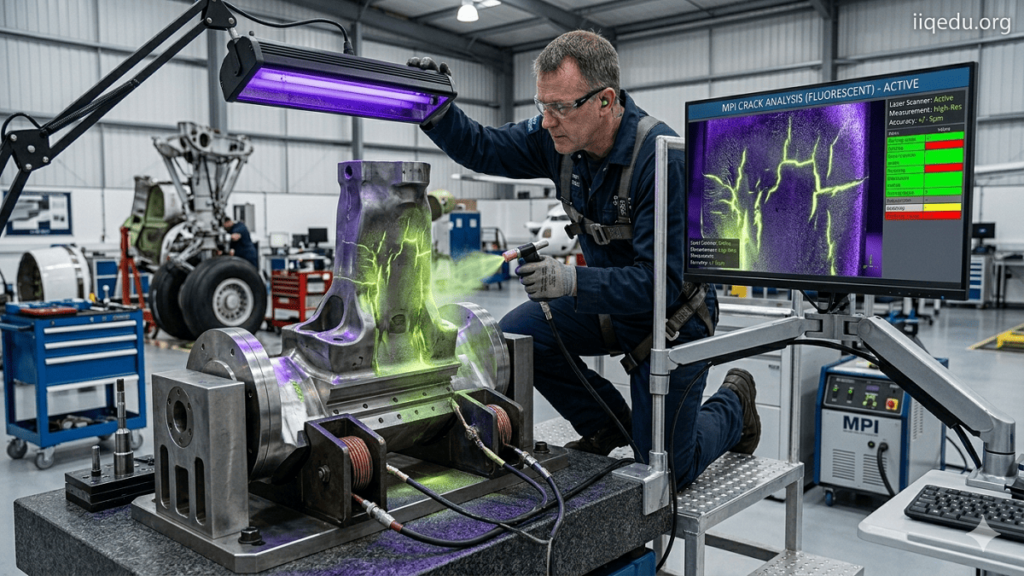
Who is Magnetic Particle Inspection required?
Magnetic Particle Inspection (MPI) is required by industries and organizations where structural integrity and safety of ferromagnetic components are critical. It is especially mandated for parts and systems where failure could result in injury, operational downtime, environmental hazards, or significant financial loss.
Industries That Require MPI
- Aerospace Industry
- MPI is used to inspect aircraft components like landing gear, engine parts, and structural airframe components.
- Regulatory authorities such as the Federal Aviation Administration (FAA) and European Union Aviation Safety Agency (EASA) often require MPI as part of routine maintenance and certification procedures.
- Automotive Industry
- Critical automotive components, such as crankshafts, gears, axles, and suspension parts, undergo MPI to detect fatigue cracks or manufacturing defects that could lead to mechanical failure.
- Oil & Gas and Petrochemical Industries
- Pressure vessels, pipelines, storage tanks, and valves made from ferromagnetic materials are routinely inspected using MPI to prevent leaks, explosions, or environmental hazards.
- Power Generation
- Turbine shafts, generator components, and structural steel in nuclear and thermal power plants are inspected to ensure reliability and prevent catastrophic failures.
- Construction and Heavy Machinery
- Bridges, cranes, railways, and structural steel frameworks require MPI to detect cracks, weld defects, or corrosion that could compromise safety.
- Defense and Military Applications
- Armored vehicles, naval vessels, and critical weapon system components undergo MPI for quality control and periodic maintenance.
Who Must Perform MPI?
- MPI must be carried out by trained and certified NDT professionals, typically according to standards set by:
- ASNT (American Society for Nondestructive Testing) – certifications include Level I, II, and III.
- ISO 9712 / EN 473 – internationally recognized certification for NDT personnel.
Certified inspectors are responsible for:
- Selecting the appropriate magnetization technique.
- Choosing the correct type of magnetic particles (dry or wet, fluorescent or non-fluorescent).
- Interpreting the results accurately.
- Maintaining proper documentation for quality control and regulatory compliance.
Regulatory and Standard Requirements
- ASTM E1444 – Standard practice for MPI in quality control and safety-critical components.
- ASME Section V – Required for pressure vessels and piping inspections.
- ISO 9934-1 – Provides general principles for MPI, often cited in international standards for manufacturing and maintenance.
In summary, MPI is required wherever ferromagnetic components are subject to stress, fatigue, or critical service conditions. It is a preventive measure to ensure safety, compliance with regulatory standards, and longevity of equipment.
For reference:
#Magnetic Particle Inspection in Kolkata
When is Magnetic Particle Inspection required?
Magnetic Particle Inspection (MPI) is required whenever there is a need to ensure the integrity, reliability, and safety of ferromagnetic components, particularly when defects could lead to mechanical failure, safety hazards, or operational downtime. The timing of MPI is determined by regulatory standards, manufacturing requirements, and service conditions of the components.
Situations When MPI is Required
- After Manufacturing or Fabrication
- MPI is commonly performed on newly manufactured ferromagnetic components, such as shafts, gears, and structural steel, to detect any surface or near-surface defects introduced during machining, casting, or forging.
- Welded joints in structural components, pressure vessels, and pipelines are also inspected to identify cracks, slag inclusions, or porosity.
- Before Critical Service or Commissioning
- Components that will operate under high stress, high pressure, or high temperature must undergo MPI before being placed into service.
- This is essential in industries like aerospace, nuclear, and petrochemical sectors to ensure no pre-existing defects compromise performance.
- During Preventive Maintenance and In-Service Inspections
- MPI is used as part of routine maintenance programs to detect fatigue cracks, stress corrosion cracks, or wear-induced defects that develop over time.
- For example, aircraft landing gear, turbine shafts, and pipeline welds are periodically inspected to prevent catastrophic failures.
- After Accidents, Overload, or Repairs
- Components subjected to unusual stress, impact, or repair work (such as welding or heat treatment) should be inspected to ensure no hidden defects were introduced.
- This is particularly critical in structural, transport, and energy systems where a failure could have severe consequences.
- When Required by Standards or Regulatory Codes
- MPI is mandated by standards such as:
- ASTM E1444/E1444M – for surface and near-surface defect detection in ferromagnetic materials.
- ASME Section V – for inspection of pressure vessels, boilers, and piping.
- ISO 9934-1 – general principles for MPI in international manufacturing and maintenance practices.
- Regulatory bodies in aerospace (FAA, EASA), energy, and defense sectors require MPI as part of quality assurance and certification procedures.
- MPI is mandated by standards such as:
- Critical Components Subject to Fatigue or Stress
- Components that experience repeated cyclic loading, such as rotors, crankshafts, axles, and structural supports, require MPI to detect incipient cracks before they propagate to failure.
Summary
MPI is required at key stages of a component’s lifecycle: after manufacturing, before commissioning, during preventive maintenance, after repairs or incidents, and whenever regulatory or safety standards mandate inspection. Its purpose is to prevent failures by detecting surface and near-surface discontinuities early, ensuring safety, reliability, and compliance.
References for further reading:
- ASTM E1444 – Magnetic Particle Testing Standard
- ASNT – Overview of Magnetic Particle Inspection
- ISO 9934-1 – Magnetic Particle Testing General Principles
#Magnetic Particle Inspection in Banglore
Where is Magnetic Particle Inspection required?
Magnetic Particle Inspection (MPI) is required in industries, applications, and locations where ferromagnetic components are critical to safety, performance, or structural integrity. It is specifically applied wherever surface or near-surface defects could result in failure under operational stresses.
1. Aerospace Industry
- MPI is used on aircraft components made from ferromagnetic materials, such as:
- Landing gear assemblies
- Engine shafts and rotors
- Structural airframe components
- Both manufacturing quality checks and periodic maintenance inspections require MPI to detect fatigue cracks or micro-fractures that could compromise flight safety.
- Regulatory standards: FAA, EASA, and military specifications often mandate MPI in these applications.
2. Automotive and Transportation
- Critical automotive parts undergo MPI to ensure operational reliability and prevent failures:
- Crankshafts, camshafts, and gears
- Axles and suspension components
- Welded assemblies in heavy vehicles
- In railways, MPI is used to inspect rails, wheelsets, and bogie components for fatigue cracks or defects from repeated loading.
3. Oil, Gas, and Petrochemical Industries
- MPI is required on pressure-containing and safety-critical components:
- Pipelines and pipeline welds
- Pressure vessels, storage tanks, and flanges
- Valves and fittings
- These components operate under high pressure and temperature, so surface or subsurface cracks could result in leaks, explosions, or environmental hazards.
4. Power Generation
- MPI is applied in both conventional and nuclear power plants on components such as:
- Turbine shafts, rotors, and blades
- Generator shafts and bearings
- Structural steel in boilers, heat exchangers, and support frames
- MPI ensures long-term operational reliability and prevents catastrophic failures.
5. Construction and Heavy Machinery
- MPI is required for structural steel and load-bearing components:
- Bridges, cranes, and lifting equipment
- Structural beams and welded joints in high-stress areas
- Mining and earth-moving equipment
- MPI is especially critical for weld inspections, where cracks or inclusions could compromise the integrity of the structure.
6. Defense and Military Applications
- MPI is required to maintain reliability and safety of:
- Armored vehicles, naval vessels, and weapon system components
- Turrets, gun barrels, and structural mounts
- Defects in critical components could have operational or life-threatening consequences, making MPI mandatory in military quality assurance programs.
7. Manufacturing and Quality Assurance
- MPI is performed in factories during production and assembly for:
- Ferromagnetic castings and forgings
- Machined components subject to high stress
- Welded or heat-treated parts before delivery
- MPI ensures compliance with industry standards such as ASTM E1444, ISO 9934, and ASME Section V.
Summary
MPI is required anywhere ferromagnetic materials are used in safety-critical, high-stress, or high-reliability applications. Common locations include:
- Manufacturing plants
- Maintenance workshops and service facilities
- Field installations like pipelines, bridges, and power plants
References for further reading:
- ASTM E1444 – Magnetic Particle Testing Standard
- ASNT – Magnetic Particle Inspection Overview
- ISO 9934-1 – Magnetic Particle Testing General Principles
#Magnetic Particle Inspection in Chennai
How is Magnetic Particle Inspection required?
Magnetic Particle Inspection (MPI) is performed by applying a magnetic field to a ferromagnetic component and using magnetic particles to reveal surface or near-surface defects. The process must follow standardized procedures to ensure reliability, sensitivity, and safety. Here’s a detailed breakdown of how MPI is required and carried out:
1. Determine the Need for MPI
Before inspection, the following must be established:
- Material suitability: MPI only works on ferromagnetic materials like iron, nickel, cobalt, or their alloys.
- Type of defects expected: Cracks, seams, laps, voids, or inclusions.
- Regulatory or standard requirements: ASTM E1444, ASME Section V, ISO 9934.
The inspection type (wet or dry particles, AC or DC magnetization) depends on the component’s geometry, expected defect orientation, and surface conditions.
2. Surface Preparation
- Clean the component thoroughly to remove oil, grease, dirt, paint, or corrosion, which could block the magnetic field or interfere with particle adhesion.
- Surface roughness should be minimized, but in most cases, slightly rough surfaces do not prevent MPI.
3. Magnetization
The component is magnetized to induce a magnetic field, which will leak at defects:
- Direct Current (DC): Produces a steady magnetic field. Best for detecting subsurface defects.
- Alternating Current (AC): The magnetic field concentrates near the surface, making it ideal for surface crack detection.
- Electromagnetic Yoke: Portable device for localized inspection. Suitable for components that cannot be easily connected to a full magnetizing setup.
- Magnetization Methods:
- Longitudinal magnetization: Field applied along the length of the part.
- Circular magnetization: Field applied around the circumference of the part.
4. Application of Magnetic Particles
- Dry powder: Typically used for small or field inspections.
- Wet suspension: Magnetic particles suspended in liquid; often fluorescent for enhanced visibility under UV light.
- Particles are applied while the component is magnetized, so they accumulate at leakage fields caused by defects.
5. Observation and Interpretation
- Examine the surface carefully for particle accumulation.
- Visible indications (lines, clusters, or patterns) reveal defects like cracks, laps, or voids.
- Fluorescent particles under UV light make defect detection faster and more accurate, especially in dimly lit conditions.
6. Demagnetization and Cleaning
- Components may retain residual magnetism after inspection, which could interfere with service or measurement instruments.
- Demagnetization is performed if necessary.
- The surface is cleaned to remove all magnetic particles.
7. Documentation
- The inspection results must be recorded according to standards.
- Critical information includes:
- Component identification
- Inspection method and magnetization technique
- Particle type used
- Location and description of defects
- Inspector’s name and certification level
Standards and Requirements
- ASTM E1444/E1444M – Standard Practice for Magnetic Particle Testing.
- ASME Section V – Requirements for pressure vessel and piping inspections.
- ISO 9934-1 – General principles for MPI.
- Certification: MPI must be performed by a trained and certified inspector (ASNT Level I, II, or III).
Summary
Magnetic Particle Inspection is required to be systematic and standardized: clean the surface, apply a magnetic field, introduce magnetic particles, interpret indications accurately, and document results. The choice of magnetization, particle type, and inspection technique depends on the component geometry, material, expected defect type, and applicable standards.
References for further reading:
- ASTM E1444 Standard – Magnetic Particle Testing
- ASNT – Magnetic Particle Testing Overview
- ISO 9934-1 – Magnetic Particle Testing General Principles
#Magnetic Particle Inspection in Ahemadabad
Case Study of Magnetic Particle Inspection
Background
An international aerospace maintenance organization was contracted to perform scheduled maintenance on a fleet of commercial aircraft. Among the critical components selected for inspection was the landing gear main shock strut — a ferromagnetic steel assembly subject to repetitive cyclic loads during take‑off, landing, and taxi operations. Fatigue cracking in landing gear components is a known risk factor that can lead to in‑flight emergencies if not detected early.
Due to the high safety and regulatory requirements in the aerospace industry, the operator elected to perform Magnetic Particle Inspection (MPI) as part of the routine non‑destructive evaluation (NDE) program, in accordance with ASTM E1444 Standard Practice for Magnetic Particle Testing and applicable aerospace maintenance manuals. This case study illustrates how MPI was applied, the findings, corrective actions, and lessons learned.
Objective
The primary objective of the MPI was to detect surface and near‑surface cracks in the landing gear shock strut assembly that could compromise structural integrity and lead to premature failure under operational stresses. Specific inspection goals included:
- Identification of fatigue cracks originating at high‑stress regions such as fillets and weld transitions.
- Verification of the current service life suitability of the component.
- Documentation of indications for maintenance records and airworthiness compliance.
Inspection Planning and Preparation
Prior to testing, the inspection team undertook the following preparatory steps:
- Materials and Standards Review:
- Confirmation that the shock strut assembly material was ferromagnetic (high‑strength alloy steel).
- Review of relevant inspection standards: ASTM E1444/E1444M for MPI, aerospace maintenance procedures, and FAA airworthiness directives. External reference: ASTM E1444 Standard Practice for Magnetic Particle Testing (https://www.astm.org/e1444‑16.html).
- Training and Certification:
- MPI was assigned to personnel certified to ASNT SNT‑TC‑1A/ISO 9712 Level II standards to ensure competency in procedure execution and indication interpretation.
- Surface Preparation:
- The shock strut was degreased, paint was removed from designated inspection zones, and surfaces were cleaned of contaminants that might interfere with magnetization or particle adherence.
Inspection Procedure
The MPI was conducted using a dual approach to maximize sensitivity for both surface and near‑surface defects:
- Magnetization:
- An electromagnetic yoke was used to apply a longitudinal magnetic field along the length of the strut, concentrating flux at potential crack sites.
- For deeper regions, direct current (DC) magnetization was also used to enhance subsurface sensitivity.
- Application of Magnetic Particles:
- A wet fluorescent magnetic particle suspension was sprayed onto the energized component surfaces. Fluorescent particles under ultraviolet (UV) lighting improve contrast and defect visibility.
- Observation and Interpretation:
- Under UV illumination, inspectors systematically scanned high‑stress regions such as bearing seats, fillet radii, and load‑bearing surfaces.
- Multiple linear indications consistent with fatigue cracking were detected in the strut barrel near a weld transition.
Findings
The inspection revealed the following:
- Primary Indication: A series of linear configurations of magnetic particles became visible under UV light, oriented perpendicular to the principal stress direction, characteristic of fatigue crack initiation.
- Location: Cracks were located adjacent to a high‑stress fillet region in the shock strut barrel, confirming areas prone to fatigue.
- Severity Assessment: Based on standard defect classification criteria, the indications were judged to be significant and required further evaluation.
Corrective Actions
Following detection of fatigue cracks:
- Component Removal: The affected shock strut assembly was removed from service immediately per aerospace maintenance procedures.
- Verification by Complementary Methods: A follow‑up confirmation using ultrasonic testing (UT) and eddy current inspection (ECT) was performed to estimate crack depth and confirm extent.
- Engineering Evaluation: A structural engineering assessment was carried out to determine the potential impact on service life and establish replacement criteria.
- Documentation: Inspection reports, indication maps, and corrective action records were filed per regulatory compliance and maintenance tracking systems.
Outcome
The early detection of fatigue cracks through MPI successfully prevented potential structural failure during subsequent flight operations. The shock strut was replaced, and corrective service life limits were revised for similar components based on the inspection data. The aircraft returned to service with documented compliance to safety standards.
Lessons Learned
- Early Detection Reduces Risk: MPI proved effective in identifying surface and near‑surface fatigue cracks that were not visible through visual inspection alone.
- Preparation and Standards Compliance: Adequate surface preparation, proper magnetizing techniques, and certified personnel were critical for accurate results.
- Combined NDT Approaches: Complementary methods such as UT and ECT enhanced confidence in severity assessment after initial crack detection by MPI.
- Documentation and Traceability: Thorough recordkeeping ensured compliance with aerospace safety standards and facilitated future maintenance planning.
References
- ASTM E1444 / E1444M – Standard Practice for Magnetic Particle Testing, ASTM International (https://www.astm.org/e1444‑16.html)
- ASNT – Magnetic Particle Inspection (MPI) Overview, American Society for Nondestructive Testing (https://www.asnt.org/MajorSiteSections/Technical‑Resources/Methods/Magnetic‑Particle)
- ISO 9934‑1 – Magnetic Particle Testing – General Principles, International Organization for Standardization (https://www.iso.org/standard/61834.html)
#Magnetic Particle Inspection in Pune
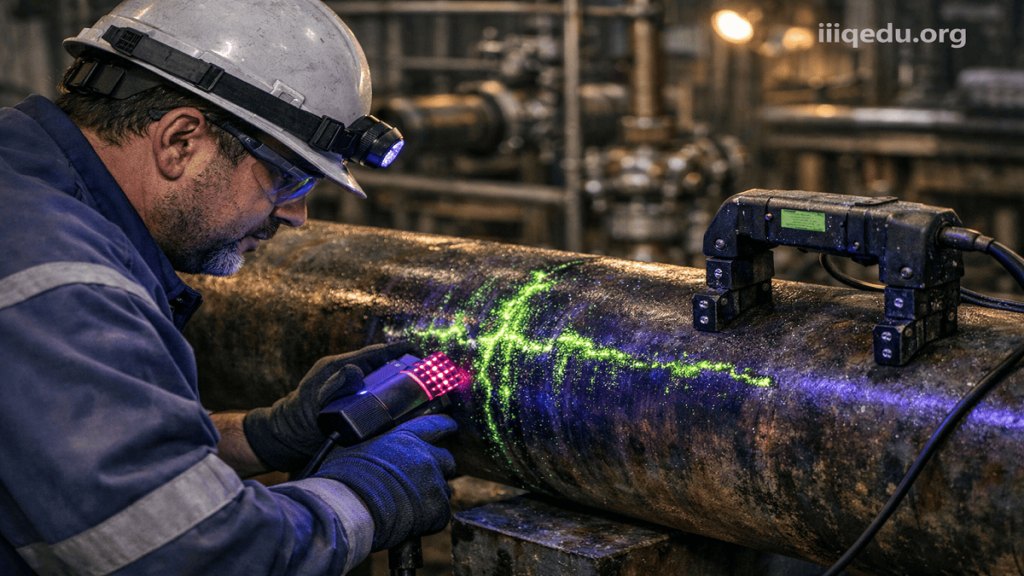
White Paper of Magnetic Particle Inspection
Executive Summary
Magnetic Particle Inspection (MPI) is a widely recognized non‑destructive testing (NDT) method used to detect surface and near‑surface discontinuities in ferromagnetic materials. MPI plays a crucial role in quality assurance, safety compliance, and lifecycle integrity of critical components in industries such as aerospace, automotive, oil and gas, power generation, and infrastructure. This white paper presents the scientific principles, inspection methodology, applications, strengths and limitations, implementation guidelines, standards references, and future outlook for MPI in industrial use.
1. Introduction
The reliability of mechanical systems frequently depends on the structural integrity of ferromagnetic components. Cracks, laps, seams, and inclusions can propagate under repeated loads, leading to fatigue failure and catastrophic results if left undetected. Magnetic Particle Inspection (MPI) is a cost‑effective NDT technique that identifies such discontinuities by exploiting the magnetic characteristics of materials. As a practical, rapid, and sensitive method, MPI is integrated into fabrication, maintenance, and safety programs worldwide.
2. Scientific Principles
MPI operates on the principle that when a ferromagnetic material is magnetized, magnetic flux lines traverse the part’s volume. If a discontinuity such as a crack interrupts these flux lines, a magnetic flux leakage field occurs at the defect. Magnetic particles — iron or iron oxide suspensions — applied to the surface are attracted to these leakage fields, forming visible indications directly over the discontinuity locations.
2.1 Magnetization
The magnetic field required for MPI can be induced by:
- Direct Current (DC) magnetization – produces a unidirectional field, suitable for subsurface defect detection.
- Alternating Current (AC) magnetization – concentrates the magnetic field near the surface, ideal for surface defect detection.
- Electromagnetic yokes, coils, and permanent magnets – used depending on component geometry.
The key to MPI effectiveness is orienting the magnetic field relative to the expected defect orientation, ensuring flux lines intersect potential discontinuity planes.
3. MPI Inspection Procedure
A standardized MPI procedure ensures repeatability and accuracy. Typical steps include:
3.1 Surface Preparation
Removal of surface coatings, oils, dirt, and corrosion is essential to allow magnetic flux penetration and particle adherence.
3.2 Magnetization
The component is magnetized using an appropriate technique selected based on geometry and expected defect orientation.
3.3 Particle Application
Magnetic particles are applied in either:
- Dry powder form
- Wet suspension, often with fluorescent particles viewed under ultraviolet (UV) light to enhance sensitivity.
3.4 Observation and Interpretation
Inspectors observe particle accumulation to identify indications of discontinuities. High contrast and proper lighting conditions improve detection.
3.5 Demagnetization and Cleaning
After inspection, residual magnetism is removed to prevent interference with service performance, and particles are cleaned from the surface.
4. Industrial Applications
MPI is employed in both manufacturing and in‑service environments where ferromagnetic materials are prevalent. Major applications include:
4.1 Aerospace
MPI is used to inspect landing gear components, engine shafts, fasteners, and structural elements for fatigue and stress cracks during production and scheduled maintenance.
4.2 Automotive
Critical components including crankshafts, gears, axles, and suspension parts undergo MPI to detect production defects or service‑induced cracking.
4.3 Oil and Gas
MPI is applied to pipelines, pressure vessels, flanges, and valves to identify weld defects and ensure safe operation under high pressure and temperature.
4.4 Power Generation
Turbines, generator shafts, and structural steel are inspected to prevent failure in power plants, including nuclear facilities where safety margins are stringent.
4.5 Construction and Heavy Machinery
Steel structures, weldments in bridges, hoists, cranes, and lifting equipment are subject to MPI to validate structural integrity.
5. Standards and Regulatory Framework
MPI procedures are governed by international and industry‑specific standards, which define methods, acceptance criteria, and documentation requirements:
- ASTM E1444/E1444M – Standard Practice for Magnetic Particle Testing
Defines MPI procedures, sensitivity levels, and reporting requirements.
Standard reference: https://www.astm.org/e1444-16.html - ASME Section V – Nondestructive Examination
Covers MPI in the context of pressure vessels and piping systems. - ISO 9934‑1 – Magnetic Particle Testing – General Principles
Establishes the general principles applicable to MPI worldwide.
Standard reference: https://www.iso.org/standard/61834.html - ASNT SNT‑TC‑1A / ISO 9712 – Personnel qualification and certification standards for NDT practitioners.
6. Advantages of MPI
MPI offers several benefits:
- High sensitivity to surface and near‑surface defects
- Rapid inspection cycle, facilitating production quality control
- Portability via handheld yokes and mobile systems
- Cost‑effectiveness compared to methods requiring complex equipment
7. Limitations
Despite its utility, MPI has limitations that must be acknowledged:
- Applicable only to ferromagnetic materials
- Does not provide defect depth quantification
- Requires thorough surface preparation
- Effectiveness depends on operator skill and interpretation
8. Personnel and Qualification
The quality of MPI results is directly tied to operator expertise. Qualified personnel should meet certification requirements such as:
- Level I – Performs specific calibrations and tests under supervision
- Level II – Independently conducts inspections and interprets results
- Level III – Develops procedures, interprets standards, and trains personnel
Certifications in accordance with ASNT SNT‑TC‑1A or ISO 9712 are widely recognized.
9. Case Examples
MPI has consistently detected critical defects before failure, such as:
- Fatigue cracks in aircraft landing gear (preventing in‑service failure)
- Weld flaws in high‑pressure piping (avoiding leaks or ruptures)
- Surface cracks in automotive driveline components (ensuring durability)
These case outcomes reinforce MPI’s role in defect detection and lifecycle management.
10. Conclusion
Magnetic Particle Inspection remains a cornerstone NDT method for ferromagnetic materials. By delivering timely and reliable detection of surface and near‑surface discontinuities, MPI supports safety, quality, and compliance across industries. Adherence to international standards, coupled with robust training and systematic procedures, enhances the effectiveness of MPI programs. As engineering materials and inspection technologies evolve, MPI continues to be integrated with complementary methods to ensure comprehensive defect characterization and risk mitigation.
Selected External References
- ASTM E1444 – Magnetic Particle Testing Standard
https://www.astm.org/e1444-16.html - ISO 9934‑1 – Magnetic Particle Testing General Principles
https://www.iso.org/standard/61834.html - American Society for Nondestructive Testing (ASNT) – Magnetic Particle Testing Overview
https://www.asnt.org/MajorSiteSections/Technical-Resources/Methods/Magnetic-Particle
#Magnetic Particle Inspection in Hyderabad
Industry Application of Magnetic Particle Inspection
Magnetic Particle Inspection (MPI) is a widely used non-destructive testing (NDT) method to detect surface and near-surface defects in ferromagnetic materials. Its versatility and sensitivity make it critical across multiple industries where component integrity and safety are paramount. Below is a detailed breakdown of MPI applications by industry, with examples of typical components and use cases.
1. Aerospace Industry
MPI is essential in aerospace due to the high safety requirements and cyclic loading on aircraft components.
Applications:
- Landing gear assemblies: Detects fatigue cracks in struts, axles, and bearings.
- Engine components: Inspects shafts, rotors, and turbine disks for micro-cracks.
- Structural airframe parts: High-stress welded joints, fasteners, and attachment points.
Standards: FAA, EASA, and military specifications require MPI as part of routine maintenance and certification programs.
Reference: ASNT – Magnetic Particle Inspection in Aerospace
2. Automotive Industry
Automotive components undergo high stress and repeated loads, making MPI crucial to prevent premature failure.
Applications:
- Crankshafts and camshafts: Detects machining-induced surface cracks.
- Gears and axles: Ensures integrity under torsional loads.
- Welded chassis components: Detects incomplete welds, laps, or inclusions.
MPI allows for production quality control and service inspection in heavy vehicles, motorsports, and commercial automotive sectors.
3. Oil, Gas, and Petrochemical Industries
In oil and gas, pressure vessels, pipelines, and valves operate under extreme conditions. MPI ensures operational safety and prevents environmental hazards.
Applications:
- Pipeline welds: Detects cracks, laps, and slag inclusions.
- Pressure vessels and storage tanks: Ensures structural integrity in high-pressure environments.
- Valves and fittings: Detects surface defects that may compromise sealing or mechanical strength.
Standards: ASME Section V and API 1104 often mandate MPI for welded components.
Reference: ASTM E1444 – Standard Practice for MPI
4. Power Generation Industry
Turbines, generators, and other rotating machinery components require MPI to prevent costly downtime and catastrophic failure.
Applications:
- Turbine shafts and rotors: Detects fatigue cracks from cyclic loading.
- Generator components: Ensures long-term reliability of high-stress ferromagnetic parts.
- Structural steel in power plants: Welded joints in boilers and heat exchangers.
MPI is often performed during manufacturing, commissioning, and preventive maintenance to maintain operational reliability.
5. Construction and Heavy Machinery
Large-scale structures and machinery rely on MPI for weld integrity and surface crack detection.
Applications:
- Bridges and steel frameworks: Detects cracks at welds and high-stress regions.
- Cranes and hoists: Ensures lifting components are free of defects.
- Mining and earth-moving equipment: Detects fatigue-induced cracks in shafts, gears, and structural members.
MPI in this sector is vital for public safety and machinery lifespan.
6. Defense and Military
Critical military applications demand MPI to ensure mission readiness and personnel safety.
Applications:
- Armored vehicle components: Axles, turrets, and suspension parts.
- Naval vessels: Welded joints in hulls and structural elements.
- Weapon system components: Ensures integrity under operational loads.
MPI helps prevent catastrophic failures in mission-critical equipment and is often mandated by military standards.
7. Manufacturing and Quality Assurance
MPI is routinely used during production and post-fabrication inspection to detect defects introduced during:
- Casting or forging
- Machining and surface finishing
- Welding or heat treatment
MPI ensures compliance with international standards (ASTM, ISO, ASME) and reduces the risk of failure in service.
Summary
Magnetic Particle Inspection is an essential NDT technique across multiple industries wherever ferromagnetic materials are subjected to stress, fatigue, or critical safety conditions. Its speed, sensitivity, and reliability make it particularly suitable for detecting cracks, laps, seams, and inclusions in high-value or high-risk components.
Key References:
- ASTM E1444 – Magnetic Particle Testing Standard
- ASNT – Magnetic Particle Inspection Overview
- ISO 9934-1 – Magnetic Particle Testing General Principles
#Magnetic Particle Inspection in Mumbai
Ask FAQs
What is Magnetic Particle Inspection (MPI)?
Answer: Magnetic Particle Inspection (MPI) is a non-destructive testing (NDT) method used to detect surface and near-surface discontinuities in ferromagnetic materials. MPI works by magnetizing the component and applying magnetic particles, which accumulate at defect locations due to magnetic flux leakage, revealing cracks, laps, seams, or inclusions.
Reference: ASTM E1444 Standard
Which materials can be inspected using MPI?
Answer: MPI is effective only on ferromagnetic materials, such as iron, nickel, cobalt, and their alloys. Non-ferromagnetic materials, such as aluminum, copper, and austenitic stainless steels, cannot be tested using MPI because they do not support magnetic flux required to reveal defects.
Reference: ASNT – MPI Overview
When is MPI required?
Answer: MPI is required during:
Post-manufacturing quality control to detect production defects in castings, forgings, and welds.
Routine maintenance or preventive inspection to detect fatigue cracks in service components.
After repairs or heat treatment to ensure no defects were introduced.
Whenever regulatory standards or industry codes mandate inspection, e.g., aerospace, oil & gas, or pressure vessels.
Reference: ISO 9934-1 – MPI Principles
What are the advantages and limitations of MPI?
Answer:
Advantages:
Highly sensitive to surface and near-surface defects.
Rapid and cost-effective, suitable for production and field inspections.
Portable with handheld yokes and flexible for complex geometries.
Limitations:
Applicable only to ferromagnetic materials.
Cannot measure defect depth accurately.
Requires clean surfaces and skilled personnel to interpret indications.
Reference: ASNT – MPI Methods
Who can perform Magnetic Particle Inspection?
Answer: MPI must be performed by trained and certified personnel, typically following ASNT SNT-TC-1A or ISO 9712 standards. Personnel levels include:
Level I: Performs inspections under supervision.
Level II: Independently conducts inspections and interprets results.
Level III: Develops procedures, trains personnel, and oversees inspection programs.
Reference: ASNT – NDT Personnel Certification
Source: DG E LEARING ADU ACADEMY
Table of Contents
Disclaimer:
The information provided in this document is for educational and informational purposes only. While care has been taken to ensure accuracy, the authors and publishers make no warranties or representations regarding the completeness, reliability, or suitability of the content for any specific application. Users should consult applicable standards, manufacturer guidelines, and qualified professionals before performing Magnetic Particle Inspection or any related procedures.