Predictive Quality Analytics
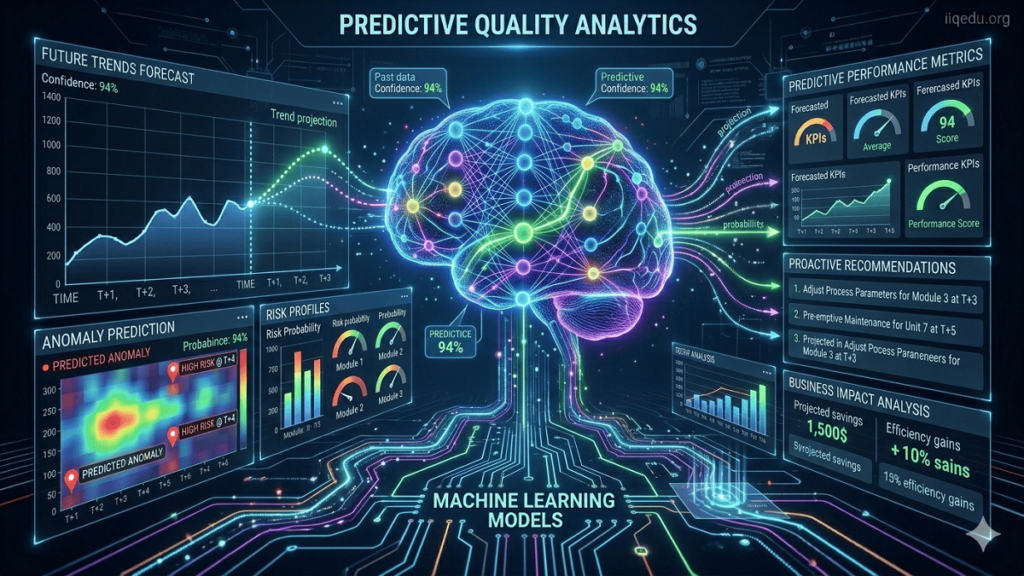
Predictive Quality Analytics (PQA) is the use of data analytics, machine learning, and statistical models to predict potential quality issues in products, services, or processes before they occur. It helps organizations analyze historical and real-time data to identify patterns that indicate future defects or failures.
Purpose of Predictive Quality Analytics
The main goal of Predictive is to prevent quality problems rather than react to them. By forecasting potential issues, organizations can take proactive steps to improve quality and reduce risks.
How Predictive Quality Analytics Works
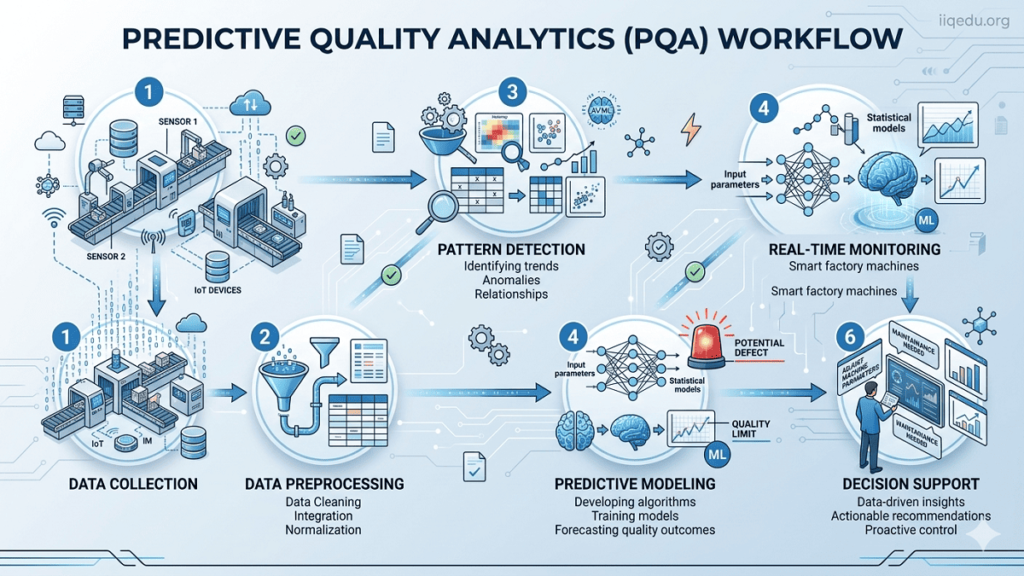
- Data Collection
Data is gathered from production systems, sensors, testing reports, customer feedback, and quality control records. - Data Processing
The collected data is cleaned, organized, and prepared for analysis. - Pattern Detection
Machine learning and statistical models analyze historical data to detect patterns that may lead to defects or quality issues. - Prediction of Quality Issues
The system predicts potential defects, failures, or process deviations. - Decision Support
Managers and engineers use these insights to improve processes and prevent problems.
Technologies Used
Predictive Quality commonly uses:
- Machine Learning
- Data Mining
- Statistical Analysis
- Artificial Intelligence
- Big Data Analytics
Industry Applications
Manufacturing
Predicts equipment failures and product defects.
Software Development
Forecasts software bugs and system performance issues.
Healthcare
Identifies potential quality problems in clinical processes.
Automotive
Predicts vehicle component failures and improves safety.
Supply Chain
Anticipates quality risks in suppliers and logistics.
Benefits
- Early detection of quality issues
- Reduced production defects
- Improved product reliability
- Lower operational costs
- Better decision-making
Simple Example
A manufacturing company analyzes sensor data from machines using predictive analytics. The system predicts when a machine might produce defective products, allowing technicians to fix the issue before defects occur.
What is Predictive Quality Analytics?
Predictive Quality Analytics (PQA) is the use of data analytics, machine learning, and statistical techniques to predict potential quality issues in products, services, or processes before they occur. It analyzes historical and real-time data to identify patterns that indicate possible defects, failures, or performance problems.
The main goal of Predictive Quality is to prevent quality problems rather than detect them after they happen. By forecasting potential issues, organizations can take proactive actions to improve product quality, reduce defects, and optimize operations.
Key Features
- Uses historical and real-time data from production or testing processes
- Applies machine learning and predictive models to detect patterns
- Helps identify risks and quality issues early
- Supports data-driven decision-making
Example
In manufacturing, Predictive Quality can analyze sensor data from machines to predict when a defect might occur in production, allowing technicians to fix the issue before defective products are produced.
In simple terms:
Predictive Quality helps organizations use data and AI to predict and prevent quality problems before they happen.
How is Predictive Quality Analytics required?
Predictive Quality Analytics (PQA) is required by applying data analytics and machine learning techniques to analyze historical and real-time quality data in order to predict potential defects or quality issues before they occur. It helps organizations move from reactive quality control to proactive quality management.
How Predictive Quality Analytics Is Required
1. Data Collection
Data is collected from various sources such as production systems, sensors, quality control reports, testing results, and customer feedback.
2. Data Preparation
The collected data is cleaned, organized, and transformed into a structured format suitable for analysis.
3. Applying Analytical Models
Machine learning algorithms and statistical models are applied to detect patterns and relationships that may indicate future quality problems.
4. Prediction of Quality Issues
The models analyze the data and predict possible defects, failures, or deviations in processes.
5. Monitoring and Alerts
The system continuously monitors operations and provides alerts when there is a high risk of quality issues.
6. Decision-Making and Improvement
Managers and engineers use these predictions to take preventive actions, adjust processes, and improve product quality.
In Simple Terms
Predictive Quality is required by using data analysis and machine learning to monitor processes, detect patterns, and predict quality issues early so that organizations can prevent defects and improve efficiency.
Who is Predictive Quality Analytics required?
Predictive Quality is required by organizations and professionals who need to monitor, predict, and prevent quality issues in products, services, or processes. It is especially useful for teams that deal with large amounts of operational or production data.
Who Requires Predictive Quality Analytics
1. Quality Assurance (QA) Teams
QA teams use predictive analytics to detect potential defects early and improve testing and quality control processes.
2. Manufacturing Companies
Manufacturers use it to predict product defects, monitor production quality, and prevent equipment failures.
3. Production Managers and Engineers
They use predictive insights to optimize production processes and maintain consistent product quality.
4. Data Analysts and Data Scientists
These professionals build and manage predictive models that analyze quality data and generate forecasts.
5. Supply Chain and Operations Managers
They use predictive quality to monitor supplier performance and ensure consistent product standards.
6. Healthcare and Service Organizations
They use predictive analytics to identify potential quality issues in services, operations, or patient care processes.
In Simple Terms
Predictive Quality is required by organizations and professionals responsible for maintaining product or service quality and preventing defects using data-driven insights.
Where is Predictive Quality Analytics required?
Predictive Quality Analytics (PQA) is required in industries and environments where organizations need to monitor quality, detect potential defects early, and prevent failures using data-driven insights. It is especially useful in sectors that generate large amounts of operational or production data.
Where Predictive Quality Analytics Is Required
1. Manufacturing Industry
Used in factories to predict product defects, monitor production processes, and prevent equipment failures.
2. Software Development Industry
Applied to predict software bugs, system failures, and performance issues during development and testing.
3. Healthcare Industry
Used to analyze clinical data and quality reports to identify potential risks in patient care or medical equipment.
4. Automotive Industry
Helps predict component failures, improve vehicle safety, and ensure product quality during production and testing.
5. Supply Chain and Logistics
Used to monitor supplier performance, detect quality issues in materials, and ensure product standards are maintained.
6. Telecommunications and IT Services
Applied to monitor system performance, predict network failures, and maintain service quality.
In Simple Terms
Predictive Quality is required wherever organizations need to analyze large amounts of data to predict and prevent quality problems in products, services, or operational processes.
When is Predictive Quality Analytics required?
Predictive Quality Analytics (PQA) is required when organizations want to identify and prevent potential quality issues before they occur. It is especially useful when large amounts of data are generated and traditional quality control methods are not enough to detect future problems.
When Predictive Quality Analytics Is Required
1. When There Is Large Quality Data
When organizations collect large volumes of data from production systems, sensors, testing reports, or customer feedback.
2. When Early Detection of Defects Is Needed
When companies want to identify possible defects or failures before they affect the final product or service.
3. When Improving Product Quality
When businesses want to continuously improve quality and reduce the number of defective products.
4. When Reducing Operational Costs
When organizations aim to minimize costs caused by rework, recalls, or equipment failures.
5. When Optimizing Production Processes
When companies want to monitor processes and make data-driven improvements to maintain consistent quality.
In Simple Terms
Predictive Quality is required when organizations need to analyze data to predict potential quality issues early and take preventive actions to improve efficiency and product reliability.
Case study of Predictive Quality Analytics
1. Background
A large automotive manufacturing company was facing frequent product defects in engine components during the production process. These defects were often detected only during the final quality inspection stage, which caused production delays, increased costs, and customer dissatisfaction.
To address this issue, the company decided to implement Predictive Quality (PQ) to predict potential defects earlier in the production cycle.
2. Problem
The company faced several quality-related challenges:
- High number of defective engine components
- Late detection of defects during final inspections
- Increased production waste and rework
- Difficulty identifying root causes of recurring quality issues
Traditional quality control methods were reactive, meaning problems were only detected after they occurred.
3. Solution: Implementing Predictive Quality Analytics
The company introduced a predictive analytics system to monitor and analyze production data.
Step 1: Data Collection
Data was collected from multiple sources, including:
- Machine sensors (temperature, vibration, pressure)
- Production process data
- Quality inspection reports
- Historical defect records
Step 2: Data Preparation
The data was cleaned and organized to remove inconsistencies and prepare it for analysis.
Step 3: Predictive Modeling
Machine learning models were developed to identify patterns associated with defective components. The models analyzed historical production data to detect conditions that often led to defects.
Step 4: Real-Time Monitoring
The predictive system monitored production lines in real time and generated alerts when it detected a high probability of defects.
4. Results
After implementing Predictive Quality, the company achieved significant improvements:
- 35% reduction in product defects
- 25% decrease in production rework
- Faster identification of quality issues during manufacturing
- Improved overall product reliability and customer satisfaction
5. Key Benefits
| Benefit | Impact |
|---|---|
| Early defect prediction | Prevents faulty products |
| Reduced waste and rework | Lowers production costs |
| Real-time monitoring | Faster response to issues |
| Data-driven decisions | Improves quality management |
6. Conclusion
This case study demonstrates that Predictive Quality helps organizations move from reactive quality control to proactive quality management. By analyzing production data and predicting potential defects, companies can improve product quality, reduce operational costs, and enhance customer satisfaction.
White paper of Predictive Quality Analytics
Executive Summary
Predictive Quality (PQ) is a data-driven approach that uses advanced analytics, machine learning, and statistical techniques to predict potential quality issues before they occur. Instead of relying only on traditional inspection methods, organizations can use predictive analytics to analyze historical and real-time data to identify patterns that lead to defects or failures.
By implementing Predictive Quality , organizations can reduce defects, improve product reliability, minimize operational costs, and enhance decision-making across production and operational processes.
1. Introduction
Quality management has traditionally relied on reactive methods, such as inspection and defect detection after production. While these methods help identify issues, they do not prevent them from occurring.
Predictive Quality shifts the focus from reactive quality control to proactive quality management. By using data analytics and machine learning, organizations can predict potential defects and take preventive actions before quality issues arise.
2. The Need for Predictive Quality Analytics
Modern industries generate large amounts of operational and production data. Without advanced analytics, it becomes difficult to detect patterns that lead to quality issues.
Key challenges that drive the need for include:
- Increasing product complexity
- Large volumes of production and operational data
- High costs associated with product defects
- Demand for improved reliability and customer satisfaction
helps organizations transform raw data into actionable quality insights.
3. Core Components of Predictive Quality Analytics
Predictive typically involves the following components:
Data Collection
Data is gathered from multiple sources such as:
- Production machines and sensors
- Quality inspection reports
- Testing systems
- Customer feedback
Data Preparation
Collected data is cleaned, organized, and structured to ensure accurate analysis.
Predictive Modeling
Machine learning and statistical models analyze the data to identify patterns associated with defects or failures.
Real-Time Monitoring
Predictive systems continuously monitor processes and detect potential risks.
Decision Support
The insights generated help managers and engineers take proactive actions to improve quality.
4. Technologies Used
Predictive relies on several technologies, including:
- Machine Learning Algorithms
- Artificial Intelligence
- Data Mining Techniques
- Statistical Modeling
- Big Data Analytics
- Internet of Things (IoT) Sensors
These technologies work together to analyze large datasets and generate predictions about future quality issues.
5. Applications Across Industries
Predictive is widely used across various industries.
Manufacturing
Predicts production defects and equipment failures.
Automotive
Improves vehicle component reliability and safety.
Healthcare
Monitors quality in clinical processes and medical equipment.
Software Development
Predicts software bugs and system performance issues.
Supply Chain
Detects potential quality risks in materials and supplier processes.
6. Benefits of Predictive Quality Analytics
| Benefit | Description |
|---|---|
| Early defect detection | Identifies potential problems before production is completed |
| Reduced operational costs | Minimizes waste, rework, and recalls |
| Improved product reliability | Ensures consistent product quality |
| Faster decision-making | Provides real-time quality insights |
| Better customer satisfaction | Reduces product failures and complaints |
7. Challenges and Considerations
Although Predictive provides many advantages, organizations may face some challenges:
- Poor data quality or incomplete datasets
- Complexity in building accurate predictive models
- Integration with existing production systems
- Requirement for skilled data professionals
Addressing these challenges is essential for successful implementation.
8. Future Trends
Predictive is expected to evolve with emerging technologies such as:
- AI-powered predictive maintenance
- Real-time analytics in smart factories
- Integration with Industry 4.0 technologies
- Advanced deep learning models for quality prediction
These advancements will further enhance predictive capabilities and improve quality management processes.
Industry application of Predictive Quality Analytics
Predictive Quality (PQ) is used across many industries to predict defects, improve quality, and optimize operational processes using data analytics and machine learning. By analyzing historical and real-time data, organizations can identify potential quality issues before they occur.
1. Manufacturing Industry
Manufacturing companies use Predictive to monitor production processes and detect potential defects early.
- Predict product defects during production
- Monitor machine performance
- Reduce waste and rework
- Improve product consistency
2. Automotive Industry
Automotive manufacturers apply predictive analytics to improve vehicle safety and component reliability.
- Predict failure of vehicle parts
- Monitor production quality of engines and components
- Improve safety testing processes
3. Healthcare Industry
Healthcare organizations use predictive analytics to maintain quality in medical services and equipment.
- Predict equipment failures
- Monitor patient care quality indicators
- Improve clinical process efficiency
4. Software Development Industry
Predictive helps software companies predict software defects before product release.
- Predict software bugs and errors
- Analyze testing data
- Improve software reliability and performance
5. Telecommunications Industry
Telecom companies use predictive analytics to maintain network quality and prevent service disruptions.
- Predict network failures
- Monitor service quality
- Improve troubleshooting efficiency
6. Supply Chain and Logistics
Predictive analytics helps organizations maintain quality throughout the supply chain.
- Monitor supplier performance
- Predict quality issues in raw materials
- Improve logistics and delivery reliability
Key Takeaway
Predictive is applied in industries where large amounts of operational and production data are available and maintaining high-quality standards is critical. It helps organizations prevent defects, improve efficiency, and make better data-driven decisions.
Ask FAQs
What is Predictive Quality Analytics?
Predictive Quality (PQ) uses data analytics, machine learning, and statistical models to predict potential quality issues in products, services, or processes before they occur. It helps organizations proactively prevent defects and improve quality.
Why is Predictive Quality Analytics important?
It is important because it shifts quality management from reactive inspection to proactive prevention. By predicting defects early, organizations can reduce waste, rework, production costs, and improve overall product reliability.
Who uses Predictive Quality Analytics?
PQA is used by quality assurance teams, production managers, engineers, data analysts, and operations managers in industries such as manufacturing, automotive, healthcare, software development, and supply chain management.
How does Predictive Quality Analytics work?
PQA works by collecting historical and real-time data from production, sensors, and QA reports. Machine learning and statistical models analyze the data to detect patterns, predict defects, and provide actionable insights for preventive measures.
What are the benefits of Predictive Quality Analytics?
Key benefits include:
Early detection of defects
Reduced operational costs and rework
Improved product reliability and consistency
Data-driven decision-making
Higher customer satisfaction
Source: Simplilearn
Table of Contents
Disclaimer:
The information provided about Predictive Quality Analytics is for educational and informational purposes only. Results may vary depending on data quality, tools, and organizational context. Users should evaluate their specific requirements before implementing these methods in real-world environments.