Quality in Sustainable Packaging
Sustainable packaging has become a key priority for businesses aiming to reduce environmental impact while maintaining product integrity. However, using eco-friendly materials introduces unique challenges in quality control, durability, and consumer satisfaction. Ensuring high-quality sustainable packaging is critical for brand reputation, product safety, and regulatory compliance.
What is Sustainable Packaging?
Sustainable packaging refers to materials and design practices that minimize environmental impact. This includes:
- Recyclable materials (paper, cardboard, certain plastics)
- Biodegradable and compostable options
- Reusable or refillable packaging designs
- Reduced packaging weight and volume
The goal is to balance environmental responsibility with functional quality.
Why Quality Matters in Sustainable Packaging
Even eco-friendly packaging must meet standards for:
- Strength & Durability: Packaging must protect the product during shipping and handling.
- Barrier Properties: Some products (like food, cosmetics, or electronics) require protection from moisture, air, or light.
- Consistency: Uniform size, shape, and appearance ensure brand image and smooth logistics.
- Regulatory Compliance: Packaging must meet safety standards and labeling requirements.
Failing to maintain quality can result in damaged products, customer complaints, and higher costs, even if the packaging is environmentally friendly.
Common Quality Challenges
- Material Limitations – Recycled or biodegradable materials may be weaker than traditional plastics.
- Printing & Labeling Issues – Sustainable inks or coatings may affect clarity and durability.
- Supply Chain Variability – Sourcing eco-friendly materials consistently can be difficult.
- Performance Under Stress – Heat, humidity, and weight-bearing may degrade biodegradable materials faster.
Industry Application
Sustainable packaging quality control is crucial across industries:
- Food & Beverage: Ensuring freshness and preventing contamination
- Cosmetics & Personal Care: Maintaining product integrity while using biodegradable packaging
- Consumer Electronics: Protecting devices with strong, sustainable materials
- E-commerce & Retail: Reducing waste while ensuring products arrive intact
Best Practices for Ensuring Quality
- Conduct material testing for strength, durability, and barrier properties
- Use standardized packaging specifications across suppliers
- Implement quality inspections at production, assembly, and pre-shipment stages
- Monitor environmental impact alongside functional performance
- Train employees and suppliers in sustainable material handling
Key Takeaway
Quality in sustainable packaging is about finding the right balance between environmental responsibility and functional performance. Companies that invest in strong quality control systems for eco-friendly materials can protect their products, enhance customer satisfaction, and strengthen brand reputation while contributing to sustainability goals.
What is Quality in Sustainable Packaging?
Sustainable packaging is increasingly important as businesses aim to reduce environmental impact while maintaining product integrity. Quality in sustainable packaging ensures that eco-friendly materials still protect products, meet regulatory standards, and satisfy customers.
What is Sustainable Packaging?
Sustainable packaging uses materials and designs that minimize harm to the environment, such as:
- Recyclable materials like cardboard or certain plastics
- Biodegradable and compostable materials
- Reusable packaging solutions
- Minimalist designs to reduce waste
Why Quality Matters
Even eco-friendly packaging must meet high standards:
- Durability: Protects products during transport and storage
- Barrier Performance: Shields products from moisture, air, or light
- Consistency: Maintains uniformity in size, shape, and branding
- Compliance: Meets safety and labeling regulations
Without proper quality controls, sustainable packaging can fail, leading to damaged goods, customer complaints, and higher costs—even if it’s environmentally friendly.
Common Challenges
- Weaker materials compared to traditional plastics
- Printing or labeling inconsistencies with eco-friendly inks
- Variable supplier quality
- Reduced performance under heat, humidity, or weight stress
Best Practices
- Test materials for strength and durability
- Standardize specifications across suppliers
- Inspect products at production, assembly, and pre-shipment stages
- Monitor both functional performance and environmental impact
- Train teams and suppliers on proper handling of sustainable materials
Key Takeaway
Quality in sustainable packaging is about balancing environmental responsibility with product protection. Businesses that focus on strong quality standards can enhance customer trust, protect products, and contribute to sustainability goals.
Who is Quality in Sustainable Packaging required?
Quality in sustainable packaging is essential for multiple stakeholders throughout the product lifecycle. It is not just a technical requirement—it ensures products are protected, compliant, and environmentally responsible.
1. Manufacturers
- Responsible for designing and producing packaging that is both eco-friendly and durable.
- Ensures products are safely delivered to distributors and customers.
2. Suppliers & Material Providers
- Provide recyclable, biodegradable, or reusable materials that meet quality standards.
- Must maintain consistency and reliability to avoid weak or defective packaging.
3. Quality Control & QA Teams
- Monitor the strength, performance, and compliance of sustainable packaging.
- Detect defects or failures before products leave the factory.
4. Regulatory Authorities
- Ensure packaging meets environmental, safety, and labeling regulations.
- Verify that sustainable claims are legitimate and safe for consumers.
5. Distributors & Retailers
- Handle and store products without damaging eco-friendly packaging.
- Participate in ensuring packaging quality reaches the end consumer intact.
6. Consumers
- Indirectly benefit from high-quality sustainable packaging, as it protects products and supports eco-friendly initiatives.
Key Takeaway
Quality in sustainable packaging is required for everyone involved in the product lifecycle—from material suppliers to manufacturers, distributors, regulators, and ultimately consumers. Strong quality ensures both product protection and environmental responsibility.
When is Quality in Sustainable Packaging required?
Sustainable packaging is required whenever businesses want to balance product protection with environmental responsibility. Its use depends on both regulatory demands and market expectations.
1. Product Launch or Production Stage
- When designing new products, sustainable packaging should be considered from the start to ensure durability and eco-friendliness.
- Early integration prevents redesign costs and ensures proper material selection.
2. Regulatory Compliance
- Required when local or international laws mandate recyclable, biodegradable, or reusable materials.
- Examples include plastic bans, mandatory recycling guidelines, or eco-labeling regulations.
3. Consumer Expectations & Brand Strategy
- Companies adopting green initiatives often require sustainable packaging to meet consumer demand for eco-friendly products.
- Helps build a brand image of responsibility and sustainability.
4. Logistics & Supply Chain Considerations
- Sustainable packaging is needed when products require efficient transport, minimal waste, and safe storage while remaining eco-conscious.
5. Corporate Sustainability Goals
- Required when businesses aim to reduce carbon footprint, minimize waste, or achieve sustainability certifications.
Key Takeaway
Sustainable packaging is required anytime a company wants to protect products while reducing environmental impact, comply with regulations, and meet consumer and corporate sustainability expectations.
Where is Quality in Sustainable Packaging required?
Sustainable packaging is required across multiple stages and locations in the product lifecycle. Its use is not limited to manufacturing—it extends from production to the end consumer.
1. Manufacturing Facilities
- Sustainable packaging is designed, produced, and tested in factories.
- Ensures eco-friendly materials meet quality and durability standards before distribution.
2. Supplier and Material Locations
- Materials such as recycled paper, biodegradable plastics, and compostable films are sourced from suppliers.
- Quality checks at these locations ensure consistency and reliability for production.
3. Warehouses and Distribution Centers
- Sustainable packaging is used during storage and handling to protect products while minimizing waste.
- Packaging should be sturdy enough to survive transport without generating additional environmental impact.
4. Retail Stores and E-Commerce Fulfillment
- Products are presented to customers in eco-friendly packaging that meets both functional and branding standards.
- Packaging must be durable, visually appealing, and environmentally responsible.
5. End Consumer Usage
- Sustainable packaging continues to serve its purpose when consumers reuse, recycle, or compost it.
- Its proper design encourages eco-conscious behavior and reduces waste.
Key Takeaway
Sustainable packaging is required from material sourcing and production to retail and consumer use. Its presence across the supply chain ensures product protection, environmental responsibility, and compliance with regulations.
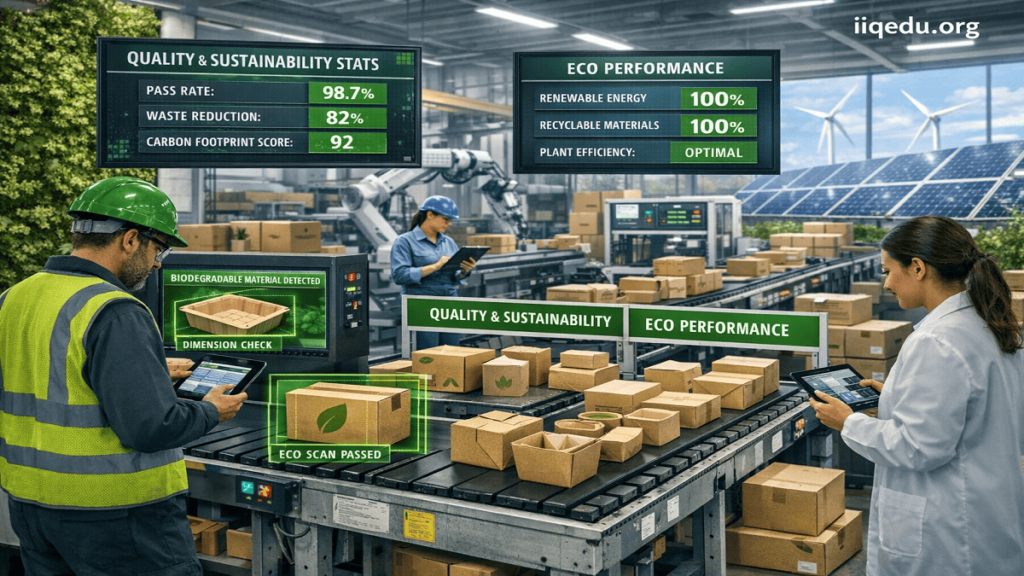
How is Quality in Sustainable Packaging required?
Sustainable packaging is implemented through systematic processes to ensure it is both eco-friendly and functional. It is not just about using recycled materials—it must protect the product, meet standards, and support sustainability goals.
1. Material Selection
- Choose recyclable, biodegradable, or compostable materials suitable for the product type.
- Ensure materials provide strength, barrier properties, Sustainable Packaging, and durability needed for shipping and storage.
2. Design & Engineering
- Packaging should be efficient in size and shape to reduce material usage.
- Design for ease of recycling, reuse, or composting.
- Conduct structural testing to ensure durability under real-world conditions.
3. Quality Control & Testing
- Inspect sustainable packaging during production for strength, consistency, and defect prevention.
- Test performance against moisture, heat, pressure, or weight.
- Ensure labeling, printing, and branding remain clear and durable.
4. Supply Chain Integration
- Train suppliers and logistics teams on proper handling of sustainable materials.
- Monitor packaging performance during transport and storage.
5. Regulatory and Certification Compliance
- Ensure the packaging meets local and international regulations (e.g., recycling laws, eco-labeling standards).
- Obtain certifications if needed, such as FSC, compostability, or recycled content verification.
Key Takeaway
Sustainable packaging is required through careful material selection, Sustainable Packaging, design, testing, and quality monitoring, integrated across the supply chain. When implemented correctly, it protects products, reduces environmental impact, and enhances brand credibility.
Case Study of Quality in Sustainable Packaging
Background
Patagonia, a global outdoor clothing brand, is known for its strong commitment to environmental responsibility. In addition to using recycled and organic materials in its products, Patagonia focuses heavily on high-quality sustainable packaging to reduce environmental impact while ensuring product protection.

The Challenge
Patagonia wanted packaging that was:
- Eco-friendly (recyclable, compostable, or minimal waste)
- Durable enough to protect apparel and outdoor gear during shipping
- Consistent and visually appealing to maintain brand standards
Many recycled or biodegradable materials available in the market were weaker or inconsistent compared to traditional packaging, risking product damage during transportation.
The Quality Approach
- Material Testing
- Patagonia evaluated multiple recycled paper, cardboard, and biodegradable plastic options.
- Materials were tested for strength, tear resistance, and water protection to ensure durability.
- Supplier Management
- Suppliers were audited to ensure they Sustainable Packaging met Patagonia’s strict quality and sustainability standards.
- Only suppliers providing consistent, high-quality sustainable materials were approved.
- Design Optimization
- Packaging was redesigned to reduce material use without compromising protection.
- Custom inserts and reinforced structures were introduced to secure products during transit.
- Pre-Shipment Quality Checks
- QC teams inspected packaging batches for consistency, printing quality, and durability.
- Any defective packaging was rejected before shipment.
Results
- Products arrived in excellent condition, minimizing damage and returns.
- Sustainable packaging reduced the company’s carbon footprint and reliance on virgin materials.
- Patagonia maintained its brand reputation for both quality and environmental responsibility.
- Customer satisfaction improved, as consumers appreciated eco-conscious packaging that still protected products effectively.
Key Takeaways
- Sustainable packaging must meet the same quality standards as traditional packaging—durability and protection cannot be compromised.
- Testing and supplier management are critical to ensure consistency in eco-friendly materials.
- Integration of design, QC, and sustainability goals ensures both environmental and functional success.
- Strong quality systems in sustainable packaging can enhance brand reputation and customer trust while achieving environmental goals.
White Paper of Quality in Sustainable Packaging
Executive Summary
Sustainable packaging is no longer optional—it is a critical element of modern product strategy. Companies must ensure packaging is not only eco-friendly but also meets high-quality standards for protection, durability, and regulatory compliance. This white paper explores the challenges, industry applications, best practices, and benefits of integrating quality into sustainable packaging solutions.
1. Introduction
Sustainable packaging combines environmental responsibility with functional quality. While businesses strive to reduce environmental impact, poor-quality eco-friendly materials can compromise product safety, brand reputation, and customer satisfaction.
This white paper provides a roadmap for implementing, testing, and maintaining high-quality sustainable packaging across industries.
2. Understanding Sustainable Packaging
2.1 Definition
Sustainable packaging uses materials and designs Sustainable Packaging that minimize environmental impact while ensuring the product remains safe, intact, and appealing.
2.2 Key Features
- Recyclable, biodegradable, or compostable materials
- Minimal packaging waste and material usage
- Reusable packaging designs
- Compliance with environmental regulations and certifications
3. The Importance of Quality in Sustainable Packaging
High-quality sustainable packaging ensures:
- Durability: Protects products during shipping and handling
- Barrier Performance: Maintains freshness or prevents contamination
- Consistency: Ensures uniformity in size, shape, and branding
- Regulatory Compliance: Meets safety, labeling, and eco-certification standards
Failure to maintain quality can lead to damaged goods, customer complaints, returns, and increased costs, even if the packaging is eco-friendly.
4. Common Challenges
- Material Limitations: Recycled or biodegradable materials may be weaker than traditional options
- Printing & Labeling Issues: Eco-friendly inks may fade or smudge
- Supply Chain Variability: Material quality may vary between suppliers
- Environmental Performance: Biodegradable materials may degrade under high heat or humidity
5. Industry Applications
Sustainable packaging with quality control is critical across industries:
| Industry | Application | Quality Focus |
|---|---|---|
| Food & Beverage | Packaging food, beverages | Barrier protection, freshness, contamination prevention |
| Cosmetics & Personal Care | Bottles, jars, boxes | Durability, leakage prevention, brand aesthetics |
| Consumer Electronics | Device packaging | Shock absorption, moisture protection, durability |
| E-commerce & Retail | Shipping boxes, envelopes | Strength, lightweight design, recyclability |
| Apparel & Fashion | Bags, wraps, boxes | Tear resistance, consistent appearance, eco-labeling |
6. Best Practices for Quality in Sustainable Packaging
- Material Testing – Strength, barrier performance, environmental degradation
- Supplier Quality Management – Auditing suppliers for consistent eco-friendly materials
- Design Optimization – Minimize material use without compromising protection
- Quality Inspection – Regular checks during production and pre-shipment
- Regulatory Compliance – Ensure certifications like FSC, compostable, or recycled content
- Continuous Improvement – Collect feedback and refine packaging strategies
7. Case Example: Patagonia
Patagonia successfully integrates quality with sustainable packaging by:
- Testing recycled and biodegradable materials
- Standardizing supplier quality
- Redesigning packaging for strength and minimal waste
- Conducting pre-shipment QC inspections
This approach ensures product safety, customer satisfaction, and brand reputation, while meeting sustainability goals.
8. Conclusion
Quality in sustainable packaging is about balancing eco-responsibility with functional performance. Companies that invest in high-quality eco-friendly packaging protect their products, strengthen their brand, satisfy consumers, and contribute to long-term sustainability goals.
Industry Application of Quality in Sustainable Packaging
Ensuring quality in sustainable packaging is critical across multiple industries. High-quality eco-friendly packaging protects products, enhances customer experience, ensures regulatory compliance, and supports brand sustainability goals.
1. Food & Beverage Industry
- Application: Packaging for fresh, frozen, or packaged foods must protect against moisture, air, and contamination.
- Quality Focus: Barrier properties, durability, and safe materials that comply with food safety regulations.
- Example: Biodegradable wrappers for snacks or compostable containers for takeout meals.
2. Cosmetics & Personal Care Industry
- Application: Sustainable packaging for bottles, jars, and boxes.
- Quality Focus: Leak-proof containers, Sustainable Packaging, durability during shipping, and premium appearance.
- Example: Recycled glass jars with secure lids and sustainable inks for branding.
3. Consumer Electronics Industry
- Application: Packaging for smartphones, laptops, and accessories.
- Quality Focus: Shock absorption, moisture protection, and sturdy yet eco-friendly materials.
- Example: Molded pulp or recycled cardboard inserts replacing traditional plastic trays.
4. E-commerce & Retail Industry
- Application: Shipping boxes, envelopes, and product wraps.
- Quality Focus: Lightweight, strong, and recyclable packaging to reduce waste and shipping costs.
- Example: Corrugated boxes made from 100% recycled paper with minimal filler materials.
5. Apparel & Fashion Industry
- Application: Packaging for clothing, shoes, and accessories.
- Quality Focus: Tear resistance, consistent size and branding, and reusable or recyclable materials.
- Example: Reusable cloth bags, recycled paper boxes, or compostable mailers for online orders.
6. Pharmaceutical & Medical Devices
- Application: Packaging for medicines, medical equipment, and health products.
- Quality Focus: Sterility, barrier protection, and safe, compliant materials.
- Example: Biodegradable blister packs or recyclable cartons that maintain product integrity.
Key Takeaway
Quality in sustainable packaging is essential across all industries. It ensures that eco-friendly materials perform effectively while meeting product protection, regulatory, and consumer expectations. Companies that integrate quality into sustainable packaging gain brand trust, reduce waste, and improve customer satisfaction.
#qualityinsustanablepackaginginmumbai #qualityinsustanablepackaginginindia #qualityinsustanablepackaginginvasai #qualityinsustanablepackagingingorakhpur #qualityinsustanablepackaginginpatna #qualityinsustanablepackaginginmaharashtra #qualityinsustanablepackaginginoune #qualityinsustanablepackagingindelhi #qualityinsustanablepackaginginlakhnav #qualityinsustanablepackaginginuttarakhand #bestinstituteinvirar #bestinstituteinmaharashtra #bestinstituteinworld
Ask FAQs
What is quality in sustainable packaging?
Quality in sustainable packaging ensures that eco-friendly materials protect products, maintain durability, meet regulatory standards, and provide a consistent customer experience. It balances environmental responsibility with functional performance
Why is quality important in sustainable packaging?
High-quality sustainable packaging prevents product damage, maintains brand reputation, ensures compliance with safety and environmental regulations, and increases customer satisfaction. Poor-quality eco-friendly packaging can fail even if it is environmentally friendly.
Who is responsible for maintaining quality in sustainable packaging?
Responsibility lies with multiple stakeholders: manufacturers, quality control teams, material suppliers, regulatory authorities, distributors, and retailers. All parties must ensure the packaging meets durability, safety, and sustainability standards.
When should sustainable packaging quality be checked?
Quality should be checked at every stage: material sourcing, production, assembly, pre-shipment inspection, and even during distribution. Continuous monitoring ensures consistent performance and prevents failures.
How can companies ensure high-quality sustainable packaging?
Companies can ensure quality by:
Selecting strong and reliable eco-friendly materials
Conducting thorough testing for durability and barrier performance
Auditing suppliers and production processes
Implementing standardized quality control checks
Complying with regulatory and environmental standards
Source: allaboutsustainability
Table of Contents
Disclaimer:
This content is for informational purposes only and does not constitute professional, legal, or regulatory advice. Businesses should consult relevant guidelines and industry standards when implementing sustainable packaging solutions.