Public Utility Customer Service Quality
Public utility customer service quality refers to how effectively a utility (such as water, electricity, gas, or telecommunications) meets the expectations of its customers through reliable, accessible, and responsive support and service delivery. High‑quality customer service in public utilities is essential for maintaining trust, satisfaction, and long‑term operational resilience, particularly given the critical nature of these services in everyday life.
1. Definition and Significance
Customer service quality encompasses the degree to which a utility aligns its service delivery with customer expectations and strives to exceed them. It is grounded in systematically assessing customer interactions, responsiveness in handling inquiries and issues, and the consistency of service outcomes. In the context of public utilities, this quality directly impacts public perception, regulatory compliance, and operational efficiency given that utilities provide essential services often under public scrutiny.
Quality measurement typically involves both operational and experience‑based indicators, with the former focusing on efficiency metrics and the latter on customer perception and satisfaction levels. Operational metrics may include speed of response and resolution, whereas experience metrics capture how customers perceive service performance relative to their expectations. These dual perspectives offer a comprehensive view of a utility’s service quality and opportunities for improvement.
2. Key Measurement Approaches
A widely recognized model for evaluating service quality is SERVQUAL, developed by Parasuraman et al., which compares customer expectations with actual service performance across five dimensions: reliability, assurance, tangibles, empathy, and responsiveness. SERVQUAL has been adapted across sectors and remains a foundational tool for identifying gaps in service delivery and customer perceptions.
Beyond SERVQUAL, utilities often monitor specific Key Performance Indicators (KPIs) to quantify service quality. Common customer service KPIs include Customer Satisfaction Score (CSAT), Net Promoter Score (NPS), and Customer Effort Score (CES), which respectively measure satisfaction levels, likelihood of recommendation, and ease of interacting with the utility. Operational KPIs such as first contact resolution and average handle time further elucidate service responsiveness and efficiency.
3. Strategic Importance in Utilities
For public utilities, quality customer service enhances customer trust, reduces complaints, and strengthens regulatory standing. Reliable customer support systems and continuous feedback loops allow utilities to adapt operations, tailor communications, and proactively resolve issues before escalation. Incorporating customer feedback into service improvement strategies ensures that utilities not only meet compliance requirements but also build resilience through elevated customer loyalty and satisfaction.
#Public Utility Customer Service Quality in India
What is Public Utility Customer Service Quality?
Public utility customer service quality refers to the effectiveness, efficiency, and responsiveness with which public utilities—such as electricity, water, gas, and telecommunications providers—serve their customers. It measures how well these organizations meet or exceed customer expectations in delivering essential services and resolving service-related issues. Unlike commercial services, public utilities often operate under regulatory oversight, and their services are critical for daily life, making service quality not only a matter of customer satisfaction but also of social responsibility and public trust.
Key Dimensions of Service Quality
The quality of customer service in public utilities is typically assessed through multiple dimensions:
- Reliability: The utility’s ability to provide consistent, uninterrupted service. Customers expect dependable delivery of electricity, water, or gas, and reliability directly influences overall satisfaction.
- Responsiveness: The speed and efficiency with which the utility addresses inquiries, complaints, and service disruptions. Timely responses prevent escalation and enhance trust.
- Assurance: The knowledge, competence, and courtesy of utility personnel in instilling confidence that services are delivered safely and correctly.
- Empathy: Personalized attention and understanding of customer concerns, reflecting the utility’s commitment to addressing unique needs.
- Tangibles: Physical facilities, communication channels, billing systems, and digital interfaces that contribute to customer convenience and perception of professionalism.
These dimensions are often measured using frameworks like the SERVQUAL model, which compares customer expectations with actual service delivery to identify gaps. Additionally, utilities monitor Key Performance Indicators (KPIs) such as Customer Satisfaction Score (CSAT), Net Promoter Score (NPS), and average response times to ensure continuous improvement. (en.wikipedia.org)
Importance of High-Quality Service
High-quality customer service in public utilities fosters customer trust, reduces complaints, and improves operational efficiency. It also enhances regulatory compliance and public reputation, particularly in situations where service interruptions or billing errors occur. Utilities that prioritize service quality often implement feedback mechanisms, staff training, and technological solutions to enhance responsiveness and customer experience, ultimately building long-term loyalty and community goodwill.
For further reading on best practices in public utility customer service quality, IBM provides insights on service metrics and continuous improvement strategies: IBM Customer Service Metrics.
#Public Utility Customer Service Quality in Delhi

Who is Public Utility Customer Service Quality required?
Public utility customer service quality is essential for multiple stakeholders, each of whom relies on utilities to deliver reliable, efficient, and responsive services. The requirement for high-quality service extends beyond just the customers and encompasses regulatory, operational, and societal considerations.
1. Customers
The primary beneficiaries of high-quality customer service in public utilities are the end-users—households, businesses, and institutions. Customers require dependable service delivery, timely communication regarding outages or billing issues, and efficient problem resolution. A failure to meet these expectations can result in dissatisfaction, complaints, or even safety hazards, particularly in sectors like electricity, water, or gas. Maintaining high-quality service ensures customer trust and loyalty while enhancing overall user experience. (ibm.com)
2. Regulatory Authorities
Public utilities are typically governed by government agencies or independent regulators that establish service standards, safety requirements, and performance benchmarks. Regulators require utilities to maintain a high standard of customer service to protect consumers’ rights, ensure equitable access to essential services, and enforce compliance with legal and operational guidelines. Utilities that fail to meet service standards may face penalties, fines, or reputational damage.
3. Utility Management and Employees
High-quality customer service is critical internally for utility management and employees. It streamlines operations, reduces repeat complaints, and optimizes resource allocation. Efficient customer service systems enable staff to handle inquiries and issues promptly, decreasing operational stress and increasing workforce productivity.
4. Community and Society at Large
Public utilities provide essential services that impact public health, safety, and overall quality of life. Reliable service and responsive customer support are necessary for societal stability and economic continuity. Communities depend on utilities to manage emergencies, outages, or environmental risks effectively, making service quality a societal necessity rather than merely a business objective.
Conclusion
Public utility customer service quality is required by customers, regulatory authorities, utility management, employees, and society as a whole. It ensures satisfaction, compliance, operational efficiency, and public trust. By prioritizing service quality, utilities strengthen their reputation, meet regulatory standards, and contribute to community well-being.
#Public Utility Customer Service Quality in Kolkata
When is Public Utility Customer Service Quality required?
Public utility customer service quality is required at all times, but its importance becomes especially critical during specific scenarios where the reliability, responsiveness, and effectiveness of services directly affect customers, regulatory compliance, and societal well-being.
1. During Routine Operations
Even under normal circumstances, public utilities—such as electricity, water, gas, or telecommunications providers—must maintain high-quality customer service. Routine billing inquiries, account updates, service installations, or maintenance requests require efficient and accurate handling to ensure customer satisfaction and operational efficiency. Consistent quality during routine operations builds trust and reduces friction between the utility and its users. (ibm.com)
2. During Service Interruptions or Emergencies
Service outages, technical failures, or natural disasters make high-quality customer service essential. Customers rely on timely communication, rapid response, and clear guidance to manage the impact of these disruptions. Utilities must provide accurate information, estimate resolution times, and coordinate with emergency services when necessary. Quality service during these periods mitigates risks, prevents panic, and demonstrates the utility’s commitment to reliability and public safety.
3. When Regulatory Compliance Is Required
Public utilities operate under strict regulatory frameworks that mandate minimum service standards, reporting obligations, and response protocols. High-quality customer service ensures compliance with these requirements, reducing the risk of penalties or legal consequences. For example, timely resolution of billing disputes or outage notifications may be a regulatory requirement, making service quality non-negotiable. (en.wikipedia.org)
4. During Customer Feedback and Continuous Improvement Processes
Customer service quality is also crucial when collecting feedback or addressing complaints. Utilities use this information to improve operations, train staff, and implement technology solutions. Responding effectively to feedback reinforces customer trust, strengthens loyalty, and helps the utility adapt proactively to changing needs.
Conclusion
Public utility customer service quality is required continuously but is particularly critical during routine interactions, service interruptions, regulatory compliance obligations, and feedback processes. Ensuring consistent, reliable, and responsive service strengthens trust, supports operational efficiency, and upholds public confidence.
For more guidance on measuring and improving utility customer service, refer to IBM’s overview of key service metrics: IBM Customer Service Metrics.
#Public Utility Customer Service Quality in Pune
Where is Public Utility Customer Service Quality required?
Public utility customer service quality is required wherever essential public services are delivered and accessed. Because utilities—such as electricity, water, gas, and telecommunications—impact daily life, service quality must be maintained across all points of interaction between the utility and its stakeholders.
1. Customer Interaction Points
High-quality customer service is critical wherever customers interact with the utility, including:
- Call centers and online support portals: These channels handle inquiries, complaints, and emergency reports, requiring timely and accurate responses.
- Service centers and offices: In-person interactions for account management, bill payment, and technical assistance must demonstrate professionalism, empathy, and efficiency.
- Digital platforms and mobile applications: Websites, apps, and chatbots must provide seamless navigation, easy access to services, and prompt resolution of issues.
These touchpoints directly affect customer satisfaction, loyalty, and perception of the utility’s reliability. (ibm.com)
2. Service Delivery Locations
Service quality extends beyond communication channels to the physical delivery of utilities:
- Residential and commercial properties: Timely installation, maintenance, and repair of water, electricity, or gas connections are essential to prevent disruptions.
- Public infrastructure: Utilities that supply street lighting, traffic signals, or municipal water systems must maintain high service standards to ensure public safety and operational efficiency.
3. Regulatory and Monitoring Environments
Customer service quality is also required in contexts involving oversight and compliance:
- Regulatory reporting: Utilities must provide accurate information about outages, customer complaints, and resolution times to meet government or regulatory standards.
- Audits and inspections: Transparent reporting and adherence to service quality standards are essential during evaluations by regulatory authorities. (en.wikipedia.org)
4. Community and Emergency Contexts
In communities, especially during emergencies such as storms, natural disasters, or major outages, high-quality service is crucial. Rapid response, effective communication, and problem resolution help protect public safety and minimize disruption.
Conclusion
Public utility customer service quality is required across all interaction points, service delivery locations, regulatory environments, and community contexts. Maintaining high standards at every touchpoint ensures operational efficiency, customer satisfaction, regulatory compliance, and societal well-being.
Further guidance on utility service quality metrics can be found here: IBM Customer Service Metrics.
#Public Utility Customer Service Quality in Ahemdabad
How is Public Utility Customer Service Qualityrequired?
Public utility customer service quality is required through structured processes, standards, and practices designed to ensure that utilities consistently meet customer expectations, comply with regulations, and deliver reliable services. The “how” involves the implementation of service frameworks, performance monitoring, and continuous improvement mechanisms.
1. Establishing Standards and Policies
Utilities are required to define clear service standards and policies that govern customer interactions, service delivery, and problem resolution. These standards often include response times for inquiries, outage management procedures, billing accuracy, and safety protocols. Regulatory authorities frequently mandate these standards to ensure public accountability and uniformity across service providers. (en.wikipedia.org)
2. Implementing Customer Service Systems
High-quality service is achieved by deploying systems that facilitate effective communication and service management:
- Customer Relationship Management (CRM) systems: Track interactions, complaints, service requests, and resolutions to ensure consistency and accountability.
- Digital platforms and self-service portals: Allow customers to access account information, report issues, and track service progress efficiently.
- Call centers and support teams: Staffed and trained to handle inquiries and emergencies professionally and promptly.
These systems ensure that service delivery is organized, transparent, and measurable.
3. Monitoring and Measuring Performance
Utilities are required to monitor service quality through metrics and key performance indicators (KPIs). Common measures include:
- Customer Satisfaction Score (CSAT): Evaluates overall customer satisfaction.
- Net Promoter Score (NPS): Measures the likelihood of customers recommending the utility.
- First Contact Resolution (FCR): Tracks whether issues are resolved in the first interaction.
- Response and Resolution Times: Assesses the speed of addressing customer concerns. (ibm.com)
4. Continuous Improvement and Feedback Integration
Utilities are required to incorporate customer feedback into operational improvements. Surveys, complaint logs, and performance audits provide insights into service gaps. By analyzing this data, utilities can adjust processes, train personnel, and enhance technology systems to improve service quality over time.
5. Compliance and Accountability
Regulatory oversight ensures that utilities maintain required service levels. Utilities demonstrate compliance by documenting processes, reporting metrics, and addressing customer complaints systematically. Non-compliance can result in fines, penalties, or reputational damage.
Conclusion
Public utility customer service quality is required through clearly defined standards, effective systems, performance monitoring, feedback integration, and regulatory compliance. By implementing these measures, utilities ensure reliable service, customer satisfaction, and public trust.
For more information on improving customer service in utilities, see: IBM Customer Service Metrics.
#Public Utility Customer Service Quality in Banglore
Case Study of Public Utility Customer Service Quality
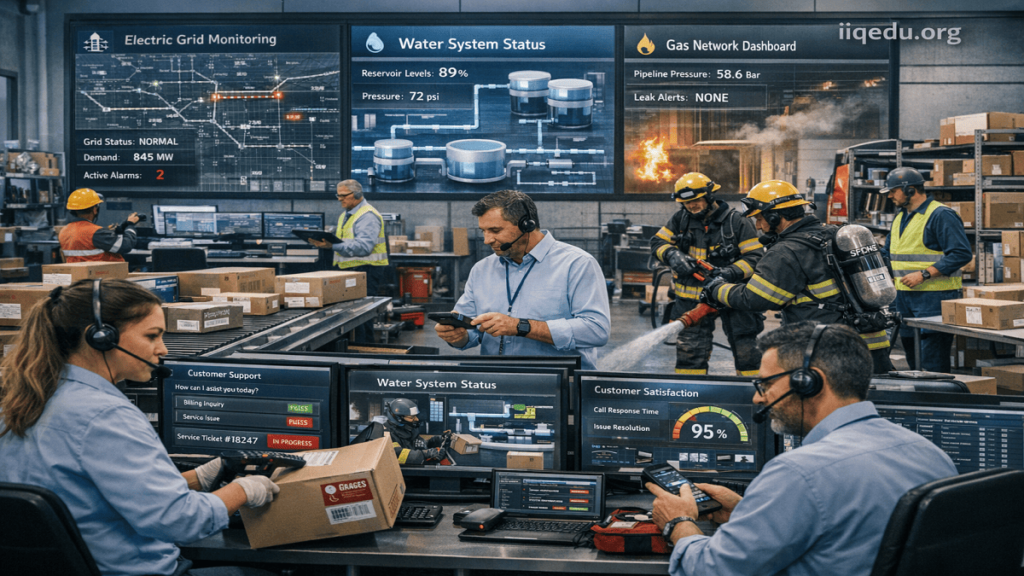
A well‑documented case highlighting the importance and impact of customer service quality in a public utility setting examines the Dubai Electricity and Water Authority (DEWA). In this study, researchers applied the SERVQUAL model to assess gaps between customer expectations and actual service delivery in a large public utility organization. The findings revealed that DEWA customers perceived significant gaps between expected and received service quality, particularly in aspects such as tangible service elements, reliability, responsiveness.
Another illustrative case involves a major utility company in the United States that sought to transform its customer care operations amid rising customer complaints and operational costs. The utility partnered with an external service provider to overhaul its customer care processes. By implementing comprehensive quality management practices—including defining clear service level agreements, standardizing communication processes, and using Lean and Six Sigma principles—the utility reduced its backlog of service issues significantly and cut customer complaints by approximately 80 percent within one year. These improvements were achieved while also optimizing billing exception handling and training customer service representatives. This case underscores that robust service quality initiatives can yield simultaneous gains in customer experience and operational efficiency.
In a third example, a national utility company commissioned research to understand customer satisfaction throughout different stages of customer interaction, including new service requests, service calls, and account inquiries. Survey results helped segment customers based on specific needs and expectations, which allowed the utility to design targeted service improvements. After piloting strategic changes—such as tailored support levels for different customer segments and systematic performance evaluations—improvements were scaled across the organization, enhancing satisfaction ratings and loyalty.
Collectively, these case studies demonstrate that public utility customer service quality improvements are most effective when they incorporate systematic measurement of customer expectations, targeted operational changes, and continuous performance monitoring. Investments in reliable service delivery, tailored communication, and quality management methodologies like SERVQUAL can significantly improve customer satisfaction and organizational performance.
#Public Utility Customer Service Quality in Chennai
White Paper of Public Utility Customer Service Quality
Executive Summary
Public utility customer service quality is a strategic imperative for utility providers responsible for critical services such as electricity, water, gas, and telecommunications. High‑quality customer service ensures operational reliability, regulatory compliance, and public trust. This white paper outlines key concepts, measurement frameworks, implementation strategies, and best practices that utilities should adopt to elevate customer service quality and strengthen stakeholder relations.
Introduction
Public utilities operate in a complex environment where service disruptions have immediate and widespread consequences. Unlike competitive commercial sectors, utilities often serve captive markets regulated by government bodies. Therefore, customer service quality must be systematically designed, measured, and improved to ensure that utilities meet customer expectations and regulatory requirements concurrently.
Defining Service Quality in Utilities
Customer service quality in utilities extends beyond issue resolution to encompass responsiveness, accessibility, reliability, empathy, and communication clarity. The SERVQUAL model, widely used across industries, measures service quality by comparing customer expectations with actual service performance across dimensions such as tangibles, reliability, responsiveness, assurance, and empathy. This model provides a diagnostic framework to identify service gaps. (SERVQUAL Overview)
Key Performance Indicators (KPIs)
Utilities must adopt quantitative and qualitative KPIs to monitor service quality effectively:
- Customer Satisfaction Score (CSAT): Measures satisfaction after specific interactions or transactions.
- Net Promoter Score (NPS): Assesses customers’ likelihood of recommending the utility.
- First Contact Resolution (FCR): Tracks the percentage of issues resolved on first contact.
- Average Response and Resolution Times: Indicates how quickly customer inquiries and service disruptions are addressed. These metrics help utilities prioritize resources and refine customer support processes. (Customer Service KPIs)
Implementation Strategies
To embed service quality in utility operations, providers should:
- Establish Clear Service Standards: Codify expectations for response times, communication protocols, and escalation procedures.
- Leverage Technology: Deploy CRM systems, mobile apps, and self‑service portals to streamline interactions and reduce friction.
- Train and Empower Staff: Provide frontline teams with skills and authority to resolve issues efficiently and empathetically.
- Integrate Feedback Mechanisms: Use surveys and complaint data to drive continuous improvement cycles.
Conclusion
High‑quality customer service is essential for public utilities to maintain regulatory compliance, operational efficiency, and customer trust. By implementing structured measurement frameworks, defining clear service standards, and embracing continuous improvement, utilities can transform customer service from a compliance obligation into a strategic differentiator.
#Public Utility Customer Service Quality in Hyderabad
Industry Application of Public Utility Customer Service Quality
Public utility customer service quality has a broad and critical application across industries that provide essential services such as electricity, water, gas, and telecommunications. In these sectors, service quality is not only a driver of customer satisfaction but also a regulatory requirement and a determinant of operational efficiency.
1. Electricity and Energy Utilities
In electricity distribution and generation, customer service quality ensures timely response to outages, accurate billing, and proactive communication during emergencies. Energy providers implement advanced customer service technologies, including online outage reporting tools, mobile apps, and AI-driven chatbots, to facilitate real-time issue resolution. Utilities such as the Singapore Power Group have successfully applied service quality frameworks to improve reliability and customer satisfaction while ensuring compliance with energy regulatory standards. (singaporepower.com)
2. Water and Waste Management Utilities
Water utilities rely heavily on customer service quality to manage billing, leakage reports, and maintenance requests. Quality service frameworks enable utilities to quickly respond to contamination issues, pipeline failures, and service interruptions. Organizations such as Thames Water in the United Kingdom use structured performance metrics like response time and resolution rate to enhance customer trust and operational reliability. (thameswater.co.uk)
3. Gas Utilities
Gas providers focus on service quality in areas such as emergency response, safety compliance, and account management. Customer service quality ensures rapid handling of gas leaks, billing disputes, and safety inquiries. Implementing performance measurement systems, training frontline staff, and integrating digital support platforms are common industry practices to maintain high service standards.
4. Telecommunications Utilities
Telecom companies are increasingly considered public utilities due to their critical role in communication infrastructure. Service quality in this sector involves network reliability, customer support responsiveness, and transparency in billing. Providers like AT&T and Verizon utilize customer satisfaction metrics, automated support systems, and multi-channel communication strategies to enhance customer experience and loyalty. (att.com)
5. Cross-Industry Best Practices
Across all public utility industries, common applications of customer service quality include:
- Establishing service standards and KPIs (CSAT, NPS, FCR).
- Using CRM systems to track and resolve customer inquiries.
- Implementing digital self-service platforms.
- Continuous staff training and empowerment.
- Monitoring and analyzing customer feedback to guide operational improvements.
Conclusion
The application of customer service quality in public utilities directly affects reliability, regulatory compliance, and customer satisfaction. By adopting structured frameworks and technology-enabled solutions, utilities across industries can maintain high service standards, reduce complaints, and foster public trust.
For additional insights, IBM’s guide on customer service metrics provides industry-specific strategies: IBM Customer Service Metrics.
#Public Utility Customer Service Quality in Mumbai
Ask FAQs
What is public utility customer service quality?
Public utility customer service quality refers to how effectively a utility provider—such as electricity, water, gas, or telecommunications—meets customer expectations in delivering services. It encompasses responsiveness, reliability, communication clarity, empathy, and the efficiency of issue resolution. High-quality service ensures customer satisfaction, operational efficiency, and regulatory compliance. (ibm.com)
Why is customer service quality important for public utilities?
Customer service quality is vital because utilities provide essential services that impact daily life. High-quality service builds trust, reduces complaints, improves operational efficiency, and ensures compliance with government regulations. It also enhances public perception and loyalty, which is especially important during service disruptions or emergencies.
How is customer service quality measured in utilities?
Utilities measure service quality using both quantitative and qualitative metrics. Common indicators include:
Customer Satisfaction Score (CSAT)
Net Promoter Score (NPS)
First Contact Resolution (FCR)
Average Response and Resolution Times
Models like SERVQUAL are often used to compare customer expectations with actual service delivery. (en.wikipedia.org)
Who requires high-quality customer service in utilities?
High-quality service is required by multiple stakeholders, including:
Customers, who rely on timely and accurate service
Regulatory authorities, who enforce service standards
Utility management and staff, for operational efficiency
Communities and society, to ensure safety and continuity of essential services
How can utilities improve their customer service quality?
Utilities can enhance service quality through:
Clear service standards and protocols
Training and empowering staff for effective problem resolution
Implementing digital solutions such as CRM systems and self-service portals
Monitoring KPIs and customer feedback for continuous improvement
Proactively communicating with customers during outages or emergencies (ibm.com)
Source: Convey
Table of Contents
Disclaimer
The information provided in this content is for general informational and educational purposes only. While every effort has been made to ensure accuracy, it does not constitute professional, legal, or regulatory advice. Users should verify details independently and consult relevant authorities or experts before making decisions based on this content. The author and publisher are not responsible for any actions taken based on the information provided.