Robotics & Automation Quality
Definition
Robotics & Automation Quality refers to the structured processes, standards, and quality assurance practices applied to the design, development, deployment, and maintenance of robotic and automated systems. It ensures that these systems perform reliably, safely, and efficiently while meeting regulatory, operational, and performance requirements.
- Robotics Quality: Focuses on the mechanical, electrical, and software aspects of robots, ensuring precision, repeatability, and safety.
- Automation Quality: Ensures automated workflows and processes deliver consistent, error-free outcomes while maximizing productivity.
References:
Importance
High-quality robotics and automation systems are critical because:
- They reduce operational errors and increase efficiency.
- Ensure safety in human-robot collaboration (HRC).
- Enhance productivity and reduce costs.
- Ensure regulatory compliance in industries such as automotive, electronics, pharmaceuticals, and logistics.
- Maintain reliability and uptime in industrial processes.
Key Components of Robotics & Automation Quality
- Design Validation
- Ensuring robots meet intended functionality before deployment.
- Software Quality Assurance
- Testing control algorithms, AI modules, and embedded software for reliability and security.
- Hardware Quality Checks
- Precision in sensors, actuators, and mechanical systems.
- Process Standardization
- Standard operating procedures (SOPs) and maintenance schedules for automated workflows.
- Compliance and Certification
- Meeting ISO standards (ISO 10218, ISO 13482), industry safety regulations, and local labor laws.
Applications
- Manufacturing & Assembly Lines
Ensures robotic arms, conveyor systems, and automated production lines operate consistently. - Logistics & Warehousing
Quality frameworks monitor autonomous guided vehicles (AGVs) and sorting robots. - Healthcare & Surgery
Robotic surgical systems must meet high safety and precision standards. - Agriculture
Automated drones and harvesting robots require reliability for consistent crop yield. - Automotive Industry
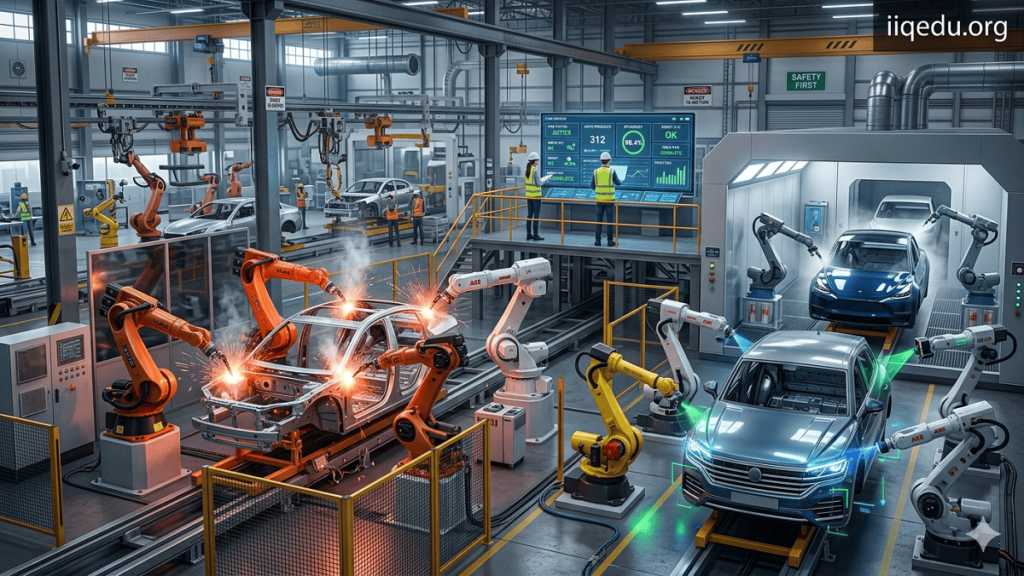
Robotic painting, welding, and assembly require precise calibration and quality assurance.
Integration with Quality Frameworks
- ISO 9001 / ISO 13485: Standardizes QA processes for industrial and medical robots.
- Six Sigma / Lean Manufacturing: Reduces defects and improves operational efficiency.
- Continuous Monitoring & Predictive Maintenance: Uses IoT and analytics to anticipate failures and maintain uptime.
References:
Conclusion
Robotics & Automation Quality ensures safe, reliable, and efficient operation of automated systems across industries. By combining rigorous testing, compliance with international standards, and continuous process improvement, organizations can maximize productivity, minimize errors, and maintain trust in automated systems.
#Robotics & Automation Quality required in Chennai
What is Robotics & Automation Quality?
Robotics & Automation Quality refers to the systematic application of quality standards, practices, and assessments to robotic systems and automated processes to ensure they operate reliably, efficiently, and safely. It encompasses both hardware and software quality in robotics, as well as the performance and consistency of automated workflows.
Key Aspects Include:
- Design Quality: Ensuring robots and automation systems meet intended functional requirements and design specifications.
- Operational Reliability: Maintaining consistent performance over time, minimizing errors, and avoiding system failures.
- Safety Compliance: Ensuring robotic systems operate safely alongside humans and meet regulatory standards such as ISO 10218 (industrial robots) or ISO 13482 (service robots).
- Process Consistency: Standardizing automated workflows to reduce variability, improve efficiency, and maintain predictable outcomes.
- Software & Algorithm Quality: Testing and validating control systems, AI modules, and embedded software to prevent malfunctions or unpredictable behavior.
Purpose:
The primary goal is to maximize efficiency, safety, and trust in robotic and automated systems while minimizing downtime, defects, and operational risks across industries like manufacturing, healthcare, logistics, and agriculture.
References:
#Robotics & Automation Quality required in Ahemdabad
Who is Robotics & Automation Quality required?
Robotics & Automation Quality is required by any organization or individual that relies on robotic systems or automated processes where precision, reliability, safety, and efficiency are critical. Key stakeholders include:
1. Industrial Manufacturers
- Who: Automotive, electronics, aerospace, and consumer goods manufacturers.
- Why: To ensure robotic assembly lines, welding systems, and automated inspection tools perform consistently, maintain product quality, and meet safety standards.
2. Healthcare Providers & Medical Device Companies
- Who: Hospitals, surgical centers, and medical device manufacturers.
- Why: Robotic surgical systems, automated diagnostic equipment, and laboratory automation must comply with stringent safety and accuracy standards (e.g., ISO 13485).
3. Logistics & Supply Chain Operators
- Who: Warehousing, distribution centers, and e-commerce fulfillment companies.
- Why: Autonomous guided vehicles (AGVs), robotic sorting, and inventory automation require high reliability to avoid delays, errors, and operational losses.
4. Agriculture & Food Processing Firms
- Who: Companies using automated harvesting, planting, or food packaging robots.
- Why: To ensure operational precision, reduce crop or product loss, and maintain food safety standards.
5. Research & Development Organizations
- Who: Robotics labs, automation startups, and universities.
- Why: High-quality standards are needed during prototyping, testing, and deployment to validate new robotic solutions and minimize errors.
6. Government & Defense
- Who: Military, space agencies, and public infrastructure organizations.
- Why: Autonomous drones, robotic vehicles, and automated monitoring systems must be reliable, safe, and mission-ready under strict regulations.
Summary:
In essence, any industry or sector deploying robotic or automated systems where safety, efficiency, or accuracy matters requires Robotics & Automation Quality. It ensures systems perform as intended, comply with regulatory standards, and reduce operational risks.
References:
#Robotics & Automation Quality required in Hyderabad

When is Robotics & Automation Quality required?
Robotics & Automation Quality is required whenever robotic systems or automated processes are implemented in environments where accuracy, reliability, safety, or efficiency are critical. Key situations include:
1. During System Design and Development
- Ensuring that the robot or automation system meets functional specifications.
- Validating hardware, software, sensors, and actuators to prevent design flaws.
- Applying quality checks before production or deployment to reduce future defects.
2. During Deployment and Integration
- When robots are integrated into production lines, hospitals, warehouses, or research labs.
- Verifying that automated processes function as intended under real-world conditions.
- Ensuring compatibility with other systems and compliance with operational standards.
3. During Regulatory Compliance and Certification
- When systems must meet industry safety standards like ISO 10218 (industrial robots), ISO 13482 (service robots), or ISO 9001 for process quality.
- Especially critical in sectors such as healthcare, automotive, aerospace, and defense.
4. During Maintenance and Continuous Operation
- To monitor robotic performance over time and prevent downtime.
- Implementing predictive maintenance and periodic inspections to detect wear, software drift, or hardware degradation.
- Ensuring consistency, reliability, and safety throughout the system’s lifecycle.
5. During Process Optimization
- When automated workflows are upgraded or optimized for efficiency.
- Ensuring changes do not introduce errors or compromise quality standards.
- Continuous improvement requires quality validation at each stage.
Summary:
Robotics & Automation Quality is required from conception to operation, including design, deployment, maintenance, regulatory compliance, and process optimization. Applying quality principles throughout the lifecycle ensures safety, reliability, and operational efficiency.
References:
#Robotics & Automation Quality required in Jaipur
Where is Robotics & Automation Quality required?
Robotics & Automation Quality is required in any environment where robotic or automated systems are deployed and operational performance, safety, or reliability is critical. Key locations and settings include:
1. Manufacturing and Assembly Plants
- Where: Automotive factories, electronics assembly lines, heavy machinery production facilities.
- Why: Robotic arms, automated conveyors, welding, and painting robots must perform precisely to maintain product quality and safety standards.
2. Healthcare and Medical Facilities
- Where: Hospitals, surgical centers, and laboratories.
- Why: Surgical robots, automated diagnostic systems, and laboratory automation require high reliability, precision, and compliance with ISO 13485 and other medical standards.
3. Warehousing and Logistics Centers
- Where: E-commerce fulfillment centers, distribution hubs, and large-scale warehouses.
- Why: Autonomous guided vehicles (AGVs), robotic pick-and-place systems, and sorting automation must operate consistently to prevent errors, delays, or product damage.
4. Agriculture and Food Processing Sites
- Where: Automated crop harvesting fields, packaging plants, and greenhouse facilities.
- Why: Robotics ensures precision in planting, harvesting, and processing, minimizing waste and improving yield while maintaining food safety.
5. Research and Development Labs
- Where: Robotics research laboratories, automation prototyping centers, and universities.
- Why: Ensures new robotic solutions are validated, tested, and safe before industrial deployment.
6. Defense, Aerospace, and Government Facilities
- Where: Military bases, space research centers, drone testing sites, and public infrastructure projects.
- Why: Autonomous vehicles, drones, and monitoring robots must be reliable and meet stringent safety and operational standards.
7. Smart Buildings and Industrial IoT Environments
- Where: Factories, smart warehouses, and automated energy management systems.
- Why: Integration of robotics and automation into IoT systems requires quality checks to ensure smooth operation and prevent system failures.
Summary:
Robotics & Automation Quality is required wherever robotic systems or automated workflows are used in production, healthcare, logistics, agriculture, research, defense, or smart environments. Applying quality principles ensures reliable performance, safety, compliance, and operational efficiency across these sectors.
References:
- ISO 10218 – Industrial Robots Safety
- ISO 13482 – Personal Care Robots Safety
- IEEE Robotics & Automation Society
#Robotics & Automation Quality required in Maharashtra
How is Robotics & Automation Quality required?
Robotics & Automation Quality is required through structured processes, standards, and continuous monitoring to ensure robotic systems and automated workflows operate reliably, safely, and efficiently. The approach involves multiple layers:
1. Design and Development Stage
- Requirement Analysis: Define clear functional, safety, and performance requirements for robotic systems or automated processes.
- Design Validation: Apply rigorous testing of mechanical, electrical, and software components before production.
- Simulation and Prototyping: Use digital twins and simulations to detect design flaws early.
2. Software and Algorithm Quality
- Testing and Verification: Validate control algorithms, AI modules, and automation software against expected outcomes.
- Error Mitigation: Implement redundancy and fail-safe mechanisms in software and hardware.
- Cybersecurity Measures: Protect automated systems from hacking, tampering, or unauthorized access.
3. Hardware and Mechanical Quality
- Precision Calibration: Ensure sensors, actuators, and robotic arms meet exact specifications.
- Material Quality Checks: Use certified components and materials to avoid early wear or failures.
- Preventive Maintenance: Establish schedules for inspection, lubrication, and component replacement.
4. Process Quality
- Standard Operating Procedures (SOPs): Define consistent operational workflows for human operators and robotic systems.
- Continuous Monitoring: Use IoT sensors and analytics to track performance metrics in real time.
- Quality Metrics: Track KPIs like defect rates, uptime, error frequency, and process efficiency.
5. Compliance and Certification
- Regulatory Adherence: Ensure robots meet safety standards such as ISO 10218, ISO 13482, and ISO 9001.
- Auditing and Documentation: Maintain records of quality inspections, system calibrations, and process improvements.
- Third-Party Validation: Engage certified labs or agencies to verify compliance and operational safety.
6. Continuous Improvement
- Lean and Six Sigma Integration: Reduce waste and variability in automated processes.
- Feedback Loops: Collect operational data to identify errors, optimize performance, and implement improvements.
- Lifecycle Management: Apply quality standards throughout the robot’s or automation system’s lifecycle, from deployment to decommissioning.
Summary:
Robotics & Automation Quality is required throughout the entire lifecycle of robots and automated systems: from design, software and hardware testing, operational processes, and regulatory compliance to continuous improvement. Structured implementation ensures safe, reliable, and high-performance automation across industries.
References:
- ISO 10218 – Industrial Robots Safety
- ISO 13482 – Personal Care Robots Safety
- IEEE Robotics & Automation Society
#Robotics & Automation Quality required in Patna
Case Study of Robotics & Automation Quality required
Overview
The automotive industry relies heavily on robotic assembly lines for welding, painting, material handling, and quality inspections. Ensuring Robotics & Automation Quality is critical to maintain product reliability, safety, and production efficiency. This case study examines how a leading automotive manufacturer implemented a structured quality framework to optimize robotics and automation.
Company Background
- Industry: Automotive
- Location: Germany
- Operations: Global production plants with multiple robotic assembly lines
- Objective: Improve operational efficiency, reduce defects, and ensure compliance with ISO 10218 standards for industrial robots
Challenges
- Inconsistent Robot Performance: Variations in robotic arm calibration caused defects in welding and assembly.
- Process Downtime: Unexpected robotic failures led to production delays and increased operational costs.
- Regulatory Compliance: Ensuring all robotic systems met international safety standards.
- Integration Complexity: Coordinating robotics with automated inspection and quality control systems was challenging.
Implementation of Robotics & Automation Quality
- Design Validation and Standardization
- Conducted thorough testing of robotic arms and actuators before deployment.
- Standardized robot programming and operational protocols across all assembly lines.
- Software and Algorithm Assurance
- Tested AI-based vision systems for defect detection.
- Implemented predictive error detection algorithms to anticipate and correct deviations in real time.
- Hardware Quality and Maintenance
- Established preventive maintenance schedules for all robotic components.
- Replaced worn-out sensors and calibrated robotic arms regularly to maintain precision.
- Process Optimization
- Applied Lean and Six Sigma principles to minimize variability in automated workflows.
- Integrated real-time monitoring dashboards to track key performance indicators (KPIs) like defect rate, uptime, and cycle time.
- Regulatory Compliance and Certification
- Ensured all systems complied with ISO 10218 for industrial robots and ISO 9001 for quality management.
- Conducted periodic third-party audits to maintain certification standards.
Results
- Defect Rate Reduction: 30% decrease in assembly defects within six months.
- Increased Uptime: Operational downtime reduced by 25% through preventive maintenance and real-time monitoring.
- Enhanced Safety: Compliance with ISO 10218 standards improved worker safety in human-robot collaborative areas.
- Process Efficiency: Cycle times for assembly lines improved by 15%, increasing overall productivity.
Conclusion
This case study demonstrates that applying Robotics & Automation Quality frameworks ensures consistent performance, regulatory compliance, and operational efficiency in industrial settings. By integrating hardware validation, software testing, process standardization, and continuous monitoring, companies can maximize the benefits of robotic automation while minimizing defects, downtime, and risks.
References:
- ISO 10218 – Industrial Robots Safety
- IEEE Robotics & Automation Society
- Lean and Six Sigma in Manufacturing
#Robotics & Automation Quality required in Kolkata
White Paper of Robotics & Automation Quality required
1. Executive Summary
Robotics and automation are transforming industries by increasing efficiency, reducing human error, and enabling high-precision operations. However, the successful deployment of these systems requires robust quality frameworks to ensure safety, reliability, compliance, and performance. This white paper explores the principles, implementation strategies, benefits, and industry applications of Robotics & Automation Quality.
2. Introduction
- Definition of Robotics & Automation Quality: Structured practices and standards applied to robotic systems and automated processes to maintain consistent performance, operational safety, and regulatory compliance.
- Importance: Ensures that automated systems meet operational and safety standards, reduces defects, and optimizes productivity.
- Scope: Focuses on industrial manufacturing, healthcare, logistics, agriculture, and defense sectors.
3. Key Components of Robotics & Automation Quality
- Design and Development Quality
- Validation of hardware and software before deployment.
- Use of simulations, digital twins, and prototypes to reduce design flaws.
- Software and Algorithm Assurance
- Testing control systems, AI modules, and vision systems.
- Implementation of fail-safes, redundancy, and cybersecurity measures.
- Hardware Quality Management
- Precision calibration of sensors and actuators.
- Preventive maintenance schedules to minimize downtime.
- Process Standardization and Optimization
- SOPs for consistent workflow execution.
- Real-time monitoring of KPIs like uptime, defect rate, and throughput.
- Regulatory Compliance and Certification
- Compliance with ISO 10218 (industrial robots), ISO 13482 (service robots), and ISO 9001 (quality management).
- Periodic audits and third-party validation to maintain standards.
- Continuous Improvement
- Integration of Lean, Six Sigma, and predictive analytics.
- Feedback loops to optimize performance and reduce variability.
4. Industry Applications
| Industry | Robotics & Automation Quality Use Cases |
|---|---|
| Automotive Manufacturing | Robotic welding, assembly, painting; ensures precision and safety. |
| Healthcare | Surgical robots, automated labs; maintains accuracy and patient safety. |
| Logistics & Warehousing | AGVs, sorting robots; ensures efficiency and error-free operations. |
| Agriculture | Automated harvesting and planting; ensures yield consistency. |
| Defense & Aerospace | Autonomous vehicles, drones; ensures mission reliability and safety. |
5. Implementation Strategy
- Conduct requirements analysis for systems and processes.
- Integrate design validation and simulation for early detection of issues.
- Deploy real-time monitoring systems with predictive maintenance.
- Standardize processes with SOPs and enforce quality KPIs.
- Ensure compliance with international standards and maintain audit documentation.
- Continuously improve through data-driven feedback and Lean/Six Sigma methods.
6. Benefits of Robotics & Automation Quality
- Improved operational efficiency and productivity.
- Reduced defects and operational errors.
- Increased system reliability and uptime.
- Compliance with safety and regulatory standards.
- Enhanced safety for human workers in collaborative environments.
- Data-driven continuous improvement for long-term sustainability.
7. Challenges and Considerations
- High initial investment for quality systems and monitoring tools.
- Complexity in integrating robotics with existing workflows.
- Continuous software updates and cybersecurity considerations.
- Need for skilled personnel to manage robotics quality frameworks.
8. Future Trends
- Integration of AI and Machine Learning for self-optimizing robotic systems.
- Increased adoption of IoT-enabled predictive maintenance.
- Expansion of robotics in service sectors with high-quality assurance standards.
- Development of global regulatory frameworks for collaborative and autonomous robots.
9. Conclusion
Robotics & Automation Quality is essential for organizations leveraging automation to improve efficiency, reliability, and safety. Applying structured frameworks across hardware, software, and process management ensures that robotic systems meet operational and regulatory standards while enabling continuous improvement and innovation.
References
- ISO 10218 – Industrial Robots Safety
- ISO 13482 – Personal Care Robots Safety
- ISO 9001 – Quality Management Systems
- IEEE Robotics & Automation Society
- Lean Six Sigma in Automation
#Robotics & Automation Quality required in Pune
Industry Application of Robotics & Automation Quality required
Robotics & Automation Quality is critical across multiple industries where precision, reliability, safety, and efficiency are essential. High-quality standards ensure that robotic systems and automated workflows deliver consistent performance while meeting regulatory and operational requirements.
1. Automotive Manufacturing
- Applications: Robotic welding, painting, assembly, and inspection.
- Quality Impact: Ensures consistent product quality, reduces defects, improves production speed, and maintains safety standards in human-robot collaborative areas.
- Example: Automotive plants use ISO 10218-certified robotic arms for welding, combined with predictive maintenance to reduce downtime.
2. Healthcare and Medical Devices
- Applications: Robotic surgical systems, automated diagnostic machines, laboratory automation, and telemedicine robots.
- Quality Impact: Maintains accuracy, patient safety, regulatory compliance (ISO 13485), and minimizes human errors.
- Example: Hospitals using robotic-assisted surgery rely on validated software and hardware quality frameworks for safe operation.
3. Logistics and Warehousing
- Applications: Autonomous guided vehicles (AGVs), robotic pick-and-place systems, automated sorting and packaging, inventory management.
- Quality Impact: Ensures timely deliveries, error-free order fulfillment, and efficient warehouse operations.
- Example: E-commerce fulfillment centers implement real-time monitoring and quality metrics to optimize robotic operations.
4. Agriculture and Food Processing
- Applications: Automated planting, harvesting, robotic milking, and food packaging.
- Quality Impact: Ensures consistent crop yield, reduces waste, maintains food safety, and optimizes resource utilization.
- Example: Smart greenhouses use robotic sensors and automation quality frameworks to monitor and adjust irrigation, temperature, and nutrient supply.
5. Defense, Aerospace, and Government
- Applications: Autonomous drones, robotic surveillance, unmanned vehicles, and industrial maintenance robots.
- Quality Impact: Ensures mission-critical reliability, safety, and compliance with strict operational standards.
- Example: Military applications of robotics rely on certified quality standards to ensure autonomous vehicles perform under extreme conditions.
6. Industrial IoT and Smart Manufacturing
- Applications: Smart factories, collaborative robots (cobots), and predictive maintenance systems.
- Quality Impact: Integrates robotics with IoT analytics for real-time monitoring, performance optimization, and minimal downtime.
- Example: Manufacturing plants track KPIs such as uptime, cycle time, and defect rates using quality frameworks and IoT-enabled monitoring systems.
7. Research and Development
- Applications: Prototyping new robotic systems, AI-driven automation, and experimental lab setups.
- Quality Impact: Validates functionality, safety, and reliability before large-scale deployment.
- Example: Robotics research labs apply quality frameworks to ensure reproducible results and safe human-robot interaction during testing.
Summary:
Robotics & Automation Quality is applied across manufacturing, healthcare, logistics, agriculture, defense, and R&D to ensure that robotic systems are safe, reliable, and efficient. Implementing quality frameworks reduces operational risk, ensures compliance with international standards, and maximizes the benefits of automation.
References:
- ISO 10218 – Industrial Robots Safety
- ISO 13482 – Personal Care Robots Safety
- IEEE Robotics & Automation Society
- Lean Six Sigma in Robotics & Automation
#Robotics & Automation Quality required in Mumbai
Ask FAQs
What is Robotics & Automation Quality?
Robotics & Automation Quality is the systematic application of quality standards, practices, and monitoring to robotic systems and automated processes. It ensures these systems operate safely, reliably, and efficiently, meeting both regulatory and operational requirements. This includes hardware precision, software validation, process consistency, and compliance with standards like ISO 10218 and ISO 13482.
Why is Robotics & Automation Quality important?
High-quality robotics and automation reduce defects, prevent operational failures, improve productivity, and ensure safety in environments where humans and machines collaborate. Quality frameworks also help organizations maintain compliance with international standards, optimize workflows, and minimize downtime and costs.
Which industries require Robotics & Automation Quality?
Key industries include:
Automotive: Robotic assembly, welding, and painting
Healthcare: Surgical robots, laboratory automation
Logistics: Autonomous guided vehicles and sorting robots
Agriculture: Automated planting and harvesting
Defense and Aerospace: Autonomous drones and vehicles
Any industry that relies on precision, safety, and operational reliability benefits from implementing robotics quality standards.
How is Robotics & Automation Quality implemented?
It is implemented through:
Design and development validation using prototypes and simulations
Hardware and software testing to ensure precision and reliability
Process standardization with SOPs and KPIs
Preventive maintenance and predictive monitoring
Regulatory compliance audits and continuous improvement programs like Lean and Six Sigma
This lifecycle approach ensures robotic systems perform consistently and safely.
What are the benefits of Robotics & Automation Quality?
Implementing robotics quality frameworks provides:
Increased operational efficiency and productivity
Reduced errors and defects
Improved safety for human workers
Compliance with international standards (ISO 10218, ISO 13482, ISO 9001)
Predictable and reliable performance of automated systems
Data-driven insights for continuous improvement and process optimization
Source: Innovative Industry
Table of Contents
Disclaimer:
The information provided is for educational and informational purposes only. While efforts have been made to ensure accuracy, the content may not reflect the latest technological developments or regulatory requirements. IIQEDU.org disclaims any liability for decisions made based on this information. Users should consult qualified professionals or authoritative sources before implementing robotics or automation systems.