Smart Factory Quality Platforms
Imagine a factory that detects defects before they happen, tracks every product in real time, and ensures perfect quality—all without slowing production. This isn’t science fiction. With Smart Factory Quality Platforms, manufacturers are turning data into unmatched efficiency and product excellence.
Stat highlight: According to Industry 4.0 studies, implementing smart quality systems can reduce defects by up to 30% while increasing overall productivity.
What Are Smart Factory Quality Platforms?
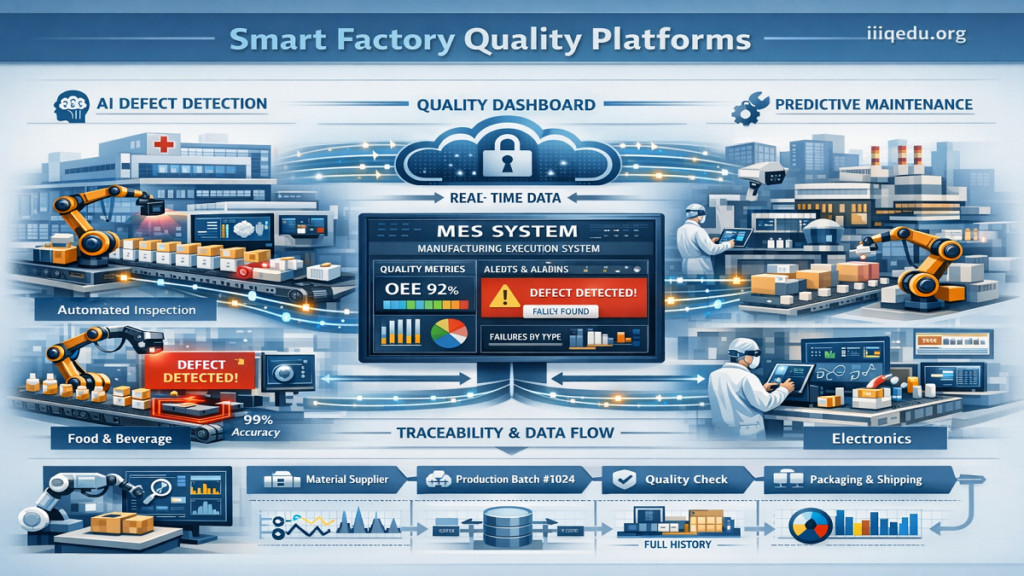
At their core, these platforms are digital systems integrating AI, IoT, and cloud analytics to monitor, control, and improve product quality. They collect real-time data from:
- Machines and sensors
- Production lines
- Inspection stations
Then they analyze it to:
- Predict defects
- Recommend corrective actions
- Automate quality reporting
Think of it as a digital quality supervisor that never sleeps.
Key Features to Look For
- Real-Time Monitoring – Live dashboards display quality metrics instantly.
- Predictive Analytics – AI predicts failures before they impact production.
- Traceability – Track every product from raw material to shipment.
- Integration with MES & ERP – Ensures seamless communication with existing systems.
- Regulatory Compliance Tools – Simplifies ISO, IATF, or FDA reporting.
Top Platforms in the Market
- Siemens Opcenter Quality – Fully integrates with digital twins for proactive quality management.
- Plex Quality Management System – Provides real-time quality insights across multiple factories.
- GE Digital Predix Quality – Uses AI analytics to predict and prevent defects.
- Rockwell Automation FactoryTalk Quality – Monitors and improves quality in complex production environments.
Benefits of Implementing Smart Quality Platforms
- Fewer Defects & Recalls: Early detection prevents costly mistakes.
- Cost Reduction: Less waste, rework, and downtime.
- Faster Decision-Making: Real-time insights help managers act quickly.
- Regulatory Compliance: Automates reporting and audits.
- Predictive Maintenance: Machines perform optimally, reducing breakdowns.
How to Get Started
- Identify key production lines or products that need monitoring.
- Deploy IoT sensors and integrate with your MES or ERP.
- Choose a quality platform that fits your industry and scale.
- Train your team to leverage real-time dashboards and AI insights.
- Continuously optimize based on analytics and production feedback.
Conclusion: The Smart Factory Advantage
In today’s competitive manufacturing landscape, quality is king. Smart Factory Quality Platforms give businesses the tools to predict, prevent, and perfect production, creating a future where every product meets the highest standards—every time.
CTA Idea: “Curious which Smart Factory Quality Platform suits your factory? Download our free comparison guide today!”
Who are Smart Factory Quality Platforms required?
1. Manufacturing Companies with High-Volume Production
- Factories producing thousands or millions of products need real-time monitoring to prevent defects.
- Example: Automotive, electronics, and consumer goods manufacturers.
- Why: A single defective batch can cause huge losses; platforms reduce rework and recalls.
2. Quality Assurance (QA) and Quality Control (QC) Teams
- These teams are responsible for ensuring products meet standards.
- Platforms help by:
- Monitoring processes in real time
- Providing dashboards and alerts
- Automating reporting for audits
3. Production Managers & Operations Teams
- Smart platforms allow managers to:
- Track line efficiency
- Identify bottlenecks affecting quality
- Make data-driven decisions quickly
4. Regulatory Compliance Teams
- Industries like pharma, food, and automotive have strict compliance requirements.
- Platforms ensure traceability, record-keeping, and reporting for ISO, FDA, or IATF standards.
5. Maintenance & Engineering Teams
- Predictive maintenance is a key part of smart platforms.
- These teams can prevent machine failures that would lead to defective products, saving costs and downtime.
6. Companies Looking to Digitally Transform
- Any factory or company moving toward Industry 4.0 / Smart Manufacturing will need these platforms to integrate IoT, AI, and data analytics into production.
In short:
Smart Factory Quality Platforms are required wherever product quality, efficiency, and compliance are critical. Essentially, anyone who produces goods at scale or wants to leverage data-driven manufacturing will benefit.
When are Smart Factory Quality Platforms required?
1. During High-Volume Production
- When production scales up, manual quality checks become slow and error-prone.
- Platforms are needed to monitor thousands of products in real time and catch defects early.
2. When Product Quality is Critical
- Industries like automotive, aerospace, electronics, pharmaceuticals, and food cannot tolerate defects.
- Platforms ensure every item meets strict quality standards and reduces recalls.
3. When Regulatory Compliance is Mandatory
- If your industry requires ISO, IATF, FDA, or GMP compliance, smart platforms automate:
- Documentation
- Traceability
- Audit-ready reporting
4. During Digital Transformation or Industry 4.0 Initiatives
- Companies moving toward smart factories need platforms to integrate IoT, AI, MES, and ERP systems.
- They enable predictive quality analytics, process optimization, and data-driven decisions.
5. When Downtime or Waste is Costly
- If defects or equipment failure result in high losses, smart platforms predict maintenance needs and prevent production errors.
6. When Continuous Improvement is a Goal
- Factories aiming for lean manufacturing and Six Sigma practices need continuous insights to improve:
- Processes
- Productivity
- Product quality
Summary
Smart Factory Quality Platforms are required anytime a manufacturer wants to shift from reactive to proactive quality control, especially in environments where high volume, strict compliance, and efficiency matter.
Where are Smart Factory Quality Platforms required?
1. On the Factory Floor
- Production lines—automated or semi-automated—need real-time monitoring to detect defects as products are made.
- Critical machines and equipment—sensors track wear, temperature, vibration, and output quality.
- Inspection stations—platforms automate quality checks and provide instant feedback.
2. Across Multiple Manufacturing Sites
- Companies with multiple factories or plants benefit from centralized platforms that collect data from all locations.
- Example: Automotive suppliers or electronics manufacturers with plants in different countries.
3. In Warehouses and Supply Chains
- For traceability, platforms track components from suppliers to production to final shipment.
- This ensures defective parts are caught before entering the assembly line.
4. In R&D and Prototype Facilities
- Smart platforms are used to test new products under real production conditions.
- They capture data on quality deviations to refine designs before mass production.
5. In Industries with High Compliance Requirements
- Industries like pharmaceuticals, food & beverage, aerospace, and automotive need platforms wherever regulatory audits, safety, or certifications are required.
- Here, platforms are crucial for documented, audit-ready quality control.
Summary
Smart Factory Quality Platforms are required anywhere products are made, inspected, or moved through production, especially in:
- Factories (single or multiple sites)
- Critical production equipment
- Supply chains and warehouses
- R&D/prototyping labs
- Industries with strict compliance needs
How are Smart Factory Quality Platforms required?
1. Integration with Production Systems
- Platforms are integrated with MES (Manufacturing Execution Systems), ERP, and SCADA systems.
- This allows real-time data from machines and production lines to flow directly into the quality platform.
2. Deployment of IoT Sensors and Data Collection Devices
- Sensors are installed on machines, tools, and critical process points.
- They collect data on temperature, vibration, speed, dimensions, and other quality metrics.
3. Real-Time Monitoring and Alerts
- The platform monitors production continuously, providing dashboards for operators.
- If quality parameters go out of spec, it triggers alerts or even automated corrective actions.
4. Predictive and Prescriptive Analytics
- Using AI and machine learning, platforms predict potential defects or machine failures before they occur.
- They can also recommend actions, like adjusting a machine or stopping a batch to prevent defects.
5. Traceability and Documentation
- Every product or batch is tracked through the entire process, from raw material to finished goods.
- The platform stores audit-ready records to comply with ISO, IATF, FDA, or other regulations.
6. Continuous Improvement and Feedback Loops
- Data collected is used to analyze root causes of defects.
- Insights are fed back to production teams for process optimization.
Summary
Smart Factory Quality Platforms are required by being actively embedded into production operations:
- Integrate with existing IT/production systems.
- Collect real-time data from sensors and machines.
- Monitor quality continuously with dashboards and alerts.
- Use AI/ML to predict and prevent defects.
- Ensure traceability and regulatory compliance.
- Provide feedback for continuous process improvement.
Case Study of Smart Factory Quality Platforms
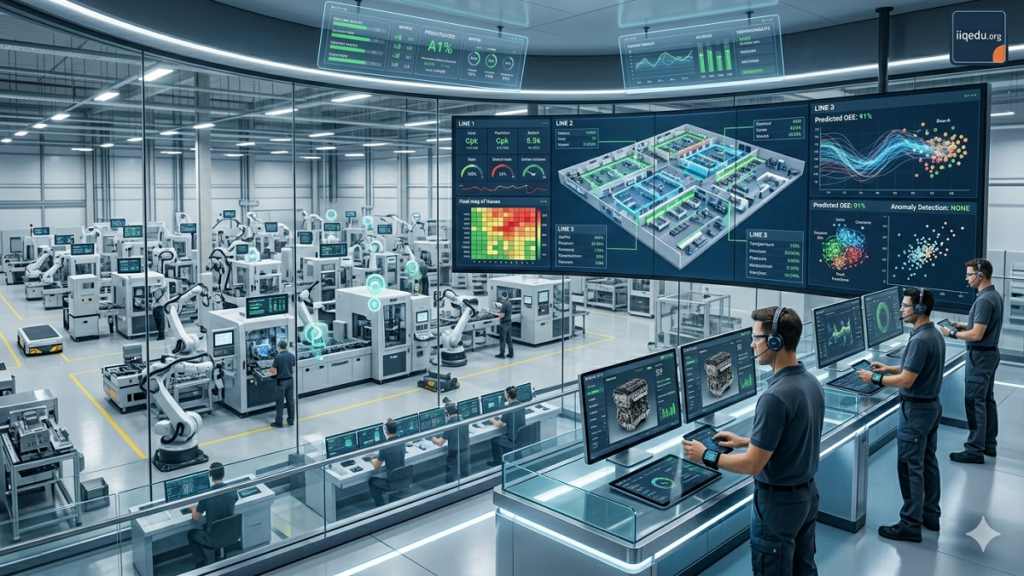
In today’s competitive manufacturing landscape, product quality is not just a differentiator—it is essential for survival. Defects, recalls, and inefficient processes can lead to significant financial losses and reputational damage. Smart Factory Quality Platforms provide a solution by combining real-time monitoring, predictive analytics, and data-driven decision-making to ensure consistent, high-quality output.
By integrating IoT sensors, AI algorithms, and production systems, these platforms allow manufacturers to detect defects early, trace issues across the production line, and maintain compliance with industry standards.
What Are Smart Factory Quality Platforms?
Smart Factory Quality Platforms are digital systems that collect, analyze, and act on data from every stage of manufacturing. They:
- Monitor machines, equipment, and production lines in real time
- Detect quality deviations before they impact products
- Predict potential failures using AI and machine learning
- Provide full traceability for compliance and audits
Essentially, these platforms act as a digital quality supervisor, ensuring production meets the highest standards while reducing human error.
Who Needs Smart Factory Quality Platforms?
- Manufacturing Companies – High-volume manufacturers, such as automotive, electronics, and consumer goods producers, benefit by reducing defects and increasing throughput.
- Quality Assurance and Control Teams – Automates inspections, tracks product quality, and simplifies reporting.
- Production and Operations Managers – Provides real-time insights to optimize workflows and minimize downtime.
- Regulatory Compliance Officers – Ensures audit-ready documentation and supports adherence to ISO, FDA, or IATF standards.
- Maintenance and Engineering Teams – Predicts equipment failures to prevent defects caused by machinery issues.
- Companies Undergoing Digital Transformation – Integrates IoT, AI, and MES systems to achieve Industry 4.0 capabilities.
When and Where Are They Required?
When:
- High-volume production where manual inspections are insufficient
- Industries with critical quality requirements, such as automotive, aerospace, pharmaceuticals, and food
- Environments where regulatory compliance is mandatory
- Factories seeking to implement predictive maintenance and continuous improvement
Where:
- Factory floors and production lines
- Multi-site manufacturing operations
- Warehouses and supply chain facilities for traceability
- R&D and prototype testing facilities
- Any manufacturing environment moving toward digital transformation
How Smart Factory Quality Platforms Work
- Integration with Systems – Connects with MES, ERP, and SCADA systems for seamless data flow.
- Sensor Deployment – Collects data on machine health, product dimensions, and environmental conditions.
- Real-Time Monitoring – Provides dashboards and alerts for deviations in quality metrics.
- Predictive Analytics – Uses AI to forecast defects or equipment failures and suggests corrective actions.
- Traceability and Documentation – Tracks products from raw material to shipment for audit readiness.
- Continuous Improvement – Feedback loops analyze defects and optimize production processes.
Case Study: Electronics Manufacturer Improves PCB Production
A leading electronics company implemented a smart factory quality platform to monitor PCB assembly lines. By integrating inline inspection data and production analytics, the company could identify defect causes early in the process.
Results:
- Significant reduction in defective products
- Faster root cause analysis
- Full traceability across the production process
This example demonstrates how smart quality platforms transform manufacturing from reactive to proactive quality management.
Benefits of Smart Factory Quality Platforms
- Reduction in product defects and recalls
- Lower production costs through reduced waste and rework
- Faster, data-driven decision-making
- Improved regulatory compliance
- Predictive maintenance and fewer machine failures
- Enhanced productivity and efficiency
Conclusion
Smart Factory Quality Platforms are essential for modern manufacturing. They enable companies to move from reactive quality control to proactive quality management, delivering higher efficiency, lower costs, and better customer satisfaction. By leveraging AI, IoT, and real-time analytics, these platforms create smarter factories capable of meeting the demands of Industry 4.0.
White Paper of Smart Factory Quality Platforms
Executive Summary
Manufacturers today face increasing pressures: rising customer expectations, strict regulatory compliance, and the demand for cost efficiency. Traditional quality management methods—manual inspections, batch testing, and reactive maintenance—are no longer sufficient.
Smart Factory Quality Platforms provide a comprehensive solution by integrating real-time data, predictive analytics, and process automation to ensure superior product quality, reduce defects, and optimize production efficiency. This white paper explores their role, benefits, implementation, and real-world impact in modern manufacturing environments.
1. Introduction
Global manufacturing is undergoing a digital transformation under Industry 4.0, emphasizing interconnected machines, real-time data analysis, and predictive decision-making. Quality control has evolved from post-production inspection to proactive, data-driven quality assurance, enabled by Smart Factory Quality Platforms.
These platforms serve as centralized systems that collect, analyze, and act on data across the production lifecycle, ensuring every product meets stringent quality standards.
2. What Are Smart Factory Quality Platforms?
Smart Factory Quality Platforms are integrated software solutions designed to:
- Collect real-time data from IoT sensors, machines, and production lines
- Monitor and track product quality continuously
- Predict defects using AI and machine learning
- Provide actionable insights to operators, managers, and quality teams
- Maintain full traceability for regulatory compliance
They operate as a digital quality supervisor, improving product reliability, production efficiency, and operational visibility.
3. Key Features
| Feature | Description | Benefit |
|---|---|---|
| Real-Time Monitoring | Live dashboards of quality metrics | Immediate detection of deviations |
| Predictive Analytics | AI predicts defects and machine failures | Reduced downtime and scrap |
| Traceability | Tracks products through the entire production lifecycle | Audit readiness and compliance |
| System Integration | Connects with MES, ERP, and SCADA | Streamlined workflows and data sharing |
| Automated Reporting | Generates reports for quality and regulatory standards | Saves time and ensures accuracy |
| Feedback Loops | Continuous process improvement | Higher productivity and quality over time |
4. Who Needs Smart Factory Quality Platforms?
- Manufacturing Companies – High-volume and complex production lines.
- QA and QC Teams – Automated inspections, monitoring, and reporting.
- Production Managers – Real-time operational insights.
- Regulatory Compliance Officers – ISO, IATF, FDA, or GMP adherence.
- Maintenance Teams – Predictive maintenance to prevent quality-impacting failures.
- Digital Transformation Teams – Integrating IoT, AI, and Industry 4.0 technologies.
5. When and Where Are They Required?
When:
- High-volume or precision production where manual quality control is insufficient
- Industries with critical quality standards (automotive, aerospace, pharmaceuticals, food)
- Environments requiring compliance with regulatory standards
- Factories implementing predictive maintenance and continuous improvement
Where:
- Factory floors and production lines
- Multi-site manufacturing operations
- Warehouses and supply chain facilities for component tracking
- R&D and prototype testing facilities
- Digital transformation initiatives aiming for smart factory operations
6. Benefits
- Reduction in Defects and Recalls – Early detection prevents costly errors
- Lower Production Costs – Reduced waste, rework, and downtime
- Enhanced Decision-Making – Real-time data enables rapid, informed actions
- Compliance Assurance – Audit-ready documentation and traceability
- Predictive Maintenance – Fewer machine failures impacting production
- Improved Efficiency – Optimized workflows and higher throughput
7. Case Study Example
Electronics PCB Manufacturer:
A leading PCB manufacturer implemented a smart quality platform to monitor assembly lines in real-time. By integrating sensor data with predictive analytics:
- Defective products were reduced significantly
- Root cause analysis became faster and more precise
- End-to-end traceability was achieved
- Production efficiency improved while maintaining compliance with industry standards
8. Implementation Guidelines
- Assessment – Identify production lines, critical processes, and quality goals.
- Integration – Connect the platform with MES, ERP, and other production systems.
- Sensor Deployment – Install IoT sensors on critical equipment.
- Monitoring & Analytics – Set dashboards, alerts, and predictive models.
- Training – Equip staff to use insights and dashboards effectively.
- Continuous Improvement – Use platform data to refine production processes over time.
9. Conclusion
Smart Factory Quality Platforms are no longer optional—they are a strategic requirement for modern manufacturing. By providing real-time monitoring, predictive insights, and regulatory traceability, they help manufacturers achieve higher product quality, lower costs, and improved operational efficiency.
Industry Application of Smart Factory Quality Platforms
1. Automotive Industry
- Application: Monitoring assembly lines, engine and component production, paint shops, and final inspection.
- Use Case: Predictive analytics detect defects in engines or body panels before they reach the customer.
- Benefit: Reduces recalls, scrap rates, and improves compliance with IATF 16949 standards.
2. Electronics and Semiconductor Manufacturing
- Application: PCB assembly lines, semiconductor wafer production, and electronics testing.
- Use Case: Inline inspection with AI-driven quality analytics identifies micro-defects in boards or chips.
- Benefit: Reduces failure rates, ensures high yields, and improves traceability across multiple production stages.
3. Aerospace and Defense
- Application: Component manufacturing, turbine blade production, and avionics assembly.
- Use Case: High-precision monitoring ensures that every part meets strict tolerance and quality standards.
- Benefit: Enhances safety, reliability, and compliance with aviation quality standards such as AS9100.
4. Pharmaceuticals and Life Sciences
- Application: Drug production, packaging, and sterile manufacturing.
- Use Case: Automated quality monitoring and traceability of each batch for regulatory compliance.
- Benefit: Ensures GMP compliance, reduces contamination risk, and maintains batch quality.
5. Food and Beverage Industry
- Application: Processing lines, packaging, labeling, and storage monitoring.
- Use Case: Real-time tracking of temperature, humidity, and product quality for perishable goods.
- Benefit: Improves product safety, reduces spoilage, and ensures compliance with FDA or ISO 22000 standards.
6. Heavy Machinery and Industrial Equipment
- Application: Production of engines, turbines, and large-scale machinery components.
- Use Case: Predictive maintenance ensures machines operate within quality parameters.
- Benefit: Reduces downtime, increases machine lifespan, and ensures final product reliability.
7. Consumer Goods Manufacturing
- Application: Electronics, home appliances, textiles, and packaging.
- Use Case: Monitoring assembly and packaging lines for defects or inconsistencies.
- Benefit: Reduces returns and improves customer satisfaction by ensuring consistent quality.
Key Takeaways
- Smart Factory Quality Platforms are versatile and applicable wherever product quality is critical.
- They combine real-time monitoring, AI analytics, and traceability to improve efficiency, reduce waste, and ensure compliance.
- Industries with high-volume, high-precision, or regulatory-driven manufacturing benefit most from these platforms.
#smartfactoryqualityplatformsinindia #smartfactoryqualityplatformsinmumbai #smartfactoryqualityplatformsinkolkata #smartfactoryqualityplatformsinchennai #smartfactoryqualityplatformsinbangalore #smartfactoryqualityplatformsinkochi #smartfactoryqualityplatformsinjaipur #smartfactoryqualityplatformsinmaharashtra #smartfactoryqualityplatformsinpune #smartfactoryqualityplatformsingujrat #bestinstituteintheworld #bestinstituteinindia #bestinstituteinmumbai #bestinstituteinvasai
Ask FAQs
What is a Smart Factory Quality Platform?
A Smart Factory Quality Platform is a digital system that monitors, analyzes, and manages product quality in manufacturing. It integrates data from IoT sensors, machines, and production lines, enabling real-time defect detection, predictive analytics, and process optimization.
Who needs a Smart Factory Quality Platform?
These platforms are essential for manufacturers, QA/QC teams, production managers, maintenance engineers, and compliance officers—anyone responsible for ensuring product quality, reducing defects, and maintaining operational efficiency.
When should a company implement a Smart Factory Quality Platform?
They are required when:
Production volumes are high or complex
Product quality and compliance are critical
Predictive maintenance or continuous improvement is desired
The company is transitioning toward Industry 4.0 or digital manufacturing
How do Smart Factory Quality Platforms improve manufacturing quality?
They:
Monitor production in real time to detect defects early
Predict potential failures using AI/ML analytics
Automate quality reporting and traceability
Provide actionable insights to improve production processes and reduce waste
Which industries benefit most from Smart Factory Quality Platforms?
Industries that gain the most include:
Automotive and aerospace
Electronics and semiconductor manufacturing
Pharmaceuticals and life sciences
Food and beverage production
Heavy machinery and consumer goods manufacturing
Source: Digital Catapult
Table of Contents
Disclaimer:
The information provided in this content is for general informational purposes only. While we strive for accuracy, it does not constitute professional advice, and the results of implementing Smart Factory Quality Platforms may vary depending on specific business operations, industry requirements, or technology integration. Readers should consult qualified experts before making business or technical decisions.