Sustainable Supply Chain Verification
Sustainable supply chain verification refers to the systematic process of assessing, monitoring, and validating whether the environmental, social, and ethical standards claimed within a supply chain are accurate, credible, and consistently implemented. As globalization has expanded supply networks across multiple countries and regulatory environments, organizations are increasingly expected to ensure transparency and accountability not only within their own operations but also across suppliers, subcontractors, and logistics partners.
1. Concept and Importance
At its core, sustainable supply chain verification ensures that products and services are sourced, produced, and delivered in ways that minimize environmental impact, uphold human rights, and maintain ethical business practices. It transforms sustainability commitments from mere declarations into measurable, auditable realities.
The importance of verification arises from several factors:
- Risk Management: Prevents exposure to environmental violations, labor exploitation, and reputational damage.
- Regulatory Compliance: Helps organizations meet international laws and standards such as due diligence requirements and anti-slavery regulations.
- Stakeholder Trust: Investors, consumers, and partners increasingly demand proof of responsible sourcing.
- Competitive Advantage: Verified sustainability practices can differentiate brands in global markets.
2. Key Dimensions of Verification
Sustainable supply chain verification typically focuses on three major pillars:
a. Environmental Verification
- Carbon emissions and climate impact
- Resource usage (water, energy, raw materials)
- Waste management and pollution control
- Biodiversity protection
b. Social Verification
- Labor rights (fair wages, working conditions)
- Health and safety compliance
- Prevention of child labor and forced labor
- Community impact and engagement
c. Governance and Ethical Practices
- Anti-corruption policies
- Transparency in sourcing
- Ethical procurement practices
- Compliance with international standards and certifications
3. Verification Methods and Tools
Organizations employ a combination of qualitative and quantitative methods to verify sustainability across supply chains:
a. Audits and Inspections
Third-party audits are one of the most common verification mechanisms. These include:
- On-site inspections
- Documentation reviews
- Worker interviews
Audits can be scheduled or unannounced to ensure authenticity.
b. Certifications and Standards
Independent certifications provide credible validation of sustainability claims. Common standards include:
- ISO 14001 (Environmental Management)
- SA8000 (Social Accountability)
- Fair Trade certifications
- Forest Stewardship Council (FSC)
c. Supplier Self-Assessments
Suppliers complete structured questionnaires regarding their sustainability practices. While cost-effective, these require validation through audits or data checks.
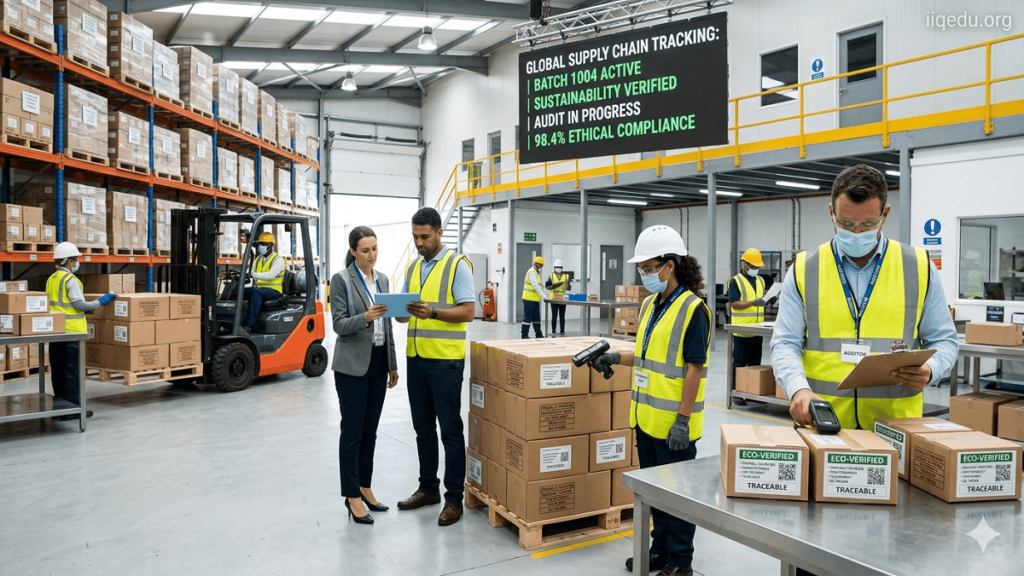
d. Digital Tracking and Traceability Systems
Advanced technologies improve transparency and verification:
- Blockchain for immutable transaction records
- IoT sensors for real-time environmental monitoring
- AI analytics for risk detection and anomaly identification
e. Life Cycle Assessment (LCA)
LCA evaluates the environmental impact of a product from raw material extraction to disposal, helping verify sustainability claims across the entire lifecycle.
4. Challenges in Implementation
Despite its importance, sustainable supply chain verification faces several challenges:
- Complexity of Global Supply Chains: Multiple tiers of suppliers make end-to-end visibility difficult.
- Data Reliability Issues: Suppliers may provide incomplete or inaccurate information.
- Cost and Resource Constraints: Audits and technology adoption can be expensive, especially for smaller firms.
- Lack of Standardization: Different regions and industries follow varying standards, complicating uniform verification.
- Supplier Resistance: Some suppliers may be reluctant to disclose sensitive operational data.
5. Emerging Trends
The field of supply chain verification is evolving rapidly due to technological advancements and regulatory pressure:
- Increased Use of Blockchain: Enhancing transparency and traceability.
- Mandatory Due Diligence Laws: Governments are introducing stricter compliance requirements.
- Real-Time Monitoring: Transition from periodic audits to continuous verification systems.
- Integration with ESG Reporting: Verification data feeds into Environmental, Social, and Governance (ESG) disclosures.
- Collaborative Verification Models: Industry-wide platforms where multiple companies share verification data to reduce redundancy.
6. Best Practices for Effective Verification
Organizations seeking robust sustainable supply chain verification should adopt the following practices:
- Map the Entire Supply Chain: Identify all tiers of suppliers and critical risk points.
- Adopt Recognized Standards: Align with globally accepted frameworks and certifications.
- Use a Risk-Based Approach: Focus verification efforts on high-risk regions and materials.
- Leverage Technology: Implement digital tools for traceability and data analytics.
- Engage Suppliers: Provide training and incentives for sustainable practices.
- Ensure Continuous Monitoring: Move beyond one-time audits to ongoing verification mechanisms.
- Maintain Transparency: Publicly disclose verification processes and results where appropriate.
7. Conclusion
Sustainable supply chain verification is a critical component of modern business strategy, bridging the gap between sustainability commitments and measurable outcomes. By combining rigorous auditing practices, advanced technologies, and collaborative approaches, organizations can enhance transparency, mitigate risks, and contribute to long-term environmental and social well-being. As global expectations continue to rise, effective verification will no longer be optional but a fundamental requirement for responsible and resilient supply chain management.
#Sustainable Supply Chain Verification in Pune
What is Sustainable Supply Chain Verification?
Sustainable Supply Chain Verification is the process of systematically evaluating and confirming that a company’s supply chain operates in accordance with established environmental, social, and ethical standards. It ensures that sustainability claims made by an organization are accurate, credible, and consistently upheld across all stages of production and distribution.
Key Elements of the Definition
- Verification of Environmental Practices
This involves checking whether suppliers minimize environmental impact through responsible use of resources, reduction of emissions, proper waste management, and sustainable sourcing of raw materials. - Verification of Social Responsibility
It ensures that labor practices across the supply chain respect human rights, including fair wages, safe working conditions, and the absence of child or forced labor. - Verification of Ethical and Governance Standards
This includes confirming adherence to anti-corruption policies, transparency in operations, and compliance with legal and regulatory requirements.
Purpose
The main purpose of sustainable supply chain verification is to:
- Ensure transparency and accountability across complex global supply networks
- Reduce risks related to environmental damage, legal violations, and reputational harm
- Build trust with stakeholders such as customers, investors, and regulators
- Support compliance with international sustainability standards and regulations
In Simple Terms
Sustainable supply chain verification is about proving that a company’s supply chain is truly sustainable, rather than just claiming it. It involves collecting evidence, conducting audits, and using tools or certifications to confirm that responsible practices are actually being followed.
Conclusion
In today’s business environment, where sustainability is a critical expectation, verification plays a vital role in transforming commitments into measurable and trustworthy actions. It helps organizations ensure that sustainability is embedded throughout their entire supply chain, from raw material sourcing to final product delivery.
#Sustainable Supply Chain Verification in Kashmir
Who is Sustainable Supply Chain Verification required?
Sustainable Supply Chain Verification is required by multiple stakeholders, not just one group. It is driven by regulatory bodies, market expectations, and internal business needs. The key entities that require or demand it are:
1. Governments and Regulatory Authorities
National and international regulators increasingly mandate supply chain transparency and sustainability compliance.
- Governments require companies to verify that their supply chains are free from illegal practices such as forced labor, environmental violations, and corruption.
- Laws related to due diligence, environmental protection, and human rights make verification compulsory in many industries.
Purpose: Legal compliance and enforcement of sustainability standards.
2. Corporations and Multinational Companies
Large organizations require their suppliers to undergo sustainable supply chain verification.
- Companies impose sustainability criteria on vendors and partners.
- Verification ensures that suppliers align with corporate environmental, social, and governance (ESG) policies.
- It is especially important in industries like manufacturing, retail, food, and electronics.
Purpose: Risk management, brand protection, and operational consistency.
3. Investors and Financial Institutions
Investors increasingly demand verified sustainability performance before making financial decisions.
- ESG-focused investors require proof of responsible sourcing and operations.
- Verified supply chains reduce financial risks and improve long-term investment stability.
Purpose: Informed investment decisions and risk mitigation.
4. Consumers and End Users
Modern consumers are more aware and concerned about how products are made.
- Customers prefer brands that can prove ethical sourcing and environmental responsibility.
- Verification helps companies build trust and credibility in the marketplace.
Purpose: Transparency and ethical consumption.
5. Non-Governmental Organizations (NGOs) and Advocacy Groups
NGOs monitor and pressure companies to ensure ethical practices across supply chains.
- They often demand independent verification of sustainability claims.
- Public reporting and audits are used to hold companies accountable.
Purpose: Social accountability and protection of human rights and the environment.
6. Industry Bodies and Certification Organizations
Industry groups and certification agencies require verification as part of standard compliance.
- Certifications (such as environmental and social standards) require third-party verification.
- Participation in global supply chains often depends on meeting these verified standards.
Purpose: Standardization and credibility across industries.
7. Suppliers and Business Partners
Even suppliers themselves may require verification to remain competitive.
- Smaller suppliers must comply with verification requirements set by larger buyers.
- It becomes a prerequisite for entering or continuing in global markets.
Purpose: Market access and business continuity.
Conclusion
Sustainable Supply Chain Verification is not limited to a single entity—it is collectively required by governments, corporations, investors, consumers, and global institutions. It has become an essential practice in modern business, ensuring that sustainability is not just promised but demonstrably achieved across the entire supply chain.
#Sustainable Supply Chain Verification in Vasai
When is Sustainable Supply Chain Verification required?
1. During Supplier Selection and Onboarding
Verification is required when a company engages new suppliers.
- Organizations assess whether potential suppliers meet environmental, social, and ethical standards before entering into contracts.
- This helps prevent risks from the outset and ensures alignment with sustainability policies.
2. Before Entering New Markets or Regions
When expanding into new geographic areas, verification becomes necessary.
- Different countries have different environmental and labor regulations.
- Companies must verify that their supply chains comply with local and international laws.
3. To Meet Legal and Regulatory Requirements
Verification is required whenever laws mandate due diligence and compliance.
- Governments may require companies to demonstrate that their supply chains are free from illegal practices such as forced labor or environmental harm.
- This is often part of mandatory reporting and compliance frameworks.
4. During Certification and Standard Compliance
Organizations must verify their supply chains when applying for or maintaining certifications.
- Sustainability certifications require periodic audits and documented proof of compliance.
- Verification ensures continued eligibility for recognized standards.
5. At Regular Intervals (Ongoing Monitoring)
Verification is required continuously, not just once.
- Periodic audits (annual, biannual, or risk-based) ensure that suppliers maintain standards over time.
- Continuous monitoring helps detect changes, risks, or violations early.
6. When Risks or Red Flags Are Identified
If potential issues arise, immediate verification is necessary.
- Examples include reports of labor violations, environmental incidents, or supplier misconduct.
- Companies may conduct unannounced audits or investigations in such cases.
7. During Mergers, Acquisitions, or Partnerships
Verification is required when companies merge or form strategic alliances.
- Due diligence processes include assessing the sustainability performance of partners’ supply chains.
- This prevents inheriting hidden risks.
8. For ESG Reporting and Stakeholder Disclosure
Verification is needed when companies report sustainability performance.
- Investors, regulators, and stakeholders require accurate, verified data.
- It ensures credibility in Environmental, Social, and Governance (ESG) reporting.
9. When Introducing New Products or Materials
Verification is required when sourcing new raw materials or launching new products.
- Companies must ensure that new inputs meet sustainability standards.
- This is especially critical in industries like food, textiles, and electronics.
Conclusion
Sustainable Supply Chain Verification is required throughout the entire business lifecycle—from supplier onboarding to ongoing operations and reporting. It is both a proactive and reactive process, ensuring compliance, managing risks, and maintaining trust in an increasingly sustainability-focused global market
#Sustainable Supply Chain Verification in Jaipur
Where is Sustainable Supply Chain Verification required?
1. At Raw Material Sources
Verification begins at the origin of the supply chain.
- Locations where natural resources are extracted (e.g., mining sites, farms, forests) must be verified for sustainable practices.
- This ensures responsible sourcing, environmental protection, and fair labor conditions.
2. At Supplier and Sub-Supplier Facilities
All tiers of suppliers require verification, not just direct partners.
- Manufacturing units, processing plants, and assembly facilities must comply with sustainability standards.
- Sub-suppliers (tier 2, tier 3, etc.) are equally important, as risks often exist deeper in the supply chain.
3. In Manufacturing and Production Sites
Verification is essential where goods are produced or assembled.
- Ensures efficient resource use, waste management, and safe working environments.
- Confirms adherence to environmental and labor regulations.
4. In Transportation and Logistics Networks
Verification extends to how goods are moved.
- Includes shipping, warehousing, and distribution centers.
- Focus areas include fuel efficiency, emissions, and ethical labor practices in logistics operations.
5. At Warehousing and Distribution Centers
Storage and distribution points must also be verified.
- Ensures proper handling of goods, energy efficiency, and safe working conditions.
- Reduces environmental impact through optimized storage and transportation systems.
6. At Retail and End-Point Operations
Verification is required even at the final stages of the supply chain.
- Retail outlets and service providers must comply with sustainability commitments.
- Ensures that the entire product journey aligns with ethical and environmental standards.
7. Across International and Cross-Border Operations
Verification is particularly critical in global supply chains.
- Different countries have varying regulations and risk levels.
- High-risk regions (e.g., with weak labor laws or environmental enforcement) require stricter verification.
8. Within Digital and Data Systems
Modern supply chains also require verification in information systems.
- Digital platforms used for tracking, reporting, and managing supply chains must ensure data accuracy and transparency.
- Technologies like traceability systems help verify activities across locations.
Conclusion
Sustainable Supply Chain Verification is required throughout the entire supply chain network, from raw material extraction to final delivery and even within supporting systems. It is not limited to a single location but applies to every point where environmental, social, or ethical risks may arise, ensuring a fully transparent and responsible supply chain.
#Sustainable Supply Chain Verification in Patna
How is Sustainable Supply Chain Verification required?
1. Through Supplier Assessments
The process begins with evaluating suppliers’ sustainability practices.
- Companies use questionnaires and self-assessment forms to gather data on environmental, social, and ethical performance.
- These assessments help identify risks and determine whether suppliers meet required standards.
2. Through Audits and Inspections
Verification is commonly performed via internal and third-party audits.
- On-site audits: Physical inspections of facilities to observe actual practices.
- Document reviews: Examination of records such as labor contracts, environmental reports, and compliance certificates.
- Worker interviews: Direct feedback from employees to validate working conditions.
Audits may be scheduled or unannounced to ensure accuracy.
3. Through Certifications and Standards
Organizations rely on recognized certification systems for verification.
- Suppliers must comply with established sustainability standards.
- Independent certification bodies validate compliance through periodic evaluations.
This provides credibility and comparability across industries.
4. Through Traceability and Transparency Systems
Verification is strengthened by tracking materials and processes.
- Digital tools track the movement of goods from source to final product.
- Technologies such as blockchain, RFID, and cloud-based platforms ensure data integrity and transparency.
5. Through Data Collection and Performance Metrics
Quantitative data is used to measure sustainability performance.
- Key indicators include carbon emissions, energy consumption, water usage, and labor conditions.
- Data is regularly collected, analyzed, and benchmarked against standards.
6. Through Risk-Based Approaches
Organizations prioritize verification efforts based on risk levels.
- High-risk suppliers, regions, or materials receive more frequent and detailed verification.
- This approach ensures efficient use of resources while maintaining strong oversight.
7. Through Continuous Monitoring and Reporting
Verification is an ongoing process rather than a one-time activity.
- Regular monitoring systems track compliance over time.
- Companies produce sustainability or ESG reports based on verified data.
This ensures accountability and transparency to stakeholders.
8. Through Stakeholder Engagement
Verification involves collaboration with multiple stakeholders.
- Companies work with suppliers, auditors, NGOs, and industry bodies.
- Training and capacity-building programs help suppliers improve compliance.
9. Through Corrective Actions and Improvement Plans
Verification also includes addressing identified issues.
- Non-compliance leads to corrective action plans.
- Suppliers are required to implement improvements within a defined timeframe.
- Follow-up audits ensure that corrective measures are effective.
Conclusion
Sustainable Supply Chain Verification is conducted through a multi-layered approach combining assessments, audits, certifications, technology, and continuous monitoring. This structured process ensures that sustainability is not only evaluated but also maintained and improved over time, creating a transparent, accountable, and responsible supply chain.
#Sustainable Supply Chain Verification in India
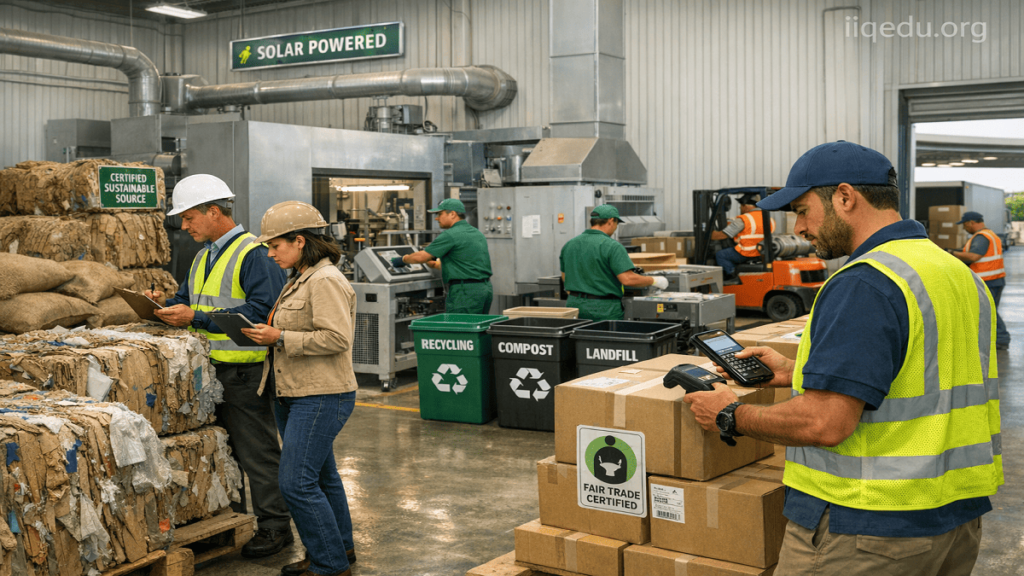
Case Study of Sustainable Supply Chain Verification
1. Background
Unilever is one of the world’s largest consumer goods companies, producing food, personal care, and household products. A significant portion of its products relies on palm oil, a raw material often associated with environmental issues such as deforestation, biodiversity loss, and greenhouse gas emissions, as well as social concerns like labor exploitation.
To address these challenges, the company implemented a comprehensive Sustainable Supply Chain Verification system focused on responsible palm oil sourcing.
2. Problem Statement
The company faced several critical risks:
- Lack of transparency in a complex, multi-tier global supply chain
- Environmental damage caused by unsustainable palm oil cultivation
- Social risks including poor labor conditions
- Increasing pressure from consumers, regulators, and NGOs for accountability
The key challenge was to verify whether palm oil was truly sourced sustainably, rather than relying on supplier claims.
3. Objectives
- Achieve full traceability of palm oil sources
- Ensure zero deforestation in the supply chain
- Verify compliance with environmental and social standards
- Build trust with stakeholders through transparent reporting
4. Verification Approach
a. Supply Chain Mapping
The company mapped its entire palm oil supply chain, identifying mills and plantations, including indirect suppliers.
b. Certification and Standards
- Adopted certification through the Roundtable on Sustainable Palm Oil (RSPO)
- Required suppliers to comply with strict sustainability criteria
c. Third-Party Audits
- Independent auditors conducted on-site inspections of plantations and mills
- Verified environmental practices, such as no deforestation and proper waste management
- Assessed labor conditions and worker rights
d. Digital Traceability Systems
- Implemented advanced tracking systems to trace palm oil back to specific mills
- Used satellite monitoring to detect deforestation activities in real time
e. Risk-Based Monitoring
- High-risk regions were subject to more frequent and detailed verification
- Suppliers with poor performance were closely monitored
f. Supplier Engagement and Training
- Worked with suppliers to improve sustainability practices
- Provided guidance on compliance and environmental protection
g. Public Disclosure
- Published verified data on palm oil sourcing
- Shared lists of suppliers and progress reports to enhance transparency
5. Challenges Faced
- Difficulty in tracing indirect suppliers (smallholder farmers)
- Inconsistent data quality across regions
- Resistance from some suppliers due to cost and operational changes
- Complexity of monitoring global operations
6. Outcomes
- Achieved high levels of traceability to palm oil mills
- Significant reduction in deforestation risks within the supply chain
- Improved supplier compliance with sustainability standards
- Strengthened brand reputation and stakeholder trust
7. Key Learnings
- Verification must go beyond direct suppliers to include all tiers
- Technology (e.g., satellite monitoring) greatly enhances transparency
- Collaboration with industry bodies improves standardization
- Continuous monitoring is more effective than one-time audits
8. Conclusion
This case study demonstrates that Sustainable Supply Chain Verification is essential for managing environmental and social risks in global supply chains. By combining certifications, audits, digital tools, and stakeholder engagement, organizations can move from mere sustainability commitments to verified, measurable impact.
#Sustainable Supply Chain Verification in Banglore
White Paper of Sustainable Supply Chain Verification
1. Executive Summary
Sustainable Supply Chain Verification (SSCV) is a critical framework for ensuring that supply chain operations adhere to environmental, social, and ethical standards. As global supply chains grow more complex and stakeholders demand greater transparency, organizations must move beyond self-declared sustainability claims to verifiable, data-driven accountability.
This white paper outlines the concept, importance, methodologies, challenges, and future directions of SSCV. It provides a structured approach for organizations to design and implement effective verification systems that enhance transparency, reduce risks, and support long-term sustainability goals.
2. Introduction
Globalization has enabled organizations to source materials and services from diverse regions, often involving multiple tiers of suppliers. While this has improved efficiency and reduced costs, it has also increased exposure to risks such as environmental degradation, labor rights violations, and unethical practices.
Sustainable Supply Chain Verification addresses these challenges by ensuring that sustainability commitments are consistently implemented and validated across all supply chain stages—from raw material sourcing to final product delivery.
3. Objectives of Sustainable Supply Chain Verification
The primary objectives of SSCV include:
- Ensuring Compliance: Aligning supply chain operations with legal, regulatory, and industry standards
- Enhancing Transparency: Providing visibility into supplier practices and operations
- Mitigating Risks: Identifying and addressing environmental, social, and governance (ESG) risks
- Building Trust: Strengthening credibility with stakeholders, including customers, investors, and regulators
- Driving Continuous Improvement: Encouraging suppliers to adopt sustainable practices over time
4. Scope and Key Components
Sustainable Supply Chain Verification covers three core dimensions:
4.1 Environmental Verification
- Carbon footprint and emissions tracking
- Energy and water usage efficiency
- Waste management and pollution control
- Sustainable sourcing of raw materials
4.2 Social Verification
- Labor rights and working conditions
- Health and safety standards
- Elimination of child and forced labor
- Community impact and development
4.3 Governance and Ethical Verification
- Anti-corruption and anti-bribery policies
- Transparency and traceability
- Ethical sourcing and procurement practices
- Regulatory compliance
5. Verification Framework
An effective SSCV system typically includes the following stages:
5.1 Supply Chain Mapping
- Identification of all suppliers, including tier 2 and tier 3
- Risk profiling based on geography, industry, and material type
5.2 Supplier Assessment
- Self-assessment questionnaires
- Sustainability scorecards and performance metrics
5.3 Auditing and Validation
- Internal audits
- Third-party independent audits
- On-site inspections and documentation reviews
5.4 Certification and Standards
- Adoption of recognized sustainability standards
- Periodic recertification and compliance checks
5.5 Monitoring and Reporting
- Continuous data collection and analysis
- ESG reporting and disclosure
- Real-time monitoring systems
5.6 Corrective Action and Improvement
- Identification of non-compliance issues
- Implementation of corrective action plans
- Follow-up verification and performance tracking
6. Technologies Enabling Verification
Technological advancements are transforming supply chain verification:
- Blockchain: Ensures secure and tamper-proof transaction records
- Internet of Things (IoT): Enables real-time monitoring of environmental conditions
- Artificial Intelligence (AI): Detects anomalies and predicts risks
- Satellite Monitoring: Tracks environmental changes such as deforestation
- Digital Traceability Platforms: Provide end-to-end visibility across supply chains
7. Challenges and Limitations
Despite its importance, SSCV faces several challenges:
- Complex Supply Chain Structures: Multiple tiers reduce visibility
- Data Accuracy Issues: Reliance on supplier-reported data
- High Implementation Costs: Audits and technologies require investment
- Lack of Standardization: Variability in global sustainability standards
- Supplier Resistance: Limited willingness or capability to comply
8. Best Practices
Organizations can enhance SSCV effectiveness by:
- Adopting a risk-based verification approach
- Engaging suppliers through training and capacity building
- Leveraging technology for transparency and efficiency
- Collaborating with industry bodies and stakeholders
- Ensuring continuous monitoring rather than one-time audits
- Maintaining transparent reporting and communication
9. Regulatory and Industry Landscape
Governments and international bodies are increasingly enforcing sustainability requirements:
- Mandatory due diligence laws
- ESG disclosure requirements
- Industry-specific sustainability standards
- Global frameworks for responsible sourcing
Organizations must stay informed and proactive to ensure compliance with evolving regulations.
10. Future Trends
The future of Sustainable Supply Chain Verification will be shaped by:
- Increased Automation: AI-driven verification systems
- Real-Time Monitoring: Continuous verification replacing periodic audits
- Stronger Regulations: Mandatory global compliance frameworks
- Greater Collaboration: Shared verification platforms across industries
- Consumer-Driven Transparency: Demand for verifiable product origins
11. Conclusion
Sustainable Supply Chain Verification is no longer optional; it is a strategic necessity in modern business operations. By implementing robust verification systems, organizations can ensure accountability, enhance transparency, and mitigate risks across their supply chains.
A well-designed SSCV framework not only supports compliance but also drives long-term value creation by aligning business practices with global sustainability goals. As expectations from regulators, investors, and consumers continue to rise, organizations must adopt comprehensive and technology-enabled verification strategies to remain competitive and responsible in the global marketplace.
#Sustainable Supply Chain Verification in Surat
Idustry Application of Sustainable Supply Chain Verification
Sustainable Supply Chain Verification (SSCV) is applied across a wide range of industries to ensure responsible sourcing, ethical operations, and environmental stewardship. Each industry adopts verification practices tailored to its specific risks, regulatory requirements, and operational complexities.
1. Manufacturing Industry
In manufacturing, supply chains are often global and multi-tiered, involving raw material suppliers, component manufacturers, and assembly units.
Applications:
- Verification of raw material sourcing (e.g., metals, chemicals)
- Monitoring energy consumption and emissions in production
- Ensuring safe labor practices in factories
- Auditing waste management and recycling processes
Impact:
Reduces environmental footprint, ensures regulatory compliance, and enhances operational efficiency.
2. Food and Agriculture Industry
This industry is highly sensitive to sustainability issues such as food safety, environmental impact, and ethical farming.
Applications:
- Verification of sustainable farming practices
- Traceability of food products from farm to table
- Monitoring pesticide use, water consumption, and soil health
- Ensuring fair labor conditions for farm workers
Impact:
Improves food safety, supports sustainable agriculture, and builds consumer trust.
3. Retail and Consumer Goods Industry
Retailers rely on extensive supplier networks across different regions.
Applications:
- Verification of supplier compliance with ethical sourcing policies
- Auditing production facilities for labor and environmental standards
- Tracking product origins and materials
- Ensuring sustainable packaging practices
Impact:
Enhances brand reputation and meets growing consumer demand for ethical products.
4. Textile and Apparel Industry
This sector is often associated with labor-intensive processes and environmental challenges.
Applications:
- Verification of labor conditions in garment factories
- Monitoring use of chemicals and dyes
- Ensuring sustainable sourcing of fibers (e.g., cotton, wool)
- Auditing water usage and wastewater treatment
Impact:
Promotes ethical fashion, reduces environmental harm, and ensures compliance with global standards.
5. Electronics and Technology Industry
Supply chains in this sector involve complex components and rare materials.
Applications:
- Verification of conflict-free mineral sourcing
- Monitoring environmental impact of component manufacturing
- Ensuring safe working conditions in assembly plants
- Tracking e-waste management and recycling
Impact:
Reduces ethical risks, improves transparency, and supports responsible innovation.
6. Pharmaceutical and Healthcare Industry
This industry requires strict compliance with safety and ethical standards.
Applications:
- Verification of raw material sourcing for drugs
- Ensuring compliance with health and safety regulations
- Monitoring ethical practices in clinical supply chains
- Auditing suppliers for quality and sustainability standards
Impact:
Ensures product safety, regulatory compliance, and ethical responsibility.
7. Automotive Industry
Automotive supply chains involve numerous components and suppliers worldwide.
Applications:
- Verification of sustainable sourcing of metals and components
- Monitoring emissions and environmental impact of production
- Ensuring ethical labor practices in supplier factories
- Tracking lifecycle impact of vehicles
Impact:
Supports sustainable mobility and reduces environmental and social risks.
8. Energy and Utilities Industry
This sector has a significant environmental footprint and regulatory oversight.
Applications:
- Verification of sustainable sourcing of fuels and materials
- Monitoring emissions and environmental compliance
- Ensuring ethical practices in large infrastructure projects
- Auditing renewable energy supply chains
Impact:
Promotes clean energy transitions and regulatory compliance.
9. Construction and Infrastructure Industry
Large-scale projects involve multiple contractors and material suppliers.
Applications:
- Verification of sustainable sourcing of construction materials
- Monitoring environmental impact of construction activities
- Ensuring worker safety and labor rights
- Auditing compliance with green building standards
Impact:
Supports sustainable urban development and reduces environmental degradation.
10. Logistics and Transportation Industry
This industry plays a key role in moving goods across supply chains.
Applications:
- Monitoring fuel efficiency and emissions
- Verifying labor conditions for drivers and logistics workers
- Ensuring compliance with environmental regulations
- Optimizing routes to reduce carbon footprint
Impact:
Improves efficiency, reduces emissions, and enhances sustainability performance.
Conclusion
Sustainable Supply Chain Verification is widely applicable across industries, with each sector adapting its approach based on specific risks and operational needs. By implementing verification systems, industries can ensure compliance, enhance transparency, and contribute to global sustainability goals while maintaining competitiveness in an increasingly responsible business environment.
#Sustainable Supply Chain Verification in Mumbai
Ask FAQs
What is Sustainable Supply Chain Verification?
Sustainable Supply Chain Verification is the process of evaluating and confirming that all activities within a supply chain meet environmental, social, and ethical standards. It ensures that companies’ sustainability claims are accurate and supported by evidence such as audits, certifications, and data analysis.
Why is Sustainable Supply Chain Verification important?
It is important because it helps organizations reduce risks, comply with regulations, and build trust with stakeholders. Verification ensures transparency, prevents unethical practices such as labor exploitation, and minimizes environmental impact, thereby enhancing a company’s reputation and long-term sustainability.
Who is responsible for implementing Sustainable Supply Chain Verification?
Responsibility lies primarily with companies that manage supply chains, especially large organizations and multinational corporations. However, suppliers, third-party auditors, certification bodies, and regulatory authorities also play key roles in ensuring that verification processes are properly conducted.
What methods are used for Sustainable Supply Chain Verification?
Common methods include supplier self-assessments, third-party audits, certification programs, digital traceability systems, and continuous monitoring through data analytics. These methods work together to validate sustainability performance across the supply chain.
What challenges are associated with Sustainable Supply Chain Verification?
Key challenges include complex multi-tier supply chains, lack of reliable data, high implementation costs, varying global standards, and resistance from suppliers. Despite these challenges, advancements in technology and stricter regulations are helping improve verification processes.
Source: The Intermodal Logistics Channel
Table of Contents
Disclaimer
This content is intended for informational and educational purposes only. While efforts have been made to ensure accuracy and relevance, it does not constitute legal, professional, or regulatory advice. Organizations should consult qualified experts and applicable standards before implementing Sustainable Supply Chain Verification practices.