Water Quality Monitoring Innovations
Water Quality Monitoring Innovations refer to the advancement and integration of modern technologies, scientific methods, and intelligent systems designed to improve how water quality is measured, analyzed, and managed. These innovations enhance the ability to monitor water resources more accurately, efficiently, and continuously, ensuring that water remains safe for human use, industrial processes, and environmental sustainability.
Comprehensive Explanation
Water quality monitoring has traditionally relied on manual sampling techniques, where water samples are collected from specific locations and analyzed in laboratories. While effective, this approach is often time-consuming, limited in frequency, and may not detect sudden changes or contamination events in real time.
With the emergence of technological innovations, water monitoring has evolved into a more dynamic, data-driven process. These innovations incorporate digital tools, automation, and advanced analytics to provide continuous and precise insights into water conditions.
Modern water quality monitoring innovations typically focus on evaluating three major categories of parameters:
- Physical parameters: temperature, turbidity, and color
- Chemical parameters: pH levels, dissolved oxygen, heavy metals, and pollutants
- Biological parameters: bacteria, microorganisms, and pathogens
Key Features of Water Quality Monitoring Innovations
1. Real-Time Monitoring
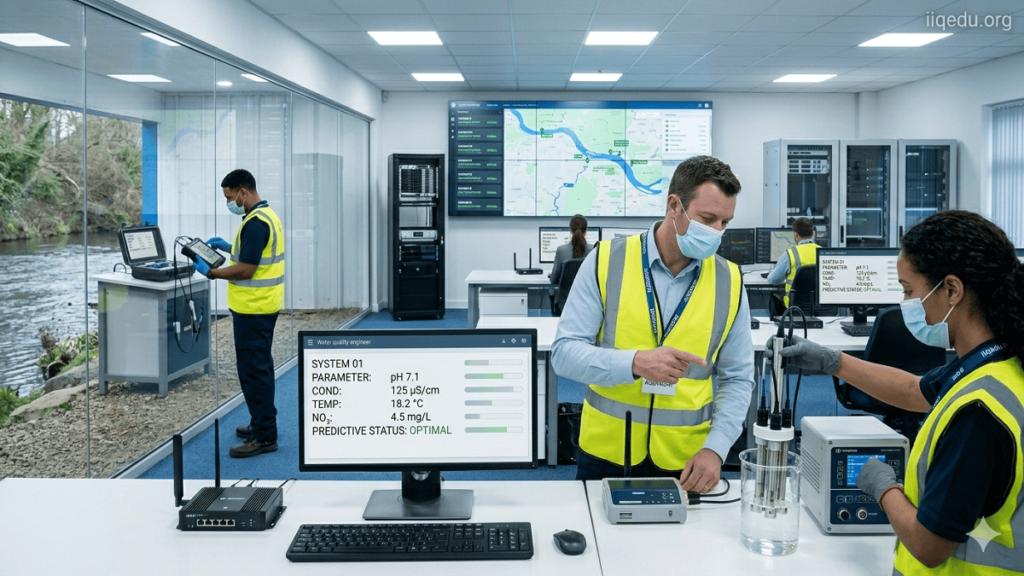
One of the most significant advancements is the ability to monitor water quality continuously. Sensors installed in water bodies or treatment systems provide instant data, allowing quick detection of contamination or irregularities.
2. Smart Sensors and IoT Integration
Innovative monitoring systems use Internet of Things (IoT) devices equipped with sensors that automatically collect and transmit data to centralized platforms. This enables remote monitoring and reduces the need for manual intervention.
3. Automation and Remote Access
Automated systems can operate in remote or hazardous locations, ensuring consistent data collection without requiring constant human presence. This improves efficiency and reduces operational costs.
4. Advanced Data Analytics and Artificial Intelligence
Data collected from monitoring systems is analyzed using advanced algorithms and artificial intelligence. These tools help identify trends, predict potential risks, and support proactive decision-making.
5. Improved Accuracy and Efficiency
Innovations reduce human error and enhance the precision of measurements. Continuous monitoring ensures that even minor changes in water quality are detected promptly.
Importance of Water Quality Monitoring Innovations
These innovations are essential for multiple reasons:
- Public Health Protection: Ensures drinking water is safe and free from harmful contaminants
- Environmental Conservation: Helps maintain healthy ecosystems in rivers, lakes, and oceans
- Regulatory Compliance: Assists industries and governments in meeting environmental standards
- Resource Management: Supports sustainable use and conservation of water resources
- Rapid Response: Enables quick action in case of pollution or contamination events
Applications
Water quality monitoring innovations are widely used in:
- Municipal water supply systems
- Industrial wastewater management
- Agriculture and irrigation systems
- Environmental monitoring of natural water bodies
- Aquaculture and fisheries
Conclusion
Water Quality Monitoring Innovations represent a significant transformation in how water safety and sustainability are managed. By combining real-time monitoring, smart technologies, and data-driven insights, these innovations provide a more reliable, efficient, and proactive approach to ensuring water quality. As global water challenges continue to grow, such innovations will play a critical role in safeguarding this essential resource for future generations.
#Water Quality Monitoring Innovations in vasai
What is Water Quality Monitoring Innovations?
Water Quality Monitoring Innovations refer to the use of advanced technologies, modern tools, and improved methods to monitor, measure, and manage the quality of water more accurately, efficiently, and continuously.
Detailed Explanation
Water quality monitoring is the process of analyzing water to determine its suitability for various uses such as drinking, agriculture, industry, and environmental conservation. Traditionally, this process involved manual sampling and laboratory testing, which could be time-consuming and limited in scope.
With innovations, this process has significantly evolved. Modern water quality monitoring now incorporates digital and automated systems that allow for real-time data collection and analysis. These innovations include smart sensors, remote monitoring devices, data analytics, and intelligent systems that provide faster and more reliable results.
These advanced systems help monitor key water parameters such as:
- Physical characteristics (temperature, turbidity)
- Chemical properties (pH, dissolved oxygen, pollutants)
- Biological factors (bacteria and microorganisms)
Key Features
- Real-time monitoring: Continuous tracking of water conditions
- Automation: Reduced need for manual sampling
- High accuracy: More precise and reliable data
- Remote access: Ability to monitor water from distant locations
- Data-driven insights: Use of analytics for better decision-making
In Simple Terms
Water Quality Monitoring Innovations mean using modern technology to check and manage water quality quickly, accurately, and continuously to ensure it is safe and sustainable.
Conclusion
Water Quality Monitoring Innovations play a crucial role in protecting public health, supporting environmental sustainability, and improving water management systems. By enabling faster detection of contamination and better decision-making, these innovations are essential in addressing global water challenges.
#Water Quality Monitoring Innovations in Kashmir
Who is Water Quality Monitoring Innovations required?
Water Quality Monitoring Innovations are required by a wide range of stakeholders who depend on safe, clean, and well-managed water resources. These innovations are essential for ensuring water safety, regulatory compliance, environmental protection, and efficient resource management.
1. Governments and Regulatory Authorities
Government bodies are among the primary users of water quality monitoring innovations.
- They are responsible for ensuring that water meets public health and environmental standards
- Use advanced monitoring systems to track pollution levels in rivers, lakes, and groundwater
- Enforce regulations related to drinking water quality and wastewater discharge
Purpose: Protect public health and ensure compliance with environmental laws
2. Municipal Water Supply Agencies
Organizations that provide drinking water to cities and communities rely heavily on these innovations.
- Monitor water quality in treatment plants and distribution systems
- Detect contamination in real time
- Ensure safe and consistent water supply to households
Purpose: Deliver safe drinking water and maintain service reliability
3. Industrial Sector
Industries that use or discharge water require monitoring innovations.
- Ensure wastewater meets environmental standards before discharge
- Monitor water used in manufacturing processes
- Reduce environmental impact and improve operational efficiency
Purpose: Regulatory compliance and sustainable operations
4. Environmental and Conservation Organizations
Environmental groups use these innovations to protect ecosystems.
- Monitor water bodies such as rivers, lakes, and oceans
- Detect pollution and ecological changes
- Support conservation and restoration efforts
Purpose: Preserve biodiversity and natural resources
5. Agricultural Sector
Farmers and agricultural organizations use water monitoring technologies for irrigation management.
- Ensure water used for crops is safe and suitable
- Monitor salinity, pH, and nutrient levels
- Optimize water usage and improve crop yield
Purpose: Sustainable agriculture and efficient water use
6. Research and Academic Institutions
Universities and research organizations require advanced monitoring systems.
- Conduct scientific studies on water quality and environmental impact
- Develop new technologies and solutions
- Analyze long-term trends and climate-related changes
Purpose: Knowledge development and innovation
7. Public Health Organizations
Health agencies rely on water quality monitoring to prevent disease outbreaks.
- Detect harmful contaminants and pathogens
- Monitor drinking water safety
- Support public health initiatives
Purpose: Prevent waterborne diseases and protect communities
8. Aquaculture and Fisheries
Water quality is critical in aquatic farming and fisheries.
- Monitor oxygen levels, temperature, and contaminants
- Ensure healthy conditions for aquatic life
- Prevent losses due to poor water quality
Purpose: Maintain productivity and sustainability in aquatic systems
Conclusion
Water Quality Monitoring Innovations are required by governments, industries, communities, and environmental organizations. They play a vital role in ensuring safe water, protecting ecosystems, and supporting sustainable development across multiple sectors.
#Water Quality Monitoring Innovations in Pune
When is Water Quality Monitoring Innovations required?
Water Quality Monitoring Innovations are required whenever there is a need to ensure water safety, maintain environmental standards, and manage water resources efficiently. These innovations are used at different stages and situations where water quality can impact human health, ecosystems, or industrial processes.
1. During Drinking Water Treatment and Supply
Monitoring innovations are essential during water purification and distribution.
- To ensure water is safe for human consumption
- To continuously check for contamination in pipelines and storage systems
- To maintain consistent quality standards
Purpose: Protect public health and ensure safe drinking water
2. In Wastewater Treatment and Disposal
Water quality monitoring is required when treating and releasing wastewater.
- To verify that treated water meets environmental regulations
- To monitor pollutants before discharge into natural water bodies
- To prevent environmental contamination
Purpose: Ensure regulatory compliance and environmental protection
3. When Pollution Risks Are High
Monitoring innovations are crucial in areas prone to contamination.
- Industrial zones, mining areas, and urban regions
- Locations near chemical plants or waste disposal sites
- During accidental spills or environmental emergencies
Purpose: Early detection and rapid response to pollution
4. During Agricultural Activities
Water quality monitoring is required in farming operations.
- To check water suitability for irrigation
- To monitor chemical runoff such as fertilizers and pesticides
- To ensure sustainable use of water resources
Purpose: Support safe and efficient agricultural practices
5. For Environmental Monitoring of Natural Water Bodies
Continuous monitoring is needed in rivers, lakes, and oceans.
- To track ecosystem health and biodiversity
- To detect changes in water conditions over time
- To support conservation efforts
Purpose: Maintain ecological balance and environmental sustainability
6. During Industrial Operations
Industries require monitoring at various stages of production.
- To ensure water used in processes meets quality standards
- To monitor discharge and waste management systems
- To avoid legal penalties and environmental damage
Purpose: Operational efficiency and compliance
7. In Emergency and Disaster Situations
Monitoring innovations are critical during crises.
- Floods, chemical spills, or contamination events
- Natural disasters affecting water sources
- Sudden outbreaks of waterborne diseases
Purpose: Quick detection and immediate corrective action
8. For Regulatory Compliance and Reporting
Organizations must use monitoring innovations to meet legal requirements.
- Regular testing and reporting of water quality data
- Compliance with environmental and safety standards
- Supporting audits and inspections
Purpose: Legal compliance and accountability
Conclusion
Water Quality Monitoring Innovations are required whenever water quality needs to be ensured, maintained, or improved. From daily operations to emergency situations, these innovations provide real-time insights and enable proactive decision-making to safeguard human health, industry performance, and the environment.
#Water Quality Monitoring Innovations in Banglore
Where is Water Quality Monitoring Innovations required?
Water Quality Monitoring Innovations are required across various locations and environments where water quality impacts health, safety, industry, or the environment. These innovations ensure that water is monitored continuously, accurately, and efficiently, enabling proactive management of water resources.
1. Municipal Water Treatment Plants and Distribution Systems
- Monitoring is required in water purification facilities to ensure safe drinking water.
- Pipelines, storage tanks, and reservoirs also require continuous water quality checks.
- Ensures compliance with public health standards and prevents contamination.
2. Industrial and Manufacturing Facilities
- Water used in industrial processes such as cooling, cleaning, and production must be monitored.
- Wastewater discharged from factories needs verification to meet environmental regulations.
- Applicable in chemical, pharmaceutical, food processing, textile, and electronics industries.
3. Agricultural Fields and Irrigation Systems
- Monitoring is required in farms, greenhouses, and irrigation networks.
- Ensures water used for crops is safe, free from contaminants, and suitable for irrigation.
- Helps prevent soil degradation and reduces chemical runoff into nearby water bodies.
4. Natural Water Bodies
- Rivers, lakes, wetlands, and reservoirs require monitoring for ecosystem health.
- Detects pollution, harmful algal blooms, or changes in water chemistry that can affect aquatic life.
- Supports conservation efforts and sustainable resource management.
5. Aquaculture and Fisheries
- Fish farms and aquatic systems rely on water quality monitoring to maintain oxygen levels, temperature, and contamination-free conditions.
- Helps prevent disease outbreaks and supports sustainable production.
6. Remote or Hazardous Locations
- Monitoring is needed in difficult-to-access areas, such as mountain streams, underground wells, or industrial effluent discharge points.
- Innovations like IoT sensors and automated systems allow for remote, real-time data collection.
7. Emergency and Disaster Zones
- Areas affected by floods, chemical spills, or natural disasters require immediate monitoring to detect contamination.
- Enables rapid response to protect communities and restore safe water access.
8. Research and Academic Settings
- Universities, laboratories, and research institutes use innovations to study water quality trends.
- Provides data for environmental studies, climate impact assessments, and development of new water treatment technologies.
Conclusion
Water Quality Monitoring Innovations are required wherever water safety, quality, and sustainability are critical. From municipal water systems to agricultural fields, industrial facilities, natural ecosystems, and disaster zones, these innovations provide accurate, real-time data to ensure safe, sustainable, and responsible water management.
#Water Quality Monitoring Innovations in Delhi
Case Study of Water Quality Monitoring Innovations
1. Background
The Thames River in the United Kingdom has historically faced challenges with water pollution from industrial runoff, urban wastewater, and agricultural chemicals. Maintaining high water quality is critical for public health, aquatic ecosystems, and recreational activities. Traditional monitoring relied on periodic sampling and laboratory analysis, which often failed to detect sudden pollution spikes.
To address these challenges, the Thames Water Authority implemented a Water Quality Monitoring Innovation program using real-time sensors, IoT technologies, and predictive analytics to enhance water safety and environmental management.
2. Problem Statement
The river ecosystem and communities faced several risks:
- Intermittent contamination from industrial and agricultural sources
- Delayed detection of harmful chemical or biological pollutants
- Limited monitoring coverage across the river’s extensive network
- Difficulty in maintaining compliance with regulatory standards
The key objective was to ensure continuous, real-time monitoring of water quality and rapid detection of potential hazards.
3. Objectives
- Implement a smart, automated water monitoring system
- Detect chemical, physical, and biological pollutants in real time
- Provide actionable data for regulatory compliance and public safety
- Improve environmental management and ecosystem conservation
4. Innovative Approach
a. Smart Sensors and IoT Deployment
- Sensors installed at multiple points along the river measured pH, turbidity, dissolved oxygen, heavy metals, and microbial levels.
- IoT-enabled devices transmitted real-time data to centralized monitoring stations.
b. Data Analytics and Predictive Modeling
- Collected data was analyzed using AI and machine learning algorithms to detect patterns and predict potential pollution events.
- Early warning alerts were generated for authorities to take immediate action.
c. Remote Monitoring and Accessibility
- Authorities and environmental managers accessed real-time data via secure dashboards.
- Enabled remote decision-making without the need for constant on-site sampling.
d. Public Transparency
- Real-time water quality data was made publicly accessible, increasing transparency and trust among communities and stakeholders.
5. Challenges Faced
- Integrating multiple sensor types into a single monitoring platform
- Maintaining sensor accuracy in varying environmental conditions
- Ensuring data security and reliability for remote access
- Initial high investment costs for technology deployment
6. Outcomes
- Continuous monitoring of the river, reducing response time to pollution events from days to hours
- Improved detection of chemical spills, microbial contamination, and sudden turbidity changes
- Enhanced compliance with environmental regulations
- Data-driven strategies for ecosystem conservation and sustainable water management
- Increased public trust through transparent reporting
7. Key Learnings
- Real-time monitoring enables faster and more effective decision-making
- IoT and smart sensors significantly improve coverage compared to traditional sampling
- Data analytics allows predictive insights and risk assessment
- Collaboration between government, technology providers, and communities is essential for successful implementation
8. Conclusion
The Thames River case study demonstrates the transformative impact of Water Quality Monitoring Innovations. By integrating smart sensors, IoT devices, and predictive analytics, authorities achieved continuous, accurate, and proactive water quality management, ensuring public safety, regulatory compliance, and environmental sustainability.
#Water Quality Monitoring Innovations in Maharashtra
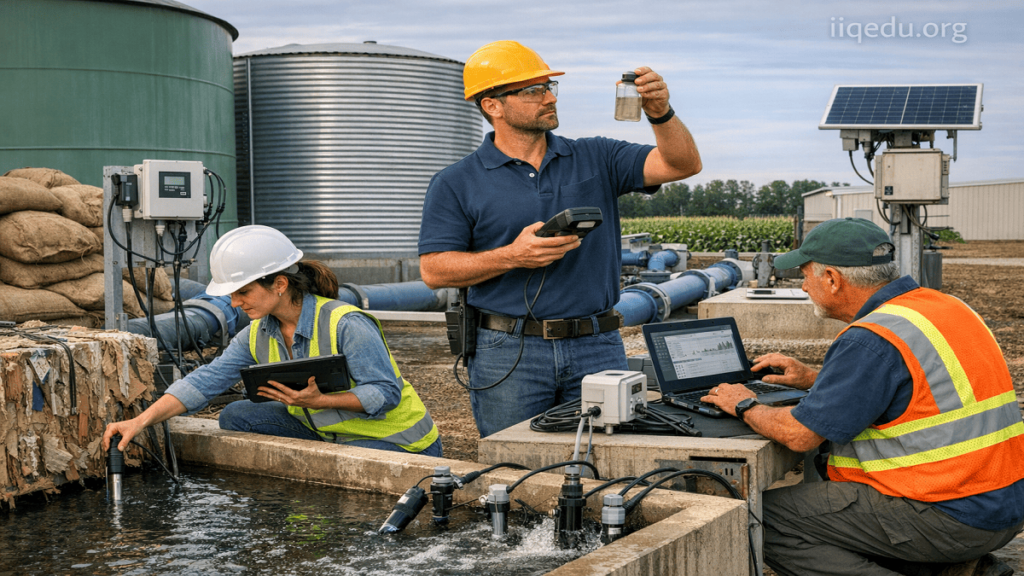
White Paper of Water Quality Monitoring Innovations
1. Background
The Thames River in the United Kingdom has historically faced challenges with water pollution from industrial runoff, urban wastewater, and agricultural chemicals. Maintaining high water quality is critical for public health, aquatic ecosystems, and recreational activities. Traditional monitoring relied on periodic sampling and laboratory analysis, which often failed to detect sudden pollution spikes.
To address these challenges, the Thames Water Authority implemented a Water Quality Monitoring Innovation program using real-time sensors, IoT technologies, and predictive analytics to enhance water safety and environmental management.
2. Problem Statement
The river ecosystem and communities faced several risks:
- Intermittent contamination from industrial and agricultural sources
- Delayed detection of harmful chemical or biological pollutants
- Limited monitoring coverage across the river’s extensive network
- Difficulty in maintaining compliance with regulatory standards
The key objective was to ensure continuous, real-time monitoring of water quality and rapid detection of potential hazards.
3. Objectives
- Implement a smart, automated water monitoring system
- Detect chemical, physical, and biological pollutants in real time
- Provide actionable data for regulatory compliance and public safety
- Improve environmental management and ecosystem conservation
4. Innovative Approach
a. Smart Sensors and IoT Deployment
- Sensors installed at multiple points along the river measured pH, turbidity, dissolved oxygen, heavy metals, and microbial levels.
- IoT-enabled devices transmitted real-time data to centralized monitoring stations.
b. Data Analytics and Predictive Modeling
- Collected data was analyzed using AI and machine learning algorithms to detect patterns and predict potential pollution events.
- Early warning alerts were generated for authorities to take immediate action.
c. Remote Monitoring and Accessibility
- Authorities and environmental managers accessed real-time data via secure dashboards.
- Enabled remote decision-making without the need for constant on-site sampling.
d. Public Transparency
- Real-time water quality data was made publicly accessible, increasing transparency and trust among communities and stakeholders.
5. Challenges Faced
- Integrating multiple sensor types into a single monitoring platform
- Maintaining sensor accuracy in varying environmental conditions
- Ensuring data security and reliability for remote access
- Initial high investment costs for technology deployment
6. Outcomes
- Continuous monitoring of the river, reducing response time to pollution events from days to hours
- Improved detection of chemical spills, microbial contamination, and sudden turbidity changes
- Enhanced compliance with environmental regulations
- Data-driven strategies for ecosystem conservation and sustainable water management
- Increased public trust through transparent reporting
7. Key Learnings
- Real-time monitoring enables faster and more effective decision-making
- IoT and smart sensors significantly improve coverage compared to traditional sampling
- Data analytics allows predictive insights and risk assessment
- Collaboration between government, technology providers, and communities is essential for successful implementation
8. Conclusion
The Thames River case study demonstrates the transformative impact of Water Quality Monitoring Innovations. By integrating smart sensors, IoT devices, and predictive analytics, authorities achieved continuous, accurate, and proactive water quality management, ensuring public safety, regulatory compliance, and environmental sustainability.
This example highlights how modern innovations are not only improving monitoring efficiency but also enabling data-driven environmental governance.
If you want, I can also create a White Paper for Water Quality Monitoring Innovations and Industry Applications next in the same detailed professional format. Do you want me to do that?
#Water Quality Monitoring Innovations in Patna
White Paper of Water Quality Monitoring Innovations
1. Executive Summary
Water is a critical resource for human health, industrial processes, agriculture, and ecosystem sustainability. Ensuring water quality has become increasingly challenging due to urbanization, industrialization, agricultural runoff, and climate change. Traditional water quality monitoring methods—manual sampling and laboratory testing—are often time-consuming, limited in frequency, and unable to detect sudden contamination events.
Water Quality Monitoring Innovations address these challenges by integrating advanced technologies, intelligent systems, and automated processes to continuously monitor water quality in real time. This white paper provides an in-depth overview of these innovations, their applications, methodologies, challenges, and future trends, emphasizing their role in safeguarding public health, ensuring regulatory compliance, and promoting sustainable water management.
2. Introduction
Water quality monitoring is essential for public safety, environmental protection, and industrial operations. The increasing complexity of global water systems, combined with growing environmental pressures, has made conventional monitoring methods insufficient.
Innovations in monitoring technologies enable:
- Real-time data collection and analysis
- Automated and remote monitoring capabilities
- Predictive insights using data analytics and AI
- Improved regulatory compliance and decision-making
These advances have transformed water quality management from reactive testing to proactive and predictive strategies.
3. Objectives
The primary objectives of Water Quality Monitoring Innovations include:
- Ensuring Safe Water: Protect public health and ecosystem integrity
- Regulatory Compliance: Meet national and international water quality standards
- Environmental Protection: Detect and prevent pollution in natural water bodies
- Operational Efficiency: Optimize water use in agriculture, industry, and municipalities
- Data-Driven Decision Making: Provide accurate and actionable insights for rapid interventions
4. Scope and Key Components
Water quality monitoring innovations cover multiple dimensions:
4.1 Physical Parameters
- Temperature, turbidity, and color
- Sediment and particulate levels
4.2 Chemical Parameters
- pH, dissolved oxygen, and nutrient levels
- Heavy metals, toxins, and pollutants
4.3 Biological Parameters
- Bacterial and microbial content
- Algal blooms and pathogen detection
4.4 Technological Components
- Smart sensors and IoT devices
- Automated sampling systems
- Remote monitoring platforms
- AI and data analytics for predictive insights
5. Verification and Implementation Framework
5.1 Deployment of Smart Sensors
- Sensors placed at water intake points, rivers, lakes, and treatment plants
- Continuous measurement of key water parameters
5.2 Data Integration and Analytics
- Real-time data transmission to central platforms
- Use of AI and machine learning for trend analysis and early warning
5.3 Remote Monitoring and Alerts
- Web-based dashboards and mobile apps for operators
- Automated alerts for parameter deviations or contamination events
5.4 Certification and Compliance
- Integration with regulatory reporting requirements
- Alignment with environmental standards such as ISO 14001
5.5 Continuous Improvement
- Regular calibration and maintenance of sensors
- Feedback loops for operational optimization and system upgrades
6. Technologies Driving Innovation
- IoT and Sensor Networks: Real-time monitoring of multiple parameters
- Artificial Intelligence: Predictive modeling and anomaly detection
- Cloud Platforms: Centralized data storage, processing, and visualization
- Blockchain: Ensures secure and transparent reporting of water quality data
- Remote Sensing and Satellite Imaging: Detect pollution and environmental changes over large areas
7. Challenges
- High initial investment costs for technology deployment
- Integrating multiple types of sensors into a unified system
- Data accuracy and reliability in harsh environmental conditions
- Ensuring cybersecurity and privacy of water quality data
- Resistance to adoption due to lack of technical expertise
8. Best Practices
- Adopt risk-based monitoring, prioritizing high-risk areas first
- Invest in training programs for operators and stakeholders
- Use redundant monitoring systems to ensure reliability
- Implement transparent reporting for regulatory compliance and public trust
- Continuously evaluate technology upgrades to maintain accuracy and efficiency
9. Industry Applications
Water quality monitoring innovations are widely applied across industries and sectors:
- Municipal Water Supply: Ensuring safe drinking water
- Agriculture: Monitoring irrigation water for crop safety
- Industrial Operations: Compliance with wastewater discharge standards
- Environmental Conservation: Monitoring rivers, lakes, and wetlands
- Aquaculture: Maintaining healthy aquatic ecosystems
- Research and Academia: Studying water systems and environmental trends
10. Future Trends
- Increased Automation: Fully autonomous monitoring systems
- Real-Time Predictive Analytics: Anticipating pollution events before they occur
- Integration with Smart Cities: Water quality as part of urban digital infrastructure
- Global Standardization: Unified international monitoring protocols
- Sustainability Focus: Reducing energy and resource consumption in monitoring systems
11. Conclusion
Water Quality Monitoring Innovations represent a paradigm shift from reactive testing to proactive, continuous, and intelligent water management. By combining IoT, AI, and remote monitoring technologies, organizations and governments can ensure water safety, enhance environmental stewardship, and maintain regulatory compliance. These innovations are essential for addressing growing water challenges, protecting public health, and promoting sustainable resource management in an increasingly complex world.
#Water Quality Monitoring Innovations in Mumbai
Industry Application of Water Quality Monitoring Innovations
Water Quality Monitoring Innovations have become critical across multiple industries due to the increasing demand for safe water, regulatory compliance, environmental protection, and operational efficiency. By integrating advanced technologies, real-time monitoring systems, and data analytics, industries can manage water resources more effectively while minimizing environmental and health risks.
1. Municipal Water Supply
Municipalities and public utilities rely heavily on water quality monitoring innovations.
Applications:
- Continuous monitoring of drinking water treatment plants and distribution networks
- Detection of microbial contamination, chemical pollutants, and turbidity changes
- Real-time alerts for system failures, contamination events, or infrastructure issues
Impact:
Ensures safe drinking water, protects public health, and supports regulatory compliance.
2. Industrial and Manufacturing Sector
Industries that use large volumes of water or generate wastewater require advanced monitoring systems.
Applications:
- Monitoring water used in production processes such as cooling, cleaning, or chemical reactions
- Tracking wastewater discharge to ensure compliance with environmental regulations
- Preventing industrial pollution by detecting chemical, heavy metal, or thermal contamination
Impact:
Reduces environmental liability, optimizes water usage, and ensures operational efficiency.
3. Agriculture and Irrigation
Water quality directly affects crop yield, soil health, and sustainability in agriculture.
Applications:
- Monitoring water used for irrigation for salinity, pH, nutrient levels, and contamination
- Detecting chemical runoff from fertilizers and pesticides
- Integrating IoT-based systems to automate irrigation decisions based on water quality data
Impact:
Supports sustainable agriculture, improves crop productivity, and prevents soil and water degradation.
4. Aquaculture and Fisheries
Maintaining optimal water conditions is vital for fish and aquatic organism health.
Applications:
- Monitoring oxygen levels, temperature, pH, and pollutants in fish ponds or aquaculture tanks
- Early detection of harmful microorganisms or algal blooms
- Automated systems to adjust water conditions in real time
Impact:
Enhances fish survival rates, increases productivity, and maintains a sustainable aquatic ecosystem.
5. Environmental and Ecosystem Management
Water quality innovations are essential for protecting natural water bodies and biodiversity.
Applications:
- Monitoring rivers, lakes, wetlands, and groundwater for chemical and biological pollutants
- Detecting industrial or agricultural contamination upstream
- Supporting environmental conservation initiatives and compliance with environmental standards
Impact:
Preserves ecosystems, maintains biodiversity, and enables proactive environmental protection.
6. Research and Academic Institutions
Universities, laboratories, and research organizations rely on monitoring innovations for scientific studies.
Applications:
- Collecting continuous, high-quality water data for research on pollution, climate change, and ecosystem health
- Testing and developing new water treatment and purification technologies
- Modeling predictive trends in water quality using AI and data analytics
Impact:
Supports innovation, improves environmental knowledge, and guides policy-making.
7. Disaster Management and Emergency Response
Water quality monitoring is crucial during emergencies such as floods, chemical spills, or contamination events.
Applications:
- Rapid detection of pollutants and pathogens in affected water sources
- Remote monitoring in inaccessible or hazardous areas
- Providing data for quick decision-making and public health advisories
Impact:
Minimizes public health risks, accelerates disaster response, and ensures timely mitigation actions.
8. Food and Beverage Industry
Water quality directly impacts production, safety, and compliance in food and beverage operations.
Applications:
- Monitoring water used in processing, cleaning, and ingredient preparation
- Ensuring compliance with food safety standards (e.g., microbial and chemical limits)
- Continuous monitoring to prevent contamination during production
Impact:
Maintains product safety, reduces risk of recalls, and enhances brand reputation.
Conclusion
Water Quality Monitoring Innovations are widely applicable across sectors, from municipal water supply to agriculture, industry, and environmental management. By leveraging smart sensors, IoT, AI, and automated systems, industries can ensure safe and sustainable water use, maintain regulatory compliance, and respond proactively to contamination events. These innovations are essential for protecting public health, conserving ecosystems, and promoting long-term sustainability.
#Water Quality Monitoring Innovations in India
Ask FAQs
What are Water Quality Monitoring Innovations?
Water Quality Monitoring Innovations refer to advanced technologies, methods, and systems used to monitor, measure, and manage water quality more accurately, efficiently, and continuously. These include smart sensors, IoT devices, automated sampling, real-time data analytics, and predictive AI tools that help ensure safe water for human consumption, industrial use, agriculture, and environmental conservation.
Why are Water Quality Monitoring Innovations important?
These innovations are crucial because they provide real-time and accurate monitoring of water quality, allowing for early detection of contamination, regulatory compliance, protection of public health, and sustainable water management. They reduce reliance on manual testing, minimize human error, and enable proactive decision-making.
Who requires Water Quality Monitoring Innovations?
Water quality monitoring innovations are required by governments, municipal water agencies, industries, agriculture, aquaculture, research institutions, and environmental organizations. Essentially, any sector that depends on safe, clean, and sustainable water resources benefits from implementing these innovations.
When should Water Quality Monitoring Innovations be implemented?
These innovations should be implemented:
During drinking water treatment and distribution
In industrial processes and wastewater management
In agricultural irrigation systems
In natural water bodies for ecosystem monitoring
During emergency situations such as floods, chemical spills, or contamination events
For regulatory compliance and ongoing environmental management
Where are Water Quality Monitoring Innovations applied?
They are applied in a wide range of locations, including:
Municipal water supply plants and pipelines
Industrial and manufacturing facilities
Agricultural fields and irrigation networks
Aquaculture farms and fisheries
Rivers, lakes, wetlands, and groundwater sources
Research laboratories and academic institutions
Emergency and disaster-affected zones
Source: Earth Science Answers
Table of Contents
Disclaimer
This content is intended for informational and educational purposes only. While efforts have been made to ensure accuracy, it does not constitute professional, legal, or regulatory advice. Organizations should consult qualified experts and follow applicable standards before implementing Water Quality Monitoring Innovations.