Tribological Testing
Tribological testing is a critical area of study in materials science and mechanical engineering, focused on understanding the behavior of surfaces in relative motion under various conditions. Tribology, the overarching field, encompasses the study of friction, wear, and lubrication, which are fundamental to the performance, reliability, and longevity of mechanical systems. Tribological testing provides quantitative and qualitative data that guide the design of components ranging from automotive engines to biomedical implants.
1. Purpose of Tribological Testing
Tribological testing is conducted to:
- Characterize friction: Understanding the coefficient of friction between materials is essential for efficiency and energy consumption in mechanical systems.
- Assess wear resistance: Wear leads to material loss, surface degradation, and eventual component failure. Testing helps predict lifespan and performance under operational conditions.
- Evaluate lubrication effectiveness: Lubricants reduce friction and wear. Testing helps determine optimal lubricant type, viscosity, and additive performance.
- Simulate real-world operating conditions: Components in machinery experience complex loads, temperatures, and environments. Tribological testing replicates these to ensure reliability.
2. Types of Tribological Tests
Tribological testing can be broadly classified based on the nature of motion and contact conditions:
a. Sliding Wear Tests
- A common test is the pin-on-disk method, where a stationary pin slides against a rotating disk under controlled load and speed.
- Metrics measured: friction coefficient, wear rate, surface roughness changes.
- Standards: ASTM G99 is widely used for pin-on-disk testing.
b. Rolling Contact Tests
- Simulate rolling elements in bearings or gears.
- Ball-on-flat or roller-on-disk setups are common.
- These tests help study contact fatigue, pitting, and rolling resistance.
c. Abrasive Wear Tests
- Materials are exposed to abrasive particles under controlled conditions.
- Taber Abraser or dry sand rubber wheel tests measure resistance to abrasive wear.
d. Erosive Wear Tests
- Simulate material loss due to high-velocity particles impacting a surface.
- Critical in industries like aerospace, mining, and pipelines.
e. Lubrication Performance Tests
- Evaluate lubricant behavior under varying loads, speeds, and temperatures.
- Common setups include Four-Ball Tribometer, SRV (Sliding Reciprocating) Test, and boundary lubrication tests.
3. Measurement Parameters
Tribological tests measure several parameters to assess performance:
- Coefficient of friction (μ): Ratio of tangential to normal force.
- Wear rate: Material loss per unit distance or time (e.g., mm³/N·m).
- Surface topography: Post-test analysis using optical microscopy, SEM, or profilometry.
- Temperature changes: Frictional heat generation can influence wear and lubrication.
4. Applications
Tribological testing is applied across industries:
- Automotive and aerospace: Engine components, bearings, gears.
- Biomedical implants: Artificial joints and dental prosthetics, where wear debris can affect biocompatibility.
- Manufacturing: Cutting tools, forming dies, and machinery subjected to high frictional loads.
- Energy systems: Wind turbines, turbines, and hydraulic machinery where lubrication and wear are critical.
5. Advanced Considerations
Modern tribological testing often incorporates:
- High-temperature and high-speed testing to simulate real-world conditions.
- Corrosive environments to study combined chemical and mechanical wear.
- Nano-tribology, which investigates friction and wear at micro and nano scales, particularly relevant for MEMS devices and thin coatings.
6. Standards and References
- ASTM G99-17: Standard test method for wear testing with a pin-on-disk apparatus.
- ISO 20808:2004: Determination of wear by dry sand/rubber wheel apparatus.
- Journals and Research: Wear (Elsevier), Tribology International provide extensive studies on testing methods and material behavior.
For further reading:
- Tribology Handbook by Michael Nosonovsky & Bharat Bhushan – Comprehensive coverage of tribological principles and testing.
- ASTM Standards for Tribology – Official standards for wear and friction testing.
- Tribology International Journal – Latest research articles on experimental and theoretical tribology.
Tribological testing is an indispensable tool for engineers and researchers aiming to optimize material selection, surface engineering, and lubrication strategies. The correct implementation of these tests can dramatically improve the durability, efficiency, and safety of mechanical systems.
#Tribological Testing in India
What is Tribological Testing?
Tribological testing is the systematic evaluation of how materials behave under conditions of relative motion, specifically focusing on friction, wear, and lubrication. It is a fundamental part of the field of tribology, which studies the interactions between surfaces in contact and how these interactions affect the performance, efficiency, and lifespan of mechanical components. The goal of tribological testing is to quantify and understand these interactions so engineers can optimize material selection, surface treatments, and lubrication strategies for industrial and biomedical applications.
1. Purpose of Tribological Testing
The primary objectives of tribological testing are:
- Friction Analysis: Measure the coefficient of friction between materials to assess energy losses and mechanical efficiency.
- Wear Characterization: Determine the wear rate and wear mechanisms (adhesive, abrasive, erosive, or corrosive) to predict material longevity.
- Lubricant Evaluation: Test the effectiveness of lubricants under varying loads, speeds, and temperatures.
- Surface Engineering Optimization: Assess how coatings, surface treatments, or composite materials affect performance.
- Simulation of Real Conditions: Replicate operating conditions such as high temperature, high load, corrosive environments, or high-speed motion.
2. Common Tribological Tests
Tribological testing is performed using specialized apparatuses, depending on the type of motion and contact:
- Sliding Wear Tests
- Pin-on-Disk: A pin slides over a rotating disk; measures friction and wear.
- Block-on-Ring: Simulates sliding under load and is often used for lubricated systems.
- Rolling Contact Tests
- Ball-on-Flat or Roller-on-Disk: Simulate bearings or gear contacts, assessing rolling resistance and fatigue.
- Abrasive Wear Tests
- Dry Sand Rubber Wheel Test: Material is exposed to abrasive particles to simulate erosion.
- Lubrication Tests
- Four-Ball Tribometer: Evaluates lubricant performance under high load.
- SRV (Sliding Reciprocating) Test: Measures friction and wear under lubricated or boundary conditions.
- Erosive and Corrosive Wear Tests
- Examine material loss due to particle impact or chemical interactions combined with mechanical stress.
3. Key Measurements
Tribological testing provides quantitative and qualitative data, including:
- Coefficient of friction (μ): Ratio of frictional force to normal force.
- Wear rate: Material loss per distance or time (e.g., mm³/N·m).
- Surface morphology: Analyzed via microscopy or profilometry.
- Temperature effects: Monitored to understand frictional heating and lubricant behavior.
4. Applications
Tribological testing is critical in industries such as:
- Automotive and Aerospace: Engines, gears, bearings.
- Biomedical: Artificial joints, dental implants.
- Manufacturing: Cutting tools, forming dies, machinery components.
- Energy Systems: Wind turbines, turbines, pipelines.
#Tribological Testing in Singapore
Who is Tribological Testing required?
Tribological testing is required by a wide range of professionals, industries, and researchers whenever there is a need to understand and optimize how materials and surfaces interact under motion. Its necessity arises from the critical role of friction, wear, and lubrication in determining the performance, efficiency, and longevity of mechanical systems. Below is a detailed overview of who requires tribological testing and why:
1. Mechanical and Materials Engineers
- Engineers in mechanical design, materials science, and manufacturing rely on tribological testing to select appropriate materials and surface treatments for components that experience friction and wear.
- Applications include bearings, gears, pistons, and cutting tools, where friction and wear can significantly affect performance and energy efficiency.
- Tribological testing helps engineers predict failure modes, optimize lubrication, and reduce maintenance costs.
2. Automotive and Aerospace Industries
- Automotive engineers use tribological testing for engine components, transmission systems, brake pads, and tires, ensuring performance under high temperature, load, and speed.
- Aerospace engineers test aircraft landing gears, turbine blades, and hydraulic systems, where failure due to friction or wear can be catastrophic.
- Tribological testing in these industries ensures safety, durability, and regulatory compliance.
3. Biomedical and Healthcare Fields
- Tribological testing is essential for orthopedic implants (hip/knee joints), dental prosthetics, and cardiovascular devices.
- Wear of implant materials can produce debris that causes inflammation or tissue damage, so testing predicts long-term biocompatibility and durability.
- Researchers use tribological testing to develop advanced coatings and low-friction biomaterials for medical applications.
4. Energy and Industrial Machinery Sectors
- Power generation, oil and gas, and wind energy systems require tribological testing to maximize the efficiency and lifespan of turbines, pumps, compressors, and pipelines.
- Lubrication and wear studies help reduce energy losses and prevent costly downtime due to component failure.
5. Academia and Research Organizations
- Universities and research labs perform tribological testing to study fundamental surface interactions, friction mechanisms, and new materials.
- Nano-tribology and micro-scale testing are particularly important for MEMS devices, microelectronics, and advanced coatings.
6. Regulatory and Standards Bodies
- Tribological testing is required by organizations that set performance standards for mechanical systems, medical implants, and industrial components.
- Examples include ASTM, ISO, and SAE, which provide standardized test methods to ensure consistency and safety across industries.
7. Manufacturers of Coatings, Lubricants, and Surface Treatments
- Companies producing lubricants, anti-wear coatings, and surface-engineered materials rely on tribological testing to demonstrate effectiveness and optimize formulations.
- Testing helps quantify friction reduction, wear resistance, and thermal stability under realistic operating conditions.
Summary:
Tribological testing is required whenever surface interactions, friction, wear, or lubrication affect performance, safety, or longevity. This includes professionals in engineering, biomedical devices, automotive and aerospace systems, energy sectors, materials research, and standards compliance. Essentially, any industry or application where moving parts interact under load can benefit from tribological testing.
References:
- ASTM Tribology Standards: https://www.astm.org/Standards/tribology-standards.html
- Nosonovsky, M., Bhushan, B. Tribology Handbook, Springer: https://www.springer.com/gp/book/9781441973782
- Tribology International Journal: https://www.journals.elsevier.com/tribology-international
#Tribological Testing in Chennai
When is Tribological Testing required?
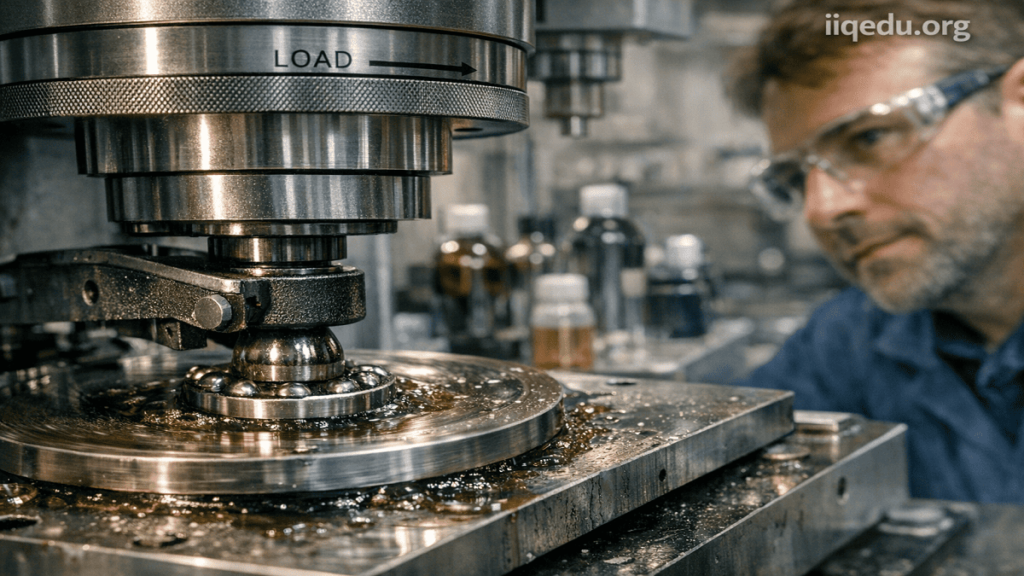
Tribological testing is required whenever there is a need to evaluate the interaction between surfaces in motion, particularly to ensure reliability, safety, efficiency, or longevity of components in mechanical, industrial, or biomedical systems. Its timing is often determined by stages in design, production, maintenance, or research. Here is a detailed breakdown:
1. During Material Selection and Product Design
- Purpose: To identify suitable materials or coatings that minimize friction and wear.
- When required:
- When designing components exposed to sliding, rolling, or abrasive contact.
- For selecting lubricants or surface treatments to meet specific performance criteria.
- Example: Choosing the appropriate alloy and coating for automotive engine bearings to withstand high-speed operation without excessive wear.
2. During Prototype Development and Testing
- Purpose: To validate design assumptions and predict component lifespan under realistic operating conditions.
- When required:
- After initial product design but before mass production.
- When developing new mechanical systems or biomedical implants that must operate under load, heat, or corrosive environments.
- Example: Testing hip implants under simulated body motion to ensure long-term wear resistance.
3. Before Production Scale-Up
- Purpose: To ensure quality, safety, and compliance with standards before large-scale manufacturing.
- When required:
- For certifying that materials and lubricants meet industrial standards (ASTM, ISO).
- To prevent costly failures or recalls due to premature wear or friction-related issues.
- Example: Evaluating cutting tool coatings to ensure they maintain performance in high-speed machining.
4. During Product Lifespan or Maintenance
- Purpose: To monitor wear and performance degradation for maintenance planning or component replacement.
- When required:
- In systems with high operational stress, such as turbines, gears, or engines.
- When performance declines or friction increases, indicating potential failure.
- Example: Monitoring bearing wear in wind turbines to schedule preventive maintenance.
5. When Developing New Lubricants or Coatings
- Purpose: To optimize friction reduction and wear protection.
- When required:
- During R&D of lubricants, anti-wear coatings, or nanocomposite surfaces.
- To determine performance under varying loads, speeds, and temperatures.
- Example: Testing boundary lubrication performance of engine oils under extreme pressure.
6. When Regulatory Compliance or Certification is Needed
- Purpose: To meet industrial, safety, or medical standards.
- When required:
- For medical implants, automotive components, aerospace machinery, and industrial tools.
- To provide documented evidence of friction, wear, or lubrication performance.
- Example: Demonstrating that hip joint implants meet ISO 14242 standards for wear testing.
Summary
Tribological testing is required:
- Early in design for material and lubricant selection.
- During prototyping to validate performance.
- Before production to ensure safety and compliance.
- During operational life to monitor wear and schedule maintenance.
- In R&D for new materials, coatings, or lubricants.
- For regulatory certification to meet industry standards.
In essence, any stage where surface interactions affect performance, safety, or lifespan is a point at which tribological testing is necessary.
#Tribological Testing in Delhi
Where is Tribological Testing required?
Tribological testing is required in any environment, industry, or application where surfaces interact under relative motion, particularly where friction, wear, or lubrication affect performance, safety, efficiency, or lifespan. Its use spans multiple sectors, from industrial machinery to biomedical devices. Below is a detailed breakdown of where tribological testing is essential:
1. Automotive Industry
- Where required:
- Engines, transmissions, brakes, tires, and suspension components.
- Areas where high friction, wear, or lubrication challenges exist.
- Purpose:
- Ensure fuel efficiency, reduce component wear, and enhance safety.
- Example: Testing piston rings and cylinder liners under high temperature and pressure conditions.
2. Aerospace Industry
- Where required:
- Aircraft engines, landing gears, turbine blades, and hydraulic systems.
- Components exposed to high loads, temperatures, and speed variations.
- Purpose:
- Prevent catastrophic failures, ensure reliability, and extend service life.
- Example: Evaluating wear of rolling-element bearings in jet engines.
3. Energy and Power Generation
- Where required:
- Wind turbines, hydroelectric turbines, steam turbines, pumps, compressors, and pipelines.
- Purpose:
- Minimize energy losses due to friction, prevent unexpected downtime, and reduce maintenance costs.
- Example: Testing lubricants and coatings for turbine bearings under high-speed rotation.
4. Biomedical Applications
- Where required:
- Artificial joints (hip, knee), dental implants, and cardiovascular devices (heart valves).
- Purpose:
- Reduce wear debris, ensure biocompatibility, and extend implant lifespan.
- Example: Simulating gait cycles to test polyethylene wear in hip implants.
5. Manufacturing and Industrial Machinery
- Where required:
- Cutting tools, dies, forming equipment, conveyors, and heavy machinery components.
- Purpose:
- Optimize tool life, reduce frictional losses, and prevent surface failure under repeated stress.
- Example: Tribological testing of coatings on high-speed steel tools to prevent abrasive wear.
6. Research and Development
- Where required:
- Universities, material science labs, and R&D centers.
- Purpose:
- Study fundamental friction and wear mechanisms, develop new materials, lubricants, and coatings.
- Example: Nano-tribology testing for MEMS devices and thin film coatings.
7. Coatings, Lubricant, and Material Production
- Where required:
- Manufacturers producing anti-wear coatings, surface treatments, lubricants, and advanced composites.
- Purpose:
- Verify performance claims, optimize formulations, and benchmark products against competitors.
- Example: Testing molybdenum disulfide (MoS₂) coatings for dry lubrication applications.
8. Regulatory and Standards Testing
- Where required:
- Any industry that must comply with ASTM, ISO, SAE, or FDA standards.
- Purpose:
- Ensure compliance, safety, and reliability.
- Example: ISO 14242 testing of artificial joints to evaluate wear under simulated body conditions.
Summary
Tribological testing is required wherever surface interactions affect function, safety, or longevity, including:
- Automotive and aerospace systems
- Energy and power generation equipment
- Biomedical implants and prosthetics
- Manufacturing and industrial machinery
- Material and lubricant R&D
- Compliance with industry standards
In essence, any sector involving moving parts, mechanical contact, or surface engineering can require tribological testing.
References:
- ASTM Tribology Standards: https://www.astm.org/Standards/tribology-standards.html
- Nosonovsky, M., Bhushan, B. Tribology Handbook, Springer: https://www.springer.com/gp/book/9781441973782
- Tribology International Journal: https://www.journals.elsevier.com/tribology-international
#Tribological Testing in Banglore
How is Tribological Testing required?
Tribological testing is required through a systematic, controlled process designed to simulate real-world operating conditions and quantify friction, wear, and lubrication performance. The “how” involves selecting appropriate test methods, preparing specimens, defining operating parameters, executing tests, and analyzing results. Here’s a professional, detailed explanation:
1. Define the Objective
Before conducting any tribological test, it is crucial to determine why the test is needed:
- Material evaluation: Assessing wear resistance or friction characteristics.
- Lubricant performance: Determining how oils, greases, or solid lubricants reduce friction.
- Surface coating assessment: Testing anti-wear or low-friction coatings.
- Component durability prediction: Simulating operational conditions to forecast lifespan.
Clear objectives ensure that the correct test method and parameters are selected.
2. Select the Appropriate Test Method
Tribological testing methods are chosen based on contact type, motion, load, and environment:
a. Sliding Tests
- Examples: Pin-on-disk, block-on-ring
- Purpose: Simulate sliding contacts like bearings, gears, or seals
b. Rolling Tests
- Examples: Ball-on-flat, roller-on-disk
- Purpose: Simulate rolling contact applications such as bearings and tires
c. Abrasive and Erosive Tests
- Examples: Dry sand/rubber wheel, slurry erosion test
- Purpose: Assess resistance to abrasive wear or particle impact
d. Lubrication Performance Tests
- Examples: Four-ball tribometer, SRV (Sliding Reciprocating) Test
- Purpose: Evaluate lubricant performance under load, temperature, and speed
e. Specialized Conditions
- High temperature, corrosive environment, vacuum, or nano-scale tests
- Purpose: Replicate extreme operating conditions relevant to aerospace, biomedical, or MEMS devices
3. Prepare the Specimens and Surfaces
- Specimens must be machined or polished to standard dimensions and surface roughness.
- Surface treatments, coatings, or lubricants are applied according to the test requirements.
- Proper preparation ensures repeatable and reliable results.
4. Define Test Parameters
Key parameters must be precisely controlled:
- Load/pressure: Normal and tangential forces applied to the surfaces.
- Speed/velocity: Sliding or rolling speed of the contact surfaces.
- Temperature: Ambient or elevated temperatures relevant to operational conditions.
- Environment: Presence of lubricants, humidity, corrosive chemicals, or vacuum.
- Duration or distance: Total test time or sliding/rolling distance to assess wear.
5. Conduct the Test
- Tests are run using specialized tribometers or tribological rigs, which provide controlled motion and measure forces.
- Real-time data such as friction force, wear depth, and temperature can be recorded.
- For some tests, cyclic or intermittent loading may be applied to replicate realistic operational conditions.
6. Analyze Results
Post-test analysis involves:
- Wear evaluation: Measure volume or mass loss using profilometers, microscopy, or gravimetric methods.
- Friction analysis: Calculate coefficient of friction from force measurements.
- Surface characterization: Use SEM, optical microscopy, or atomic force microscopy (AFM) to examine wear mechanisms.
- Lubricant assessment: Evaluate lubricant degradation, film thickness, or tribochemical reactions.
7. Compare with Standards or Specifications
- Test results are benchmarked against ASTM, ISO, or industry-specific standards:
- ASTM G99 – Pin-on-Disk Wear Testing
- ISO 14242 – Wear Testing of Hip Implants
- ASTM D4172 – Four-Ball Lubricant Wear Test
- Ensures compliance with safety, reliability, and performance requirements.
8. Report Findings
A comprehensive tribological test report includes:
- Test method and equipment used
- Material and surface preparation details
- Operating parameters
- Friction coefficient, wear rate, and surface analysis results
- Observed wear mechanisms and performance evaluation
- Recommendations for design, material, or lubricant optimization
Summary
Tribological testing is required by systematically simulating real-world surface interactions. The process involves:
- Defining objectives
- Selecting test methods
- Preparing specimens
- Controlling test parameters
- Conducting tests under controlled conditions
- Analyzing wear, friction, and lubrication performance
- Benchmarking against standards
- Reporting findings to guide design, material, or lubricant decisions
This structured approach ensures reliable, reproducible, and actionable results that optimize component performance and durability.
References:
- ASTM Tribology Standards: https://www.astm.org/Standards/tribology-standards.html
- Nosonovsky, M., Bhushan, B. Tribology Handbook, Springer: https://www.springer.com/gp/book/9781441973782
- Tribology International Journal: https://www.journals.elsevier.com/tribology-international
#Tribological Testing in Pune
Case Study of Tribological Testing
Background
A manufacturer of high‑pressure reciprocating compressors experienced premature wear and early failure of PTFE‑based seal rings in natural gas environments at operating contact pressures up to 40 MPa. Despite conventional tribological data indicating satisfactory performance at lower pressures, seals were failing much earlier in service, leading to unplanned shutdowns and high maintenance costs. The operating conditions involved high contact pressures, elevated temperatures, and gas environments that affected lubricant film formation and seal performance.
This situation necessitated a targeted tribological investigation to identify the root cause and propose an optimized material and surface treatment solution.
Tribological Test Configuration
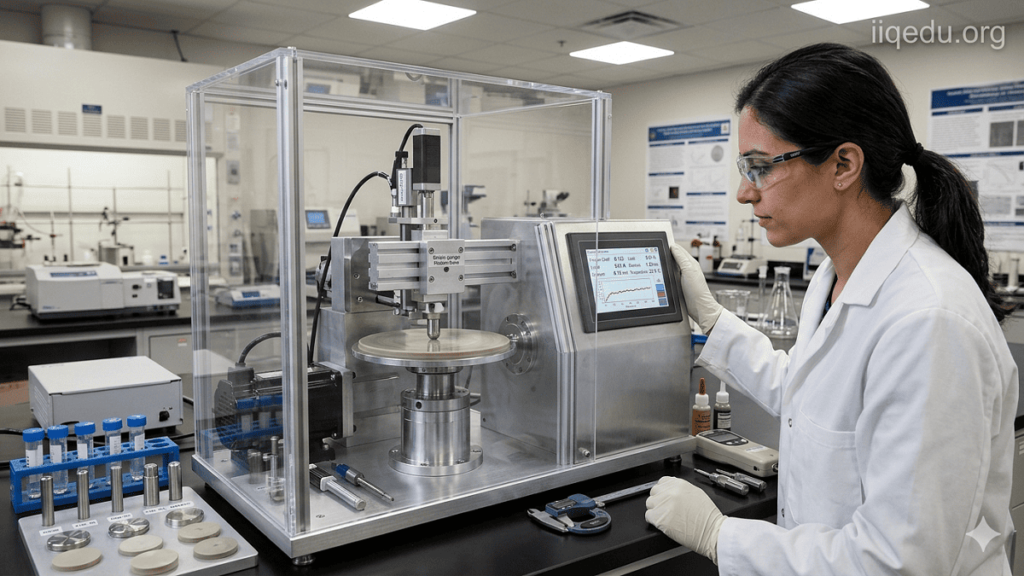
The testing solution involved in situ linear reciprocating high‑pressure tribometry, enabling real‑time friction and wear measurement under conditions that simulated the actual service environment. Key aspects of the tribological test setup included:
- Test Geometry: Linear reciprocating pin‑on‑flat configuration.
- Contact Pressure Range: 5 to 40 MPa (incremental stages to reflect service conditions).
- Sliding Distance and Speed: 20 mm stroke at 0.1–0.5 m/s sliding speed.
- Environment: High‑pressure nitrogen up to 35 MPa to simulate natural gas service.
- Temperature Range: Ambient up to 80 °C.
- Materials: PTFE‑based seal material against a hardened steel counterface.
- Measurements:
- Friction coefficient continuously recorded during sliding.
- Wear volume measured post‑test via non‑contact profilometry.
Results and Tribological Analysis
The tribological testing revealed two distinct regimes:
- Low to Moderate Pressures (<20 MPa):
- The friction coefficient remained low (~0.08–0.12), consistent with lubrication from PTFE transfer film formation.
- Wear rates remained within acceptable limits for PTFE at these pressures.
- High Pressures (>25 MPa):
- The friction coefficient sharply increased (~0.25–0.35) as contact pressure approached service levels.
- Correspondingly, the specific wear rate increased dramatically, indicating accelerated material loss.
The surface morphology analysis (SEM) revealed that at elevated contact pressures and pressurized gas environments, the PTFE transfer film—normally responsible for low friction—became unstable and discontinuous. This led to increased direct contact between the PTFE material and the steel counterface, producing a combination of adhesive and abrasive wear mechanisms.
Root Cause Identification
The core issue was identified as pressure‑induced disruption of the PTFE transfer film under high contact pressures and gas environments that altered lubricant film behavior. Conventional tribological data obtained under ambient conditions did not capture this high‑pressure effect.
This was significant because it showed that typical low‑pressure laboratory tests were not replicating critical service conditions. Only by testing under in situ pressures and environment could the team identify why the material failed prematurely in real operation.
Engineering Solutions
Based on the tribological findings, the following material and surface engineering solutions were developed and verified through follow‑up testing:
- Material Reformulation:
- Replace the original PTFE with a composite formulation combining PTFE with bronze and molybdenum disulfide.
- This composite offered improved transfer film stability and wear resistance at high pressure.
- Counterface Surface Modification:
- Steel counterface surface finish was modified to have a roughness (Ra) of approximately 0.1–0.2 µm.
- Improved surface finish facilitated stable transfer film adhesion and reduced direct metal‑polymer contact.
- Validation Testing:
- Tribological retesting with the composite seal material showed a substantially lower friction coefficient (typical range 0.10–0.14) at 40 MPa.
- Wear rate was reduced by approximately 75 % compared with the original material under identical test conditions.
Conclusion and Lessons Learned
This case study demonstrates the importance of tribological testing under service‑replicating conditions. Key conclusions include:
- Standard laboratory tests under ambient conditions may not predict performance in high‑pressure, gas‑exposed environments.
- In situ tribometry that replicates actual contact pressures, speeds, temperatures, and environmental conditions can identify failure mechanisms that conventional tests miss.
- Engineering the material composition and surface finish based on tribological insights can dramatically improve performance and extend service life.
This illustrates a core principle of applied tribological testing: tests must reflect real operating conditions to yield meaningful, actionable data for material selection and design improvements.
#Tribological Testing in Ahemdabad
White Paper of Tribological Testing
Executive Summary
Tribological testing quantifies friction, wear, and lubrication behavior between contacting surfaces under controlled conditions. As an interdisciplinary engineering practice, it supports material selection, component design, lubricant evaluation, and performance validation across automotive, aerospace, energy, biomedical, and manufacturing sectors. This white paper provides an in‑depth examination of why tribological testing is essential, how it is conducted, the major test methodologies, interpretation of results, and standardization frameworks that govern reliable and repeatable measurements.
1. Introduction
Tribology is defined as the science and engineering of interacting surfaces in relative motion, encompassing friction, wear, and lubrication. Tribological testing is the experimental extension of this field, intended to replicate relevant operating conditions and generate quantitative data that inform design decisions, reduce failure risk, improve energy efficiency, and extend service life of mechanical systems.
Tribological performance directly affects system reliability, efficiency, noise emission, maintenance costs, and safety. By quantifying frictional response and material degradation under representative loads and environments, engineers and researchers can optimize material pairings, surface engineering approaches, and lubricant formulations.
2. Core Principles
Tribological testing is rooted in three primary performance metrics:
- Friction: The resistance to relative motion between two surfaces.
- Wear: The progressive loss of material due to mechanical interaction.
- Lubrication: The reduction of friction and wear through intervening films (fluid or solid).
These phenomena are interdependent. For example, increasing friction accelerates wear, while effective lubrication reduces both friction and wear. The goal of tribological testing is to quantify these parameters consistently and correlate them with real‑world performance.
3. When and Why Tribological Testing Is Required
Tribological testing is required at multiple stages of product development and lifecycle management:
- Material Selection: To determine which materials or coatings provide suitable friction and wear performance for a given application.
- Design Validation: To confirm that components will function reliably under expected load, speed, temperature, and environmental conditions.
- Lubricant Evaluation: To select and optimize lubricant chemistry, additives, and application methods for efficient performance.
- Failure Analysis: To diagnose wear mechanisms following unexpected or premature component degradation.
- Regulatory Compliance: To satisfy industry safety and performance standards.
- R&D of Novel Materials: Including nanostructured coatings and surface treatments.
In practical terms, tribological testing may be required whenever moving parts experience contact under load, including engine components, bearings, gears, biomedical implants, cutting tools, and seals in harsh environments.
4. Standardized Test Methods and Equipment
Tribological test methods vary according to contact mechanics (sliding, rolling), environmental conditions (temperature, humidity, gas exposure), and performance priorities (lubricated vs. dry systems). Established standards ensure that results can be compared across laboratories and industries.
4.1 Common Test Geometries and Standards
- Pin‑on‑Disk (Sliding Wear): ASTM G99 — widely used for sliding contact wear assessment.
Reference: https://www.astm.org/g0099-17.html - Block‑on‑Ring: Evaluates sliding on curved surfaces under lubricated conditions.
- Four‑Ball Wear Test: ASTM D4172 — lubricant performance under extreme pressure.
Reference: https://www.astm.org/d4172-21.html - SRV (Sliding Reciprocating Viscosity) Test: Evaluates friction and wear under reciprocating motion with controlled temperature.
- Ball‑on‑Flat / Roller‑on‑Disk: To simulate rolling contact relevant to bearings and gears.
- Abrasive Wear Tests (Dry Sand/Rubber Wheel): ISO 20808 — abrasives simulate sand or dust environments.
Reference: https://www.iso.org/standard/48348.html
4.2 Key Instrumentation
- Tribometers: Devices capable of imposing controlled normal load, motion (rotational or linear), speed, and environment.
- Force Sensors: Measure normal and tangential forces for friction coefficient calculation.
- Profilometry and Microscopy: Assess wear scar dimensions and surface morphology post‑test.
- Environmental Chambers: Facilitate testing at elevated temperatures, controlled humidity, or specific atmospheric compositions.
5. Test Procedure: Typical Steps
A robust tribological test sequence generally follows:
- Objective Definition: Specify performance metric (e.g., coefficient of friction, wear rate).
- Specimen Preparation: Surface finishing, dimensions, coating or lubrication application.
- Parameter Selection: Load, speed, temperature, environment, and test duration.
- Execution: Controlled motion using tribometer with real‑time data acquisition.
- Post‑Test Analysis:
- Wear volume/loss calculation
- Surface morphology via SEM or optical microscopy
- Statistical evaluation of repeated trials
- Benchmarking: Comparison against standards or competitive materials.
6. Interpretation of Results
Metrics must be correlated with real‑world performance requisites:
- Coefficient of Friction (μ): Lower values generally indicate reduced energy losses; stable friction behavior implies predictable performance.
- Wear Rate (mm³/N·m): Normalized material loss; lower wear rates indicate superior durability.
- Wear Mechanism Identification: Adhesive, abrasive, oxidative, or fatigue wear modes inform corrective design or material changes.
Results are often visualized in friction vs. time graphs, wear maps, or wear track profiles. Effective interpretation requires understanding of mechanical loading, lubrication regime (boundary, mixed, or hydrodynamic), and material pairing.
7. Industrial Applications
Automotive
Tribological testing under high temperature and high load predicts engine lubrication needs and component wear in bearings, piston rings, and gears.
Aerospace
Testing under extreme temperatures and pressures guides material choice for turbines and landing gear components, where failure has severe consequences.
Biomedical
Implant wear tests simulate human body motion and environments to prevent debris‑induced inflammation and ensure longevity.
Manufacturing
Tool wear assessment under dry and lubricated machining conditions supports selection of cutting tool coatings and machining strategies.
8. Emerging Trends in Tribological Testing
Modern challenges are expanding the scope of tribological testing:
- Nano‑ and Micro‑Scale Testing: For MEMS devices and thin film coatings.
- Environment‑Specific Studies: High pressure, corrosive media, or vacuum conditions relevant to aerospace and deep‑sea applications.
- Data‑Driven Tribology: Advanced sensors and machine learning used to predict wear and optimize lubricant formulations.
9. Standards and Quality Assurance
Standards bodies provide reference methods and criteria for consistent assessment:
- ASTM International: Defines wear and lubricant test methods across industries.
Link: https://www.astm.org/Standards/tribology-standards.html - ISO (International Organization for Standardization): Covers environmentally perturbed tests and biomedical implant wear.
Link: https://www.iso.org/ics/25.160.html - SAE (Society of Automotive Engineers): Automotive‑specific tribology requirements.
Adherence to standards ensures data comparability, regulatory compliance, and acceptance in certification processes.
10. Conclusion
Tribological testing is essential for reliably quantifying friction, wear, and lubrication performance under representative conditions. It underpins critical decisions in materials engineering, component design, lubricant selection, and failure analysis. By aligning testing with standardized methods and realistic operating scenarios, organizations can reduce risk, enhance performance, and drive innovations that extend service life and reduce lifecycle costs.
References and Further Reading
- ASTM G99‑17 — Standard Test Method for Wear Testing with a Pin‑on‑Disk Apparatus
https://www.astm.org/g0099-17.html - ASTM D4172‑21 — Standard Test Method for Wear Preventive Characteristics of Lubricants (Four‑Ball Method)
https://www.astm.org/d4172-21.html - ISO 20808: Rubber‑Wheel Dry Sand Abrasion Tests
https://www.iso.org/standard/48348.html - Tribology International Journal — Elsevier
https://www.journals.elsevier.com/tribology-international - Nosonovsky, Michael and Bharat Bhushan, Tribology Handbook, Springer
https://www.springer.com/gp/book/9781441973782
#Tribological Testing in Hyderabad
Industry Application of Tribological Testing
Tribological testing has wide-ranging industry applications because nearly every sector relies on moving parts, surface contact, or materials exposed to friction, wear, or lubrication challenges. Its application ensures reliability, efficiency, safety, and cost-effectiveness. Below is a detailed, professional overview of industry applications of tribological testing, with examples and references.
1. Automotive Industry
- Applications:
- Engine components: pistons, piston rings, cylinder liners
- Transmission gears and shafts
- Brake pads and disc surfaces
- Bearings, clutches, and differential assemblies
- Purpose:
- Reduce friction and wear, improve fuel efficiency, enhance component longevity
- Optimize lubricant formulations and selection for high-speed, high-load conditions
- Example: Pin-on-disk testing is used to assess wear rates of engine cylinder coatings under high temperature and pressure.
- Reference: ASTM G99 – Pin-on-Disk Wear Test
2. Aerospace Industry
- Applications:
- Aircraft engines and turbine blades
- Landing gear systems
- Hydraulic and fuel system components
- Purpose:
- Ensure safety and reliability under extreme loads, temperatures, and speeds
- Predict fatigue wear and lubrication performance in critical aerospace components
- Example: Ball-on-flat tribometry to simulate rolling contact in high-speed bearings.
- Reference: Tribology International Journal
3. Energy and Power Generation
- Applications:
- Wind turbine bearings
- Steam and gas turbine shafts and bearings
- Pumps and compressors in oil & gas industry
- Purpose:
- Reduce energy losses due to friction
- Extend maintenance intervals and component lifespan
- Evaluate high-pressure and high-temperature lubrication performance
- Example: Four-ball wear test to assess lubricants under extreme pressure conditions in turbines.
- Reference: ASTM D4172 – Four-Ball Lubricant Wear Test
4. Biomedical Industry
- Applications:
- Artificial hip, knee, and shoulder implants
- Dental prosthetics
- Cardiovascular devices such as heart valves
- Purpose:
- Prevent wear-induced debris that can trigger inflammation or rejection
- Ensure long-term durability of implants under physiological load cycles
- Example: ISO 14242 hip implant wear tests simulate human gait cycles to evaluate polyethylene wear in artificial joints.
- Reference: ISO 14242 – Wear Testing of Hip Implants
5. Manufacturing and Industrial Machinery
- Applications:
- Cutting tools, forming dies, and machining surfaces
- Conveyors, rollers, and heavy machinery components
- Purpose:
- Optimize tool life and reduce downtime due to abrasive or adhesive wear
- Evaluate surface coatings for wear resistance under high-load machining conditions
- Example: Tribological testing of tungsten carbide coatings for cutting tools to reduce wear under dry and lubricated conditions.
6. Coatings, Lubricant, and Material Production
- Applications:
- Anti-wear coatings (e.g., TiN, DLC)
- Lubricants for automotive, aerospace, and industrial applications
- Surface-engineered composites
- Purpose:
- Validate claims of wear resistance or friction reduction
- Compare different coating or lubricant formulations under simulated operational conditions
- Example: SRV (Sliding Reciprocating) testing to evaluate solid and liquid lubricants under boundary lubrication regimes.
7. Research and Development
- Applications:
- Material innovation: polymers, composites, nanomaterials
- MEMS devices and micro-scale components
- Nano-tribology for thin films and coatings
- Purpose:
- Understand fundamental wear and friction mechanisms
- Develop advanced materials with low friction and high wear resistance
- Example: AFM-based nano-tribological tests to study friction at micro- and nano-scale surfaces.
- Reference: Nosonovsky, M., Bhushan, B., Tribology Handbook, Springer Link
Summary Table of Industry Applications
| Industry | Components | Purpose | Example Test Method |
|---|---|---|---|
| Automotive | Engine, gears, brakes, bearings | Reduce friction/wear, improve efficiency | Pin-on-disk, Four-ball |
| Aerospace | Turbines, bearings, landing gear | Ensure safety, predict fatigue wear | Ball-on-flat, SRV |
| Energy | Turbines, pumps, compressors | Minimize energy loss, extend life | Four-ball, Block-on-ring |
| Biomedical | Hip/knee implants, heart valves | Longevity, biocompatibility | ISO 14242 hip/knee wear tests |
| Manufacturing | Cutting tools, dies, rollers | Optimize tool life, surface durability | Abrasive wear tests, SRV |
| Coatings & Lubricants | Anti-wear coatings, lubricants | Validate performance under stress | Four-ball, SRV |
| R&D | MEMS, composites, thin films | Study friction/wear mechanisms | Nano-tribology, AFM-based testing |
Key Takeaways:
- Tribological testing is essential wherever surfaces interact under motion, whether at macro, micro, or nano scales.
- Proper tribological assessment enhances component reliability, energy efficiency, safety, and service life.
- Industry-specific testing ensures materials and lubricants are optimized for realistic operating conditions.
References:
- ASTM Tribology Standards: https://www.astm.org/Standards/tribology-standards.html
- Nosonovsky, M., Bhushan, B. Tribology Handbook, Springer: https://www.springer.com/gp/book/9781441973782
- Tribology International Journal: https://www.journals.elsevier.com/tribology-international
- ISO 14242: https://www.iso.org/standard/51945.html
#Tribological Testing in Mumbai
Ask FAQs
What is tribological testing?
Tribological testing is the experimental evaluation of friction, wear, and lubrication between contacting surfaces under controlled conditions. It simulates real-world operating environments to quantify material loss, frictional behavior, and lubrication effectiveness. The results guide material selection, surface engineering, and lubricant optimization to ensure component reliability, efficiency, and longevity.
Why is tribological testing important?
Tribological testing is crucial because friction and wear directly impact component performance, safety, energy efficiency, and lifecycle costs. By understanding how materials behave under load, speed, temperature, and environmental conditions, engineers can:
Predict and prevent premature failures
Optimize lubrication strategies
Improve energy efficiency by reducing friction
Develop wear-resistant coatings and advanced materials
Who requires tribological testing?
Tribological testing is required by industries and professionals where surface interactions affect performance or safety, including:
Automotive and aerospace engineers for engines, bearings, and turbines
Biomedical researchers for implants and prosthetics
Industrial machinery manufacturers for cutting tools, dies, and conveyors
Material scientists and lubricant developers for coating and lubrication research
Regulatory and standards organizations to ensure compliance with ASTM, ISO, or SAE specifications
When should tribological testing be conducted?
Tribological testing is performed at multiple stages of the product lifecycle:
Design and material selection to identify suitable materials or coatings
Prototyping to validate performance under simulated service conditions
Pre-production to verify compliance with standards and reliability requirements
During service or maintenance to monitor wear and predict component replacement
R&D for new materials, lubricants, or surface treatments
How is tribological testing performed?
Tribological testing involves a systematic procedure:
Define objectives (friction, wear, or lubrication assessment).
Select test method (pin-on-disk, ball-on-flat, four-ball, SRV, or nano-tribology).
Prepare specimens with standardized surface finish and coatings.
Set parameters including load, speed, temperature, environment, and duration.
Conduct the test using a tribometer with real-time data acquisition.
Analyze results for friction coefficient, wear rate, and surface morphology.
Benchmark against standards such as ASTM, ISO, or SAE to guide engineering decisions.
Source: The Mechanical Study
Table of Contents
Disclaimer:
The information provided in this document is for general informational and educational purposes only. Results from tribological testing may vary depending on specific materials, equipment, and operating conditions. The authors and publishers are not responsible for any errors, omissions, or outcomes arising from the use of this information. Users should conduct independent testing and verification before making engineering or operational decisions.