AI-Powered Supplier Quality Assessment
AI-Powered Supplier Quality Assessment is the use of Artificial Intelligence (AI) and machine learning to evaluate, monitor, and improve the quality and performance of suppliers in a supply chain. Instead of relying solely on manual audits and historical reports, AI analyzes large volumes of supplier data in real time to identify quality risks, compliance issues, and performance trends.
This technology enables organizations to make faster, data-driven decisions, select reliable suppliers, reduce defects, and maintain consistent product quality.
Key Benefits
- Faster supplier evaluation through automated data analysis
- Early detection of quality issues and potential risks
- Better supplier selection and performance management
- Reduced manual auditing effort
- Improved compliance with quality standards
Industry Applications
AI-powered supplier quality assessment is used across industries where supplier reliability is critical:
- Automotive manufacturing
- Electronics and semiconductors
- Pharmaceuticals and healthcare
- Food and beverage manufacturing
- Aerospace and defense
How It Works
- Data Collection: Gather data from inspection reports, audits, delivery records, and ERP systems.
- AI Analysis: Detect patterns, trends, and anomalies in supplier performance.
- Risk Scoring: Automatically assign risk scores based on quality history, delivery reliability, and compliance.
- Predictive Insights: Forecast potential supplier issues before they impact production.
- Reporting & Alerts: Provide dashboards, alerts, and recommendations to quality teams.
Example Scenario
A manufacturing company receives components from multiple suppliers. AI identifies that Supplier B has a rising defect trend over three months. The system:
- Flags the supplier risk score
- Alerts the quality team
- Recommends an audit or process review
This helps prevent production disruptions and maintain product quality.
What is AI-Powered Supplier Quality Assessment?
AI-Powered Supplier Quality Assessment is the use of Artificial Intelligence (AI) and machine learning to evaluate, monitor, and improve the quality and performance of suppliers in a supply chain.
Unlike traditional methods, which rely on periodic audits or historical reports, AI can analyze large volumes of supplier data in real time—including quality inspection reports, delivery performance, non-conformance records, and audit results—to identify patterns, detect risks, and predict potential issues before they impact production.
In Simple Terms
AI acts as a smart assistant that continuously monitors supplier performance, flags quality issues, and provides actionable insights. This allows companies to select reliable suppliers, reduce defects, and maintain consistent product quality.
Who is AI-Powered Supplier Quality Assessment required?
AI-Powered Supplier Quality Assessment is required by organizations that rely on suppliers for critical components or materials and want to ensure consistent quality, reduce risks, and improve supply chain efficiency.
Key Users
- Manufacturing Companies
- Automotive, electronics, and machinery manufacturers use AI to monitor supplier quality and reduce defects in production.
- Pharmaceutical and Healthcare Companies
- Ensures suppliers comply with strict regulatory standards and maintain high-quality raw materials.
- Food and Beverage Industry
- Monitors supplier hygiene, ingredient quality, and consistency to prevent contamination or recalls.
- Aerospace and Defense
- Critical for monitoring suppliers of high-precision components where failures can have serious consequences.
- Large Enterprises with Complex Supply Chains
- Companies with multiple suppliers use AI to track performance, compliance, and risk across the entire supply chain.
Where is AI-Powered Supplier Quality Assessment required?
AI-Powered Supplier Quality Assessment is required in industries and sectors where supplier performance and product quality are critical to business success. It helps organizations monitor suppliers, detect risks early, and maintain consistent quality across the supply chain.
Key Industries
- Automotive Manufacturing
- Ensures suppliers provide defect-free parts for vehicles and prevents production delays.
- Electronics and Semiconductor Industry
- Monitors component quality, assembly accuracy, and delivery performance.
- Pharmaceuticals and Healthcare
- Tracks raw material quality and supplier compliance with strict regulations.
- Food and Beverage Manufacturing
- Ensures ingredient quality, safety, and supplier hygiene standards.
- Aerospace and Defense
- Critical for monitoring suppliers of high-precision components to avoid operational or safety risks.
- Large Enterprises with Complex Supply Chains
- Any organization sourcing from multiple suppliers benefits from real-time monitoring, predictive risk scoring, and automated reporting.
When is AI-Powered Supplier Quality Assessment required?
AI-Powered Supplier Quality Assessment is required in organizations and industries where maintaining consistent supplier performance, minimizing risks, and ensuring high product quality are critical. Unlike traditional methods, which rely on periodic audits and manual inspections, AI uses advanced analytics and machine learning to continuously monitor suppliers, identify trends, predict potential problems, and provide actionable insights. This makes it particularly valuable in complex supply chains, high-stakes industries, or environments where even small quality issues can have significant operational or financial consequences.
Detailed Scenarios Where It’s Required
- Frequent or Recurring Quality Issues
When suppliers consistently deliver products or materials that are defective, non-compliant, or below the expected quality standards, AI-powered assessments can quickly analyze historical data, detect patterns, and identify the root causes. This proactive approach helps prevent repeated quality issues before they affect production or end products. For example, in automotive manufacturing, repeated defective components from a single supplier could halt production lines, and AI can alert the quality team to intervene early. - Large and Complex Supplier Networks
Companies sourcing materials or components from multiple suppliers, often across different regions or countries, face challenges in monitoring and comparing supplier performance manually. AI systems can automatically integrate and analyze data from all suppliers, providing real-time insights, risk scores, and performance dashboards. This ensures that organizations can evaluate all suppliers consistently, even in highly complex supply chains. - Industries with Critical Compliance and Safety Requirements
In industries such as aerospace, pharmaceuticals, healthcare, automotive, and food & beverage, supplier quality directly affects safety, regulatory compliance, and product reliability. AI-powered supplier assessments can monitor compliance with standards, predict potential non-conformances, and ensure that only reliable and certified suppliers are used. This reduces the risk of regulatory violations, recalls, or safety incidents. - Need for Real-Time Supplier Performance Insights
In dynamic production environments, waiting for periodic audits or quarterly reports can delay critical decisions. AI continuously monitors supplier performance, analyzing data in real time to provide alerts and recommendations. This enables organizations to act immediately if a supplier starts showing signs of risk, such as an increasing defect rate or delayed deliveries. - High Costs of Defects, Delays, or Non-Compliance
When the consequences of defective materials, delayed shipments, or supplier non-compliance are financially or operationally significant, AI becomes essential. The system can predict supplier risks before they impact production, helping companies avoid losses, maintain schedules, and protect product quality. For instance, in pharmaceutical manufacturing, a minor quality issue from a raw material supplier can result in costly batch recalls, which AI can help prevent.
How is AI-Powered Supplier Quality Assessment required?
AI-Powered Supplier Quality Assessment is required as a strategic tool for organizations to monitor, evaluate, and improve supplier performance in a systematic, real-time, and predictive manner. Unlike traditional approaches, which rely on manual audits, spreadsheets, or periodic supplier reviews, AI uses advanced data analytics, machine learning, and automation to transform how companies manage supplier quality and compliance.
How It Is Implemented and Required
- Real-Time Supplier Performance Monitoring
AI systems continuously collect and analyze data from multiple sources, including quality inspection reports, delivery schedules, audit results, ERP systems, and production feedback. By doing so, AI enables organizations to monitor supplier performance in real time, detect early warning signs of quality or delivery issues, and take corrective action before these issues impact production or customer satisfaction. - Data-Driven Risk Assessment
AI-powered assessments provide organizations with predictive insights and risk scores for each supplier. By analyzing historical and current performance data, AI can detect trends such as increasing defect rates, late deliveries, or compliance deviations. This makes it possible for organizations to prioritize high-risk suppliers, perform targeted audits, and take proactive measures to mitigate potential supply chain disruptions. - Automation of Supplier Evaluation
Organizations with large supplier networks require AI because manual evaluation of each supplier is time-consuming and error-prone. AI automates this process, creating performance dashboards, supplier scorecards, and detailed reports. This ensures consistent, objective, and scalable evaluation across all suppliers, regardless of volume or location. - Improvement of Supplier Quality and Compliance
AI systems can generate actionable recommendations for suppliers, helping them improve quality, reduce defects, and comply with industry regulations. For example, if a supplier repeatedly fails to meet quality standards, AI can identify the specific processes causing issues and suggest corrective measures, which reduces risks and enhances collaboration. - Integration with Supply Chain and Quality Systems
AI-powered supplier quality assessments are often integrated with broader supply chain management, quality management, and production systems. This ensures that supplier performance data directly influences procurement decisions, production planning, and overall operational strategy, creating a proactive and connected quality management ecosystem.
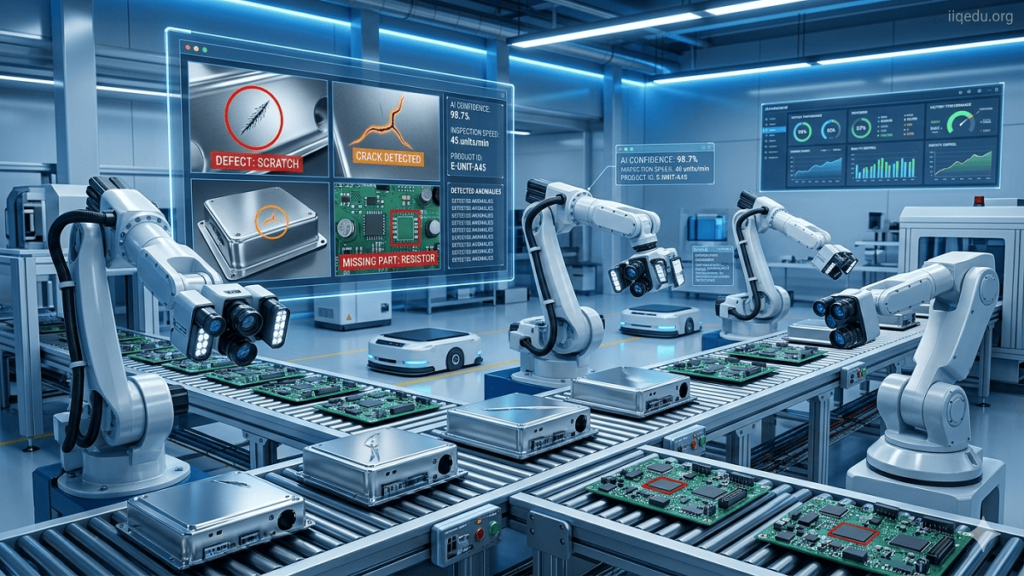
Artificial intelligence analyzing supplier data to predict risks, improve quality, and optimize supply chain performance.
Case study of AI-Powered Supplier Quality Assessment
The company sourced components from multiple suppliers worldwide. They faced recurring issues with defective parts, late deliveries, and inconsistent compliance with quality standards. Traditional audits and manual supplier reviews were time-consuming and failed to detect issues early.
Problem
- Frequent defective parts entering production.
- Delays affecting production schedules.
- Limited visibility into supplier performance across multiple locations.
- Difficulty in prioritizing supplier audits and corrective actions.
AI-Powered Solution
The company implemented an AI-powered supplier quality assessment system that integrated:
- Supplier quality inspection reports
- Delivery and lead-time data
- Audit results and compliance records
- ERP and production system data
How AI helped:
- Continuous Monitoring: AI analyzed supplier data in real time, tracking defect trends, delivery delays, and compliance issues.
- Predictive Risk Scoring: Suppliers were automatically assigned risk scores based on historical performance, allowing the company to focus on high-risk suppliers.
- Automated Alerts & Recommendations: The system flagged suppliers showing quality deterioration and suggested corrective measures.
- Dashboard & Reporting: AI generated easy-to-read dashboards showing overall supplier performance, trends, and potential risks.
Results
After implementing AI-powered supplier quality assessment, the company achieved:
- 35% reduction in defective components from suppliers
- 25% improvement in on-time deliveries
- Faster identification of high-risk suppliers for audits
- Better collaboration with suppliers to implement corrective actions
- Overall improvement in supply chain reliability and product quality
White paper of AI-Powered Supplier Quality Assessment
Abstract
Maintaining consistent supplier quality is a critical factor for operational efficiency, product reliability, and regulatory compliance. Traditional supplier evaluation methods, such as manual audits and periodic reviews, are often slow, subjective, and unable to detect emerging risks. AI-Powered Supplier Quality Assessment leverages artificial intelligence, machine learning, and predictive analytics to monitor supplier performance in real time, detect quality issues early, and provide actionable insights for better decision-making. This white paper explores the concept, benefits, implementation, and industry applications of AI-powered supplier quality assessment.
Introduction
Supplier quality directly impacts a company’s product quality, operational costs, and customer satisfaction. In globalized supply chains, organizations face challenges such as:
- Complex supplier networks across multiple regions
- Rising quality expectations and regulatory requirements
- Frequent delays, defects, or compliance issues
AI-powered supplier quality assessment provides a data-driven, predictive approach to managing supplier performance. By analyzing vast amounts of supplier data, AI helps organizations proactively detect risks, improve supplier selection, and maintain high-quality standards.
Understanding AI-Powered Supplier Quality Assessment
AI-powered supplier quality assessment involves the application of artificial intelligence, machine learning, and analytics to evaluate supplier performance continuously. It collects and analyzes data from:
- Supplier quality inspection reports
- Delivery and logistics performance
- Audit results and compliance records
- ERP and production systems
The AI system identifies patterns, predicts potential risks, assigns risk scores, and generates actionable recommendations for quality teams.
Key Technologies
Machine Learning
Analyzes historical and real-time supplier data to identify trends and predict potential quality failures.
Predictive Analytics
Forecasts supplier performance issues before they impact production or customer satisfaction.
Data Integration
Consolidates supplier information from multiple systems to provide a single view of supplier performance.
Automation
Automates supplier scoring, reporting, and alerts to streamline quality management processes.
Implementation Framework
- Data Collection: Gather supplier data from inspections, audits, ERP systems, and production feedback.
- Data Processing and Analysis: Use AI to detect anomalies, trends, and potential risks.
- Supplier Risk Scoring: Assign predictive risk scores to prioritize attention on high-risk suppliers.
- Reporting and Alerts: Generate dashboards, performance reports, and real-time alerts for quality teams.
- Continuous Improvement: Use AI insights to work with suppliers on corrective actions and preventive measures.
Benefits
- Improved Supplier Performance: Identify underperforming suppliers early and provide corrective guidance.
- Reduced Defects and Non-Compliance: Predict potential quality issues before they affect production.
- Faster Decision-Making: Real-time dashboards and alerts enable proactive management.
- Efficient Audit and Quality Management: Automates repetitive monitoring tasks.
- Enhanced Supply Chain Reliability: Ensures consistent quality across all suppliers.
Industry Applications
- Automotive: Monitor component quality and prevent defective parts from entering production.
- Electronics & Semiconductors: Ensure component precision and reliability.
- Pharmaceuticals & Healthcare: Maintain compliance and track raw material quality.
- Food & Beverage: Monitor ingredient quality, safety, and supplier hygiene.
- Aerospace & Defense: Ensure high-precision parts meet strict quality standards.
Challenges and Considerations
- Integrating data from multiple suppliers and systems
- Ensuring data security and privacy
- Initial setup cost and resource investment
- Change management for staff adoption
Organizations need to address these challenges to fully leverage AI-powered supplier quality assessment.
Future Trends
- Digital Twins for Supplier Performance Simulation
- AI-Driven Autonomous Supply Chain Systems
- Enhanced Predictive Analytics for Risk Management
- Integration with Blockchain for Transparent Supplier Data
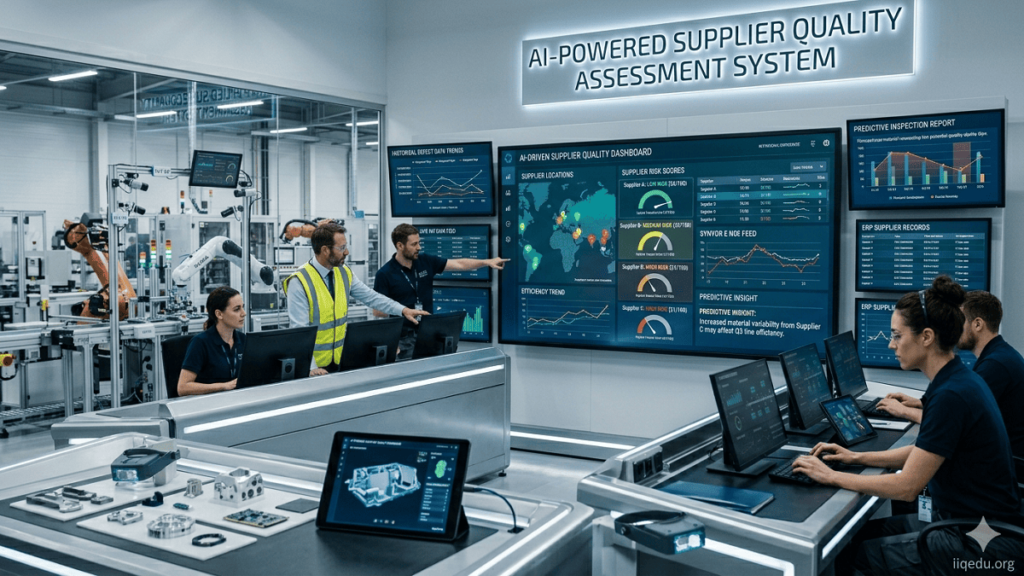
Industry Application of AI-Powered Supplier Quality Assessment
AI-Powered Supplier Quality Assessment is applied across industries where supplier performance, product quality, and regulatory compliance are critical. By leveraging AI and machine learning, organizations can monitor suppliers in real time, detect quality issues early, and make data-driven decisions to optimize their supply chains.
1. Automotive Manufacturing
- Ensures defect-free components
- Reduces production delays caused by faulty supplier parts
- Monitors supplier compliance with automotive standards
2. Electronics & Semiconductor Industry
- Tracks component precision and assembly quality
- Predicts supplier-related defects before production impact
- Supports quality control in complex multi-tier supply chains
3. Pharmaceuticals & Healthcare
- Ensures raw materials meet strict regulatory and safety standards
- Monitors supplier compliance with FDA or global standards
- Reduces the risk of recalls or production disruptions
4. Food & Beverage Manufacturing
- Monitors supplier hygiene and ingredient quality
- Ensures compliance with food safety regulations
- Detects supplier inconsistencies that could affect final product quality
5. Aerospace & Defense
- Tracks high-precision supplier components
- Reduces risk of operational failures caused by defective parts
- Supports compliance with stringent aerospace quality standards
6. Large Enterprises & Complex Supply Chains
- Companies sourcing from multiple suppliers globally benefit from predictive risk scoring
- Enables efficient prioritization of audits and corrective actions
- Provides a holistic view of supplier performance across regions
Ask FAQs
What is AI-Powered Supplier Quality Assessment?
AI-Powered Supplier Quality Assessment is the use of artificial intelligence and machine learning to monitor, evaluate, and improve supplier performance. It analyzes data from audits, inspections, deliveries, and ERP systems to detect quality risks, predict potential issues, and provide actionable insights for supply chain reliability.
Who needs AI-Powered Supplier Quality Assessment?
Organizations that rely on critical suppliers, have complex supply chains, or operate in industries with strict quality standards—such as automotive, aerospace, pharmaceuticals, electronics, and food manufacturing—benefit most from AI-driven supplier quality assessment.
When is AI-Powered Supplier Quality Assessment required?
It is required when recurring defects, delayed deliveries, regulatory compliance issues, or supplier risks threaten production quality or operational efficiency. AI enables proactive monitoring and early detection of potential problems.
Where is AI-Powered Supplier Quality Assessment applied?
It is applied across industries where supplier reliability and product quality are crucial, including automotive, electronics, aerospace, healthcare, pharmaceuticals, food & beverage, and large global enterprises with multiple suppliers.
How does AI-Powered Supplier Quality Assessment work?
AI collects and analyzes supplier data in real time, including inspection reports, delivery metrics, and audit results. It assigns risk scores, detects trends, predicts potential failures, and provides actionable recommendations to improve supplier performance and prevent production disruptions.
Source: IBM
Table of Contents
Disclaimer:
The information provided about AI-Powered Supplier Quality Assessment is for educational and informational purposes only. It is not professional, technical, or business advice. Organizations should consult qualified experts before implementing AI solutions for supplier quality management.