Apparel Quality Inspection
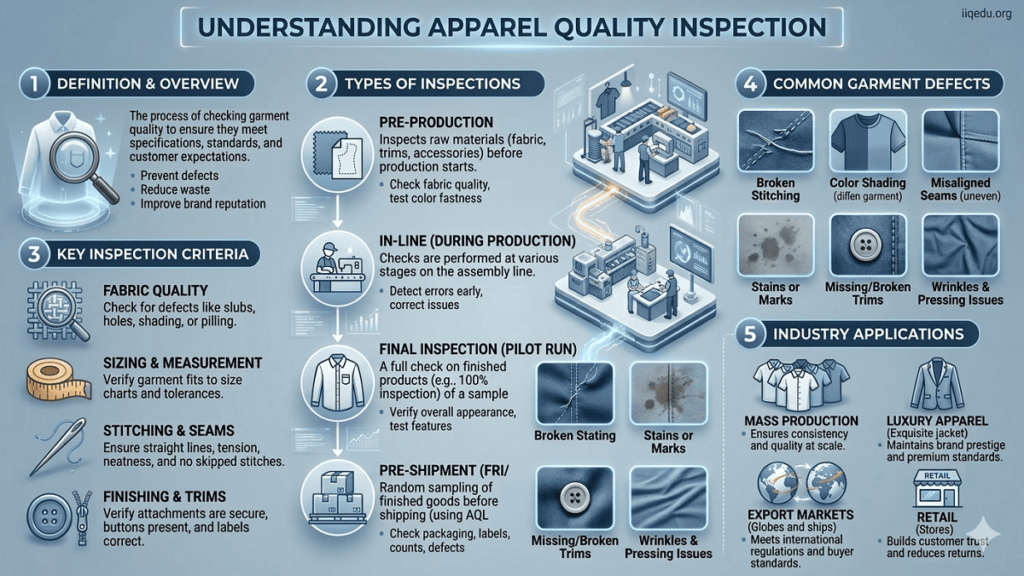
Apparel Quality Inspection is the process of checking garments to ensure they meet required standards before reaching customers. It focuses on identifying defects, maintaining consistency, and ensuring the final product matches specifications.
Types of Inspection
1. Raw Material Inspection
- Checks fabric quality, color, texture, and defects before production
2. In-line Inspection (During Production)
- Monitors stitching, measurements, and workmanship
- Helps catch issues early
3. Final Inspection
- Conducted after production is completed
- Ensures garments meet all quality standards before shipment
Key Inspection Criteria
- Fabric Quality: No holes, stains, or color variations
- Stitching: Strong, even, and properly finished seams
- Measurements: Correct size and fit as per specifications
- Appearance: Clean, properly pressed, and free from defects
- Labeling & Packaging: Accurate tags and proper packing
Common Defects
- Broken or uneven stitches
- Fabric flaws (holes, stains, shrinkage)
- Incorrect sizing
- Color mismatch
- Loose threads
Importance
- Ensures customer satisfaction
- Reduces returns and complaints
- Maintains brand reputation
- Meets international quality standards
Conclusion
Apparel Quality Inspection is essential in the garment industry to ensure that products are reliable, consistent, and meet customer expectations before reaching the market.
What is Apparel Quality Inspection?
Apparel Quality Inspection is the process of checking garments at different stages of production to ensure they meet required quality standards before reaching customers.
It involves examining factors such as fabric, stitching, measurements, appearance, and finishing. The goal is to identify and correct defects like uneven stitching, wrong sizing, fabric flaws, or poor finishing.
This inspection can take place at multiple stages:
- Before production (raw materials)
- During production (in-line inspection)
- After production (final inspection)
In simple terms:
Apparel Quality Inspection ensures that clothing products are made correctly, look good, and meet quality requirements before they are sold or shipped.
Who is Apparel Quality Inspection required?
1. Manufacturers (Garment Factories)
They use quality inspection to ensure products are made correctly and meet required standards before shipment.
2. Brands and Fashion Companies
Clothing brands rely on inspection to maintain their quality, reputation, and customer satisfaction.
3. Retailers
Retail businesses need quality inspection to ensure the products they sell are defect-free and meet customer expectations.
4. Exporters and Importers
Companies involved in international trade require inspection to meet global quality standards and avoid rejection of goods.
5. Quality Control Teams & Inspectors
Professionals responsible for checking garments at different production stages use inspection processes daily.
6. Customers (Indirectly)
End consumers benefit from quality inspection as it ensures they receive well-made, durable, and defect-free clothing.
In short:
Apparel Quality Inspection is required by manufacturers, brands, retailers, and traders to ensure good quality products and customer satisfaction.
When is Apparel Quality Inspection required?
Apparel Quality Inspection is required at multiple stages of the garment production process to ensure quality is maintained throughout. Here’s a simple breakdown:
When is Apparel Quality Inspection Required?
1. Before Production (Pre-production Stage)
- To check raw materials like fabric, trims, and accessories
- Ensures everything meets required standards before manufacturing begins
2. During Production (In-line Inspection)
- Conducted while garments are being made
- Helps detect defects early (stitching issues, measurement errors)
- Reduces waste and rework
3. After Production (Final Inspection)
- Done when garments are fully finished
- Ensures products meet quality standards before packing and shipping
4. Before Shipment (Pre-shipment Inspection)
- Final check before goods are delivered to buyers or retailers
- Confirms order quantity, quality, and packaging
In short:
Apparel Quality Inspection is required before, during, and after production, as well as before shipment, to ensure garments are defect-free and meet quality standards.
Where is Apparel Quality Inspection required?
Apparel Quality Inspection is required at all locations involved in garment production and distribution. Here’s a simple explanation:
Where is Apparel Quality Inspection Required?
1. Fabric and Raw Material Units
- Inspection is done where fabrics and accessories are sourced
- Ensures materials meet quality standards before use
2. Garment Factories (Production Floor)
- Conducted during stitching, cutting, and finishing processes
- Helps identify defects early in manufacturing
3. Finishing and Packing Sections
- Final checks are done after garments are completed
- Ensures proper appearance, labeling, and packaging
4. Warehouses and Distribution Centers
- Products are inspected before storage or dispatch
- Confirms correct quantity and quality
5. Export/Import Locations (Ports & Shipment Areas)
- Pre-shipment inspection ensures goods meet international standards
6. Retail Stores and Showrooms
- Final quality checks before selling to customers
In short:
Apparel Quality Inspection is required wherever garments are produced, handled, stored, or sold to ensure quality at every stage.
How is Apparel Quality Inspection Required?
Apparel Quality Inspection is required through a systematic process of checking garments at different stages using standards, tools, and procedures. Here’s a simple explanation:
How is Apparel Quality Inspection Required?
1. Setting Quality Standards
- Define requirements for fabric, stitching, measurements, and finishing
- Use buyer specifications or industry standards
2. Inspection Planning
- Decide when and where inspections will take place (pre-production, in-line, final)
- Assign trained quality inspectors
3. Sampling Method
- Inspect a selected number of garments instead of the entire batch
- Common method: AQL (Acceptable Quality Level)
4. Visual and Physical Checks
Inspectors examine:
- Fabric defects (holes, stains)
- Stitching quality
- Size and measurements
- Color and appearance
5. Testing
- Perform tests like color fastness, shrinkage, and strength
- Ensure durability and performance
6. Defect Classification
Defects are categorized as:
- Minor
- Major
- Critical
7. Reporting and Action
- Record findings in inspection reports
- Suggest corrections or reject defective products
In short:
Apparel Quality Inspection is required by setting standards, checking samples, identifying defects, and ensuring corrections so that only quality garments reach customers.
Case study of Apparel Quality Inspection
1. Background
A garment factory producing t-shirts for export markets was facing frequent customer complaints due to poor stitching, incorrect sizes, and fabric defects. This led to high product returns and loss of business.
2. Problem
- High defect rate in finished garments
- Lack of proper inspection during production
- Final inspection catching issues too late
- Increased rework and delayed shipments
3. Solution (Quality Inspection Strategy)
a. Pre-production Inspection
- Checked fabric quality, color, and shrinkage before cutting
- Ensured only approved materials were used
b. In-line Inspection
- Inspectors monitored stitching and measurements during production
- Defects were identified and corrected immediately
c. Final Inspection (AQL Method)
- Used sampling techniques to check finished garments
- Classified defects as minor, major, or critical
d. Training Workers
- Provided training on stitching standards and quality awareness
4. Implementation
- Assigned quality control teams at each stage
- Introduced daily inspection reports
- Improved communication between production and quality teams
5. Results
- Defect rate reduced significantly
- Improved product consistency and quality
- Fewer customer complaints and returns
- On-time delivery improved
6. Key Learnings
- Early inspection prevents major defects
- Continuous monitoring improves efficiency
- Worker training is essential for quality improvement
- Quality control should be a continuous process
Conclusion
This case study shows that effective Apparel Quality Inspection at every stage—before, during, and after production—can greatly improve product quality, reduce costs, and increase customer satisfaction.
Source: Textile Spy
White paper of Apparel Quality Inspection
1. Introduction
Apparel Quality Inspection is a critical process in the garment industry that ensures clothing products meet defined quality standards before reaching customers. It helps maintain consistency, reduce defects, and enhance customer satisfaction. With increasing global competition, quality inspection has become essential for brands, manufacturers, and retailers.
2. Industry Overview
The apparel industry involves multiple stages, including sourcing raw materials, production, finishing, and distribution. Quality inspection is integrated at each stage to ensure that garments meet specifications related to fabric, stitching, measurements, and appearance.
3. Key Challenges
- Inconsistent quality across batches
- High defect rates due to manual processes
- Lack of skilled inspectors
- Supply chain complexity
- Pressure for fast production and delivery
4. Quality Inspection Process
a. Pre-production Inspection
Ensures raw materials such as fabric and trims meet required standards.
b. In-line Inspection
Conducted during production to identify defects early and reduce rework.
c. Final Inspection
Checks finished garments for quality, measurements, and appearance.
d. Pre-shipment Inspection
Ensures products meet buyer requirements before dispatch.
5. Inspection Methods and Standards
- AQL (Acceptable Quality Level): Sampling method to determine acceptable defect levels
- Visual Inspection: Identifying visible defects
- Laboratory Testing: Checking color fastness, shrinkage, and durability
6. Role of Technology
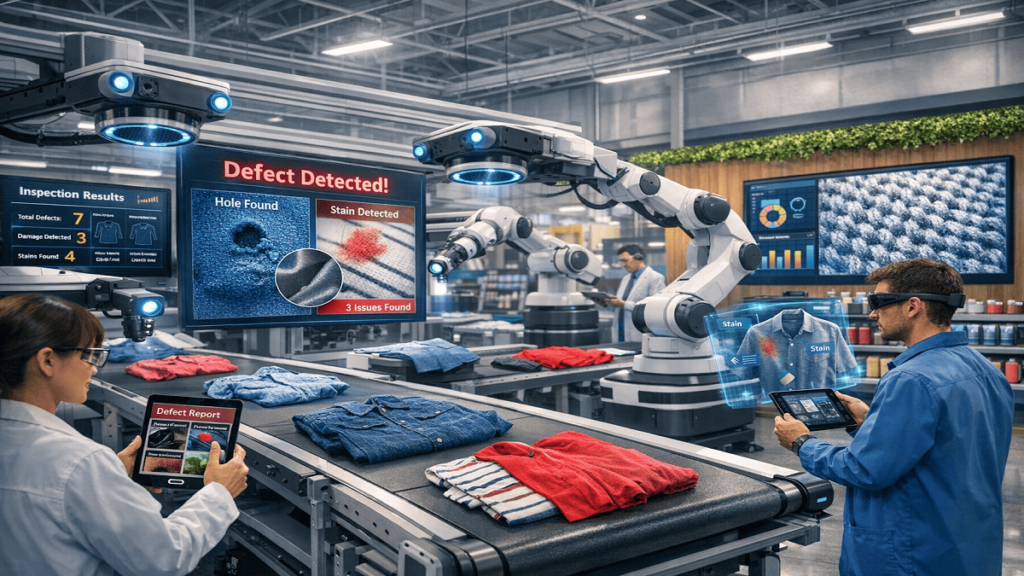
- Automation in inspection processes
- AI-based defect detection
- Digital reporting systems
- Real-time quality monitoring
7. Benefits of Apparel Quality Inspection
- Improved product quality and consistency
- Reduced returns and customer complaints
- Better brand reputation
- Cost savings through reduced rework
- Compliance with international standards
8. Strategic Recommendations
- Invest in training for quality inspectors
- Implement standardized inspection procedures
- Use technology for accuracy and efficiency
- Strengthen communication between teams
- Conduct regular audits and quality reviews
9. Conclusion
Apparel Quality Inspection is essential for ensuring high-quality garments in a competitive market. By adopting structured inspection processes and leveraging technology, companies can improve efficiency, reduce defects, and meet customer expectations effectively.
Source: Textile Explained
Industry application of Apparel Quality Inspection
Industry Applications of Apparel Quality Inspection refer to how quality inspection is used across different industries connected to garments and textiles. Here’s a simple explanation:
1. Garment Manufacturing Industry
- Ensures clothing is produced according to quality standards
- Checks stitching, measurements, and finishing during production
2. Fashion & Apparel Brands
- Maintains brand reputation by delivering defect-free products
- Ensures consistency in design, size, and quality across collections
3. Retail Industry
- Retailers inspect garments before selling to customers
- Reduces returns and improves customer satisfaction
4. Export & Import Industry
- Ensures garments meet international quality standards
- Prevents shipment rejection and financial losses
5. Textile Industry
- Inspects fabrics and raw materials before garment production
- Checks for defects like color variation, holes, or shrinkage
6. E-commerce Industry
- Online sellers rely on quality checks to avoid returns and negative reviews
- Ensures products match descriptions and images
7. Quality Control & Inspection Services
- Third-party inspection agencies provide professional quality checks
- Help companies maintain global standards
8. Logistics & Supply Chain
- Ensures correct products and quality are maintained during storage and transport
Conclusion
Apparel Quality Inspection is widely used across industries to ensure product quality, reduce defects, and maintain customer trust, making it a critical part of the apparel and textile ecosystem.
#apparelqualityinspectioninmumbai #apparelqualityinspectioninindia #apparelqualityinspectioninvasai
Ask FAQs
What is Apparel Quality Inspection?
Apparel Quality Inspection is the process of checking garments to ensure they meet required quality standards before being sold or shipped.
Why is Apparel Quality Inspection important?
It helps maintain product quality, reduce defects, minimize returns, and improve customer satisfaction.
When is Apparel Quality Inspection conducted?
It is conducted at different stages, including before production, during production, after production, and before shipment.
What are common defects found in garments?
Common defects include stitching errors, fabric flaws, incorrect sizing, color variations, and poor finishing.
Who performs Apparel Quality Inspection?
Quality inspectors, manufacturers, brands, and third-party inspection agencies perform these checks to ensure standards are met.
Table of Contents
Summary
Apparel Quality Inspection is a critical process in the garment industry that ensures clothing products meet established quality standards before reaching customers. The goal is to identify defects, maintain consistency, and guarantee that finished garments match design specifications and buyer requirements. Quality inspection is conducted at multiple stages of production.
Pre-production inspection involves checking raw materials such as fabrics, trims, and accessories to ensure they meet quality and color standards. In-line inspection occurs during production, monitoring stitching, measurements, and workmanship to catch defects early and reduce rework. Final inspection takes place after production to verify that garments are free from defects, have correct sizing, and meet appearance standards. Pre-shipment inspections ensure that finished products comply with buyer specifications before delivery.
Key inspection criteria include fabric quality, stitching accuracy, measurements, color consistency, labeling, and packaging. Common defects include broken stitches, fabric flaws, color mismatch, and incorrect sizing.
Apparel Quality Inspection is essential for manufacturers, brands, retailers, and exporters. It improves product quality, reduces customer complaints and returns, saves costs by minimizing rework, and protects brand reputation. By implementing systematic inspection procedures and leveraging technology, the apparel industry can deliver consistent, high-quality garments in a competitive market.
Technology is increasingly transforming Apparel Quality Inspection, making processes faster, more accurate, and scalable. Automated systems, AI-based defect detection, and digital reporting tools allow manufacturers to monitor production in real-time, reduce human error, and maintain uniform standards across large batches. IoT-enabled devices and smart cameras can detect stitching errors, fabric inconsistencies, or color variations during production, ensuring immediate corrective action.
Training and skill development are also critical components of an effective inspection system. Inspectors must be trained to identify minor, major, and critical defects, classify issues correctly, and communicate findings clearly to production teams. Many companies also adopt standardized frameworks such as the Acceptable Quality Level (AQL) to determine the allowable number of defects in a batch, helping balance quality control with production efficiency.
Apparel Quality Inspection is not only vital for maintaining product standards but also plays a strategic role in building brand reputation. High-quality garments increase customer satisfaction, reduce returns, and enhance loyalty. Additionally, it ensures compliance with international standards, which is especially important for exports.
Overall, integrating structured inspection processes, advanced technology, and skilled personnel helps garment manufacturers, brands, and retailers deliver superior products consistently, reduce operational costs, and remain competitive in the global market.
Disclaimer:
This content is for informational and educational purposes only. It does not constitute professional, legal, or business advice. Readers should verify information independently before applying it.