Counterfeit Detection Techniques
Counterfeit detection involves identifying fake or unauthorized products, documents, or currency to prevent fraud, protect brands, and ensure consumer safety. Counterfeit goods can include luxury items, pharmaceuticals, electronics, currency, and official documents.
Common Counterfeit Detection Techniques
1. Visual Inspection
- Examining packaging, labels, holograms, and logos
- Looking for spelling errors, poor printing, or design inconsistencies
2. Security Features
- Using watermarks, QR codes, holograms, or color-shifting inks
- Often applied on currency, certificates, and high-value products
3. Barcode & QR Code Verification
- Scanning barcodes or QR codes to verify authenticity
- Ensures the product matches the manufacturer’s database
4. Chemical & Material Analysis
- Lab testing materials, inks, or fabrics to detect fakes
- Common in pharmaceuticals, cosmetics, and high-end textiles
5. Digital Authentication & Blockchain
- Using RFID tags, NFC chips, or blockchain for traceability
- Allows verification of product history and supply chain integrity
6. Machine Learning & AI
- AI systems detect counterfeit patterns in images or transactions
- Helps identify subtle anomalies not visible to the human eye
Importance
- Protects consumers from harmful or low-quality products
- Safeguards brand reputation and revenue
- Helps authorities enforce anti-counterfeit laws
- Ensures trust in e-commerce and supply chains
What is Counterfeit Detection Techniques?
Counterfeit Detection Techniques are methods and tools used to identify fake, fraudulent, or unauthorized products, documents, or currency.
These techniques help ensure that goods are genuine, protect consumers from harm, and safeguard brand reputation. Counterfeit detection can involve:
- Visual checks (examining labels, packaging, and holograms for errors or inconsistencies)
- Security features (watermarks, QR codes, holograms, or color-shifting inks)
- Digital verification (scanning barcodes, QR codes, or using blockchain for product traceability)
- Laboratory analysis (testing materials, chemicals, or fabrics to confirm authenticity)
- Advanced technologies (AI and machine learning to detect subtle anomalies in products or transactions)
In simple terms: Counterfeit Detection Techniques are the processes and technologies used to distinguish real products or documents from fake ones, ensuring authenticity and protecting consumers, brands, and businesses.
Who is Counterfeit Detection Techniques required?
Counterfeit Detection Techniques are required by anyone involved in producing, selling, or using products or documents where authenticity matters. Here’s a breakdown:
1. Manufacturers and Brands
- Protect their products from fake replicas
- Maintain brand reputation and revenue
2. Retailers and E-commerce Platforms
- Ensure the products they sell are genuine
- Reduce returns, complaints, and legal issues
3. Consumers
- Protect themselves from harmful, low-quality, or unsafe counterfeit products
- Verify authenticity before purchase
4. Banks and Financial Institutions
- Detect counterfeit currency or fraudulent financial documents
- Prevent financial loss and fraud
5. Government and Regulatory Authorities
- Enforce anti-counterfeit laws
- Protect public safety and maintain market integrity
6. Supply Chain and Logistics Companies
- Track and verify products across the supply chain
- Prevent counterfeit goods from entering the market
In short: Counterfeit Detection Techniques are required by manufacturers, retailers, consumers, financial institutions, authorities, and supply chain stakeholders to ensure authenticity and protect people, brands, and markets.
When is Counterfeit Detection Techniques required?
Counterfeit Detection Techniques are required whenever there is a risk of fake or unauthorized products, documents, or currency entering the market or supply chain. Here’s a clear breakdown:
1. During Production
- To ensure raw materials and components are genuine
- Prevent fake parts or materials from being used in manufacturing
2. Before Distribution or Sale
- To verify products before they reach retailers or customers
- Especially important for high-value goods, pharmaceuticals, and luxury items
3. During Supply Chain Movement
- To track products and prevent counterfeits from entering warehouses or transit
- Ensures authenticity at each stage of delivery
4. At Point of Sale
- Retailers or e-commerce platforms use detection techniques to confirm genuine products
- Protects consumers from purchasing counterfeit items
5. During Financial Transactions
- Banks and financial institutions use detection for currency and important documents
- Prevents fraud and financial loss
6. When Authenticity is Questioned
- Anytime there is suspicion of counterfeit activity, such as unusual packaging, pricing, or unauthorized sellers
In short: Counterfeit Detection Techniques are required before, during, and after production and distribution, as well as whenever there is suspicion of fake products or fraud.
Where is Counterfeit Detection Techniques required?
Counterfeit Detection Techniques are required wherever products, documents, or currency need verification to ensure authenticity. Here’s a clear breakdown:
1. Manufacturing Units
- To check raw materials, components, and finished goods
- Ensures only genuine materials are used
2. Warehouses and Distribution Centers
- Verifies authenticity of products before storage or shipping
- Prevents counterfeit goods from entering the supply chain
3. Retail Stores and E-commerce Platforms
- Confirms that products sold to customers are genuine
- Protects consumers and brand reputation
4. Financial Institutions and Banks
- Detects counterfeit currency, checks, or financial documents
- Reduces risk of fraud and financial loss
5. Airports, Customs, and Border Checkpoints
- Inspects imported goods to prevent fake or smuggled products from entering the market
6. Online Marketplaces and Digital Platforms
- Uses digital verification methods for products sold online
- Protects buyers from fraudulent listings
7. Legal and Regulatory Bodies
- Monitors compliance with anti-counterfeit laws and standards
In short: Counterfeit Detection Techniques are required at every stage of the product lifecycle—from manufacturing, storage, and distribution to retail and financial transactions—to ensure authenticity and prevent fraud.
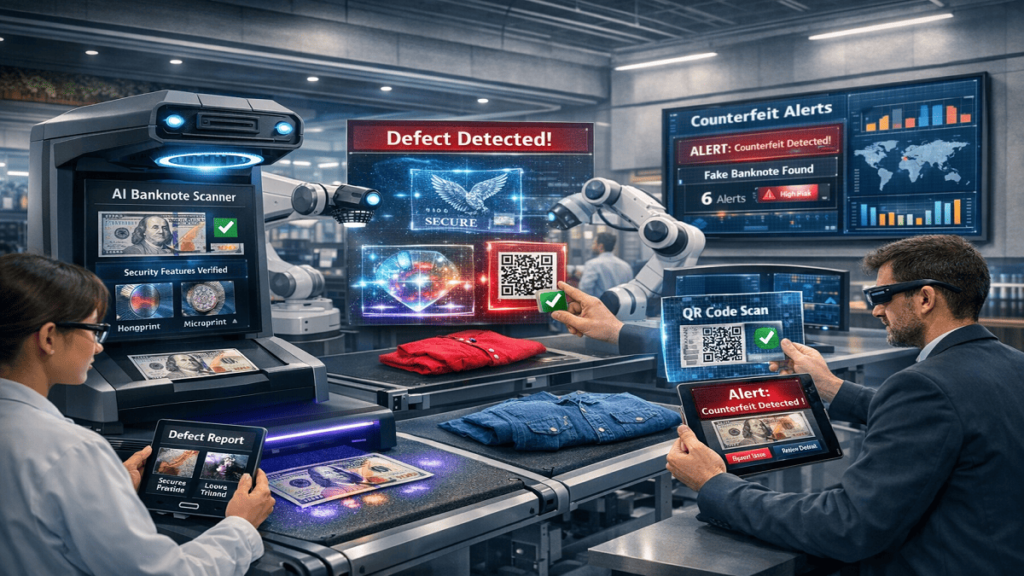
How is Counterfeit Detection Techniques required?
Counterfeit Detection Techniques are required through systematic processes and tools that verify the authenticity of products, documents, or currency. Here’s how they are applied:
1. Visual and Manual Inspection
- Examine packaging, labels, logos, holograms, or certificates
- Detect errors, inconsistencies, or signs of tampering
2. Use of Security Features
- Watermarks, QR codes, holograms, and color-shifting inks
- Often embedded in currency, luxury products, and official documents
3. Digital Verification
- Scan barcodes, QR codes, or RFID/NFC tags to match with manufacturer or official databases
- Blockchain technology can trace product history and supply chain authenticity
4. Laboratory and Material Testing
- Analyze chemical composition, fabric, inks, or raw materials
- Helps detect counterfeit pharmaceuticals, cosmetics, or high-value goods
5. Technology and AI-Based Detection
- Machine learning identifies subtle anomalies in images, packaging, or transaction patterns
- Can detect counterfeit patterns that are not visible to the human eye
6. Reporting and Action
- Document findings and flag counterfeit products
- Take corrective actions such as rejecting, recalling, or removing fake items
In short: Counterfeit Detection Techniques are required by examining, testing, verifying digitally, and using AI or security features to ensure products, documents, and currency are genuine, protecting consumers, brands, and financial systems.
Case study of Counterfeit Detection Techniques
1. Background
A global pharmaceutical company was facing a major problem with counterfeit drugs entering the supply chain. Fake medications were being sold in certain markets, leading to health risks for patients, loss of revenue, and damage to the company’s reputation.
2. Problem
- Difficulty in tracking authentic drugs across complex supply chains
- Counterfeit products had similar packaging and labels, making visual detection challenging
- High risk to consumer safety and regulatory compliance
3. Solution (Detection Techniques Implemented)
a. Serialization and Barcoding
- Each medicine pack was assigned a unique serial number and barcode
- Allowed verification at multiple checkpoints in the supply chain
b. Holograms and Security Seals
- Added holographic labels and tamper-proof seals to packaging
- Enabled visual identification of authentic products
c. Mobile Verification App
- Customers and pharmacists could scan QR codes to verify authenticity
- Real-time confirmation of genuine products
d. AI-Based Supply Chain Monitoring
- Machine learning algorithms tracked unusual patterns in product movement
- Flagged suspicious shipments for further inspection
4. Results
- Counterfeit incidents decreased significantly
- Improved patient safety and brand trust
- Enhanced compliance with global regulatory standards
- Streamlined supply chain monitoring
5. Key Learnings
- Multi-layered detection (visual, digital, AI) is more effective than a single method
- Technology integration increases speed and accuracy in detecting counterfeits
- Customer participation (through QR scanning) strengthens overall verification
Conclusion:
The case demonstrates that combining serialization, security features, digital verification, and AI monitoring provides an effective strategy to detect and prevent counterfeit products in critical industries like pharmaceuticals.
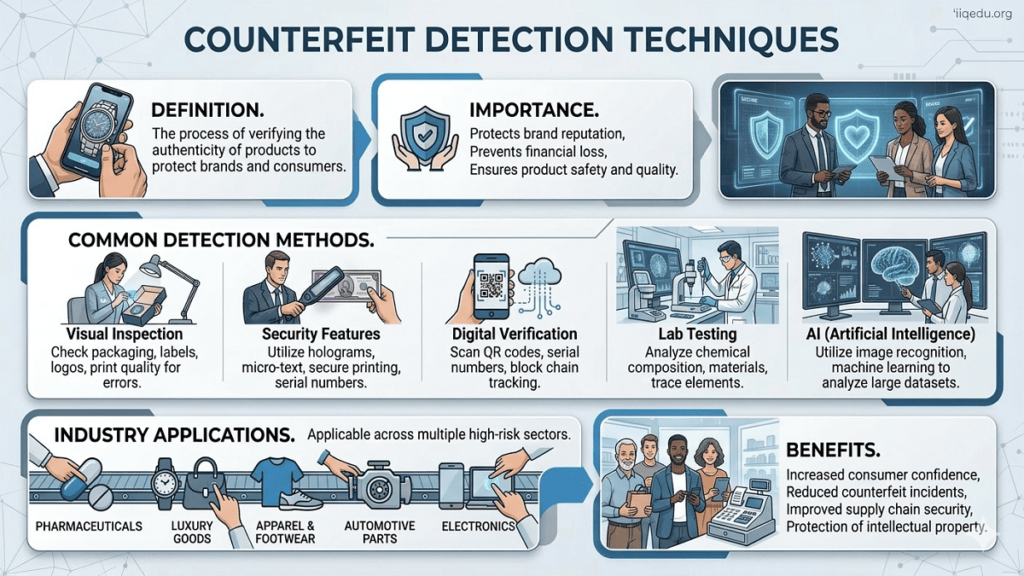
White paper of Counterfeit Detection Techniques
1. Introduction
Counterfeiting is a major global challenge affecting industries such as pharmaceuticals, luxury goods, electronics, currency, and official documents. Counterfeit products can harm consumers, damage brand reputation, and lead to financial losses. Counterfeit Detection Techniques are essential to verify authenticity, protect stakeholders, and maintain market integrity.
2. Industry Overview
Counterfeiting affects multiple sectors:
- Pharmaceuticals: Fake medicines endanger lives
- Luxury Goods & Fashion: Knockoffs reduce brand value
- Electronics & Hardware: Poor quality counterfeits pose safety risks
- Currency & Documents: Fraudulent notes and certificates threaten financial security
With the rise of e-commerce and global supply chains, counterfeit detection has become increasingly important for manufacturers, retailers, consumers, and regulators.
3. Key Counterfeit Detection Techniques
a. Visual and Manual Inspection
- Check packaging, labels, logos, holograms, and seals
- Detect obvious defects, inconsistencies, or tampering
b. Security Features
- Watermarks, holograms, color-shifting inks, RFID, QR codes
- Commonly used in currency, pharmaceuticals, and luxury goods
c. Digital Verification & Blockchain
- Scan barcodes, QR codes, or use blockchain to verify product history
- Enables traceability across supply chains
d. Laboratory and Material Analysis
- Chemical or material testing for pharmaceuticals, cosmetics, textiles, and electronics
e. AI & Machine Learning
- Detect subtle anomalies in images, packaging, or transactions
- Helps identify counterfeits not visible to the human eye
4. Implementation Process
- Define authentication standards for products or documents
- Integrate security features and digital verification methods
- Monitor supply chain with AI or automated tracking
- Conduct regular inspections and audits
- Educate consumers and retailers about verification methods
5. Benefits
- Protects consumers from harmful or low-quality products
- Safeguards brand reputation and revenue
- Reduces fraud in supply chains and financial systems
- Ensures compliance with regulatory standards
- Enhances trust in e-commerce and global trade
6. Challenges
- Rapid innovation in counterfeiting methods
- Complexity in global supply chains
- Costs of implementing advanced detection technology
- Need for continuous training of inspectors and staff
7. Conclusion
Counterfeit Detection Techniques are critical for ensuring authenticity, safety, and trust in global commerce. A multi-layered approach combining visual inspection, security features, digital verification, laboratory testing, and AI provides the most effective protection. Organizations that implement these strategies can reduce counterfeiting, protect consumers, and maintain brand integrity.
Industry application of Counterfeit Detection Techniques
1. Pharmaceutical Industry
- Detects fake or substandard medicines
- Uses serialization, QR codes, holograms, and lab testing
- Protects patient safety and ensures regulatory compliance
2. Luxury Goods & Fashion
- Identifies counterfeit apparel, handbags, watches, and jewelry
- Uses holograms, RFID tags, and visual inspection
- Maintains brand reputation and prevents revenue loss
3. Electronics & Technology
- Detects fake electronic components, smartphones, or accessories
- Uses digital verification, material testing, and AI-based anomaly detection
- Ensures product safety and quality standards
4. Currency & Financial Documents
- Banks and governments detect counterfeit notes, checks, and certificates
- Uses watermarks, color-shifting inks, holograms, and UV features
- Prevents fraud and protects the financial system
5. E-commerce & Retail
- Online marketplaces verify the authenticity of products
- QR codes, barcodes, and blockchain traceability are commonly used
- Protects customers from fraudulent or unsafe goods
6. Supply Chain & Logistics
- Ensures genuine products are transported and stored securely
- AI monitoring and scanning systems prevent counterfeit goods from entering the market
7. Legal & Regulatory Bodies
- Agencies use detection techniques to enforce anti-counterfeit laws
- Conduct inspections, audits, and enforcement actions to protect markets
In short: Counterfeit Detection Techniques are applied in pharmaceuticals, luxury goods, electronics, currency, e-commerce, supply chains, and regulatory enforcement to ensure authenticity, safety, and trust in the marketplace.
#couterfeitdetectiontechniquesinmumbai #couterfeitdetectiontechniquesinindia #couterfeitdetectiontechniquesinvasai
Ask FAQs
What are Counterfeit Detection Techniques?
Counterfeit Detection Techniques are methods and tools used to identify fake or unauthorized products, documents, or currency, ensuring authenticity and preventing fraud.
Why are Counterfeit Detection Techniques important?
They protect consumers from unsafe or low-quality products, safeguard brand reputation, prevent financial loss, and ensure compliance with regulatory standards.
When should Counterfeit Detection Techniques be applied?
They should be applied during production, before distribution or sale, during supply chain movement, at points of sale, and whenever authenticity is in question.
What methods are commonly used for counterfeit detection?
Common methods include visual inspection, security features (holograms, QR codes, watermarks), digital verification, laboratory/material testing, and AI or machine learning for anomaly detection.
Who uses Counterfeit Detection Techniques?
Manufacturers, brands, retailers, e-commerce platforms, banks, financial institutions, regulatory authorities, and consumers use these techniques to ensure products, documents, or currency are genuine.
Source: TED-Ed
Table of Contents
Summary
Counterfeit Detection Techniques are essential methods and processes used to identify fake, unauthorized, or fraudulent products, documents, and currency. Counterfeiting is a global problem that affects multiple industries, including pharmaceuticals, luxury goods, electronics, fashion, financial institutions, and official documentation. Counterfeit products not only harm consumers but also damage brand reputation, cause financial losses, and undermine trust in the supply chain.
Laboratory and material testing is used to analyze chemical composition, fabric, or raw materials, which is especially important in pharmaceuticals, cosmetics, and high-value goods. Artificial intelligence (AI) and machine learning are increasingly applied to detect subtle anomalies in packaging, images, or transaction patterns, helping identify counterfeits that may escape human inspection.
A multi-layered approach combining manual inspection, security features, digital verification, lab testing, and AI provides the most effective protection against counterfeit products, ensuring consumer safety, brand integrity, and trust in global markets.
Disclaimer:
This content is for informational and educational purposes only. It does not constitute legal, financial, or professional advice. Users should verify information independently before applying it.