Consumer Goods & Retail
The consumer goods and retail sector plays a vital role in everyday life and the overall economy. It focuses on the production of goods that people use regularly and the systems that deliver these products to consumers. From food and clothing to electronics and household items, this sector connects manufacturers with end users through various retail channels.
Consumer goods are generally divided into two categories: durable and non-durable goods. Durable goods are long-lasting products such as appliances, furniture, and electronics. These items are not purchased frequently and often involve higher costs. Non-durable goods, on the other hand, are consumed quickly and need regular replacement. Examples include food, beverages, toiletries, and cleaning products. Companies like Hindustan Unilever, Nestlé, and Procter & Gamble dominate the fast-moving consumer goods segment, offering products that are part of daily routines.
Retail refers to the process of selling these goods directly to consumers. Traditionally, retail took place in physical stores such as supermarkets, malls, and local shops. Companies like Reliance Retail and Walmart have built large networks of brick-and-mortar stores to serve customers. However, with the growth of technology and internet access, online retail has expanded rapidly. Platforms such as Amazon and Flipkart allow consumers to shop conveniently from their homes, offering a wide range of products with quick delivery options.
In recent years, the sector has seen significant changes. Many businesses are adopting an omnichannel approach, combining both online and offline experiences to better serve customers. There is also a growing focus on sustainability, with companies introducing eco-friendly products and packaging. Data and technology are increasingly used to understand consumer preferences and provide personalized shopping experiences.
The consumer goods and retail sector is highly competitive and influenced by changing consumer behavior, income levels, and trends. It is also an important contributor to employment and economic growth. As consumer needs evolve, businesses in this sector must continuously innovate to stay relevant and meet expectations.
In conclusion, the consumer goods and retail sector is a dynamic and essential part of the economy. It not only fulfills daily needs but also reflects broader economic and social trends, making it a key area of interest for businesses, investors, and consumers alike.
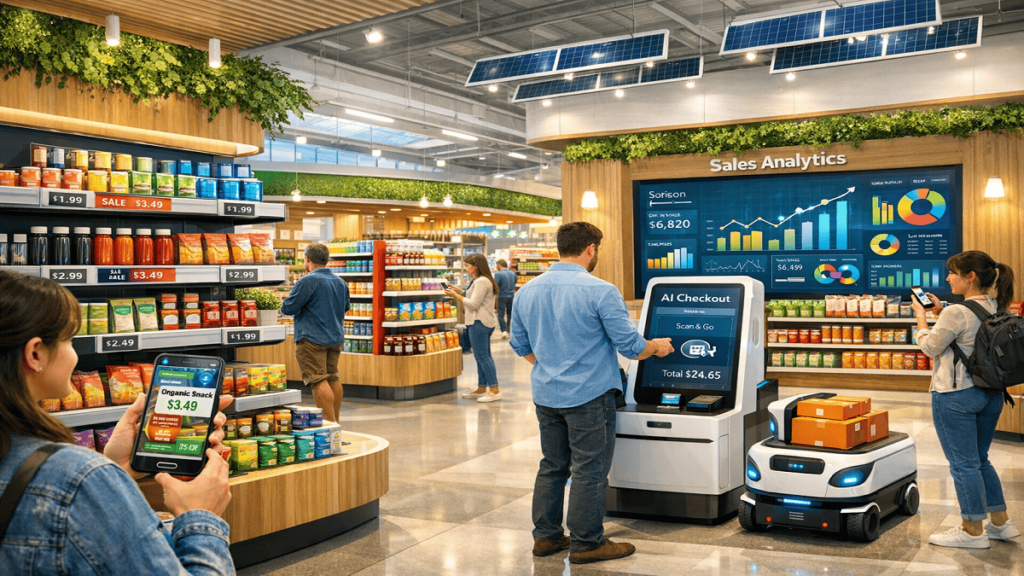
What is Consumer Goods & Retail?
Consumer Goods are items that people use in their daily lives. These include products like food, clothing, toiletries, electronics, and household items. They can be:
- Durable goods (long-lasting), such as appliances or furniture
- Non-durable goods (used quickly), such as food and personal care products
Major companies in this space include Hindustan Unilever, Nestlé, and Procter & Gamble.
Retail is the process of selling these goods directly to consumers. This can happen through:
- Physical stores like supermarkets and malls
- Online platforms such as Amazon and Flipkart
In simple terms, consumer goods are what people buy, and retail is how they buy them.
Who is Consumer Goods & Retail required?
1. Individual Consumers
Every person depends on this sector for daily needs such as food, clothing, personal care products, and household items. Without it, basic living would be difficult.
2. Households
Families regularly purchase goods like groceries, cleaning supplies, and appliances through retail stores or online platforms.
3. Businesses
Many businesses rely on consumer goods for their operations. For example:
- Restaurants need food supplies
- Offices need stationery and cleaning products
- Hotels need toiletries and furnishings
4. Economy and Government
The sector is important for economic growth, employment, and tax revenue. Governments also depend on it to ensure supply of essential goods to the public.
5. Retailers and Sellers
Companies such as Reliance Retail, Amazon, and Walmart depend on this sector to run their business and serve customers.
In short: Consumer Goods & Retail is required by anyone who buys or uses products—which means almost everyone in society.
When is Consumer Goods & Retail required?
Consumer Goods & Retail is required all the time, because people constantly need products and services in their daily lives. Here’s a simple breakdown of when it is needed:
1. Daily Needs
Every day, people buy or use items like food, beverages, toiletries, and other essentials. This makes the sector continuously active.
2. Regular Purchases
Items such as groceries, clothing, and household supplies are bought weekly or monthly, so retail stores and companies like Hindustan Unilever and Nestlé are always in demand.
3. Special Occasions
During festivals, holidays, or events (like weddings), demand increases for products such as gifts, clothing, and decorations.
4. When Replacing or Upgrading Products
Durable goods like electronics or furniture are needed when old items wear out or when people want upgrades.
5. Emergencies
In urgent situations (like health needs or sudden shortages), consumer goods such as medicines, food, and hygiene products become immediately necessary.
In short: Consumer Goods & Retail is required continuously—daily, regularly, and during special situations—because it supports everyday life.
Where is Consumer Goods & Retail required?
Consumer Goods & Retail is required everywhere, because people need products in all places where they live, work, or travel. Here’s a simple explanation:
1. Homes
People need consumer goods like food, toiletries, and household items for daily living.
2. Local Markets and Stores
Neighborhood shops, supermarkets, and malls provide easy access to everyday products.
3. Online Platforms
E-commerce websites and apps such as Amazon and Flipkart make consumer goods available anywhere with internet access.
4. Workplaces
Offices, factories, and other workplaces require supplies like stationery, cleaning products, and equipment.
5. Public Places and Services
Places like hospitals, hotels, schools, and restaurants depend on consumer goods for their operations.
6. Urban and Rural Areas
Both cities and villages require this sector, though the types of products and access methods may differ.
In short: Consumer Goods & Retail is needed in every place where people live, work, or interact, making it a universal and essential sector.
How is Consumer Goods & Retail required?
Consumer Goods & Retail is required through the process of producing, distributing, and selling products to meet people’s needs. Here’s a simple explanation of how it works:
1. Production of Goods
Companies manufacture products that people use daily, such as food, clothing, and household items. For example, Nestlé produces food products, while Procter & Gamble makes personal care items.
2. Supply Chain and Distribution
Once goods are produced, they are transported through a supply chain involving warehouses, wholesalers, and distributors to reach different locations.
3. Retail Channels
Products are then sold to consumers through various retail formats:
- Physical stores (supermarkets, malls, local shops)
- Online platforms like Amazon and Flipkart
4. Consumer Purchase
Customers buy products based on their needs, preferences, and budgets. This is the final step where demand is fulfilled.
5. Continuous Cycle
As people keep using products, they need to repurchase them, creating a continuous cycle of production and sales.
In short: Consumer Goods & Retail is required by ensuring that products are made, delivered, and made available for people to buy whenever they need them.
Case study of Consumer Goods & Retail
1. Background
Hindustan Unilever is one of India’s largest consumer goods companies. It sells everyday products such as soaps, shampoos, detergents, and packaged foods.
2. Problem
HUL faced a major challenge:
- Reaching rural customers across India
- Limited access to traditional retail stores in villages
- Low awareness of branded products
3. Strategy (Solution)
a. Project Shakti
HUL launched Project Shakti, which:
- Empowered rural women to become direct-to-home sellers
- Created a strong last-mile distribution network
b. Affordable Pricing
- Introduced small, low-cost packs (sachets)
- Made products affordable for low-income consumers
c. Strong Distribution Network
- Built a wide supply chain covering even remote villages
d. Brand Awareness
- Used local marketing and education campaigns to build trust
4. Implementation
- Trained thousands of rural women entrepreneurs
- Distributed products through villages directly
- Ensured regular supply and availability
5. Results
- Significant increase in rural sales
- Strong brand presence in villages
- Improved livelihoods for rural women
- Became a market leader in many FMCG categories
6. Key Learnings
- Understanding customer needs is critical
- Last-mile delivery can be a competitive advantage
- Small innovations (like sachets) can drive big growth
- Social impact can align with business success
Conclusion
The case of Hindustan Unilever shows how companies in the Consumer Goods & Retail sector can grow by adapting to local markets, improving distribution, and making products accessible to all segments of society.
Source: Salesforce Hulk
White paper of Consumer Goods & Retail
1. Introduction
The Consumer Goods & Retail sector includes companies that produce everyday products and businesses that sell them to consumers. It is one of the most important sectors in the global economy because it directly serves daily human needs.
2. Industry Overview
Consumer goods include products such as food, beverages, personal care items, clothing, and electronics. Retail refers to the distribution and sale of these goods through physical stores and online platforms.
This sector operates through a value chain:
- Manufacturing
- Supply chain and logistics
- Distribution
- Retail sales
3. Market Dynamics
a. Demand Drivers
- Population growth and urbanization
- Rising disposable income
- Changing consumer lifestyles
b. Challenges
- Supply chain disruptions
- Price sensitivity and competition
- Data management complexity
A recent industry report highlights that companies are focusing on efficient growth, digital engagement, and data-driven decision-making to stay competitive.
4. Key Trends
a. Digital Transformation
Technology is reshaping the sector through e-commerce, automation, and analytics. Businesses are using digital tools to better understand customers and improve operations.
b. Artificial Intelligence (AI)
AI is transforming supply chains, marketing, and customer experience by enabling automation and personalization.
c. Omnichannel Retail
Companies are combining online and offline channels to create a seamless shopping experience.
d. Personalization
Retailers are moving from mass marketing to targeted, data-driven marketing strategies.
e. Sustainability
There is growing demand for eco-friendly products and sustainable supply chains.
5. Technology in Consumer Goods & Retail
- AI and machine learning for demand forecasting
- Data analytics for customer insights
- Internet of Things (IoT) for smart stores
- Automation in warehouses and logistics
These technologies help improve efficiency, reduce costs, and enhance customer experience.
6. Consumer Behavior Insights
Modern consumers:
- Prefer convenience (online shopping)
- Expect personalized experiences
- Are more value-conscious and quality-aware
For example, reports show increasing interest in private-label products due to improved quality and affordability.
7. Strategic Recommendations
To succeed in this sector, companies should:
- Invest in digital infrastructure
- Strengthen supply chain resilience
- Focus on customer-centric strategies
- Use data responsibly and ensure privacy
- Adopt sustainable practices
8. Conclusion
The Consumer Goods & Retail sector is evolving rapidly due to technological advancements and changing consumer expectations. Companies that embrace innovation, digital transformation, and customer-focused strategies will be better positioned for long-term growth.
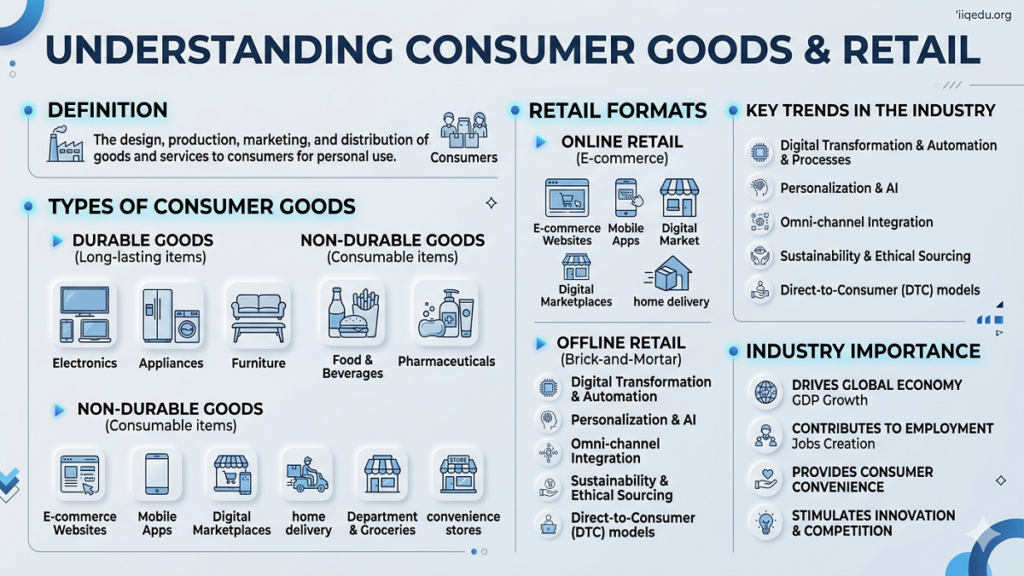
Industry application of Consumer Goods & Retail
Industry Applications of Consumer Goods & Retail refer to how this sector is used across different industries to meet needs, support operations, and deliver products to end consumers. Here’s a clear and simple explanation:
1. Food & Beverage Industry
Consumer goods companies supply packaged food, beverages, and raw materials.
- Retail stores and platforms distribute these products to customers
- Example companies: Nestlé, PepsiCo
2. Healthcare & Pharmaceuticals
- Hospitals and pharmacies use consumer goods like hygiene products, nutritional items, and over-the-counter products
- Retail pharmacies sell health-related goods directly to consumers
3. Hospitality Industry (Hotels & Restaurants)
- Hotels use toiletries, cleaning supplies, and food products
- Restaurants rely on packaged and raw consumer goods for daily operations
4. E-commerce & Technology
- Online platforms enable buying and selling of consumer goods
- Companies like Amazon and Flipkart connect sellers with customers digitally
5. Fashion & Apparel Industry
- Clothing brands produce garments (consumer goods)
- Retail outlets and online stores sell them to consumers
6. Manufacturing Industry
- Produces goods at scale (FMCG, electronics, etc.)
- Works closely with retailers for distribution
7. Logistics & Supply Chain
- Ensures storage, transportation, and delivery of goods
- Critical for maintaining product availability in retail stores
8. Banking & Financial Services
- Provides payment systems (cards, UPI, EMIs) for retail purchases
- Supports consumer financing and business operations
9. Media & Advertising
- Promotes consumer products through marketing campaigns
- Helps brands build awareness and influence buying decisions
10. Rural & Agricultural Sector
- Supplies agricultural inputs and daily-use goods in rural areas
- Companies like Hindustan Unilever adapt products for rural markets
Conclusion
The Consumer Goods & Retail sector is deeply connected with multiple industries. It supports production, distribution, and consumption across the economy, making it a central part of modern business and daily life.
#consumergoodsandretailsinmumbai ##consumergoodsandretailsinindia
Ask FAQs
What is Consumer Goods & Retail?
Consumer Goods & Retail is a sector that involves producing everyday products and selling them to customers through stores or online platforms.
What are examples of consumer goods?
Examples include food, beverages, clothing, toiletries, electronics, and household items. Companies like Nestlé and Procter & Gamble produce such goods.
What is the role of retail in this sector?
Retail connects products to customers by selling goods through physical stores or online platforms like Amazon and Flipkart.
Why is this sector important?
It is important because it fulfills daily needs, creates jobs, and contributes significantly to economic growth.
What are the current trends in Consumer Goods & Retail?
Key trends include growth of e-commerce, digital payments, personalized shopping experiences, and increasing demand for sustainable products.
Source: Simple Explain
Table of Contents
Summary
Consumer Goods & Retail is a crucial sector that focuses on producing everyday products and delivering them to consumers through various sales channels. Consumer goods include items such as food, beverages, clothing, electronics, and personal care products. These goods are generally divided into durable goods, which last for a long time, and non-durable goods, which are consumed quickly and require frequent replacement.
Retail refers to the process of selling these goods directly to customers. It includes physical stores like supermarkets and malls as well as online platforms that enable convenient shopping from anywhere. The sector operates through a value chain that involves manufacturing, supply chain management, distribution, and final sales to consumers.
This sector plays a significant role in the economy by generating employment, supporting businesses, and meeting daily consumer needs. It is highly influenced by factors such as consumer behavior, income levels, and market trends. In recent years, digital transformation, e-commerce growth, and demand for sustainable products have reshaped the industry.
Overall, Consumer Goods & Retail is an essential and dynamic sector that continuously evolves to meet changing consumer expectations and technological advancements.
Disclaimer:
This content is for informational and educational purposes only. It does not constitute professional, financial, or business advice. While efforts have been made to ensure accuracy, no guarantee is provided, and readers should verify information independently.