AutoML for Quality Data Modeling
Learn 5 key benefits of AutoML for Quality Data Modeling to predict defects, optimize processes, and improve product quality efficiently.

Learn 5 key benefits of AutoML for Quality Data Modeling to predict defects, optimize processes, and improve product quality efficiently.
A high-tech manufacturing environment demonstrating AI-powered supplier quality assessment. Digital dashboards display supplier performance metrics, risk scores, and predictive analytics, helping quality teams detect potential issues early, ensure compliance, and maintain consistent product quality across the supply chain.
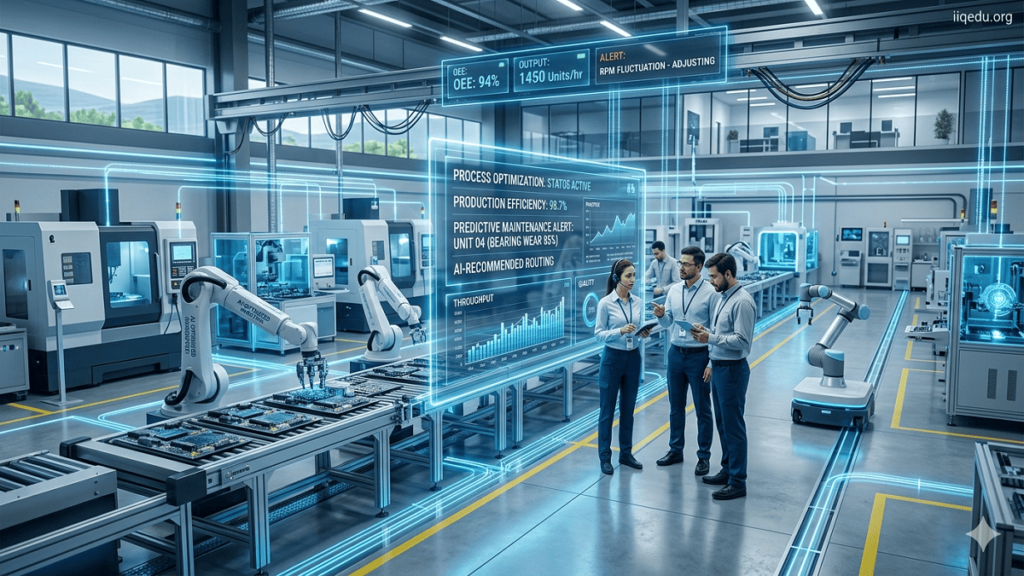
A smart factory environment demonstrating AI-powered process optimization where advanced analytics and machine learning monitor production systems, identify inefficiencies, and improve operational performance through real-time data insights.
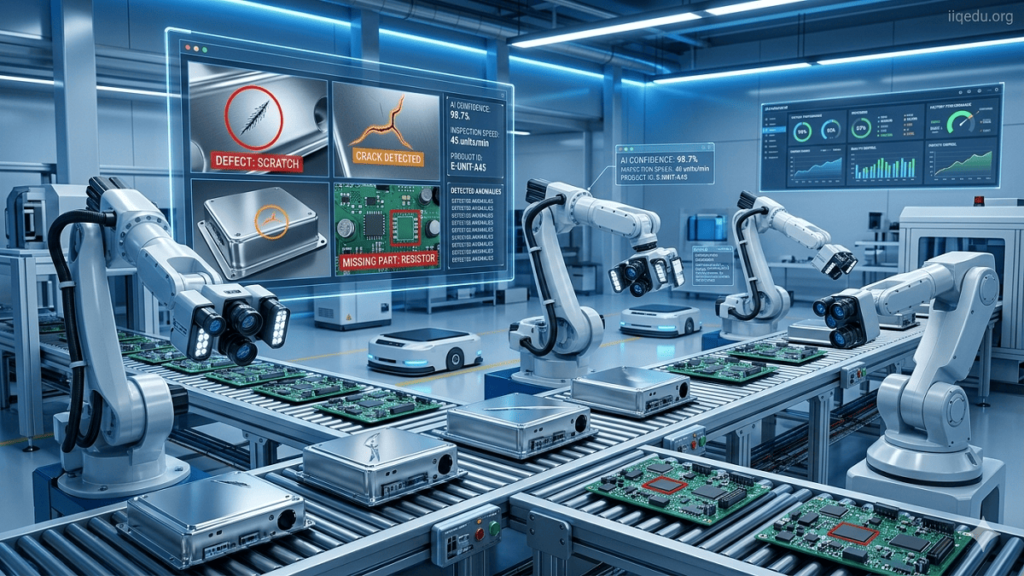
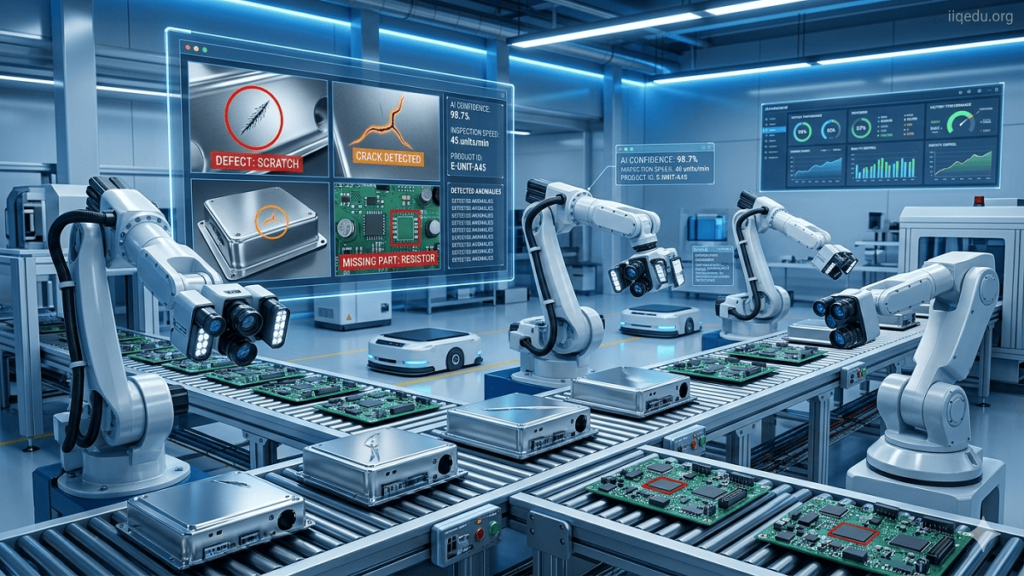
This image illustrates an AI-driven defect detection system operating in a modern smart factory. High-resolution cameras and machine vision technology analyze products moving along a conveyor belt to identify defects such as cracks, scratches, and missing components in real time. The AI system highlights defective areas and helps manufacturers improve quality control, reduce production errors, and enhance efficiency in automated industrial environments.

This visual illustrates the application of Artificial Intelligence in Risk-Based Quality Management, where AI technologies analyze large volumes of quality, compliance, and operational data to identify potential risks before they occur. The system displays predictive analytics, risk matrices, audit insights, and performance indicators on advanced digital dashboards, enabling organizations to improve quality control, ensure regulatory compliance, and enhance decision-making. AI-driven risk analysis helps industries strengthen their Quality Management Systems (QMS)
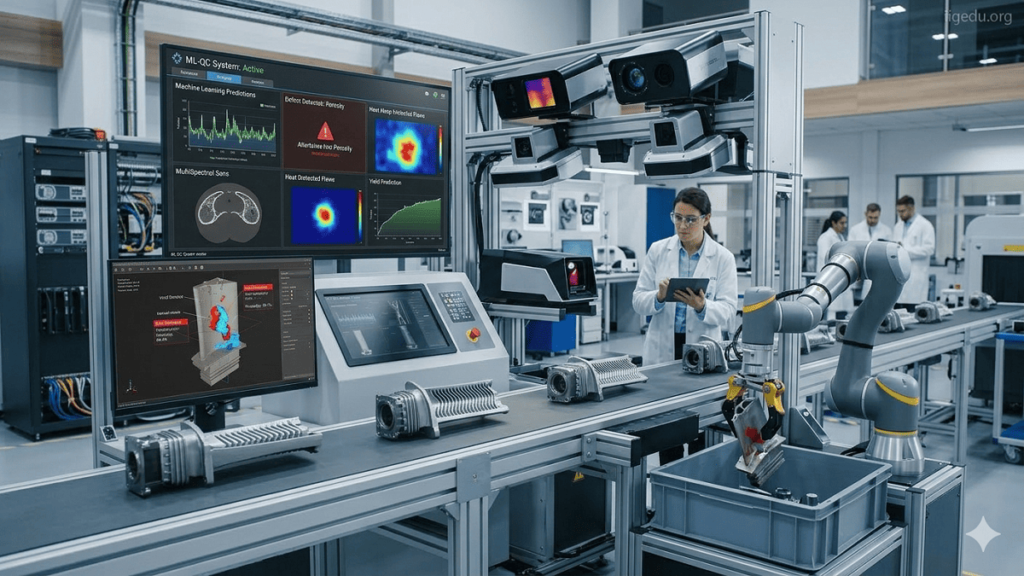
This illustration depicts AI and Machine Learning in Quality Control and Quality Assurance in a modern smart factory. Products move on a conveyor while AI-powered sensors and cameras detect defects, with live dashboards showing predictions, analytics, and defect highlights. Robotic arms automatically remove defective items, and a technician supervises the process. The environment is clean, futuristic, and high-tech, emphasizing advanced automated quality assurance. A subtle watermark ‘iiqedu.org’ appears in the top-right corner.
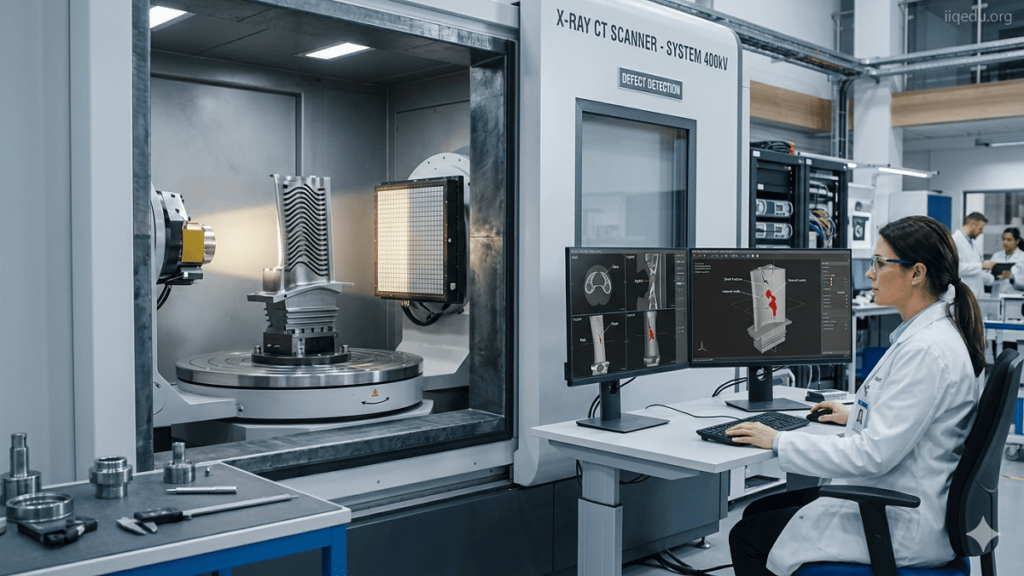
This illustration depicts X-ray CT scanning used for defect detection in a modern industrial QA setting. A turbine blade or similar component is scanned non-destructively, with cross-sectional 3D images revealing hidden cracks, voids, and internal structural inconsistencies. A technician monitors the live 3D reconstruction on adjacent screens. The environment is clean, high-tech, and futuristic, emphasizing advanced quality assurance processes. A subtle watermark ‘iiqedu.org’ appears in the top-right corner
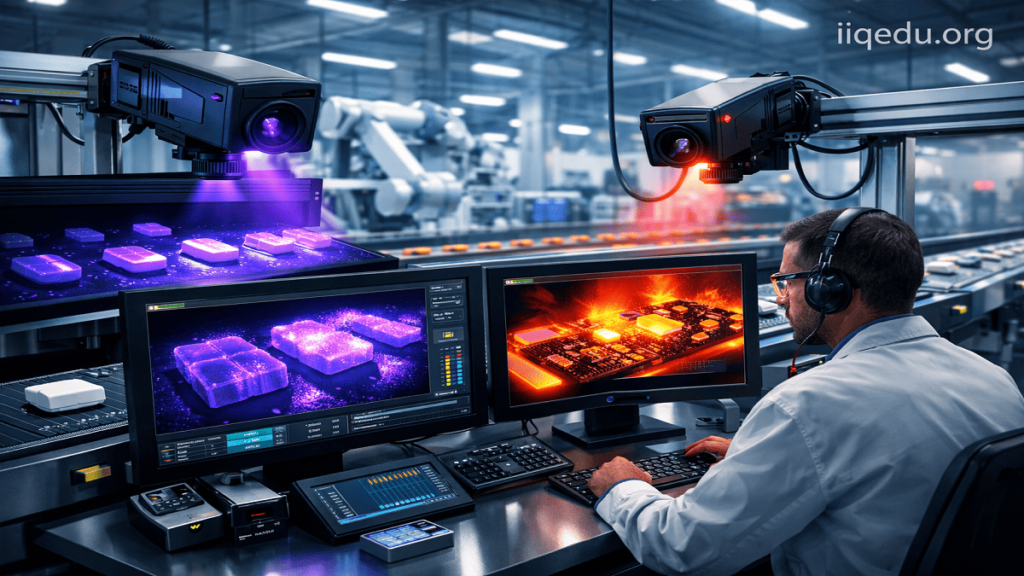
This high-resolution illustration shows UV/IR cameras used for quality assurance in an industrial setting. Products on a production line are scanned with UV cameras to reveal surface defects through fluorescence, and IR cameras detect thermal anomalies in machinery and components. A technician monitors live displays of heat maps and UV images to ensure product quality and prevent defects. A subtle watermark ‘iiqedu.org’ appears in the top-right corner, highlighting the source of the image.
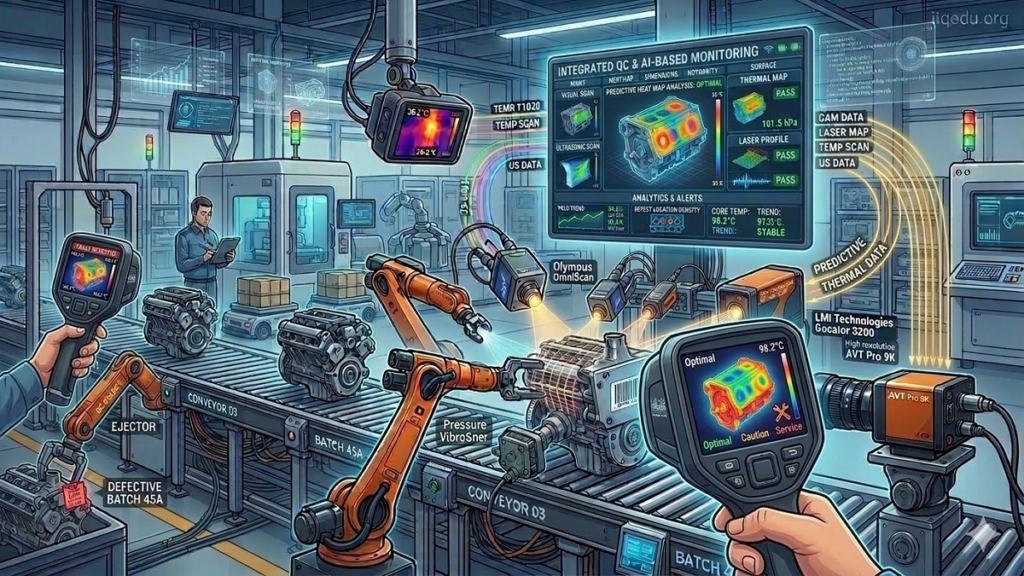
This 3D-rendered illustration shows thermal imaging used for fault detection in an industrial environment. Machinery, electrical panels, and production equipment display hotspots in red, yellow, and orange, indicating potential faults. A technician monitors live heat maps on a display screen. The scene emphasizes real-time, non-contact inspection to prevent equipment failures and optimize safety and efficiency. A subtle watermark ‘iiqedu.org’ appears in the top-right corner.
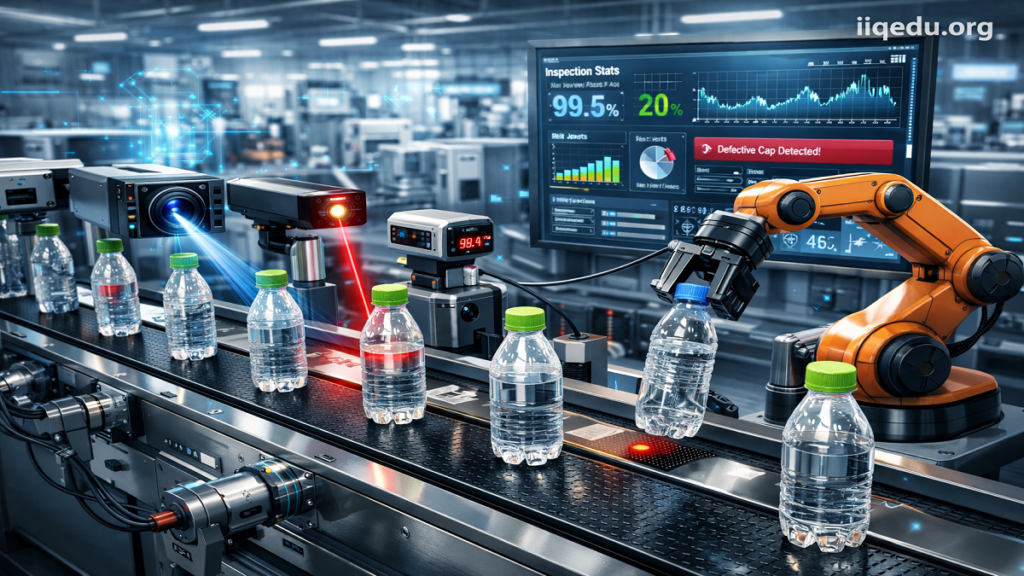
This 3D-rendered illustration shows a smart factory production line where multiple smart sensors—including vision cameras, laser scanners, and temperature sensors—inspect bottles in real time. A robotic arm removes defective products, and a digital dashboard displays live inspection statistics and alerts. The scene represents advanced Industry 4.0 technology with connected machines and real-time automated quality control. A subtle watermark ‘iiqedu.org’ is visible in the top-right corner