Digital Transformation & Industry 4.0

Digital Transformation & Industry 4.0

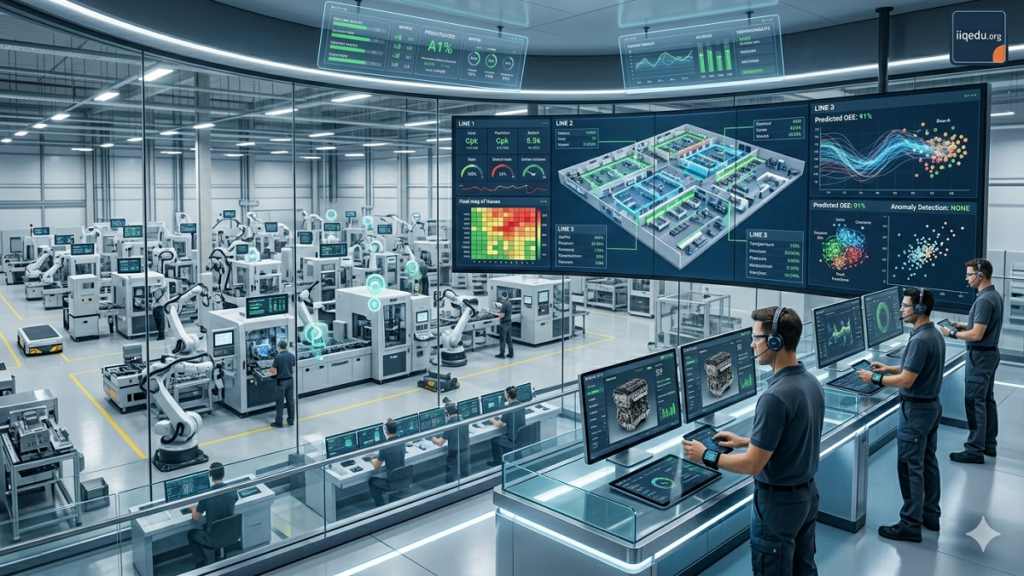
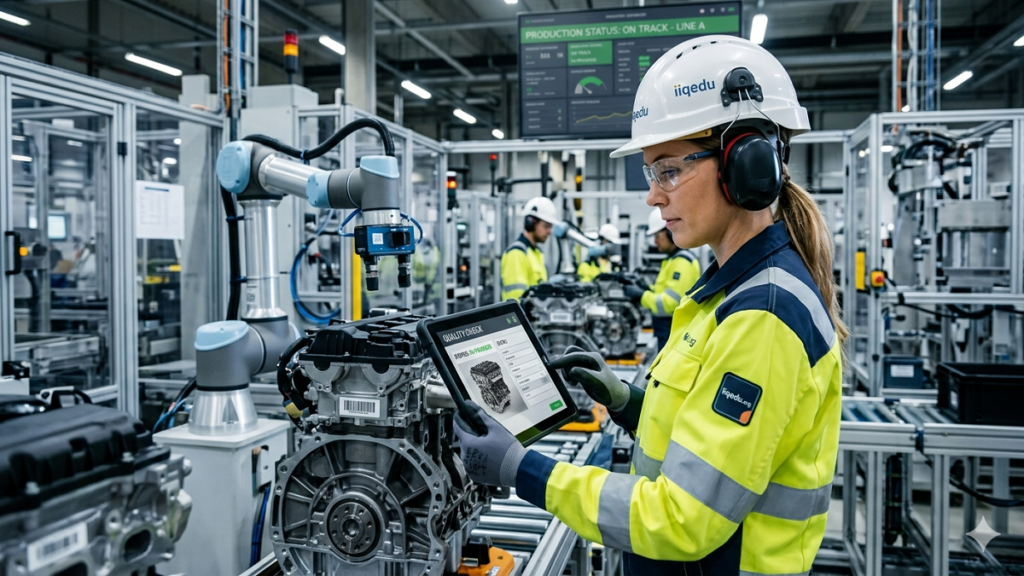
MES/SCADA Integration in QA. Illustration showing SCADA sensors and machines on a production line sending real-time data to a MES system, with dashboards displaying quality metrics and alerts.
Digital Transformation & Industry 4.0, MES/SCADA Integration in QA

MES/SCADA Integration in QA

This image visualizes MES and SCADA systems working together for quality assurance in manufacturing. SCADA sensors collect live production data from machines and equipment, which is transmitted to a MES system. The MES evaluates the data against quality thresholds, triggers alerts for deviations, and maintains traceability logs for audits and compliance. The illustration highlights how integration improves real-time monitoring, reduces defects, and ensures consistent product quality across multiple industries.

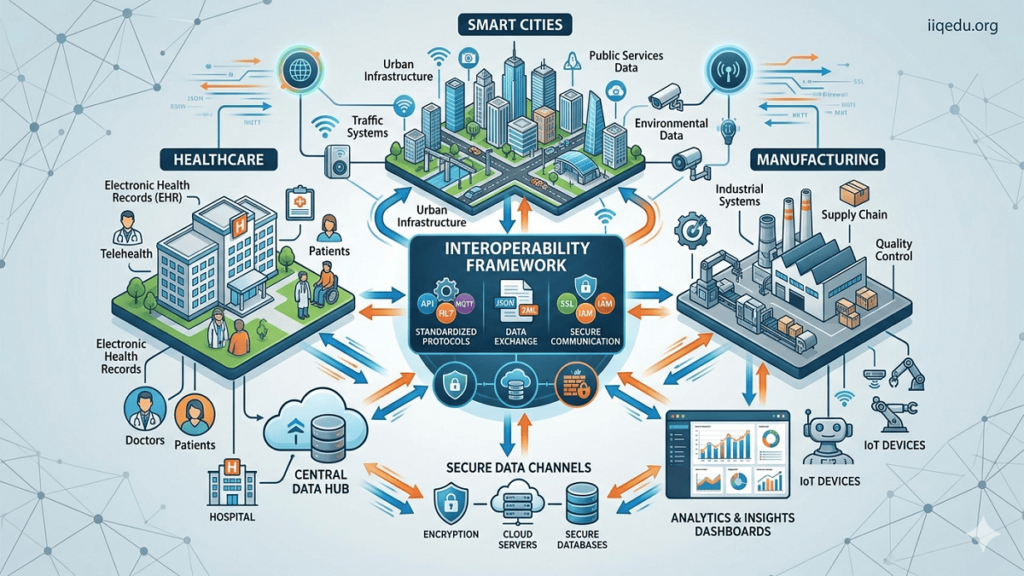
Interoperability Frameworks. Illustration showing hospitals, smart city infrastructure, and factories connected through secure data pipelines, APIs, and cloud servers representing an Interoperability Framework.
Digital Transformation & Industry 4.0, Interoperability Frameworks

Interoperability Frameworks

This image visualizes an Interoperability Framework connecting multiple industries. Hospitals, smart city infrastructure, and manufacturing plants are linked via secure data pipelines, APIs, and cloud servers. Real-time data flows through dashboards and analytics platforms, enabling coordinated operations, standardized data interpretation, and efficient collaboration. The illustration emphasizes the importance of interoperability for seamless integration, security, and operational efficiency across complex systems.

Cybersecurity in Quality Systems. A modern manufacturing facility and office environment show professionals using secure quality systems protected by cybersecurity measures. Employees monitor QA dashboards on computers and tablets displaying encrypted data, threat detection alerts, firewalls, and secure cloud connections. Visual elements such as digital locks and network security icons represent data protection. The setting is high-tech, professional, and well-lit. A small watermark “iiqedu.org” is visible in the top-right corner.
Cybersecurity in Quality Systems, Digital Transformation & Industry 4.0

Cybersecurity in Quality Systems

The image illustrates Cybersecurity in Quality Systems in action. Professionals in manufacturing and office environments use secure dashboards to monitor quality data, detect threats, and maintain system integrity. Encryption, firewalls, and secure cloud connections protect sensitive QA information from cyber risks. This approach ensures data security, regulatory compliance, operational reliability, and stakeholder trust.

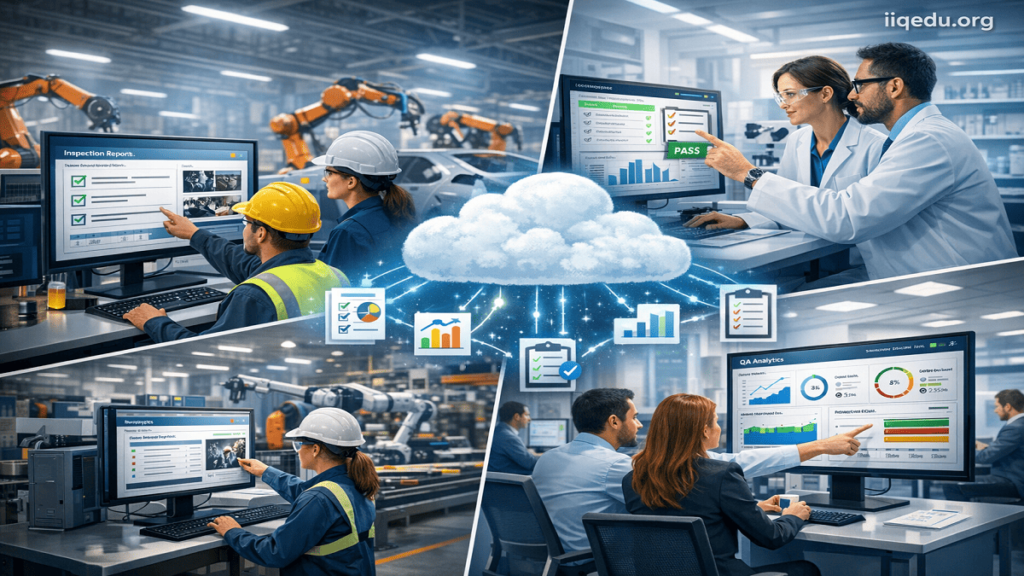
A modern manufacturing facility, laboratory, and office environment show teams using cloud-based QA systems. Employees access real-time dashboards on tablets and laptops displaying quality metrics, defect analysis, inspection reports, and compliance data. Large screens visualize cloud connectivity and data sharing across multiple locations. The setting is high-tech, professional, and well-lit. A small watermark “iiqedu.org” is visible in the top-right corner.
Cloud-Based QA Systems, Digital Transformation & Industry 4.0

Cloud-Based QA Systems

The image illustrates Cloud-Based QA Systems in action across manufacturing, laboratory, and office environments. Employees access centralized dashboards via tablets and computers to monitor inspections, analyze defects, and review compliance data in real time. Cloud connectivity enables seamless collaboration between teams in different locations, ensuring consistent quality standards and faster decision-making. This approach enhances efficiency, transparency, and regulatory compliance while reducing errors and delays.

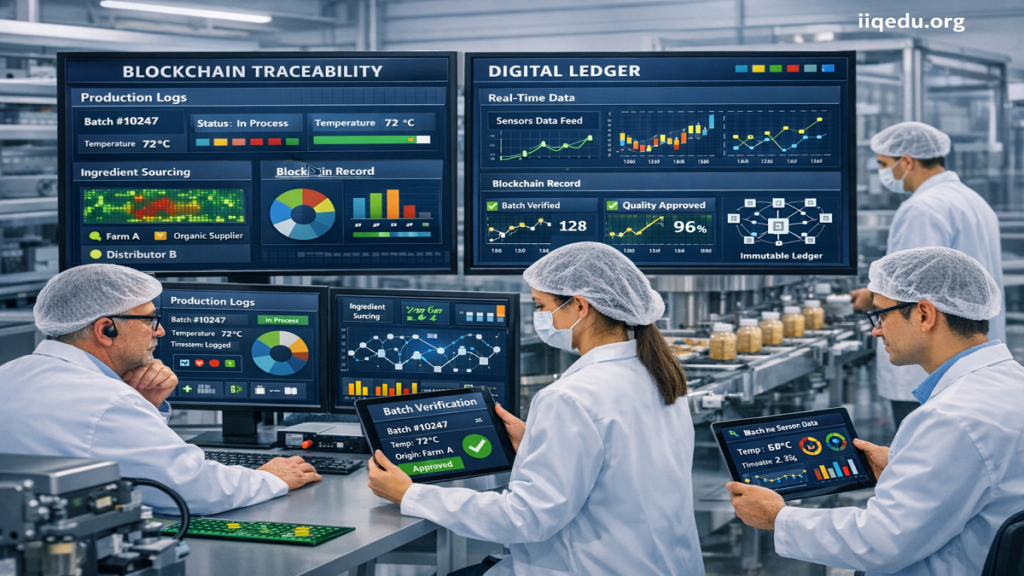
Blockchain in QA Traceability: Ensuring Transparent Quality Control
Blockchain in QA Traceability, Digital Transformation & Industry 4.0

Blockchain in QA Traceability

The image illustrates Blockchain in QA Traceability in action. Employees in pharmaceutical and food processing facilities use tablets and computers to monitor production quality, supplier data, and batch certifications recorded on a blockchain ledger. IoT sensors provide live updates to ensure accurate and immutable records. This approach enables end-to-end traceability, compliance with regulatory standards, faster recall management, and enhanced stakeholder trust

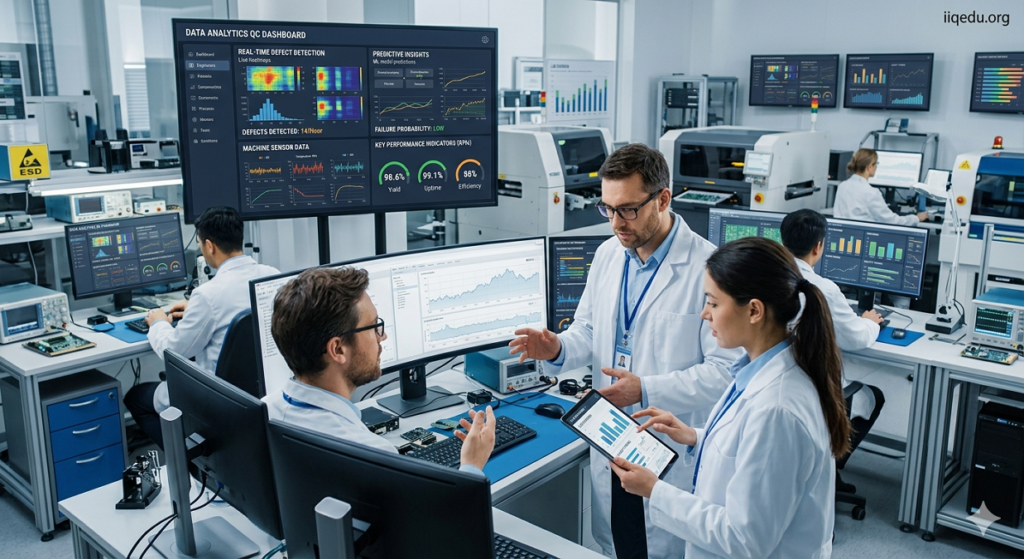
A modern manufacturing floor and electronics lab show employees using big data analytics for quality control. Large screens display real-time dashboards with defect trends, predictive analytics, KPIs, and charts. Machines are equipped with sensors sending live data to the system. Employees analyze data on tablets and computers to optimize production quality. The environment is high-tech, professional, and well-lit. A small watermark “iiqedu.org” is visible in the top-right corner.
Big Data in Quality Analytics, Digital Transformation & Industry 4.0

Big Data in Quality Analytics

The image illustrates Big Data in Quality Analytics in action. Employees in manufacturing and electronics labs analyze real-time data from sensors, production lines, and inspection tools using dashboards and KPI monitors. Predictive analytics and trend visualization help identify defects, optimize processes, and ensure consistent quality standards. This immersive approach enables data-driven decision-making, operational efficiency, and reduced defects

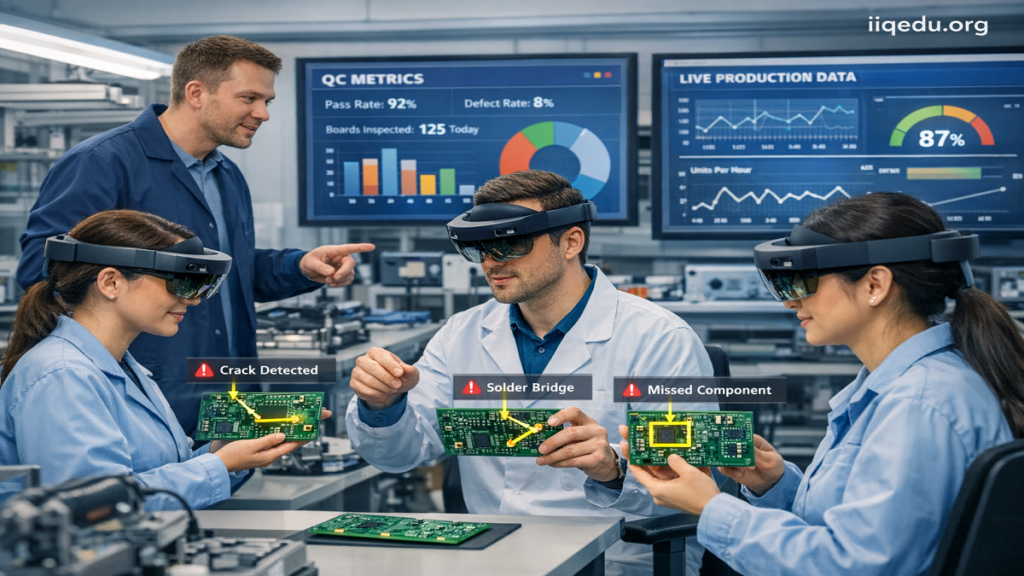
Augmented Reality for QC Training. A modern manufacturing floor and electronics lab show employees using AR headsets for quality control training. Digital overlays highlight product defects, step-by-step inspection instructions, and 3D models. Trainees interact with virtual guides while supervisors monitor performance on tablets. Screens in the background display real-time analytics and metrics. The environment is high-tech, professional, and well-lit. A small watermark “iiqedu.org” is visible in the top-right corner.
Augmented Reality for QC Training, Digital Transformation & Industry 4.0

Augmented Reality for QC Training

The image illustrates Augmented Reality (AR) in QC training, combining interactive technology with hands-on learning. Trainees wear AR headsets to perform inspections on products, detect defects, and follow step-by-step procedures displayed as digital overlays. Supervisors monitor progress on tablets, while large screens show real-time performance metrics and analytics. This immersive training approach enhances accuracy, efficiency, and consistency in quality control across manufacturing and electronics labs

Contact Detail

B-401, Om Kaveri CHS Ltd, Nagindas Pada, Next to Shivsena Office, Nalasopara (East), Dist.- Palghar
Maharastra (401209).
admin@iiqedu.org
+91 9322728183

Community

Follow Us

2025 Copyright iiqedu.org

Scroll to Top